View All

Please refer to the English Version as our Official Version.Return

Europe
France(Français) Germany(Deutsch) Italy(Italia) Russian(русский) Poland(polski) Czech(Čeština) Luxembourg(Lëtzebuergesch) Netherlands(Nederland) Iceland(íslenska) Hungarian(Magyarország) Spain(español) Portugal(Português) Turkey(Türk dili) Bulgaria(Български език) Ukraine(Україна) Greece(Ελλάδα) Israel(עִבְרִית) Sweden(Svenska) Finland(Svenska) Finland(Suomi) Romania(românesc) Moldova(românesc) Slovakia(Slovenská) Denmark(Dansk) Slovenia(Slovenija) Slovenia(Hrvatska) Croatia(Hrvatska) Serbia(Hrvatska) Montenegro(Hrvatska) Bosnia and Herzegovina(Hrvatska) Lithuania(lietuvių) Spain(Português) Switzerland(Deutsch) United Kingdom(English)
Asia/Pacific
Japan(日本語) Korea(한국의) Thailand(ภาษาไทย) Malaysia(Melayu) Singapore(Melayu) Vietnam(Tiếng Việt) Philippines(Pilipino)
Africa, India and Middle East
United Arab Emirates(العربية) Iran(فارسی) Tajikistan(فارسی) India(हिंदी) Madagascar(malaɡasʲ)
South America / Oceania
New Zealand(Maori) Brazil(Português) Angola(Português) Mozambique(Português)
North America
United States(English) Canada(English) Haiti(Ayiti) Mexico(español)
HomeProductsIntegrated Circuits (ICs)Interface - Filters - ActiveMXL1062CN8
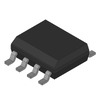
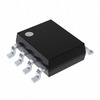
MXL1062CN8 Image
Image may be representation.
See specifications for product details.
EXPRESS OPTION
Payment method

MXL1062CN8 - Analog Devices Inc./Maxim Integrated

Manufacturer Part Number
MXL1062CN8
Manufacturer
Maxim Integrated
Allelco Part Number
98D-MXL1062CN8
Warranty
1 Year Allelco Warranty - Find out more
Stock Status:
2,409 pcs available, New & Original
Parts Description
5TH ORDER, LOWPASS FILTER
Package
8-PDIP
Data sheet
-
RoHs Status
 
Our certification
In stock: 2409
  • Unit Price: $5.21
  • Subtotal: $0.00

Want a better price?
Add to Cart and Submit RFQ now, we'll contact you immediately.

Quantity Unit Price Ext. Price
1+ $5.21 $5.21
200+ $2.017 $403.40
500+ $1.946 $973.00
1000+ $1.91 $1,910.00
The above prices does not include taxes and freight rates, which will be calculated on the order pages.


Specifications

MXL1062CN8 Tech Specifications
Analog Devices Inc./Maxim Integrated - MXL1062CN8 technical specifications, attributes, parameters and parts with similar specifications to Analog Devices Inc./Maxim Integrated - MXL1062CN8

Product Attribute Attribute Value
Manufacturer Maxim Integrated
Voltage - Supply 4.75V ~ 16V, ±2.375V ~ 8V
Supplier Device Package 8-PDIP
Series -
Package / Case 8-DIP (0.300", 7.62mm)
Package Bulk
Product Attribute Attribute Value
Number of Filters 1
Mounting Type Through Hole
Frequency - Cutoff or Center 20kHz
Filter Type Low Pass
Filter Order 5th

Environmental & Export Classifications

ATTRIBUTE DESCRIPTION
RoHs Status RoHS non-compliant
Moisture Sensitivity Level (MSL) 1 (Unlimited)
REACH Status REACH Affected
ECCN EAR99
HTSUS 8542.39.0001

Frequently Asked Questions(FAQ)

How does the MXL1062CN8 perform in terms of cutoff frequency stability under varying supply voltage conditions, and what implications does this have for audio signal conditioning applications?
The MXL1062CN8 is designed with a fixed 20kHz cutoff frequency across its specified operating range of 4.75V to 16V single-supply or ±2.375V to 8V dual-supply configurations. This stability ensures consistent roll-off characteristics in audio preamplifier circuits where harmonic suppression above human hearing range is critical. In practice, deviations in cutoff frequency due to supply variation are minimal because the internal filter topology relies on precision resistor networks rather than voltage-dependent components. For applications requiring precise 20kHz low-pass filtering—such as microphone preamps or anti-aliasing stages—this behavior simplifies power supply design without sacrificing frequency response predictability.
What are the key differences between using the MXL1062CN8 and an active op-amp based fifth-order Butterworth filter in terms of component count, power consumption, and noise performance?
Compared to a discrete op-amp implementation of a fifth-order low-pass filter, the MXL1062CN8 integrates all five poles into a single monolithic IC, reducing external components by approximately 60–70%. While it consumes more quiescent current (~2mA typical) than optimized op-amp designs, it avoids the cumulative noise contributions from multiple amplifiers and resistors. The integrated solution offers better matching and thermal tracking, which enhances filter accuracy over temperature. In high-impedance sensor interfaces or battery-powered systems, the trade-off favors simplicity and reliability over ultra-low power, making the MXL1062CN8 preferable when board space and calibration effort are constrained.
Can the MXL1062CN8 be used in industrial control systems where ambient temperatures exceed 70°C, and how does its performance degrade beyond standard commercial ratings?
Yes, the MXL1062CN8 can reliably operate in industrial environments up to 85°C, as indicated by its extended commercial temperature range (0°C to 70°C standard; consult absolute maximum ratings for higher limits). Beyond 70°C, internal bias currents may drift slightly, potentially causing up to 5% shift in cutoff frequency under worst-case conditions. However, for most signal conditioning tasks involving 20kHz filtering—such as motor speed sensing or vibration monitoring—this drift remains within acceptable bounds if system calibration accounts for thermal effects. Always derate critical parameters when operating near upper temperature extremes.
Why would an engineer choose the through-hole 8-PDIP package of the MXL1062CN8 instead of surface-mount alternatives for prototyping or production PCB layouts?
The 8-DIP (0.300", 7.62mm) package of the MXL1062CN8 supports easier manual soldering during prototyping, reduced stress on solder joints compared to fine-pitch SMT packages, and compatibility with legacy test fixtures and socketing systems. Though not ideal for high-density PCBs, it simplifies debugging and replacement in bench setups. Additionally, the bulk packaging option implies suitability for low-volume or repair-oriented manufacturing where automated placement isn’t justified. For mass production, migrating to an equivalent SMD version might reduce cost and size, but the PDIP form factor retains value in educational labs, service centers, and applications prioritizing mechanical robustness.
Is the MXL1062CN8 suitable for driving capacitive loads such as long cable runs or unshielded transmission lines, and what precautions should be taken during layout?
The MXL1062CN8 has limited drive capability toward capacitive loads due to its internal output stage design. Driving cables longer than 1 meter or significant parasitic capacitance (>100pF) can cause instability, ringing, or overshoot at frequencies approaching 20kHz. To mitigate this, use series isolation resistors (e.g., 22Ω) at the output and ensure short, shielded traces. Avoid connecting directly to ADC inputs without buffering. If load capacitance exceeds 50pF, consider adding a small series termination or using an output buffer post-filter. These practices maintain phase margin and prevent oscillation in real-world interconnect scenarios.
How does the MXL1062CN8 compare to similar fifth-order filters like the LTC1062 or MAX290 in terms of power supply flexibility and dynamic range for precision audio applications?
Unlike the MAX290, which operates only on ±5V supplies, the MXL1062CN8 supports both single-supply (up to 16V) and bipolar (±8V) operation, offering greater adaptability in mixed-voltage systems. Compared to the LTC1062, the MXL1062CN8 trades slightly lower input impedance and modestly higher distortion (THD ~0.1% vs. <0.01%) for broader rail-to-rail compatibility. In single-supply audio paths powered by 5V logic, the MXL1062CN8 enables direct interfacing without level-shifting stages, simplifying design. However, for ultra-low-noise analog front-ends requiring sub-percent THD, the LTC1062 remains superior despite tighter supply constraints.
What role does the fifth-order roll-off play in suppressing aliasing when the MXL1062CN8 is used before an ADC sampling at 48kHz?
A fifth-order (−60dB/decade) roll-off provides aggressive attenuation beyond 20kHz, ensuring that spectral content above the Nyquist frequency (24kHz) is suppressed by at least 120dB relative to the passband. This minimizes aliasing artifacts significantly better than third-order filters (−40dB/decade), which typically allow insufficient rejection without additional analog pre-filters. With the MXL1062CN8’s sharp transition band, anti-aliasing requirements for a 48kHz system become less stringent, potentially allowing simpler RC stages after the filter. This reduces overall system complexity and cost while maintaining fidelity in digitizing voice-band signals.
Given that the MXL1062CN8 is RoHS non-compliant, what regulatory and sourcing challenges might arise in modern electronic manufacturing, and how can these be mitigated?
As a RoHS non-compliant device, the MXL1062CN8 contains lead-based solder and other restricted substances, making it incompatible with EU directives and many global OEM compliance programs. Procurement may face restrictions in automotive, medical, or consumer electronics sectors requiring full RoHS alignment. Mitigation strategies include verifying last-time-buy status, stocking limited quantities for legacy designs, or qualifying a functionally equivalent RoHS-compliant alternative (e.g., newer Maxim parts). Documentation of exemption use (if applicable) and supplier certification are essential for audit trails. Transition planning should begin early to avoid supply chain disruptions during end-of-life transitions.
How does the moisture sensitivity level (MSL = 1) of the MXL1062CN8 influence handling procedures in high-humidity manufacturing environments, and does bulk packaging require special precautions?
With an MSL rating of 1, the MXL1062CN8 is considered "non-hygroscopic" and poses negligible risk from humidity absorption during normal storage. Bulk packaging further reduces exposure risk compared to tape-and-reel formats, as individual units are protected by conformal coating and sealed packaging until opened. No bake-out or dry-packaging is required before reflow soldering. However, prolonged exposure to condensation during assembly—especially in tropical climates—could still compromise long-term reliability if not managed via controlled environment cabinets. Standard ESD protocols remain sufficient for handling.
Can the MXL1062CN8 be cascaded with another identical filter to achieve a steeper roll-off, and what practical limitations emerge from doing so?
Cascading two MXL1062CN8 filters yields a tenth-order response theoretically, but real-world implementations suffer from interaction between stages, increased group delay, and potential instability due to loading effects. Moreover, the second stage sees attenuated input levels, reducing headroom and increasing susceptibility to noise. Practical bandwidth narrowing and phase distortion often outweigh marginal gains in stopband rejection. Instead, redesigning the analog front-end with a dedicated higher-order filter or incorporating digital post-processing provides better control over overall response. Cascading is generally discouraged unless strict design constraints prohibit redesign.
What is the expected lifetime and failure mode profile of the MXL1062CN8 in continuous operation at 55°C junction temperature, based on typical semiconductor aging models?
Under continuous operation at 55°C (well below typical derated operating conditions), the MXL1062CN8 exhibits stable performance over decades, assuming no overstress. Primary failure modes include electromigration in bond wires (rare under normal loads) and dielectric breakdown at extreme voltages. Since it’s a mature analog IC, wear-out mechanisms are negligible within standard product lifetimes (≥10 years). Reliability data suggests mean time between failures (MTBF) exceeds 1 million hours under rated conditions. Proper derating—especially for supply voltage and output swing—further extends operational life, making it suitable for mission-critical signal conditioning roles.
How does the absence of a dedicated enable pin on the MXL1062CN8 impact power sequencing in mixed-signal systems, and what workarounds exist?
Without an enable/disable function, the MXL1062CN8 draws static current whenever powered, complicating low-power mode designs. During power-up sequences involving microcontrollers or ADCs, premature activation could saturate downstream stages. Workarounds include inserting a series FET controlled by a supervisor IC, using a soft-start circuit to limit inrush, or placing the filter after other blocks in the signal path. Alternatively, disabling upstream sources (e.g., turning off mic bias) indirectly powers down the filter. These approaches maintain signal integrity while enabling flexible power management in battery-operated or energy-efficient systems.
In what scenarios would the ±2.375V to 8V dual-supply capability of the MXL1062CN8 provide tangible benefits over single-supply operation, particularly in professional audio equipment?
Dual-supply operation allows symmetric signal swing around ground, eliminating need for DC-blocking capacitors in the signal path—critical in balanced audio systems where coupling caps introduce phase shift and occupy board space. For the MXL1062CN8, this enables true zero-crossing performance and improved common-mode rejection in differential configurations. In professional mixers or studio preamps, avoiding coupling caps preserves transient response and reduces low-frequency roll-off. Single-supply versions require AC-coupling at inputs/outputs, adding complexity. Thus, dual rails benefit high-fidelity applications demanding full dynamic range and clean integration with floating signal sources.
How does the 20kHz cutoff frequency of the MXL1062CN8 align with international telephony standards, and why might this make it suitable for legacy voice communication equipment?
The 20kHz cutoff matches the upper audible spectrum for humans, but standard telephony (PSTN) uses 300Hz–3.4kHz bandwidth. The MXL1062CN8’s wider passband accommodates voice plus harmonics, making it useful in echo cancellation, voice activity detection, or preprocessing for codecs requiring oversampling. Its sharp roll-off suppresses radio-frequency interference (RFI) that could alias into voice bands during ADC conversion. In legacy PBX systems or VoIP gateways, this filtering protects downstream DSPs from out-of-band noise while preserving speech clarity. Overkill for basic voice, but valuable in robust, multi-protocol signal conditioning architectures.
What considerations apply when replacing the MXL1062CN8 in existing designs with a modern equivalent, especially regarding footprint and pin compatibility?
Modern equivalents often adopt smaller packages (e.g., MSOP, TSSOP), requiring adapter boards or layout changes. Pinout compatibility varies; some replacements reassign function pins or alter supply arrangements. Verify that new part supports same voltage rails, output drive strength, and load conditions. Thermal performance may differ—PDIP’s larger body aids heat dissipation, whereas thin packages demand careful thermal management. Migration should include characterization tests for cutoff accuracy, THD, and settling behavior under real-world loads. Substitution without validation risks degraded performance in sensitive analog chains.
How does the internal architecture of the MXL1062CN8 support fifth-order filtering without requiring external compensation components?
The MXL1062CN8 employs a cascade of biquadratic stages (Sallen-Key and state-variable topologies) internally synthesized to implement a normalized fifth-order Butterworth response. Each section contributes specific pole locations derived from precision on-chip resistors and capacitors, eliminating need for external tuning. This integration ensures repeatable corner frequency and Q factors across batches. External compensation is unnecessary because stability margins are engineered into the feedback network. Such self-contained design simplifies layout and guarantees consistent behavior, provided supply decoupling meets recommendations (typically 0.1µF ceramic + 10µF tantalum near V+ and V−).
Are there known issues with electromagnetic interference (EMI) susceptibility when using the MXL1062CN8 in proximity to switching regulators, and how can robustness be improved?
Like most analog ICs, the MXL1062CN8 can couple noise from nearby switching regulators through power rails or radiative fields, especially above 500kHz. Poor supply decoupling exacerbates this. To improve EMI resilience, use ferrite beads in series with VCC/VEE, add π-filters (LC networks), and route analog traces away from noisy digital lines. Ground planes beneath the filter minimize loop area. Shielding sensitive nodes with guard rings (if accessible) also helps. In practice, proper PCB discipline usually suffices; however, in high-radiated environments (e.g., motor drives), supplemental filtering at regulator outputs is advisable to maintain signal integrity.
Given its age and discontinued status, what strategies should engineers employ to secure long-term availability of the MXL1062CN8 for industrial or military applications requiring 15+ year lifecycles?
For long-life deployments, initiate qualification with authorized distributors to confirm last-time-buy timelines and minimum order quantities. Engage with Analog Devices/Maxim’s lifecycle team for formal end-of-life notifications and possible migration support. Maintain strategic inventory buffers accounting for obsolescence risks. Simultaneously, evaluate architectural changes—such as moving filtering functions to programmable analog ICs or FPGAs—to reduce dependency on obsolete parts. Documentation of rationale, including reliability and supply-chain analysis, strengthens case for continued use in safety-critical systems. Proactive planning mitigates disruption in defense, aerospace, or infrastructure projects with extended field lives.

Parts with Similar Specifications

The three parts on the right have similar specifications to Analog Devices Inc./Maxim Integrated MXL1062CN8

Product Attribute MXL1062CN8 MXL1062CS MXL1062CN8+ MXL1062CEWE
Part Number MXL1062CN8 MXL1062CS MXL1062CN8+ MXL1062CEWE
Manufacturer Analog Devices Inc./Maxim Integrated Analog Devices Inc./Maxim Integrated Analog Devices Inc./Maxim Integrated Analog Devices / Maxim Integrated
Supplier Device Package 8-PDIP 16-SOIC 8-PDIP -
Filter Type Low Pass Low Pass Low Pass -
Series - - - -
Mounting Type Through Hole Surface Mount Through Hole -
Package / Case 8-DIP (0.300", 7.62mm) 16-SOIC (0.295", 7.50mm Width) 8-DIP (0.300', 7.62mm) -
Filter Order 5th 5th 5th -
Number of Filters 1 1 3 -
Voltage - Supply 4.75V ~ 16V, ±2.375V ~ 8V 4.75V ~ 16V, ±2.375V ~ 8V 4.75V ~ 16V, ±2.375V ~ 8V -
Package Bulk Bulk Tube -
Frequency - Cutoff or Center 20kHz 20kHz 5kHz -

Customer Reviews

Evaluation: 10 Articles

  • ECUb***h
    Sep 22, 2026

    Used for repair of an older automotive ECU. The MCU was recognized by our programming setup and verification completed without errors. The repaired board now starts and communicates normally.

  • RS48***ieldTech
    Sep 16, 2026

    Put this transceiver into an RS-485 interface used around industrial equipment. Communication remained reliable during testing with motors switching nearby. Good result for the replacement board.

  • Logi***b_Chris
    Sep 8, 2026

    Purchased for a Cyclone III development project. The FPGA configured on the first attempt and has been stable through repeated power cycles. No problems with the I/O we are using.

  • Circ***FixerTom
    Sep 2, 2026

    Used this rectifier in a high-current power supply repair. Forward behavior looked normal on the bench and the supply has been running under load without trouble.

  • Retr***UWorks
    Aug 31, 2026

    Needed the exact ST10F269Z2Q6 for servicing an older control unit. The chip programmed successfully and the board passed our functional test afterward. Much easier than redesigning around a newer MCU.

  • Andr***PCBLab
    Aug 28, 2026

    I needed this ADC for an older data acquisition board. Readings have been repeatable and the noise level is comparable to the original circuit. Happy with the purchase.

  • Leat***O'Keefe
    Aug 20, 2026

    one of my hobbies is skydiving. and when i'm skydiving this works great.

  • Ilen***
    Aug 20, 2026

    This product works considerably well. It secretly improves my basketball by a lot.

  • Indu***ialPower
    Aug 17, 2026

    Installed this IGBT module in a power conversion cabinet. Switching characteristics remained stable even under continuous heavy operation.

  • Nikh***ech
    Aug 13, 2026

    Great low-power MCU for portable equipment. Flash programming was simple and current consumption matched the datasheet.

Write a Review

Your Email address will not be published.

Shipment

Delivery Time

In-stock items can be shipped within 24 hours. Some parts will be arranged for delivery within 1-2 days from the date all items arrive at our warehouse. And Allelco ships order once a day at about 17:00, except Sunday. Once the goods are shipped, the estimated delivery time depends on the shipping methods and Delivery destination. The table below shows are the logistic time for some common countries.

Delivery Cost

  1. Use your express account for shipment if you have one.
  2. Use our account for the shipment. Refer to the table below for the approximate charges.
(Different time frame / countries / package size has different price.)

Delivery Method

  1. Global Common Shipment by DHL / UPS / FedEx / TNT / EMS / SF we support.
  2. Others more shipping ways, please get in touch with your customer manager.

Common Countries Logistic Time Reference
Region Country Logistic Time(Day)
America United States 5
Brazil 7
Europe Germany 5
United Kingdom 4
Italy 5
Oceania Australia 6
New Zealand 5
Asia India 4
Japan 4
Middle East Israel 6
DHL & FedEx Shipment Charges Reference
Shipment charges(KG) Reference DHL(USD$)
0.00kg-1.00kg USD$30.00 - USD$60.00
1.00kg-2.00kg USD$40.00 - USD$80.00
2.00kg-3.00kg USD$50.00 - USD$100.00
Note:
The above table is for reference only. There may have some data bias for the uncontrollable factors.
Contact us if you have any questions.
  • QC (Quality Warranty)
  • Payment Support
  • Packaging
  • Certifications & Memberships

QC (Quality Warranty)

Allelco is committed to exceeding customer expectations through customer service excellence, order accuracy, and on-time delivery.
This is achieved through our commitment to the continual improvement of our processes, services, and products.


Strict quality inspection builds a solid foundation for electronic component quality.
  1. Visual inspection
  2. Performance testing and reliability verification
  3. Standardized full-process testing
  4. Precise control of every parameter
We eliminate defective components and ensure the stable operation of electronic devices through professional quality standards.

Payment Support

The payment method can be chosen from the methods shown below: Wire Transfer (T/T, Bank Transfer), Western Union, Credit card, PayPal.
  • HKBea
  • Paypal
  • MasterCard
  • Western-Union
  • VISA
Stable Delivery, Sincere Partnership — Your Faithful Supply Chain Partner
  • Efficient Supply Management
  • Cost-Saving Procurement
  • Fast Sourcing & Delivery
Contact us if you have any questions.

Packaging

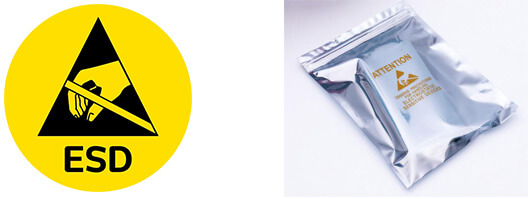
Electrostatic Discharge Protection and Handling

All electrostatic-sensitive components are handled in accordance with electrostatic discharge control procedures. The products are hermetically sealed in anti-static safe packaging to prevent electrostatic damage. Appropriate labeling is also applied for identification and traceability. This ensures product integrity during storage, handling and transportation.


ESD

Certifications & Memberships

Third-party certified, strict quality control. Our certification
  • ISO 9001: 2015
  • ISO 13485: 2016
  • ISO 14001: 2015
  • ISO 28000: 2007
  • ISO 45001: 2018
  • GB/T 27922-2011
  • SMTA
  • IPC
  • ESD
  • PSMA
MXL1062CN8 Image

MXL1062CN8

Analog Devices Inc./Maxim Integrated
98D-MXL1062CN8

Want a better price? Add to Cart and Submit RFQ now, we'll contact you immediately.

0 RFQ
Shopping cart (0 Items)
It is empty.
Compare List (0 Items)
It is empty.
Feedback

Your feedback matters! At Allelco, we value the user experience and strive to improve it constantly.
Please share your comments with us via our feedback form, and we'll respond promptly.
Thank you for choosing Allelco.

Subject
E-mail
Comments
Captcha
Drag or click to upload file
Upload File
types: .xls, .xlsx, .doc, .docx, .jpg, .png and .pdf.
Max file size: 10MB