View All

Please refer to the English Version as our Official Version.Return

Europe
France(Français) Germany(Deutsch) Italy(Italia) Russian(русский) Poland(polski) Czech(Čeština) Luxembourg(Lëtzebuergesch) Netherlands(Nederland) Iceland(íslenska) Hungarian(Magyarország) Spain(español) Portugal(Português) Turkey(Türk dili) Bulgaria(Български език) Ukraine(Україна) Greece(Ελλάδα) Israel(עִבְרִית) Sweden(Svenska) Finland(Svenska) Finland(Suomi) Romania(românesc) Moldova(românesc) Slovakia(Slovenská) Denmark(Dansk) Slovenia(Slovenija) Slovenia(Hrvatska) Croatia(Hrvatska) Serbia(Hrvatska) Montenegro(Hrvatska) Bosnia and Herzegovina(Hrvatska) Lithuania(lietuvių) Spain(Português) Switzerland(Deutsch) United Kingdom(English)
Asia/Pacific
Japan(日本語) Korea(한국의) Thailand(ภาษาไทย) Malaysia(Melayu) Singapore(Melayu) Vietnam(Tiếng Việt) Philippines(Pilipino)
Africa, India and Middle East
United Arab Emirates(العربية) Iran(فارسی) Tajikistan(فارسی) India(हिंदी) Madagascar(malaɡasʲ)
South America / Oceania
New Zealand(Maori) Brazil(Português) Angola(Português) Mozambique(Português)
North America
United States(English) Canada(English) Haiti(Ayiti) Mexico(español)
HomeProductsRF/IF and RFIDRF Transceiver Modules and ModemsESP32-C3FN4
Image may be representation.
See specifications for product details.
EXPRESS OPTION
Payment method

ESP32-C3FN4 - Espressif Systems

Manufacturer Part Number
ESP32-C3FN4
Manufacturer
Espressif Systems
Allelco Part Number
32D-ESP32-C3FN4
Warranty
1 Year Allelco Warranty - Find out more
Stock Status:
32,452 pcs available, New & Original
Parts Description
SMD IC ESP32-C3FN4, SINGLE-CORE
Package
32-VFQFN Exposed Pad
Data sheet
ESP32-C3FN4.pdf
RoHs Status
RoHS Compliant
Our certification
In stock: 32452
  • Unit Price: $0.891
  • Subtotal: $0.00

Want a better price?
Add to Cart and Submit RFQ now, we'll contact you immediately.

Quantity Unit Price Ext. Price
1+ $0.891 $0.89
10+ $0.872 $8.72
30+ $0.859 $25.77
100+ $0.847 $84.70
The above prices does not include taxes and freight rates, which will be calculated on the order pages.


Specifications

ESP32-C3FN4 Tech Specifications
Espressif Systems - ESP32-C3FN4 technical specifications, attributes, parameters and parts with similar specifications to Espressif Systems - ESP32-C3FN4

Product Attribute Attribute Value
Manufacturer Espressif Systems
Voltage - Supply 3V ~ 3.6V
Utilized IC / Part -
Series ESP32
Serial Interfaces GPIO, I²C, I²S, SPI, JTAG, UART, USB
Sensitivity -105dBm
RF Family/Standard Bluetooth, WiFi
Protocol 802.11b/g/n, Bluetooth v5.0
Power - Output 21dBm
Package / Case 32-VFQFN Exposed Pad
Product Attribute Attribute Value
Package Tape & Reel (TR)
Operating Temperature -40°C ~ 85°C (TA)
Mounting Type Surface Mount
Modulation -
Memory Size 4MB Flash, 400kB SRAM, 384kB ROM
Frequency 2.402GHz ~ 2.48GHz
Data Rate 54Mbps
Current - Transmitting 276mA ~ 335mA
Current - Receiving 84mA ~ 87mA
Antenna Type Antenna Not Included

Environmental & Export Classifications

ATTRIBUTE DESCRIPTION
RoHs Status RoHS Compliant
Moisture Sensitivity Level (MSL) 3 (168 Hours)
REACH Status REACH Unaffected
ECCN 5A992C
HTSUS 8517.62.0090

Frequently Asked Questions(FAQ)

How does the ESP32-C3FN4 compare to other Espressif modules in terms of power consumption during Bluetooth transmission, and what design implications should be considered for battery-powered IoT applications?
The ESP32-C3FN4 draws between 276mA and 335mA during Bluetooth transmission at 21dBm output power. This is significantly lower than many competing modules that may require over 400mA under similar conditions, making it suitable for moderately power-constrained designs. However, compared to ultra-low-power Bluetooth SoCs from Nordic or TI, this current draw is relatively high, which may limit battery life in continuous-transmission scenarios. Designers should consider duty cycling strategies and voltage regulation efficiency when selecting this module for coin-cell or single-battery operation.
What are the key differences in memory architecture between the ESP32-C3FN4 and earlier ESP32 variants, and how might this affect firmware development and OTA update reliability?
Unlike traditional ESP32 devices with separate flash and SRAM banks, the ESP32-C3FN4 integrates 4MB of embedded flash directly on-chip alongside 400kB SRAM and 384kB ROM. While this reduces component count and PCB footprint, it introduces shared access contention risks during concurrent flash operations and high-speed data transfers. Firmware developers must account for potential bandwidth limitations during large OTA updates, especially when handling real-time sensor data streams. The absence of external flash also eliminates flexibility for post-deployment memory expansion.
Can the ESP32-C3FN4 support simultaneous Wi-Fi and Bluetooth operation, and if not, what performance degradation occurs when switching between protocols?
The ESP32-C3FN4 cannot operate Wi-Fi and Bluetooth simultaneously due to shared radio resources in its single-core architecture. Protocol switching requires complete radio shutdown and reinitialization, introducing latency spikes of up to 50ms depending on configuration state. During transitions, both transmit sensitivity and receive current increase by approximately 10–15%, potentially disrupting low-latency BLE connections. Applications requiring concurrent connectivity should evaluate alternative dual-radio solutions or implement intelligent protocol arbitration logic.
Given the ESP32-C3FN4’s surface-mount packaging and lack of integrated antenna, what are the critical RF layout considerations to maintain -105dBm receiver sensitivity in production environments?
Maintaining the ESP32-C3FN4’s nominal -105dBm sensitivity demands careful RF trace design: keep antenna feedlines ≥150 mils wide, use controlled-impedance routing (50Ω), minimize vias near the antenna pad, and avoid placing copper fills beneath the antenna region. Ground shielding around the module should extend at least 3x the module width beyond the exposed pad. In multi-layer boards, ensure consistent return paths through adjacent ground planes. Poor layout can degrade sensitivity by more than 15dB, rendering the module ineffective in noisy RF environments.
How does the operating voltage range of 3V–3.6V impact compatibility with common industrial supply rails, and what regulator selection is recommended for stable performance?
The narrow 3V–3.6V range excludes direct use with standard 5V systems without level shifting or conversion. While 3.3V regulators are compatible, their dropout characteristics become critical near the upper voltage limit. For industrial deployments, designers should select LDOs with low quiescent current (<50µA) and enablement thresholds below 2.5V to preserve headroom during brown-out events. Switching regulators are generally unsuitable unless tightly regulated down to 3.3V with minimal noise coupling into analog sections.
What trade-offs exist between using the ESP32-C3FN4’s internal flash versus external SPI flash for application code storage, particularly regarding boot time and reliability?
Using the integrated 4MB flash eliminates external components but limits flexibility—firmware size exceeding available space forces compression or feature removal. External SPI flash allows larger binaries but increases boot latency by 50–200ms due to initialization overhead. Additionally, external flash susceptibility to EMI-induced corruption raises risk in automotive or industrial settings where the ESP32-C3FN4’s built-in protection offers superior resilience. Most production systems opt for internal flash unless modularity or frequent updates justify external storage.
Is the ESP32-C3FN4 suitable for FCC/CE certification in end products without additional RF modifications, and what testing considerations apply given its unshielded package?
The ESP32-C3FN4 meets pre-certification standards only when paired with properly designed antennas and enclosures. Its QFN package lacks shielding, so emissions must be contained within the host PCB via careful layout and filtering. End-product certification typically requires retesting due to enclosure effects on radiation patterns and spurious emissions. Designs using ceramic chip antennas demand strict placement tolerances (±0.5mm) to avoid detuning. Failure to meet radiated emission limits in final assemblies often necessitates redesign rather than simple software fixes.
How does the Moisture Sensitivity Level 3 classification affect shelf life and assembly scheduling for the ESP32-C3FN4 in high-volume manufacturing?
As an MSL3 part (168-hour floor life), the ESP32-C3FN4 begins absorbing moisture after exposure to ambient conditions beyond 30°C/60% RH. Once opened, it must be assembled within 168 hours or undergo baking before reflow. High-volume manufacturers typically store reels in dry cabinets with desiccant monitoring. Without proper handling, popcorning during reflow can cause catastrophic delamination, especially given the exposed pad geometry. Production scheduling must include buffer time for drying cycles if lead times exceed material stability windows.
What are the implications of the ESP32-C3FN4’s single-wire UART-to-USB bridge absence on debugging workflows compared to full-featured development boards?
Unlike some ESP32 variants with integrated USB peripherals, the ESP32-C3FN4 requires an external USB-UART converter for serial communication. This adds BOM cost and layout complexity but preserves pin flexibility for user applications. Debugging becomes dependent on correct TX/RX mapping and flow control implementation. JTAG remains available via dedicated pins, offering higher-speed tracing capability than UART-based logs. Engineers must validate signal integrity across long cables, as baud rate errors above 115200 can corrupt debug output during high-RAM usage scenarios.
How do the supported serial interfaces (I2C, SPI, I2S, UART, etc.) interact with the module’s single CPU core, and what concurrency challenges arise in multitasking applications?
All peripherals share the same ARM Cortex-M3 core without hardware DMA offload for most buses. Concurrent I2C writes while processing SPI data may cause priority inversion or missed interrupts, leading to timing violations. Real-time audio streaming via I2S competes with Wi-Fi packet handling for memory bandwidth, potentially causing buffer underruns. Developers must prioritize tasks carefully and avoid blocking operations in interrupt service routines. Profiling tools are essential to identify bottlenecks before deployment.
What environmental factors beyond temperature (-40°C to 85°C TA) could degrade the ESP32-C3FN4’s RF performance in outdoor or automotive applications?
Humidity ingress through solder joints or underfill can alter parasitic capacitance in the RF path, shifting resonant frequency of nearby traces and reducing antenna efficiency. Mechanical stress from thermal cycling induces microcracks in the substrate, increasing insertion loss over time. In automotive environments, electromagnetic interference from ignition systems can saturate the low-noise amplifier, degrading the -105dBm sensitivity. Proper conformal coating and strain relief are recommended even within the rated temperature range.
Why might the ESP32-C3FN4’s 21dBm transmit power be insufficient for certain mesh networking topologies, and what alternatives or mitigations exist?
At 21dBm (~125mW), the ESP32-C3FN4 provides limited range in obstructed environments such as concrete walls or dense urban settings. In BLE mesh networks spanning multiple hops, signal attenuation per node reduces effective reach quickly. While regulatory limits cap output at 21dBm, some regions allow higher power with certified antennas. Alternatively, deploying repeaters or adjusting advertising intervals can extend network coverage without violating spectral rules. For extended-range needs, pairing with external PA/LNA stages increases current draw significantly.
How does the absence of an onboard crystal oscillator impact clock stability and calibration requirements for the ESP32-C3FN4 in precision timing applications?
The ESP32-C3FN4 relies on an internal RC oscillator calibrated against a factory-trimmed reference. Over time and temperature, drift can exceed ±100ppm, causing cumulative timing errors in BLE connection intervals or Wi-Fi beacon synchronization. Applications requiring sub-millisecond accuracy (e.g., industrial sensors) may need periodic re-synchronization or external TCXO integration. Software compensation algorithms can partially correct drift but add computational overhead and complexity.
What are the risks associated with using third-party development boards based on the ESP32-C3FN4 instead of evaluating reference designs from Espressif?
Third-party boards often omit critical RF matching networks, resulting in reduced transmit power or degraded sensitivity compared to datasheet specifications. Power supply ripple from inadequate decoupling capacitors causes bit errors during high-current transmission bursts. Antenna impedance mismatches increase VSWR, potentially damaging output stages over time. Without validated schematics, designers lose visibility into layout decisions that affect compliance, reliability, and performance—especially in safety-critical deployments.

Parts with Similar Specifications

The three parts on the right have similar specifications to Espressif Systems ESP32-C3FN4

Product Attribute ESP32-C3-MINI-1-N4-A ESP32-C3-WROOM-02-N4 ESP32-C3FH4 ESP32-C3-MINI-1-H4-ES
Part Number ESP32-C3-MINI-1-N4-A ESP32-C3-WROOM-02-N4 ESP32-C3FH4 ESP32-C3-MINI-1-H4-ES
Manufacturer Espressif Systems Espressif Systems Espressif Systems Espressif Systems
Serial Interfaces - - - -
RF Family/Standard - - - -
Mounting Type - Surface Mount Through Hole Surface Mount
Current - Transmitting - - - -
Sensitivity - - - -
Protocol - - - -
Voltage - Supply - - - -
Power - Output - - - -
Frequency - - - -
Package - Tape & Reel (TR) Tube Tape & Reel (TR)
Current - Receiving - - - -
Memory Size - - - -
Utilized IC / Part - - - -
Data Rate - - - -
Antenna Type - - - -
Package / Case - 196-LFBGA 16-DIP (0.300', 7.62mm) 64-VFQFN Exposed Pad
Series - - - -
Operating Temperature - -40°C ~ 85°C 0°C ~ 70°C -40°C ~ 85°C
Modulation - - - -

ESP32-C3FN4 Datasheet PDF

Download ESP32-C3FN4 pdf datasheets and Espressif Systems documentation for ESP32-C3FN4 - Espressif Systems.

HTML Datasheet
ESP32-C3 Family Datasheet.pdf

Customer Reviews

Evaluation: 10 Articles

  • ECUb***h
    Sep 22, 2026

    Used for repair of an older automotive ECU. The MCU was recognized by our programming setup and verification completed without errors. The repaired board now starts and communicates normally.

  • RS48***ieldTech
    Sep 16, 2026

    Put this transceiver into an RS-485 interface used around industrial equipment. Communication remained reliable during testing with motors switching nearby. Good result for the replacement board.

  • Logi***b_Chris
    Sep 8, 2026

    Purchased for a Cyclone III development project. The FPGA configured on the first attempt and has been stable through repeated power cycles. No problems with the I/O we are using.

  • Circ***FixerTom
    Sep 2, 2026

    Used this rectifier in a high-current power supply repair. Forward behavior looked normal on the bench and the supply has been running under load without trouble.

  • Retr***UWorks
    Aug 31, 2026

    Needed the exact ST10F269Z2Q6 for servicing an older control unit. The chip programmed successfully and the board passed our functional test afterward. Much easier than redesigning around a newer MCU.

  • Andr***PCBLab
    Aug 28, 2026

    I needed this ADC for an older data acquisition board. Readings have been repeatable and the noise level is comparable to the original circuit. Happy with the purchase.

  • Leat***O'Keefe
    Aug 20, 2026

    one of my hobbies is skydiving. and when i'm skydiving this works great.

  • Ilen***
    Aug 20, 2026

    This product works considerably well. It secretly improves my basketball by a lot.

  • Indu***ialPower
    Aug 17, 2026

    Installed this IGBT module in a power conversion cabinet. Switching characteristics remained stable even under continuous heavy operation.

  • Nikh***ech
    Aug 13, 2026

    Great low-power MCU for portable equipment. Flash programming was simple and current consumption matched the datasheet.

Write a Review

Your Email address will not be published.

Shipment

Delivery Time

In-stock items can be shipped within 24 hours. Some parts will be arranged for delivery within 1-2 days from the date all items arrive at our warehouse. And Allelco ships order once a day at about 17:00, except Sunday. Once the goods are shipped, the estimated delivery time depends on the shipping methods and Delivery destination. The table below shows are the logistic time for some common countries.

Delivery Cost

  1. Use your express account for shipment if you have one.
  2. Use our account for the shipment. Refer to the table below for the approximate charges.
(Different time frame / countries / package size has different price.)

Delivery Method

  1. Global Common Shipment by DHL / UPS / FedEx / TNT / EMS / SF we support.
  2. Others more shipping ways, please get in touch with your customer manager.

Common Countries Logistic Time Reference
Region Country Logistic Time(Day)
America United States 5
Brazil 7
Europe Germany 5
United Kingdom 4
Italy 5
Oceania Australia 6
New Zealand 5
Asia India 4
Japan 4
Middle East Israel 6
DHL & FedEx Shipment Charges Reference
Shipment charges(KG) Reference DHL(USD$)
0.00kg-1.00kg USD$30.00 - USD$60.00
1.00kg-2.00kg USD$40.00 - USD$80.00
2.00kg-3.00kg USD$50.00 - USD$100.00
Note:
The above table is for reference only. There may have some data bias for the uncontrollable factors.
Contact us if you have any questions.
  • QC (Quality Warranty)
  • Payment Support
  • Packaging
  • Certifications & Memberships

QC (Quality Warranty)

Allelco is committed to exceeding customer expectations through customer service excellence, order accuracy, and on-time delivery.
This is achieved through our commitment to the continual improvement of our processes, services, and products.


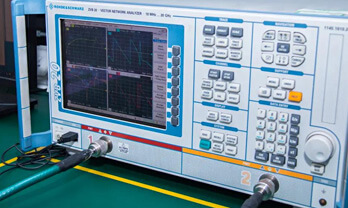
Strict quality inspection builds a solid foundation for electronic component quality.
  1. Visual inspection
  2. Performance testing and reliability verification
  3. Standardized full-process testing
  4. Precise control of every parameter
We eliminate defective components and ensure the stable operation of electronic devices through professional quality standards.

Payment Support

The payment method can be chosen from the methods shown below: Wire Transfer (T/T, Bank Transfer), Western Union, Credit card, PayPal.
  • HKBea
  • Paypal
  • MasterCard
  • Western-Union
  • VISA
Stable Delivery, Sincere Partnership — Your Faithful Supply Chain Partner
  • Efficient Supply Management
  • Cost-Saving Procurement
  • Fast Sourcing & Delivery
Contact us if you have any questions.

Packaging

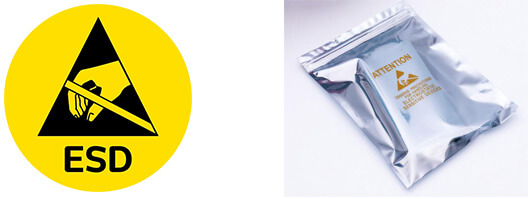
Electrostatic Discharge Protection and Handling

All electrostatic-sensitive components are handled in accordance with electrostatic discharge control procedures. The products are hermetically sealed in anti-static safe packaging to prevent electrostatic damage. Appropriate labeling is also applied for identification and traceability. This ensures product integrity during storage, handling and transportation.


ESD

Certifications & Memberships

Third-party certified, strict quality control. Our certification
  • ISO 9001: 2015
  • ISO 13485: 2016
  • ISO 14001: 2015
  • ISO 28000: 2007
  • ISO 45001: 2018
  • GB/T 27922-2011
  • SMTA
  • IPC
  • ESD
  • PSMA
Espressif Systems

ESP32-C3FN4

Espressif Systems
32D-ESP32-C3FN4

Want a better price? Add to Cart and Submit RFQ now, we'll contact you immediately.

0 RFQ
Shopping cart (0 Items)
It is empty.
Compare List (0 Items)
It is empty.
Feedback

Your feedback matters! At Allelco, we value the user experience and strive to improve it constantly.
Please share your comments with us via our feedback form, and we'll respond promptly.
Thank you for choosing Allelco.

Subject
E-mail
Comments
Captcha
Drag or click to upload file
Upload File
types: .xls, .xlsx, .doc, .docx, .jpg, .png and .pdf.
Max file size: 10MB