View All

Please refer to the English Version as our Official Version.Return

Europe
France(Français) Germany(Deutsch) Italy(Italia) Russian(русский) Poland(polski) Czech(Čeština) Luxembourg(Lëtzebuergesch) Netherlands(Nederland) Iceland(íslenska) Hungarian(Magyarország) Spain(español) Portugal(Português) Turkey(Türk dili) Bulgaria(Български език) Ukraine(Україна) Greece(Ελλάδα) Israel(עִבְרִית) Sweden(Svenska) Finland(Svenska) Finland(Suomi) Romania(românesc) Moldova(românesc) Slovakia(Slovenská) Denmark(Dansk) Slovenia(Slovenija) Slovenia(Hrvatska) Croatia(Hrvatska) Serbia(Hrvatska) Montenegro(Hrvatska) Bosnia and Herzegovina(Hrvatska) Lithuania(lietuvių) Spain(Português) Switzerland(Deutsch) United Kingdom(English)
Asia/Pacific
Japan(日本語) Korea(한국의) Thailand(ภาษาไทย) Malaysia(Melayu) Singapore(Melayu) Vietnam(Tiếng Việt) Philippines(Pilipino)
Africa, India and Middle East
United Arab Emirates(العربية) Iran(فارسی) Tajikistan(فارسی) India(हिंदी) Madagascar(malaɡasʲ)
South America / Oceania
New Zealand(Maori) Brazil(Português) Angola(Português) Mozambique(Português)
North America
United States(English) Canada(English) Haiti(Ayiti) Mexico(español)
HomeProductsIntegrated Circuits (ICs)Specialized ICsiM4A3-192/96
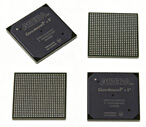
Image may be representation.
See specifications for product details.
EXPRESS OPTION
Payment method

iM4A3-192/96 - Lattice Semiconductor

Manufacturer Part Number
iM4A3-192/96
Manufacturer
Lattice Semiconductor
Allelco Part Number
32D-iM4A3-192/96
Warranty
1 Year Allelco Warranty - Find out more
Stock Status:
13,830 pcs available, New & Original
Parts Description
DAC91001
Data sheet
-
Category
Integrated Circuits (ICs) > Specialized ICs
RoHs Status
Our certification
In stock: 13830

Required fields are indicated by an asterisk (*)
Please send RFQ, we will respond immediately.

Quantity

Specifications

iM4A3-192/96 Tech Specifications
Lattice Semiconductor - iM4A3-192/96 technical specifications, attributes, parameters and parts with similar specifications to Lattice Semiconductor - iM4A3-192/96

Product Attribute Attribute Value
Part Number iM4A3-192/96
Package DAC91001
Description DAC91001
Stock Condition Get 13830 pcs available quantity at Allelco
Payment PayPal / TT / Credit Card / Western Union
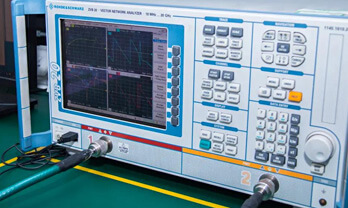
Allelco Certifications ESD / ISO 9001 / ISO 13485 / ISO 28000
Product Attribute Attribute Value
Manufacturer Lattice Semiconductor
RoHs Status -
Warranty 100% Perfect Functions
Transport port Hong Kong
Shipping by DHL / FedEx / UPS / TNT / SF Express
RFQ Email info@allelco.com

Frequently Asked Questions(FAQ)

How does the iM4A3-192/96 from Lattice compare to other FPGA solutions in terms of power efficiency for embedded control applications?
The iM4A3-192/96 is engineered with a low-power architecture that delivers significant energy savings compared to higher-density FPGAs, making it suitable for battery-powered or thermally constrained systems. While it offers 192 macrocells and 96 logic elements, its dynamic power consumption scales efficiently with clock frequency and switching activity, which helps maintain thermal headroom in compact designs. This balance allows designers to avoid over-specifying resources while still achieving reliable timing closure, a common trade-off when selecting mid-range programmable logic.
What are the key considerations when selecting the iM4A3-192/96 for high-speed I/O interfacing in industrial automation systems?
When deploying the iM4A3-192/96 in environments requiring robust I/O performance, engineers must evaluate its transceiver capabilities and I/O standards support. This device includes configurable I/O banks that support LVCMOS and LVDS signaling, enabling reliable communication over longer traces or noisy industrial buses. However, achieving optimal signal integrity often requires careful PCB layout, termination strategies, and adherence to Lattice's recommended operating conditions—especially at frequencies above 100 MHz, where skew and jitter become critical.
Can the iM4A3-192/96 be used in safety-critical applications such as medical devices, and what design practices are required?
While the iM4A3-192/96 itself is not certified under functional safety standards like IEC 61508 or ISO 26262, it can support safety-related designs through proper engineering controls. Designers may implement redundancy, error detection circuits, and watchdog monitoring within the FPGA fabric to meet system-level safety goals. Such implementations demand rigorous verification, including fault injection testing and formal timing analysis, ensuring that single-event upsets or configuration errors do not compromise system integrity.
How does the iM4A3-192/96 handle clock domain crossing (CDC) in asynchronous data pipelines?
The iM4A3-192/96 supports CDC using standard synchronization primitives available in its programmable logic fabric. However, given its moderate resource count and absence of dedicated hard IP blocks like PLLs or MMCMs, external crystal oscillators or reference clocks must be carefully managed. Designers typically employ dual-flip-flop synchronizers or FIFO-based buffers for cross-domain signals, but latency and throughput must be balanced against the 192 macrocell limit—overuse of synchronizer chains can consume significant routing resources and impact maximum achievable frequency.
What are the typical use cases where the iM4A3-192/96 outperforms discrete logic alternatives?
In scenarios requiring glue logic, state machine implementation, or protocol bridging between legacy serial interfaces (e.g., UART, SPI), the iM4A3-192/96 provides greater flexibility and lower total bill of materials than cascaded discrete ICs. For example, implementing a CAN-to-I2C bridge in an automotive gateway node benefits from deterministic timing and reduced component count. Its QFP packaging also simplifies board integration compared to DIP-based solutions, especially in space-constrained enclosures.
How should thermal management be approached when deploying the iM4A3-192/96 in continuous-operation systems?
Although the iM4A3-192/96 operates at commercial temperature ranges and generates minimal heat due to optimized process technology, sustained high toggle rates can increase junction temperature—particularly near the center of a QFP package. Engineers should simulate worst-case power dissipation using IBIS models and ensure adequate airflow or copper pour on adjacent layers. In sealed enclosures, derating clock speeds or disabling unused logic regions can prevent thermal throttling and maintain long-term reliability.
Is the iM4A3-192/96 compatible with third-party development tools such as Vivado or Quartus Prime?
No, the iM4A3-192/96 is not supported by Xilinx Vivado or Intel Quartus Prime; it is designed exclusively for Lattice’s proprietary toolchain, Diamond or Radiant. These platforms provide optimized synthesis, place-and-route algorithms, and IP integration tailored to Lattice’s architecture. Migrating designs across vendor ecosystems would require complete redesign and re-verification, emphasizing the importance of early tool selection during system planning.
What level of ESD protection does the iM4A3-192/96 offer, and how does this affect handling during manufacturing?
The iM4A3-192/96 incorporates internal ESD protection diodes on all input/output pins, rated to HBM (Human Body Model) levels typical for industrial-grade components—usually Class 2 (>2 kV). Nevertheless, assembly processes such as automated pick-and-place or manual probing should follow JEDEC guidelines to avoid latch-up or gate oxide degradation. Ground straps and ESD-safe workstations remain essential, particularly when programming or debugging populated boards.
How does the iM4A3-192/96 compare to similar macrocell-based FPGAs in terms of reconfigurability and partial reconfiguration support?
Unlike modern SoC FPGAs that support partial reconfiguration via dedicated infrastructure, the iM4A3-192/96 relies on full-system reconfiguration using JTAG or SPI flash boot methods. This means any logic update requires a complete FPGA reset and reload, limiting dynamic functionality changes. Consequently, it is less suited for adaptive systems needing runtime behavior modification, though it remains viable for static control logic deployments.
Are there known limitations in routing congestion when implementing dense combinatorial logic in the iM4A3-192/96?
Yes, due to its moderate pin count and QFP packaging, the iM4A3-192/96 can experience routing bottlenecks when implementing wide datapaths or high-fanout signals. Global interconnect resources are shared across all logic tiles, so designs with many synchronous resets or large multiplexers may require hierarchical partitioning or pipelining to meet timing constraints. Floorplanning in the synthesis phase often mitigates this by grouping related logic into localized clusters.
What programming interface options are available for the iM4A3-192/96, and how do they impact system security?
The iM4A3-192/96 supports JTAG (IEEE 1149.1) and SPI-based configuration via external flash memory. While JTAG enables field updates and debugging, it also poses a potential attack vector if unsecured. Implementing secure boot mechanisms—such as encrypted firmware loading and signature verification—requires additional cryptographic IP blocks, which exceed the scope of this mid-density device. Therefore, security-sensitive applications should consider pairing it with an external microcontroller for authentication duties.
How does the iM4A3-192/96 perform in mixed-signal environments where analog and digital sections coexist?
Since the iM4A3-192/96 contains only digital programmable logic, coexistence with analog circuits depends on physical separation and grounding strategy. Cross-talk can occur if high-speed digital nets run parallel to sensitive analog traces, leading to noise coupling. Best practices include using guard rings, differential signaling, and placing decoupling capacitors near power pins to stabilize supply rails—factors validated in Lattice’s reference designs for sensor interface applications.
What is the expected lifespan and failure rate characteristics of the iM4A3-192/96 under normal operating conditions?
As a mature industrial-grade part, the iM4A3-192/96 exhibits high long-term reliability with MTBF exceeding 1 million hours under typical stress conditions. However, unlike antifuse-based FPGAs, its SRAM configuration cells are susceptible to single-event effects (SEEs) in radiation-prone environments. For aerospace or automotive applications, hardening techniques such as scrubbing, triple modular redundancy, or shielding may be necessary to maintain data integrity over decades of operation.
How does the iM4A3-192/96 compare to CPLDs from competitors like Microchip (formerly Atmel) in terms of sequential logic capacity?
Compared to contemporary CPLDs such as Microchip’s SAM4C series, the iM4A3-192/96 offers more granular logic partitioning and better support for synchronous state machines due to its finer-grained architecture. However, CPLDs often provide higher I/O counts per logic cell and faster startup times. The choice hinges on whether the application prioritizes density (favoring the iM4A3-192/96) or simplicity and deterministic delays (leaning toward traditional CPLD families).
What impact does configuration memory type have on the iM4A3-192/96’s non-volatile retention and power-loss recovery?
The iM4A3-192/96 uses volatile SRAM for configuration storage, meaning it loses state upon power-down and requires external flash to reload on boot. This introduces brief startup latency but enables reprogrammability. In contrast, antifuse-based FPGAs retain configuration indefinitely without external memory. Systems requiring instant-on capability or operating in power-loss scenarios must account for this dependency unless supplemented with supercapacitors or backup batteries.
Can the iM4A3-192/96 drive LED arrays directly, and what current sourcing/sinking limits apply?
The iM4A3-192/96 can source or sink approximately 8–12 mA per I/O pin depending on voltage level and operating temperature, which is sufficient for driving small indicator LEDs. However, for higher-current LED bars or displays, external MOSFETs or driver ICs are recommended to avoid exceeding absolute maximum ratings. Designers should also consider forward voltage drops and duty cycle when multiplexing arrays to prevent overheating of individual pins.
How does the iM4A3-192/96 support time-sensitive networking (TSN) protocols in Ethernet-enabled control systems?
Native TSN support is limited in the iM4A3-192/96 due to lack of hardware timestamping units and specialized MAC/PHY integration. Instead, TSN-like determinism can be approximated using software-based scheduling within soft processors or dedicated state machines, though precision suffers compared to ASICs or hardened TSN-capable FPGAs. For sub-microsecond jitter requirements, this approach is generally insufficient, pushing designers toward higher-end alternatives.
What documentation and reference designs accompany the iM4A3-192/96 to accelerate evaluation and prototyping?
Lattice provides detailed datasheets, IBIS models, HDL examples (Verilog/VHDL), and schematics for starter kits featuring the iM4A3-192/96. Application notes cover common tasks such as clock generation, GPIO expansion, and serial communication. These resources help reduce time-to-market but assume familiarity with Lattice’s tool flow and IP library structure—engineers unfamiliar with their ecosystem may face a steeper learning curve initially.

Customer Reviews

Evaluation: 10 Articles

  • ECUb***h
    Sep 22, 2026

    Used for repair of an older automotive ECU. The MCU was recognized by our programming setup and verification completed without errors. The repaired board now starts and communicates normally.

  • RS48***ieldTech
    Sep 16, 2026

    Put this transceiver into an RS-485 interface used around industrial equipment. Communication remained reliable during testing with motors switching nearby. Good result for the replacement board.

  • Logi***b_Chris
    Sep 8, 2026

    Purchased for a Cyclone III development project. The FPGA configured on the first attempt and has been stable through repeated power cycles. No problems with the I/O we are using.

  • Circ***FixerTom
    Sep 2, 2026

    Used this rectifier in a high-current power supply repair. Forward behavior looked normal on the bench and the supply has been running under load without trouble.

  • Retr***UWorks
    Aug 31, 2026

    Needed the exact ST10F269Z2Q6 for servicing an older control unit. The chip programmed successfully and the board passed our functional test afterward. Much easier than redesigning around a newer MCU.

  • Andr***PCBLab
    Aug 28, 2026

    I needed this ADC for an older data acquisition board. Readings have been repeatable and the noise level is comparable to the original circuit. Happy with the purchase.

  • Leat***O'Keefe
    Aug 20, 2026

    one of my hobbies is skydiving. and when i'm skydiving this works great.

  • Ilen***
    Aug 20, 2026

    This product works considerably well. It secretly improves my basketball by a lot.

  • Indu***ialPower
    Aug 17, 2026

    Installed this IGBT module in a power conversion cabinet. Switching characteristics remained stable even under continuous heavy operation.

  • Nikh***ech
    Aug 13, 2026

    Great low-power MCU for portable equipment. Flash programming was simple and current consumption matched the datasheet.

Write a Review

Your Email address will not be published.

Shipment

Delivery Time

In-stock items can be shipped within 24 hours. Some parts will be arranged for delivery within 1-2 days from the date all items arrive at our warehouse. And Allelco ships order once a day at about 17:00, except Sunday. Once the goods are shipped, the estimated delivery time depends on the shipping methods and Delivery destination. The table below shows are the logistic time for some common countries.

Delivery Cost

  1. Use your express account for shipment if you have one.
  2. Use our account for the shipment. Refer to the table below for the approximate charges.
(Different time frame / countries / package size has different price.)

Delivery Method

  1. Global Common Shipment by DHL / UPS / FedEx / TNT / EMS / SF we support.
  2. Others more shipping ways, please get in touch with your customer manager.

Common Countries Logistic Time Reference
Region Country Logistic Time(Day)
America United States 5
Brazil 7
Europe Germany 5
United Kingdom 4
Italy 5
Oceania Australia 6
New Zealand 5
Asia India 4
Japan 4
Middle East Israel 6
DHL & FedEx Shipment Charges Reference
Shipment charges(KG) Reference DHL(USD$)
0.00kg-1.00kg USD$30.00 - USD$60.00
1.00kg-2.00kg USD$40.00 - USD$80.00
2.00kg-3.00kg USD$50.00 - USD$100.00
Note:
The above table is for reference only. There may have some data bias for the uncontrollable factors.
Contact us if you have any questions.
  • QC (Quality Warranty)
  • Payment Support
  • Packaging
  • Certifications & Memberships

QC (Quality Warranty)

Allelco is committed to exceeding customer expectations through customer service excellence, order accuracy, and on-time delivery.
This is achieved through our commitment to the continual improvement of our processes, services, and products.


Strict quality inspection builds a solid foundation for electronic component quality.
  1. Visual inspection
  2. Performance testing and reliability verification
  3. Standardized full-process testing
  4. Precise control of every parameter
We eliminate defective components and ensure the stable operation of electronic devices through professional quality standards.

Payment Support

The payment method can be chosen from the methods shown below: Wire Transfer (T/T, Bank Transfer), Western Union, Credit card, PayPal.
  • HKBea
  • Paypal
  • MasterCard
  • Western-Union
  • VISA
Stable Delivery, Sincere Partnership — Your Faithful Supply Chain Partner
  • Efficient Supply Management
  • Cost-Saving Procurement
  • Fast Sourcing & Delivery
Contact us if you have any questions.

Packaging

Electrostatic Discharge Protection and Handling

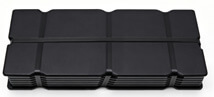
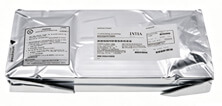
All electrostatic-sensitive components are handled in accordance with electrostatic discharge control procedures. The products are hermetically sealed in anti-static safe packaging to prevent electrostatic damage. Appropriate labeling is also applied for identification and traceability. This ensures product integrity during storage, handling and transportation.


ESD

Certifications & Memberships

Third-party certified, strict quality control. Our certification
  • ISO 9001: 2015
  • ISO 13485: 2016
  • ISO 14001: 2015
  • ISO 28000: 2007
  • ISO 45001: 2018
  • GB/T 27922-2011
  • SMTA
  • IPC
  • ESD
  • PSMA
Lattice Semiconductor

iM4A3-192/96

Lattice Semiconductor
32D-iM4A3-192/96

Want a better price? Add to Cart and Submit RFQ now, we'll contact you immediately.

0 RFQ
Shopping cart (0 Items)
It is empty.
Compare List (0 Items)
It is empty.
Feedback

Your feedback matters! At Allelco, we value the user experience and strive to improve it constantly.
Please share your comments with us via our feedback form, and we'll respond promptly.
Thank you for choosing Allelco.

Subject
E-mail
Comments
Captcha
Drag or click to upload file
Upload File
types: .xls, .xlsx, .doc, .docx, .jpg, .png and .pdf.
Max file size: 10MB