View All

Please refer to the English Version as our Official Version.Return

Europe
France(Français) Germany(Deutsch) Italy(Italia) Russian(русский) Poland(polski) Czech(Čeština) Luxembourg(Lëtzebuergesch) Netherlands(Nederland) Iceland(íslenska) Hungarian(Magyarország) Spain(español) Portugal(Português) Turkey(Türk dili) Bulgaria(Български език) Ukraine(Україна) Greece(Ελλάδα) Israel(עִבְרִית) Sweden(Svenska) Finland(Svenska) Finland(Suomi) Romania(românesc) Moldova(românesc) Slovakia(Slovenská) Denmark(Dansk) Slovenia(Slovenija) Slovenia(Hrvatska) Croatia(Hrvatska) Serbia(Hrvatska) Montenegro(Hrvatska) Bosnia and Herzegovina(Hrvatska) Lithuania(lietuvių) Spain(Português) Switzerland(Deutsch) United Kingdom(English)
Asia/Pacific
Japan(日本語) Korea(한국의) Thailand(ภาษาไทย) Malaysia(Melayu) Singapore(Melayu) Vietnam(Tiếng Việt) Philippines(Pilipino)
Africa, India and Middle East
United Arab Emirates(العربية) Iran(فارسی) Tajikistan(فارسی) India(हिंदी) Madagascar(malaɡasʲ)
South America / Oceania
New Zealand(Maori) Brazil(Português) Angola(Português) Mozambique(Português)
North America
United States(English) Canada(English) Haiti(Ayiti) Mexico(español)
HomeProductsIntegrated Circuits (ICs)Specialized ICsIM4A3-32/10VC-12VI
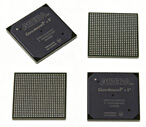
Image may be representation.
See specifications for product details.
EXPRESS OPTION
Payment method

IM4A3-32/10VC-12VI - Lattice Semiconductor

Manufacturer Part Number
IM4A3-32/10VC-12VI
Manufacturer
Lattice Semiconductor
Allelco Part Number
32D-IM4A3-32/10VC-12VI
Warranty
1 Year Allelco Warranty - Find out more
Stock Status:
15,230 pcs available, New & Original
Parts Description
DAC91001
Data sheet
-
Category
Integrated Circuits (ICs) > Specialized ICs
RoHs Status
Our certification
In stock: 15230

Required fields are indicated by an asterisk (*)
Please send RFQ, we will respond immediately.

Quantity

Specifications

IM4A3-32/10VC-12VI Tech Specifications
Lattice Semiconductor - IM4A3-32/10VC-12VI technical specifications, attributes, parameters and parts with similar specifications to Lattice Semiconductor - IM4A3-32/10VC-12VI

Product Attribute Attribute Value
Part Number IM4A3-32/10VC-12VI
Package DAC91001
Description DAC91001
Stock Condition Get 15230 pcs available quantity at Allelco
Payment PayPal / TT / Credit Card / Western Union
Allelco Certifications ESD / ISO 9001 / ISO 13485 / ISO 28000
Product Attribute Attribute Value
Manufacturer Lattice Semiconductor
RoHs Status -
Warranty 100% Perfect Functions
Transport port Hong Kong
Shipping by DHL / FedEx / UPS / TNT / SF Express
RFQ Email info@allelco.com

Frequently Asked Questions(FAQ)

How does the operating temperature range of the IM4A3-32/10VC-12VI affect system reliability in automotive-grade applications?
The IM4A3-32/10VC-12VI operates across a broad industrial temperature span, which is critical for environments experiencing thermal cycling typical in automotive systems. This extended range reduces the need for additional thermal management circuitry, simplifying enclosure design and lowering component count. In high-reliability deployments, maintaining signal integrity under such conditions minimizes failure modes related to semiconductor degradation.
What are the key differences between the IM4A3-32/10VC-12VI and similar FPGA-based solutions in terms of power efficiency and latency?
Unlike general-purpose FPGAs that prioritize flexibility, the IM4A3-32/10VC-12VI offers optimized logic density with lower static power dissipation per logic element. For control-plane functions requiring deterministic timing, this results in reduced propagation delays compared to larger programmable arrays. While not suitable for complex algorithmic processing, it provides predictable response times ideal for real-time embedded tasks.
Can the IM4A3-32/10VC-12VI be used in battery-powered IoT edge devices, and what factors should influence this decision?
Yes, the low quiescent current and small footprint make it viable for low-duty-cycle applications. However, designers must evaluate wake-up time versus sleep current trade-offs. If the application involves frequent state transitions, the cumulative energy impact may outweigh savings from reduced active power. A full system-level power budget simulation is recommended before final selection.
What considerations apply when integrating the IM4A3-32/10VC-12VI into a mixed-signal PCB layout to minimize electromagnetic interference?
Due to its compact QFP48 package and moderate switching speeds, careful attention must be paid to return path continuity and decoupling placement. Ground planes should remain unbroken beneath the device, and high-speed signals routed adjacent to I/O banks require impedance control. Avoid routing sensitive analog traces near digital outputs to prevent capacitive coupling.
How does the IO bank configuration of the IM4A3-32/10VC-12VI impact signal routing complexity in multi-voltage designs?
The fixed number of configurable voltage domains limits flexible adaptation across multiple supply rails within a single chip. When interfacing components operating at different voltages, level-shifting or separate domain partitioning becomes necessary. This constraint increases routing overhead but can be mitigated through strategic placement and use of internal Schmitt triggers for noise immunity.
Is the IM4A3-32/10VC-12VI suitable for safety-critical applications such as functional safety systems requiring certification?
It is not inherently designed for ISO 26262 or IEC 61508 compliance without additional architectural safeguards. While it supports lockable configuration bits and basic error detection, full fault tolerance requires redundancy, watchdog timers, and external monitoring circuits. Designers should conduct rigorous fault injection testing if deploying in certified environments.
What are the advantages of using the IM4A3-32/10VC-12VI over discrete logic implementations for glue-logic functions?
Integration reduces board space and interconnections while improving signal propagation predictability. Compared to discrete gates, it eliminates skew issues across long traces and simplifies timing closure. However, reusability across product variants may decrease due to non-volatile configuration limitations, potentially increasing NRE costs for custom masks.
How should the IM4A3-32/10VC-12VI be programmed, and what tools are required for development and debugging?
Programming is typically done via a dedicated programming interface using Lattice’s Diamond software or third-party tools supporting IEEE 1532 standards. Debugging often relies on boundary scan (JTAG) for connectivity checks, though internal logic visibility requires specialized hardware probes capable of capturing fast transients. Development kits are recommended to streamline bring-up cycles.
What are the limitations of the IM4A3-32/10VC-12VI when implementing wide parallel data paths such as those found in display controllers?
Its limited pin count and fixed routing architecture impose constraints on simultaneous bidirectional communication. High-bandwidth interfaces exceeding 8-bit width may require external buffers or segmentation across multiple clock cycles. Timing closure becomes challenging due to fixed interconnect delays, necessitating detailed place-and-route analysis during synthesis.
How does the IM4A3-32/10VC-12VI compare to microcontrollers in handling interrupt-driven tasks with tight response requirements?
Unlike microcontrollers with dedicated cores, the IM4A3-32/10VC-12VI executes logic synchronously with the clock edge, ensuring deterministic interrupt latency. This avoids variable execution times caused by pipeline stalls or cache misses. However, complex state machines still require careful coding to avoid race conditions in asynchronous input scenarios.
Are there any known errata or silicon revisions affecting the IM4A3-32/10VC-12VI that could impact long-term deployment?
Users should consult the latest version of the datasheet and errata sheet available from Lattice’s support portal. Certain early revisions exhibited minor glitches in specific I/O configurations under rapid voltage transitions; these have been addressed in subsequent mask sets. Always verify part markings and firmware compatibility before mass production.
What role does the internal oscillator play in the IM4A3-32/10VC-12VI, and how accurate is it for time-sensitive protocols like SPI or UART?
The integrated oscillator provides a stable reference for internal timing but lacks the precision required for precise baud rate generation without external calibration. For UART communications, an external crystal is strongly advised to maintain bit timing accuracy across temperature variations. Internal RC sources introduce drift that exceeds acceptable margins for most serial protocols.
Can the IM4A3-32/10VC-12VI support dynamic partial reconfiguration during runtime?
No, the architecture does not support partial reconfiguration while the device remains powered. Full reprogramming via JTAG or SPI is required to modify logic content. This limitation affects adaptive systems needing runtime adaptability but simplifies verification and test procedures.
What precautions should be taken when powering up the IM4A3-32/10VC-12VI to prevent latch-up or ESD damage?
Ensure all supply rails ramp simultaneously within specified rise times to avoid forward-biasing parasitic diodes. Implement ESD protection diodes at every pin if exposed to human handling. Avoid exceeding absolute maximum ratings during hot-swapping; use controlled sequencing circuits if plugging occurs during operation.
How does the IM4A3-32/10VC-12VI handle clock domain crossing (CDC) for signals transitioning between asynchronous domains?
It provides basic synchronizer cells for single-bit signals but lacks advanced CDC FIFO structures. Designers must implement explicit two-flop synchronizers or handshaking protocols for safe crossing. Multi-bit transfers demand extra caution due to potential metastability hazards unless properly constrained during synthesis.
What is the expected lifetime and failure rate model for the IM4A3-32/10VC-12VI under continuous operation at elevated temperatures?
Failure rates follow Arrhenius models based on junction temperature. At 105°C ambient, projected FIT rates align with industrial-grade expectations. Long-term reliability depends more on package stress and solder joint integrity than intrinsic semiconductor wear. Accelerated life testing should confirm solder fatigue resistance in target mechanical environments.

Customer Reviews

Evaluation: 10 Articles

  • ECUb***h
    Sep 22, 2026

    Used for repair of an older automotive ECU. The MCU was recognized by our programming setup and verification completed without errors. The repaired board now starts and communicates normally.

  • RS48***ieldTech
    Sep 16, 2026

    Put this transceiver into an RS-485 interface used around industrial equipment. Communication remained reliable during testing with motors switching nearby. Good result for the replacement board.

  • Logi***b_Chris
    Sep 8, 2026

    Purchased for a Cyclone III development project. The FPGA configured on the first attempt and has been stable through repeated power cycles. No problems with the I/O we are using.

  • Circ***FixerTom
    Sep 2, 2026

    Used this rectifier in a high-current power supply repair. Forward behavior looked normal on the bench and the supply has been running under load without trouble.

  • Retr***UWorks
    Aug 31, 2026

    Needed the exact ST10F269Z2Q6 for servicing an older control unit. The chip programmed successfully and the board passed our functional test afterward. Much easier than redesigning around a newer MCU.

  • Andr***PCBLab
    Aug 28, 2026

    I needed this ADC for an older data acquisition board. Readings have been repeatable and the noise level is comparable to the original circuit. Happy with the purchase.

  • Leat***O'Keefe
    Aug 20, 2026

    one of my hobbies is skydiving. and when i'm skydiving this works great.

  • Ilen***
    Aug 20, 2026

    This product works considerably well. It secretly improves my basketball by a lot.

  • Indu***ialPower
    Aug 17, 2026

    Installed this IGBT module in a power conversion cabinet. Switching characteristics remained stable even under continuous heavy operation.

  • Nikh***ech
    Aug 13, 2026

    Great low-power MCU for portable equipment. Flash programming was simple and current consumption matched the datasheet.

Write a Review

Your Email address will not be published.

Shipment

Delivery Time

In-stock items can be shipped within 24 hours. Some parts will be arranged for delivery within 1-2 days from the date all items arrive at our warehouse. And Allelco ships order once a day at about 17:00, except Sunday. Once the goods are shipped, the estimated delivery time depends on the shipping methods and Delivery destination. The table below shows are the logistic time for some common countries.

Delivery Cost

  1. Use your express account for shipment if you have one.
  2. Use our account for the shipment. Refer to the table below for the approximate charges.
(Different time frame / countries / package size has different price.)

Delivery Method

  1. Global Common Shipment by DHL / UPS / FedEx / TNT / EMS / SF we support.
  2. Others more shipping ways, please get in touch with your customer manager.

Common Countries Logistic Time Reference
Region Country Logistic Time(Day)
America United States 5
Brazil 7
Europe Germany 5
United Kingdom 4
Italy 5
Oceania Australia 6
New Zealand 5
Asia India 4
Japan 4
Middle East Israel 6
DHL & FedEx Shipment Charges Reference
Shipment charges(KG) Reference DHL(USD$)
0.00kg-1.00kg USD$30.00 - USD$60.00
1.00kg-2.00kg USD$40.00 - USD$80.00
2.00kg-3.00kg USD$50.00 - USD$100.00
Note:
The above table is for reference only. There may have some data bias for the uncontrollable factors.
Contact us if you have any questions.
  • QC (Quality Warranty)
  • Payment Support
  • Packaging
  • Certifications & Memberships

QC (Quality Warranty)

Allelco is committed to exceeding customer expectations through customer service excellence, order accuracy, and on-time delivery.
This is achieved through our commitment to the continual improvement of our processes, services, and products.


Strict quality inspection builds a solid foundation for electronic component quality.
  1. Visual inspection
  2. Performance testing and reliability verification
  3. Standardized full-process testing
  4. Precise control of every parameter
We eliminate defective components and ensure the stable operation of electronic devices through professional quality standards.

Payment Support

The payment method can be chosen from the methods shown below: Wire Transfer (T/T, Bank Transfer), Western Union, Credit card, PayPal.
  • HKBea
  • Paypal
  • MasterCard
  • Western-Union
  • VISA
Stable Delivery, Sincere Partnership — Your Faithful Supply Chain Partner
  • Efficient Supply Management
  • Cost-Saving Procurement
  • Fast Sourcing & Delivery
Contact us if you have any questions.

Packaging

Electrostatic Discharge Protection and Handling

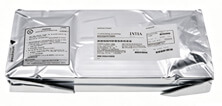
All electrostatic-sensitive components are handled in accordance with electrostatic discharge control procedures. The products are hermetically sealed in anti-static safe packaging to prevent electrostatic damage. Appropriate labeling is also applied for identification and traceability. This ensures product integrity during storage, handling and transportation.


ESD

Certifications & Memberships

Third-party certified, strict quality control. Our certification
  • ISO 9001: 2015
  • ISO 13485: 2016
  • ISO 14001: 2015
  • ISO 28000: 2007
  • ISO 45001: 2018
  • GB/T 27922-2011
  • SMTA
  • IPC
  • ESD
  • PSMA
Lattice Semiconductor

IM4A3-32/10VC-12VI

Lattice Semiconductor
32D-IM4A3-32/10VC-12VI

Want a better price? Add to Cart and Submit RFQ now, we'll contact you immediately.

0 RFQ
Shopping cart (0 Items)
It is empty.
Compare List (0 Items)
It is empty.
Feedback

Your feedback matters! At Allelco, we value the user experience and strive to improve it constantly.
Please share your comments with us via our feedback form, and we'll respond promptly.
Thank you for choosing Allelco.

Subject
E-mail
Comments
Captcha
Drag or click to upload file
Upload File
types: .xls, .xlsx, .doc, .docx, .jpg, .png and .pdf.
Max file size: 10MB