View All

Please refer to the English Version as our Official Version.Return

Europe
France(Français) Germany(Deutsch) Italy(Italia) Russian(русский) Poland(polski) Czech(Čeština) Luxembourg(Lëtzebuergesch) Netherlands(Nederland) Iceland(íslenska) Hungarian(Magyarország) Spain(español) Portugal(Português) Turkey(Türk dili) Bulgaria(Български език) Ukraine(Україна) Greece(Ελλάδα) Israel(עִבְרִית) Sweden(Svenska) Finland(Svenska) Finland(Suomi) Romania(românesc) Moldova(românesc) Slovakia(Slovenská) Denmark(Dansk) Slovenia(Slovenija) Slovenia(Hrvatska) Croatia(Hrvatska) Serbia(Hrvatska) Montenegro(Hrvatska) Bosnia and Herzegovina(Hrvatska) Lithuania(lietuvių) Spain(Português) Switzerland(Deutsch) United Kingdom(English)
Asia/Pacific
Japan(日本語) Korea(한국의) Thailand(ภาษาไทย) Malaysia(Melayu) Singapore(Melayu) Vietnam(Tiếng Việt) Philippines(Pilipino)
Africa, India and Middle East
United Arab Emirates(العربية) Iran(فارسی) Tajikistan(فارسی) India(हिंदी) Madagascar(malaɡasʲ)
South America / Oceania
New Zealand(Maori) Brazil(Português) Angola(Português) Mozambique(Português)
North America
United States(English) Canada(English) Haiti(Ayiti) Mexico(español)
HomeProductsIntegrated Circuits (ICs)Embedded - MicrocontrollersMSP430F2416TPMR
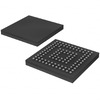
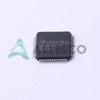
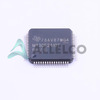
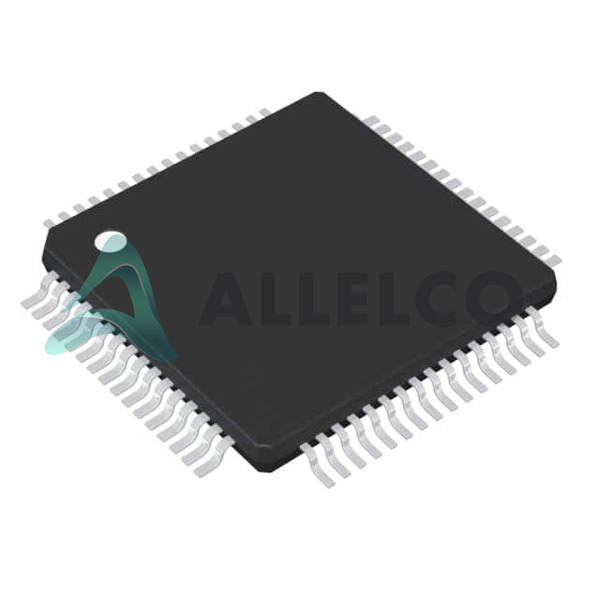
MSP430F2416TPMR Image
Image may be representation.
See specifications for product details.
EXPRESS OPTION
Payment method

MSP430F2416TPMR - Texas Instruments

Manufacturer Part Number
MSP430F2416TPMR
Manufacturer
Texas Instruments
Allelco Part Number
32D-MSP430F2416TPMR
Warranty
1 Year Allelco Warranty - Find out more
Stock Status:
5,501 pcs available, New & Original
Parts Description
IC MCU 16BIT 92KB FLASH 64LQFP
Package
64-LQFP (10x10)
Data sheet
MSP430F2416TPMR.pdf
RoHs Status
ROHS3 Compliant
Our certification
In stock: 5501

Required fields are indicated by an asterisk (*)
Please send RFQ, we will respond immediately.

Quantity

Specifications

MSP430F2416TPMR Tech Specifications
Texas Instruments - MSP430F2416TPMR technical specifications, attributes, parameters and parts with similar specifications to Texas Instruments - MSP430F2416TPMR

Product Attribute Attribute Value
Manufacturer Texas Instruments
Voltage - Supply (Vcc/Vdd) 1.8V ~ 3.6V
Supplier Device Package 64-LQFP (10x10)
Speed 16MHz
Series MSP430F2xx
RAM Size 4K x 8
Program Memory Type FLASH
Program Memory Size 92KB (92K x 8 + 256B)
Peripherals Brown-out Detect/Reset, DMA, POR, PWM, WDT
Package / Case 64-LQFP
Package Tape & Reel (TR)
Product Attribute Attribute Value
Oscillator Type Internal
Operating Temperature -40°C ~ 105°C (TA)
Number of I/O 48
Mounting Type Surface Mount
EEPROM Size -
Data Converters A/D 8x12b
Core Size 16-Bit
Core Processor MSP430 CPU16
Connectivity I²C, IrDA, LINbus, SCI, SPI, UART/USART
Base Product Number MSP430F2416

Environmental & Export Classifications

ATTRIBUTE DESCRIPTION
RoHs Status ROHS3 Compliant
Moisture Sensitivity Level (MSL) 3 (168 Hours)
REACH Status REACH Unaffected
ECCN EAR99
HTSUS 8542.31.0001

Parts Introduction

MSP430F2416TPMR Image
MSP430F2416TPMR (1)

Manufacturer Part Number

MSP430F2416TPMR

Manufacturer

texas-instruments

Introduction

The MSP430F2416TPMR is a 16-bit microcontroller from Texas Instruments embedded within the MSP430F2xx series, designed for low-power and high-performance applications.

Product Features and Performance

Core Processor: MSP430 CPU16

Core Size: 16-Bit

Operating Speed: 16MHz

Connectivity options include I2C, IrDA, LINbus, SCI, SPI, UART/USART

Peripherals include Brown-out Detect/Reset, DMA, POR, PWM, WDT

Number of I/O: 48

Program Memory Size: 92KB (92K x 8 + 256B) FLASH

RAM Size: 4K x 8

Data Converters: A/D 8x12b

Internal Oscillator

Operating Temperature Range: -40°C to +105°C

Product Advantages

High integration reduces system costs and board complexity.

Extensive connectivity options provide flexibility in system design.

Low power consumption enhances battery life in portable applications.

Key Technical Parameters

Supply Voltage Range: 1.8V 3.6V

48 I/O pins

92KB FLASH memory

4KB RAM

8-channel, 12-bit analog-to-digital converter

Quality and Safety Features

Brown-out Detect/Reset protects against voltage drops.

Watchdog Timer (WDT) for system reliability.

Compatibility

Compatible with multiple communication protocols.

Surface Mount 64-LQFP (10x10) package suitable for compact PCB designs.

Application Areas

Consumer Electronics

Industrial Automation

Wireless Sensing

Battery Operated Devices

Product Lifecycle

Status: Active

Long-term availability with no current plans for discontinuation. Replacements or upgrades are available within the MSP430 series.

Several Key Reasons to Choose This Product

High system integration capable of supporting complex digital and analog functionality.

Robust environmental specs allow operation in extreme conditions ranging from -40°C to +105°C.

Multi-protocol communication capability simplifies product design and enhances connectivity.

Enhanced safety features ensure stable and secure operation.

Proven product reliability backed by Texas Instruments' long-standing industry presence.
Frequently Asked Questions(FAQ)

How does the MSP430F2416TPMR compare to other MSP430 family members in terms of memory capacity and peripheral integration for low-power industrial sensor applications?
The MSP430F2416TPMR offers 92KB of FLASH program memory and 4KB of RAM, which positions it above many entry-level MSP430 devices that typically feature 8KB–16KB of memory. This increased code space supports complex sensor fusion algorithms or protocol stacks without requiring external program memory. Its integrated peripherals—including eight 12-bit ADC channels, multiple USART interfaces (supporting UART, SPI, I2C, LIN), and DMA controller—reduce reliance on external components in compact embedded systems. While lower-memory variants like the MSP430G2452 are sufficient for simple state machines, the F2416’s expanded resources make it better suited for applications demanding concurrent data acquisition, communication protocols, and moderate computational load, such as wireless environmental monitoring nodes.
What are the thermal and electrical trade-offs when operating the MSP430F2416TPMR near its maximum junction temperature of 150°C versus typical ambient conditions?
Operating the MSP430F2416TPMR at elevated ambient temperatures—such as near 100°C in industrial environments—requires careful attention to power dissipation due to reduced heat transfer efficiency. Although the microcontroller itself consumes only microamps in LPM3 mode, active execution at 16MHz with all peripherals engaged can generate modest self-heating. At 105°C ambient, derating internal current draw by 20–30% may be necessary to maintain long-term reliability, especially if mounted on densely populated PCBs. The device remains functional across -40°C to +105°C, but performance stability depends on adequate PCB layout for thermal relief and avoiding localized hot spots from adjacent high-current components.
Can the MSP430F2416TPMR reliably interface with 5V logic signals from legacy sensors when powered at 3.3V, and what precautions are recommended?
The MSP430F2416TPMR accepts input voltages up to Vcc + 0.3V on GPIO pins, allowing limited tolerance for brief 5V pulses. However, sustained exposure to 5V levels without level shifting risks latch-up or permanent damage. For robust interfacing with 5V sensor outputs, use Schottky clamping diodes or dedicated level translators. Alternatively, the device’s built-in Schmitt-trigger inputs on most GPIOs help reject noise but do not elevate threshold voltages beyond Vcc. Therefore, while temporary compatibility exists under controlled conditions, full-system designs should incorporate proper voltage translation to ensure longevity and compliance with TI’s recommended operating conditions.
How does the internal oscillator configuration affect system startup time and power consumption during cold boot scenarios?
The MSP430F2416TPMR relies on its calibrated 16MHz DCO (digital-controlled oscillator) as the default clock source after reset. Unlike crystal-based solutions, the DCO provides fast wake-up from low-power modes—typically within tens of microseconds—which is advantageous for battery-powered applications requiring rapid response. However, initial frequency accuracy may require software calibration using the built-in REF module or external reference. In sleep states like LPM3, disabling unused clocks reduces quiescent current to sub-µA levels, but enabling the DCO for quick recovery increases standby consumption slightly compared to using an external low-frequency crystal.
What considerations apply when selecting decoupling capacitors for the MSP430F2416TPMR in a high-noise industrial environment?
The MSP430F2416TPMR operates across a 1.8V to 3.6V supply range and demands stable voltage rails due to its analog subsystems including the 12-bit ADC. A combination of a 0.1 µF ceramic capacitor placed directly at each Vcc/Vss pin pair and a bulk 10 µF tantalum or ceramic capacitor at the power entry point ensures transient suppression. In electrically noisy environments, additional filtering via ferrite beads or π-filters may be warranted, particularly when driving motors or communicating over long traces. Layout must minimize loop area between power planes and capacitors to prevent ground bounce affecting analog performance.
How does the MSP430F2416TPMR handle interrupt latency during deep sleep modes, and what impact does this have on real-time control tasks?
When entering LPM3, the MSP430F2416TPMR disables all clocks except the ACLK, which can run from a low-frequency crystal or RC oscillator. Wake-up latency varies from ~10 cycles (~0.6 µs at 16MHz equivalent) for maskable interrupts to over 20 µs if reconfiguring the DCO. For time-critical tasks, keeping the MCLK active (LPM0) reduces latency but increases power. Applications requiring deterministic response—such as motor control or safety interlocks—should avoid deep sleeps unless energy savings justify the timing uncertainty. The device’s nested vectored interrupt controller ensures minimal overhead once awake.
Is it feasible to upgrade firmware in the field on the MSP430F2416TPMR, and what safeguards exist against corruption during flash programming?
Yes, the MSP430F2416TPMR supports in-circuit serial programming (ICSP) via the SBW interface, enabling field updates through a bootloader or host tool. Flash sectors can be erased and rewritten individually, though full-chip erase takes several seconds. Critical firmware sections should reside in protected segments or use redundancy schemes. The built-in CRC check and watchdog timer help detect incomplete writes, but robust implementations include handshake protocols and backup image storage. Note that flash endurance is rated at 10,000 write cycles per sector, necessitating wear-leveling strategies for frequently updated data.
What differences exist between the MSP430F2416TPMR and the MSP430F2418TPMR regarding ADC resolution and peripheral availability?
Both share identical core specifications, including 16-bit CPU, 92KB FLASH, and 48 GPIOs, but differ in analog front-end capabilities. The MSP430F2416TPMR features eight 12-bit successive approximation register (SAR) ADC channels, whereas the MSP430F2418TPMR offers ten 12-bit channels with an integrated reference voltage generator. This makes the F2418 more suitable for multi-sensor arrays requiring simultaneous sampling. Additionally, the F2418 includes an enhanced UART with automatic baud rate detection, providing flexibility in communication setups. Otherwise, clocking, power modes, and package options remain consistent, making selection dependent on analog channel count and communication needs rather than core processing power.
How does the 64-LQFP package influence thermal management and signal integrity in space-constrained PCB layouts?
The 64-pin LQFP (10x10 mm) package used by the MSP430F2416TPMR provides excellent electrical performance with controlled impedance traces and manageable lead inductance. However, its relatively large footprint compared to QFN packages complicates routing density on compact boards. Thermal vias under the exposed pad improve heat dissipation, but designers must ensure adequate copper pour and avoid placing high-power elements nearby to prevent thermal coupling that could degrade analog performance. Signal integrity is generally favorable due to short trace lengths, but simultaneous switching noise (SSN) from digital lines can affect the shared ground plane, particularly when driving capacitive loads or running high-speed SPI/I2C buses.
What role does the brownout detector play in ensuring reliable operation of the MSP430F2416TPMR in automotive or battery-powered systems?
The integrated brownout detector (BOR) monitors Vcc and triggers a reset if voltage drops below a programmable threshold (typically 1.8V or 2.2V depending on fuse settings). This prevents erratic behavior during power-up transients or sudden load changes common in automotive or portable applications. By ensuring the MCU resets cleanly before executing code, the BOR avoids corrupted program flow that could lead to undefined states. Configurable hysteresis allows tuning sensitivity based on system requirements, balancing false triggers against undervoltage protection—a critical factor when using lithium batteries or experiencing cold-start conditions.

Parts with Similar Specifications

The three parts on the right have similar specifications to Texas Instruments MSP430F2416TPMR

Product Attribute MSP430F2410TPMR MSP430F2416TZCAR MSP430F2416TZQWR MSP430F2417TPN
Part Number MSP430F2410TPMR MSP430F2416TZCAR MSP430F2416TZQWR MSP430F2417TPN
Manufacturer Texas Instruments Texas Instruments Texas Instruments Texas Instruments
RAM Size - - - -
Data Converters - - - -
EEPROM Size - - - -
Speed - - - -
Core Processor - - - -
Number of I/O - - - -
Package / Case - 196-LFBGA 16-DIP (0.300', 7.62mm) 64-VFQFN Exposed Pad
Connectivity - - - -
Mounting Type - Surface Mount Through Hole Surface Mount
Program Memory Size - - - -
Core Size - - - -
Series - - - -
Peripherals - - - -
Voltage - Supply (Vcc/Vdd) - - - -
Program Memory Type - - - -
Oscillator Type - - - -
Package - Tape & Reel (TR) Tube Tape & Reel (TR)
Supplier Device Package - 196-NFBGA (12x12) 16-PDIP 64-VQFN (9x9)
Operating Temperature - -40°C ~ 85°C 0°C ~ 70°C -40°C ~ 85°C
Base Product Number - DAC34H84 MAX500 ADS62P42

MSP430F2416TPMR Datasheet PDF

Download MSP430F2416TPMR pdf datasheets and Texas Instruments documentation for MSP430F2416TPMR - Texas Instruments.

Datasheets
MSP430x2xx User Guide.pdf
HTML Datasheet
MSP430x241x, 261x Datasheet.pdf

Customer Reviews

Evaluation: 10 Articles

  • Dani***alkerTech
    Jun 1, 2026

    Product works, but setup took more effort than expected. Once configured the MCU ran reliably, although documentation support felt older compared with newer platforms. Fine for maintenance projects.

  • Yuki***aka88
    May 26, 2026

    信号通信プロジェクトでこのRS-485トランシーバーを使用しました。設置は簡単で、長距離ケーブルでも通信は安定していました。消費電力も、以前使用していたものより低くなっています。

  • Stev***aker
    May 20, 2026

    Solid diode for power rectification. Works well in switching circuits.

  • Bran***Lewis
    May 11, 2026

    Compact FPGA with good performance. Suitable for basic signal processing tasks.

  • Oliv***arris
    May 7, 2026

    Reliable I/O expander. Works well in embedded control applications.

  • Jess***Jones
    Apr 17, 2026

    It offers good value for the price, and the specifications match the description. I’ve been using it for two days with no issues, and I’ll definitely buy it again if I need it in the future.

  • Mich***Smith
    Apr 17, 2026

    Shipping was on time, the component pins are neatly aligned, and I tested 10 of them with a multimeter—all readings were within the specified range. Highly recommended.

  • Aman***arris
    Apr 3, 2026

    It was great—the entire process, from placing the order to receiving the package, went very smoothly. The components were consistent, the price was fair, and I had a very pleasant shopping experience.

  • Mike***nch
    Apr 3, 2026

    Better than expected! The resistance and capacitance readings were spot-on, and it passed the test on the first try. The service was reliable, and the packaging was thoughtful—I highly recommend it.

  • Daic***K.
    Mar 23, 2026

    Very good. No issue after long time testing.

Write a Review

Your Email address will not be published.

Shipment

Delivery Time

In-stock items can be shipped within 24 hours. Some parts will be arranged for delivery within 1-2 days from the date all items arrive at our warehouse. And Allelco ships order once a day at about 17:00, except Sunday. Once the goods are shipped, the estimated delivery time depends on the shipping methods and Delivery destination. The table below shows are the logistic time for some common countries.

Delivery Cost

  1. Use your express account for shipment if you have one.
  2. Use our account for the shipment. Refer to the table below for the approximate charges.
(Different time frame / countries / package size has different price.)

Delivery Method

  1. Global Common Shipment by DHL / UPS / FedEx / TNT / EMS / SF we support.
  2. Others more shipping ways, please get in touch with your customer manager.

Common Countries Logistic Time Reference
Region Country Logistic Time(Day)
America United States 5
Brazil 7
Europe Germany 5
United Kingdom 4
Italy 5
Oceania Australia 6
New Zealand 5
Asia India 4
Japan 4
Middle East Israel 6
DHL & FedEx Shipment Charges Reference
Shipment charges(KG) Reference DHL(USD$)
0.00kg-1.00kg USD$30.00 - USD$60.00
1.00kg-2.00kg USD$40.00 - USD$80.00
2.00kg-3.00kg USD$50.00 - USD$100.00
Note:
The above table is for reference only. There may have some data bias for the uncontrollable factors.
Contact us if you have any questions.
  • QC (Quality Warranty)
  • Payment Support
  • Packaging
  • Certifications & Memberships

QC (Quality Warranty)

Allelco is committed to exceeding customer expectations through customer service excellence, order accuracy, and on-time delivery.
This is achieved through our commitment to the continual improvement of our processes, services, and products.


Strict quality inspection builds a solid foundation for electronic component quality.
  1. Visual inspection
  2. Performance testing and reliability verification
  3. Standardized full-process testing
  4. Precise control of every parameter
We eliminate defective components and ensure the stable operation of electronic devices through professional quality standards.

Payment Support

The payment method can be chosen from the methods shown below: Wire Transfer (T/T, Bank Transfer), Western Union, Credit card, PayPal.
  • HKBea
  • Paypal
  • MasterCard
  • Western-Union
  • VISA
Stable Delivery, Sincere Partnership — Your Faithful Supply Chain Partner
  • Efficient Supply Management
  • Cost-Saving Procurement
  • Fast Sourcing & Delivery
Contact us if you have any questions.

Packaging

Electrostatic Discharge Protection and Handling

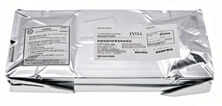
All electrostatic-sensitive components are handled in accordance with electrostatic discharge control procedures. The products are hermetically sealed in anti-static safe packaging to prevent electrostatic damage. Appropriate labeling is also applied for identification and traceability. This ensures product integrity during storage, handling and transportation.


ESD

Certifications & Memberships

Third-party certified, strict quality control. Our certification
  • ISO 9001: 2015
  • ISO 13485: 2016
  • ISO 14001: 2015
  • ISO 28000: 2007
  • ISO 45001: 2018
  • GB/T 27922-2011
  • SMTA
  • IPC
  • ESD
  • PSMA
MSP430F2416TPMR Image

MSP430F2416TPMR

Texas Instruments
32D-MSP430F2416TPMR

Want a better price? Add to Cart and Submit RFQ now, we'll contact you immediately.

0 RFQ
Shopping cart (0 Items)
It is empty.
Compare List (0 Items)
It is empty.
Feedback

Your feedback matters! At Allelco, we value the user experience and strive to improve it constantly.
Please share your comments with us via our feedback form, and we'll respond promptly.
Thank you for choosing Allelco.

Subject
E-mail
Comments
Captcha
Drag or click to upload file
Upload File
types: .xls, .xlsx, .doc, .docx, .jpg, .png and .pdf.
Max file size: 10MB