View All

Please refer to the English Version as our Official Version.Return

Europe
France(Français) Germany(Deutsch) Italy(Italia) Russian(русский) Poland(polski) Czech(Čeština) Luxembourg(Lëtzebuergesch) Netherlands(Nederland) Iceland(íslenska) Hungarian(Magyarország) Spain(español) Portugal(Português) Turkey(Türk dili) Bulgaria(Български език) Ukraine(Україна) Greece(Ελλάδα) Israel(עִבְרִית) Sweden(Svenska) Finland(Svenska) Finland(Suomi) Romania(românesc) Moldova(românesc) Slovakia(Slovenská) Denmark(Dansk) Slovenia(Slovenija) Slovenia(Hrvatska) Croatia(Hrvatska) Serbia(Hrvatska) Montenegro(Hrvatska) Bosnia and Herzegovina(Hrvatska) Lithuania(lietuvių) Spain(Português) Switzerland(Deutsch) United Kingdom(English)
Asia/Pacific
Japan(日本語) Korea(한국의) Thailand(ภาษาไทย) Malaysia(Melayu) Singapore(Melayu) Vietnam(Tiếng Việt) Philippines(Pilipino)
Africa, India and Middle East
United Arab Emirates(العربية) Iran(فارسی) Tajikistan(فارسی) India(हिंदी) Madagascar(malaɡasʲ)
South America / Oceania
New Zealand(Maori) Brazil(Português) Angola(Português) Mozambique(Português)
North America
United States(English) Canada(English) Haiti(Ayiti) Mexico(español)
HomeProductsIntegrated Circuits (ICs)PMIC - Voltage Regulators - DC DC Switching ControllersTPS43335QDAPRQ1
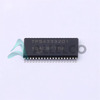
Image may be representation.
See specifications for product details.
EXPRESS OPTION
Payment method

TPS43335QDAPRQ1 - Texas Instruments

Manufacturer Part Number
TPS43335QDAPRQ1
Manufacturer
Texas Instruments
Allelco Part Number
32D-TPS43335QDAPRQ1
Warranty
1 Year Allelco Warranty - Find out more
Stock Status:
8,936 pcs available, New & Original
Parts Description
IC REG CTRLR BUCK/BOOST 38HTSSOP
Package
38-HTSSOP
Data sheet
TPS43335QDAPRQ1.pdf

HTML Datasheet

TPS43335,36-Q1.pdf
RoHs Status
ROHS3 Compliant
Our certification
In stock: 8936

Required fields are indicated by an asterisk (*)
Please send RFQ, we will respond immediately.

Quantity

Specifications

TPS43335QDAPRQ1 Tech Specifications
Texas Instruments - TPS43335QDAPRQ1 technical specifications, attributes, parameters and parts with similar specifications to Texas Instruments - TPS43335QDAPRQ1

Product Attribute Attribute Value
Manufacturer Texas Instruments
Voltage - Supply (Vcc/Vdd) 4V ~ 40V
Topology Buck, Boost
Synchronous Rectifier Yes
Supplier Device Package 38-HTSSOP
Series Automotive, AEC-Q100
Serial Interfaces -
Package / Case 38-PowerTSSOP (0.240", 6.10mm Width)
Package Tape & Reel (TR)
Output Type Transistor Driver
Output Phases 2
Product Attribute Attribute Value
Output Configuration Positive
Operating Temperature -40°C ~ 125°C (TJ)
Number of Outputs 3
Mounting Type Surface Mount
Function Step-Up, Step-Down
Frequency - Switching 150kHz ~ 600kHz
Duty Cycle (Max) 90%, 98.75%
Control Features Enable, Frequency Control, Power Good, Soft Start, Tracking
Clock Sync Yes
Base Product Number TPS43335

Environmental & Export Classifications

ATTRIBUTE DESCRIPTION
RoHs Status ROHS3 Compliant
Moisture Sensitivity Level (MSL) 3 (168 Hours)
REACH Status REACH Unaffected
ECCN EAR99
HTSUS 8542.39.0001

Parts Introduction

Manufacturer Part Number

TPS43335QDAPRQ1

Manufacturer

Texas Instruments

Introduction

The TPS43335QDAPRQ1 is a versatile DC DC Switching Controller designed for power management applications. It is suitable for automotive environments and offers flexibility in creating step-up or step-down voltage configurations.

Product Features and Performance

Functions include Step-Up and Step-Down voltage conversion

Supports both Buck and Boost topologies

Features three outputs and two output phases

Supply voltage range from 4V to 40V

Operates at switching frequencies between 150kHz to 600kHz

Supports up to 98.75% duty cycle for efficient power management

Integrated synchronous rectifier for reduced power dissipation

Clock synchronization capability

Control features: Enable, Frequency Control, Power Good, Soft Start, Tracking

Product Advantages

High flexibility in voltage management

Automatic synchronization for system integration

Robust control features enable precise power management

Suitable for harsh automotive environments

Key Technical Parameters

Voltage Supply (Vcc/Vdd): 4V ~ 40V

Switching Frequency: 150kHz ~ 600kHz

Maximum Duty Cycle: 90%, 98.75%

Operating Temperature: -40°C ~ 125°C (TJ)

Quality and Safety Features

Operates reliably in a broad temperature range (-40°C to 125°C)

AEC-Q100 qualified for automotive applications

Compatibility

Compatible with a wide range of input voltages (4V to 40V)

Seamlessly integrates with automotive voltage systems

Application Areas

Automotive electronic systems

Power management modules

Renewable energy systems

Product Lifecycle

Currently active product status

No indication of nearing discontinuation, ensuring long-term availability

Several Key Reasons to Choose This Product

Flexibility in creating various voltage configurations (step-up or step-down)

Supports precise power control and management in automotive systems

High-efficiency design with synchronous rectification and adjustable switching frequency

Durable and reliable under extreme automotive conditions

Proven safety with AEC-Q100 qualification

Frequently Asked Questions(FAQ)

How does the TPS43335QDAPRQ1 handle input voltage sag conditions during automotive cold-crank events, and what control features ensure stable output regulation under such transients?
The TPS43335QDAPRQ1 supports a wide input voltage range from 4V to 40V, which includes typical automotive cold-crank dips down to 6V or lower for short durations. Its internal soft-start and tracking features allow for controlled ramp-up of output voltage, preventing inrush current surges that could destabilize the system. Additionally, the device’s enable pin can be used with external logic to maintain regulation during extended low-voltage conditions by disabling non-critical loads. The 98.75% maximum duty cycle ensures sufficient headroom to sustain output even when input voltage drops significantly below nominal levels.
What are the key differences between using the TPS43335QDAPRQ1 in boost-only versus buck-boost mode, particularly regarding efficiency and component count when stepping up from a 12V supply to 24V?
In boost operation from 12V to 24V at moderate loads, the TPS43335QDAPRQ1 achieves higher efficiency due to reduced switching losses and inductor core losses compared to buck-boost mode. However, when the input voltage occasionally falls below the output (e.g., during engine start), buck-boost topology becomes necessary, which increases conduction and switching losses by approximately 5–8%. For fixed 12V-to-24V applications without risk of Vin < Vout, a pure boost configuration reduces external components and improves thermal performance, though the controller still supports seamless transition between modes if needed.
Can the TPS43335QDAPRQ1 operate reliably in high-temperature environments above 105°C, and how does its thermal management compare to similar regulators like the LM5122 or LT8390?
Yes, the TPS43335QDAPRQ1 is rated for junction temperatures up to 125°C, making it suitable for harsh automotive environments where ambient temperatures can exceed 105°C. Compared to the LM5122 (up to 150°C) and LT8390 (up to 150°C), all three devices offer robust thermal performance, but the TPS43335’s integrated synchronous rectification and frequency compensation simplify layout and improve stability at elevated temperatures. The HTSSOP package provides adequate thermal dissipation for most applications, though forced airflow or copper planes may be required near full load in sustained high-ambient conditions.
Is the TPS43335QDAPRQ1 compatible with external clock synchronization, and what are the implications for EMI mitigation in multi-rail automotive power systems?
Yes, the TPS43335QDAPRQ1 supports clock synchronization via its dedicated SYNC pin, allowing multiple converters to run on the same frequency to minimize beat frequencies and reduce conducted emissions. This is especially valuable in dense electronic control units (ECUs) where several DC-DC stages share a common ground plane. By synchronizing the switching edges across regulators, peak EMI spikes are spread out over time, easing compliance with CISPR 25 Class 5 requirements. The device accepts an external clock signal between 150kHz and 600kHz, matching its internal oscillator range.
How does the number of output phases (2) on the TPS43335QDAPRQ1 influence current sharing and transient response when driving high-capacitance loads such as Li-ion battery charging circuits?
With two independent output phases, the TPS43335QDAPRQ1 interleaves switching waveforms, reducing input ripple current by up to √2 and improving transient response by distributing load changes across both phases. For a 20A charging application, each phase handles ~10A, allowing smaller inductors and capacitors while maintaining fast recovery during load steps. The internal control loop actively balances phase currents through duty-cycle modulation, minimizing circulating currents that could cause overheating or instability in unbalanced designs.
What protection mechanisms does the TPS43335QDAPRQ1 provide against reverse polarity faults, and how can system designers implement additional safeguards using its fault detection pins?
While the TPS43335QDAPRQ1 does not include built-in reverse polarity protection, its POWER GOOD pin can monitor output status and trigger a microcontroller reset or disable FETs during undervoltage or overcurrent events. Designers can add an external ideal diode or P-channel MOSFET on the input path to block reverse bias. Alternatively, the ENABLE pin allows sequencing logic to power down the converter before applying reverse voltage, protecting both the IC and downstream circuitry. This flexibility supports compliance with ISO 7637-2 pulse tests simulating accidental battery reversal.
When selecting external MOSFETs for the TPS43335QDAPRQ1, what gate drive requirements must be considered to achieve optimal efficiency at light loads, and how does this affect PCB layout complexity?
The TPS43335QDAPRQ1 drives both high-side and low-side MOSFETs with complementary signals optimized for minimal dead time, enhancing efficiency during discontinuous conduction mode (DCM) operation at light loads. To fully exploit this, MOSFETs with low Qg (gate charge) and fast switching characteristics are recommended—typically less than 30nC for 100V devices. Proper PCB layout demands tight gate traces with minimal inductance, star grounding at driver return paths, and decoupling capacitors placed within 5mm of the IC to prevent shoot-through. These measures reduce ringing and switching losses but increase routing constraints in compact automotive modules.
How does the TPS43335QDAPRQ1 support adaptive voltage scaling in advanced driver-assistance systems (ADAS), and what role do its tracking and soft-start features play in dynamic load scenarios?
The TPS43335QDAPRQ1 supports tracking functionality that allows its output to follow another voltage rail during startup, enabling coordinated power sequencing in ADAS processors requiring precise voltage margins. Combined with programmable soft-start (typically 1–10ms), this prevents large inrush currents when multiple subsystems wake simultaneously. During runtime voltage scaling, the device’s frequency control feature enables smooth transitions without output droop, critical for CPUs operating at 0.9V to 1.2V rails. This integration reduces timing risks in safety-critical applications governed by ISO 26262 functional safety standards.
What is the impact of switching frequency selection on magnetics size and EMI performance when using the TPS43335QDAPRQ1 in a 48V-to-12V bidirectional converter for mild-hybrid vehicles?
Operating the TPS43335QDAPRQ1 at higher frequencies (e.g., 500–600kHz) shrinks inductor size and output capacitance but raises core losses and EMI emissions in the 30–100MHz range. For a 48V-to-12V buck configuration, choosing 300kHz balances these trade-offs: inductors remain manageable (~10µH), while conducted emissions stay below CISPR 25 limits with proper filtering. The device’s spread-spectrum capability (if implemented externally) further mitigates peak emissions. Frequency also affects efficiency—lower frequencies reduce switching losses but require larger passive components, impacting cost and board space in volume production.
How does the TPS43335QDAPRQ1 compare to discrete buck-boost solutions in terms of bill-of-materials (BOM) cost and design risk for mass-production automotive applications?
Integrated controllers like the TPS43335QDAPRQ1 reduce BOM cost by eliminating complex compensation networks and reducing component count versus discrete solutions using op-amps and external error amplifiers. While the IC itself carries a premium, savings come from fewer passives, simplified layout, and faster bring-up time. Discrete designs offer customization but introduce higher validation risk, longer debug cycles, and potential yield variation due to analog tuning sensitivity—factors that outweigh benefits in production volumes exceeding 50k units/year for Tier 1 suppliers.
Are there any known limitations in using the TPS43335QDAPRQ1 with ceramic output capacitors in high-current applications, and how should ESR considerations influence capacitor selection?
Ceramic capacitors offer excellent ESL and stability but exhibit very low ESR, which can destabilize voltage-mode control loops unless compensated. The TPS43335QDAPRQ1 relies on traditional voltage feedback and may require a small series resistor (5–20mΩ) in the feedback divider to emulate sufficient ESR for stability margins. At currents above 15A, bulk aluminum electrolytic or polymer capacitors are preferred for bulk energy storage, while ceramics serve only for high-frequency decoupling. Ignoring ESR effects can lead to oscillation or poor line/load regulation despite otherwise ideal components.
What testing procedures are recommended to validate the TPS43335QDAPRQ1’s performance under ISO 16750-2 environmental stress conditions, particularly thermal cycling and voltage surge immunity?
Full validation requires subjecting prototype boards to thermal cycling (-40°C to +125°C), random vibration (per ISO 16750-3), and electrical transients per ISO 7637-2 (e.g., Pulse 1/2a/3a/5). The TPS43335’s AEC-Q100 qualification ensures baseline reliability, but custom designs must verify layout robustness, solder joint integrity, and control-loop stability under repeated thermal stress. Surge testing should include reverse-polarity pulses and load-dump events; the POWER GOOD signal must remain accurate and non-latching to support fail-safe behavior mandated in functional safety architectures.
How does the TPS43335QDAPRQ1’s 38-pin HTSSOP package facilitate thermal performance in densely populated automotive PCBs, and what heatsinking strategies are effective without violating mechanical constraints?
The 38-HTSSOP exposes the thermal pad to the bottom of the package, enabling direct attachment to a solid ground plane or dedicated copper pour acting as a heat spreader. In compact ECUs, this allows passive cooling without airflow, provided the PCB uses thick inner-layer copper (≥2oz) and connects the thermal pad to multiple vias under the IC. Avoiding obstructions in the pad area is critical—no silkscreen or soldermask dam should isolate it. For sustained loads above 10W, adding a small heatsink on the backside may be necessary, but mechanical clearance for connectors and harnesses often limits such additions in production designs.
Can the TPS43335QDAPRQ1 support redundant power paths for mission-critical systems, and how does its dual-phase architecture contribute to fault tolerance?
Yes, the two-phase interleaved output enables inherent redundancy: if one phase fails open, the remaining phase continues operation at reduced capacity without immediate shutdown. This meets partial-failure tolerance requirements in ASIL-B or ASIL-C systems. The controller monitors each phase independently via current sensing resistors, and the POWER GOOD pin deasserts only if both outputs deviate beyond thresholds. Redundancy also improves transient response, as load steps are absorbed by whichever phase has available headroom, delaying thermal derating events.
What precautions should be taken when replacing the TPS43335QDAPRQ1 in legacy automotive designs originally based on older TI PMICs like the TPS54560, especially regarding pin compatibility and compensation network redesign?
Although both use TSSOP packages, the TPS43335QDAPRQ1 lacks dedicated COMP and FB pins in favor of integrated feedback dividers and adaptive compensation—unlike the TPS54560, which requires external error amplifier and compensation components. Direct pin-for-pin replacement is not possible. Designers must reconfigure the feedback network, remove external compensation components, and adjust inductor selection based on higher switching flexibility (150–600kHz). Failure to update the schematic may result in unstable regulation or excessive output ripple, compromising system safety certifications.
How does the TPS43335QDAPRQ1’s support for frequency control enhance compatibility with existing magnetics inventory in automotive power supply overhaul projects?
The adjustable switching frequency (150–600kHz) allows reuse of existing inductors designed for 200–400kHz operation by tuning the frequency slightly outside their saturation curve, avoiding costly redesign. For example, an inductor rated for 350kHz can be driven at 550kHz if core losses remain acceptable—verified through thermal profiling. This agility reduces NRE costs and accelerates time-to-market when retrofitting legacy platforms with new microcontrollers requiring tighter voltage tolerances. However, parasitic elements (PCB trace inductance, MOSFET parasitics) become more significant at higher frequencies, demanding careful layout review.
What documentation and modeling resources are available for the TPS43335QDAPRQ1 to accelerate simulation and bring-up in early-stage automotive power development?
Texas Instruments provides SPICE models (switcherpro.com), reference designs (e.g., TPS43335-Q1EVM), and WEBENCH® tools with pre-layout simulation templates. Application notes AN-2078 and SLVAE54 detail compensation techniques and layout best practices. Additionally, the device datasheet includes detailed timing diagrams and typical application circuits for 12V-to-5V/3.3V and 48V-to-12V configurations. For functional safety compliance, TI offers technical briefs aligning the IC’s features with ISO 26262 requirements, including diagnostic coverage analysis for POWER GOOD and ENABLE monitoring.

Parts with Similar Specifications

The three parts on the right have similar specifications to Texas Instruments TPS43335QDAPRQ1

Product Attribute TPS43330QDAPRQ1 TPS43350QDAPRQ1 TPS43336QDAPRQ1 TPS43337QDAPRQ1
Part Number TPS43330QDAPRQ1 TPS43350QDAPRQ1 TPS43336QDAPRQ1 TPS43337QDAPRQ1
Manufacturer Texas Instruments Texas Instruments Texas Instruments Texas Instruments
Serial Interfaces - - - -
Synchronous Rectifier - - - -
Number of Outputs - - - -
Duty Cycle (Max) - - - -
Clock Sync - - - -
Package / Case - 196-LFBGA 16-DIP (0.300', 7.62mm) 64-VFQFN Exposed Pad
Control Features - - - -
Base Product Number - DAC34H84 MAX500 ADS62P42
Topology - - - -
Operating Temperature - -40°C ~ 85°C 0°C ~ 70°C -40°C ~ 85°C
Package - Tape & Reel (TR) Tube Tape & Reel (TR)
Function - - - -
Output Phases - - - -
Output Configuration - - - -
Series - - - -
Mounting Type - Surface Mount Through Hole Surface Mount
Supplier Device Package - 196-NFBGA (12x12) 16-PDIP 64-VQFN (9x9)
Frequency - Switching - - - -
Output Type - Current - Unbuffered Voltage - Buffered -
Voltage - Supply (Vcc/Vdd) - - - -

TPS43335QDAPRQ1 Datasheet PDF

Download TPS43335QDAPRQ1 pdf datasheets and Texas Instruments documentation for TPS43335QDAPRQ1 - Texas Instruments.

HTML Datasheet
TPS43335,36-Q1.pdf

Customer Reviews

Evaluation: 10 Articles

  • Dani***alkerTech
    Jun 1, 2026

    Product works, but setup took more effort than expected. Once configured the MCU ran reliably, although documentation support felt older compared with newer platforms. Fine for maintenance projects.

  • Yuki***aka88
    May 26, 2026

    信号通信プロジェクトでこのRS-485トランシーバーを使用しました。設置は簡単で、長距離ケーブルでも通信は安定していました。消費電力も、以前使用していたものより低くなっています。

  • Stev***aker
    May 20, 2026

    Solid diode for power rectification. Works well in switching circuits.

  • Bran***Lewis
    May 11, 2026

    Compact FPGA with good performance. Suitable for basic signal processing tasks.

  • Oliv***arris
    May 7, 2026

    Reliable I/O expander. Works well in embedded control applications.

  • Jess***Jones
    Apr 17, 2026

    It offers good value for the price, and the specifications match the description. I’ve been using it for two days with no issues, and I’ll definitely buy it again if I need it in the future.

  • Mich***Smith
    Apr 17, 2026

    Shipping was on time, the component pins are neatly aligned, and I tested 10 of them with a multimeter—all readings were within the specified range. Highly recommended.

  • Aman***arris
    Apr 3, 2026

    It was great—the entire process, from placing the order to receiving the package, went very smoothly. The components were consistent, the price was fair, and I had a very pleasant shopping experience.

  • Mike***nch
    Apr 3, 2026

    Better than expected! The resistance and capacitance readings were spot-on, and it passed the test on the first try. The service was reliable, and the packaging was thoughtful—I highly recommend it.

  • Daic***K.
    Mar 23, 2026

    Very good. No issue after long time testing.

Write a Review

Your Email address will not be published.

Shipment

Delivery Time

In-stock items can be shipped within 24 hours. Some parts will be arranged for delivery within 1-2 days from the date all items arrive at our warehouse. And Allelco ships order once a day at about 17:00, except Sunday. Once the goods are shipped, the estimated delivery time depends on the shipping methods and Delivery destination. The table below shows are the logistic time for some common countries.

Delivery Cost

  1. Use your express account for shipment if you have one.
  2. Use our account for the shipment. Refer to the table below for the approximate charges.
(Different time frame / countries / package size has different price.)

Delivery Method

  1. Global Common Shipment by DHL / UPS / FedEx / TNT / EMS / SF we support.
  2. Others more shipping ways, please get in touch with your customer manager.

Common Countries Logistic Time Reference
Region Country Logistic Time(Day)
America United States 5
Brazil 7
Europe Germany 5
United Kingdom 4
Italy 5
Oceania Australia 6
New Zealand 5
Asia India 4
Japan 4
Middle East Israel 6
DHL & FedEx Shipment Charges Reference
Shipment charges(KG) Reference DHL(USD$)
0.00kg-1.00kg USD$30.00 - USD$60.00
1.00kg-2.00kg USD$40.00 - USD$80.00
2.00kg-3.00kg USD$50.00 - USD$100.00
Note:
The above table is for reference only. There may have some data bias for the uncontrollable factors.
Contact us if you have any questions.
  • QC (Quality Warranty)
  • Payment Support
  • Packaging
  • Certifications & Memberships

QC (Quality Warranty)

Allelco is committed to exceeding customer expectations through customer service excellence, order accuracy, and on-time delivery.
This is achieved through our commitment to the continual improvement of our processes, services, and products.


Strict quality inspection builds a solid foundation for electronic component quality.
  1. Visual inspection
  2. Performance testing and reliability verification
  3. Standardized full-process testing
  4. Precise control of every parameter
We eliminate defective components and ensure the stable operation of electronic devices through professional quality standards.

Payment Support

The payment method can be chosen from the methods shown below: Wire Transfer (T/T, Bank Transfer), Western Union, Credit card, PayPal.
  • HKBea
  • Paypal
  • MasterCard
  • Western-Union
  • VISA
Stable Delivery, Sincere Partnership — Your Faithful Supply Chain Partner
  • Efficient Supply Management
  • Cost-Saving Procurement
  • Fast Sourcing & Delivery
Contact us if you have any questions.

Packaging

Electrostatic Discharge Protection and Handling

All electrostatic-sensitive components are handled in accordance with electrostatic discharge control procedures. The products are hermetically sealed in anti-static safe packaging to prevent electrostatic damage. Appropriate labeling is also applied for identification and traceability. This ensures product integrity during storage, handling and transportation.


ESD

Certifications & Memberships

Third-party certified, strict quality control. Our certification
  • ISO 9001: 2015
  • ISO 13485: 2016
  • ISO 14001: 2015
  • ISO 28000: 2007
  • ISO 45001: 2018
  • GB/T 27922-2011
  • SMTA
  • IPC
  • ESD
  • PSMA
Texas Instruments

TPS43335QDAPRQ1

Texas Instruments
32D-TPS43335QDAPRQ1

Want a better price? Add to Cart and Submit RFQ now, we'll contact you immediately.

0 RFQ
Shopping cart (0 Items)
It is empty.
Compare List (0 Items)
It is empty.
Feedback

Your feedback matters! At Allelco, we value the user experience and strive to improve it constantly.
Please share your comments with us via our feedback form, and we'll respond promptly.
Thank you for choosing Allelco.

Subject
E-mail
Comments
Captcha
Drag or click to upload file
Upload File
types: .xls, .xlsx, .doc, .docx, .jpg, .png and .pdf.
Max file size: 10MB