View All

Please refer to the English Version as our Official Version.Return

Europe
France(Français) Germany(Deutsch) Italy(Italia) Russian(русский) Poland(polski) Czech(Čeština) Luxembourg(Lëtzebuergesch) Netherlands(Nederland) Iceland(íslenska) Hungarian(Magyarország) Spain(español) Portugal(Português) Turkey(Türk dili) Bulgaria(Български език) Ukraine(Україна) Greece(Ελλάδα) Israel(עִבְרִית) Sweden(Svenska) Finland(Svenska) Finland(Suomi) Romania(românesc) Moldova(românesc) Slovakia(Slovenská) Denmark(Dansk) Slovenia(Slovenija) Slovenia(Hrvatska) Croatia(Hrvatska) Serbia(Hrvatska) Montenegro(Hrvatska) Bosnia and Herzegovina(Hrvatska) Lithuania(lietuvių) Spain(Português) Switzerland(Deutsch) United Kingdom(English)
Asia/Pacific
Japan(日本語) Korea(한국의) Thailand(ภาษาไทย) Malaysia(Melayu) Singapore(Melayu) Vietnam(Tiếng Việt) Philippines(Pilipino)
Africa, India and Middle East
United Arab Emirates(العربية) Iran(فارسی) Tajikistan(فارسی) India(हिंदी) Madagascar(malaɡasʲ)
South America / Oceania
New Zealand(Maori) Brazil(Português) Angola(Português) Mozambique(Português)
North America
United States(English) Canada(English) Haiti(Ayiti) Mexico(español)
HomeProductsIntegrated Circuits (ICs)Specialized ICsLM2735YSD/NOPB
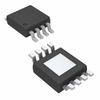
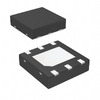
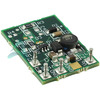
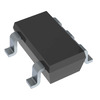
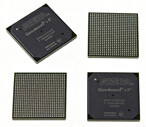
Image may be representation.
See specifications for product details.
EXPRESS OPTION
Payment method

LM2735YSD/NOPB - Texas Instruments

Manufacturer Part Number
LM2735YSD/NOPB
Manufacturer
Texas Instruments
Allelco Part Number
41D-LM2735YSD/NOPB
Warranty
1 Year Allelco Warranty - Find out more
Stock Status:
15,900 pcs available, New & Original
Parts Description
WSON-6(3x3)
Data sheet
-
Category
Integrated Circuits (ICs) > Specialized ICs
RoHs Status
Our certification
In stock: 15900

Required fields are indicated by an asterisk (*)
Please send RFQ, we will respond immediately.

Quantity

Specifications

LM2735YSD/NOPB Tech Specifications
Texas Instruments - LM2735YSD/NOPB technical specifications, attributes, parameters and parts with similar specifications to Texas Instruments - LM2735YSD/NOPB

Product Attribute Attribute Value
Part Number LM2735YSD/NOPB
Package WSON-6(3x3)
Description WSON-6(3x3)
Stock Condition Get 15900 pcs available quantity at Allelco
Payment PayPal / TT / Credit Card / Western Union
Allelco Certifications ESD / ISO 9001 / ISO 13485 / ISO 28000
Product Attribute Attribute Value
Manufacturer Texas Instruments
RoHs Status -
Warranty 100% Perfect Functions
Transport port Hong Kong
Shipping by DHL / FedEx / UPS / TNT / SF Express
RFQ Email info@allelco.com

Parts Introduction

Manufacturer Part Number

LM2735YSD/NOPB

Manufacturer

Texas Instruments

Introduction

The LM2735YSD/NOPB is a high-efficiency, step-up/step-down DC-DC converter capable of providing up to 2.1A of output current. It features an adjustable output voltage range from 3V to 24V, making it suitable for a wide variety of applications.

Product Features and Performance

High efficiency of up to 95%

Wide input voltage range of 2.7V to 5.5V

Adjustable output voltage from 3V to 24V

Maximum output current of 2.1A

Switching frequency of 520kHz

Thermal shutdown and overcurrent protection

Small 6-WDFN package with exposed thermal pad

Product Advantages

Versatile step-up/step-down operation for flexible power supply designs

High efficiency for improved energy savings and thermal management

Wide output voltage range accommodates various system requirements

Compact package size for space-constrained applications

Key Reasons to Choose This Product

Excellent power conversion efficiency for enhanced system performance

Flexible output voltage configuration to match diverse application needs

Robust protection features for reliable and safe operation

Small form factor enables compact power supply designs

Quality and Safety Features

Thermal shutdown protection

Overcurrent protection

RoHS-compliant and lead-free package

Compatibility

The LM2735YSD/NOPB is compatible with a wide range of electronic devices and systems that require a flexible and efficient power supply solution.

Application Areas

Portable electronics

Industrial equipment

Automotive applications

Medical devices

Telecommunications equipment

Product Lifecycle

The LM2735YSD/NOPB is an active product, and there are no plans for discontinuation at this time. Texas Instruments offers several equivalent and alternative models, such as the LM2735-Q1, LM2735-ADJ, and LM2735-ADJ/NOPB, which may be suitable depending on specific application requirements. For more information, please contact our website's sales team.
Frequently Asked Questions(FAQ)

How does the LM2735YSD/NOPB handle thermal management in high-output applications, and what design considerations should be made for sustained operation at 2.1A?
The LM2735YSD/NOPB integrates a thermally enhanced 6-WSON package with an exposed pad to improve heat dissipation during continuous current delivery. At 2.1A switching current, internal power losses increase significantly with duty cycle and output voltage, particularly in boost configurations exceeding 12V. Engineers must ensure adequate PCB copper area connected to the exposed pad—ideally 4x4 mils of 2oz copper per side—to maintain junction temperatures below 100°C under full load. Without sufficient thermal relief, the device may trigger internal thermal shutdown or experience reduced reliability over time.
Can the LM2735YSD/NOPB operate reliably from a lithium-polymer battery that drops as low as 2.7V, and how does its efficiency compare across input voltages?
Yes, the LM2735YSD/NOPB supports input voltages down to 2.7V, making it suitable for single-cell Li-Po batteries in portable devices. Efficiency varies with input-output differential: at 3.6V input delivering 5V/1A, typical efficiency exceeds 88%, but drops to around 78% when boosting from 2.7V to 5V at the same load. This degradation is due to higher conduction and switching losses under deep dimming conditions. For designs requiring maximum runtime from low-voltage sources, minimizing output voltage swing or using dynamic voltage scaling can help preserve efficiency.
What external components are required to configure the LM2735YSD/NOPB as a flyback converter, and how do inductor and diode selections impact stability?
To implement flyback mode, the LM2735YSD/NOPB requires a coupled inductor with appropriate turns ratio, a freewheeling diode (typically Schottky), and feedback resistors for voltage regulation. Unlike isolated topologies, flyback operation demands careful attention to core saturation and leakage inductance. The recommended inductance range is 4.7µH to 22µH, depending on isolation requirements and power level. Diode selection must account for reverse voltage stress up to the reflected output voltage plus input overshoot. Poor choices here can lead to instability, EMI issues, or premature component failure—especially in compact designs where parasitic inductance dominates.
How does the 520kHz switching frequency of the LM2735YSD/NOPB affect PCB layout compared to lower-frequency alternatives?
The 520kHz switching frequency allows smaller passive components than slower regulators but increases sensitivity to layout parasitics. Minimizing loop area between the SW node, inductor, and input capacitor is critical to reduce radiated emissions and switching noise coupling into sensitive analog traces. Ground plane segmentation under the IC should be avoided; instead, a solid return path beneath the exposed pad ensures low impedance. Compared to 200kHz parts, the LM2735YSD/NOPB demands tighter control over trace lengths and via placement to maintain performance and comply with CISPR standards.
In what scenarios would using the LM2735YSD/NOPB in SEPIC mode be preferable over boost or flyback, and what trade-offs arise?
SEPIC topology enables the LM2735YSD/NOPB to regulate output voltage above or below input voltage without polarity inversion—ideal for automotive systems where battery voltage can sag below regulator requirements. However, SEPIC requires two inductors and capacitors, increasing BOM cost and board space. Additionally, efficiency suffers by 5–10% versus pure boost at similar loads due to extra conduction paths. While flyback offers electrical isolation, SEPIC avoids bulky transformers and simplifies safety certification. Thus, SEPIC strikes a balance between flexibility and complexity, though not all applications justify the added components.
What is the impact of enabling/disabling soft-start on startup transients with the LM2735YSD/NOPB, and how should it be tuned for capacitive loads?
The LM2735YSD/NOPB features programmable soft-start that limits inrush current during startup, reducing stress on input supplies and preventing voltage droop. With large output capacitors (>100µF), improper soft-start timing can cause instability or prolonged startup times. Typical soft-start capacitance ranges from 1nF to 10nF, setting ramp time proportional to CS pin charging. For capacitive loads exceeding 220µF, extending soft-start duration helps avoid excessive current draw and ensures clean enable sequencing. Disabling soft-start risks damaging downstream regulators or microcontrollers during hot-plug events.
How does the lack of synchronous rectification in the LM2735YSD/NOPB influence system efficiency in high-current applications, and are there workarounds?
Asynchronous operation means the body diode of the internal MOSFET conducts during off-time, introducing forward voltage drop (~0.3–0.6V) that reduces efficiency at high loads. At 2.1A output, this loss translates to 0.6W–1.3W dissipated in the diode, lowering overall efficiency by 8–12% compared to synchronous counterparts. While external synchronous rectifiers can mitigate this, they add complexity and cost. Instead, designers often accept the penalty in non-critical applications or use higher-efficiency buck-boost ICs when bidirectional conversion is unnecessary.
What precautions should be taken when cascading multiple LM2735YSD/NOPB stages to achieve higher voltages or currents?
Cascading boost stages increases risk of instability, ringing, and cumulative efficiency loss. Each stage introduces propagation delay and feedback lag, potentially causing interaction between control loops. If required, proper isolation via optocouplers or transformer coupling is essential—but this negates the benefit of integrated controllers like the LM2735YSD/NOPB. For multi-stage designs, alternative solutions such as specialized high-voltage converters or modular DC-DC bricks are more reliable. Direct parallel operation without current sharing is not supported and will result in uneven loading and thermal imbalance.
How does the operating temperature range (-40°C to 125°C) affect reliability in industrial environments, and what derating guidelines apply?
The LM2735YSD/NOPB’s extended temperature range suits automotive and industrial use, but long-term reliability depends on derating. Continuous operation near 125°C TJ accelerates electromigration and reduces MTBF. TI recommends limiting average junction temperature to <85°C for mission-critical systems. This implies reducing power dissipation through better heatsinking, lowering switching frequency, or accepting lower output current. Ambient temperatures above 50°C require careful airflow analysis, especially in sealed enclosures where thermal resistance rises rapidly.
Why might the LM2735YSD/NOPB be preferred over the LM2734 for battery-powered devices despite similar topologies?
The LM2735YSD/NOPB offers adjustable output up to 24V and higher switch current (2.1A vs. 1.5A), providing greater flexibility for applications needing wide regulation ranges or higher power. While the LM2734 targets fixed-output designs like white LEDs, the LM2735’s configurability makes it suitable for general-purpose step-up/down conversion. However, the LM2734 consumes less quiescent current (30µA vs. 50µA), which benefits ultra-low-power systems. Thus, choice depends on whether adjustability and peak current outweigh static power savings.
What role does the internal compensation network play in maintaining stability across different loads with the LM2735YSD/NOPB, and when might external compensation be necessary?
The LM2735YSD/NOPB includes internal Type III compensation optimized for standard LC filters in boost and SEPIC modes. It maintains phase margin >45° across most load steps, ensuring stability with common inductor values (e.g., 4.7µH). However, aggressive output filtering, long feedback traces, or exotic magnetics can degrade loop response. In such cases, external compensation using RC networks allows fine-tuning of crossover frequency and damping. This is rare but occasionally needed in noise-sensitive medical equipment or aerospace systems.
How does the Moisture Sensitivity Level (MSL) rating of 1 for the LM2735YSD/NOPB affect manufacturing handling, and what storage protocols apply?
MSL 1 indicates unlimited shelf life under proper storage conditions (dry environment <30°C/<60% RH). No baking or special packaging is required before reflow soldering, simplifying production logistics. Manufacturers can process tape-and-reel units immediately upon unpacking, unlike MSL 3+ parts that demand humidity barriers. However, once opened, the LM2735YSD/NOPB should be used within 168 hours if ambient conditions exceed 26°C/60% RH per J-STD-033. Proper desiccant use in dry packs extends usable window.
What are the implications of the EAR99 classification for global distribution of products containing the LM2735YSD/NOPB, and are there export restrictions?
EAR99 means the LM2735YSD/NOPB is not subject to strict U.S. export controls, allowing unrestricted shipment worldwide for most commercial applications. However, end-use verification may still apply to certain countries under national regulations. Unlike items controlled for military or surveillance use, general electronics incorporating the LM2735YSD/NOPB do not require licenses for transfer to civilian entities in sanctioned regions. Still, importers must comply with local import laws, including RoHS and REACH declarations.
How does the adjustable output feature of the LM2735YSD/NOPB simplify prototyping compared to fixed-voltage variants, and what resistor selection criteria matter?
Using external feedback resistors (RFB and RREF) allows precise tuning of output voltage across 3V to 24V, eliminating the need for custom PCB revisions when changing requirements. Standard 1% metal-film resistors suffice, but tolerance stack-up matters: selecting both resistors from the same batch minimizes drift over temperature. For example, setting VOUT = 1.21 × (RFB/RREF + 1) with RREF = 10kΩ yields accurate results. This flexibility accelerates design iterations and supports multi-voltage platforms without hardware changes.
In what ways does the integrated gate driver improve switching performance in the LM2735YSD/NOPB compared to discrete implementations?
The LM2735YSD/NOPB embeds a dedicated gate driver capable of sourcing/sinking up to 2.1A, enabling fast MOSFET turn-on/off transitions that minimize shoot-through and reduce switching losses. Discrete drivers often suffer from propagation delay mismatch and require additional biasing circuitry, increasing EMI and layout complexity. The integrated solution ensures consistent dead-time control and robust noise immunity, which is crucial at 520kHz where timing margins are tight. This results in cleaner waveforms and improved EMI compliance out-of-the-box.
What testing methodology best validates real-world performance of the LM2735YSD/NOPB before production release?
Comprehensive validation includes bench characterization under worst-case conditions: minimum input voltage (2.7V), maximum output (24V), highest ambient temperature (85°C), and full load transient response. Key metrics include efficiency curves, ripple amplitude, thermal rise (ΔT), and recovery time after load steps. Automated scripts can simulate battery discharge profiles or automotive cold-crank scenarios. Additionally, long-duration burn-in tests (≥100 hours) identify latent defects in power stages and packaging integrity. Only after passing these benchmarks should designs proceed to pilot production.

Customer Reviews

Evaluation: 10 Articles

  • Dani***alkerTech
    Jun 1, 2026

    Product works, but setup took more effort than expected. Once configured the MCU ran reliably, although documentation support felt older compared with newer platforms. Fine for maintenance projects.

  • Yuki***aka88
    May 26, 2026

    信号通信プロジェクトでこのRS-485トランシーバーを使用しました。設置は簡単で、長距離ケーブルでも通信は安定していました。消費電力も、以前使用していたものより低くなっています。

  • Stev***aker
    May 20, 2026

    Solid diode for power rectification. Works well in switching circuits.

  • Bran***Lewis
    May 11, 2026

    Compact FPGA with good performance. Suitable for basic signal processing tasks.

  • Oliv***arris
    May 7, 2026

    Reliable I/O expander. Works well in embedded control applications.

  • Jess***Jones
    Apr 17, 2026

    It offers good value for the price, and the specifications match the description. I’ve been using it for two days with no issues, and I’ll definitely buy it again if I need it in the future.

  • Mich***Smith
    Apr 17, 2026

    Shipping was on time, the component pins are neatly aligned, and I tested 10 of them with a multimeter—all readings were within the specified range. Highly recommended.

  • Aman***arris
    Apr 3, 2026

    It was great—the entire process, from placing the order to receiving the package, went very smoothly. The components were consistent, the price was fair, and I had a very pleasant shopping experience.

  • Mike***nch
    Apr 3, 2026

    Better than expected! The resistance and capacitance readings were spot-on, and it passed the test on the first try. The service was reliable, and the packaging was thoughtful—I highly recommend it.

  • Daic***K.
    Mar 23, 2026

    Very good. No issue after long time testing.

Write a Review

Your Email address will not be published.

Shipment

Delivery Time

In-stock items can be shipped within 24 hours. Some parts will be arranged for delivery within 1-2 days from the date all items arrive at our warehouse. And Allelco ships order once a day at about 17:00, except Sunday. Once the goods are shipped, the estimated delivery time depends on the shipping methods and Delivery destination. The table below shows are the logistic time for some common countries.

Delivery Cost

  1. Use your express account for shipment if you have one.
  2. Use our account for the shipment. Refer to the table below for the approximate charges.
(Different time frame / countries / package size has different price.)

Delivery Method

  1. Global Common Shipment by DHL / UPS / FedEx / TNT / EMS / SF we support.
  2. Others more shipping ways, please get in touch with your customer manager.

Common Countries Logistic Time Reference
Region Country Logistic Time(Day)
America United States 5
Brazil 7
Europe Germany 5
United Kingdom 4
Italy 5
Oceania Australia 6
New Zealand 5
Asia India 4
Japan 4
Middle East Israel 6
DHL & FedEx Shipment Charges Reference
Shipment charges(KG) Reference DHL(USD$)
0.00kg-1.00kg USD$30.00 - USD$60.00
1.00kg-2.00kg USD$40.00 - USD$80.00
2.00kg-3.00kg USD$50.00 - USD$100.00
Note:
The above table is for reference only. There may have some data bias for the uncontrollable factors.
Contact us if you have any questions.
  • QC (Quality Warranty)
  • Payment Support
  • Packaging
  • Certifications & Memberships

QC (Quality Warranty)

Allelco is committed to exceeding customer expectations through customer service excellence, order accuracy, and on-time delivery.
This is achieved through our commitment to the continual improvement of our processes, services, and products.


Strict quality inspection builds a solid foundation for electronic component quality.
  1. Visual inspection
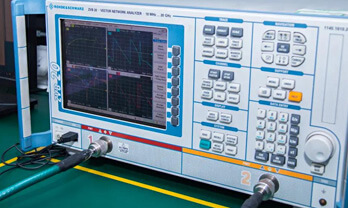
  2. Performance testing and reliability verification
  3. Standardized full-process testing
  4. Precise control of every parameter
We eliminate defective components and ensure the stable operation of electronic devices through professional quality standards.

Payment Support

The payment method can be chosen from the methods shown below: Wire Transfer (T/T, Bank Transfer), Western Union, Credit card, PayPal.
  • HKBea
  • Paypal
  • MasterCard
  • Western-Union
  • VISA
Stable Delivery, Sincere Partnership — Your Faithful Supply Chain Partner
  • Efficient Supply Management
  • Cost-Saving Procurement
  • Fast Sourcing & Delivery
Contact us if you have any questions.

Packaging

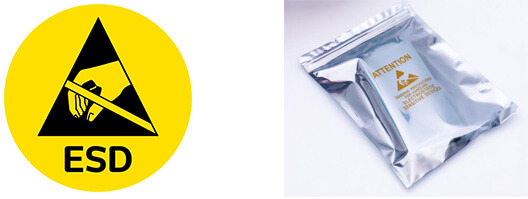
Electrostatic Discharge Protection and Handling

All electrostatic-sensitive components are handled in accordance with electrostatic discharge control procedures. The products are hermetically sealed in anti-static safe packaging to prevent electrostatic damage. Appropriate labeling is also applied for identification and traceability. This ensures product integrity during storage, handling and transportation.


ESD

Certifications & Memberships

Third-party certified, strict quality control. Our certification
  • ISO 9001: 2015
  • ISO 13485: 2016
  • ISO 14001: 2015
  • ISO 28000: 2007
  • ISO 45001: 2018
  • GB/T 27922-2011
  • SMTA
  • IPC
  • ESD
  • PSMA
Texas Instruments

LM2735YSD/NOPB

Texas Instruments
41D-LM2735YSD/NOPB

Want a better price? Add to Cart and Submit RFQ now, we'll contact you immediately.

0 RFQ
Shopping cart (0 Items)
It is empty.
Compare List (0 Items)
It is empty.
Feedback

Your feedback matters! At Allelco, we value the user experience and strive to improve it constantly.
Please share your comments with us via our feedback form, and we'll respond promptly.
Thank you for choosing Allelco.

Subject
E-mail
Comments
Captcha
Drag or click to upload file
Upload File
types: .xls, .xlsx, .doc, .docx, .jpg, .png and .pdf.
Max file size: 10MB