View All

Please refer to the English Version as our Official Version.Return

Europe
France(Français) Germany(Deutsch) Italy(Italia) Russian(русский) Poland(polski) Czech(Čeština) Luxembourg(Lëtzebuergesch) Netherlands(Nederland) Iceland(íslenska) Hungarian(Magyarország) Spain(español) Portugal(Português) Turkey(Türk dili) Bulgaria(Български език) Ukraine(Україна) Greece(Ελλάδα) Israel(עִבְרִית) Sweden(Svenska) Finland(Svenska) Finland(Suomi) Romania(românesc) Moldova(românesc) Slovakia(Slovenská) Denmark(Dansk) Slovenia(Slovenija) Slovenia(Hrvatska) Croatia(Hrvatska) Serbia(Hrvatska) Montenegro(Hrvatska) Bosnia and Herzegovina(Hrvatska) Lithuania(lietuvių) Spain(Português) Switzerland(Deutsch) United Kingdom(English)
Asia/Pacific
Japan(日本語) Korea(한국의) Thailand(ภาษาไทย) Malaysia(Melayu) Singapore(Melayu) Vietnam(Tiếng Việt) Philippines(Pilipino)
Africa, India and Middle East
United Arab Emirates(العربية) Iran(فارسی) Tajikistan(فارسی) India(हिंदी) Madagascar(malaɡasʲ)
South America / Oceania
New Zealand(Maori) Brazil(Português) Angola(Português) Mozambique(Português)
North America
United States(English) Canada(English) Haiti(Ayiti) Mexico(español)
HomeProductsIntegrated Circuits (ICs)Specialized ICsATSAME70Q20A-CFN
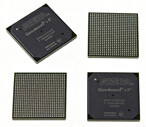
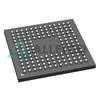
Image may be representation.
See specifications for product details.
EXPRESS OPTION
Payment method

ATSAME70Q20A-CFN - Microchip

Manufacturer Part Number
ATSAME70Q20A-CFN
Manufacturer
Microchip Technology
Allelco Part Number
41D-ATSAME70Q20A-CFN
Warranty
1 Year Allelco Warranty - Find out more
Stock Status:
17,200 pcs available, New & Original
Parts Description
-
Data sheet
-
Category
Integrated Circuits (ICs) > Specialized ICs
RoHs Status
Our certification
In stock: 17200

Required fields are indicated by an asterisk (*)
Please send RFQ, we will respond immediately.

Quantity

Specifications

ATSAME70Q20A-CFN Tech Specifications
Microchip - ATSAME70Q20A-CFN technical specifications, attributes, parameters and parts with similar specifications to Microchip - ATSAME70Q20A-CFN

Product Attribute Attribute Value
Part Number ATSAME70Q20A-CFN
Package -
Description -
Stock Condition Get 17200 pcs available quantity at Allelco
Payment PayPal / TT / Credit Card / Western Union
Allelco Certifications ESD / ISO 9001 / ISO 13485 / ISO 28000
Product Attribute Attribute Value
Manufacturer Microchip Technology
RoHs Status -
Warranty 100% Perfect Functions
Transport port Hong Kong
Shipping by DHL / FedEx / UPS / TNT / SF Express
RFQ Email info@allelco.com

Parts Introduction

Manufacturer Part Number

ATSAME70Q20A-CFN

Manufacturer

microchip-technology

Introduction

The ATSAME70Q20A-CFN is an advanced 32-bit ARM® Cortex®-M7 based microcontroller from Microchip Technology, offering a powerful processing core, extensive connectivity options, and advanced peripherals for a wide range of embedded applications.

Product Features and Performance

ARM® Cortex®-M7 32-bit processor core operating at up to 300 MHz

1MB of FLASH program memory and 384KB of RAM

Comprehensive connectivity options including CAN, Ethernet, I2C, LIN, QSPI, SPI, UART, and USB

Extensive peripheral set including DMA, I2S, PWM, and watchdog timer

High-performance 24x 12-bit ADCs and 2x 12-bit DACs

Wide operating voltage range of 1.62V to 3.6V

Wide operating temperature range of -40°C to +105°C

Product Advantages

Powerful 32-bit ARM Cortex-M7 core for demanding applications

Extensive peripheral set and connectivity options for flexible system design

Low power consumption and wide operating voltage/temperature ranges

Robust design and safety features for reliable operation

Key Reasons to Choose This Product

Exceptional processing performance and peripheral integration for advanced embedded systems

Flexibility to support a wide range of applications with comprehensive connectivity and peripherals

Reliable and robust design for demanding environments

Backed by Microchip's extensive ecosystem and technical support

Quality and Safety Features

Brown-out detection and reset for reliable operation

Power-on reset (POR) for predictable startup behavior

Watchdog timer for reliable system monitoring and recovery

Compatibility

The ATSAME70Q20A-CFN is pin-compatible with other devices in the SAM E70 series, allowing for easy migration and system scalability.

Application Areas

Industrial automation and control systems

Automotive electronics and infotainment

Medical equipment and instrumentation

Robotics and motor control applications

Internet of Things (IoT) devices and gateways

Product Lifecycle

The ATSAME70Q20A-CFN is an active product in our website's sales team's portfolio. There are several equivalent and alternative models available in the SAM E70 series, such as the ATSAME70Q19A, ATSAME70Q21A, and ATSAME70N20A. For the most up-to-date information on product availability and recommended alternatives, please contact our website's sales team.
Frequently Asked Questions(FAQ)

What are the key differences between the ATSAME70Q20A-CFN and other SAM E70 series microcontrollers when selecting a processor for a real-time industrial control system requiring deterministic response?
The ATSAME70Q20A-CFN features an ARM Cortex-M7 core running at 300MHz, providing significantly higher processing throughput compared to lower-speed variants in the same family. This enables faster execution of complex control algorithms while maintaining deterministic behavior through hardware-based peripherals such as DMA and dedicated PWM modules. Its 1MB flash memory supports larger firmware with runtime updates, which is critical for systems requiring field-programmable functionality without hardware replacement. In contrast to lower-end models like the ATSAME70N20, this variant offers enhanced peripheral integration including CAN-FD, Ethernet MAC, and dual-channel ADC, reducing host CPU overhead. These attributes make it particularly suitable for applications where both computational intensity and real-time responsiveness are non-negotiable.
How does the supply voltage range of 1.62V to 3.6V in the ATSAME70Q20A-CFN influence power management strategies in battery-powered embedded designs?
The wide operating voltage range allows designers to optimize power consumption dynamically based on performance needs. At lower voltages (e.g., 1.8V), the device consumes less static and dynamic power, extending battery life in low-duty-cycle applications. However, clock speed may be throttled due to voltage scaling limitations; despite supporting up to 300MHz at nominal voltages, sustained operation below ~2.4V typically requires reduced frequency to meet timing margins. Designers must balance energy efficiency against required computational throughput. Additionally, brown-out detection integrated into the MCU ensures safe transitions across voltage thresholds, preventing erratic behavior during battery discharge—a crucial feature for reliable deployment in remote or portable devices.
Can the ATSAME70Q20A-CFN support multiple communication protocols simultaneously without bus contention or arbitration overhead?
Yes, the ATSAME70Q20A-CFN includes native interfaces for USB 2.0 OTG, Ethernet MAC, SPI, UART/USART, I2C, QSPI, and CANbus, all supported by hardware-level arbitration and DMA channels. The ARM Cortex-M7’s nested vector interrupt controller (NVIC) prioritizes interrupts from these peripherals, minimizing latency in multi-protocol environments. For example, data can flow from an SD card via MMC/SDIO interface directly to RAM using DMA, while USB packets are processed independently by another DMA channel. This architecture eliminates software bottlenecks and prevents bus contention, making it ideal for gateway applications that bridge legacy serial networks (e.g., LINbus) with modern IP-based systems over Ethernet.
What considerations apply when integrating the ATSAME70Q20A-CFN into a high-reliability automotive application subject to ISO 16750-2 standards?
While not qualified under AEC-Q100, the ATSAME70Q20A-CFN operates over an extended temperature range of -40°C to +105°C, aligning with many automotive-grade requirements. Designers should implement external protection circuits such as TVS diodes for ESD immunity and ensure proper PCB layout with short signal return paths to minimize noise coupling. The internal watchdog timer and power-on reset circuitry enhance robustness against transient faults, but additional software diagnostics and error-checking mechanisms are recommended. Since this part is not Digi-Electronics Verified for automotive use, formal qualification testing per ISO 16750-2 (vibration, thermal cycling, surge) must be conducted independently if used in safety-relevant subsystems.
How does the 384KB of RAM in the ATSAME70Q20A-CFN impact real-time operating system (RTOS) selection and task scheduling complexity?
With 384KB of SRAM available, the ATSAME70Q20A-CFN supports RTOSes like FreeRTOS, ThreadX, or Zephyr with moderate task counts and substantial stack allocation. For instance, a typical configuration might reserve 128KB for OS kernel structures, 128KB for application buffers and heaps, and 64KB for interrupt stacks—leaving room for dynamic memory allocation. However, memory-intensive tasks such as image processing or large logging queues may exceed available space unless carefully managed. Using static memory allocation and optimizing ISR duration further reduces RAM pressure. Compared to smaller RAM variants, this allows richer middleware implementations without resorting to external SDRAM, simplifying board design and improving determinism.
Is the ATSAME70Q20A-CFN suitable for motor control applications requiring precise PWM generation and feedback sampling?
Absolutely. The ATSAME70Q20A-CFN includes advanced PWM modules capable of generating up to six-phase motor control signals with programmable dead times and fault protection. Paired with its 24-channel, 12-bit SAR ADC (with simultaneous sampling capability), it enables closed-loop control at high update rates. For example, three-phase BLDC motor control can be achieved using two ADCs sampling current sensors in parallel while the PWM outputs are synchronized via timer triggers. The ADC’s 12-bit resolution provides sufficient granularity for torque regulation, and the 300MHz CPU ensures timely execution of field-oriented control (FOC) algorithms. This combination eliminates need for external DSP chips, reducing bill of materials and improving system integration.
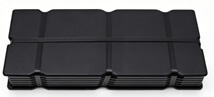
What are the implications of choosing the Tray packaging for the ATSAME70Q20A-CFN in mass production manufacturing lines?
The tray packaging format is standard for surface-mount assembly processes and facilitates automated pick-and-place operations. It ensures consistent handling during high-volume production, reducing risk of damage associated with tape-and-reel alternatives if not needed for reel-fed machinery. Each tray holds 100 units in a JEDEC-compliant pattern compatible with most SMT lines. However, for continuous feed systems, conversion to tape and reel may be necessary depending on OEM equipment capabilities. The MSL 3 rating (168-hour floor life) mandates storage under controlled humidity conditions post-opening to prevent solder joint defects during reflow.
How does the absence of external memory interfaces affect system design when using the ATSAME70Q20A-CFN compared to processors with EBI?
Unlike some microcontrollers with external bus interfaces (EBI), the ATSAME70Q20A-CFN relies entirely on internal flash (1MB) and RAM (384KB). This simplifies PCB layout by eliminating address/data line routing and chip-select logic, reducing component count and potential failure points. However, it constrains systems requiring more than 1MB of code space or >384KB of volatile memory. For such cases, external NOR flash or SDRAM would still be needed, though not natively supported. Designers must therefore evaluate whether their firmware size and data throughput justify adding external memory components. Given typical embedded firmware densities, the internal resources often suffice for mid-complexity applications.
What role does the internal oscillator play in system reliability for the ATSAME70Q20A-CFN in time-critical applications?
The ATSAME70Q20A-CFN integrates a precision internal RC oscillator calibrated across temperature and voltage, serving as a backup clock source when an external crystal is unavailable. While less accurate than a ±20ppm TCXO (±0.5 seconds/day drift), it ensures basic operation during startup or in environments where external clocks fail. For time-sensitive protocols like CANbus or Ethernet, however, an external high-stability crystal remains strongly recommended. The device supports automatic switching between internal and external clocks, enhancing resilience in harsh conditions. Still, long-term timing accuracy should never rely solely on the internal oscillator for mission-critical synchronization.
Can the ATSAME70Q20A-CFN be used in medical devices requiring EMI compliance and patient isolation?
The ATSAME70Q20A-CFN itself does not provide galvanic isolation nor is it certified for medical use. However, it can serve as the control core in isolated subsystems where analog front-ends and communication ports (e.g., USB-to-isolated-UART) incorporate certified isolation barriers. Its low-voltage digital logic (1.62–3.6V) eases interfacing with optocouplers and digital isolators commonly used in medical instrumentation. Careful PCB grounding and shielding practices must accompany its use. Since it lacks built-in safety certifications (e.g., IEC 60601), full system validation including creepage/clearance, leakage current, and EMI testing is mandatory before deployment.
What trade-offs exist between using the ATSAME70Q20A-CFN versus a FPGA-based solution for high-speed data acquisition?
The ATSAME70Q20A-CFN offers deterministic real-time performance with lower power consumption and simpler development compared to FPGAs, but lacks parallel processing capabilities. It excels at sequential algorithm execution with predictable latency, whereas FPGAs handle custom digital pipelines (e.g., FIR filters, protocol decoding) concurrently. For 12-bit ADC data sampled at 1 MSPS, the MCU’s DMA can transfer samples to RAM without CPU intervention, but complex transformations still require sequential processing. If raw throughput exceeds 10 MSPS or bit manipulation is highly parallelized, a FPGA becomes preferable. Otherwise, the ATSAME70Q20A-CFN provides a cost-effective balance of flexibility and determinism.
How does RoHS3 compliance impact material selection and regulatory documentation for the ATSAME70Q20A-CFN in EU markets?
RoHS3 compliance confirms adherence to Directive 2011/65/EU and amendments, restricting hazardous substances like lead, mercury, and cadmium above specified thresholds. This ensures the ATSAME70Q20A-CFN meets European Union environmental regulations without requiring exemptions. Documentation typically includes a Declaration of Conformity (DoC) stating compliance with RoHS3 and REACH (which this device is unaffected by). Manufacturers benefit from streamlined certification processes and access to public databases for substance declarations. No additional testing is required beyond standard production controls, assuming supply chain traceability is maintained.
What precautions are necessary when soldering the 144-UFBGA package of the ATSAME70Q20A-CFN to avoid yield loss?
The fine-pitch 0.5mm pitch BGA requires precise solder paste printing, accurate alignment, and controlled reflow profiles. Stencil thickness should be 0.12–0.15mm with laser-cut apertures to prevent bridging. Alignment tolerance must be within ±25μm to ensure all pads connect properly. Reflow temperatures must stay below 260°C peak to avoid die stress, while ensuring full wetting. X-ray inspection is strongly advised post-reflow to detect voids or misalignment. Given the small pad size, rework is extremely difficult; thus, first-pass yield depends heavily on process control and fixture accuracy.
Does the ATSAME70Q20A-CFN support secure boot and cryptographic acceleration for IoT edge devices?
Yes, the ATSAME70Q20A-CFN includes a TrustZone-enabled Cortex-M7 core and hardware cryptographic accelerators supporting AES, SHA, and TRNG for secure boot and firmware authentication. Secure boot can verify signed firmware images at startup using asymmetric cryptography, preventing unauthorized code execution. Combined with Flash write protection regions, this mitigates tampering risks in connected devices. The hardware engine offloads encryption tasks from the CPU, preserving real-time performance. This makes the device well-suited for IoT gateways requiring end-to-end security without significant performance penalty.
How does the operating temperature range of -40°C to +105°C influence thermal design in industrial enclosures?
The extended temperature rating permits operation in unregulated environments such as factory floors or outdoor cabinets without active cooling. However, junction temperatures must remain below 125°C to avoid degradation. At 300MHz peak load, typical power dissipation might reach 100mW, resulting in <10°C rise above ambient in a well-designed layout. Thermal vias under the UFBGA package help spread heat to inner layers. In sealed enclosures, cumulative heating from nearby components must be factored in; otherwise, derating the clock speed or adding minimal ventilation may be necessary to maintain margin.
What are the advantages of using the ATSAME70Q20A-CFN over older ARM Cortex-M4-based MCUs in next-generation smart sensors?
Compared to Cortex-M4 parts, the ATSAME70Q20A-CFN delivers approximately 2x the single-threaded performance due to higher clock speed and improved pipeline efficiency. It also adds floating-point unit (FPU) enhancements, DSP instructions, and more advanced memory protection units (MPU), enabling complex sensor fusion algorithms. Additional peripherals like QSPI and dual ADCs allow direct connection to multiple MEMS sensors without external multiplexers. With 114 GPIOs, it supports rich user interfaces and expansion headers, future-proofing designs against evolving sensor suites. These upgrades reduce system-level BOM count and simplify firmware maintenance.
How does the lack of EEPROM impact data retention strategies when using the ATSAME70Q20A-CFN?
Without onboard EEPROM, non-volatile storage must be implemented externally using serial EEPROMs, FRAM, or NAND flash. The ATSAME70Q20A-CFN supports I2C and SPI interfaces ideal for connecting low-power serial memories. Alternatively, portions of the internal flash can be designated for emulation of EEPROM-like storage, though this consumes program memory and risks corruption during power loss. For infrequently updated parameters (e.g., calibration offsets), periodic writes to external FRAM provide fast, byte-addressable access without wear concerns. Designers must weigh endurance, speed, and cost when choosing an external NV solution.
What steps are required to validate timing closure when designing a custom PCB with the ATSAME70Q20A-CFN driving a 100BASE-T1 Ethernet PHY?
Timing validation involves ensuring the RMII or RGMII interface meets setup/hold constraints dictated by the PHY datasheet. The ATSAME70Q20A-CFN’s Ethernet MAC generates precise TX_CLK and RX_CLK signals synchronized to the reference clock. PCB trace lengths for MDIO, MDC, and differential pairs must match within 50ps skew. Signal integrity simulations should account for impedance matching (typically 100Ω differential) and termination. Additionally, the 300MHz CPU must service receive frames within the inter-frame gap; worst-case latency analysis using DMA-assisted packet buffering is essential to prevent overflow. Compliance testing with IEEE 802.3bw is recommended post-layout.

Customer Reviews

Evaluation: 10 Articles

  • Dani***alkerTech
    Jun 1, 2026

    Product works, but setup took more effort than expected. Once configured the MCU ran reliably, although documentation support felt older compared with newer platforms. Fine for maintenance projects.

  • Yuki***aka88
    May 26, 2026

    信号通信プロジェクトでこのRS-485トランシーバーを使用しました。設置は簡単で、長距離ケーブルでも通信は安定していました。消費電力も、以前使用していたものより低くなっています。

  • Stev***aker
    May 20, 2026

    Solid diode for power rectification. Works well in switching circuits.

  • Bran***Lewis
    May 11, 2026

    Compact FPGA with good performance. Suitable for basic signal processing tasks.

  • Oliv***arris
    May 7, 2026

    Reliable I/O expander. Works well in embedded control applications.

  • Jess***Jones
    Apr 17, 2026

    It offers good value for the price, and the specifications match the description. I’ve been using it for two days with no issues, and I’ll definitely buy it again if I need it in the future.

  • Mich***Smith
    Apr 17, 2026

    Shipping was on time, the component pins are neatly aligned, and I tested 10 of them with a multimeter—all readings were within the specified range. Highly recommended.

  • Aman***arris
    Apr 3, 2026

    It was great—the entire process, from placing the order to receiving the package, went very smoothly. The components were consistent, the price was fair, and I had a very pleasant shopping experience.

  • Mike***nch
    Apr 3, 2026

    Better than expected! The resistance and capacitance readings were spot-on, and it passed the test on the first try. The service was reliable, and the packaging was thoughtful—I highly recommend it.

  • Daic***K.
    Mar 23, 2026

    Very good. No issue after long time testing.

Write a Review

Your Email address will not be published.

Shipment

Delivery Time

In-stock items can be shipped within 24 hours. Some parts will be arranged for delivery within 1-2 days from the date all items arrive at our warehouse. And Allelco ships order once a day at about 17:00, except Sunday. Once the goods are shipped, the estimated delivery time depends on the shipping methods and Delivery destination. The table below shows are the logistic time for some common countries.

Delivery Cost

  1. Use your express account for shipment if you have one.
  2. Use our account for the shipment. Refer to the table below for the approximate charges.
(Different time frame / countries / package size has different price.)

Delivery Method

  1. Global Common Shipment by DHL / UPS / FedEx / TNT / EMS / SF we support.
  2. Others more shipping ways, please get in touch with your customer manager.

Common Countries Logistic Time Reference
Region Country Logistic Time(Day)
America United States 5
Brazil 7
Europe Germany 5
United Kingdom 4
Italy 5
Oceania Australia 6
New Zealand 5
Asia India 4
Japan 4
Middle East Israel 6
DHL & FedEx Shipment Charges Reference
Shipment charges(KG) Reference DHL(USD$)
0.00kg-1.00kg USD$30.00 - USD$60.00
1.00kg-2.00kg USD$40.00 - USD$80.00
2.00kg-3.00kg USD$50.00 - USD$100.00
Note:
The above table is for reference only. There may have some data bias for the uncontrollable factors.
Contact us if you have any questions.
  • QC (Quality Warranty)
  • Payment Support
  • Packaging
  • Certifications & Memberships

QC (Quality Warranty)

Allelco is committed to exceeding customer expectations through customer service excellence, order accuracy, and on-time delivery.
This is achieved through our commitment to the continual improvement of our processes, services, and products.


Strict quality inspection builds a solid foundation for electronic component quality.
  1. Visual inspection
  2. Performance testing and reliability verification
  3. Standardized full-process testing
  4. Precise control of every parameter
We eliminate defective components and ensure the stable operation of electronic devices through professional quality standards.

Payment Support

The payment method can be chosen from the methods shown below: Wire Transfer (T/T, Bank Transfer), Western Union, Credit card, PayPal.
  • HKBea
  • Paypal
  • MasterCard
  • Western-Union
  • VISA
Stable Delivery, Sincere Partnership — Your Faithful Supply Chain Partner
  • Efficient Supply Management
  • Cost-Saving Procurement
  • Fast Sourcing & Delivery
Contact us if you have any questions.

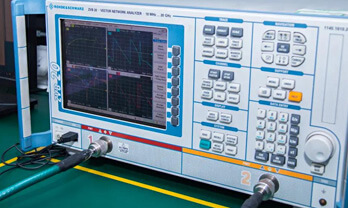
Packaging

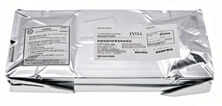
Electrostatic Discharge Protection and Handling

All electrostatic-sensitive components are handled in accordance with electrostatic discharge control procedures. The products are hermetically sealed in anti-static safe packaging to prevent electrostatic damage. Appropriate labeling is also applied for identification and traceability. This ensures product integrity during storage, handling and transportation.


ESD

Certifications & Memberships

Third-party certified, strict quality control. Our certification
  • ISO 9001: 2015
  • ISO 13485: 2016
  • ISO 14001: 2015
  • ISO 28000: 2007
  • ISO 45001: 2018
  • GB/T 27922-2011
  • SMTA
  • IPC
  • ESD
  • PSMA
Microchip

ATSAME70Q20A-CFN

Microchip
41D-ATSAME70Q20A-CFN

Want a better price? Add to Cart and Submit RFQ now, we'll contact you immediately.

0 RFQ
Shopping cart (0 Items)
It is empty.
Compare List (0 Items)
It is empty.
Feedback

Your feedback matters! At Allelco, we value the user experience and strive to improve it constantly.
Please share your comments with us via our feedback form, and we'll respond promptly.
Thank you for choosing Allelco.

Subject
E-mail
Comments
Captcha
Drag or click to upload file
Upload File
types: .xls, .xlsx, .doc, .docx, .jpg, .png and .pdf.
Max file size: 10MB