View All

Please refer to the English Version as our Official Version.Return

Europe
France(Français) Germany(Deutsch) Italy(Italia) Russian(русский) Poland(polski) Czech(Čeština) Luxembourg(Lëtzebuergesch) Netherlands(Nederland) Iceland(íslenska) Hungarian(Magyarország) Spain(español) Portugal(Português) Turkey(Türk dili) Bulgaria(Български език) Ukraine(Україна) Greece(Ελλάδα) Israel(עִבְרִית) Sweden(Svenska) Finland(Svenska) Finland(Suomi) Romania(românesc) Moldova(românesc) Slovakia(Slovenská) Denmark(Dansk) Slovenia(Slovenija) Slovenia(Hrvatska) Croatia(Hrvatska) Serbia(Hrvatska) Montenegro(Hrvatska) Bosnia and Herzegovina(Hrvatska) Lithuania(lietuvių) Spain(Português) Switzerland(Deutsch) United Kingdom(English)
Asia/Pacific
Japan(日本語) Korea(한국의) Thailand(ภาษาไทย) Malaysia(Melayu) Singapore(Melayu) Vietnam(Tiếng Việt) Philippines(Pilipino)
Africa, India and Middle East
United Arab Emirates(العربية) Iran(فارسی) Tajikistan(فارسی) India(हिंदी) Madagascar(malaɡasʲ)
South America / Oceania
New Zealand(Maori) Brazil(Português) Angola(Português) Mozambique(Português)
North America
United States(English) Canada(English) Haiti(Ayiti) Mexico(español)
HomeProductsIntegrated Circuits (ICs)MemoryMT52L1G32D4PG-107 WT:B TR
Image may be representation.
See specifications for product details.
EXPRESS OPTION
Payment method

MT52L1G32D4PG-107 WT:B TR - Micron Technology Inc.

Manufacturer Part Number
MT52L1G32D4PG-107 WT:B TR
Manufacturer
Micron Technology
Allelco Part Number
98D-MT52L1G32D4PG-107 WT:B TR
Warranty
1 Year Allelco Warranty - Find out more
Stock Status:
36,885 pcs available, New & Original
Parts Description
IC DRAM 32GBIT 933MHZ 178FBGA
Package
178-FBGA (12x11.5)
Data sheet
MT52L1G32D4PG-1.pdf
RoHs Status
ROHS3 Compliant
Our certification
In stock: 36885
  • Unit Price: $53.955
  • Subtotal: $0.00

Want a better price?
Add to Cart and Submit RFQ now, we'll contact you immediately.

Quantity Unit Price Ext. Price
1+ $53.955 $53.96
The above prices does not include taxes and freight rates, which will be calculated on the order pages.


Specifications

MT52L1G32D4PG-107 WT:B TR Tech Specifications
Micron Technology Inc. - MT52L1G32D4PG-107 WT:B TR technical specifications, attributes, parameters and parts with similar specifications to Micron Technology Inc. - MT52L1G32D4PG-107 WT:B TR

Product Attribute Attribute Value
Manufacturer Micron Technology
Write Cycle Time - Word, Page -
Voltage - Supply 1.2V
Technology SDRAM - Mobile LPDDR3
Supplier Device Package 178-FBGA (12x11.5)
Series -
Package / Case 178-VFBGA
Package Tape & Reel (TR)
Operating Temperature -30°C ~ 85°C (TC)
Product Attribute Attribute Value
Mounting Type Surface Mount
Memory Type Volatile
Memory Size 32Gbit
Memory Organization 1G x 32
Memory Interface -
Memory Format DRAM
Clock Frequency 933 MHz
Base Product Number MT52L1G32

Environmental & Export Classifications

ATTRIBUTE DESCRIPTION
RoHs Status ROHS3 Compliant
Moisture Sensitivity Level (MSL) 3 (168 Hours)
REACH Status REACH Unaffected
ECCN EAR99
HTSUS 8542.32.0036

Frequently Asked Questions(FAQ)

What are the key performance characteristics of the MT52L1G32D4PG-107 that make it suitable for high-bandwidth mobile applications, and how does its 933 MHz clock frequency compare to other LPDDR3 variants in terms of real-world throughput?
The MT52L1G32D4PG-107 delivers 32 Gbit of memory capacity organized as 1G x 32, enabling efficient data handling in space-constrained systems. With a core frequency of 933 MHz and operating at 1.2V, it achieves a balance between power efficiency and bandwidth, making it ideal for mobile and embedded devices where thermal and energy budgets are tight. Compared to lower-speed LPDDR3 parts, this frequency supports higher peak data rates—typically around 1866 Mbps per pin in double-data-rate mode—resulting in approximately 29.8 GB/s theoretical bandwidth when fully utilized. While newer LPDDR4 or LPDDR5 solutions offer higher frequencies and improved efficiency, the MT52L1G32D4PG-107 remains competitive in applications where backward compatibility and moderate performance suffice.
How should designers evaluate the impact of temperature range (-30°C to 85°C) on stability and reliability when integrating the MT52L1G32D4PG-107 into industrial or automotive-grade systems?
The extended operating temperature range of -30°C to 85°C indicates that the MT52L1G32D4PG-107 is qualified for industrial environments, though not automotive AEC-Q100 grade unless explicitly verified. At cold temperatures near -30°C, signal integrity may degrade due to increased impedance and slower transistor response, potentially affecting timing margins during read/write operations. Conversely, at 85°C, leakage current increases slightly, which can elevate standby power and reduce effective endurance. Designers must ensure proper PCB layout with adequate decoupling capacitance and thermal management to maintain stable operation across extremes. Derating strategies and margining on timing parameters such as tCK and tRCD are advisable in high-temperature corners.
In what scenarios would the MT52L1G32D4PG-107 be preferred over alternative 32 Gb LPDDR3 components, particularly when considering package size and integration complexity?
The MT52L1G32D4PG-107 uses a compact 178-FBGA package (12x11.5 mm), which favors designs requiring dense memory stacking or multi-chip module configurations. Its small form factor reduces footprint compared to larger SO-DIMM or BGA alternatives, making it attractive for handheld devices, thin laptops, or IoT gateways. However, FBGA packages demand precise solder paste printing and reflow profiles to avoid bridging or voids. When comparing against similar-density LPDDR3 chips from other vendors, the MT52L1G32D4PG-107’s consistent interface timing and Micron’s long-term availability history provide an advantage in production scalability. Still, system-level considerations like controller support and trace routing complexity must be weighed against raw density benefits.
What are the implications of the MT52L1G32D4PG-107's Moisture Sensitivity Level (MSL) rating of 3 for manufacturing yield and storage conditions in high-volume production?
An MSL 3 classification means the MT52L1G32D4PG-107 can withstand up to 168 hours of exposure to ambient humidity before baking is required. This aligns with standard JEDEC guidelines for most fine-pitch BGAs and simplifies assembly logistics in typical fab shops. However, prolonged storage beyond 168 hours without desiccant packaging risks moisture absorption, leading to popcorn cracking during reflow. High-volume manufacturers typically implement real-time humidity monitoring and controlled dry rooms to maintain inventory within safe limits. Failure to adhere to MSL protocols can result in costly rework or field returns due to delamination failures.
How does the 1.2V supply voltage of the MT52L1G32D4PG-107 influence power consumption in battery-powered applications, and what design steps are necessary to ensure stable power delivery?
Operating at 1.2V places the MT52L1G32D4PG-107 squarely within the LPDDR3 specification for low-power operation, reducing dynamic and static power draw compared to DDR3L at 1.35V. For a 32 Gb device drawing typical active current around 200–300 mA at full speed, this translates to roughly 0.24–0.36 W under load—significant for always-on systems. Stable power delivery requires careful PDN design: low-ESR bulk capacitors near the VDDQ pins, high-frequency bypass caps within 1–2 mm, and controlled impedance traces to minimize IR drop and noise coupling. Power sequencing must also comply with LPDDR3 requirements to prevent latch-up or undefined states.
Can the MT52L1G32D4PG-107 be used interchangeably with other Micron LPDDR3 parts like the MT53L512M16D4MA-075, and what critical differences should engineers verify before substitution?
No, the MT52L1G32D4PG-107 cannot be directly substituted with the MT53L512M16D4MA-075 due to fundamental architectural differences. The former is a 32 Gb (4GB) device with 1G x 32 organization, while the latter is a 4 Gb (512 MB) part with 256M x 16 configuration. Beyond capacity and bus width mismatches, their timing parameters (e.g., tRCD, tRP, tCL) and command sets differ. Additionally, the MT52L1G32D4PG-107 operates at 933 MHz (1866 MT/s), whereas the MT53L... runs at 750 MHz (1500 MT/s). Substitution would require complete memory controller reconfiguration and likely board redesign, including trace length matching and termination adjustments.
What role does error correction play in the context of the MT52L1G32D4PG-107, and why is ECC not inherently built into standard LPDDR3 implementations?
The MT52L1G32D4PG-107 is a conventional volatile DRAM without integrated ECC logic. Standard LPDDR3 memory ICs like this omit on-die parity or SECDED capabilities because ECC adds latency, complexity, and cost—factors unacceptable for consumer mobile devices where area and power are premium. Instead, system-level ECC is implemented in the memory controller or application processor for critical subsystems. In high-reliability environments (e.g., servers), designers often use registered DIMMs with external ECC, but for typical mobile SoCs, error detection relies on retry mechanisms, scrubbing, or watchdog resets rather than real-time correction.
How does the tape and reel packaging format affect procurement and assembly workflows for the MT52L1G32D4PG-107, and what precautions are needed during automated pick-and-place handling?
The Tape & Reel (TR) packaging enables automated high-speed assembly using surface-mount equipment, improving throughput and reducing human handling errors. The MT52L1G32D4PG-107’s FBGA footprint is compatible with standard pick-and-place nozzles and vacuum pickup tools common in SMT lines. However, its fine pitch (likely 0.8 mm ball pitch) demands precise alignment tolerances (±0.05 mm) to avoid misplacement. Feeder setup must account for carrier tape tension and guide rails to prevent tape deformation. Post-placement inspection via AOI or X-ray is strongly recommended due to the risk of hidden solder voids or insufficient wetting in such dense interconnects.
Given its RoHS3 compliance and REACH unaffected status, what environmental regulations does the MT52L1G32D4PG-107 meet, and how might regional compliance affect global product distribution?
The MT52L1G32D4PG-107 complies with EU RoHS3 Directive 2015/863, restricting four hazardous substances (Pb, Hg, Cd, Cr6+) plus four additional phthalates (DEHP, BBP, DBP, DIBP). It is also REACH unaffected, meaning it contains no SVHCs (Substances of Very High Concern) above regulatory thresholds. This ensures market access in the European Union and other regions adopting similar standards (e.g., China RoHS, California Prop 65). However, export to certain jurisdictions may still require additional documentation or labeling. Designers sourcing globally should confirm local importer requirements, especially for consumer electronics sold in regulated markets.
What are the typical applications where the MT52L1G32D4PG-107 demonstrates superior suitability compared to GDDR or DDR4 memory types?
The MT52L1G32D4PG-107 excels in mobile and embedded systems where power efficiency outweighs raw bandwidth needs. Unlike GDDR6—optimized for discrete GPUs with high-throughput frame buffers—or DDR4—designed for desktop/server platforms with higher voltage (1.2V nominal, often 1.35V for DDR4L)—this LPDDR3 variant minimizes energy per accessed byte. It finds strong adoption in smartphones, tablets, set-top boxes, and industrial tablets where thermal envelope and battery life dominate design criteria. While DDR4 offers higher densities and speeds, it consumes more power and lacks the low-voltage advantages critical for always-connected portable devices.
How should system architects assess the trade-offs between using multiple smaller LPDDR3 chips versus a single high-density part like the MT52L1G32D4PG-107 in terms of cost, power, and routing complexity?
Using a single MT52L1G32D4PG-107 reduces BOM count, simplifies PCB layout, and lowers interconnect loss compared to paralleling four 8Gb LPDDR3 devices. Fewer chips mean less variation in process parameters, improving yield predictability. However, monolithic designs face challenges in yield loss if one die fails—entire stack unusable—whereas modular approaches allow partial failure isolation. Routing becomes simpler with fewer vias and shorter nets, reducing crosstalk and skew. Power distribution scales linearly with chip count, so consolidating into one IC generally improves overall efficiency. Ultimately, the choice hinges on target capacity, budget, and reliability tolerance, with high-volume designs favoring integration to minimize assembly steps.
What considerations apply when designing test fixtures or debug interfaces for validating the MT52L1G32D4PG-107 in prototype stages, given its 178-ball FBGA configuration?
Debugging the MT52L1G32D4PG-107 requires specialized test hardware due to its fine-pitch BGA. Bed-of-nails probes or pogo-pin test sockets must match the 178-ball grid precisely, often necessitating custom adapters. Boundary-scan (JTAG) may assist in initial bring-up but cannot access internal DRAM arrays. Logic analyzers or protocol sniffers help verify command sequences and timing adherence. Thermal profiling during functional tests is essential, as elevated junction temperatures can mask timing violations. Additionally, power integrity measurements using oscilloscopes with differential probes reveal ripple on VDDQ/VPP lines, which could cause intermittent failures masked by nominal lab conditions.
How does the memory organization (1G x 32) of the MT52L1G32D4PG-107 map to actual address decoding, and what implications does this have for row/column addressing and refresh overhead?
The 1G x 32 organization implies 30-bit addressing (2^30 = 1,073,741,824 rows) across 32 independent data lanes. Each row contains 1G bits, equivalent to 128 million bytes per row. In LPDDR3, banks are typically 8 or 16 deep; assuming 8 banks, each bank holds ~134 million rows. Refresh operations scale with row count, so higher-density devices like this incur greater background refresh traffic, increasing average power even during idle periods. Designers must balance refresh interval settings against data retention requirements, especially at elevated temperatures. Excessive refresh can starve foreground tasks, while inadequate refresh risks data corruption—particularly problematic in always-on edge nodes.
What are the risks associated with long-term supply continuity for the MT52L1G32D4PG-107, and how do base product numbers (e.g., MT52L1G32) aid in lifecycle planning?
While Micron maintains robust supply chains, shifting semiconductor demand and technology transitions pose risks for legacy parts. The MT52L1G32D4PG-107’s base number MT52L1G32 signals it belongs to a family sharing core architecture, facilitating migration paths. Engineers should monitor Micron’s product change notifications and consider qualifying alternate sources early. Using the broader base number helps identify compatible derivatives (e.g., different speed grades or packaging variants) if obsolescence occurs. Strategic buffer stocking and dual-sourcing assessments become prudent for mission-critical applications, though LPDDR3 itself faces displacement by newer standards like LPDDR4/5 in many new designs.
How does the absence of explicit ECC in the MT52L1G32D4PG-107 affect system-level fault tolerance in safety-critical embedded systems, and what mitigation strategies are viable?
Without on-die ECC, transient errors from cosmic rays or voltage spikes can corrupt stored data silently. In safety-critical systems (e.g., medical devices or avionics), this violates functional safety standards like ISO 26262 or IEC 61508. Mitigation includes software-based checksums, periodic memory scrubbing, redundant execution, or watchdog-driven recovery. Alternatively, designers may pair the MT52L1G32D4PG-107 with external ECC memory controllers or adopt fail-safe architectures that detect corruption via application-layer validation. However, these add latency and complexity—trade-offs that may render LPDDR3 unsuitable for highest-integrity applications unless supplemented with additional safeguards.
What role does the 178-VFBGA package play in thermal dissipation for the MT52L1G32D4PG-107, and how might heat spreading techniques improve reliability in compact enclosures?
The 178-VFBGA package features a central thermal pad (if present) and direct die attachment to the substrate, offering better thermal conduction than plastic QFP alternatives. However, limited surface area constrains passive cooling. Effective heat spreading uses thermal vias under the package connected to internal ground planes or outer copper layers, acting as a micro-heat sink. In sealed enclosures, airflow must be managed carefully; stagnant air raises junction temperatures, accelerating electromigration. Designers should simulate thermal profiles under worst-case workloads and consider dynamic throttling or reduced operating frequencies if sustained thermal headroom falls below 10–15°C above ambient.

Parts with Similar Specifications

The three parts on the right have similar specifications to Micron Technology Inc. MT52L1G32D4PG-107 WT:B TR

Product Attribute MT52L1G32D4PG-093 WT:B TR MT52L1G32D4PG-107 WT:B MT52L256M32D1PD-107 WT ES:B TR MT52L256M32D1PD-107 WT:B TR
Part Number MT52L1G32D4PG-093 WT:B TR MT52L1G32D4PG-107 WT:B MT52L256M32D1PD-107 WT ES:B TR MT52L256M32D1PD-107 WT:B TR
Manufacturer Micron Technology Inc. Micron Technology Inc. Micron Technology Inc. Micron Technology Inc.
Operating Temperature - -40°C ~ 85°C 0°C ~ 70°C -40°C ~ 85°C
Memory Organization - - - -
Package / Case - 196-LFBGA 16-DIP (0.300', 7.62mm) 64-VFQFN Exposed Pad
Clock Frequency - - - -
Base Product Number - DAC34H84 MAX500 ADS62P42
Write Cycle Time - Word, Page - - - -
Memory Interface - - - -
Voltage - Supply - - - -
Technology - - - -
Memory Type - - - -
Memory Format - - - -
Mounting Type - Surface Mount Through Hole Surface Mount
Supplier Device Package - 196-NFBGA (12x12) 16-PDIP 64-VQFN (9x9)
Package - Tape & Reel (TR) Tube Tape & Reel (TR)
Series - - - -
Memory Size - - - -

MT52L1G32D4PG-107 WT:B TR Datasheet PDF

Download MT52L1G32D4PG-107 WT:B TR pdf datasheets and Micron Technology Inc. documentation for MT52L1G32D4PG-107 WT:B TR - Micron Technology Inc..

PCN Design/Specification
Cylindrical Battery Holders.pdf
PCN Packaging
Standard Pkg Label Chg 20/Feb/2019.pdf

Customer Reviews

Evaluation: 10 Articles

  • ECUb***h
    Sep 22, 2026

    Used for repair of an older automotive ECU. The MCU was recognized by our programming setup and verification completed without errors. The repaired board now starts and communicates normally.

  • RS48***ieldTech
    Sep 16, 2026

    Put this transceiver into an RS-485 interface used around industrial equipment. Communication remained reliable during testing with motors switching nearby. Good result for the replacement board.

  • Logi***b_Chris
    Sep 8, 2026

    Purchased for a Cyclone III development project. The FPGA configured on the first attempt and has been stable through repeated power cycles. No problems with the I/O we are using.

  • Circ***FixerTom
    Sep 2, 2026

    Used this rectifier in a high-current power supply repair. Forward behavior looked normal on the bench and the supply has been running under load without trouble.

  • Retr***UWorks
    Aug 31, 2026

    Needed the exact ST10F269Z2Q6 for servicing an older control unit. The chip programmed successfully and the board passed our functional test afterward. Much easier than redesigning around a newer MCU.

  • Andr***PCBLab
    Aug 28, 2026

    I needed this ADC for an older data acquisition board. Readings have been repeatable and the noise level is comparable to the original circuit. Happy with the purchase.

  • Leat***O'Keefe
    Aug 20, 2026

    one of my hobbies is skydiving. and when i'm skydiving this works great.

  • Ilen***
    Aug 20, 2026

    This product works considerably well. It secretly improves my basketball by a lot.

  • Indu***ialPower
    Aug 17, 2026

    Installed this IGBT module in a power conversion cabinet. Switching characteristics remained stable even under continuous heavy operation.

  • Nikh***ech
    Aug 13, 2026

    Great low-power MCU for portable equipment. Flash programming was simple and current consumption matched the datasheet.

Write a Review

Your Email address will not be published.

Shipment

Delivery Time

In-stock items can be shipped within 24 hours. Some parts will be arranged for delivery within 1-2 days from the date all items arrive at our warehouse. And Allelco ships order once a day at about 17:00, except Sunday. Once the goods are shipped, the estimated delivery time depends on the shipping methods and Delivery destination. The table below shows are the logistic time for some common countries.

Delivery Cost

  1. Use your express account for shipment if you have one.
  2. Use our account for the shipment. Refer to the table below for the approximate charges.
(Different time frame / countries / package size has different price.)

Delivery Method

  1. Global Common Shipment by DHL / UPS / FedEx / TNT / EMS / SF we support.
  2. Others more shipping ways, please get in touch with your customer manager.

Common Countries Logistic Time Reference
Region Country Logistic Time(Day)
America United States 5
Brazil 7
Europe Germany 5
United Kingdom 4
Italy 5
Oceania Australia 6
New Zealand 5
Asia India 4
Japan 4
Middle East Israel 6
DHL & FedEx Shipment Charges Reference
Shipment charges(KG) Reference DHL(USD$)
0.00kg-1.00kg USD$30.00 - USD$60.00
1.00kg-2.00kg USD$40.00 - USD$80.00
2.00kg-3.00kg USD$50.00 - USD$100.00
Note:
The above table is for reference only. There may have some data bias for the uncontrollable factors.
Contact us if you have any questions.
  • QC (Quality Warranty)
  • Payment Support
  • Packaging
  • Certifications & Memberships

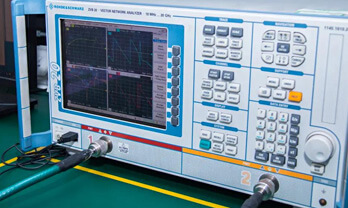
QC (Quality Warranty)

Allelco is committed to exceeding customer expectations through customer service excellence, order accuracy, and on-time delivery.
This is achieved through our commitment to the continual improvement of our processes, services, and products.


Strict quality inspection builds a solid foundation for electronic component quality.
  1. Visual inspection
  2. Performance testing and reliability verification
  3. Standardized full-process testing
  4. Precise control of every parameter
We eliminate defective components and ensure the stable operation of electronic devices through professional quality standards.

Payment Support

The payment method can be chosen from the methods shown below: Wire Transfer (T/T, Bank Transfer), Western Union, Credit card, PayPal.
  • HKBea
  • Paypal
  • MasterCard
  • Western-Union
  • VISA
Stable Delivery, Sincere Partnership — Your Faithful Supply Chain Partner
  • Efficient Supply Management
  • Cost-Saving Procurement
  • Fast Sourcing & Delivery
Contact us if you have any questions.

Packaging

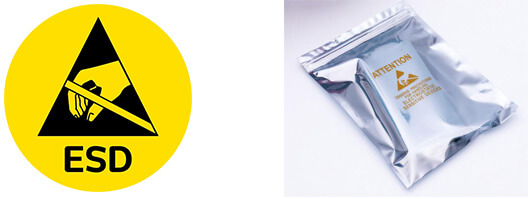
Electrostatic Discharge Protection and Handling

All electrostatic-sensitive components are handled in accordance with electrostatic discharge control procedures. The products are hermetically sealed in anti-static safe packaging to prevent electrostatic damage. Appropriate labeling is also applied for identification and traceability. This ensures product integrity during storage, handling and transportation.


ESD

Certifications & Memberships

Third-party certified, strict quality control. Our certification
  • ISO 9001: 2015
  • ISO 13485: 2016
  • ISO 14001: 2015
  • ISO 28000: 2007
  • ISO 45001: 2018
  • GB/T 27922-2011
  • SMTA
  • IPC
  • ESD
  • PSMA
Micron Technology Inc.

MT52L1G32D4PG-107 WT:B TR

Micron Technology Inc.
98D-MT52L1G32D4PG-107 WT:B TR

Want a better price? Add to Cart and Submit RFQ now, we'll contact you immediately.

0 RFQ
Shopping cart (0 Items)
It is empty.
Compare List (0 Items)
It is empty.
Feedback

Your feedback matters! At Allelco, we value the user experience and strive to improve it constantly.
Please share your comments with us via our feedback form, and we'll respond promptly.
Thank you for choosing Allelco.

Subject
E-mail
Comments
Captcha
Drag or click to upload file
Upload File
types: .xls, .xlsx, .doc, .docx, .jpg, .png and .pdf.
Max file size: 10MB