View All

Please refer to the English Version as our Official Version.Return

Europe
France(Français) Germany(Deutsch) Italy(Italia) Russian(русский) Poland(polski) Czech(Čeština) Luxembourg(Lëtzebuergesch) Netherlands(Nederland) Iceland(íslenska) Hungarian(Magyarország) Spain(español) Portugal(Português) Turkey(Türk dili) Bulgaria(Български език) Ukraine(Україна) Greece(Ελλάδα) Israel(עִבְרִית) Sweden(Svenska) Finland(Svenska) Finland(Suomi) Romania(românesc) Moldova(românesc) Slovakia(Slovenská) Denmark(Dansk) Slovenia(Slovenija) Slovenia(Hrvatska) Croatia(Hrvatska) Serbia(Hrvatska) Montenegro(Hrvatska) Bosnia and Herzegovina(Hrvatska) Lithuania(lietuvių) Spain(Português) Switzerland(Deutsch) United Kingdom(English)
Asia/Pacific
Japan(日本語) Korea(한국의) Thailand(ภาษาไทย) Malaysia(Melayu) Singapore(Melayu) Vietnam(Tiếng Việt) Philippines(Pilipino)
Africa, India and Middle East
United Arab Emirates(العربية) Iran(فارسی) Tajikistan(فارسی) India(हिंदी) Madagascar(malaɡasʲ)
South America / Oceania
New Zealand(Maori) Brazil(Português) Angola(Português) Mozambique(Português)
North America
United States(English) Canada(English) Haiti(Ayiti) Mexico(español)
HomeProductsIntegrated Circuits (ICs)PMIC - Voltage Regulators - DC DC Switching RegulatorsMP2229GQ-Z
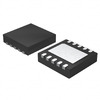
MP2229GQ-Z Image
Image may be representation.
See specifications for product details.
EXPRESS OPTION
Payment method

MP2229GQ-Z - Monolithic Power Systems Inc.

Manufacturer Part Number
MP2229GQ-Z
Manufacturer
Monolithic Power Systems
Allelco Part Number
32D-MP2229GQ-Z
Warranty
1 Year Allelco Warranty - Find out more
Stock Status:
31,877 pcs available, New & Original
Parts Description
IC REG BUCK ADJUSTABLE 6A 14QFN
Package
14-QFN (3x3)
Data sheet
MP2229GQ-Z.pdf
RoHs Status
ROHS3 Compliant
Our certification
In stock: 31877
  • Unit Price: $1.687
  • Subtotal: $0.00

Want a better price?
Add to Cart and Submit RFQ now, we'll contact you immediately.

Quantity Unit Price Ext. Price
1+ $1.687 $1.69
100+ $1.44 $144.00
500+ $1.177 $588.50
1000+ $0.975 $975.00
3000+ $0.914 $2,742.00
The above prices does not include taxes and freight rates, which will be calculated on the order pages.

Specifications

MP2229GQ-Z Tech Specifications
Monolithic Power Systems Inc. - MP2229GQ-Z technical specifications, attributes, parameters and parts with similar specifications to Monolithic Power Systems Inc. - MP2229GQ-Z

Product Attribute Attribute Value
Manufacturer Monolithic Power Systems
Voltage - Output (Min/Fixed) 0.6V
Voltage - Output (Max) 19.95V
Voltage - Input (Min) 4.5V
Voltage - Input (Max) 21V
Topology Buck
Synchronous Rectifier Yes
Supplier Device Package 14-QFN (3x3)
Series -
Package / Case 14-PowerVFQFN
Product Attribute Attribute Value
Package Tape & Reel (TR)
Output Type Adjustable
Output Configuration Positive
Operating Temperature -40°C ~ 125°C (TJ)
Number of Outputs 1
Mounting Type Surface Mount
Function Step-Down
Frequency - Switching 300kHz ~ 1.8MHz
Current - Output 6A
Base Product Number MP2229

Environmental & Export Classifications

ATTRIBUTE DESCRIPTION
RoHs Status ROHS3 Compliant
Moisture Sensitivity Level (MSL) 1 (Unlimited)
REACH Status REACH Unaffected
ECCN EAR99
HTSUS 8542.39.0001

Parts Introduction

MP2229GQ-Z Image
MP2229GQ-Z (1)

Manufacturer Part Number

MP2229GQ-Z

Manufacturer

Monolithic Power Systems

Introduction

MP2229GQ-Z is a high-efficiency, synchronous, step-down, switch-mode converter designed for a variety of applications in power management.

Product Features and Performance

Synchronous Buck Converter Topology

Adjustable Output Voltage

High Efficiency for Power Saving

Integrated MOSFETs for Reduced External Components

Programmable Soft-Start

Thermal Shutdown Protection

Over-Current Protection

Under Voltage Lockout (UVLO)

Frequency Synchronization

Built-in Compensation Network

Product Advantages

Low RDS(on) for improved efficiency

Small 14-QFN footprint for space-constrained applications

Wide 4.5V to 21V Input Voltage Range

Compact Package Suitable for High-Density Designs

Continuous 6A Output Current Capability

MP2229GQ-Z Image
MP2229GQ-Z (2)

Key Technical Parameters

Output Type: Adjustable

Voltage - Input (Min): 4.5V

Voltage - Input (Max): 21V

Voltage - Output (Min/Fixed): 0.6V

Voltage - Output (Max): 19.95V

Current - Output: 6A

Frequency - Switching: 300kHz to 1.8MHz

Number of Outputs: 1

Operating Temperature: -40°C to 125°C

Quality and Safety Features

Over Temperature Protection

Cycle-by-Cycle Over Current Protection

Meets or Exceeds Quality and Safety Industry Standards

Compatibility

Compatible with High-Density PCB Layouts

Suitable for a Wide Range of Input and Output Voltages

Application Areas

Computing Systems

Telecommunications

Networking Equipment

Industrial Controls

Product Lifecycle

Active

Not near discontinuation

Replacement or Upgrade Options Available Upon Request

Several Key Reasons to Choose This Product

High Power Density for Compact Power Design

Versatile for Various Power Regulation Scenarios

Robust Construction for Enhanced Durability

Multi-Feature Integration Saves Additional Component Costs

Highly Customizable Output Parameters for Diverse Use Cases

Reliable Performance Across a Broad Operating Temperature Range

Frequently Asked Questions(FAQ)

How does the MP2229GQ-Z handle thermal performance under continuous 6A load, and what PCB layout considerations are critical to maintain junction temperature below 100°C in a compact design?
The MP2229GQ-Z is designed for high-efficiency operation with integrated synchronous rectification, which reduces conduction losses and improves thermal behavior at full 6A output. Under typical 24V-to-5V conversion with 50% duty cycle, power dissipation can reach approximately 3–4W due to MOSFET resistance and switching losses. To keep the junction temperature below 100°C in a 25°C ambient environment, the thermal resistance from junction to ambient (θJA) must be carefully managed. With the 14-QFN package offering exposed pad thermal enhancement, proper soldering and copper area on the PCB are essential. A minimum of 4×4 thermal vias under the exposed pad connected to inner ground planes significantly lowers effective θJA. Designers should target at least 2 cm² of copper pour per side of the board near the IC, with solder mask defined pads to improve wetting. Without adequate heatsinking, thermal throttling or reliability issues may arise during sustained loads.
Can the MP2229GQ-Z operate reliably in automotive environments, and how do its protection features support functional safety compliance?
Yes, the MP2229GQ-Z operates over an industrial temperature range of -40°C to 125°C (TJ), making it suitable for automotive-grade applications such as infotainment or ADAS power rails, provided the full system meets AEC-Q100 qualification. The device includes comprehensive protection mechanisms including overcurrent protection (OCP), overtemperature shutdown (OTP), and undervoltage lockout (UVLO). The OCP uses hiccup mode recovery, minimizing disruption during short-circuit conditions. The thermal shutdown threshold is typically set around 150°C with hysteresis, ensuring robust recovery under transient thermal stress. These features align with ISO 26262 functional safety requirements when used within a safety-margined design framework, though final certification depends on system-level integration and diagnostics.
What are the trade-offs between using fixed versus adjustable output modes when selecting the MP2229GQ-Z for a 3.3V logic supply in a space-constrained IoT device?
While the MP2229GQ-Z supports adjustable output via external resistors, many engineers prefer fixed-output variants for 3.3V rails to simplify BOM and reduce component count. However, if only the adjustable version is available, using a precision resistor divider from VOUT to AGND with low-temperature-coefficient resistors ensures stable feedback. The key trade-off involves efficiency: adjustable mode introduces minimal overhead compared to fixed, but requires accurate resistor selection to maintain ±1% output accuracy. In contrast, a dedicated 3.3V fixed regulator might offer marginally better transient response due to optimized compensation networks. For the MP2229GQ-Z, the adjustable topology still achieves >85% efficiency at 3.3V/6A, making it viable despite added complexity. Space savings from eliminating a separate LDO post-regulator often outweigh the need for external components.
How does the switching frequency flexibility of the MP2229GQ-Z impact EMI mitigation strategies in a noisy industrial control system?
The MP2229GQ-Z allows synchronization or frequency dithering across 300kHz to 1.8MHz via the FREQ pin, enabling designers to avoid resonant frequencies shared with communication buses like CAN or RS-485. Operating above 700kHz reduces inductor size and improves transient response but increases high-frequency noise. Conversely, lower frequencies ease filter design but require larger magnetics. For EMI-sensitive applications, spreading the spectrum through burst-mode modulation or choosing a center frequency outside common interference bands helps meet CISPR 22 Class B limits. The device’s spread-spectrum capability minimizes peak emissions at specific harmonics. Additionally, placing the inductor away from sensitive analog traces and using shielded ferrites can further suppress conducted emissions without compromising the MP2229GQ-Z’s core functionality.
In comparison to the MP20065GQ-V, what advantages does the MP2229GQ-Z offer for a 12V-to-1.8V high-current FPGA core supply?
Unlike the MP20065GQ-V, which is limited to 5.5V input voltage, the MP2229GQ-Z supports up to 21V input, providing greater headroom when powered from a 12V rail that may experience transients up to 20V. This makes the MP2229GQ-Z more robust in systems with unregulated pre-regulation stages. Both devices offer similar current ratings (6A), but the MP2229GQ-Z features higher switching frequency flexibility (up to 1.8MHz vs. fixed ~600kHz), allowing smaller inductors and capacitors. The MP2229GQ-Z also includes integrated bootstrap circuitry and optimized gate drive strength, resulting in faster switching edges and reduced dead-time losses—critical for maintaining efficiency above 88% at light loads. Thus, for 12V-to-1.8V conversion driving FPGAs, the MP2229GQ-Z offers superior input tolerance and dynamic performance.
What precautions must be taken during reflow soldering of the MP2229GQ-Z to avoid damage given its Moisture Sensitivity Level?
Although the MP2229GQ-Z has MSL 1 classification, indicating unlimited shelf life and no bake requirement before reflow, proper handling during assembly remains crucial. Exposure to humid environments prior to soldering could introduce moisture into the package cavity, leading to popcorning during thermal cycling. Even with MSL 1, storing parts in sealed dry cabinets with desiccant and humidity indicators below 10% RH is recommended. During reflow, adhering to the JEDEC J-STD-020 profile—specifically peak temperatures not exceeding 260°C and dwell time under liquidus <60 seconds—ensures reliability. The 14-QFN package’s thin mold compound is sensitive to excessive thermal stress, so avoiding multiple rework cycles on the same land is advised to prevent delamination.
How does the MP2229GQ-Z compare to discrete solutions in terms of bill-of-materials (BOM) cost and PCB real estate for a 24V-to-5V 6A point-of-load converter?
Discrete buck solutions require multiple external components including high-side and low-side MOSFETs, drivers, compensation networks, and snubbers, increasing BOM cost by 20–30% and consuming 2–3 times more PCB area. In contrast, the MP2229GQ-Z integrates all necessary functions in a single 14-pin QFN package, reducing component count and enabling dense layouts. At high currents like 6A, the monolithic approach also improves efficiency by minimizing parasitic inductance and gate charge losses. While unit pricing may be higher than discrete designs, total system cost—including labor, testing, and failure risk—often favors the MP2229GQ-Z. Moreover, its compact footprint supports miniaturization in space-constrained applications such as industrial motor drives or PoE-powered sensors.
What external components are required to stabilize the MP2229GQ-Z at 19.95V output with 6A load, and how does compensation network design affect stability margins?
Achieving stable regulation at maximum output requires careful selection of inductor, capacitor, and feedback resistors. An inductor with 0.6–1.0 µH, DCR <15 mΩ, and saturation current >8A is recommended to minimize losses and prevent core collapse. Output capacitance should combine ceramic (e.g., X7R 10µF 25V MLCC) with low-ESR polymer types for bulk filtering. The compensation network, typically implemented via a series RC circuit between FB and COMP pins, must ensure adequate phase margin (>45°) across load steps. At 19.95V, the duty cycle approaches 95%, increasing right-half-plane zero effects; thus, slower ramp rates and tighter loop bandwidth help maintain stability. Simulation using tools like LTspice or Monolithic Power Systems’ online design assistant validates crossover frequency placement relative to switching harmonics.
Is the MP2229GQ-Z suitable for battery-powered applications requiring automatic bypass to pass-through mode during deep discharge, and how does it support such use cases?
The MP2229GQ-Z does not natively support pass-through mode, but it can be configured for ultra-low dropout operation near unity gain by setting VOUT close to VIN−dropout (typically 1.2–1.5V above minimum input). For battery applications like Li-ion packs, this enables efficient step-down even at low voltages (e.g., 3.3V from 3.6V nominal). However, true pass-through functionality—where output tracks input without regulation—requires additional circuitry such as a comparator and MOSFET switch controlled by the EN pin. Without such augmentation, the MP2229GQ-Z maintains regulated output, which may limit efficiency at very light loads unless pulse-skipping or discontinuous conduction mode (DCM) is leveraged. Nevertheless, its wide input range and adaptive gate drive make it adaptable to hybrid topologies in energy-harvesting systems.
How does the internal soft-start timing interact with external sequencing requirements in multi-rail systems using multiple MP2229GQ-Z units?
The MP2229GQ-Z features programmable soft-start via a capacitor on the SS pin, typically ranging from 1ms to 50ms depending on capacitance. This prevents inrush current during startup and allows gradual rise of output voltage. When coordinating multiple regulators, designers must ensure that soft-start intervals do not overlap excessively, which could cause cumulative current draw or voltage sag on the main bus. One strategy is staggering the EN pins using a dedicated sequencer IC or RC delays. Alternatively, tying the SS pins together with a resistor-divider network forces synchronized ramp-up. For the MP2229GQ-Z specifically, matching soft-start times across channels reduces peak load stress and simplifies power-up behavior in complex PMIC arrays.
What impact does output ripple voltage have on system performance when using the MP2229GQ-Z to feed precision analog circuits, and how can it be minimized?
High output ripple increases noise coupling into sensitive analog blocks such as ADC references or op-amps. With the MP2229GQ-Z driving 6A, even small ESR-related spikes (e.g., 50mVpp) can degrade SNR by several dB. Minimizing ripple involves selecting low-ESR output capacitors (≤10mΩ) and placing them within 5mm of the IC. Adding LC filters post-regulator—especially with ferrite beads rated for DC bias—can attenuate high-frequency content without affecting DC performance. Additionally, operating near resonance-free frequencies avoids peaking in the control loop response. For applications demanding <10mVpp ripple, parallel ceramic banks with balanced placement achieve best results while maintaining stability.
How does the enable (EN) threshold voltage behave over temperature, and what design considerations ensure reliable turn-on in cold-start scenarios?
The EN pin threshold is specified at 1.2V typical, with hysteresis to prevent chatter. Over the industrial temperature range (-40°C to 125°C), thresholds shift minimally due to bandgap reference design, typically within ±5%. However, in cold environments, input voltage droop during initial power-up may fall below EN threshold prematurely. To guarantee clean enable triggering, pull-up resistors should be sized to ensure sufficient current (≥1µA) even at lowest VIN. Alternatively, using an external supervisor IC with delayed reset output provides deterministic sequencing. The MP2229GQ-Z’s UVLO feature complements this by disabling operation below 3.8V (typical), preventing brownout conditions during partial charging.
Can the MP2229GQ-Z be used in parallel to increase output current capacity, and what challenges arise from mismatched regulation loops?
Parallel operation is generally discouraged due to inherent loop instability caused by circulating currents between regulators sharing different feedback paths. The MP2229GQ-Z lacks built-in current sharing mechanisms, making paralleling risky without external current balancing networks involving sense resistors and op-amp comparators. Even with matched parts, slight variations in feedback resistors or propagation delays lead to uneven load distribution. Instead, designers should cascade multiple MP2229GQ-Z units sequentially rather than in parallel, or select alternative ICs with explicit multiphase or load-sharing capabilities. Attempting parallel configuration without careful compensation risks one regulator dominating while others remain idle or overstressed.
What are the implications of using the MP2229GQ-Z in a hot-swap application with backpower protection needs?
Hot-swap events induce large inrush currents due to capacitor charging on the output rail. The MP2229GQ-Z’s soft-start limits this to a controlled ramp, but without additional circuitry like NTC thermistors or active current-limiting MOSFETs, peak currents may exceed safe limits for upstream supplies. Backpower protection—preventing reverse current flow when input drops—requires a blocking diode or ideal diode controller on the output, as the internal body diodes cannot reliably handle bidirectional currents during fault conditions. Integrating a hot-swap controller upstream ensures graceful insertion while protecting both the MP2229GQ-Z and system connectors. The device itself withstands reverse input polarity only briefly; prolonged exposure risks latch-up.
How does the MP2229GQ-Z perform in terms of efficiency at light loads (100mA) compared to heavy loads (6A), and what techniques optimize idle performance?
Efficiency curves show a steep drop below 1A due to fixed gate drive losses and quiescent current draw (~120µA typical). At 100mA, efficiency may fall to 75–80%, whereas at 6A it exceeds 90% thanks to synchronous rectification and low RDS(on). To improve light-load efficiency, enabling pulse skipping (if supported) or forcing discontinuous conduction mode (DCM) reduces switching losses. Some designs disable unused phases, but the MP2229GQ-Z operates in forced continuous mode (FCM) by default. Adding a secondary low-dropout linear regulator for sub-100mA loads offloads the switcher and improves overall system efficiency. Monitoring load dynamically via external FETs allows transitioning between modes based on demand.
What are the key differences between the MP2229GQ-Z and the MP2307GQ in terms of input voltage tolerance and application suitability for 24V industrial buses?
The MP2307GQ supports only up to 18V input, making it unsuitable for direct connection to 24V industrial lines subject to surges. In contrast, the MP2229GQ-Z tolerates up to 21V, accommodating transient spikes common in harsh environments. Both deliver 6A, but the MP2229GQ-Z offers wider frequency agility (300kHz–1.8MHz vs. fixed ~500kHz), enabling smaller magnetics at higher frequencies. The MP2307GQ lacks spread-spectrum modulation, potentially complicating EMI compliance near radio bands. Therefore, for 24V-to-3.3V or 5V conversion in factory automation, the MP2229GQ-Z provides greater robustness and design flexibility, especially where input conditioning adds cost or board space.

Parts with Similar Specifications

The three parts on the right have similar specifications to Monolithic Power Systems Inc. MP2229GQ-Z

Product Attribute MP2229GQ-P MP2228GJ-Z MP2227DQ-LF-Z MP2228GJ-P
Part Number MP2229GQ-P MP2228GJ-Z MP2227DQ-LF-Z MP2228GJ-P
Manufacturer Monolithic Power Systems Inc. Monolithic Power Systems Inc. Monolithic Power Systems Inc. Monolithic Power Systems Inc.
Topology - - - -
Voltage - Input (Max) - - - -
Voltage - Output (Max) - - - -
Package - Tape & Reel (TR) Tube Tape & Reel (TR)
Current - Output - - - -
Base Product Number - DAC34H84 MAX500 ADS62P42
Output Type - Current - Unbuffered Voltage - Buffered -
Output Configuration - - - -
Function - - - -
Synchronous Rectifier - - - -
Mounting Type - Surface Mount Through Hole Surface Mount
Operating Temperature - -40°C ~ 85°C 0°C ~ 70°C -40°C ~ 85°C
Supplier Device Package - 196-NFBGA (12x12) 16-PDIP 64-VQFN (9x9)
Voltage - Output (Min/Fixed) - - - -
Series - - - -
Frequency - Switching - - - -
Voltage - Input (Min) - - - -
Number of Outputs - - - -
Package / Case - 196-LFBGA 16-DIP (0.300', 7.62mm) 64-VFQFN Exposed Pad

MP2229GQ-Z Datasheet PDF

Download MP2229GQ-Z pdf datasheets and Monolithic Power Systems Inc. documentation for MP2229GQ-Z - Monolithic Power Systems Inc..

Environmental Information
MonolithicPower Systems Environmental Compliance D.pdf

Customer Reviews

Evaluation: 10 Articles

  • ECUb***h
    Sep 22, 2026

    Used for repair of an older automotive ECU. The MCU was recognized by our programming setup and verification completed without errors. The repaired board now starts and communicates normally.

  • RS48***ieldTech
    Sep 16, 2026

    Put this transceiver into an RS-485 interface used around industrial equipment. Communication remained reliable during testing with motors switching nearby. Good result for the replacement board.

  • Logi***b_Chris
    Sep 8, 2026

    Purchased for a Cyclone III development project. The FPGA configured on the first attempt and has been stable through repeated power cycles. No problems with the I/O we are using.

  • Circ***FixerTom
    Sep 2, 2026

    Used this rectifier in a high-current power supply repair. Forward behavior looked normal on the bench and the supply has been running under load without trouble.

  • Retr***UWorks
    Aug 31, 2026

    Needed the exact ST10F269Z2Q6 for servicing an older control unit. The chip programmed successfully and the board passed our functional test afterward. Much easier than redesigning around a newer MCU.

  • Andr***PCBLab
    Aug 28, 2026

    I needed this ADC for an older data acquisition board. Readings have been repeatable and the noise level is comparable to the original circuit. Happy with the purchase.

  • Leat***O'Keefe
    Aug 20, 2026

    one of my hobbies is skydiving. and when i'm skydiving this works great.

  • Ilen***
    Aug 20, 2026

    This product works considerably well. It secretly improves my basketball by a lot.

  • Indu***ialPower
    Aug 17, 2026

    Installed this IGBT module in a power conversion cabinet. Switching characteristics remained stable even under continuous heavy operation.

  • Nikh***ech
    Aug 13, 2026

    Great low-power MCU for portable equipment. Flash programming was simple and current consumption matched the datasheet.

Write a Review

Your Email address will not be published.

Shipment

Delivery Time

In-stock items can be shipped within 24 hours. Some parts will be arranged for delivery within 1-2 days from the date all items arrive at our warehouse. And Allelco ships order once a day at about 17:00, except Sunday. Once the goods are shipped, the estimated delivery time depends on the shipping methods and Delivery destination. The table below shows are the logistic time for some common countries.

Delivery Cost

  1. Use your express account for shipment if you have one.
  2. Use our account for the shipment. Refer to the table below for the approximate charges.
(Different time frame / countries / package size has different price.)

Delivery Method

  1. Global Common Shipment by DHL / UPS / FedEx / TNT / EMS / SF we support.
  2. Others more shipping ways, please get in touch with your customer manager.

Common Countries Logistic Time Reference
Region Country Logistic Time(Day)
America United States 5
Brazil 7
Europe Germany 5
United Kingdom 4
Italy 5
Oceania Australia 6
New Zealand 5
Asia India 4
Japan 4
Middle East Israel 6
DHL & FedEx Shipment Charges Reference
Shipment charges(KG) Reference DHL(USD$)
0.00kg-1.00kg USD$30.00 - USD$60.00
1.00kg-2.00kg USD$40.00 - USD$80.00
2.00kg-3.00kg USD$50.00 - USD$100.00
Note:
The above table is for reference only. There may have some data bias for the uncontrollable factors.
Contact us if you have any questions.
  • QC (Quality Warranty)
  • Payment Support
  • Packaging
  • Certifications & Memberships

QC (Quality Warranty)

Allelco is committed to exceeding customer expectations through customer service excellence, order accuracy, and on-time delivery.
This is achieved through our commitment to the continual improvement of our processes, services, and products.


Strict quality inspection builds a solid foundation for electronic component quality.
  1. Visual inspection
  2. Performance testing and reliability verification
  3. Standardized full-process testing
  4. Precise control of every parameter
We eliminate defective components and ensure the stable operation of electronic devices through professional quality standards.

Payment Support

The payment method can be chosen from the methods shown below: Wire Transfer (T/T, Bank Transfer), Western Union, Credit card, PayPal.
  • HKBea
  • Paypal
  • MasterCard
  • Western-Union
  • VISA
Stable Delivery, Sincere Partnership — Your Faithful Supply Chain Partner
  • Efficient Supply Management
  • Cost-Saving Procurement
  • Fast Sourcing & Delivery
Contact us if you have any questions.

Packaging

Electrostatic Discharge Protection and Handling

All electrostatic-sensitive components are handled in accordance with electrostatic discharge control procedures. The products are hermetically sealed in anti-static safe packaging to prevent electrostatic damage. Appropriate labeling is also applied for identification and traceability. This ensures product integrity during storage, handling and transportation.


ESD

Certifications & Memberships

Third-party certified, strict quality control. Our certification
  • ISO 9001: 2015
  • ISO 13485: 2016
  • ISO 14001: 2015
  • ISO 28000: 2007
  • ISO 45001: 2018
  • GB/T 27922-2011
  • SMTA
  • IPC
  • ESD
  • PSMA
MP2229GQ-Z Image

MP2229GQ-Z

Monolithic Power Systems Inc.
32D-MP2229GQ-Z

Want a better price? Add to Cart and Submit RFQ now, we'll contact you immediately.

0 RFQ
Shopping cart (0 Items)
It is empty.
Compare List (0 Items)
It is empty.
Feedback

Your feedback matters! At Allelco, we value the user experience and strive to improve it constantly.
Please share your comments with us via our feedback form, and we'll respond promptly.
Thank you for choosing Allelco.

Subject
E-mail
Comments
Captcha
Drag or click to upload file
Upload File
types: .xls, .xlsx, .doc, .docx, .jpg, .png and .pdf.
Max file size: 10MB