View All

Please refer to the English Version as our Official Version.Return

Europe
France(Français) Germany(Deutsch) Italy(Italia) Russian(русский) Poland(polski) Czech(Čeština) Luxembourg(Lëtzebuergesch) Netherlands(Nederland) Iceland(íslenska) Hungarian(Magyarország) Spain(español) Portugal(Português) Turkey(Türk dili) Bulgaria(Български език) Ukraine(Україна) Greece(Ελλάδα) Israel(עִבְרִית) Sweden(Svenska) Finland(Svenska) Finland(Suomi) Romania(românesc) Moldova(românesc) Slovakia(Slovenská) Denmark(Dansk) Slovenia(Slovenija) Slovenia(Hrvatska) Croatia(Hrvatska) Serbia(Hrvatska) Montenegro(Hrvatska) Bosnia and Herzegovina(Hrvatska) Lithuania(lietuvių) Spain(Português) Switzerland(Deutsch) United Kingdom(English)
Asia/Pacific
Japan(日本語) Korea(한국의) Thailand(ภาษาไทย) Malaysia(Melayu) Singapore(Melayu) Vietnam(Tiếng Việt) Philippines(Pilipino)
Africa, India and Middle East
United Arab Emirates(العربية) Iran(فارسی) Tajikistan(فارسی) India(हिंदी) Madagascar(malaɡasʲ)
South America / Oceania
New Zealand(Maori) Brazil(Português) Angola(Português) Mozambique(Português)
North America
United States(English) Canada(English) Haiti(Ayiti) Mexico(español)
HomeProductsResistorsChip Resistor - Surface MountERJ-U03D4643V
ERJ-U03D4643V Image
Image may be representation.
See specifications for product details.
EXPRESS OPTION
Payment method

ERJ-U03D4643V - Panasonic Electronic Components

Manufacturer Part Number
ERJ-U03D4643V
Manufacturer
Panasonic
Allelco Part Number
98D-ERJ-U03D4643V
Warranty
1 Year Allelco Warranty - Find out more
Stock Status:
31,880 pcs available, New & Original
Parts Description
0603 ANTI-SULFUR RES. , 0.5%, 46
Package
0603
Data sheet
ERJ-U03D4643V.pdf
RoHs Status
ROHS3 Compliant
Our certification
In stock: 31880
  • Unit Price: $0.026
  • Subtotal: $0.00

Want a better price?
Add to Cart and Submit RFQ now, we'll contact you immediately.

Quantity Unit Price Ext. Price
1+ $0.026 $0.03
The above prices does not include taxes and freight rates, which will be calculated on the order pages.


Specifications

ERJ-U03D4643V Tech Specifications
Panasonic Electronic Components - ERJ-U03D4643V technical specifications, attributes, parameters and parts with similar specifications to Panasonic Electronic Components - ERJ-U03D4643V

Product Attribute Attribute Value
Manufacturer Panasonic
Tolerance ±0.5%
Temperature Coefficient ±100ppm/°C
Supplier Device Package 0603
Size / Dimension 0.063" L x 0.031" W (1.60mm x 0.80mm)
Series ERJ-U03
Resistance 464 kOhms
Ratings AEC-Q200
Power (Watts) 0.1W, 1/10W
Product Attribute Attribute Value
Package / Case 0603 (1608 Metric)
Package Tape & Reel (TR)
Operating Temperature -55°C ~ 155°C
Number of Terminations 2
Height - Seated (Max) 0.022" (0.55mm)
Features Anti-Sulfur, Automotive AEC-Q200
Failure Rate -
Composition Thick Film
Base Product Number ERJ-U03

Environmental & Export Classifications

ATTRIBUTE DESCRIPTION
RoHs Status ROHS3 Compliant
Moisture Sensitivity Level (MSL) 1 (Unlimited)
REACH Status REACH Unaffected
ECCN EAR99
HTSUS 8533.21.0030

Frequently Asked Questions(FAQ)

What makes the ERJ-U03D4643V suitable for automotive applications where sulfur contamination is a concern?
The ERJ-U03D4643V incorporates anti-sulfur thick film technology specifically designed to resist degradation from hydrogen sulfide exposure, a common contaminant in automotive environments. Standard chip resistors can experience resistance drift or open-circuit failures when exposed to sulfur-containing compounds found in certain PCB finishes, potting materials, or environmental conditions. The ERJ-U03D4643V's anti-sulfur construction maintains the 464 kOhms nominal value and ±0.5% tolerance stability across the automotive temperature range of -55°C to 155°C, even under prolonged sulfur exposure. This is why the part carries AEC-Q200 automotive qualification—it demonstrates reliability in harsh underhood and exterior vehicle applications where standard resistors would degrade.
How does the ±0.5% tolerance of the ERJ-U03D4643V compare to standard general-purpose resistors for precision analog circuits?
The ERJ-U03D4643V's ±0.5% tolerance places it in the precision resistor category, roughly 4–8 times tighter than typical general-purpose 5% tolerance parts and comparable to high-end film resistors. For a 464 kOhms value, this tolerance band spans ±2.32 kOhms, which is tight enough for gain-setting networks, sensor signal conditioning, and RC timing circuits that require predictable performance. In automotive applications, the ERJ-U03D4643V's 464 kOhms ±0.5% value makes it well-suited for voltage dividers in analog-to-digital converter (ADC) input scaling, where analog accuracy directly affects sensor interpretation. Compared to standard 1% thick film resistors, the ERJ-U03D4643V trades slightly higher cost for superior performance stability across the extended automotive temperature range and under sulfur exposure—a trade-off that justifies its selection in safety-critical circuits.
What is the thermal behavior of the ERJ-U03D4643V across its operating range, and how does the ±100ppm/°C temperature coefficient affect long-term accuracy?
The ERJ-U03D4643V exhibits a temperature coefficient of ±100ppm/°C, which describes how the 464 kOhms resistance value changes per degree Celsius. Over the full -55°C to 155°C automotive operating range (a 210°C span), this translates to a maximum resistance shift of approximately 2.1% (±21 kOhms from nominal), well within the device's ±0.5% tolerance specification. In practical terms, a precision voltage divider built with the ERJ-U03D4643V will experience measurable drift in cold-start engine conditions (-40°C ambient) and during extended high-temperature operation (135°C underhood), but the thick film construction and automotive qualification ensure this drift remains predictable and within design margins. For applications requiring tighter temperature stability (such as reference networks or precision oscillators), designers would need to implement temperature compensation or select film resistors with lower temperature coefficients, though those alternatives sacrifice the ERJ-U03D4643V's anti-sulfur protection.
Can the ERJ-U03D4643V be used in high-reliability automotive modules that undergo thermal shock cycling?
Yes, the ERJ-U03D4643V is specifically qualified for thermal cycling stress common in automotive modules. The 0603 (1608 metric) package size, combined with the thick film technology and anti-sulfur construction, provides excellent mechanical stability during rapid temperature transitions such as cold engine cranking followed by thermal stabilization. The AEC-Q200 automotive qualification includes qualification testing for thermal shock, which verifies that the 464 kOhms resistance value, tolerance, and termination integrity remain stable through repeated transitions between temperature extremes. The low moisture sensitivity level (MSL 1, unlimited) further supports reliability by eliminating moisture-related degradation mechanisms during assembly and field operation. However, designers should still observe standard PCB layout practices—keeping the ERJ-U03D4643V away from thermal gradients, using appropriate trace routing, and respecting the 0.1W power rating during worst-case transient conditions.
How does the 0.1W power rating of the ERJ-U03D4643V affect circuit design for battery-powered automotive systems?
The ERJ-U03D4643V is rated for 0.1W (100mW) continuous power dissipation, which determines the maximum safe current the resistor can sustain. At 464 kOhms and 0.1W, the maximum current is approximately 14.7 mA, corresponding to a maximum safe voltage drop of 6.8V across the part. In battery-powered automotive circuits, this power rating is typically adequate for sensor signal conditioning, pullup/pulldown networks, and voltage dividers operating at moderate current levels. However, designers must verify worst-case power dissipation during fault conditions—such as a shorted sensor or supply rail anomaly. If the ERJ-U03D4643V is used as a current-limiting resistor or in a circuit where peak fault current could exceed 14.7 mA, the part would dissipate excessive power, potentially overheating and derating or failing prematurely. For high-current fault conditions, designers should either use a lower resistance value (accepting reduced tolerance and potential sulfur sensitivity trade-offs) or implement circuit protection such as series fuses or active current limits to ensure the ERJ-U03D4643V operates well within its thermal envelope.
What are the key differences between the ERJ-U03D4643V and standard 1% thin film resistors for automotive precision applications?
The ERJ-U03D4643V differs from typical 1% thin film resistors in several critical ways. While both offer superior tolerance compared to 5% parts, the ERJ-U03D4643V uses thick film technology combined with anti-sulfur treatment and AEC-Q200 automotive qualification, whereas thin film resistors typically lack anti-sulfur protection. The ERJ-U03D4643V's ±0.5% tolerance is twice as tight as standard 1% thin film parts, making it more suitable for precision analog circuits where initial accuracy is critical. However, thin film resistors often exhibit superior temperature coefficient stability (typically 25–50ppm/°C compared to the ERJ-U03D4643V's ±100ppm/°C), giving them an advantage in temperature-sensitive applications. Conversely, the ERJ-U03D4643V's anti-sulfur construction and automotive qualification ensure long-term reliability in harsh automotive environments, whereas thin film resistors may experience unexpected resistance drift under sulfur exposure. Cost is also a differentiator—standard 1% thin film resistors are generally less expensive, but the ERJ-U03D4643V's added durability and environmental protection often justify the premium in safety-critical automotive circuits.
Why is anti-sulfur protection critical for the ERJ-U03D4643V in automotive underhood applications?
Automotive underhood environments can contain sulfur-bearing compounds from multiple sources: certain solder fluxes, conformal coatings, and atmospheric contamination. When hydrogen sulfide or other sulfur species come into contact with unprotected thick film resistor elements, they can form metallic sulfides on the resistor surface and within the film, causing resistance values to drift unpredictably or creating intermittent open-circuit failures. The ERJ-U03D4643V's anti-sulfur treatment creates a protective barrier that prevents these sulfur compounds from reacting with the resistor material, maintaining the 464 kOhms ±0.5% specification throughout the service life. This protection is not optional in applications such as engine control modules, transmission controllers, and sensor conditioning circuits where a single resistor failure can cascade into sensor misinterpretation and loss of vehicle function. Standard non-automotive resistors lack this protection, making them unsuitable for underhood mounting despite having identical nominal resistance values and similar package sizes.
How should the ERJ-U03D4643V be handled and stored to maintain its AEC-Q200 reliability attributes?
The ERJ-U03D4643V's moisture sensitivity level (MSL 1, unlimited) means it can tolerate indefinite exposure to ambient moisture without degradation, simplifying storage and handling compared to higher-MSL parts. However, maintaining reliability requires following standard industry practices: store the tape and reel packaging in controlled ambient conditions (typically 16–35°C, 45–75% relative humidity), avoid thermal shock during the transition from storage to reflow soldering, and respect the component's rated reflow temperature profile. The AEC-Q200 qualification assumes that the part will be processed through standard automotive-grade PCB assembly methods; non-standard reflow profiles, hand-soldering at excessive temperatures, or wave-soldering can thermally degrade the thick film element and anti-sulfur coating, voiding the reliability guarantees. Once assembled into the PCB, the ERJ-U03D4643V is robust, but pre-assembly handling should still treat the part as a precision component—avoiding mechanical shock, static discharge, and contamination of the termination pads. Following these practices ensures that the ERJ-U03D4643V arrives at the field with its full AEC-Q200 reliability margin intact.
What design considerations apply when using the ERJ-U03D4643V in high-impedance sensor signal conditioning circuits?
The ERJ-U03D4643V's 464 kOhms resistance places it in the mid-to-high impedance range, making it suitable for high-impedance sensor interfaces such as thermistors, pressure transducers, and capacitive sensors. In these applications, the ±0.5% tolerance and stable temperature coefficient ensure that scaling and biasing networks maintain calibration across the -55°C to 155°C automotive range. However, high-impedance networks are sensitive to parasitic leakage currents and PCB contamination. Designers using the ERJ-U03D4643V should maintain clean PCB layout around sensor signal paths, use appropriate trace routing (avoiding long runs that can pick up noise), and consider placing the 464 kOhms network elements close to the analog-to-digital converter or signal conditioning IC to minimize noise coupling. The thick film construction of the ERJ-U03D4643V offers good noise performance compared to some thin film alternatives, but the anti-sulfur treatment does not provide electromagnetic interference (EMI) shielding. For extremely noise-sensitive applications, additional filtering (such as series ferrite beads or RC lowpass filters) may be necessary to complement the ERJ-U03D4643V's inherent stability.
Can the ERJ-U03D4643V be substituted with a lower-cost standard resistor in legacy automotive designs?
Substituting the ERJ-U03D4643V with a lower-cost standard resistor is not recommended without rigorous re-validation. While a standard 5% or 1% 464 kOhms resistor may have the same nominal value and similar package size, it lacks the anti-sulfur treatment and AEC-Q200 qualification that define the ERJ-U03D4643V's design purpose. Legacy automotive designs that have been validated with the ERJ-U03D4643V assume its reliability margin under sulfur exposure, thermal cycling, and extended temperature operation. Substituting with an unqualified part introduces unknown failure modes—such as resistance drift, intermittent opens, or accelerated degradation under sulfur contamination—that could escape production testing and emerge in field failures. Additionally, some automotive OEMs and Tier-1 suppliers enforce strict component approval processes that explicitly require AEC-Q200 qualification; using a non-approved alternative may violate contractual or regulatory requirements. If cost reduction is essential, the appropriate path is engineering re-evaluation to determine whether the circuit function actually requires 464 kOhms or whether the tolerance, temperature stability, or anti-sulfur protection can be relaxed without compromising performance or safety, followed by formal design change control and re-qualification with an alternative approved part.
How does the RoHS3 compliance of the ERJ-U03D4643V affect sourcing and supply chain considerations?
The ERJ-U03D4643V's RoHS3 compliance indicates that it is manufactured without restricted hazardous substances (lead, cadmium, mercury, etc.), making it suitable for assembly into equipment destined for European markets and regions with similar environmental regulations. RoHS3 compliance is now standard for automotive components, so the ERJ-U03D4643V's status presents no sourcing obstacles in modern supply chains. However, designers should verify that the downstream assembly process, PCB finishes, and solder alloys are also RoHS3-compliant to maintain full regulatory compliance. The ERJ-U03D4643V's REACH Unaffected status further confirms that it does not contain substances of very high concern (SVHC), eliminating additional regulatory documentation and potential supply chain delays. For long-lead automotive projects, the combination of AEC-Q200 qualification, RoHS3 compliance, and REACH status makes the ERJ-U03D4643V a low-risk component choice from a regulatory and supply-chain stability perspective, reducing the likelihood of mid-production component obsolescence or regulatory re-qualification requirements.
What failure mechanisms should designers anticipate for the ERJ-U03D4643V over its service life?
Despite its robust design, the ERJ-U03D4643V can experience several failure modes if misapplied or subjected to extreme conditions. Thermal overstress—exceeding the 0.1W power rating or operating above 155°C—causes permanent resistance drift and potential open-circuit failure as the thick film element thermally degrades. Mechanical shock or vibration can crack internal connections or the ceramic substrate, particularly if the ERJ-U03D4643V is poorly mounted or subjected to high-frequency vibration (>500 Hz) without adequate damping. Moisture ingress, while unlikely given the MSL 1 rating, can still occur if the PCB is exposed to condensation immediately after reflow or if solder joint cracks allow moisture penetration. Despite the anti-sulfur treatment, extreme sulfur exposure (such as in coastal marine environments with exceptionally high H2S concentrations) can eventually overwhelm the protective coating over many years. Electrical overstress—such as a nearby arc or transient voltage spike—can create internal faults. The ERJ-U03D4643V does not include internal surge protection, so designers should implement circuit-level transient suppression if the 464 kOhms node is exposed to potential overvoltage events. Regular design reviews and field failure analysis help identify whether these mechanisms are active in specific applications.
How does the ERJ-U03D4643V's 0603 package size affect routing density and thermal management in automotive control modules?
The 0603 (1608 metric) package of the ERJ-U03D4643V measures 1.60mm x 0.80mm with a maximum seated height of 0.55mm, allowing dense placement on automotive PCBs with minimal footprint overhead. This compact size enables high component density in space-constrained underhood modules while maintaining adequate separation from heat sources and other components. From a thermal management perspective, the ERJ-U03D4643V's small package provides good heat dissipation to the PCB substrate, particularly when soldered to a multi-layer PCB with thermal vias beneath the solder pads. However, in extreme high-density layouts or in close proximity to high-power drivers or switching regulators, localized heating can raise the ERJ-U03D4643V's operating temperature above the ambient, causing additional temperature coefficient drift and potentially accelerating the anti-sulfur coating degradation. Designers should use thermal imaging or finite-element analysis to verify that the ERJ-U03D4643V remains within acceptable temperature margins during worst-case high-current transient conditions. Adequate trace spacing and copper area beneath the resistor help conduct heat away, maintaining the 464 kOhms value stability and extending component life.

Parts with Similar Specifications

The three parts on the right have similar specifications to Panasonic Electronic Components ERJ-U03D4643V

Product Attribute ERJ-U03D4642V ERJ-U03D4641V ERJ-U03D46R4V ERJ-U03D4640V
Part Number ERJ-U03D4642V ERJ-U03D4641V ERJ-U03D46R4V ERJ-U03D4640V
Manufacturer Panasonic Electronic Components Panasonic Electronic Components Panasonic Electronic Components Panasonic Electronic Components
Height - Seated (Max) - - - -
Number of Terminations - - - -
Base Product Number - DAC34H84 MAX500 ADS62P42
Package - Tape & Reel (TR) Tube Tape & Reel (TR)
Composition - - - -
Ratings - - - -
Supplier Device Package - 196-NFBGA (12x12) 16-PDIP 64-VQFN (9x9)
Size / Dimension - - - -
Operating Temperature - -40°C ~ 85°C 0°C ~ 70°C -40°C ~ 85°C
Failure Rate - - - -
Tolerance - - - -
Package / Case - 196-LFBGA 16-DIP (0.300', 7.62mm) 64-VFQFN Exposed Pad
Resistance - - - -
Power (Watts) - - - -
Features - - - Simultaneous Sampling
Temperature Coefficient - - - -
Series - - - -

ERJ-U03D4643V Datasheet PDF

Download ERJ-U03D4643V pdf datasheets and Panasonic Electronic Components documentation for ERJ-U03D4643V - Panasonic Electronic Components.

Datasheets
Fixed Resistors Product Catalog.pdf ERJ-S,U Series Datasheet.pdf
HTML Datasheet
Fixed Resistors Product Catalog.pdf

Customer Reviews

Evaluation: 10 Articles

  • ECUb***h
    Sep 22, 2026

    Used for repair of an older automotive ECU. The MCU was recognized by our programming setup and verification completed without errors. The repaired board now starts and communicates normally.

  • RS48***ieldTech
    Sep 16, 2026

    Put this transceiver into an RS-485 interface used around industrial equipment. Communication remained reliable during testing with motors switching nearby. Good result for the replacement board.

  • Logi***b_Chris
    Sep 8, 2026

    Purchased for a Cyclone III development project. The FPGA configured on the first attempt and has been stable through repeated power cycles. No problems with the I/O we are using.

  • Circ***FixerTom
    Sep 2, 2026

    Used this rectifier in a high-current power supply repair. Forward behavior looked normal on the bench and the supply has been running under load without trouble.

  • Retr***UWorks
    Aug 31, 2026

    Needed the exact ST10F269Z2Q6 for servicing an older control unit. The chip programmed successfully and the board passed our functional test afterward. Much easier than redesigning around a newer MCU.

  • Andr***PCBLab
    Aug 28, 2026

    I needed this ADC for an older data acquisition board. Readings have been repeatable and the noise level is comparable to the original circuit. Happy with the purchase.

  • Leat***O'Keefe
    Aug 20, 2026

    one of my hobbies is skydiving. and when i'm skydiving this works great.

  • Ilen***
    Aug 20, 2026

    This product works considerably well. It secretly improves my basketball by a lot.

  • Indu***ialPower
    Aug 17, 2026

    Installed this IGBT module in a power conversion cabinet. Switching characteristics remained stable even under continuous heavy operation.

  • Nikh***ech
    Aug 13, 2026

    Great low-power MCU for portable equipment. Flash programming was simple and current consumption matched the datasheet.

Write a Review

Your Email address will not be published.

Shipment

Delivery Time

In-stock items can be shipped within 24 hours. Some parts will be arranged for delivery within 1-2 days from the date all items arrive at our warehouse. And Allelco ships order once a day at about 17:00, except Sunday. Once the goods are shipped, the estimated delivery time depends on the shipping methods and Delivery destination. The table below shows are the logistic time for some common countries.

Delivery Cost

  1. Use your express account for shipment if you have one.
  2. Use our account for the shipment. Refer to the table below for the approximate charges.
(Different time frame / countries / package size has different price.)

Delivery Method

  1. Global Common Shipment by DHL / UPS / FedEx / TNT / EMS / SF we support.
  2. Others more shipping ways, please get in touch with your customer manager.

Common Countries Logistic Time Reference
Region Country Logistic Time(Day)
America United States 5
Brazil 7
Europe Germany 5
United Kingdom 4
Italy 5
Oceania Australia 6
New Zealand 5
Asia India 4
Japan 4
Middle East Israel 6
DHL & FedEx Shipment Charges Reference
Shipment charges(KG) Reference DHL(USD$)
0.00kg-1.00kg USD$30.00 - USD$60.00
1.00kg-2.00kg USD$40.00 - USD$80.00
2.00kg-3.00kg USD$50.00 - USD$100.00
Note:
The above table is for reference only. There may have some data bias for the uncontrollable factors.
Contact us if you have any questions.
  • QC (Quality Warranty)
  • Payment Support
  • Packaging
  • Certifications & Memberships

QC (Quality Warranty)

Allelco is committed to exceeding customer expectations through customer service excellence, order accuracy, and on-time delivery.
This is achieved through our commitment to the continual improvement of our processes, services, and products.


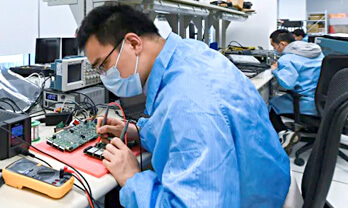
Strict quality inspection builds a solid foundation for electronic component quality.
  1. Visual inspection
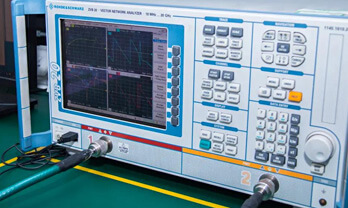
  2. Performance testing and reliability verification
  3. Standardized full-process testing
  4. Precise control of every parameter
We eliminate defective components and ensure the stable operation of electronic devices through professional quality standards.

Payment Support

The payment method can be chosen from the methods shown below: Wire Transfer (T/T, Bank Transfer), Western Union, Credit card, PayPal.
  • HKBea
  • Paypal
  • MasterCard
  • Western-Union
  • VISA
Stable Delivery, Sincere Partnership — Your Faithful Supply Chain Partner
  • Efficient Supply Management
  • Cost-Saving Procurement
  • Fast Sourcing & Delivery
Contact us if you have any questions.

Packaging

Electrostatic Discharge Protection and Handling

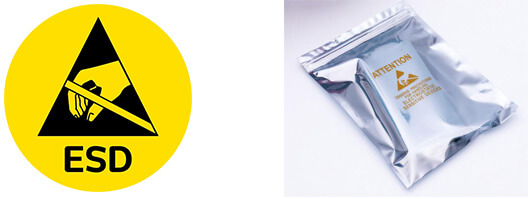
All electrostatic-sensitive components are handled in accordance with electrostatic discharge control procedures. The products are hermetically sealed in anti-static safe packaging to prevent electrostatic damage. Appropriate labeling is also applied for identification and traceability. This ensures product integrity during storage, handling and transportation.


ESD

Certifications & Memberships

Third-party certified, strict quality control. Our certification
  • ISO 9001: 2015
  • ISO 13485: 2016
  • ISO 14001: 2015
  • ISO 28000: 2007
  • ISO 45001: 2018
  • GB/T 27922-2011
  • SMTA
  • IPC
  • ESD
  • PSMA
ERJ-U03D4643V Image

ERJ-U03D4643V

Panasonic Electronic Components
98D-ERJ-U03D4643V

Want a better price? Add to Cart and Submit RFQ now, we'll contact you immediately.

0 RFQ
Shopping cart (0 Items)
It is empty.
Compare List (0 Items)
It is empty.
Feedback

Your feedback matters! At Allelco, we value the user experience and strive to improve it constantly.
Please share your comments with us via our feedback form, and we'll respond promptly.
Thank you for choosing Allelco.

Subject
E-mail
Comments
Captcha
Drag or click to upload file
Upload File
types: .xls, .xlsx, .doc, .docx, .jpg, .png and .pdf.
Max file size: 10MB