View All

Please refer to the English Version as our Official Version.Return

Europe
France(Français) Germany(Deutsch) Italy(Italia) Russian(русский) Poland(polski) Czech(Čeština) Luxembourg(Lëtzebuergesch) Netherlands(Nederland) Iceland(íslenska) Hungarian(Magyarország) Spain(español) Portugal(Português) Turkey(Türk dili) Bulgaria(Български език) Ukraine(Україна) Greece(Ελλάδα) Israel(עִבְרִית) Sweden(Svenska) Finland(Svenska) Finland(Suomi) Romania(românesc) Moldova(românesc) Slovakia(Slovenská) Denmark(Dansk) Slovenia(Slovenija) Slovenia(Hrvatska) Croatia(Hrvatska) Serbia(Hrvatska) Montenegro(Hrvatska) Bosnia and Herzegovina(Hrvatska) Lithuania(lietuvių) Spain(Português) Switzerland(Deutsch) United Kingdom(English)
Asia/Pacific
Japan(日本語) Korea(한국의) Thailand(ภาษาไทย) Malaysia(Melayu) Singapore(Melayu) Vietnam(Tiếng Việt) Philippines(Pilipino)
Africa, India and Middle East
United Arab Emirates(العربية) Iran(فارسی) Tajikistan(فارسی) India(हिंदी) Madagascar(malaɡasʲ)
South America / Oceania
New Zealand(Maori) Brazil(Português) Angola(Português) Mozambique(Português)
North America
United States(English) Canada(English) Haiti(Ayiti) Mexico(español)
HomeProductsIntegrated Circuits (ICs)MemoryM34C02-RDW6TP
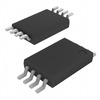
M34C02-RDW6TP Image
Image may be representation.
See specifications for product details.
EXPRESS OPTION
Payment method

M34C02-RDW6TP - STMicroelectronics

Manufacturer Part Number
M34C02-RDW6TP
Manufacturer
STMicroelectronics
Allelco Part Number
32D-M34C02-RDW6TP
Warranty
1 Year Allelco Warranty - Find out more
Stock Status:
5,960 pcs available, New & Original
Parts Description
IC EEPROM 2KBIT I2C 8TSSOP
Package
8-TSSOP
Data sheet
M34C02-RDW6TP.pdf

Datasheets

M34C02 (Rev8.0).pdf
RoHs Status
ROHS3 Compliant
Our certification
In stock: 5960

Required fields are indicated by an asterisk (*)
Please send RFQ, we will respond immediately.

Quantity

Specifications

M34C02-RDW6TP Tech Specifications
STMicroelectronics - M34C02-RDW6TP technical specifications, attributes, parameters and parts with similar specifications to STMicroelectronics - M34C02-RDW6TP

Product Attribute Attribute Value
Manufacturer STMicroelectronics
Write Cycle Time - Word, Page 10ms
Voltage - Supply 1.8V ~ 5.5V
Technology EEPROM
Supplier Device Package 8-TSSOP
Series -
Package / Case 8-TSSOP (0.173", 4.40mm Width)
Package Tape & Reel (TR)
Operating Temperature -40°C ~ 85°C (TA)
Product Attribute Attribute Value
Mounting Type Surface Mount
Memory Type Non-Volatile
Memory Size 2Kbit
Memory Organization 256 x 8
Memory Interface I²C
Memory Format EEPROM
Clock Frequency 400 kHz
Base Product Number M34C02
Access Time 900 ns

Environmental & Export Classifications

ATTRIBUTE DESCRIPTION
RoHs Status ROHS3 Compliant
Moisture Sensitivity Level (MSL) 1 (Unlimited)
REACH Status REACH Unaffected
ECCN EAR99
HTSUS 8542.32.0051

Parts Introduction

M34C02-RDW6TP Image
M34C02-RDW6TP (1)

Manufacturer Part Number

M34C02-RDW6TP

Manufacturer

STMicroelectronics

Introduction

The M34C02 is a 2Kbit EEPROM from STMicroelectronics designed for storing non-volatile memory data.

Product Features and Performance

Non-Volatile EEPROM Memory

2Kbit Memory Size

256 x 8 Memory Organization

I2C Memory Interface

400 kHz Clock Frequency

10 ms Write Cycle Time for Word or Page

900 ns Access Time

8V to 5.5V Supply Voltage Range

Operable in a wide temperature range: -40°C to 85°C

Surface Mounting Type

Product Advantages

High data retention

Fast data access

Low power consumption

Wide operating voltage range

I2C Bus Interface for easy integration

Suitable for harsh temperature environments

Key Technical Parameters

Memory Format: EEPROM

Technology: EEPROM

Clock Frequency: 400 kHz

Write Cycle Time: 10ms

Access Time: 900 ns

Voltage - Supply: 1.8V to 5.5V

Operating Temperature: -40°C to 85°C

Package / Case: 8-TSSOP

Quality and Safety Features

Data retention of 40 years

Endurance of one million write cycles

Lead-free and RoHS compliant

Compatibility

Compatible with I2C bus interface systems

Supports standard and fast I2C protocols

Application Areas

Embedded systems

Consumer electronics

Industrial automation

Automotive applications

PC peripherals

Product Lifecycle

Obsolete

Alternatives or replacements may be available

Several Key Reasons to Choose This Product

Long-term data retention capability

Suitable for low-power applications

Broad compatibility with I2C protocol

Resilient to severe temperature conditions

High reliability with endurance of one million cycles

Ease of integration into various electronic systems due to the common 8-TSSOP package
Frequently Asked Questions(FAQ)

What are the key electrical characteristics of the M34C02-RDW6TP EEPROM that determine its compatibility with low-voltage microcontroller systems?
The M34C02-RDW6TP operates across a supply voltage range of 1.8V to 5.5V, making it suitable for modern low-power embedded designs where microcontrollers like STM32L or MSP44F may operate at 3.3V or even 1.8V. Its I2C interface supports standard-mode (100 kHz) and fast-mode (400 kHz) signaling, which aligns with common bus speeds used in battery-powered IoT devices. The access time of 900 ns ensures read operations complete within a few clock cycles under typical conditions, reducing latency in real-time logging applications such as environmental sensors. This combination of wide voltage tolerance and sub-millisecond write timing allows seamless integration into energy-constrained systems without requiring level shifting or additional power regulation.
How does the write cycle performance of the M34C02-RDW6TP compare to alternative non-volatile memory options when used in periodic data logging scenarios?
With a typical page write time of 10 ms and byte-wise write capability, the M34C02-RDW6TP is optimized for small, infrequent writes rather than high-speed streaming data. In contrast, serial flash memories like the W25Q80DV offer faster page programming times (typically 0.75 ms per 256-byte sector), making them better suited for frequent large-block updates. However, for applications such as storing calibration coefficients or event flags—where only one or two bytes change between writes—the M34C02’s endurance rating of 1 million write cycles per location far exceeds that of flash, which often has lower endurance (around 10k cycles). Thus, while flash excels in speed and density, the M34C02 provides superior reliability for low-overhead, long-term storage in industrial control loops.
Can the M34C02-RDW6TP be substituted directly with part numbers such as 24AA02H-I/ST or AT34C02D-XHM-T in existing PCB layouts?
Yes, the M34C02-RDW6TP shares functional equivalence with several competing devices including the 24AA02H-I/ST and AT34C02D-XHM-T due to their identical 2Kbit capacity, I²C interface, and 8-pin TSSOP packaging. All three support the same 1.7–5.5V operating range and 400kHz clock frequency. Pin-for-pin mechanical compatibility allows drop-in replacement assuming identical pull-up resistor values on SDA/SCL lines. However, subtle differences exist in manufacturer-specific features: for example, some variants include hardware write protection pins or enhanced ESD protection levels. Designers should verify absolute maximum ratings and moisture sensitivity levels during substitution to ensure compliance with process constraints, particularly in lead-free reflow profiles above 260°C.
What design considerations apply when implementing software retry logic around write operations involving the M34C02-RDW6TP?
Given the 10ms write duration, firmware must account for this latency before issuing another transaction on the I²C bus. A common practice involves polling the device’s internal busy flag via repeated start conditions or checking acknowledgment after each byte transfer. Alternatively, designers can implement a timeout mechanism that waits up to 15ms before declaring a failure. Additionally, power-loss resilience requires careful sequencing: since the M34C02 uses Fowler-Nordheim tunneling for programming, abrupt voltage drops during writes may corrupt data. Therefore, systems with brown-out detection or capacitor-backed power rails benefit from validating checksums post-write. For mission-critical applications, pairing the EEPROM with a backup supercapacitor or battery-backed RAM buffer adds fault tolerance against transient outages.
How does the operating temperature range of -40°C to 85°C influence the selection of the M34C02-RDW6TP for automotive edge devices?
While the M34C02-RDW6TP meets commercial-grade temperature specs, most automotive environments require components rated from -40°C to +125°C per AEC-Q100 standards. Though the device functions reliably within -40°C to 85°C, prolonged exposure near the upper limit may accelerate oxide degradation in the floating gate, potentially reducing write endurance over time. In cabin-mounted sensors or non-engine-compartment edge nodes where ambient temperatures rarely exceed 85°C, this limitation is acceptable. However, for under-hood applications or industrial motor drives, alternatives like the BR24L02FVT-WE2—which offers extended temperature operation—should be considered. The choice ultimately depends on system-level thermal profiling and required lifetime reliability targets.
What impact does the Moisture Sensitivity Level 1 have on manufacturing handling and storage of boards populated with M34C02-RDW6TP devices?
As an MSL 1 component, the M34C02-RDW6TP poses minimal risk from moisture absorption and does not require baking prior to reflow soldering under normal conditions. It can be stored indefinitely in sealed packaging at room temperature and processed without special precautions in typical SMT lines. This simplifies inventory management and reduces handling costs compared to higher-MSL parts that demand dry-room storage or pre-drying protocols. Nevertheless, even MSL 1 devices benefit from minimizing exposure to humid environments during assembly to prevent popcorning, especially in lead-free processes with peak temperatures exceeding 245°C. Standard JEDEC J-STD-033 guidelines still apply for extended open-bag storage beyond 12 months.
In what ways does the 256 x 8 memory organization affect data structuring when using the M34C02-RDW6TP for configuration parameter storage?
The M34C02-RDW6TP divides its 2Kbit array into 256 pages of eight bytes each, enabling efficient page-based writes that reduce wear compared to byte-at-a-time updates. This structure supports compact configuration blocks—such as network credentials, sensor offsets, or user preferences—without requiring external RAM. Each page write erases and programs all eight bytes simultaneously, so partial-page updates must fill the entire page to avoid data corruption. For instance, storing a 12-byte calibration table would consume two full pages, wasting four bytes but ensuring atomicity. Designers often pad structures to match page boundaries or use wear-leveling algorithms if frequent modifications occur within the same logical block.
How do the REACH and RoHS compliance status of the M34C02-RDW6TP influence global supply chain decisions for consumer electronics manufacturers?
The M34C02-RDW6TP being fully RoHS3 compliant and REACH unaffected eliminates regulatory hurdles for export into EU, North America, and other regulated markets. These certifications confirm absence of restricted substances like lead, cadmium, mercury, and certain flame retardants, aligning with ISO 14001 environmental management standards. For OEMs sourcing components globally, this reduces audit overhead and accelerates time-to-market in products targeting sustainability-conscious consumers. While many EEPROMs meet basic RoHS requirements, explicit REACH documentation provides added assurance against future substance restrictions, supporting long-term product lifecycle planning beyond initial certification windows.
What are the trade-offs between using the M34C02-RDW6TP versus discrete serial EEPROMs when designing space-constrained wearable medical devices?
The M34C02-RDW6TP integrates 2Kbit of non-volatile memory in an 8-pin TSSOP package, eliminating the need for separate ICs and saving board real estate crucial for miniaturized wearables. Discrete alternatives like the 24LC02 typically come in SOIC packages requiring more routing layers and larger footprints. However, integrating multiple functions (e.g., combining EEPROM with ADC or MCU) might allow further consolidation. The M34C02’s modest capacity limits its use to simple patient ID storage or dosing logs, whereas larger arrays would necessitate multiple chips. Still, its single-chip simplicity reduces BOM count, lowers cost, and minimizes interconnect noise—critical factors in implantable-class devices where size, power, and reliability dominate design priorities.
How should firmware handle address arbitration if multiple I²C masters attempt to communicate with the M34C02-RDW6TP in a shared-bus system?
The M34C02-RDW6TP acts as a slave device with a fixed 7-bit I²C address (typically 0xA0 for write, 0xA1 for read), so arbitration occurs at the bus level among competing masters. Firmware must implement proper collision detection using I²C status codes (e.g., NACK responses) and retransmit logic. Since the device itself doesn’t participate in arbitration, designers should prioritize deterministic scheduling of master activities or employ bus contention resolution protocols. In multi-drop configurations, adding unique addresses through hardware pin strapping or software remapping (if supported by host controllers) can isolate traffic. Without such measures, simultaneous access attempts may corrupt data or trigger unexpected resets, undermining system stability in distributed sensor networks.
What role does the 900 ns access time play in real-time system responsiveness when querying the M34C02-RDW6TP for diagnostic logs?
At 400kHz I²C clock speed, transmitting a single byte requires approximately 20µs including ACK bits, so the 900ns access time contributes minimally to total read latency. However, in interrupt-driven architectures where the CPU polls the EEPROM every few milliseconds to retrieve sensor history, the narrow window for timely response becomes relevant. For example, in a 10ms sampling interval, the 900ns delay represents less than 1% of available time, allowing ample margin for ISR execution and context switching. Thus, while not a bottleneck in most applications, the access time ensures consistent worst-case behavior across process corners, supporting predictable timing analysis in safety-critical diagnostics where jitter must be bounded.
Are there any known errata or silicon revisions affecting the M34C02-RDW6TP that engineers should monitor during mass production?
STMicroelectronics maintains public errata sheets for active devices; as of current documentation, no critical issues specific to the M34C02-RDW6TP have been reported that impact core functionality. However, minor deviations in write endurance curves or slight variations in standby current between wafer lots may occur due to process node tolerances. Designers are advised to perform qualification testing on first production samples, focusing on write/erase cycling under accelerated life conditions and verifying retention characteristics at elevated temperatures. Cross-referencing batch codes with ST’s quality bulletins helps identify potential anomalies early, though the device generally exhibits robust performance across commercial grades without requiring revision-controlled substitutions.
How does the ECCN classification (EAR99) affect international procurement and shipping logistics for the M34C02-RDW6TP?
Classified under ECCN EAR99, the M34C02-RDW6TP is subject to U.S. Export Administration Regulations but generally exempt from strict licensing requirements unless destined for embargoed countries. This simplifies cross-border supply chains for defense contractors and aerospace firms operating under ITAR exemptions. Unlike encryption-related parts classified under 5A002, generic memory ICs like the M34C02 face minimal export controls, facilitating faster delivery through distributors such as Digi-Key or Mouser without lengthy compliance checks. Nonetheless, importers must still comply with local regulations (e.g., China’s MIIT or EU dual-use lists), so end-system classification remains the primary determinant of export eligibility rather than the component itself.
What precautions should be taken when prototyping with the M34C02-RDW6TP in open-air bench setups to avoid premature failures?
Although not hygroscopic, the M34C02-RDW6TP benefits from avoiding electrostatic discharge (ESD) during manual handling due to its CMOS input circuitry. Using grounded workstations and wrist straps mitigates risks of latch-up or oxide breakdown. Additionally, decoupling capacitors (≥100nF ceramic) placed close to VCC/GND pins stabilize supply transients during write operations, preventing partial programming or address corruption. Avoid probing active I²C lines with oscilloscopes lacking proper termination, as reflections can distort signals and trigger unintended device resets. Finally, ensure pull-up resistors (typically 4.7kΩ for 3.3V systems) are present on SDA/SCL to maintain valid logic levels during idle periods, preventing bus lockups from floating inputs.
How does the memory size of 2Kbit constrain the types of persistent data that can be stored using the M34C02-RDW6TP in smart metering applications?
At 256 bytes total, the M34C02-RDW6TP accommodates modest datasets such as meter serial numbers, tariff tables, or tamper counters but cannot store full firmware images or extensive historical logs. Typical usage includes storing last-kWh readings, configuration flags, or encrypted keys—all fitting within single-page boundaries. If more data is needed, external FRAM or NOR flash must supplement the EEPROM. However, for meters requiring secure key storage or audit trails, the M34C02’s immunity to radiation-induced soft errors and infinite endurance make it preferable over volatile RAM for critical parameters. Designers often compress data structures or rotate entries to fit within capacity, leveraging the device’s byte-addressability for granular updates without erasing unused sectors.

Parts with Similar Specifications

The three parts on the right have similar specifications to STMicroelectronics M34C02-RDW6TP

Product Attribute M34C02-LDW6TP M34C02-LDW6T M34C02-WDW6T M34C02-WMN6T
Part Number M34C02-LDW6TP M34C02-LDW6T M34C02-WDW6T M34C02-WMN6T
Manufacturer STMicroelectronics STMicroelectronics STMicroelectronics STMicroelectronics
Memory Organization - - - -
Package / Case - 196-LFBGA 16-DIP (0.300', 7.62mm) 64-VFQFN Exposed Pad
Series - - - -
Package - Tape & Reel (TR) Tube Tape & Reel (TR)
Memory Interface - - - -
Operating Temperature - -40°C ~ 85°C 0°C ~ 70°C -40°C ~ 85°C
Write Cycle Time - Word, Page - - - -
Memory Format - - - -
Technology - - - -
Memory Type - - - -
Base Product Number - DAC34H84 MAX500 ADS62P42
Voltage - Supply - - - -
Supplier Device Package - 196-NFBGA (12x12) 16-PDIP 64-VQFN (9x9)
Memory Size - - - -
Access Time - - - -
Clock Frequency - - - -
Mounting Type - Surface Mount Through Hole Surface Mount

M34C02-RDW6TP Datasheet PDF

Download M34C02-RDW6TP pdf datasheets and STMicroelectronics documentation for M34C02-RDW6TP - STMicroelectronics.

Datasheets
M34C02 (Rev8.0).pdf

Customer Reviews

Evaluation: 10 Articles

  • ECUb***h
    Sep 22, 2026

    Used for repair of an older automotive ECU. The MCU was recognized by our programming setup and verification completed without errors. The repaired board now starts and communicates normally.

  • RS48***ieldTech
    Sep 16, 2026

    Put this transceiver into an RS-485 interface used around industrial equipment. Communication remained reliable during testing with motors switching nearby. Good result for the replacement board.

  • Logi***b_Chris
    Sep 8, 2026

    Purchased for a Cyclone III development project. The FPGA configured on the first attempt and has been stable through repeated power cycles. No problems with the I/O we are using.

  • Circ***FixerTom
    Sep 2, 2026

    Used this rectifier in a high-current power supply repair. Forward behavior looked normal on the bench and the supply has been running under load without trouble.

  • Retr***UWorks
    Aug 31, 2026

    Needed the exact ST10F269Z2Q6 for servicing an older control unit. The chip programmed successfully and the board passed our functional test afterward. Much easier than redesigning around a newer MCU.

  • Andr***PCBLab
    Aug 28, 2026

    I needed this ADC for an older data acquisition board. Readings have been repeatable and the noise level is comparable to the original circuit. Happy with the purchase.

  • Leat***O'Keefe
    Aug 20, 2026

    one of my hobbies is skydiving. and when i'm skydiving this works great.

  • Ilen***
    Aug 20, 2026

    This product works considerably well. It secretly improves my basketball by a lot.

  • Indu***ialPower
    Aug 17, 2026

    Installed this IGBT module in a power conversion cabinet. Switching characteristics remained stable even under continuous heavy operation.

  • Nikh***ech
    Aug 13, 2026

    Great low-power MCU for portable equipment. Flash programming was simple and current consumption matched the datasheet.

Write a Review

Your Email address will not be published.

Shipment

Delivery Time

In-stock items can be shipped within 24 hours. Some parts will be arranged for delivery within 1-2 days from the date all items arrive at our warehouse. And Allelco ships order once a day at about 17:00, except Sunday. Once the goods are shipped, the estimated delivery time depends on the shipping methods and Delivery destination. The table below shows are the logistic time for some common countries.

Delivery Cost

  1. Use your express account for shipment if you have one.
  2. Use our account for the shipment. Refer to the table below for the approximate charges.
(Different time frame / countries / package size has different price.)

Delivery Method

  1. Global Common Shipment by DHL / UPS / FedEx / TNT / EMS / SF we support.
  2. Others more shipping ways, please get in touch with your customer manager.

Common Countries Logistic Time Reference
Region Country Logistic Time(Day)
America United States 5
Brazil 7
Europe Germany 5
United Kingdom 4
Italy 5
Oceania Australia 6
New Zealand 5
Asia India 4
Japan 4
Middle East Israel 6
DHL & FedEx Shipment Charges Reference
Shipment charges(KG) Reference DHL(USD$)
0.00kg-1.00kg USD$30.00 - USD$60.00
1.00kg-2.00kg USD$40.00 - USD$80.00
2.00kg-3.00kg USD$50.00 - USD$100.00
Note:
The above table is for reference only. There may have some data bias for the uncontrollable factors.
Contact us if you have any questions.
  • QC (Quality Warranty)
  • Payment Support
  • Packaging
  • Certifications & Memberships

QC (Quality Warranty)

Allelco is committed to exceeding customer expectations through customer service excellence, order accuracy, and on-time delivery.
This is achieved through our commitment to the continual improvement of our processes, services, and products.


Strict quality inspection builds a solid foundation for electronic component quality.
  1. Visual inspection
  2. Performance testing and reliability verification
  3. Standardized full-process testing
  4. Precise control of every parameter
We eliminate defective components and ensure the stable operation of electronic devices through professional quality standards.

Payment Support

The payment method can be chosen from the methods shown below: Wire Transfer (T/T, Bank Transfer), Western Union, Credit card, PayPal.
  • HKBea
  • Paypal
  • MasterCard
  • Western-Union
  • VISA
Stable Delivery, Sincere Partnership — Your Faithful Supply Chain Partner
  • Efficient Supply Management
  • Cost-Saving Procurement
  • Fast Sourcing & Delivery
Contact us if you have any questions.

Packaging

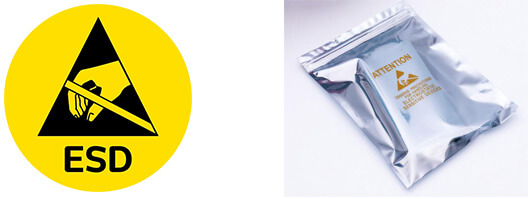
Electrostatic Discharge Protection and Handling

All electrostatic-sensitive components are handled in accordance with electrostatic discharge control procedures. The products are hermetically sealed in anti-static safe packaging to prevent electrostatic damage. Appropriate labeling is also applied for identification and traceability. This ensures product integrity during storage, handling and transportation.


ESD

Certifications & Memberships

Third-party certified, strict quality control. Our certification
  • ISO 9001: 2015
  • ISO 13485: 2016
  • ISO 14001: 2015
  • ISO 28000: 2007
  • ISO 45001: 2018
  • GB/T 27922-2011
  • SMTA
  • IPC
  • ESD
  • PSMA
M34C02-RDW6TP Image

M34C02-RDW6TP

STMicroelectronics
32D-M34C02-RDW6TP

Want a better price? Add to Cart and Submit RFQ now, we'll contact you immediately.

0 RFQ
Shopping cart (0 Items)
It is empty.
Compare List (0 Items)
It is empty.
Feedback

Your feedback matters! At Allelco, we value the user experience and strive to improve it constantly.
Please share your comments with us via our feedback form, and we'll respond promptly.
Thank you for choosing Allelco.

Subject
E-mail
Comments
Captcha
Drag or click to upload file
Upload File
types: .xls, .xlsx, .doc, .docx, .jpg, .png and .pdf.
Max file size: 10MB