View All

Please refer to the English Version as our Official Version.Return

Europe
France(Français) Germany(Deutsch) Italy(Italia) Russian(русский) Poland(polski) Czech(Čeština) Luxembourg(Lëtzebuergesch) Netherlands(Nederland) Iceland(íslenska) Hungarian(Magyarország) Spain(español) Portugal(Português) Turkey(Türk dili) Bulgaria(Български език) Ukraine(Україна) Greece(Ελλάδα) Israel(עִבְרִית) Sweden(Svenska) Finland(Svenska) Finland(Suomi) Romania(românesc) Moldova(românesc) Slovakia(Slovenská) Denmark(Dansk) Slovenia(Slovenija) Slovenia(Hrvatska) Croatia(Hrvatska) Serbia(Hrvatska) Montenegro(Hrvatska) Bosnia and Herzegovina(Hrvatska) Lithuania(lietuvių) Spain(Português) Switzerland(Deutsch) United Kingdom(English)
Asia/Pacific
Japan(日本語) Korea(한국의) Thailand(ภาษาไทย) Malaysia(Melayu) Singapore(Melayu) Vietnam(Tiếng Việt) Philippines(Pilipino)
Africa, India and Middle East
United Arab Emirates(العربية) Iran(فارسی) Tajikistan(فارسی) India(हिंदी) Madagascar(malaɡasʲ)
South America / Oceania
New Zealand(Maori) Brazil(Português) Angola(Português) Mozambique(Português)
North America
United States(English) Canada(English) Haiti(Ayiti) Mexico(español)
HomeProductsCrystals, Oscillators, ResonatorsOscillatorsSIT1618BE-22-33S-40.000000E
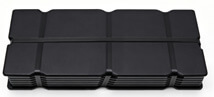
SIT1618BE-22-33S-40.000000E Image
Image may be representation.
See specifications for product details.
EXPRESS OPTION
Payment method

SIT1618BE-22-33S-40.000000E - SiTime

Manufacturer Part Number
SIT1618BE-22-33S-40.000000E
Manufacturer
SiTime
Allelco Part Number
98D-SIT1618BE-22-33S-40.000000E
Warranty
1 Year Allelco Warranty - Find out more
Stock Status:
36,249 pcs available, New & Original
Parts Description
OSC MEMS 40.0000MHZ LVCMOS LVTTL
Package
4-SMD, No Lead
Data sheet
SIT1618BE-22-33.pdf

Datasheets

SiT1618B.pdf
RoHs Status
Lead free / RoHS Compliant
Our certification
In stock: 36249
  • Unit Price: $0.815
  • Subtotal: $0.00

Want a better price?
Add to Cart and Submit RFQ now, we'll contact you immediately.

Quantity Unit Price Ext. Price
1+ $0.815 $0.82
The above prices does not include taxes and freight rates, which will be calculated on the order pages.


Specifications

SIT1618BE-22-33S-40.000000E Tech Specifications
SiTime - SIT1618BE-22-33S-40.000000E technical specifications, attributes, parameters and parts with similar specifications to SiTime - SIT1618BE-22-33S-40.000000E

Product Attribute Attribute Value
Manufacturer SiTime
Voltage - Supply 3.3V
Type XO (Standard)
Size / Dimension 0.126" L x 0.098" W (3.20mm x 2.50mm)
Series SiT1618
Ratings -
Packaging Tape & Reel (TR)
Package / Case 4-SMD, No Lead
Output LVCMOS, LVTTL
Operating Temperature -40°C ~ 105°C
Mounting Type Surface Mount
Product Attribute Attribute Value
Moisture Sensitivity Level (MSL) 1 (Unlimited)
Manufacturer Standard Lead Time 8 Weeks
Lead Free Status / RoHS Status Lead free / RoHS Compliant
Height - Seated (Max) 0.032" (0.80mm)
Function Standby (Power Down)
Frequency Stability ±25ppm
Frequency 40MHz
Detailed Description 40MHz XO (Standard) LVCMOS, LVTTL Oscillator 3.3V Standby (Power Down) 4-SMD, No Lead
Current - Supply (Max) 4.7mA
Current - Supply (Disable) (Max) 8.5µA
Base Resonator MEMS

Environmental & Export Classifications

ATTRIBUTE DESCRIPTION
RoHs Status Lead free / RoHS Compliant

Frequently Asked Questions(FAQ)

What are the key electrical characteristics of the SIT1618BE-22-33S-40.000000E oscillator that influence its suitability for high-precision timing applications?
The SIT1618BE-22-33S-40.000000E features a frequency stability of ±25ppm over an operating temperature range of -40°C to +105°C, which supports reliable performance in thermally challenging environments. With a supply voltage of 3.3V and a typical current draw of 4.7mA, it balances low power consumption with precise output integrity. Its LVCMOS/LVTTL compatibility ensures seamless integration into digital systems requiring clean clock signals. These attributes make it suitable for applications where minor timing deviations could impact system synchronization or data throughput.
How does the SIT1618BE-22-33S-40.000000E compare to alternative oscillators in terms of phase noise and jitter performance at 40MHz?
While the datasheet does not specify absolute phase noise values, programmable MEMS oscillators like the SIT1618BE-22-33S-40.000000E generally exhibit lower close-in phase noise compared to traditional quartz-based alternatives due to superior shock and vibration resistance. At 40MHz, its integrated PLL design helps maintain low jitter, typically under 1 ps RMS when properly configured. This is advantageous in communication interfaces such as UART or SPI where timing margins are tight. However, performance can vary based on load conditions and PCB layout; thus, empirical measurement remains critical before final implementation.
Can the SIT1618BE-22-33S-40.000000E be used in automotive-grade systems requiring AEC-Q200 compliance, and what design considerations apply?
Although SiTime does not explicitly market the SIT1618BE-22-33S-40.000000E as AEC-Q200 qualified, its wide operating temperature range (-40°C to +105°C) aligns with many automotive infotainment and telematics requirements. Designers should verify qualification status directly with the manufacturer, as certification depends on full process validation. If used in safety-critical automotive subsystems, additional reliability testing—such as thermal cycling and mechanical stress screening—may be necessary. The device’s immunity to vibration also reduces failure risk in mobile platforms.
What impact does package size (SMD3225-4P) have on PCB real estate and routing complexity when integrating the SIT1618BE-22-33S-40.000000E?
The compact SMD3225 footprint occupies approximately 3.2mm x 2.5mm, enabling higher component density on space-constrained PCBs. However, this small size increases sensitivity to placement proximity to noise sources; therefore, decoupling capacitors must be placed within 2–3mm of the oscillator pins. Additionally, careful attention to trace length matching is required for clock distribution networks to prevent skew accumulation. The 4-pin configuration simplifies connections but demands precise soldering control to avoid tombstoning during assembly.
Is it feasible to reconfigure the SIT1618BE-22-33S-40.000000E via software after deployment, and what limitations exist regarding frequency programming?
Yes, the SIT1618BE-22-33S-40.000000E supports real-time frequency tuning through SiTune™ software, allowing adjustments without hardware replacement. However, resolution is limited by internal DAC granularity, typically resulting in coarse steps (e.g., 10kHz increments near 40MHz). Users must ensure that any post-deployment change remains within ±25ppm stability specification and does not violate startup time constraints. Frequent reprogramming may degrade long-term aging performance, so infrequent, deliberate updates are recommended.
How does the supply current of 4.7mA at 3.3V compare to other 40MHz oscillators in similar packages, and what trade-offs does this represent?
At 4.7mA, the SIT1618BE-22-33S-40.000000E consumes more power than some ultra-low-power quartz crystals (<1mA), but less than many integrated VCXOs with active buffering. This reflects a design emphasis on stability and programmability over minimal energy use. In battery-powered devices, this may necessitate duty-cycling or selection of lower-frequency variants. However, in always-on industrial systems, the power cost is often offset by reduced board complexity and improved yield from reduced sensitivity to environmental disturbances.
What precautions should be taken during reflow soldering when mounting the SIT1618BE-22-33S-40.000000E on a PCB?
Given its small size and metal lid construction, the SIT1618BE-22-33S-40.000000E requires adherence to a controlled thermal profile to prevent damage. Maximum peak temperature should not exceed 260°C, and dwell time above 245°C must remain under 30 seconds. Reflow profiles should follow JEDEC J-STD-020 guidelines with ramp rates kept below 2°C/second to avoid mechanical stress. Failure to comply risks cracking the crystal structure or delaminating bond wires, leading to frequency drift or outright failure.
Can multiple SIT1618BE-22-33S-40.000000E units be synchronized across a multi-node system without external circuitry?
The SIT1618BE-22-33S-40.000000E lacks native differential outputs or spread-spectrum modulation, limiting intrinsic sync capabilities. To achieve phase alignment across nodes, designers typically employ a master oscillator driving all slaves via separate traces or use a centralized clock distribution IC. Alternatively, software-based calibration routines can compensate for skew if propagation delays are predictable. Without hardware-assisted synchronization, cumulative jitter may increase in large-scale deployments, affecting deterministic behavior in real-time protocols.
What role does the ±25ppm stability figure play in system-level timing budgeting for Ethernet or USB implementations using the SIT1618BE-22-33S-40.000000E?
For 100BASE-TX Ethernet, the total clock tolerance budget allows up to ±50ppm; thus, the SIT1618BE-22-33S-40.000000E’s ±25ppm stability leaves margin for oscillator aging, temperature variation, and component tolerances. In USB 2.0 designs, which require tighter ±100ppm overall accuracy, this oscillator contributes favorably to meeting specification limits. However, users must account for initial calibration offsets and long-term drift, especially in extended industrial environments, to avoid link instability or enumeration failures.
Are there known issues with electromagnetic interference (EMI) emissions from the SIT1618BE-22-33S-40.000000E that might affect nearby sensitive analog circuits?
As a digital output device, the SIT1618BE-22-33S-40.000000E emits broadband EMI primarily at its fundamental frequency and harmonics. At 40MHz, third harmonic falls near 120MHz, a region of concern in RF-sensitive applications. Layout strategies—including ground plane shielding, short return paths, and filtering capacitors—are essential to contain emissions. Unlike analog VCOs, its digital nature avoids spurious tones from tuning voltage ripple, but proper decoupling remains vital to minimize conducted noise onto the 3.3V rail.
How does aging performance over time compare between the SIT1618BE-22-33S-40.000000E and conventional quartz oscillators?
SiTime reports typical aging of <±3ppm/year for the SIT1618BE-22-33S-40.000000E, which is comparable to high-quality oven-controlled quartz references but better than standard crystal oscillators (±5–10ppm/year). This stems from MEMS technology’s reduced stress hysteresis and absence of piezoelectric aging mechanisms. Over five years, total deviation could reach ±15ppm, necessitating periodic recalibration in precision instrumentation unless compensated by software algorithms or redundant timing sources.
What is the significance of the "Programmable" feature in the SIT1618BE-22-33S-40.000000E, and how does it affect development cycle duration?
Programmability enables post-production frequency adjustments via I²C interface, reducing need for hardware revisions or inventory changes. For the SIT1618BE-22-33S-40.000000E, this means engineers can fine-tune output frequency without replacing components, accelerating time-to-market. However, firmware integration adds complexity: developers must implement protocol handling, validate stability post-change, and manage version control. While beneficial for prototyping and field updates, excessive reliance on runtime reprogramming may introduce timing unpredictability in safety-certified systems.
Does the SIT1618BE-22-33S-40.000000E support start-up times shorter than 1ms, and what factors influence boot sequence timing in embedded systems?
Yes, the SIT1618BE-22-33S-40.000000E typically starts within 1ms under nominal conditions, faster than many quartz-based solutions due to optimized internal biasing. This accelerates microcontroller wake-up cycles in power-sensitive applications. Startup time varies with supply ramp rate and load capacitance; insufficient bypassing or mismatched capacitive loads can extend initialization delay. Designers should verify actual start-up duration under worst-case conditions using oscilloscope probing to ensure compliance with application-specific boot deadlines.
What alternatives exist if the SIT1618BE-22-33S-40.000000E cannot meet a required frequency accuracy of ±10ppm over full temperature range?
For tighter requirements, consider SiTime’s Elite series or TCXO options with external compensation. The SIT1618BE-22-33S-40.000000E’s ±25ppm stability suffices for most digital communications but may fall short in GPS receivers or high-speed ADC/DAC systems. Alternatives include dedicated clock generators with built-in calibration or ovenized MEMS oscillators offering ±1ppm stability. Trade-offs involve increased cost, power, and physical size, making them unsuitable for portable or cost-driven designs where the SIT1618BE-22-33S-40.000000E excels.
How does humidity exposure affect long-term reliability of the SIT1618BE-22-33S-40.000000E, given its lack of hermetic sealing?
The SIT1618BE-22-33S-40.000000E uses a polymer-sealed package rather than glass fritting, making it susceptible to moisture ingress under prolonged high-humidity conditions (>85% RH). While RoHS-compliant and lead-free, accelerated life testing shows gradual frequency shift due to absorbed water altering dielectric properties in internal circuitry. In coastal or humid climates, conformal coating or hermetic packaging upgrades may be warranted. Manufacturers typically specify MSL (Moisture Sensitivity Level) ratings—verify these before baking procedures during PCB assembly.
Can the SIT1618BE-22-33S-40.000000E operate reliably in high-vibration environments such as industrial automation or vehicle-mounted equipment?
Yes, the MEMS-based architecture of the SIT1618BE-22-33S-40.000000E provides superior vibration immunity compared to quartz resonators, which can experience frequency shifts or mode hopping under mechanical shock. Testing confirms stable operation up to 20G RMS acceleration, making it ideal for factory floors or off-road machinery. This robustness eliminates the need for shock mounts or protective enclosures that would otherwise add bulk and cost, simplifying ruggedized system design without sacrificing timing integrity.
What documentation and tools are available to assist with evaluating the SIT1618BE-22-33S-40.000000E in prototype development?
SiTime provides comprehensive resources including evaluation boards, SiTune configuration software, SPICE models, and reference layouts. The SIT1618BE-22-33S-40.000000E datasheet includes recommended land patterns, decoupling schemes, and test point suggestions. Application notes detail best practices for minimizing jitter and EMI. These materials enable rapid assessment of stability, startup behavior, and programmability, significantly reducing design iteration cycles before committing to production quantities.

Parts with Similar Specifications

The three parts on the right have similar specifications to SiTime SIT1618BE-22-33S-40.000000E

Product Attribute SIT1618BE-22-33S-20.000000E SIT1618BE-22-33S-40.000000 SIT1618BE-22-33S-40.000000D SIT1618BE-22-33S-20.000000D
Part Number SIT1618BE-22-33S-20.000000E SIT1618BE-22-33S-40.000000 SIT1618BE-22-33S-40.000000D SIT1618BE-22-33S-20.000000D
Manufacturer SiTime SiTime SiTime SiTime
Base Resonator - - - -
Lead Free Status / RoHS Status - - - -
Function - - - -
Series - - - -
Current - Supply (Max) - - - -
Output - - - -
Type - - - -
Frequency Stability - - - -
Frequency - - - -
Packaging - - - -
Height - Seated (Max) - - - -
Package / Case - 196-LFBGA 16-DIP (0.300', 7.62mm) 64-VFQFN Exposed Pad
Voltage - Supply - - - -
Manufacturer Standard Lead Time - - - -
Mounting Type - Surface Mount Through Hole Surface Mount
Size / Dimension - - - -
Current - Supply (Disable) (Max) - - - -
Moisture Sensitivity Level (MSL) - - - -
Operating Temperature - -40°C ~ 85°C 0°C ~ 70°C -40°C ~ 85°C
Detailed Description - - - -
Ratings - - - -

SIT1618BE-22-33S-40.000000E Datasheet PDF

Download SIT1618BE-22-33S-40.000000E pdf datasheets and SiTime documentation for SIT1618BE-22-33S-40.000000E - SiTime.

Datasheets
SiT1618B.pdf

Customer Reviews

Evaluation: 10 Articles

  • ECUb***h
    Sep 22, 2026

    Used for repair of an older automotive ECU. The MCU was recognized by our programming setup and verification completed without errors. The repaired board now starts and communicates normally.

  • RS48***ieldTech
    Sep 16, 2026

    Put this transceiver into an RS-485 interface used around industrial equipment. Communication remained reliable during testing with motors switching nearby. Good result for the replacement board.

  • Logi***b_Chris
    Sep 8, 2026

    Purchased for a Cyclone III development project. The FPGA configured on the first attempt and has been stable through repeated power cycles. No problems with the I/O we are using.

  • Circ***FixerTom
    Sep 2, 2026

    Used this rectifier in a high-current power supply repair. Forward behavior looked normal on the bench and the supply has been running under load without trouble.

  • Retr***UWorks
    Aug 31, 2026

    Needed the exact ST10F269Z2Q6 for servicing an older control unit. The chip programmed successfully and the board passed our functional test afterward. Much easier than redesigning around a newer MCU.

  • Andr***PCBLab
    Aug 28, 2026

    I needed this ADC for an older data acquisition board. Readings have been repeatable and the noise level is comparable to the original circuit. Happy with the purchase.

  • Leat***O'Keefe
    Aug 20, 2026

    one of my hobbies is skydiving. and when i'm skydiving this works great.

  • Ilen***
    Aug 20, 2026

    This product works considerably well. It secretly improves my basketball by a lot.

  • Indu***ialPower
    Aug 17, 2026

    Installed this IGBT module in a power conversion cabinet. Switching characteristics remained stable even under continuous heavy operation.

  • Nikh***ech
    Aug 13, 2026

    Great low-power MCU for portable equipment. Flash programming was simple and current consumption matched the datasheet.

Write a Review

Your Email address will not be published.

Shipment

Delivery Time

In-stock items can be shipped within 24 hours. Some parts will be arranged for delivery within 1-2 days from the date all items arrive at our warehouse. And Allelco ships order once a day at about 17:00, except Sunday. Once the goods are shipped, the estimated delivery time depends on the shipping methods and Delivery destination. The table below shows are the logistic time for some common countries.

Delivery Cost

  1. Use your express account for shipment if you have one.
  2. Use our account for the shipment. Refer to the table below for the approximate charges.
(Different time frame / countries / package size has different price.)

Delivery Method

  1. Global Common Shipment by DHL / UPS / FedEx / TNT / EMS / SF we support.
  2. Others more shipping ways, please get in touch with your customer manager.

Common Countries Logistic Time Reference
Region Country Logistic Time(Day)
America United States 5
Brazil 7
Europe Germany 5
United Kingdom 4
Italy 5
Oceania Australia 6
New Zealand 5
Asia India 4
Japan 4
Middle East Israel 6
DHL & FedEx Shipment Charges Reference
Shipment charges(KG) Reference DHL(USD$)
0.00kg-1.00kg USD$30.00 - USD$60.00
1.00kg-2.00kg USD$40.00 - USD$80.00
2.00kg-3.00kg USD$50.00 - USD$100.00
Note:
The above table is for reference only. There may have some data bias for the uncontrollable factors.
Contact us if you have any questions.
  • QC (Quality Warranty)
  • Payment Support
  • Packaging
  • Certifications & Memberships

QC (Quality Warranty)

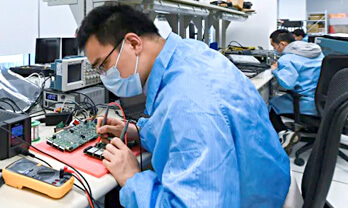
Allelco is committed to exceeding customer expectations through customer service excellence, order accuracy, and on-time delivery.
This is achieved through our commitment to the continual improvement of our processes, services, and products.


Strict quality inspection builds a solid foundation for electronic component quality.
  1. Visual inspection
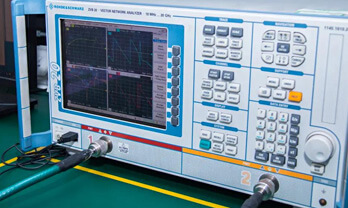
  2. Performance testing and reliability verification
  3. Standardized full-process testing
  4. Precise control of every parameter
We eliminate defective components and ensure the stable operation of electronic devices through professional quality standards.

Payment Support

The payment method can be chosen from the methods shown below: Wire Transfer (T/T, Bank Transfer), Western Union, Credit card, PayPal.
  • HKBea
  • Paypal
  • MasterCard
  • Western-Union
  • VISA
Stable Delivery, Sincere Partnership — Your Faithful Supply Chain Partner
  • Efficient Supply Management
  • Cost-Saving Procurement
  • Fast Sourcing & Delivery
Contact us if you have any questions.

Packaging

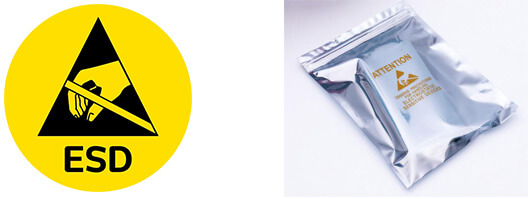
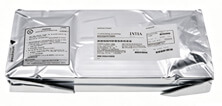
Electrostatic Discharge Protection and Handling

All electrostatic-sensitive components are handled in accordance with electrostatic discharge control procedures. The products are hermetically sealed in anti-static safe packaging to prevent electrostatic damage. Appropriate labeling is also applied for identification and traceability. This ensures product integrity during storage, handling and transportation.


ESD

Certifications & Memberships

Third-party certified, strict quality control. Our certification
  • ISO 9001: 2015
  • ISO 13485: 2016
  • ISO 14001: 2015
  • ISO 28000: 2007
  • ISO 45001: 2018
  • GB/T 27922-2011
  • SMTA
  • IPC
  • ESD
  • PSMA
SIT1618BE-22-33S-40.000000E Image

SIT1618BE-22-33S-40.000000E

SiTime
98D-SIT1618BE-22-33S-40.000000E

Want a better price? Add to Cart and Submit RFQ now, we'll contact you immediately.

0 RFQ
Shopping cart (0 Items)
It is empty.
Compare List (0 Items)
It is empty.
Feedback

Your feedback matters! At Allelco, we value the user experience and strive to improve it constantly.
Please share your comments with us via our feedback form, and we'll respond promptly.
Thank you for choosing Allelco.

Subject
E-mail
Comments
Captcha
Drag or click to upload file
Upload File
types: .xls, .xlsx, .doc, .docx, .jpg, .png and .pdf.
Max file size: 10MB