View All

Please refer to the English Version as our Official Version.Return

Europe
France(Français) Germany(Deutsch) Italy(Italia) Russian(русский) Poland(polski) Czech(Čeština) Luxembourg(Lëtzebuergesch) Netherlands(Nederland) Iceland(íslenska) Hungarian(Magyarország) Spain(español) Portugal(Português) Turkey(Türk dili) Bulgaria(Български език) Ukraine(Україна) Greece(Ελλάδα) Israel(עִבְרִית) Sweden(Svenska) Finland(Svenska) Finland(Suomi) Romania(românesc) Moldova(românesc) Slovakia(Slovenská) Denmark(Dansk) Slovenia(Slovenija) Slovenia(Hrvatska) Croatia(Hrvatska) Serbia(Hrvatska) Montenegro(Hrvatska) Bosnia and Herzegovina(Hrvatska) Lithuania(lietuvių) Spain(Português) Switzerland(Deutsch) United Kingdom(English)
Asia/Pacific
Japan(日本語) Korea(한국의) Thailand(ภาษาไทย) Malaysia(Melayu) Singapore(Melayu) Vietnam(Tiếng Việt) Philippines(Pilipino)
Africa, India and Middle East
United Arab Emirates(العربية) Iran(فارسی) Tajikistan(فارسی) India(हिंदी) Madagascar(malaɡasʲ)
South America / Oceania
New Zealand(Maori) Brazil(Português) Angola(Português) Mozambique(Português)
North America
United States(English) Canada(English) Haiti(Ayiti) Mexico(español)
HomeProductsCrystals, Oscillators, ResonatorsOscillatorsSIT9120AI-2D3-25E166.660000
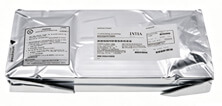
SIT9120AI-2D3-25E166.660000 Image
Image may be representation.
See specifications for product details.
EXPRESS OPTION
Payment method

SIT9120AI-2D3-25E166.660000 - SiTime

Manufacturer Part Number
SIT9120AI-2D3-25E166.660000
Manufacturer
SiTime
Allelco Part Number
98D-SIT9120AI-2D3-25E166.660000
Warranty
1 Year Allelco Warranty - Find out more
Stock Status:
32,186 pcs available, New & Original
Parts Description
MEMS OSC XO 166.6600MHZ LVDS SMD
Package
6-SMD, No Lead
Data sheet
SIT9120AI-2D3-2.pdf
RoHs Status
ROHS3 Compliant
Our certification
In stock: 32186
  • Unit Price: $2.835
  • Subtotal: $0.00

Want a better price?
Add to Cart and Submit RFQ now, we'll contact you immediately.

Quantity Unit Price Ext. Price
1+ $2.835 $2.84
The above prices does not include taxes and freight rates, which will be calculated on the order pages.


Specifications

SIT9120AI-2D3-25E166.660000 Tech Specifications
SiTime - SIT9120AI-2D3-25E166.660000 technical specifications, attributes, parameters and parts with similar specifications to SiTime - SIT9120AI-2D3-25E166.660000

Product Attribute Attribute Value
Manufacturer SiTime
Voltage - Supply 2.5V
Type XO (Standard)
Spread Spectrum Bandwidth -
Size / Dimension 0.276" L x 0.197" W (7.00mm x 5.00mm)
Series SiT9120
Ratings -
Package / Case 6-SMD, No Lead
Package Strip
Output LVDS
Product Attribute Attribute Value
Operating Temperature -40°C ~ 85°C
Mounting Type Surface Mount
Height - Seated (Max) 0.039" (1.00mm)
Function Enable/Disable
Frequency Stability ±50ppm
Frequency 166.66 MHz
Current - Supply (Max) 55mA
Base Resonator MEMS
Absolute Pull Range (APR) -

Environmental & Export Classifications

ATTRIBUTE DESCRIPTION
RoHs Status ROHS3 Compliant
Moisture Sensitivity Level (MSL) 1 (Unlimited)
ECCN EAR99
HTSUS 8542.39.0001

Frequently Asked Questions(FAQ)

How does the SIT9120AI-2D3-25E166.660000 compare to traditional quartz-based oscillators in terms of frequency stability and long-term reliability for high-speed data acquisition systems?
The SIT9120AI-2D3-25E166.660000 leverages SiTime’s MEMS resonator technology, which typically exhibits superior resistance to shock, vibration, and temperature cycling compared to quartz alternatives. Its ±50ppm frequency stability over the –40°C to 85°C operating range ensures consistent timing performance in industrial environments where mechanical stress is common. Unlike quartz oscillators, which can experience aging effects that gradually shift frequency over time, MEMS-based solutions like this one demonstrate minimal drift under continuous operation, making them preferable for applications requiring sustained accuracy without periodic recalibration.
In what scenarios would the enable/disable function of the SIT9120AI-2D3-25E166.660000 be strategically beneficial during system power management?
The active enable/disable pin allows designers to gate the 166.66 MHz LVDS output dynamically, enabling significant power savings in battery-powered or thermally constrained systems. By disabling the oscillator during idle periods—such as when a processor enters low-power mode—the system reduces static power draw from 55mA to near zero. This is particularly valuable in edge computing nodes or portable instrumentation where duty cycling is frequent. The transition between states occurs within microseconds, preserving responsiveness while extending operational life.
What are the implications of mounting the SIT9120AI-2D3-25E166.660000 using surface mount technology on PCB layout and signal integrity at 166.66 MHz?
The 6-SMD, no-lead package (7.00mm × 5.00mm) enables compact board designs but demands careful attention to high-frequency layout practices. At 166.66 MHz, LVDS signaling requires controlled impedance traces (typically 100Ω differential), tight pair routing, and minimal stub lengths to prevent reflections. Grounding planes beneath the device should be unbroken to reduce ground bounce, and decoupling capacitors must be placed within 3mm of the supply pins to suppress transient noise. Poor layout can degrade phase noise and increase jitter beyond specified levels.
Can the SIT9120AI-2D3-25E166.660000 be used in place of a crystal oscillator in FPGA clock distribution networks, and what design considerations apply?
Yes, the SIT9120AI-2D3-25E166.660000 is suitable for many FPGA clocking applications due to its stable 166.66 MHz LVDS output and 2.5V supply compatibility. However, unlike crystals, it integrates an internal oscillator circuit, so no external load capacitance is required. Designers must ensure the FPGA’s clock input supports LVPECL/LVDS conversion internally or via a simple resistor divider if only single-ended CMOS inputs are available. Additionally, the oscillator’s startup time (~1ms typical) should be accounted for in reset sequencing logic.
How does the operating temperature range of the SIT9120AI-2D3-25E166.660000 affect its suitability for automotive-grade versus industrial monitoring systems?
While the device operates reliably from –40°C to 85°C—meeting standard industrial requirements—it falls short of the AEC-Q200 qualification needed for most automotive applications, which often require extended temperature ranges up to 125°C. For non-automotive industrial sensors or test equipment exposed to ambient thermal variation, this range is sufficient. Systems deployed in harsh outdoor environments may still benefit from thermal isolation techniques such as heatsinking or enclosure ventilation to maintain junction temperatures within nominal bounds.
When comparing the SIT9120AI-2D3-25E166.660000 to alternative SiTime parts like the SiT9022, what key trade-offs emerge in terms of output type, power consumption, and footprint?
The SiT9022 offers similar MEMS reliability but typically provides CMOS outputs with higher supply currents (up to 80mA) and larger package sizes (e.g., 7×5 mm vs. the same physical size here). In contrast, the SIT9120AI uses LVDS, which consumes less power per unit length of trace and offers better noise immunity over longer distances. Both share comparable frequency stabilities (±50ppm), but the SiT9120’s integrated enable function adds flexibility at negligible cost. Selection hinges on interface compatibility and whether differential signaling is mandated by system architecture.
Is it acceptable to operate the SIT9120AI-2D3-25E166.660000 continuously at full load without derating, given its maximum current draw of 55mA?
Under normal operating conditions within the specified –40°C to 85°C range, continuous operation at 55mA is permissible without immediate risk of failure. However, prolonged exposure to elevated ambient temperatures increases junction temperature, potentially accelerating electromigration in internal traces. To ensure long-term reliability, engineers should calculate actual power dissipation and verify that thermal resistance paths allow adequate heat dissipation through the PCB. Derating by 10–15% above worst-case environmental conditions is prudent for mission-critical systems.
What role does the Moisture Sensitivity Level (MSL) rating of 1 play in handling and storage of the SIT9120AI-2D3-25E166.660000 before reflow soldering?
With MSL 1, the SIT9120AI-2D3-25E166.660000 is not sensitive to moisture absorption under normal storage conditions and can be handled indefinitely without bake-out procedures prior to soldering. This simplifies inventory management and reduces production overhead, especially beneficial for high-volume manufacturing where lead times are short. Nonetheless, standard IPC/JEDEC guidelines still recommend storing unpacked components in dry cabinets if ambient humidity exceeds 60% RH to prevent condensation during sudden temperature changes post-reflow.
How does the absence of absolute pull range (APR) specification impact PLL loop design when integrating the SIT9120AI-2D3-25E166.660000 into a clock recovery subsystem?
Since APR is not defined, designers cannot rely on predictable tuning behavior across process-voltage-temperature corners. This limits the use of digitally controlled oscillators (DCOs) that depend on calibrated frequency pulling for fine synchronization. Instead, PLL bandwidth must be conservatively set to accommodate potential frequency deviations outside the ±50ppm stability window. Lock-time margins should be increased, and reference clock redundancy may be necessary in systems demanding sub-ppb alignment, such as coherent optical transceivers or precision radar timing.
What precautions should be taken when replacing a legacy quartz oscillator with the SIT9120AI-2D3-25E166.660000 in an existing PCB footprint?
Although the physical dimensions align with common 6-pin SMD packages, electrical compatibility must be verified. Quartz oscillators often require specific load capacitance and series/parallel resonance modes, whereas the SIT9120AI is a standalone LVDS oscillator with internal drive strength. Direct substitution risks signal level mismatches or excessive loading on downstream circuits. A buffer stage or level translator may be needed, and firmware should account for differences in start-up latency and disable response time.
Does the RoHS3 compliance of the SIT9120AI-2D3-25E166.660000 impose any constraints on soldering profiles or material selection in lead-free assembly processes?
RoHS3 compliance confirms adherence to EU directives restricting hazardous substances, including phthalates, with no additional technical restrictions beyond standard lead-free processing. The component can undergo standard SnAgCu (SAC305) reflow profiles peaking at 245°C for 30–60 seconds without degradation. No special flux chemistry or nitrogen atmosphere is required. As with all fine-pitch SMD devices, proper wetting inspection post-solder is critical to detect tombstoning or insufficient fillet formation.
How might spread spectrum modulation be applied to the SIT9120AI-2D3-25E166.660000 if EMI reduction were a design priority?
Though the datasheet indicates no integrated spread spectrum feature, external modulation could theoretically be implemented using a microcontroller to cycle the enable pin rapidly between on/off states at low duty cycles. However, this approach introduces significant jitter and phase discontinuities unsuitable for synchronous digital systems. A better alternative would be to select a variant from the SiT9120 family that explicitly supports spread spectrum clocking, ensuring harmonic energy is distributed rather than concentrated at the fundamental frequency.
What is the significance of the ECCN code EAR99 for procurement and export control of the SIT9120AI-2D3-25E166.660000?
ECCN EAR99 signifies that the SIT9120AI-2D3-25E166.660000 is subject to general U.S. export administration regulations rather than stricter controls under categories like 3A001 or 5A002. This simplifies global sourcing and reduces licensing requirements for most commercial applications, though end-use verification remains advisable. It also implies the device contains less than 20% controlled origin content and is not intended for military, aerospace, or telecommunications infrastructure in embargoed regions.
In multi-board synchronization systems, how does the phase noise profile of the SIT9120AI-2D3-25E166.660000 compare to that of a high-quality oven-controlled crystal oscillator (OCXO)?
The SIT9120AI exhibits phase noise characteristics typical of high-performance MEMS oscillators—approximately –150 dBc/Hz at 1 kHz offset—which is adequate for many digital communications links but inferior to OCXOs, which can achieve –160 dBc/Hz or lower under stabilized conditions. For time-interleaved ADCs or MIMO antenna arrays requiring picosecond-level skew control, an OCXO may remain preferable despite higher cost, power, and size. The MEMS choice excels in applications tolerant of microsecond-level jitter but sensitive to shock and vibration.
Should decoupling capacitors be bypassed or minimized when using the SIT9120AI-2D3-25E166.660000 in space-constrained wearable medical devices?
Decoupling must not be omitted. The device draws dynamic current during oscillation startup and switching transitions, which can induce voltage sag on the 2.5V rail. Even small-value capacitors (e.g., 100 nF X7R MLCCs) close to the VDD pin provide essential local energy storage and suppress high-frequency supply noise that degrades LVDS eye diagrams. In wearables, where board real estate is limited, use of 0201-sized capacitors with low ESL is recommended to meet both electrical and mechanical integration goals.
What documentation should accompany the SIT9120AI-2D3-25E166.660000 to support reliability analysis and failure mode tracking in safety-certified medical equipment?
Beyond the standard datasheet, engineers should obtain SiTime’s Application Note AN1001 covering MEMS oscillator reliability metrics, accelerated life test reports, and FIT (Failures-In-Time) rates under various stress conditions. Additionally, requesting a Certificate of Conformance with traceable lot codes aids in root cause analysis during field failures. For IEC 62304 compliance, failure mode and effects analysis (FMEA) templates referencing this part number help map potential single-point failures to system-level impacts, especially around enable/disable logic glitches.
How does the height-seated dimension of 1.00mm influence placement near tall connectors or heat-generating ICs in dense backplane designs?
At 1.00mm maximum height, the SIT9120AI-2D3-25E166.660000 occupies minimal vertical space, allowing co-location with high-profile components such as USB-C connectors or power regulators without clearance conflicts. However, proximity to heat sources (>85°C sustained) risks exceeding the device’s thermal envelope. Thermal vias beneath the package and strategic spacing of >2mm from hot surfaces are advised to avoid thermal coupling that could compromise frequency stability or accelerate aging.
What testing methodology best validates that the SIT9120AI-2D3-25E166.660000 meets timing budgets in a PCIe Gen3 link application?
Use a high-bandwidth oscilloscope with differential probes to measure the LVDS output directly at the receiver endpoint, capturing rise/fall times (<300 ps typical) and jitter components. Compare measured eye height and timing margin against PCI-SIG specifications for Gen3 (8 GT/s). Perform sweeps across process corners (slow/fast silicon), temperature extremes, and supply voltage tolerances (±5% typical). Include stress tests with simulated vibration and power rail dips to confirm robustness under worst-case conditions.

Parts with Similar Specifications

The three parts on the right have similar specifications to SiTime SIT9120AI-2D3-25E166.660000

Product Attribute SIT9120AI-2D3-25E166.660000T SIT9120AI-2D3-25E166.660000X SIT9120AI-2D3-25E166.660000Y SIT9120AI-2D3-25E166.600000
Part Number SIT9120AI-2D3-25E166.660000T SIT9120AI-2D3-25E166.660000X SIT9120AI-2D3-25E166.660000Y SIT9120AI-2D3-25E166.600000
Manufacturer SiTime SiTime SiTime SiTime
Frequency Stability - - - -
Package - Tape & Reel (TR) Tube Tape & Reel (TR)
Frequency - - - -
Base Resonator - - - -
Absolute Pull Range (APR) - - - -
Spread Spectrum Bandwidth - - - -
Function - - - -
Voltage - Supply - - - -
Package / Case - 196-LFBGA 16-DIP (0.300', 7.62mm) 64-VFQFN Exposed Pad
Height - Seated (Max) - - - -
Operating Temperature - -40°C ~ 85°C 0°C ~ 70°C -40°C ~ 85°C
Mounting Type - Surface Mount Through Hole Surface Mount
Size / Dimension - - - -
Ratings - - - -
Series - - - -
Current - Supply (Max) - - - -
Output - - - -
Type - - - -

SIT9120AI-2D3-25E166.660000 Datasheet PDF

Download SIT9120AI-2D3-25E166.660000 pdf datasheets and SiTime documentation for SIT9120AI-2D3-25E166.660000 - SiTime.

Other Related Documents
Manufacturing Notes for SiTime Products.pdf

Customer Reviews

Evaluation: 10 Articles

  • ECUb***h
    Sep 22, 2026

    Used for repair of an older automotive ECU. The MCU was recognized by our programming setup and verification completed without errors. The repaired board now starts and communicates normally.

  • RS48***ieldTech
    Sep 16, 2026

    Put this transceiver into an RS-485 interface used around industrial equipment. Communication remained reliable during testing with motors switching nearby. Good result for the replacement board.

  • Logi***b_Chris
    Sep 8, 2026

    Purchased for a Cyclone III development project. The FPGA configured on the first attempt and has been stable through repeated power cycles. No problems with the I/O we are using.

  • Circ***FixerTom
    Sep 2, 2026

    Used this rectifier in a high-current power supply repair. Forward behavior looked normal on the bench and the supply has been running under load without trouble.

  • Retr***UWorks
    Aug 31, 2026

    Needed the exact ST10F269Z2Q6 for servicing an older control unit. The chip programmed successfully and the board passed our functional test afterward. Much easier than redesigning around a newer MCU.

  • Andr***PCBLab
    Aug 28, 2026

    I needed this ADC for an older data acquisition board. Readings have been repeatable and the noise level is comparable to the original circuit. Happy with the purchase.

  • Leat***O'Keefe
    Aug 20, 2026

    one of my hobbies is skydiving. and when i'm skydiving this works great.

  • Ilen***
    Aug 20, 2026

    This product works considerably well. It secretly improves my basketball by a lot.

  • Indu***ialPower
    Aug 17, 2026

    Installed this IGBT module in a power conversion cabinet. Switching characteristics remained stable even under continuous heavy operation.

  • Nikh***ech
    Aug 13, 2026

    Great low-power MCU for portable equipment. Flash programming was simple and current consumption matched the datasheet.

Write a Review

Your Email address will not be published.

Shipment

Delivery Time

In-stock items can be shipped within 24 hours. Some parts will be arranged for delivery within 1-2 days from the date all items arrive at our warehouse. And Allelco ships order once a day at about 17:00, except Sunday. Once the goods are shipped, the estimated delivery time depends on the shipping methods and Delivery destination. The table below shows are the logistic time for some common countries.

Delivery Cost

  1. Use your express account for shipment if you have one.
  2. Use our account for the shipment. Refer to the table below for the approximate charges.
(Different time frame / countries / package size has different price.)

Delivery Method

  1. Global Common Shipment by DHL / UPS / FedEx / TNT / EMS / SF we support.
  2. Others more shipping ways, please get in touch with your customer manager.

Common Countries Logistic Time Reference
Region Country Logistic Time(Day)
America United States 5
Brazil 7
Europe Germany 5
United Kingdom 4
Italy 5
Oceania Australia 6
New Zealand 5
Asia India 4
Japan 4
Middle East Israel 6
DHL & FedEx Shipment Charges Reference
Shipment charges(KG) Reference DHL(USD$)
0.00kg-1.00kg USD$30.00 - USD$60.00
1.00kg-2.00kg USD$40.00 - USD$80.00
2.00kg-3.00kg USD$50.00 - USD$100.00
Note:
The above table is for reference only. There may have some data bias for the uncontrollable factors.
Contact us if you have any questions.
  • QC (Quality Warranty)
  • Payment Support
  • Packaging
  • Certifications & Memberships

QC (Quality Warranty)

Allelco is committed to exceeding customer expectations through customer service excellence, order accuracy, and on-time delivery.
This is achieved through our commitment to the continual improvement of our processes, services, and products.


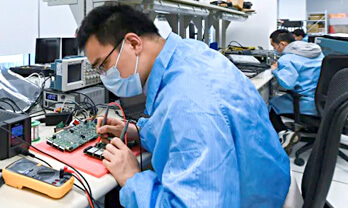
Strict quality inspection builds a solid foundation for electronic component quality.
  1. Visual inspection
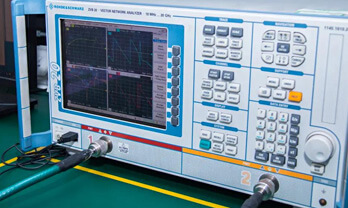
  2. Performance testing and reliability verification
  3. Standardized full-process testing
  4. Precise control of every parameter
We eliminate defective components and ensure the stable operation of electronic devices through professional quality standards.

Payment Support

The payment method can be chosen from the methods shown below: Wire Transfer (T/T, Bank Transfer), Western Union, Credit card, PayPal.
  • HKBea
  • Paypal
  • MasterCard
  • Western-Union
  • VISA
Stable Delivery, Sincere Partnership — Your Faithful Supply Chain Partner
  • Efficient Supply Management
  • Cost-Saving Procurement
  • Fast Sourcing & Delivery
Contact us if you have any questions.

Packaging

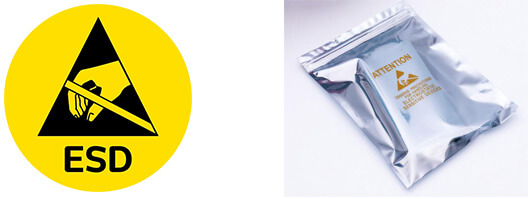
Electrostatic Discharge Protection and Handling

All electrostatic-sensitive components are handled in accordance with electrostatic discharge control procedures. The products are hermetically sealed in anti-static safe packaging to prevent electrostatic damage. Appropriate labeling is also applied for identification and traceability. This ensures product integrity during storage, handling and transportation.


ESD

Certifications & Memberships

Third-party certified, strict quality control. Our certification
  • ISO 9001: 2015
  • ISO 13485: 2016
  • ISO 14001: 2015
  • ISO 28000: 2007
  • ISO 45001: 2018
  • GB/T 27922-2011
  • SMTA
  • IPC
  • ESD
  • PSMA
SIT9120AI-2D3-25E166.660000 Image

SIT9120AI-2D3-25E166.660000

SiTime
98D-SIT9120AI-2D3-25E166.660000

Want a better price? Add to Cart and Submit RFQ now, we'll contact you immediately.

0 RFQ
Shopping cart (0 Items)
It is empty.
Compare List (0 Items)
It is empty.
Feedback

Your feedback matters! At Allelco, we value the user experience and strive to improve it constantly.
Please share your comments with us via our feedback form, and we'll respond promptly.
Thank you for choosing Allelco.

Subject
E-mail
Comments
Captcha
Drag or click to upload file
Upload File
types: .xls, .xlsx, .doc, .docx, .jpg, .png and .pdf.
Max file size: 10MB