View All

Please refer to the English Version as our Official Version.Return

Europe
France(Français) Germany(Deutsch) Italy(Italia) Russian(русский) Poland(polski) Czech(Čeština) Luxembourg(Lëtzebuergesch) Netherlands(Nederland) Iceland(íslenska) Hungarian(Magyarország) Spain(español) Portugal(Português) Turkey(Türk dili) Bulgaria(Български език) Ukraine(Україна) Greece(Ελλάδα) Israel(עִבְרִית) Sweden(Svenska) Finland(Svenska) Finland(Suomi) Romania(românesc) Moldova(românesc) Slovakia(Slovenská) Denmark(Dansk) Slovenia(Slovenija) Slovenia(Hrvatska) Croatia(Hrvatska) Serbia(Hrvatska) Montenegro(Hrvatska) Bosnia and Herzegovina(Hrvatska) Lithuania(lietuvių) Spain(Português) Switzerland(Deutsch) United Kingdom(English)
Asia/Pacific
Japan(日本語) Korea(한국의) Thailand(ภาษาไทย) Malaysia(Melayu) Singapore(Melayu) Vietnam(Tiếng Việt) Philippines(Pilipino)
Africa, India and Middle East
United Arab Emirates(العربية) Iran(فارسی) Tajikistan(فارسی) India(हिंदी) Madagascar(malaɡasʲ)
South America / Oceania
New Zealand(Maori) Brazil(Português) Angola(Português) Mozambique(Português)
North America
United States(English) Canada(English) Haiti(Ayiti) Mexico(español)
HomeProductsCrystals, Oscillators, ResonatorsOscillatorsSIT9120AI-2D3-25E166.666600
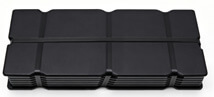
SIT9120AI-2D3-25E166.666600 Image
Image may be representation.
See specifications for product details.
EXPRESS OPTION
Payment method

SIT9120AI-2D3-25E166.666600 - SiTime

Manufacturer Part Number
SIT9120AI-2D3-25E166.666600
Manufacturer
SiTime
Allelco Part Number
98D-SIT9120AI-2D3-25E166.666600
Warranty
1 Year Allelco Warranty - Find out more
Stock Status:
35,751 pcs available, New & Original
Parts Description
MEMS OSC XO 166.6666MHZ LVDS SMD
Package
6-SMD, No Lead
Data sheet
SIT9120AI-2D3-2.pdf
RoHs Status
ROHS3 Compliant
Our certification
In stock: 35751
  • Unit Price: $2.835
  • Subtotal: $0.00

Want a better price?
Add to Cart and Submit RFQ now, we'll contact you immediately.

Quantity Unit Price Ext. Price
1+ $2.835 $2.84
The above prices does not include taxes and freight rates, which will be calculated on the order pages.


Specifications

SIT9120AI-2D3-25E166.666600 Tech Specifications
SiTime - SIT9120AI-2D3-25E166.666600 technical specifications, attributes, parameters and parts with similar specifications to SiTime - SIT9120AI-2D3-25E166.666600

Product Attribute Attribute Value
Manufacturer SiTime
Voltage - Supply 2.5V
Type XO (Standard)
Spread Spectrum Bandwidth -
Size / Dimension 0.276" L x 0.197" W (7.00mm x 5.00mm)
Series SiT9120
Ratings -
Package / Case 6-SMD, No Lead
Package Strip
Output LVDS
Product Attribute Attribute Value
Operating Temperature -40°C ~ 85°C
Mounting Type Surface Mount
Height - Seated (Max) 0.039" (1.00mm)
Function Enable/Disable
Frequency Stability ±50ppm
Frequency 166.6666 MHz
Current - Supply (Max) 55mA
Base Resonator MEMS
Absolute Pull Range (APR) -

Environmental & Export Classifications

ATTRIBUTE DESCRIPTION
RoHs Status ROHS3 Compliant
Moisture Sensitivity Level (MSL) 1 (Unlimited)
ECCN EAR99
HTSUS 8542.39.0001

Frequently Asked Questions(FAQ)

How does the frequency stability of the SIT9120AI-2D3-25E166.666600 compare to traditional quartz-based oscillators, and what design implications does this difference have in high-precision timing applications?
The SIT9120AI-2D3-25E166.666600 offers ±50ppm frequency stability, which is significantly better than many legacy crystal oscillators that may exhibit ±100ppm or worse under varying environmental conditions. This improved stability reduces clock drift over temperature and improves system synchronization accuracy. For applications such as Ethernet PHY interfaces or data converter systems operating at 166.6666 MHz, this level of precision ensures reliable data transmission and minimizes timing margin violations. Engineers should consider this enhanced stability when selecting oscillators for mission-critical timing loops where phase noise and jitter directly impact performance.
What are the key advantages of using a MEMS oscillator like the SIT9120AI-2D3-25E166.666600 over a conventional crystal oscillator in industrial environments?
The SIT9120AI-2D3-25E166.666600 benefits from MEMS technology’s inherent resistance to shock, vibration, and mechanical stress compared to fragile quartz crystals. In industrial settings with frequent handling or exposure to harsh motion, this robustness translates into higher reliability and reduced failure rates. Additionally, MEMS devices typically exhibit lower aging effects and superior long-term frequency drift characteristics. While both types operate within the same supply range (2.5V), the MEMS resonator eliminates concerns about crystal fracture during PCB assembly or field operation—making it ideal for embedded systems in transportation, factory automation, or outdoor instrumentation.
Can the SIT9120AI-2D3-25E166.666600 be used in low-power battery-operated devices, and how does its current consumption affect system-level power budgeting?
With a maximum supply current draw of 55mA at 2.5V, the SIT9120AI-2D3-25E166.666600 consumes approximately 137.5mW peak power, which may be excessive for ultra-low-power applications such as wearables or remote sensors. However, if the device supports enable/disable functionality and operates intermittently, average current can be significantly reduced by duty cycling. Designers must evaluate whether the timing accuracy and stability benefits justify the increased power envelope. For always-on systems requiring continuous 166.6666 MHz operation, alternative low-jitter clock sources with lower quiescent currents should be considered unless the application prioritizes phase noise performance over energy efficiency.
How does the LVDS output type of the SIT9120AI-2D3-25E166.666600 influence board layout requirements compared to CMOS or HCSL outputs?
The LVDS (Low-Voltage Differential Signaling) output requires careful impedance-controlled routing due to its differential pair structure and typical 350–400Ω differential impedance requirement. Unlike single-ended CMOS outputs, LVDS mandates matched trace lengths, controlled dielectric thickness, and avoidance of vias near signal paths to maintain signal integrity at 166.6666 MHz. Layout engineers must also ensure proper termination at the receiver end to prevent reflections. Compared to HCSL, LVDS offers lower EMI but demands tighter spacing between traces to avoid crosstalk. These constraints increase PCB complexity but yield better noise immunity in noisy digital environments.
What thermal considerations arise when integrating the SIT9120AI-2D3-25E166.666600 into compact enclosures, given its operating temperature range and power dissipation?
Although rated from -40°C to 85°C, the SIT9120AI-2D3-25E166.666600 generates heat through its 55mA maximum current draw. In sealed or thermally constrained enclosures, cumulative power dissipation from multiple ICs could elevate ambient temperatures beyond 85°C, violating operating specifications. Even without exceeding the absolute maximum rating, prolonged exposure near the upper limit degrades frequency stability and accelerates component aging. Thermal management strategies include spacing components adequately, using copper pours under the oscillator, or incorporating ventilation channels. Monitoring junction temperature via simulation tools is recommended for designs with tight thermal budgets.
Is the SIT9120AI-2D3-25E166.666600 suitable for automotive-grade applications despite not explicitly listing AEC-Q100 qualification?
While the SIT9120AI-2D3-25E166.666600 operates across an industrial temperature range (-40°C to 85°C), automotive systems often require extended temperature coverage (-40°C to +125°C) and rigorous qualification per AEC-Q100. Without explicit certification, this device may not meet functional safety standards required in ADAS or infotainment platforms. Engineers evaluating automotive use cases should verify with SiTime or request reliability reports demonstrating compliance with automotive criteria. For non-automotive industrial or consumer electronics within the specified temp range, the part remains viable provided environmental stress testing confirms adequate longevity.
How does the enable/disable function on the SIT9120AI-2D3-25E166.666600 impact system startup latency and wake-up sequencing?
Activating the enable pin allows rapid shutdown of the oscillator core, reducing power consumption during idle periods. When re-enabled, the SIT9120AI-2D3-25E166.666600 typically reaches stable oscillation within microseconds, enabling fast wake-up cycles essential for energy-efficient protocols like USB suspend/resume or IoT sleep modes. However, designers must account for stabilization time before critical peripherals rely on the clock—typically 1–2 ms depending on load conditions. This feature provides flexibility but requires careful firmware coordination to avoid data corruption during transitions, especially in synchronous communication links operating at 166.6666 MHz.
What are the implications of the Moisture Sensitivity Level 1 (MSL 1) classification for the SIT9120AI-2D3-25E166.666600 in reflow soldering processes?
MSL 1 indicates unlimited floor life and no special storage requirements prior to reflow, simplifying inventory handling for the SIT9120AI-2D3-25E166.666600. It can withstand standard lead-free reflow profiles (e.g., 260°C peak) without risk of moisture-induced cracking. This aligns with typical SMT assembly workflows and reduces scheduling constraints related to bake-out procedures. Nevertheless, consistent process control remains necessary to preserve solder joint integrity, particularly given the small 6-SMD package size. No additional precautions beyond standard IPC guidelines are needed for most production environments.
How does the absence of Absolute Pull Range (APR) specification affect frequency tuning capability in custom oscillator configurations using the SIT9120AI-2D3-25E166.666600?
The lack of an APR value suggests the SIT9120AI-2D3-25E166.666600 is designed as a fixed-frequency device with minimal internal tuning authority. Unlike voltage-controlled oscillators (VCXOs), it cannot be adjusted post-manufacturing to fine-tune frequency. This simplifies calibration but limits flexibility during board bring-up if slight deviations occur due to manufacturing tolerances. Engineers should reserve this component for applications where exact frequency matching is achievable through external dividers or PLL feedback rather than analog correction. Deviations beyond ±50ppm would indicate out-of-spec operation and likely require replacement rather than adjustment.
What role does spread spectrum bandwidth play in mitigating electromagnetic interference (EMI), and why isn't it specified for the SIT9120AI-2D3-25E166.666600?
Spread spectrum modulation intentionally dithers the clock frequency around the center point to reduce peak emissions at harmonic frequencies, lowering radiated and conducted EMI. Its absence in the SIT9120AI-2D3-25E166.666600 datasheet implies the device does not implement this feature, making it more susceptible to EMI spikes at multiples of 166.6666 MHz. In sensitive RF coexistence scenarios or regulatory-constrained markets (e.g., ETSI EN 300 328), this could necessitate additional filtering or layout shielding. If EMI compliance is critical, alternative SiTime models with spread spectrum support or external clock conditioning circuits may be preferable despite added complexity.
How does the physical footprint of the SIT9120AI-2D3-25E166.666600 influence placement density in high-layer-count PCBs compared to larger packaged oscillators?
At 7.00mm x 5.00mm, the SIT9120AI-2D3-25E166.666600 occupies relatively modest space on densely populated boards, enabling efficient routing in multi-layer designs. However, its surface-mount configuration without leads still requires clearance zones for adjacent components to avoid thermal coupling or mechanical interference during wave soldering. In tightly packed FPGA or ASIC designs requiring multiple timing references, careful stackup planning ensures return path continuity for LVDS signals while minimizing skew. Despite the compact form factor, alignment with high-speed digital nets demands precise placement relative to reference planes and termination resistors.
What trade-offs exist between phase noise performance and jitter characteristics when selecting the SIT9120AI-2D3-25E166.666600 for high-speed serial interfaces?
While the datasheet does not specify phase noise curves, MEMS oscillators generally offer lower integrated jitter than equivalent crystal solutions due to reduced mechanical resonances. For 166.6666 MHz interfaces such as PCIe Gen2 or DDR memory clocks, this translates to cleaner eye diagrams and improved bit error rates. However, without spread spectrum, narrowband spurs may appear near the carrier, potentially impacting SERDES equalization algorithms. Engineers must weigh these spectral attributes against power and cost constraints—choosing this device when jitter budgets permit but considering alternative architectures if ultra-low phase noise below -150 dBc/Hz @ 1 kHz offset is mandated.
Can the SIT9120AI-2D3-25E166.666600 replace a crystal oscillator in legacy designs without modifying the existing clock tree infrastructure?
The SIT9120AI-2D3-25E166.666600 shares the same 2.5V supply, LVDS output format, and enable pin function as many standard crystal oscillators, facilitating drop-in replacements in compatible systems. However, differences in startup time, load capacitance sensitivity, and drive strength may affect marginal circuit behavior. Legacy layouts assuming crystal-specific parasitics might need minor adjustments to termination networks or driver sizing. Verification through prototype testing ensures compatibility before full-scale migration. Successful integration preserves backward compatibility while gaining MEMS benefits, but undocumented assumptions about timing margins could introduce subtle failures.
What environmental factors beyond temperature could degrade the performance of the SIT9120AI-2D3-25E166.666600 over its lifetime?
Beyond thermal stress, humidity, mechanical shock, and prolonged DC bias exposure can affect MEMS resonators. Although RoHS-compliant and MSL 1-rated, repeated thermal cycling or condensation events might accelerate material fatigue in the thin-film structures underlying the SIT9120AI-2D3-25E166.666600. Field experience shows MEMS devices typically exhibit slower aging than crystals, but extreme environments still warrant accelerated life testing. Designers should avoid exposing the oscillator to corrosive atmospheres or excessive vibrational loads unless qualified for such conditions. Proper encapsulation and conformal coating further mitigate environmental risks in deployed systems.
How does the ECCN classification of EAR99 influence global procurement logistics for the SIT9120AI-2D3-25E166.666600?
Classified under EAR99, the SIT9120AI-2D3-25E166.666600 is subject to U.S. export regulations only if used in military or intelligence applications, simplifying international sourcing compared to items with stricter controls (e.g., EAR99 with license exceptions). Most commercial electronics manufacturers can import and distribute this device without complex licensing paperwork, facilitating faster lead times and broader supplier availability. However, end-use verification remains the responsibility of the buyer to ensure compliance with local regulations, particularly in regions with dual-use restrictions.
Why is the height-seated dimension of 1.00mm significant in chassis-mounted or vertically stacked PCB assemblies?
At 1.00mm maximum height, the SIT9120AI-2D3-25E166.666600 fits within tight vertical clearances common in modular or stacked electronic systems. This enables dense packaging in blade servers, telecom line cards, or aerospace avionics where space is at a premium. Compatibility with standard pick-and-place equipment simplifies automated assembly, while minimal profile reduces susceptibility to airflow blockage in forced-convection cooling scenarios. However, designers must confirm connector heights and adjacent component clearances to avoid interference during insertion or removal operations.
How does the choice of LVDS versus other output types affect interoperability with downstream ICs in a mixed-signal design?
LVDS is widely supported by high-speed transceivers, FPGAs, and PHY chips, ensuring broad compatibility for the SIT9120AI-2D3-25E166.666600 across vendors. Single-ended CMOS outputs would require level shifting and offer inferior noise rejection, while HCSL demands higher supply voltages. By selecting LVDS, engineers leverage standardized differential signaling conventions, simplifying board-level validation and reducing susceptibility to ground bounce or crosstalk. Provided the receiving IC accepts LVDS input, the interface remains robust even over longer traces, making this output type a pragmatic default for medium-distance, high-integrity clock distribution.
What validation steps are recommended before deploying the SIT9120AI-2D3-25E166.666600 in mass production to ensure long-term reliability?
Prior to volume deployment, engineers should conduct environmental stress screening including thermal cycling (-40°C to +85°C), vibration testing per JEDEC standards, and accelerated life testing under elevated temperature and voltage conditions. Functional verification must confirm stable 166.6666 MHz output across all corners of supply voltage and temperature. Oscilloscope measurements should validate rise/fall times, jitter, and phase noise within acceptable limits. Sampling multiple units from different batches ensures process consistency. Only after passing these tests can confidence in field reliability be established, minimizing early-life failure risks associated with MEMS device maturation.

Parts with Similar Specifications

The three parts on the right have similar specifications to SiTime SIT9120AI-2D3-25E166.666600

Product Attribute SIT9120AI-2D3-25E166.666600X SIT9120AI-2D3-25E166.666600Y SIT9120AI-2D3-25E166.666600T SIT9120AI-2D3-25E166.666000T
Part Number SIT9120AI-2D3-25E166.666600X SIT9120AI-2D3-25E166.666600Y SIT9120AI-2D3-25E166.666600T SIT9120AI-2D3-25E166.666000T
Manufacturer SiTime SiTime SiTime SiTime
Height - Seated (Max) - - - -
Output - - - -
Series - - - -
Package / Case - 196-LFBGA 16-DIP (0.300', 7.62mm) 64-VFQFN Exposed Pad
Frequency Stability - - - -
Absolute Pull Range (APR) - - - -
Frequency - - - -
Size / Dimension - - - -
Type - - - -
Mounting Type - Surface Mount Through Hole Surface Mount
Function - - - -
Ratings - - - -
Spread Spectrum Bandwidth - - - -
Current - Supply (Max) - - - -
Operating Temperature - -40°C ~ 85°C 0°C ~ 70°C -40°C ~ 85°C
Voltage - Supply - - - -
Package - Tape & Reel (TR) Tube Tape & Reel (TR)
Base Resonator - - - -

SIT9120AI-2D3-25E166.666600 Datasheet PDF

Download SIT9120AI-2D3-25E166.666600 pdf datasheets and SiTime documentation for SIT9120AI-2D3-25E166.666600 - SiTime.

Other Related Documents
Manufacturing Notes for SiTime Products.pdf

Customer Reviews

Evaluation: 10 Articles

  • ECUb***h
    Sep 22, 2026

    Used for repair of an older automotive ECU. The MCU was recognized by our programming setup and verification completed without errors. The repaired board now starts and communicates normally.

  • RS48***ieldTech
    Sep 16, 2026

    Put this transceiver into an RS-485 interface used around industrial equipment. Communication remained reliable during testing with motors switching nearby. Good result for the replacement board.

  • Logi***b_Chris
    Sep 8, 2026

    Purchased for a Cyclone III development project. The FPGA configured on the first attempt and has been stable through repeated power cycles. No problems with the I/O we are using.

  • Circ***FixerTom
    Sep 2, 2026

    Used this rectifier in a high-current power supply repair. Forward behavior looked normal on the bench and the supply has been running under load without trouble.

  • Retr***UWorks
    Aug 31, 2026

    Needed the exact ST10F269Z2Q6 for servicing an older control unit. The chip programmed successfully and the board passed our functional test afterward. Much easier than redesigning around a newer MCU.

  • Andr***PCBLab
    Aug 28, 2026

    I needed this ADC for an older data acquisition board. Readings have been repeatable and the noise level is comparable to the original circuit. Happy with the purchase.

  • Leat***O'Keefe
    Aug 20, 2026

    one of my hobbies is skydiving. and when i'm skydiving this works great.

  • Ilen***
    Aug 20, 2026

    This product works considerably well. It secretly improves my basketball by a lot.

  • Indu***ialPower
    Aug 17, 2026

    Installed this IGBT module in a power conversion cabinet. Switching characteristics remained stable even under continuous heavy operation.

  • Nikh***ech
    Aug 13, 2026

    Great low-power MCU for portable equipment. Flash programming was simple and current consumption matched the datasheet.

Write a Review

Your Email address will not be published.

Shipment

Delivery Time

In-stock items can be shipped within 24 hours. Some parts will be arranged for delivery within 1-2 days from the date all items arrive at our warehouse. And Allelco ships order once a day at about 17:00, except Sunday. Once the goods are shipped, the estimated delivery time depends on the shipping methods and Delivery destination. The table below shows are the logistic time for some common countries.

Delivery Cost

  1. Use your express account for shipment if you have one.
  2. Use our account for the shipment. Refer to the table below for the approximate charges.
(Different time frame / countries / package size has different price.)

Delivery Method

  1. Global Common Shipment by DHL / UPS / FedEx / TNT / EMS / SF we support.
  2. Others more shipping ways, please get in touch with your customer manager.

Common Countries Logistic Time Reference
Region Country Logistic Time(Day)
America United States 5
Brazil 7
Europe Germany 5
United Kingdom 4
Italy 5
Oceania Australia 6
New Zealand 5
Asia India 4
Japan 4
Middle East Israel 6
DHL & FedEx Shipment Charges Reference
Shipment charges(KG) Reference DHL(USD$)
0.00kg-1.00kg USD$30.00 - USD$60.00
1.00kg-2.00kg USD$40.00 - USD$80.00
2.00kg-3.00kg USD$50.00 - USD$100.00
Note:
The above table is for reference only. There may have some data bias for the uncontrollable factors.
Contact us if you have any questions.
  • QC (Quality Warranty)
  • Payment Support
  • Packaging
  • Certifications & Memberships

QC (Quality Warranty)

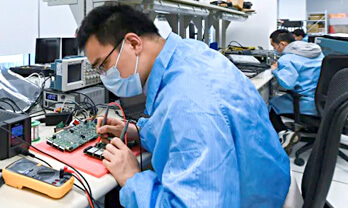
Allelco is committed to exceeding customer expectations through customer service excellence, order accuracy, and on-time delivery.
This is achieved through our commitment to the continual improvement of our processes, services, and products.


Strict quality inspection builds a solid foundation for electronic component quality.
  1. Visual inspection
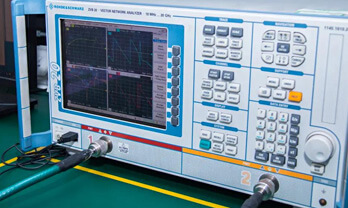
  2. Performance testing and reliability verification
  3. Standardized full-process testing
  4. Precise control of every parameter
We eliminate defective components and ensure the stable operation of electronic devices through professional quality standards.

Payment Support

The payment method can be chosen from the methods shown below: Wire Transfer (T/T, Bank Transfer), Western Union, Credit card, PayPal.
  • HKBea
  • Paypal
  • MasterCard
  • Western-Union
  • VISA
Stable Delivery, Sincere Partnership — Your Faithful Supply Chain Partner
  • Efficient Supply Management
  • Cost-Saving Procurement
  • Fast Sourcing & Delivery
Contact us if you have any questions.

Packaging

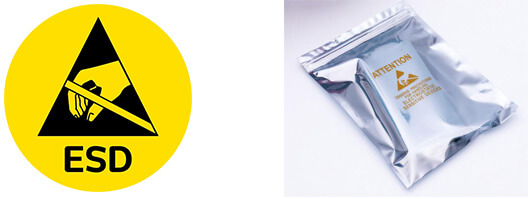
Electrostatic Discharge Protection and Handling

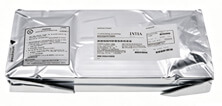
All electrostatic-sensitive components are handled in accordance with electrostatic discharge control procedures. The products are hermetically sealed in anti-static safe packaging to prevent electrostatic damage. Appropriate labeling is also applied for identification and traceability. This ensures product integrity during storage, handling and transportation.


ESD

Certifications & Memberships

Third-party certified, strict quality control. Our certification
  • ISO 9001: 2015
  • ISO 13485: 2016
  • ISO 14001: 2015
  • ISO 28000: 2007
  • ISO 45001: 2018
  • GB/T 27922-2011
  • SMTA
  • IPC
  • ESD
  • PSMA
SIT9120AI-2D3-25E166.666600 Image

SIT9120AI-2D3-25E166.666600

SiTime
98D-SIT9120AI-2D3-25E166.666600

Want a better price? Add to Cart and Submit RFQ now, we'll contact you immediately.

0 RFQ
Shopping cart (0 Items)
It is empty.
Compare List (0 Items)
It is empty.
Feedback

Your feedback matters! At Allelco, we value the user experience and strive to improve it constantly.
Please share your comments with us via our feedback form, and we'll respond promptly.
Thank you for choosing Allelco.

Subject
E-mail
Comments
Captcha
Drag or click to upload file
Upload File
types: .xls, .xlsx, .doc, .docx, .jpg, .png and .pdf.
Max file size: 10MB