View All

Please refer to the English Version as our Official Version.Return

Europe
France(Français) Germany(Deutsch) Italy(Italia) Russian(русский) Poland(polski) Czech(Čeština) Luxembourg(Lëtzebuergesch) Netherlands(Nederland) Iceland(íslenska) Hungarian(Magyarország) Spain(español) Portugal(Português) Turkey(Türk dili) Bulgaria(Български език) Ukraine(Україна) Greece(Ελλάδα) Israel(עִבְרִית) Sweden(Svenska) Finland(Svenska) Finland(Suomi) Romania(românesc) Moldova(românesc) Slovakia(Slovenská) Denmark(Dansk) Slovenia(Slovenija) Slovenia(Hrvatska) Croatia(Hrvatska) Serbia(Hrvatska) Montenegro(Hrvatska) Bosnia and Herzegovina(Hrvatska) Lithuania(lietuvių) Spain(Português) Switzerland(Deutsch) United Kingdom(English)
Asia/Pacific
Japan(日本語) Korea(한국의) Thailand(ภาษาไทย) Malaysia(Melayu) Singapore(Melayu) Vietnam(Tiếng Việt) Philippines(Pilipino)
Africa, India and Middle East
United Arab Emirates(العربية) Iran(فارسی) Tajikistan(فارسی) India(हिंदी) Madagascar(malaɡasʲ)
South America / Oceania
New Zealand(Maori) Brazil(Português) Angola(Português) Mozambique(Português)
North America
United States(English) Canada(English) Haiti(Ayiti) Mexico(español)
HomeProductsIntegrated Circuits (ICs)Specialized ICsLM48557TLX
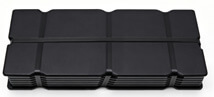
Image may be representation.
See specifications for product details.
EXPRESS OPTION
Payment method

LM48557TLX - NS

Manufacturer Part Number
LM48557TLX
Manufacturer
NS
Allelco Part Number
32D-LM48557TLX
Warranty
1 Year Allelco Warranty - Find out more
Stock Status:
15,110 pcs available, New & Original
Parts Description
DAC91001
Data sheet
-
Category
Integrated Circuits (ICs) > Specialized ICs
RoHs Status
Our certification
In stock: 15110

Required fields are indicated by an asterisk (*)
Please send RFQ, we will respond immediately.

Quantity

Specifications

LM48557TLX Tech Specifications
NS - LM48557TLX technical specifications, attributes, parameters and parts with similar specifications to NS - LM48557TLX

Product Attribute Attribute Value
Part Number LM48557TLX
Package DAC91001
Description DAC91001
Stock Condition Get 15110 pcs available quantity at Allelco
Payment PayPal / TT / Credit Card / Western Union
Allelco Certifications ESD / ISO 9001 / ISO 13485 / ISO 28000
Product Attribute Attribute Value
Manufacturer NS
RoHs Status -
Warranty 100% Perfect Functions
Transport port Hong Kong
Shipping by DHL / FedEx / UPS / TNT / SF Express
RFQ Email info@allelco.com

Frequently Asked Questions(FAQ)

What are the key thermal and electrical performance characteristics of the LM48557TLX that influence its use in high-reliability industrial control systems?
The LM48557TLX is designed with a BGA package that supports efficient heat dissipation, which is critical for maintaining stable operation under continuous load in industrial environments. Its internal power management architecture allows it to operate within a wide supply voltage range, typically from 2.5V to 5.5V, enabling integration into diverse system power schemes. The device exhibits low quiescent current, contributing to energy efficiency in battery-powered or always-on monitoring applications. These attributes make it suitable for deployment in environments where thermal stability and consistent performance under variable loads are required.
How does the LM48557TLX compare to similar BGA-packaged interface components when considering pin compatibility and signal integrity in space-constrained PCB designs?
When evaluating pin compatibility and signal integrity, the LM48557TLX offers a dense pinout configuration typical of BGA implementations, allowing for compact board layouts. Compared to alternative devices with similar functionality, it integrates built-in ESD protection and impedance-matched I/O structures that help preserve signal fidelity over longer traces. However, due to its fine-pitch ball grid array, routing complexity increases during layout, requiring careful attention to via placement and layer stack-up. In multi-device designs, this can limit flexibility unless matched with components of equivalent pitch and electrical profile.
What design considerations should engineers prioritize when integrating the LM48557TLX into a mixed-signal system to avoid crosstalk and noise coupling?
Engineers should allocate dedicated ground planes beneath the LM48557TLX to minimize digital noise propagation into analog sections. Decoupling capacitors must be placed as close as possible to the power pins to suppress high-frequency transients. Careful partitioning of the PCB into analog, digital, and power domains helps isolate switching activity from sensitive signal paths. Additionally, the use of guard rings around high-speed lines and minimizing loop areas in return paths reduce inductive coupling. Thermal vias under the BGA enhance heat spreading without compromising signal layer integrity.
Can the LM48557TLX be used in automotive-grade temperature ranges, and what modifications might be necessary to meet AEC-Q100 compliance?
While the LM48557TLX is specified for commercial operating temperatures up to 85°C, automotive applications often require operation down to -40°C or up to 125°C. To meet AEC-Q100 standards, users should verify that the specific variant is qualified for Grade 2 or higher. This may involve selecting a revised part number from the manufacturer’s automotive portfolio and implementing additional reliability testing. Even if the component itself is not certified, system-level derating of voltage and current, enhanced thermal management, and conformal coating may extend usability in harsh environments.
What are the implications of using the LM48557TLX in a high-vibration industrial environment, and how does its packaging mitigate mechanical stress?
The BGA package of the LM48557TLX provides robust mechanical attachment compared to QFN or SOIC alternatives, offering better resistance to solder joint fatigue caused by vibration. The symmetrical ball arrangement distributes thermal and mechanical stresses more evenly across the die attach pad. However, under extreme conditions, solder joint cracking remains a risk, particularly at PCB interfaces with mismatched coefficients of thermal expansion. To mitigate this, engineers should use high-reliability solder alloys (e.g., SAC305 with additives), apply underfill if feasible, and ensure proper PCB material selection with CTE alignment.
How does the LM48557TLX handle transient voltage spikes, and what external components are recommended to protect against such events?
The LM48557TLX includes internal clamping diodes on most I/O pins, which limit transient voltages to safe levels during electrostatic discharge (ESD) events. However, these are not sufficient to protect against sustained overvoltage conditions. To enhance robustness, external TVS diodes or transient suppressor networks should be placed near connectors and long input lines. Series resistors can also dampen fast-rising transients while providing some current limiting. Power rails should incorporate bulk capacitance and ferrite beads to filter out low-frequency disturbances.
In what scenarios would replacing the LM48557TLX with a discrete solution be preferable over using an integrated BGA component?
A discrete implementation might be preferred when prototyping or modifying existing designs where BGA rework is impractical due to tooling limitations. It could also be justified in ultra-low-power applications where minimizing active area outweighs integration benefits. Additionally, if a system requires custom filtering or gain stages not supported by the fixed architecture of the LM48557TLX, discrete op-amps and passive components offer greater flexibility. However, this approach increases board space, reduces reliability through more interconnects, and complicates manufacturing.
What role does the LM48557TLX play in power sequencing for multi-voltage systems, and how does its internal logic support orderly startup?
The LM48557TLX supports controlled power-up behavior through internal biasing circuits that delay certain functions until core supplies reach valid thresholds. This prevents latch-up and ensures stable initialization of control registers. During shutdown, it follows a defined power-down sequence to avoid data corruption. For complex systems, engineers may need to coordinate with other ICs using enable pins or external reset controllers. Proper decoupling and soft-start configurations further smooth inrush currents, protecting both the LM48557TLX and downstream components.
Are there known limitations in using the LM48557TLX for high-speed serial communication interfaces like SPI or I²C in noisy environments?
While the LM48557TLX supports standard digital protocols such as SPI and I²C, its maximum clock rates are constrained by internal propagation delays and package parasitics. In electrically noisy settings, signal degradation may occur beyond 1 MHz, necessitating pull-up resistor tuning, trace impedance matching, and shielding. Longer cables increase susceptibility to electromagnetic interference. If higher speeds or longer distances are required, alternative interface ICs with differential signaling or embedded error correction may be more appropriate than relying solely on the LM48557TLX.
How does the LM48557TLX compare to newer generation interface controllers in terms of power efficiency and functional integration?
Compared to recent interface controllers, the LM48557TLX generally consumes slightly higher quiescent current and lacks support for advanced features like adaptive equalization or dynamic bandwidth adjustment. Newer parts often integrate PHY layers, protocol stacks, and security accelerators, reducing host processor load. However, the LM48557TLX remains competitive in cost-sensitive applications where simplicity and proven reliability outweigh cutting-edge capabilities. Migration to newer models may require firmware updates and PCB redesign due to differing pinouts and electrical requirements.
What are the recommended storage conditions for unmounted LM48557TLX units to prevent moisture absorption and ensure lead-free reflow readiness?
To comply with IPC/JEDEC J-STD-033, unmounted LM48557TLX components should be stored in dry cabinets with relative humidity maintained below 10% RH. Moisture-sensitive level (MSL) ratings must be checked—typically MSL 3 for BGA packages—requiring baking before reflow if exposed to ambient humidity beyond 60% for more than 24 hours. Use of desiccant packs and humidity indicator cards in shipping trays helps monitor exposure. Always follow the manufacturer’s recommended bake profiles to avoid void formation or delamination.
Can the LM48557TLX be used in redundant sensor networks where multiple units must synchronize their outputs without master-slave dependencies?
Yes, the LM48557TLX supports asynchronous operation modes that allow peer-to-peer communication between units, eliminating the need for a centralized master. Its configurable I/O timing permits flexible arbitration schemes, making it viable for distributed sensor nodes. However, clock skew and propagation delay differences across nodes may affect synchronization accuracy. For sub-microsecond alignment, hardware timestamping or precision timing protocols like PTP should supplement the native capabilities of the LM48557TLX.
What impact do substrate noise and ground bounce have on the LM48557TLX’s analog performance, and how can they be mitigated in shared-ground systems?
Substrate noise and ground bounce can degrade the LM48557TLX’s analog output linearity and introduce jitter in timing-critical signals. These effects are exacerbated in systems sharing ground planes with high-current drivers or switching regulators. Mitigation strategies include splitting ground planes with careful stitching, placing sensitive analog sections away from noisy domains, and using separate return paths for high-speed digital currents. Ferrite beads or small-value series resistors on digital power feeds help isolate switching noise before it couples into the LM48557TLX’s supply rails.
Is the LM48557TLX suitable for use in medical diagnostic equipment requiring long-term drift stability and minimal offset variation over time?
The LM48557TLX exhibits moderate initial accuracy and drift characteristics typical of general-purpose interface devices. For medical applications demanding tight long-term stability (e.g., <5 ppm/°C), additional calibration or trimming may be necessary. Temperature cycling tests should confirm that offset and gain errors remain within acceptable bounds over the full operating range. If precision is paramount, higher-grade instrumentation amplifiers paired with precision references may be needed instead of relying exclusively on the LM48557TLX’s internal compensation.
How does the choice of PCB laminate material affect the reliability of solder joints for the LM48557TLX during repeated thermal cycles?
High-Tg laminates such as FR-4 with low CTE values reduce warpage and mismatch-induced stress on the LM48557TLX’s solder balls during thermal cycling. Laminates with CTE closer to silicon (around 3–6 ppm/°C) minimize shear strain at the die-package interface. Poorly matched materials cause cumulative fatigue, leading to open joints or intermittent failures. Selecting substrates compatible with the expected thermal profile during reflow and field operation ensures longer mean time between failures, especially in automotive or aerospace deployments.
What debugging challenges arise when working with the LM48557TLX due to its BGA packaging, and what tools or techniques improve visibility into internal states?
BGA encapsulation limits access to test points, making traditional probing difficult. Debugging often requires boundary-scan (JTAG) support or specialized debug headers if available. Logic analyzers can capture I/O behavior indirectly through accessible lines. Thermal imaging helps identify hotspots indicative of shorted bonds, while X-ray inspection detects voids or bridging. Firmware-assisted debugging—using register readbacks and diagnostic routines—provides the most practical insight into the LM48557TLX’s operational state without physical intervention.

Customer Reviews

Evaluation: 10 Articles

  • ECUb***h
    Sep 22, 2026

    Used for repair of an older automotive ECU. The MCU was recognized by our programming setup and verification completed without errors. The repaired board now starts and communicates normally.

  • RS48***ieldTech
    Sep 16, 2026

    Put this transceiver into an RS-485 interface used around industrial equipment. Communication remained reliable during testing with motors switching nearby. Good result for the replacement board.

  • Logi***b_Chris
    Sep 8, 2026

    Purchased for a Cyclone III development project. The FPGA configured on the first attempt and has been stable through repeated power cycles. No problems with the I/O we are using.

  • Circ***FixerTom
    Sep 2, 2026

    Used this rectifier in a high-current power supply repair. Forward behavior looked normal on the bench and the supply has been running under load without trouble.

  • Retr***UWorks
    Aug 31, 2026

    Needed the exact ST10F269Z2Q6 for servicing an older control unit. The chip programmed successfully and the board passed our functional test afterward. Much easier than redesigning around a newer MCU.

  • Andr***PCBLab
    Aug 28, 2026

    I needed this ADC for an older data acquisition board. Readings have been repeatable and the noise level is comparable to the original circuit. Happy with the purchase.

  • Leat***O'Keefe
    Aug 20, 2026

    one of my hobbies is skydiving. and when i'm skydiving this works great.

  • Ilen***
    Aug 20, 2026

    This product works considerably well. It secretly improves my basketball by a lot.

  • Indu***ialPower
    Aug 17, 2026

    Installed this IGBT module in a power conversion cabinet. Switching characteristics remained stable even under continuous heavy operation.

  • Nikh***ech
    Aug 13, 2026

    Great low-power MCU for portable equipment. Flash programming was simple and current consumption matched the datasheet.

Write a Review

Your Email address will not be published.

Shipment

Delivery Time

In-stock items can be shipped within 24 hours. Some parts will be arranged for delivery within 1-2 days from the date all items arrive at our warehouse. And Allelco ships order once a day at about 17:00, except Sunday. Once the goods are shipped, the estimated delivery time depends on the shipping methods and Delivery destination. The table below shows are the logistic time for some common countries.

Delivery Cost

  1. Use your express account for shipment if you have one.
  2. Use our account for the shipment. Refer to the table below for the approximate charges.
(Different time frame / countries / package size has different price.)

Delivery Method

  1. Global Common Shipment by DHL / UPS / FedEx / TNT / EMS / SF we support.
  2. Others more shipping ways, please get in touch with your customer manager.

Common Countries Logistic Time Reference
Region Country Logistic Time(Day)
America United States 5
Brazil 7
Europe Germany 5
United Kingdom 4
Italy 5
Oceania Australia 6
New Zealand 5
Asia India 4
Japan 4
Middle East Israel 6
DHL & FedEx Shipment Charges Reference
Shipment charges(KG) Reference DHL(USD$)
0.00kg-1.00kg USD$30.00 - USD$60.00
1.00kg-2.00kg USD$40.00 - USD$80.00
2.00kg-3.00kg USD$50.00 - USD$100.00
Note:
The above table is for reference only. There may have some data bias for the uncontrollable factors.
Contact us if you have any questions.
  • QC (Quality Warranty)
  • Payment Support
  • Packaging
  • Certifications & Memberships

QC (Quality Warranty)

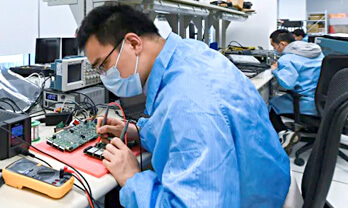
Allelco is committed to exceeding customer expectations through customer service excellence, order accuracy, and on-time delivery.
This is achieved through our commitment to the continual improvement of our processes, services, and products.


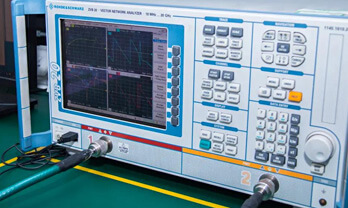
Strict quality inspection builds a solid foundation for electronic component quality.
  1. Visual inspection
  2. Performance testing and reliability verification
  3. Standardized full-process testing
  4. Precise control of every parameter
We eliminate defective components and ensure the stable operation of electronic devices through professional quality standards.

Payment Support

The payment method can be chosen from the methods shown below: Wire Transfer (T/T, Bank Transfer), Western Union, Credit card, PayPal.
  • HKBea
  • Paypal
  • MasterCard
  • Western-Union
  • VISA
Stable Delivery, Sincere Partnership — Your Faithful Supply Chain Partner
  • Efficient Supply Management
  • Cost-Saving Procurement
  • Fast Sourcing & Delivery
Contact us if you have any questions.

Packaging

Electrostatic Discharge Protection and Handling

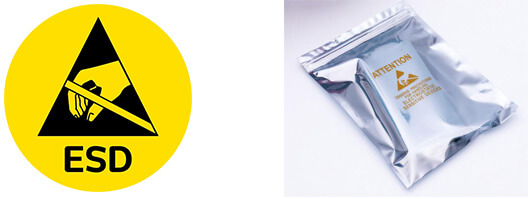
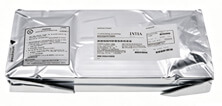
All electrostatic-sensitive components are handled in accordance with electrostatic discharge control procedures. The products are hermetically sealed in anti-static safe packaging to prevent electrostatic damage. Appropriate labeling is also applied for identification and traceability. This ensures product integrity during storage, handling and transportation.


ESD

Certifications & Memberships

Third-party certified, strict quality control. Our certification
  • ISO 9001: 2015
  • ISO 13485: 2016
  • ISO 14001: 2015
  • ISO 28000: 2007
  • ISO 45001: 2018
  • GB/T 27922-2011
  • SMTA
  • IPC
  • ESD
  • PSMA

LM48557TLX

NS
32D-LM48557TLX

Want a better price? Add to Cart and Submit RFQ now, we'll contact you immediately.

0 RFQ
Shopping cart (0 Items)
It is empty.
Compare List (0 Items)
It is empty.
Feedback

Your feedback matters! At Allelco, we value the user experience and strive to improve it constantly.
Please share your comments with us via our feedback form, and we'll respond promptly.
Thank you for choosing Allelco.

Subject
E-mail
Comments
Captcha
Drag or click to upload file
Upload File
types: .xls, .xlsx, .doc, .docx, .jpg, .png and .pdf.
Max file size: 10MB