Everything You Need to Know About DDR3
In the rapidly evolving world of memory technology, DDR3 SDRAM has emerged as a groundbreaking advancement, addressing the increasing demands for efficiency, performance, and scalability in modern computing. From innovative features like Command Write Delay (CWD) and On Die Calibration Engine (ODCE) to notable enhancements in power management and thermal control, DDR3 introduces a host of capabilities that redefine memory performance. This article explores the key features, architectural improvements, and practical applications of DDR3, shedding light on how it surpasses its predecessor, DDR2, and sets a new standard in memory design for both consumer and industrial applications.Catalog
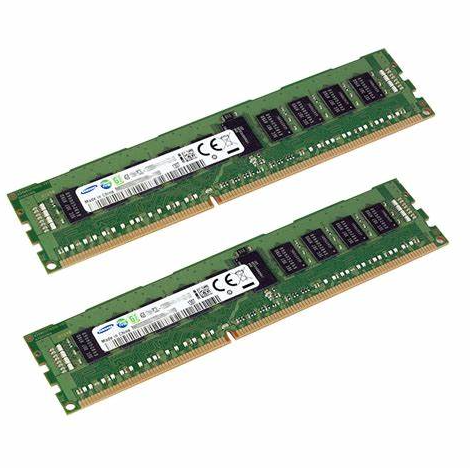
Overview
CWD, or Command Write Delay, is a mechanism designed to optimize write delays in memory systems, enhancing data management efficiency. The Reset command activates a super power-saving mode in DDR3 SDRAM, halting memory operations and shifting the system into low-energy standby. This feature conserves energy and extends memory lifespan, making it mostly valuable for mobile and embedded applications where power efficiency is used.
The ZQ function advances terminal resistance calibration through the On Die Calibration Engine (ODCE), fine-tuning On Die Termination (ODT) resistance to maintain signal integrity under varying conditions. This calibration mitigates risks like signal degradation that can compromise data accuracy and system stability. High-performance computing environments highlight the reliability improvements these optimizations provide, especially in applications demanding consistent performance.
The Self-Reflash Temperature (SRT) function integrates programmable temperature control for present adjustments to memory clock speeds based on thermal conditions. This enhances power management and prevents overheating, a common challenge that can lead to throttling or component failure. Additionally, the Partial Array Self-Refresh (PASR) feature selectively refreshes active memory segments, significantly reducing power consumption. This targeted approach to resource management is widely recognized as an effective strategy for optimizing memory performance without sacrificing efficiency, mostly in systems with irregular memory usage patterns.
New Design of DDR3
The DDR3 memory architecture introduces an innovative 8-bit prefetch design, which effectively doubles the previous 4-bit prefetch characteristic found in DDR2. This advancement allows the DRAM core to function at just 1/8 of the data frequency. For instance, DDR3-800 operates at a core frequency of merely 100MHz, showcasing a significant leap in efficiency.
Key features of this design include:
• The implementation of a point-to-point topology, which significantly reduces the load on address, command, and control buses, leading to enhanced overall system performance.
• A manufacturing process that falls below 100nm, resulting in a decrease in operating voltage from 1.8V in DDR2 to 1.5V. This reduction not only fosters energy efficiency but also promotes better thermal management within the system.
• The introduction of asynchronous reset and ZQ calibration functionalities, marking a meaningful transformation in design that boosts operational stability and efficiency.
These enhancements reflect a thoughtful approach to memory architecture, aiming to meet the evolving demands of modern computing while considering aspects like energy consumption and system performance.
DDR2 and DDR3 Comparison
|
Feature |
DDR2 |
DDR3 |
|
Burst Length (BL) |
BL=4 is commonly used |
BL=8 is fixed; supports a 4-bit Burst Chop (BL=4 read +
BL=4 write to synthesize BL=8). Controlled via A12 address line. Burst
interrupt is prohibited |
|
Addressing Timing |
CL range: 2–5; Additional Latency (AL) range: 0–4 |
CL range: 5–11; AL options: 0, CL-1, CL-2. Adds Write
Delay (CWD) based on operating frequency |
|
Reset Function |
Not available |
Newly introduced. A dedicated reset pin simplifies
initialization, reduces power consumption, and halts internal functions
during reset |
|
ZQ Calibration |
Not available |
Introduced with a ZQ pin using a 240-ohm reference
resistor. Automatically calibrates data output and ODT resistance |
|
Reference Voltage |
Single reference voltage (VREF) |
Divided into two signals: VREFCA (command/address) and
VREFDQ (data bus), improving signal-to-noise ratio |
|
Point-to-Point Connection (P2P) |
Multiple memory channels supported per controller |
Memory controller handles one channel with one slot,
enabling P2P or P22P relationships. Reduces bus load and improves
performance |
|
Power Consumption |
Standard self-refresh mechanisms |
Advanced features like automatic self-refresh and partial
self-refresh based on temperature, leading to better efficiency |
|
Applications |
Primarily used in desktops and servers |
Ideal for mobile devices, servers, and desktops due to
high frequency, speed, and lower power consumption |
|
Future Platform Support |
Supported on legacy systems and current platforms |
Supported by Intel's Bear Lake and AMD K9 platforms for
future compatibility |
Memory Improvements of DDR3
Logical Banks
The evolution from DDR2 to DDR3 represents a notable shift in-memory architecture, initiating with 8 logical banks and the potential to expand up to 16. This development goes beyond technical enhancements; it mirrors an increasing demand for high-capacity chips capable of handling complex applications. As both software and hardware requirements continue to rise, the ability to support more logical banks becomes increasingly relevant. Experiences across various industries suggest that systems designed with scalability in mind often provide greater long-term returns, as they can adjust to future technical changes without the need for extensive overhauls.
Packaging
The DDR3 packaging signifies a remarkable advancement in engineering, highlighted by a higher pin count that enables new functionalities. The transition from DDR2's 60/68/84-ball FBGA packages to the 78-ball FBGA for 8-bit chips and the 96-ball FBGA for 16-bit chips illustrates this leap. This improvement not only enhances data transfer capabilities but also reflects a growing commitment to sustainability, as DDR3 complies with strict environmental standards, eliminating harmful substances. In today’s manufacturing landscape, you can be increasingly drawn to products that prioritize ecological responsibility, emphasizing the need to weave sustainable practices into high-tech innovations.
Power Consumption
A standout feature of DDR3 is its capacity to deliver high bandwidth while significantly minimizing power consumption. By reducing the operating voltage from DDR2's 1.8V to 1.5V, DDR3 is projected to use 30% less power overall. The power ratios for DDR3-800, 1066, and 1333—0.72X, 0.83X, and 0.95X respectively—demonstrate a clear path toward enhanced performance and efficiency. This decrease in power consumption not only supports environmental sustainability but also prolongs the device's lifespan, as reduced heat generation leads to less thermal stress on components. Historical data from various sectors indicate that energy-efficient technologies tend to lower operational costs over time, reinforcing the value of DDR3.
Pros in Performance
|
Performance Advantage |
Details |
|
Less Power Consumption and Heat |
DDR3 draws lessons from DDR2, reducing energy consumption
and heat while maintaining cost control. This makes DDR3 more appealing to you |
|
Higher Operating Frequency |
Due to lower energy consumption, DDR3 achieves higher
operating frequencies, compensating for longer delay times and serving as a
selling point for graphics cards |
|
Reduced Graphics Card Cost |
DDR3 uses larger memory particles (32M x 32-bit),
requiring fewer chips to achieve the same capacity as DDR2, reducing PCB
area, power consumption, and cost |
|
Improved Versatility |
DDR3 offers better compatibility with DDR2 due to
unchanged key features (pins, packaging), enabling easier integration with
existing DDR2 designs |
|
Wide Adoption |
DDR3 is widely used in new high-end graphics cards and
increasingly adopted in low-end graphics cards |
Growth History
The DDR3 memory standard, officially unveiled by JEDEC on June 28, 2002, represented a major moment in the evolution of memory technology. Yet, it wasn't until 2006 that DDR2 truly began to carve out its niche in the marketplace. This lag in widespread acceptance did not deter manufacturers from eagerly pursuing DDR3 solutions, highlighting a visionary approach to memory technology that would ultimately transform the industry.
Market Share
Market analysts, including those from iSuppli, anticipated that by 2008, DDR3 would establish a dominant position within the memory sector, forecasting a market share of 55%. By the close of 2008, DDR3 memory modules, operating at frequencies of 1066, 1333, and 1600 MHz, became readily available to consumers. While DDR3 shared architectural similarities with DDR2, it effectively tackled the shortcomings of its predecessor, facilitating a smoother transition and fostering broader acceptance. This progression illustrates the value of flexibility in technical advancements, as you can adeptly respond to consumer needs while simultaneously enhancing performance metrics.
New Features
DDR3 memory brings substantial enhancements over DDR2, featuring elevated data transfer rates, an innovative topology for address and control buses, and improved energy efficiency. The introduction of an 8-bit prefetch design combined with a point-to-point architecture not only optimizes operations but also elevates overall performance. These improvements mirror a wider trend in technology where speed and efficiency reign supreme. Insights from various sectors reveal that those who embrace innovation often secure a competitive edge, evidenced by the swift adoption of DDR3 across multiple applications.
Capacity Milestone
In late 2009, Samsung captured attention with the release of a groundbreaking 4Gb DDR3 chip fabricated using a 50nm process, enabling the creation of 32GB memory sticks and significantly enhancing the potential of 64-bit computing. This chip also boasted an impressive 40% reduction in power consumption compared to earlier generations. Projections indicating a rise in DDR3's market share to 72% by 2011 further accentuated the natural progression from DDR2 to DDR3. This shift serves as a reminder of the cyclical nature of technological advancement, where each new iteration builds upon its predecessor, driving innovation and efficiency in an ever-changing digital environment.
About us
ALLELCO LIMITED
Read more
Quick inquiry
Please send an inquiry, we will respond immediately.
Digital Signal Processing: Principles and Applications
on December 30th
Exploring Block RAM in Xilinx SP3 Series: Features, Differences, and Optimization
on December 30th
Popular Posts
-

Complex Instruction Set Computers: How They Changed Computing?
on April 18th 147749
-

USB-C Pinout and Features
on April 18th 111920
-
Using Xilinx Unified Simulation Primitives: A Comprehensive Guide to FPGA Design and Simulation
on April 18th 111349
-

Power Supply Voltages in Electronics: Meaning of VCC, VDD, VEE, VSS, and GND
on April 18th 83714
-

RJ45 Connector Guide: Pinout, Wiring, Cable Types, and Uses
on January 1th 79502
-

The Ultimate Guide to Wire Color Codes in Modern Electrical Systems
The way our electrical systems use colors isn’t just for looks. Each wire color now indicates a specific function, making it easier to identify and handle electrical components correctly during ins...on January 1th 66872
-

Quality (Q) Factor: Equations and Applications
The quality factor, or 'Q', is important when checking how well inductors and resonators work in electronic systems that use radio frequencies (RF). 'Q' measures how well a circuit minimizes energy...on January 1th 63005
-
Purge Valve Guide: Function, Symptoms, Testing, and Replacement for Optimal Engine Performance
The purge valve is a key part of a car’s system that helps keep the air clean by managing fuel vapors before they can escape into the atmosphere. This not only helps the environment by reducing pol...on January 1th 62952
-

Achieving Peak Performance with the Maximum Power Transfer Theorem
The Maximum Power Transfer Theorem explains how energy from a source, such as a battery or generator, flows to a connected load. It shows the exact condition where the load receives the most power....on January 1th 54078
-

A23 Battery Specifications and Compatibility
The A23 battery is a small, cylinder-shaped battery with high voltage. Also called 23A, 23AE, or MN21, it runs at 12 volts and much higher than AA or AAA batteries. Its special design make...on January 1th 52092
HOT Part Number
-

BD9B100MUV-E2
Rohm Semiconductor
IC REG BUCK ADJ 1A 16VQFN
UPD70F3539AF5A9-PN7-Q-A
Renesas Electronics America Inc
IC MICROCONTROLLER
18081A621JAT2A
KYOCERA AVX
CAP CER 620PF 100V NP0 1808
FDN340P
onsemi
MOSFET P-CH 20V 2A SUPERSOT3
70231-101
Amphenol ICC (FCI)
CONN RCPT BLADE PWR 8POS EDGE MT
MPSW42RLRAG
onsemi
TRANS NPN 300V 0.5A TO92
MC7824BT
onsemi
IC REG LINEAR 24V 1A TO220AB
AD8009ARZ-REEL
Analog Devices Inc.
IC OPAMP CFA 1 CIRCUIT 8SOIC
LT1815CS5#TRPBF
Analog Devices Inc.
IC OPAMP VFB 1 CIRCUIT TSOT23-5
DG411DYZ
Renesas Electronics America Inc
IC SWITCH SPST-NCX4 35OHM 16SOIC
VFT2060C-M3/4W
Vishay General Semiconductor - Diodes Division
DIODE SCHOTTKY 20A 60V ITO-220AB
TSX562AIYST
STMicroelectronics
IC CMOS 2 CIRCUIT 8MINISO
MR256D08BMA45
Everspin Technologies Inc.
IC RAM 256KBIT PARALLEL 48FBGA
VSC3312YYP-01
Microchip Technology
IC SWITCH 16X16 6.5GBPS 196FCBGA
XC68HC908GP20CFB
Motorola
TSG 8BIT20K FLASH
CSR8811A08-ICXR-R
Qualcomm
IC RF TXRX+MCU BLUETOOTH
MPSW05
onsemi
TRANS NPN 60V 0.5A TO92
1N4055R
Solid State Inc.
DIODE GEN PURP REV 900V 275A DO9 -

ASX342ATSC00XPED0-DP
onsemi
IMAGE SENSOR VGA 1/4 CIS SOC
0433.125NR
Littelfuse Inc.
FUSE BOARD MNT 125MA 125VAC/VDC
1SMA5941BT3G
onsemi
DIODE ZENER 47V 1.5W SMA
DCP010512BP-U/700
Texas Instruments
DC DC CONVERTER 12V 1W
1-1734344-1
TE Connectivity AMP Connectors
CONN D-SUB HD RCPT 15P R/A SLDR
KSD1621STF
onsemi
TRANS NPN 25V 2A SOT89-3
BQ24161RGET
Texas Instruments
IC BATT CHG LI-ION 1CELL 24VQFN
BTA26-600BW
STMicroelectronics
TRIAC ALTERNISTOR 600V 25A TOP3
NCP1239DD65R2G
onsemi
IC OFFLINE SWITCH FLYBACK 7SOIC
TMS320TCI6482BZTZA
Texas Instruments
TMS320 - DIGITAL SIGNAL PROCESSO
BQ20Z90DBTR-V150
Texas Instruments
IC GAS GAUGE LI-ION 30TSSOP
PCMB104T-1R0MT
Susumu
FIXED IND 1UH 18A 3.3 MOHM SMD
CY29942AXCT
Infineon Technologies
IC CLK BUFFER 1:18 200MHZ 32TQFP
CC0402KRX7R9BB561
YAGEO
CAP CER 560PF 50V X7R 0402
STPS20M60SG-TR
STMicroelectronics
DIODE SCHOTTKY 60V 20A D2PAK
AT25010N-10SC-2.7
Microchip Technology
IC EEPROM 1KBIT SPI 3MHZ 8SOIC
04023A1R0CAT4A
KYOCERA AVX
CAP CER 1PF 25V C0G/NP0 0402
ISL6327IRZ
Intersil
SWITCHING CONTROLLER, VOLTAGE-MO -

LQW18AN75NG0ZD
Murata Electronics
FIXED IND
DFA100BA160
SanRex Corporation
DIODE MODULE 1600V 100A
BAR46AFILM
STMicroelectronics
DIODE ARRAY SCHOTTKY 100V SOT23
MAX825SEUK
Analog Devices Inc./Maxim Integrated
IC SUPERVISOR MPU
MMST2222A-7-F
Diodes Incorporated
TRANS NPN 40V 0.6A SOT323
FODM8801AR2
onsemi
OPTOISO 3.75KV TRANS 4-MINI-FLAT
FJV1845FMTF
Fairchild Semiconductor
SMALL SIGNAL BIPOLAR TRANSISTOR,
EVK105RH5R1JW-F
Taiyo Yuden
CAP CER 5.1PF 16V R2H 0402
6651170-3
TE Connectivity AMP Connectors
CONN EDGE DUAL FMALE 4POS 0.508
KSZ8893FQLI-FX
Microchip Technology
IC SWITCH ETH 3PORT 128QFP
170M6340
Eaton - Bussmann Electrical Division
FUSE SQUARE 400A 1.3KVAC RECT
BCM20741A2KFB1G
Broadcom Limited
SINGLE-CHIP BLUETOOTH
MAX3443EASA+
Analog Devices Inc./Maxim Integrated
IC TRANSCEIVER HALF 1/1 8SOIC
GRM0335C1H9R3DA01D
Murata Electronics
CAP CER 9.3PF 50V C0G/NP0 0201
TNY175PN
Power Integrations
11.5 W (85-265 VAC) 15 W (230 VA
742700726
Würth Elektronik
FERRITE CORE 278 OHM SOLID 4MM
DM74S20N
onsemi
IC GATE NAND 2CH 4-INP 14DIP
P4SMA56CA-E3/61
Vishay General Semiconductor - Diodes Division
TVS DIODE 47.8VWM 77VC DO214AC