Guide to Motor Speed Control: AC and DC Techniques, Methods, and Applications
This guide is all about how we control the speed of electric motors. It explains how both AC (Alternating Current) and DC (Direct Current) motors can be made to run faster or slower depending on what the machine needs. It talks about tools like VFDs (Variable Frequency Drives) for AC motors and PWM (Pulse Width Modulation) for DC motors. You'll also learn how different parts of a motor, like the stator and rotor, can be adjusted to change speed. The guide shares different methods used in older systems and modern technology, and it shows where these motors are used in our life.Catalog
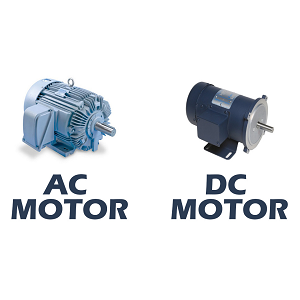
What is Motor Speed Control?
Motor speed control means adjusting how fast a motor rotates to meet the exact needs of a task. It’s not just about changing speed randomly, it’s about matching the motor’s behavior to what the system requires at any moment. This ability to fine-tune speed improves energy efficiency, extends equipment life by reducing mechanical stress, and ensures better accuracy in operations. For example, a conveyor might need to slow down for delicate items or speed up when the line is clear. Electric motors often have to adapt to changing loads, tasks, or environments. Without adjustable speed, motors would only run at one fixed speed, making them less useful and less efficient.
Speed is controlled by adjusting the electrical input. In AC motors, this usually means changing the frequency of the power supply. In DC motors, voltage changes are more common. Some systems also use feedback sensors to monitor performance and make adjustments. This feedback loop helps maintain consistent speed even when loads vary. Speed control ranges from basic resistors in older systems to advanced digital controllers using microprocessors and sophisticated algorithms. These newer methods allow motors to respond smoothly and precisely to changing conditions.
AC Motor Speed Control
AC motor speed depends on two things: the frequency of the AC power and the number of poles in the motor. To change speed, we change the frequency. That’s where Variable Frequency Drives (VFDs) come in. A VFD converts fixed-frequency AC power into DC, smooths it, and then converts it back to AC at the desired frequency. This lets the motor speed be adjusted with precision. By controlling both frequency and voltage, VFDs can manage motor torque and speed more efficiently.

Figure 2. Block Diagram of an AC Motor Speed Control System
Modern Variable Frequency Drives (VFDs) go beyond merely adjusting motor speed by incorporating advanced control techniques such as Vector Control, which separates torque and flux for fine-tuned performance, and Direct Torque Control (DTC), which provides fast and precise torque adjustments. These capabilities enable motors to accelerate, decelerate, and maintain loads efficiently without the need for additional mechanical components or added stress. Features like soft-start functions, built-in overload protection, and advanced diagnostics have made VFDs important across a wide range of applications, from water treatment plants to elevator systems.
DC Motor Speed Control
DC motors are often chosen when quick, accurate speed changes are necessary. Their speed changes directly with the voltage applied to the armature. Load also affects speed, increased load typically slows the motor. The most efficient method today is PWM. It uses high-frequency voltage pulses with adjustable widths to control the average voltage delivered to the motor. This allows precise speed control with low power loss.

Figure 3. Block Diagram of a DC Motor Speed Control System
Other control methods include Field Control, where adjusting the current in the magnetic field changes motor speed, reducing the field increases speed but decreases torque; Armature Resistance Control, a simple but inefficient method that adds resistance to reduce voltage and speed; and Closed-Loop Control, which uses sensors to monitor speed and automatically adjust voltage or current to maintain consistent performance under varying loads. Due to their high precision and responsiveness, DC motors are commonly used in robotics, medical equipment, and battery-powered tools.
Detailed Techniques: AC vs. DC
AC Motor Speed Control Techniques
AC motor speed control techniques are based on the formula for synchronous speed:
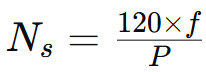
Where:
• Ns is synchronous speed (in RPM)
• f is frequency of the AC supply (in Hz)
• P is number of poles of the motor
By varying the supply frequency, the motor speed can be adjusted, which is achieved using Variable Frequency Drives (VFDs). There are two main types of VFD control: Scalar (V/F) Control, which maintains a constant voltage-to-frequency ratio and is simple and stable for basic applications; and Vector Control, which separates torque and magnetic flux components to allow for more precise and responsive control, especially at low speeds. More advanced systems incorporate sensorless control, estimating motor position without the need for physical sensors. Additionally, VFDs support functions such as controlled acceleration (ramping), torque limiting, and braking, making them highly suitable for demanding applications like elevators, cranes, and CNC machines.
DC Motor Speed Control Techniques
DC motor speed is governed by the relationship,
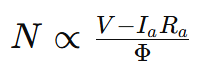
Where:
• V is armature voltage
• Ia is armature current
• Ra is armature resistance
• Φ is magnetic flux
Among various speed control techniques, Pulse Width Modulation (PWM) remains the most effective due to its efficiency and responsiveness. Other methods include flux weakening, which increases speed by reducing the magnetic field strength suitable in situations where lower torque is acceptable; armature resistance control, which is simpler but less efficient due to energy losses; and closed-loop control with feedback, which uses sensors like encoders or tachogenerators to provide precise and adaptive speed regulation.
AC Motor Speed Control Methods
Stator Side Control
Voltage Control: This method slows the motor by reducing the supply voltage applied to the stator windings. As voltage drops, the magnetic field strength decreases, resulting in lower torque and speed. While the simplicity of this method makes it attractive for basic applications, especially with fan or pump loads, it is generally inefficient because the motor continues to draw high current even at reduced speeds, leading to increased heat and energy losses. It is reserved for light-duty operations where precise control is not required.
Frequency Control (VFDs): Variable Frequency Drives (VFDs) adjust both the voltage and frequency supplied to the motor, allowing precise and efficient control of speed and torque. By maintaining a constant volts-per-hertz ratio, VFDs preserve the motor's magnetic balance and torque characteristics across a wide speed range. This method is widely used in modern industrial and commercial applications due to its energy efficiency, adaptability, and ability to handle varying load conditions smoothly.
Pole Changing: Some squirrel cage induction motors are designed with stator windings that can be reconfigured to change the number of magnetic poles. By altering the pole count, the synchronous speed of the motor changes in discrete steps (e.g., from 2-pole to 4-pole operation), allowing the motor to run at different fixed speeds. This method provides a simple and robust way to achieve multi-speed control without requiring external electronics, though it is limited to predefined speed settings and lacks smooth variability.
Rotor Side Control
External Rotor Resistance: This technique involves adding variable resistors into the rotor circuit via slip rings and brushes. By increasing rotor resistance, slip is increased, which lowers the rotor speed and provides better torque control, useful during startup or for loads that require variable torque. However, a portion of electrical energy is dissipated as heat in the external resistors, making the method inefficient for continuous use.
Cascade Control: In this setup, two motors are mechanically coupled, and one motor (the secondary or auxiliary motor) is electrically connected to the rotor circuit of the main (primary) motor. This arrangement allows power sharing and speed control in fixed steps, depending on the design of the electrical and mechanical link. Although relatively complex and less common in modern systems, cascade control was an effective way to manage large loads and intermediate speeds in legacy industrial machinery.
EMF Injection: Electromotive force (EMF) injection, used in systems like Kramer and Scherbius drives, involves injecting a controlled voltage of specific frequency and phase into the rotor circuit. This changes the slip frequency of the rotor and allows variable-speed operation with better efficiency than resistance methods. These drives are well-suited for high-power applications where precise speed regulation and energy recovery are important, such as in large compressors, pumps, or mills.
DC Motor Speed Control Methods
Shunt Motor Control
Field Control: This method involves inserting a variable resistor in series with the field winding of a DC shunt motor. By increasing resistance, the current through the field winding decreases, which weakens the magnetic flux. According to the speed equation of a DC motor, a reduction in flux leads to an increase in speed, assuming constant armature voltage. Field control is relatively efficient for increasing speed above the rated value. However, since weakening the field also reduces torque and can cause instability or overspeeding, this method must be applied with care and often requires protective measures.
Armature Voltage Control: In this method, the voltage supplied to the armature is directly varied while keeping the field flux constant. Lowering the armature voltage reduces the speed and torque proportionally. This technique is straightforward to implement and allows smooth control below the rated speed. However, it is less energy efficient, especially under load, because any excess energy is often dissipated as heat in control resistors or in power electronics.
Ward-Leonard System: This classic control system uses a motor-generator (M-G) set, where a variable voltage is produced by controlling the output of a DC generator driven by an AC or DC motor. The generated voltage is fed to the armature of the shunt motor, allowing fine and continuous control over a wide speed range in both directions. Although costly and bulky, the Ward-Leonard system delivers excellent performance in terms of torque control and speed regulation, making it ideal for demanding applications such as elevator hoists, rolling mills, and printing presses.
Series Motor Control
Field Diverter: A resistor (diverter) is connected in parallel with the series field winding. This allows a portion of the current to bypass the field winding, weakening the magnetic flux and increasing the motor speed. This method provides a basic form of speed control, and useful in applications like traction where temporary speed boosts are required. However, it reduces torque and must be balanced carefully to prevent instability or motor overheating.
Armature Diverter: By placing a resistor in parallel with the armature circuit, the current distribution between the armature and the field can be modified. This adjustment changes the torque-speed characteristic of the motor. It is a more nuanced method than field diverters, allowing better control over torque, but it introduces complexity and requires careful tuning to avoid performance losses or damage.
Tapped Field & Re-grouping: This method modifies the magnetic field strength by changing the number of active turns in the field winding. By using taps on the winding or rearranging the connections (re-grouping), different magnetic configurations can be selected to shift the speed-torque curve. It provides fixed-speed steps and is commonly used in equipment where predictable changes in speed are sufficient, such as cranes or hoists.
Resistive Control: A basic method where external resistors are added in series with the motor to drop voltage and reduce speed. While simple and inexpensive, this method is highly inefficient because much of the electrical energy is lost as heat. It's generally used only in low-cost or older systems where efficiency is not a primary concern.
Series-Parallel Control: In this technique, two or more series motors are connected either in series or in parallel. In series, they share the same current and operate at lower speed with higher torque; in parallel, they operate at higher speed with reduced torque. This control method allows step changes in speed and is commonly found in electric traction systems such as trams and trains, where simple and reliable speed control is needed.
Applications
AC Motor Speed Control Applications
Industry
In industrial settings, AC motor speed control plays a role in optimizing processes involving conveyors, mixers, pumps, and other mechanical systems. By precisely regulating motor speed using devices like Variable Frequency Drives (VFDs), operations can be tuned for specific production requirements, leading to improved process accuracy, reduced mechanical stress, and energy savings. For example, slowing down a conveyor belt during product inspection or gently ramping up a mixer reduces wear and enhances safety. This flexibility enhances overall efficiency and extends the lifespan of machinery.
HVAC
Heating, Ventilation, and Air Conditioning (HVAC) systems benefit greatly from speed-controlled motors in fans, blowers, and compressors. By adjusting motor speed in response to environmental conditions and system demands, energy consumption is reduced, particularly in variable load situations such as temperature fluctuations or occupancy changes. VFDs allow for soft starting and fine-tuned modulation of airflow and refrigeration cycles, leading to quieter operation, enhanced comfort, and lower operational costs in both residential and commercial buildings.
Home Appliance
Modern home appliances like washing machines, refrigerators, and dishwashers increasingly use speed-controlled AC motors to improve performance and energy efficiency. For instance, variable-speed motors in washing machines enable different washing cycles with optimized agitation and spin speeds, reducing noise and vibration. In refrigerators, compressors with speed control can adjust cooling cycles more smoothly, maintaining consistent temperatures with less energy use.
Smart Infrastructure
In smart buildings and transportation systems, AC motor speed control is integral to managing elevators, escalators, moving walkways, and automated doors. These systems often use intelligent motor controllers that interface with building management systems (BMS) or IoT networks to provide control, diagnostics, and energy monitoring. For example, elevators can adjust acceleration and deceleration profiles based on passenger load or floor demand, improving ride comfort and energy usage. Escalators may slow down or pause when not in use, reducing idle power consumption and aligning with sustainability goals in modern infrastructure design.
DC Motor Speed Control Applications
Robotics
DC motors are widely used in robotics due to their ability to provide fast response and precise speed and position control. With the help of pulse-width modulation (PWM) and feedback systems like encoders, robotic systems can achieve fine-grained movement necessary for tasks such as object manipulation, navigation, and coordination. This responsiveness is important in applications ranging from industrial robotic arms to autonomous mobile robots.
Electric Vehicles
In electric vehicles (EVs), DC motor speed control is good for smooth acceleration, deceleration, and overall drive performance. By adjusting the voltage and current supplied to the motor, vehicles can transition seamlessly between various speed and torque levels, enhancing driving comfort and control. Regenerative braking systems use controlled DC motor operation to convert kinetic energy back into electrical energy during braking, improving overall efficiency and extending battery life. These features make DC motors ideal for both two-wheel and four-wheel electric transport systems.
Consumer Devices
DC motors are at the heart of many compact and portable consumer devices, including power tools, hair dryers, computer cooling fans, and small kitchen appliances. Speed control in these applications ensures optimal performance, safety, and energy efficiency. For instance, in power drills, variable-speed triggers allow to adjust torque and speed for different materials, while in fans, speed variation provides better comfort and noise control. Compact design and ease of electronic control make DC motors suitable for battery-powered devices.
Medical & Lab Equipment
Medical and laboratory instruments require highly controlled, quiet, and reliable motor operation. DC motors with precise speed control are used in equipment such as infusion pumps, centrifuges, surgical tools, and automated analyzers. These applications demand silent operation to avoid disturbing sensitive environments, along with accurate motion control for precise delivery or measurement of fluids, samples, or surgical movements. Brushless DC motors (BLDCs) are favored for their low noise, low maintenance, and consistent performance.
Comparison Table
|
Feature |
AC Motor |
DC Motor |
|
Power Source |
Uses alternating current (AC) |
Uses direct current (DC) |
|
How Speed Is Controlled |
Speed changes by adjusting the frequency with a Variable
Frequency Drive (VFD) |
Speed changes by adjusting voltage or field current |
|
Control Complexity |
More complex: needs VFDs, vector control, sometimes
sensors |
Simpler: uses voltage changes, PWM, or field control |
|
Response Time |
Slower response due to VFD delay |
Quick response, especially with digital control |
|
Starting Torque |
Low without special control methods |
High starting torque by default |
|
Torque at Different Speeds |
Torque can drop at low speeds |
Maintains strong torque at all speeds |
|
Speed Stability |
Good with closed-loop systems; less stable without |
Excellent control and stability across all speeds |
|
Speed Range |
Limited by the drive and motor design |
Wide range from very low to high speeds |
|
Maintenance Needs |
Low: no brushes or commutators |
Higher: brushes wear out unless brushless |
|
Durability in Harsh Environments |
More rugged and better for tough conditions |
Brushed motors are less durable in rough environments |
|
Heat Handling |
Often built with cooling systems |
Can overheat if not properly cooled |
|
Noise & Interference (EMI) |
Can produce electrical noise (EMI); needs filtering |
Brushed motors make noise; brushless are quieter |
|
Power Supply Needs |
Works directly with AC mains (e.g., 120V or 240V) |
Needs DC supply or converter from AC |
|
Reversing Direction |
Requires programming in VFD |
Easy: just reverse polarity or use an H-bridge |
|
Regenerative Braking |
Complicated and expensive to set up |
Easy and efficient, used in EVs and robotics |
|
Energy Recovery |
Possible with advanced VFDs |
Naturally supports energy recovery |
|
Digital Control Integration |
Connects to systems like PLCs through the VFD |
Easily controlled by microcontrollers |
|
Efficiency |
Very efficient at steady speeds |
Very efficient with variable speed or frequent
starts/stops |
|
Size of Control System |
VFDs can be large and need cooling |
DC controllers are small and easy to install |
Conclusion
Controlling motor speed is very important in today’s machines and devices. It helps save energy, makes machines last longer, and keeps them running smoothly. AC motors often use VFDs to change speed by adjusting the frequency of the power. DC motors change speed by adjusting voltage or using fast on-off signals (PWM). These methods let machines do their jobs better, whether it’s a big factory machine, an air conditioner, or a robot arm. AC motors are great for heavy jobs and long-lasting use, while DC motors are better when quick and accurate movement is needed. By using the right speed control method, we make sure machines work safely, efficiently, and exactly how we need them to.
About us
ALLELCO LIMITED
Read more
Quick inquiry
Please send an inquiry, we will respond immediately.
Frequently Asked Questions [FAQ]
1. Which motor is more powerful, AC or DC?
Power depends more on motor design than the type (AC or DC). However, for the same size and voltage rating, AC motors are more powerful because they can handle higher loads and are built for continuous, heavy-duty use. Industrial AC motors like three-phase induction motors are common in factories because they can drive large machines reliably. On the other hand, DC motors offer more precise speed and torque control, but they’re usually used in smaller, more specialized applications like robotics, where fine-tuned movement is more important than raw power.
2. Which motor has high rpm, AC or DC?
DC motors usually achieve higher RPMs (revolutions per minute) than AC motors, especially small permanent magnet or brushless DC motors. That’s because DC motors don’t rely on power line frequency and can spin faster just by increasing voltage. AC motor speed, however, is tied to the input frequency and number of poles, so it’s more limited unless advanced VFDs are used. DC motors are often used where high-speed performance is needed, such as in power tools, drones, or medical devices.
3. Do DC motors last longer than AC motors?
Not always. AC motors last longer in heavy-duty environments. This is because most AC motors, especially induction types, have fewer moving parts and no brushes, which means less wear over time. Brushed DC motors wear out faster due to friction between brushes and the commutator. However, brushless DC motors (BLDCs) have a long lifespan similar to AC motors and are very reliable in low-power or precision devices. So, it depends on the type of DC motor and how it's used.
4. What are the disadvantages of AC and DC motors?
AC motors can be harder to control because changing their speed requires complex devices like VFDs. They also don’t respond as quickly to control signals, which makes them less ideal for tasks needing rapid speed changes. DC motors, especially brushed ones, require more maintenance due to brush wear. They can also be less efficient at high power levels and need electronic controllers like PWM circuits for speed control. Additionally, they often can't handle large loads as well as AC motors without becoming bulky or overheating.
5. What can be used for speed control with both AC and DC motors?
For AC motors, Variable Frequency Drives (VFDs) are used to change speed by adjusting the frequency and voltage of the power supply. For DC motors, Pulse Width Modulation (PWM) is the most common method, where speed is adjusted by rapidly switching voltage on and off to control power delivery. In both cases, closed-loop control systems can be added using sensors to monitor motor speed and adjust it automatically, offering consistent and precise operation across varying loads.

Everything About TMS320DM642AGNZ6 in One Place
on May 21th
XCS20-3TQ144I FPGA Guide: Features, Applications, Alternatives and Datasheet
on May 20th
Popular Posts
-

Complex Instruction Set Computers: How They Changed Computing?
on April 18th 147749
-

USB-C Pinout and Features
on April 18th 111898
-
Using Xilinx Unified Simulation Primitives: A Comprehensive Guide to FPGA Design and Simulation
on April 18th 111349
-

Power Supply Voltages in Electronics: Meaning of VCC, VDD, VEE, VSS, and GND
on April 18th 83713
-

RJ45 Connector Guide: Pinout, Wiring, Cable Types, and Uses
on January 1th 79502
-

The Ultimate Guide to Wire Color Codes in Modern Electrical Systems
The way our electrical systems use colors isn’t just for looks. Each wire color now indicates a specific function, making it easier to identify and handle electrical components correctly during ins...on January 1th 66866
-

Quality (Q) Factor: Equations and Applications
The quality factor, or 'Q', is important when checking how well inductors and resonators work in electronic systems that use radio frequencies (RF). 'Q' measures how well a circuit minimizes energy...on January 1th 63004
-
Purge Valve Guide: Function, Symptoms, Testing, and Replacement for Optimal Engine Performance
The purge valve is a key part of a car’s system that helps keep the air clean by managing fuel vapors before they can escape into the atmosphere. This not only helps the environment by reducing pol...on January 1th 62934
-

Achieving Peak Performance with the Maximum Power Transfer Theorem
The Maximum Power Transfer Theorem explains how energy from a source, such as a battery or generator, flows to a connected load. It shows the exact condition where the load receives the most power....on January 1th 54074
-

A23 Battery Specifications and Compatibility
The A23 battery is a small, cylinder-shaped battery with high voltage. Also called 23A, 23AE, or MN21, it runs at 12 volts and much higher than AA or AAA batteries. Its special design make...on January 1th 52087
HOT Part Number
-

XC3S50A-4VQG100C
AMD
IC FPGA 68 I/O 100VQFP
SI1102-A-GM
Silicon Labs
SENSOR OPT REFLECTIVE 50CM 8WDFN
TCN4-13+
Mini-Circuits
1:4 LTCC TRANSFORMER, 650 - 1250
VF30100S-E3/4W
Vishay General Semiconductor - Diodes Division
DIODE SCHOTTKY 100V 30A ITO220AB
GRM033R70J103KA01D
Murata Electronics
CAP CER 10000PF 6.3V X7R 0201
QMK212B7102MDHT
Taiyo Yuden
CAP CER 1000PF 250V X7R 0805
M82351G-12
MACOM Technology Solutions
ACCESS VOICE PROCESSOR
74LV132D,112
Nexperia USA Inc.
IC GATE NAND SCHMIT 4CH 2IN 14SO
AH1801-FJG-7
Diodes Incorporated
MAG SWITCH OMNIPOLAR DFN2020B-3
DG412DY-T1-E3
Vishay Siliconix
IC SWITCH SPST-NOX4 35OHM 16SOIC
PIC16F876A-I/SO
Microchip Technology
IC MCU 8BIT 14KB FLASH 28SOIC
LXA08FP600
Power Integrations
DIODE GP 600V 8A TO220 FULL PACK
FM25V20A-DG
Infineon Technologies
IC FRAM 2MBIT SPI 40MHZ 8DFN
CY7C1011CV33-10ZXC
Cypress Semiconductor Corp
IC SRAM 2MBIT PARALLEL 32TSOP II
04023C221KAT2A
KYOCERA AVX
CAP CER 220PF 25V X7R 0402
RO3101A
Murata Electronics
SAW RES 433.9200MHZ SMD
XRD9818ACGTR
MaxLinear, Inc.
IC AFE 3 CHAN 16BIT 28TSSOP
CL21F104ZBANNNC
Samsung Electro-Mechanics
CAP CER 0.1UF 50V Y5V 0805 -

BZT52-B16_R1_00001
Panjit International Inc.
SOD-123, ZENER
P0300ECL
Littelfuse Inc.
THYRISTOR 25V 400A TO226-2
TPS73615DBVTG4
Texas Instruments
IC REG LINEAR 1.5V 400MA SOT23-5
SN74AXC4T774BQBR
Texas Instruments
IC TRANSCEIVER HALF 4/4 16WQFN
170M5954
Eaton - Bussmann Electrical Division
FUSE SQUARE 350A 1KVAC RECT
CC0805KRX7R9BB682
YAGEO
CAP CER 6800PF 50V X7R 0805
SRP7028A-6R8M
Bourns Inc.
FIXED IND 6.8UH 4.5A 60 MOHM SMD
SMAJ150CA
Taiwan Semiconductor Corporation
TVS DIODE 150VWM 243VC DO214AC
PE-68675
Pulse Electronics
IC CHIP
MAX14890EATJ+
Analog Devices Inc./Maxim Integrated
IC RECEIVER 0/4 32TQFN
TFZGTR20B
Rohm Semiconductor
DIODE ZENER 20V 500MW TUMD2
1N5406-E3/73
Vishay General Semiconductor - Diodes Division
DIODE GEN PURP 600V 3A DO201AD
ME501610
Powerex Inc.
BRIDGE RECT 3P 1.6KV 100A MODULE
GRM1555C2A5R8DA01D
Murata Electronics
CAP CER 5.8PF 100V C0G/NP0 0402
MRF8S19140HSR3
NXP USA Inc.
FET RF 65V 1.96GHZ NI780HS
TN2130K1-G
Microchip Technology
MOSFET N-CH 300V 85MA TO236AB
ADL5519ACPZ-R7
Analog Devices Inc.
IC AMP LOG DETECT CTRLR 32LFCSP
SP3222ECT-L
MaxLinear, Inc.
IC TRANSCEIVER FULL 2/2 18SOIC -
502AT-2
Semitec USA Corp
NTC THERMISTORS 5KOHM 1%
NFM18CC101R1C3D
Murata Electronics
CAP FEEDTHRU 100PF 20% 16V 0603
PS2562L-1-F3-A
Renesas Electronics America Inc
OPTOISOLATOR 5KV DARL 4SMD
502494-0370
Affinity Medical Technologies - a Molex company
2.0 W/B SGL R/ARECASSY3CKTEMBSTP
C1206C223K5RACTU
KEMET
CAP CER 0.022UF 50V X7R 1206
NIS5102QP2HT1G
onsemi
IC HOT SWAP CTRLR GP 12PLLP
VI-J62-MY
Vicor Corporation
DC DC CONVERTER 15V 50W
ADR441ARMZ-REEL7
Analog Devices Inc.
IC VREF SERIES 0.12% 8MSOP
MIC5200-5.0BS
Microchip Technology
IC REG LINEAR 5V 100MA SOT223-3
TAS3251DKQR
Texas Instruments
IC AMP D MONO/STER 350W 56HSSOP
GRM1886T1H360JD01D
Murata Electronics
CAP CER 36PF 50V T2H 0603
TZM5249B-GS08
Vishay General Semiconductor - Diodes Division
DIODE ZENER 19V 500MW SOD80
LM2575-5.0YWM
Microchip Technology
IC REG BUCK 5V 1A 24SOIC
RT0402BRE075K6L
YAGEO
RES SMD 5.6K OHM 0.1% 1/16W 0402
C0603JB1A104M030BC
TDK Corporation
CAP CER 0.1UF 10V JB 0201
CSD17571Q2
Texas Instruments
MOSFET N-CH 30V 22A 6SON
P4SMA13CA
Bourns Inc.
TVS DIODE 11.1VWM 18.2VC DO214AC
AR0144ATSM20XUEA0-DPBR
onsemi
1MP 1/4 CIS SO