LC4384C-75FTN256C: High-Performance CPLD for Efficient Digital Logic and Low Power Applications
The LC4384C-75FTN256C is a powerful programmable logic device part of the ispMACH 4000C series and designed for projects that need smart, low-power digital solutions. This device is versatile with its 384 macrocells and 192 input/output pins, and it operates on low power, making it efficient. This guide will explore the device's key features, technical details, and uses, showing how it improves the performance and efficiency of digital systems.Catalog

LC4384C-75FTN256C Description
The LC4384C-75FTN256C is a high-performance Complex Programmable Logic Device (CPLD) from Lattice Semiconductor, belonging to the ispMACH 4000C family. It is designed to cater to applications requiring flexible digital logic solutions with a stringent low-power footprint. The device features 384 macrocells and 192 input/output pins, which provide substantial versatility for various design needs. Its programming and operational core voltage ranges from 1.65V to 1.95V, ensuring efficient power management. Key performance metrics of the LC4384C-75FTN256C include a propagation delay of 7.5 ns and an operating frequency that can reach up to 168 MHz. This combination of speed and responsiveness makes it ideal for high-speed data processing applications. The device supports multiple I/O standards such as 3.3V, 2.5V, and 1.8V LVCMOS, with 5V-tolerant inputs to accommodate a broad range of signal levels. Each macrocell is enhanced with individual controls for clock, reset, preset, and clock enable, allowing precise management of logic operations.
If you're looking to add reliable, efficient, and high-performance logic devices to your products, the LC4384C-75FTN256C is a great choice. And if you're thinking about placing a bulk order, you’ll be able to take full advantage of what this advanced technology has to offer for your applications.
LC4384C-75FTN256C CAD Models
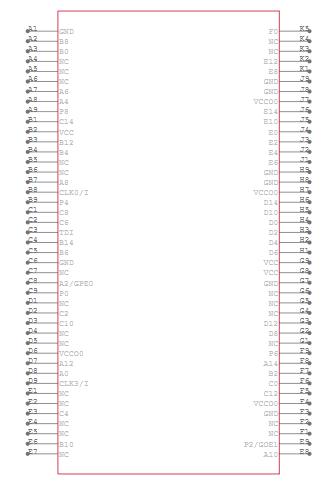
LC4384C-75FTN256C Symbol
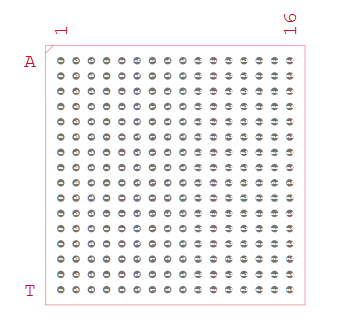
LC4384C-75FTN256C Footprint
LC4384C-75FTN256C 3D Model
LC4384C-75FTN256C Features
• High Performance: The LC4384C-75FTN256C operates with an impressive maximum frequency of up to 178.57 MHz, coupled with a low propagation delay of 7.5 ns. This ensures swift data processing capabilities and quick response times for high-speed digital environments.
• In-System Programmability (ISP): This device supports in-system programming through an IEEE 1532 compliant interface. This feature allows for easy firmware updates directly on the circuit without the need for device removal, simplifying maintenance and upgrades.
• Enhanced Macrocells: Equipped with 384 macrocells, each capable of independent clocking, resetting, presetting, and clock enable control. This arrangement offers extensive flexibility and precision in managing complex logic operations for customized digital logic designs.
• Versatile I/O Support: The CPLD boasts 192 input/output pins that are compatible with multiple voltage standards, including 3.3V, 2.5V, and 1.8V LVCMOS. It also supports 5V-tolerant inputs, which enhances compatibility with older legacy systems and various digital ecosystems.
• Low Power Consumption: It is designed to operate efficiently within a core voltage range of 1.65V to 1.95V, making it an excellent choice for applications where power efficiency is required. This low power consumption helps in minimizing thermal output and enhancing system reliability.
LC4384C-75FTN256C Block Diagram
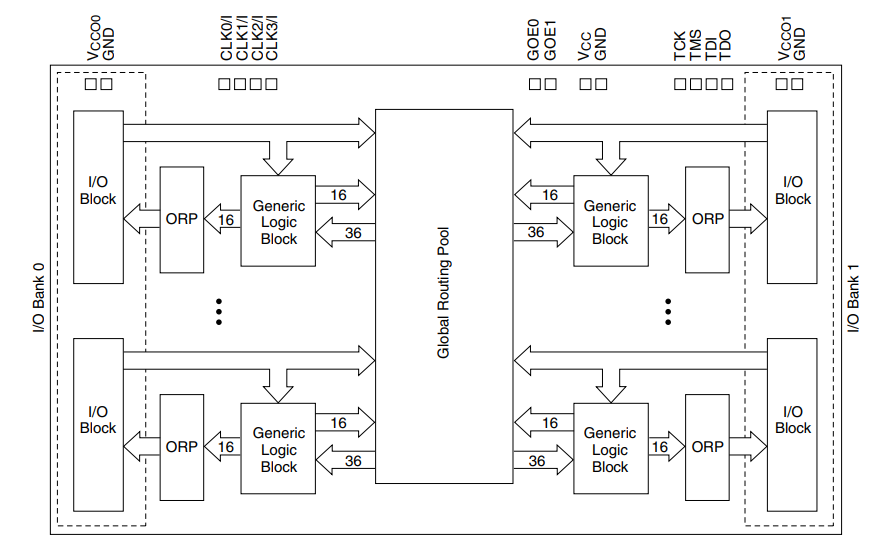
The LC4384C-75FTN256C block diagram shows the internal structure of a programmable logic device. It is organized around a central Global Routing Pool (GRP) that connects all parts of the device, ensuring fast and flexible communication between components. On each side of the diagram, there are I/O Banks (I/O Bank 0 and I/O Bank 1), which handle input and output signals to and from the device. These banks are connected to Output Routing Pools (ORP), which manage the flow of data between the I/O blocks and the Generic Logic Blocks (GLBs). The Generic Logic Blocks (GLBs) are the main processing units that perform logic operations. They are linked to the ORPs for input and output and connected to the GRP for communication with other GLBs, allowing complex logic functions to be created. At the top, the diagram shows Clock and Control Inputs for managing timing and device operation, including multiple clock signals and JTAG inputs for programming and testing. The diagram illustrates how the device is designed for flexible logic implementation with high-speed connections and efficient signal routing.
LC4384C-75FTN256C Specifications
|
Type |
Parameter |
|
Manufacturer |
Lattice Semiconductor Corporation |
|
Series |
ispMACH® 4000C |
|
Packaging |
Tray |
|
Part Status |
Obsolete |
|
Programmable Type |
In System Programmable |
|
Delay Time tpd(1) Max |
7.5 ns |
|
Voltage Supply - Internal |
1.65V ~ 1.95V |
|
Number of Logic Elements/Blocks |
24 |
|
Number of Macrocells |
384 |
|
Number of I/O |
192 |
|
Operating Temperature |
0°C ~ 90°C (TJ) |
|
Mounting Type |
Surface Mount |
|
Package / Case |
256-LBGA |
|
Supplier Device Package |
256-FTBGA (17x17) |
|
Base Product Number |
LC4384 |
LC4384C-75FTN256C Generic Logic Block
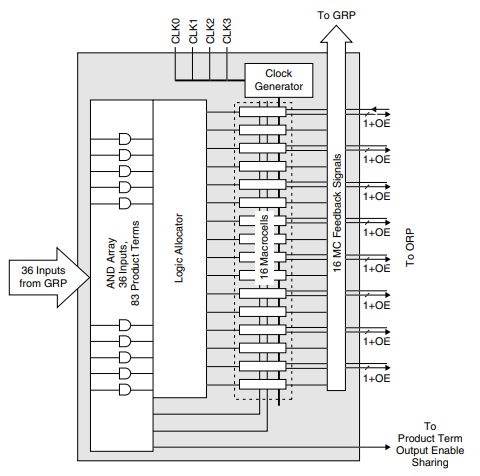
The Generic Logic Block (GLB) of the LC4384C-75FTN256C processes logic operations using a flexible and efficient design. It receives 36 inputs from the Global Routing Pool (GRP), which are combined using an AND Array to form 83 product terms. These product terms are basic logic combinations that are managed by a Logic Allocator. The Logic Allocator distributes these product terms to 16 Macrocells, which are the main processing units. These macrocells perform logic functions, including combinational and sequential operations. They are synchronized by a Clock Generator using four clock signals (CLK0 to CLK3), allowing precise timing control. Each macrocell can send its output back to the GRP or to the Output Routing Pool (ORP) for further processing. They support feedback for implementing complex state machines and sequential circuits. The GLB’s design is highly flexible, enabling complex logic functions with efficient routing and timing control, suitable for advanced digital designs.
LC4384C-75FTN256C Macrocell
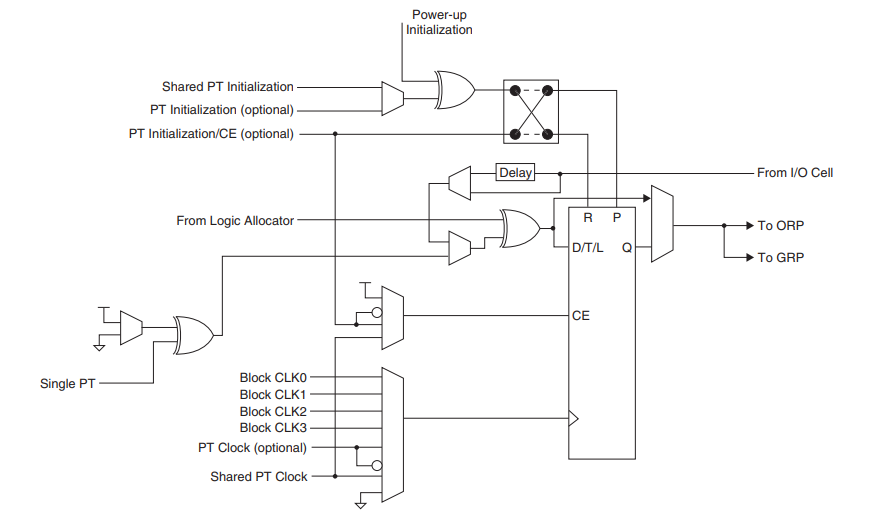
The Macrocell of the LC4384C-75FTN256C is designed for flexible and efficient logic processing. It receives inputs from the Logic Allocator and can initialize using various methods, including Shared PT Initialization and Power-up Initialization, ensuring a known start state. The macrocell supports multiple clock sources such as Block Clocks (CLK0 to CLK3), PT Clock, and Shared PT Clock, with a Clock Multiplexer selecting the appropriate source for precise timing control. At its core, a D/T/L Flip-Flop operates in different modes, D (Data), T (Toggle), or L (Latch) and features a Clock Enable (CE) input for conditional clocking. Outputs from the macrocell can be routed to the Output Routing Pool (ORP) for external connections or the Global Routing Pool (GRP) for internal feedback, allowing for complex logic functions and efficient signal routing. A Delay Element ensures proper timing and signal alignment, making the macrocell highly adaptable for advanced digital designs.
LC4384C-75FTN256C Applications
Digital Logic Applications
This CPLD excels in handling custom logic functions, such as state machines and glue logic, providing a flexible solution for creating tailored digital interfaces and pathways. Its ability to manage complex logic circuits efficiently makes it a primary choice to streamline hardware functionalities.
Microcontroller and System-on-Chip (SoC) Designs
The LC4384C-75FTN256C enhances microcontroller systems by offering additional logic to support increased functionality. It can serve as a component in SoC designs, where integration of multiple devices on a single chip is needed, thus aiding in reducing overall system costs and power consumption.
Embedded Systems
With its in-system programmability and multi-voltage I/O capabilities, this device is perfectly suited for embedded systems. It allows for on-the-fly updates and system adjustments without the need for extensive downtimes, making it ideal for applications requiring high reliability and adaptability.
Industrial Control Systems
In industrial environments, the LC4384C-75FTN256C contributes to automation and process control. Its robust design ensures reliable operation under challenging conditions, making it a valuable component for managing complex industrial processes and machinery.
Automotive Electronics
The device's low power consumption and high-speed data handling capabilities make it an excellent choice for automotive electronics. It is used in applications ranging from vehicle control units to advanced infotainment systems, helping to enhance both performance and safety features in modern vehicles.
Video and Image Processing
Thanks to its ability to process high-speed signals efficiently, the LC4384C-75FTN256C is also used in video and image processing tasks. It supports activities such as video scaling, filtering, and format conversion for multimedia applications and devices.
LC4384C-75FTN256C Similar Parts
LC4384C-75FTN256C Advantages
Non-Volatile Configuration
This CPLD benefits from internal non-volatile memory, which facilitates immediate functionality upon power-up without reliance on external configuration sources. This inherent capability not only simplifies the overall design process by eliminating the need for additional non-volatile memory components but also increases system reliability by reducing potential points of failure.
Deterministic Timing
The device offers consistent and predictable propagation delays, an advantage for applications requiring precise timing control. This deterministic timing ensures that all logic operations are synchronized accurately, making the LC4384C-75FTN256C ideal for managing timing-sensitive tasks in digital circuits.
Simplified Design Process
Unlike FPGAs, which can require complex programming and configuration, the LC4384C-75FTN256C boasts a more straightforward design approach. Its centralized logic architecture facilitates easier implementation of control logic and state machines, reducing development time and simplifying the learning curve.
Power Efficiency
Designed for low power consumption, the LC4384C-75FTN256C operates efficiently within a core voltage range of 1.65V to 1.95V. This power efficiency makes it suited for battery-operated or power-sensitive applications, helping to extend device longevity and reduce energy costs.
Robust I/O Capabilities
With 192 programmable I/O pins that support multiple voltage standards, the LC4384C-75FTN256C offers extensive interfacing flexibility. This capability allows it to easily integrate with a variety of digital and analog components, enhancing its usability across multiple platforms and technologies.
High-Speed Performance
The ability to operate at frequencies up to 178.57 MHz enables the LC4384C-75FTN256C to handle high-speed data processing and throughput demands. This makes it an excellent choice for applications involving rapid data manipulation and real-time processing requirements.
LC4384C-75FTN256C Packaging Dimensions
Packaging dimensions for the LC4384C-75FTN256C:
|
Parameter |
Dimension (mm) |
|
Body Size |
17 x 17 |
|
Ball Pitch |
0.8 |
|
Ball Count |
256 |
LC4384C-75FTN256C Manufacturer
Lattice Semiconductor Corporation, based in Hillsboro, Oregon, is the manufacturer of the LC4384C-75FTN256C, a prominent FPGA (Field-Programmable Gate Array) component known for its configurability and versatility in various applications. Established in 1983, Lattice Semiconductor has carved a niche in the semiconductor industry by specializing in low-power, small-form-factor, and customizable solutions that cater to a wide range of market needs, from electronics to industrial applications. The LC4384C-75FTN256C, part of their extensive product lineup, exemplifies their commitment to providing advanced programmable logic devices that support complex digital systems with a focus on innovation and efficiency.
Conclusion
The LC4384C-75FTN256C showcases Lattice Semiconductor's dedication to innovative and efficient technology in the semiconductor field. This device is equipped for detailed design tasks with its flexible input/output options and advanced internal structures. It's perfect for use in various areas like industrial systems, car electronics, and video processing, because it processes data quickly and can be adapted easily to different needs. This guide highlights the device's ability to handle complex digital tasks smoothly and improve overall system functionality, proving it to be an important tool in programmable logic devices.
Datasheet PDF
LC4384C-75FTN256C Datasheets:
About us
ALLELCO LIMITED
Read more
Quick inquiry
Please send an inquiry, we will respond immediately.
Frequently Asked Questions [FAQ]
1. What are the primary benefits of using the LC4384C-75FTN256C in my projects?
The LC4384C-75FTN256C offers a combination of high-speed performance, low power consumption, and extensive I/O capabilities. It's ideal for complex digital tasks in industries like automotive, industrial control, and multimedia processing, making it a versatile choice for a wide range of applications.
2. Can the LC4384C-75FTN256C be integrated into existing legacy systems?
Yes, the device supports multiple I/O standards including 5V-tolerant inputs, making it compatible with both modern and legacy digital systems. This flexibility ensures seamless integration without the need for extensive system overhauls.
3. How does the LC4384C-75FTN256C support high-speed data processing?
The device can operate at frequencies up to 178.57 MHz with a low propagation delay, allowing for rapid data manipulation and throughput great for processing and high-speed digital environments.
4. How does the in-system programmability of the LC4384C-75FTN256C enhance system maintenance?
With in-system programmability, you can update firmware directly on the circuit without removing the device, simplifying maintenance and upgrades. This feature is best for reducing system downtime and facilitating quick adaptations to evolving technological needs.
5. What makes the LC4384C-75FTN256C suitable for power-sensitive applications?
Operating within a core voltage range of 1.65V to 1.95V, the LC4384C-75FTN256C is designed for energy efficiency, which is advantageous for battery-operated or power-sensitive applications. This helps in extending device longevity and reducing energy costs.
EP1S80F1020C5 FPGA Complete Guide Features and Specifications
on February 21th
EPF10K10TI144-4 FPGA: Ultimate Guide to Altera FLEX 10K Features and Applications
on February 21th
Popular Posts
-

Complex Instruction Set Computers: How They Changed Computing?
on April 18th 147760
-

USB-C Pinout and Features
on April 18th 111974
-
Using Xilinx Unified Simulation Primitives: A Comprehensive Guide to FPGA Design and Simulation
on April 18th 111351
-

Power Supply Voltages in Electronics: Meaning of VCC, VDD, VEE, VSS, and GND
on April 18th 83742
-

RJ45 Connector Guide: Pinout, Wiring, Cable Types, and Uses
on January 1th 79527
-

The Ultimate Guide to Wire Color Codes in Modern Electrical Systems
The way our electrical systems use colors isn’t just for looks. Each wire color now indicates a specific function, making it easier to identify and handle electrical components correctly during ins...on January 1th 66937
-
Purge Valve Guide: Function, Symptoms, Testing, and Replacement for Optimal Engine Performance
The purge valve is a key part of a car’s system that helps keep the air clean by managing fuel vapors before they can escape into the atmosphere. This not only helps the environment by reducing pol...on January 1th 63086
-

Quality (Q) Factor: Equations and Applications
The quality factor, or 'Q', is important when checking how well inductors and resonators work in electronic systems that use radio frequencies (RF). 'Q' measures how well a circuit minimizes energy...on January 1th 63025
-

Achieving Peak Performance with the Maximum Power Transfer Theorem
The Maximum Power Transfer Theorem explains how energy from a source, such as a battery or generator, flows to a connected load. It shows the exact condition where the load receives the most power....on January 1th 54092
-

A23 Battery Specifications and Compatibility
The A23 battery is a small, cylinder-shaped battery with high voltage. Also called 23A, 23AE, or MN21, it runs at 12 volts and much higher than AA or AAA batteries. Its special design make...on January 1th 52167
HOT Part Number
-

JANTX1N751A-1
MACOM Technology Solutions
DIODE ZENER 5.1V 500MW DO35
74ALVCH16245ZQLR
Texas Instruments
IC TXRX NON-INVERT 3.6V 56BGA
NTE5252AK
NTE Electronics, Inc
DIODE ZENER 10V 50W DO5
BAV170_R1_00001
Panjit International Inc.
SOT-23, SWITCHING
OPA657U
Texas Instruments
IC VOLTAGE FEEDBACK 1 CIRC 8SOIC
MIXA30WB1200TED
IXYS
IGBT MODULE 1200V 43A 150W E2
WSLP1206R0200FEA
Vishay Dale
RES 0.02 OHM 1% 1W 1206
502237-0517
Molex
USB Mini-B Receptacle, Vertical,
MB89935DPFV-GS-109-ERE1
Infineon Technologies
IC MCU 8BIT 16KB MROM 30SSOP
C1812C334K1RAC7800
KEMET
CAP CER 0.33UF 100V X7R 1812
ADL5565ACPZ-R7
Analog Devices Inc.
IC OPAMP RF/IF DIFF 1CIR 16LFCSP
KSP94BU
onsemi
TRANS PNP 400V 0.3A TO92-3
LTC2619IGN#PBF
Analog Devices Inc.
IC DAC 14BIT V-OUT 16SSOP
TLV1117-25CKVURG3
Texas Instruments
IC REG LINEAR 2.5V 800MA TO252-3
IRF7413PBF
International Rectifier
MOSFET N-CH 30V 13A 8SO
MPC8572EVTAVND
Freescale Semiconductor
MPU, 32-BIT, 1500MHZ, PBGA1023
GRM1886T1H7R2DD01D
Murata Electronics
CAP CER 7.2PF 50V T2H 0603
FAN23SV06PAMPX
onsemi
IC REG BUCK ADJUSTABLE 6A 34PQFN -

9EPRS525AGLFT
Renesas Electronics America Inc
IC EMBEDDED PC MAIN CLK 56TSSOP
MHQ0402PSA3N3BT000
TDK Corporation
FIXED IND 3.3NH 250MA 650MOHM SM
XC7VX415T-2FFG1157I
AMD
IC FPGA 600 I/O 1157FCBGA
1N5233B
onsemi
DIODE ZENER 6V 500MW DO35
IRFP4321PBF
Infineon Technologies
MOSFET N-CH 150V 78A TO247AC
GRM155R71C224KA12D
Murata Electronics
CAP CER 0.22UF 16V X7R 0402
TPS65140PWPRG4
Texas Instruments
IC LCD SUPPLY TFT QUAD 24HTSSOP
MA12RTR
APEM Inc.
SWITCH SLIDE SPDT 300MA 4V
TSV6191ILT
STMicroelectronics
IC OPAMP GP 1 CIRCUIT SOT23-5
06035AR47CAT2A
KYOCERA AVX
CAP CER 0.47PF 50V NP0 0603
AD7858LARSZ
Analog Devices Inc.
IC ADC 12BIT SAR 24SSOP
0603ZC224KA12A
KYOCERA AVX
CAP CER 0.22UF 10V X7R 0603
CD4528BCN
onsemi
IC MULTIVIBRATOR 65NS 16DIP
1N4754A-TAP
Vishay General Semiconductor - Diodes Division
DIODE ZENER 39V 1.3W DO41
EP2C50F672C7N
Intel
IC FPGA 450 I/O 672FBGA
MTFC16GAKAEJP-5M AIT
Micron Technology Inc.
IC FLASH 128GBIT MMC 153VFBGA
OPA2337PA
Texas Instruments
IC CMOS 2 CIRCUIT 8DIP
12TQ045
SMC Diode Solutions
DIODE SCHOTTKY 45V 15A TO220AC -
AT49BV040B-JU
Microchip Technology
IC FLASH 4MBIT PARALLEL 32PLCC
XCS20-3TQ144I
AMD
IC FPGA 113 I/O 144TQFP
DS4156P+
Analog Devices Inc./Maxim Integrated
IC OSC CLOCK 156.25MHZ 10-LCCC
LTC1709EG-7#TRPBF
Analog Devices Inc.
IC REG CTRLR BUCK 36SSOP
IHLP3232DZER3R3M01
Vishay Dale
FIXED IND 3.3UH 9.2A 17.7MOHM SM
ADP150AUJZ-3.3-R7
Analog Devices Inc.
IC REG LINEAR 3.3V 150MA TSOT5
24VL014T/MNY
Microchip Technology
IC EEPROM 1KBIT I2C 400KHZ 8TDFN
CY62137CV30LL-55BAI
Cypress Semiconductor Corp
IC SRAM 2MBIT PARALLEL 48FBGA
06031A100CAT2A
AVX Corporation
CAP CER 10PF 100V C0G/NP0 0603
XCS20XL-4VQG100C
AMD
IC FPGA 77 I/O 100VQFP
IS43R16320F-5TL
ISSI, Integrated Silicon Solution Inc
512M, 2.5V, DDR 32Mx16, 200MHz,
C2012X7T2W223K125AE
TDK Corporation
CAP CER 0.022UF 450V X7T 0805
CGA5L1X7R1V685M160AC
TDK Corporation
CAP CER 6.8UF 35V X7R 1206
744031330
Würth Elektronik
FIXED IND 33UH 420MA 660MOHM SMD
1N2055
Solid State Inc.
DIODE GEN PURP 100V 275A DO9
LT1943EFE#TRPBF
Analog Devices Inc.
IC REG CONV TFT LCD 4OUT 28TSSOP
STTH2R02U
STMicroelectronics
DIODE GEN PURP 200V 2A SMB
1N3326RB
Microchip Technology
DIODE ZENER 36V 50W DO5