Monoblock Amplifiers: How They Work, Types, Benefits, and Applications
This guide explains everything you need to know about monoblock amplifiers, also called mono amps. It shows how mono amps work, the parts inside them, and how they handle audio signals. It describes the different types of monoblock amplifiers, their main benefits, and some of the problems they may have. Finally, it gives examples of where and how these amplifiers are used.Catalog
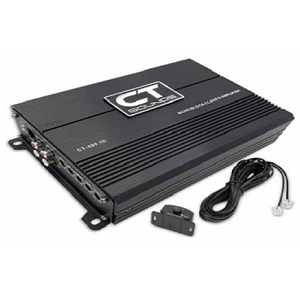
What is a Monoblock Amplifier?
A monoblock amplifier, often called a mono amp is a power amplifier built to drive a single audio channel. It's commonly used to power subwoofers, which only need a one-channel signal. Unlike stereo amplifiers that split audio into left and right channels, a monoblock focuses all its power on just one. This dedicated approach helps it deliver clean, powerful bass with greater efficiency.
Subwoofers need a lot of energy to produce low-frequency sounds. A monoblock amp is well-suited for this job because it can supply high current with low distortion. Since subwoofers don’t require stereo separation, there's no need to divide the audio signal, just power and clarity. Many monoblock amplifiers use Class D technology. This method rapidly switches transistors on and off, boosting power efficiency and reducing heat.
How Monoblock Amplifiers Work?
Monoblock amplifiers operate by processing a single-channel audio signal and amplifying it to power a speaker, typically a subwoofer. The signal first enters a preamplifier stage, where it is filtered and shaped specifically for low-frequency output. It then moves to a voltage amplification stage, which increases the signal’s strength. Following that, a current amplification stage provides the high current required to move the subwoofer cone and produce sound.
The internal structure of a monoblock is a single signal path, which simplifies the design and reduces signal interference, contributing to cleaner sound output. To support the high power demands, monoblocks include robust power supplies with components like large transformers, capacitors, and high-current transistors (such as MOSFETs). These elements are good for delivering stable power, especially under heavy loads (e.g., at 2 ohms or lower).
To ensure consistent performance, monoblocks incorporate thermal management systems. These include large heat sinks, thermal sensors, and often protection features such as soft start-up circuits, short-circuit safeguards, and voltage regulation. The design also promotes signal purity and phase accuracy, which are important in setups requiring precise bass performance. Since there's no second channel, crosstalk is eliminated, making monoblock amplifiers especially well-suited for high-fidelity or high-output audio systems.
Mono Amplifier Circuit Using KIA6278P
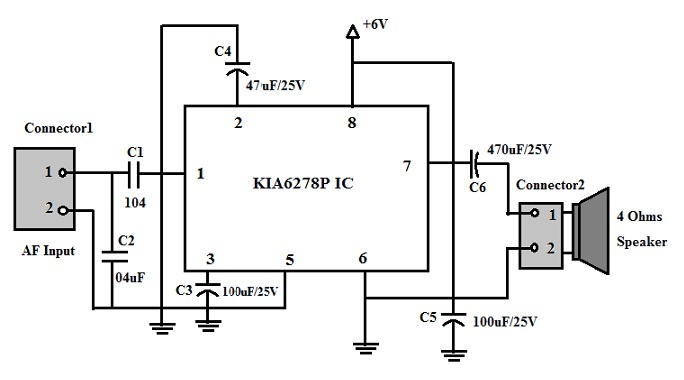
Figure 2. Monoblock Audio Amplifier Circuit
Let’s examine a simple circuit built around the KIA6278P, a compact audio amplifier IC capable of delivering approximately 1 watt into a 4-ohm speaker using a 6V DC supply. This straightforward setup is ideal for DIY beginners and small-scale audio projects. In this design, the audio input passes through capacitor C1 (0.1µF), which blocks any DC components that might damage the amplifier. Capacitor C2 (0.04µF) is connected between the input and ground to suppress high-frequency noise, ensuring a clean signal enters the IC at Pin 1.
Inside the IC, the signal is amplified in both voltage and current. Capacitors C3 (100µF) and C4 (47µF) serve as power supply filters, stabilizing the voltage and reducing ripple. The amplified signal exits through Pin 7, passes through capacitor C6 (470µF), which removes any residual DC and is sent to the speaker via Connector 2. Power is supplied at Pin 8, while Pins 5 and 6 are grounded. Capacitor C5 (100µF) is connected between ground and the power line to further stabilize the supply and reduce noise. Despite its simplicity, the circuit covers all amplifier stages: input filtering, signal amplification, and clean signal output.
Once assembled on a PCB or veroboard, the circuit is powered by a 6V supply (such as a battery pack or adapter). A simple way to check if the amplifier is working is to briefly touch the input pin with a metal object; if the speaker produces a buzzing sound, the amp is active. You can then connect an audio source, like a phone or MP3 player, to the input. The signal enters through Pin 1, gets amplified, and exits via Pin 7 to drive the speaker. Capacitors ensure that only AC audio signals pass through, blocking harmful DC voltages.
For optimal performance:
• Use a 4-ohm speaker to match the amplifier’s output.
• Confirm the polarity of all electrolytic capacitors, incorrect installation can damage the components.
• Carefully check all solder joints and voltage levels before operation to avoid short circuits or overheating.
• With proper assembly and testing, this circuit provides clean, reliable mono audio amplification suitable for compact or custom audio setups.
Types of Monoblock Amplifiers
Each type of monoblock amplifier uses a different method to amplify the signal.
Class A
Class A monoblock amplifiers are renowned for delivering the highest sound quality and the most linear amplification. In this design, the output transistors conduct electricity at all times, ensuring that the audio signal remains as close as possible to the original input. This results in a smooth, warm, and highly detailed sound. However, this constant operation generates heat and leads to high power consumption, making Class A amplifiers less efficient. Because of their pristine audio performance, they are most commonly found in high-end home audio systems where power usage and heat dissipation are less of a concern.
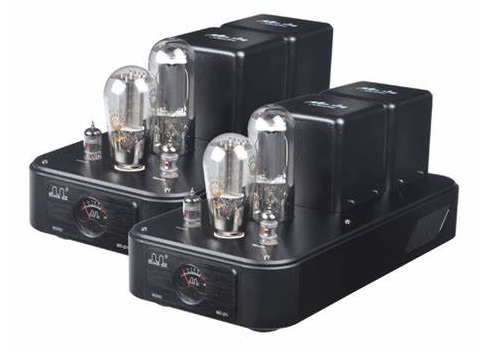
Figure 3. Class A Monoblock Amplifier
Class AB
Class AB amplifiers aim to strike a balance between the sonic purity of Class A and the energy efficiency of Class B designs. They achieve this by using a pair of transistors that operate in an overlapping manner (one handling the positive half of the waveform and the other the negative) reducing the distortion that is common in pure Class B amplifiers. This hybrid approach results in good sound quality with much better efficiency than Class A. As a result, Class AB monoblock amplifiers are widely used in both home stereo setups and car audio systems, offering a dependable mix of performance and practicality.

Figure 4. Class AB Monoblock Amplifier
Class D
Class D monoblock amplifiers, sometimes referred to as digital amplifiers (though they’re technically analog), are known for their exceptional efficiency and compact size. These amplifiers use high-frequency switching technology and pulse-width modulation (PWM) to convert input signals into amplified output. This design dramatically reduces heat and power consumption, making Class D amps ideal for confined spaces like cars or compact home theater systems. While early models were criticized for inferior audio quality, modern advancements have improved their fidelity. Today, many Class D amplifiers provide impressively clean and dynamic sound, for prioritizing efficiency without sacrificing too much on audio performance.
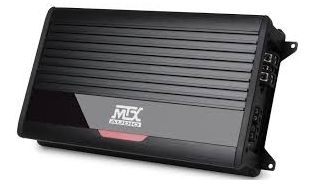
Figure 5. Class D Monoblock Amplifier
Class H
Class H amplifiers are designed with performance and efficiency in mind, especially when delivering high power outputs. They utilize dynamically changing voltage rails, meaning the power supply adjusts in time based on the incoming signal. This technique minimizes wasted energy and reduces heat generation, especially during lower volume passages. Because of this efficiency and their ability to deliver high output without overheating, Class H monoblock amplifiers are frequently employed in environments such as PA systems, live sound reinforcement, and studio monitors. They are ideal for scenarios where reliability, output power, and thermal management are needed.
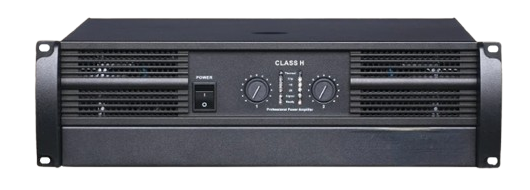
Figure 6. Class H Monoblock Amplifier
Mono vs. Stereo Amplifiers
|
Feature |
Monoblock Amplifier |
Stereo Amplifier |
|
Channels |
Single-channel |
Two-channel (left and right) |
|
Primary Use |
Powering subwoofers |
Driving full-range speakers |
|
Audio Focus |
Strong, clean bass output |
Balanced sound with spatial imaging |
|
System Role |
Complements existing stereo setup |
Core of full-range audio system |
|
Complexity |
Simpler, more focused design |
More complex with multiple signal paths |
|
Size |
Often smaller and more compact |
Usually bulkier due to added circuitry |
|
Sound Imaging |
No stereo imaging; focused mono output |
Provides stereo separation and soundstage |
|
Efficiency with Subwoofers |
High; delivers clean power to low frequencies |
Less optimized for deep bass |
|
Ideal Application |
Car audio, subwoofer-only setups |
Home theater, stereo music playback |
Benefits of Monoblock Amplifiers
• Dedicated Power: Sends all power to a single channel, resulting in greater clarity, improved channel separation, and tighter bass response.
• Higher Output Potential: Because the amplifier is focused on just one channel, it can often deliver higher wattage to that speaker compared to multi-channel amps.
• Improved Soundstage and Imaging: With each speaker powered independently, stereo imaging and spatial accuracy are enhanced, especially in high-fidelity systems.
• Efficiency: Class D monoblocks, operate cooler and use energy more efficiently, reducing heat buildup and power draw.
• Modularity: Easy to customize and expand. Add more amplifiers as you add more speakers or subwoofers, making it ideal for growing systems.
• Reduced Crosstalk: By isolating channels into separate units, monoblocks prevent signal interference between left and right audio paths.
• Placement Flexibility: Smaller, self-contained design allows amps to be positioned close to individual speakers, minimizing cable length and signal loss.
• Dedicated Grounding: Each unit can be grounded separately, which can reduce electrical noise and interference in complex setups.
• Thermal & Overload Protection: Built-in safety features like thermal shutdown, short circuit protection, and soft-start functions help preserve both the amp and connected equipment.
Limitations of Monoblock Amplifiers
• No Stereo from a Single Unit: Each monoblock handles just one audio channel, so achieving stereo sound requires at least two units. Multi-channel setups need even more.
• Higher Cost per Channel: Purchasing a separate amplifier for each speaker or subwoofer increases the total system cost compared to integrated or multi-channel amps.
• Increased Space Requirements: More units mean more shelf or rack space, more cables, and more complex wire management, which can be an issue in compact setups.
• More Demanding Installation: Requires proper grounding to avoid hum or noise. Impedance matching must be accurate to prevent damage or poor performance. Longer or lower-quality interconnects can introduce noise or signal loss.
• Greater Power Consumption in Total: While each unit may be efficient on its own (especially Class D), the cumulative draw of multiple amps can tax your power supply, especially in large systems.
• More Heat in Aggregate: Although efficient, running many units together can still generate noticeable heat in a confined area, especially with high-output Class A/B designs.
• No Built-in Signal Processing: Unlike some integrated or multi-channel amps, most monoblocks lack features like bass management, crossover controls, or EQ. These need to be handled externally.
• Complex Troubleshooting: More individual components mean more potential points of failure. Diagnosing hum, imbalance, or distortion can take more time and effort.
• Longer Setup Time: With each amp requiring connections, placement, and calibration, initial installation is more time-consuming than using a single multi-channel amp.
Where Monoblock Amplifiers Are Used?
Automotive Audio Systems
Monoblock amplifiers are a popular choice for powering subwoofers in car audio systems. Their ability to produce high amounts of power from a relatively small and efficient unit makes them ideal for vehicles, where space and electrical resources are limited. Many monoblocks, especially Class D models, are compact and energy-efficient, allowing them to fit in tight areas like under seats or in the trunk. They’re designed to run at low impedances (such as 1 or 2 ohms) making them perfect for driving powerful subwoofers that need more current to produce deep, strong bass. Whether you're upgrading a factory system or building a custom audio setup, monoblock amps ensure your subwoofer delivers clean, punchy bass without straining the car’s battery or alternator.
Home Theater Systems
In high-performance home theater systems, monoblock amplifiers are often used to drive individual speakers in a multi-channel surround sound setup. By dedicating a single amp to each speaker. you eliminate the risk of signal interference between channels and ensure consistent power delivery. This separation results in clearer dialogue, sharper sound effects, and a more immersive audio experience overall.
Live Sound and Stage Performances
Monoblock amplifiers are often used in live sound setups, including stage monitors, PA systems, and concert speaker arrays. These environments demand stable, high-output performance across varying conditions and long durations. Monoblocks are well-suited for the task, they’re rugged, reliable, and capable of pushing large amounts of power to individual speakers without distortion. Their ability to drive specific speaker types, makes them valuable for reinforcing instruments and vocals in large venues. Whether indoors or outdoors, monoblocks help ensure consistent sound levels and clear audio performance throughout the audience space.
Custom Multi-Zone Audio Systems
In custom installations like smart homes, conference centers, hotels, or commercial spaces, monoblock amplifiers are used to power speakers in multiple zones independently. Each zone such as a kitchen, living room, or outdoor patio, can have its own dedicated monoblock, allowing for precise control over volume, sound source, and tone. This setup ensures consistent audio quality across the entire property and allows for flexible expansion as more zones are added. Because each amplifier works independently, there’s less risk of interference or signal degradation, making monoblocks an excellent choice for high-quality, scalable distributed audio systems.
High-End Hi-Fi Two-Channel Setups
In premium stereo systems, monoblock amplifiers are often used to power each speaker individually, rather than using a shared two-channel amp. This setup provides each speaker with its own dedicated power supply and signal path, reducing electrical interference and enhancing stereo imaging. Monoblocks also contribute to tighter bass, greater dynamics, and a more natural listening experience. Many opt for tube-based monoblocks to add warmth and character to the sound, recreating the classic feel of vintage hi-fi gear with modern precision.
Marine Audio Systems
Boats and marine environments require audio equipment that can handle moisture, salt, and vibrations, conditions that would quickly damage standard gear. Marine-grade monoblock amplifiers are designed for this purpose, with waterproof casings, corrosion-resistant materials, and sealed circuit boards. These amps are commonly used to power subwoofers, delivering strong bass response in open-air settings where low frequencies can easily get lost. Marine monoblocks are also built to handle fluctuating electrical systems and limited power availability on boats. Whether used for leisure cruising or marine entertainment systems, these amps ensure durable, high-quality sound on the water.
Home DJ Setups and Audio Rigs
For DJs and home producers, having powerful and precise bass is needed. Monoblock amplifiers are often used to power subwoofers or dedicated bass bins in a DJ rig, delivering deep, impactful low-end that enhances the overall mix. Because each monoblock is designed to handle a single audio channel, they can deliver clean, focused power without affecting the performance of other speakers. This helps maintain tight bass definition and strong rhythm during performances, practice sessions, or house parties. Monoblocks are a great solution for DJs who want club-quality sound from their personal setup, offering reliable performance and high output in a manageable format.
Conclusion
Monoblock amplifiers are designed to give strong, clear sound to just one speaker. They are perfect for subwoofers because they can send a lot of power without losing sound quality. These amps have a simple design that reduces noise and keeps the sound clean. There are different types, some focus on better sound quality, while others are made to be more energy efficient. Monoblock amps are easy to add to any system and give you more control, but they can cost more and take up more space. Even so, they are widely used in many places like cars, homes, boats, concerts, and DJ setups because they offer reliable and powerful sound performance.
About us
ALLELCO LIMITED
Read more
Quick inquiry
Please send an inquiry, we will respond immediately.
Frequently Asked Questions [FAQ]
1. What's the difference between a monoblock amp and a regular amp?
A monoblock amp powers one speaker with one audio channel, usually a subwoofer. It’s built to deliver high power and clean bass. A regular amp (like a stereo or multi-channel amp) powers two or more speakers and can handle left-right stereo sound. Monoblocks are simpler in design, more focused on low frequencies, and are often used where strong, undistorted bass is the priority like in car subwoofer setups or high-end audio systems.
2. What is the difference between a monoblock amp and a 4-channel amp?
A monoblock amp has one channel for one speaker, usually for bass. A 4-channel amp has four separate outputs, so it can power four speakers or two speakers and a subwoofer (in bridged mode). Monoblocks give more power per channel, but fewer connections. A 4-channel amp is more flexible for full-range speaker setups but shares power across channels, which may not match the subwoofer’s demand for power.
3. How many speakers can a monoblock amp run?
A monoblock amp is meant to power one speaker, especially a subwoofer. However, if you have multiple subwoofers wired correctly (in parallel or series) and their total impedance matches the amp’s rated load (e.g., 2 ohms or 4 ohms), the amp can run more than one subwoofer. But all the speakers will get the same signal, and the amp must be able to handle the combined load safely.
4. How many channels does a monoblock amp have?
A monoblock amp has one channel. It’s designed to process and amplify a single audio signal path, which makes it perfect for subwoofers that don’t need stereo sound. Even though it may have multiple speaker terminals, these are often just parallel outputs for wiring convenience not extra channels. All terminals output the same audio signal.
5. Why do monoblock amps have 2 inputs?
Monoblock amps often have two RCA inputs (left and right), even though they only power one channel, to accept stereo signals from the source unit. Internally, the amp sums the left and right inputs into a single mono signal. This ensures that no part of the stereo mix is lost especially if bass is split between left and right channels. Some amps also allow you to use just one input if needed.
EPM3256ATC144-10N CPLD: Features, Pinout, Applications, and Alternatives
on June 14th
Learn About the AD7828BR and Its Functional Design
on June 13th
Popular Posts
-

Complex Instruction Set Computers: How They Changed Computing?
on April 18th 147749
-

USB-C Pinout and Features
on April 18th 111920
-
Using Xilinx Unified Simulation Primitives: A Comprehensive Guide to FPGA Design and Simulation
on April 18th 111349
-

Power Supply Voltages in Electronics: Meaning of VCC, VDD, VEE, VSS, and GND
on April 18th 83714
-

RJ45 Connector Guide: Pinout, Wiring, Cable Types, and Uses
on January 1th 79502
-

The Ultimate Guide to Wire Color Codes in Modern Electrical Systems
The way our electrical systems use colors isn’t just for looks. Each wire color now indicates a specific function, making it easier to identify and handle electrical components correctly during ins...on January 1th 66872
-

Quality (Q) Factor: Equations and Applications
The quality factor, or 'Q', is important when checking how well inductors and resonators work in electronic systems that use radio frequencies (RF). 'Q' measures how well a circuit minimizes energy...on January 1th 63005
-
Purge Valve Guide: Function, Symptoms, Testing, and Replacement for Optimal Engine Performance
The purge valve is a key part of a car’s system that helps keep the air clean by managing fuel vapors before they can escape into the atmosphere. This not only helps the environment by reducing pol...on January 1th 62951
-

Achieving Peak Performance with the Maximum Power Transfer Theorem
The Maximum Power Transfer Theorem explains how energy from a source, such as a battery or generator, flows to a connected load. It shows the exact condition where the load receives the most power....on January 1th 54078
-

A23 Battery Specifications and Compatibility
The A23 battery is a small, cylinder-shaped battery with high voltage. Also called 23A, 23AE, or MN21, it runs at 12 volts and much higher than AA or AAA batteries. Its special design make...on January 1th 52092
HOT Part Number
-

BD9B100MUV-E2
Rohm Semiconductor
IC REG BUCK ADJ 1A 16VQFN
UPD70F3539AF5A9-PN7-Q-A
Renesas Electronics America Inc
IC MICROCONTROLLER
18081A621JAT2A
KYOCERA AVX
CAP CER 620PF 100V NP0 1808
FDN340P
onsemi
MOSFET P-CH 20V 2A SUPERSOT3
70231-101
Amphenol ICC (FCI)
CONN RCPT BLADE PWR 8POS EDGE MT
MPSW42RLRAG
onsemi
TRANS NPN 300V 0.5A TO92
MC7824BT
onsemi
IC REG LINEAR 24V 1A TO220AB
AD8009ARZ-REEL
Analog Devices Inc.
IC OPAMP CFA 1 CIRCUIT 8SOIC
LT1815CS5#TRPBF
Analog Devices Inc.
IC OPAMP VFB 1 CIRCUIT TSOT23-5
DG411DYZ
Renesas Electronics America Inc
IC SWITCH SPST-NCX4 35OHM 16SOIC
VFT2060C-M3/4W
Vishay General Semiconductor - Diodes Division
DIODE SCHOTTKY 20A 60V ITO-220AB
TSX562AIYST
STMicroelectronics
IC CMOS 2 CIRCUIT 8MINISO
MR256D08BMA45
Everspin Technologies Inc.
IC RAM 256KBIT PARALLEL 48FBGA
VSC3312YYP-01
Microchip Technology
IC SWITCH 16X16 6.5GBPS 196FCBGA
XC68HC908GP20CFB
Motorola
TSG 8BIT20K FLASH
CSR8811A08-ICXR-R
Qualcomm
IC RF TXRX+MCU BLUETOOTH
MPSW05
onsemi
TRANS NPN 60V 0.5A TO92
1N4055R
Solid State Inc.
DIODE GEN PURP REV 900V 275A DO9 -

ASX342ATSC00XPED0-DP
onsemi
IMAGE SENSOR VGA 1/4 CIS SOC
0433.125NR
Littelfuse Inc.
FUSE BOARD MNT 125MA 125VAC/VDC
1SMA5941BT3G
onsemi
DIODE ZENER 47V 1.5W SMA
DCP010512BP-U/700
Texas Instruments
DC DC CONVERTER 12V 1W
1-1734344-1
TE Connectivity AMP Connectors
CONN D-SUB HD RCPT 15P R/A SLDR
KSD1621STF
onsemi
TRANS NPN 25V 2A SOT89-3
BQ24161RGET
Texas Instruments
IC BATT CHG LI-ION 1CELL 24VQFN
BTA26-600BW
STMicroelectronics
TRIAC ALTERNISTOR 600V 25A TOP3
NCP1239DD65R2G
onsemi
IC OFFLINE SWITCH FLYBACK 7SOIC
TMS320TCI6482BZTZA
Texas Instruments
TMS320 - DIGITAL SIGNAL PROCESSO
BQ20Z90DBTR-V150
Texas Instruments
IC GAS GAUGE LI-ION 30TSSOP
PCMB104T-1R0MT
Susumu
FIXED IND 1UH 18A 3.3 MOHM SMD
CY29942AXCT
Infineon Technologies
IC CLK BUFFER 1:18 200MHZ 32TQFP
CC0402KRX7R9BB561
YAGEO
CAP CER 560PF 50V X7R 0402
STPS20M60SG-TR
STMicroelectronics
DIODE SCHOTTKY 60V 20A D2PAK
AT25010N-10SC-2.7
Microchip Technology
IC EEPROM 1KBIT SPI 3MHZ 8SOIC
04023A1R0CAT4A
KYOCERA AVX
CAP CER 1PF 25V C0G/NP0 0402
ISL6327IRZ
Intersil
SWITCHING CONTROLLER, VOLTAGE-MO -

LQW18AN75NG0ZD
Murata Electronics
FIXED IND
DFA100BA160
SanRex Corporation
DIODE MODULE 1600V 100A
BAR46AFILM
STMicroelectronics
DIODE ARRAY SCHOTTKY 100V SOT23
MAX825SEUK
Analog Devices Inc./Maxim Integrated
IC SUPERVISOR MPU
MMST2222A-7-F
Diodes Incorporated
TRANS NPN 40V 0.6A SOT323
FODM8801AR2
onsemi
OPTOISO 3.75KV TRANS 4-MINI-FLAT
FJV1845FMTF
Fairchild Semiconductor
SMALL SIGNAL BIPOLAR TRANSISTOR,
EVK105RH5R1JW-F
Taiyo Yuden
CAP CER 5.1PF 16V R2H 0402
6651170-3
TE Connectivity AMP Connectors
CONN EDGE DUAL FMALE 4POS 0.508
KSZ8893FQLI-FX
Microchip Technology
IC SWITCH ETH 3PORT 128QFP
170M6340
Eaton - Bussmann Electrical Division
FUSE SQUARE 400A 1.3KVAC RECT
BCM20741A2KFB1G
Broadcom Limited
SINGLE-CHIP BLUETOOTH
MAX3443EASA+
Analog Devices Inc./Maxim Integrated
IC TRANSCEIVER HALF 1/1 8SOIC
GRM0335C1H9R3DA01D
Murata Electronics
CAP CER 9.3PF 50V C0G/NP0 0201
TNY175PN
Power Integrations
11.5 W (85-265 VAC) 15 W (230 VA
742700726
Würth Elektronik
FERRITE CORE 278 OHM SOLID 4MM
DM74S20N
onsemi
IC GATE NAND 2CH 4-INP 14DIP
P4SMA56CA-E3/61
Vishay General Semiconductor - Diodes Division
TVS DIODE 47.8VWM 77VC DO214AC