Non-Polarized Capacitors: Types, Functions, Applications and Selection Guide
Non-polarized capacitors are key parts in electronic circuits because they can handle electricity coming in any direction, unlike polarized capacitors which need a specific setup. They are very useful in different kinds of circuits, like those in audio devices, power systems, and machines that process signals. This guide dives deep into how these capacitors are made, what they do, the different types available, and how they're used in many kinds of electronic equipment.Catalog

What is a Non-Polarized Capacitor?
Non-polarized capacitors are important parts of electronic circuits because they can work no matter which way the voltage is applied. This makes them different from polarized capacitors, like electrolytic capacitors, which need to be connected in a specific direction to avoid damage. Since non-polarized capacitors do not have this limitation, they are very useful in circuits that use alternating current (AC), where the voltage changes direction constantly. They can also be used in direct current (DC) circuits for tasks such as filtering, blocking unwanted signals, or stabilizing voltage. Because of their flexibility, these capacitors are commonly found in audio devices, power supplies, and signal-processing equipment. They are made from materials like ceramic, plastic film, or mica, each offering different benefits depending on the application. Many choose non-polarized capacitors when they need a reliable component that can work in different conditions without worrying about connection direction.
One of the biggest advantages of non-polarized capacitors is their ability to handle AC signals, making them excellent in audio systems, such as speaker crossovers, where they help separate different sound frequencies. They are also used in electric motors to help them start and run smoothly. When selecting a non-polarized capacitor, factors such as capacitance (how much charge it can store), voltage rating (how much voltage it can handle), and the type of material used are important to consider. For example, ceramic capacitors are great for high-frequency circuits, while film capacitors are preferred in audio and power-related applications because they produce less electrical loss. Compared to polarized capacitors, non-polarized ones usually have lower capacitance, but they last longer and are more reliable in circuits where voltage direction might change. Understanding how these capacitors work and where they are best used helps design better and more efficient electronic devices.
Features of Non-Polarized Capacitors

Figure 2. Non Polarized Capacitor Symbol
Non-polarized capacitors are special electronic parts that can be connected in any direction without worrying about positive or negative sides. This makes them simple to use and reduces mistakes during installation. They are commonly used in circuits that handle changing (AC) signals or when electricity needs to flow both ways. These capacitors are made from materials like ceramic and plastic films, which help them work reliably over time. They come in different sizes and capacitance values, making them useful for many electronic devices and systems. Understanding their features can help in choosing the right one for a circuit.
Absence of Polarity
Non-polarized capacitors are designed to function efficiently regardless of the direction in which they are connected within an electrical circuit. Unlike polarized capacitors, which require careful attention to the correct positive and negative leads, non-polarized types eliminate this constraint, simplifying both circuit design and assembly. This absence of polarity not only reduces the risk of incorrect installation but also enhances reliability, as there is no potential for damage due to reversed connections. Because of this characteristic, these capacitors are commonly used in applications where AC signals or bidirectional voltage operation is necessary, ensuring stable performance without concerns about orientation. Their versatility makes them an ideal choice for those seeking components that contribute to ease of use and long-term reliability.
Additionally, the absence of polarity in these capacitors enhances their suitability for a variety of electronic configurations, ranging from basic filtering circuits to complex signal processing networks. Since they do not impose directional constraints, they can be seamlessly integrated into circuits that require capacitors to handle both positive and negative voltage swings. This is advantageous in AC coupling, crossover networks in audio systems, and timing circuits for bidirectional current flow. Their straightforward implementation reduces the complexity of circuit layouts and minimizes troubleshooting efforts, making them highly valued in both electronics and industrial applications. As a result, non-polarized capacitors continue in countless electrical and electronic systems, offering flexibility, reliability, and ease of integration.
Composition and Materials
The structural composition of non-polarized capacitors plays a role in their performance, longevity, and stability. These capacitors are primarily constructed using dielectric materials such as ceramic, polyester, polypropylene, and other plastic films, which inherently do not exhibit polarity. Ceramic capacitors, for instance, are known for their compact size, high reliability, and excellent thermal stability, making them well-suited for applications involving high-frequency signals and precise filtering tasks. Film capacitors, on the other hand, are favored for their durability, low dielectric loss, and ability to handle higher voltage ratings, which makes them useful in power electronics and audio circuits. The choice of dielectric material directly impacts the capacitor’s electrical characteristics, including its capacitance stability, resistance to environmental stress, and ability to operate effectively across varying temperatures and frequencies.
Beyond just the dielectric, the electrode materials and encapsulation techniques used in non-polarized capacitors further contribute to their performance and resilience. Many film capacitors employ metalized plastic films, where a thin layer of metal is deposited onto the dielectric to form the conductive plates. This design enhances their self-healing properties, allowing minor dielectric breakdowns to be corrected without degradation in performance. In ceramic capacitors, multilayer structures are often used to increase capacitance while maintaining a compact form factor. These construction methods ensure that non-polarized capacitors can withstand mechanical vibrations, temperature fluctuations, and electrical stress, making them reliable components in a broad spectrum of electronic applications. Their robust design ensures consistent functionality over extended periods, reinforcing their reputation as an elements in modern circuit design.
Capacitance Value Spectrum
Non-polarized capacitors are available in a wide range of capacitance values, allowing them to serve various functions within electronic circuits. While they generally do not reach the extremely high capacitance levels achievable by electrolytic capacitors, they compensate for this limitation through enhanced stability, durability, and flexibility. Their capacitance values range from a few picofarads (pF) to several microfarads (µF), making them suitable for diverse applications such as coupling, decoupling, noise filtering, and signal processing. One of the key considerations when selecting a non-polarized capacitor is the trade-off between capacitance and physical size. As the capacitance value increases, so does the overall size of the component, which can impact the feasibility of using these capacitors in compact circuit designs. Despite this, their ability to provide stable capacitance without concerns of polarity makes them invaluable in various AC and mixed-signal applications.
Moreover, the broad capacitance spectrum of non-polarized capacitors ensures their adaptability across different industries and technological fields. In low-capacitance ranges, ceramic capacitors are often used for high-frequency applications, such as radio frequency (RF) circuits and precision timing elements. In medium to higher capacitance ranges, film capacitors are widely employed in power conditioning, motor run circuits, and signal filtering. The predictable and stable performance of these capacitors over time, even in challenging environmental conditions, makes them an important choice for designing robust and efficient electronic systems. By carefully selecting the appropriate capacitance value, you can optimize circuit performance while ensuring long-term functionality, reinforcing the importance of non-polarized capacitors in modern electronics.
Functions of Non-Polarized Capacitors
Non-polarized capacitors help smooth out signals, reduce unwanted noise, and keep voltage levels stable. Since they can be connected in any direction, they work well in both AC and DC circuits. These capacitors are used for filtering out interference, passing signals between different parts of a circuit, and protecting electronic parts from sudden voltage changes. They help make electronic devices more reliable and efficient. Understanding their functions makes it easier to choose the right capacitor for any project.
Filtering and Noise Suppression
One of the most common uses of non-polarized capacitors is to remove unwanted electrical noise from circuits. Electrical noise can come from many sources, such as power lines, nearby electronic devices, or the circuit itself. If this noise is not controlled, it can cause problems like poor sound quality in audio devices, weak signals in communication systems, or unstable performance in sensitive electronics. Non-polarized capacitors help by filtering out these unwanted signals, allowing the circuit to work smoothly. In audio systems, for example, they reduce humming or buzzing sounds, making the sound clearer. In radio and communication systems, they help ensure strong and accurate signals by blocking interference from other electronic devices. These capacitors are also used in power supply circuits to make sure electronic devices receive steady power without sudden fluctuations. This is important for devices like computers, medical equipment, and industrial machines, where even small power disruptions can cause problems. By acting as noise filters, non-polarized capacitors help keep circuits clean and stable, preventing issues like data loss, flickering lights, or unexpected shutdowns.
Coupling and Decoupling
Non-polarized capacitors are also used to pass AC signals from one part of a circuit to another while blocking unwanted DC signals. This function, called coupling, is important in audio and communication systems, where clear signal transmission is needed. In an audio amplifier, for example, coupling capacitors allow sound signals to move between different stages without letting unwanted DC voltages interfere. This helps maintain sound quality and prevents distortion. By ensuring only the necessary signals pass through, non-polarized capacitors help keep circuits working as intended. Another important function is decoupling, which helps stabilize voltage levels in a circuit. Many electronic devices, such as computers and mobile phones, contain parts that turn on and off very quickly. These rapid changes can create voltage spikes, which might cause the device to malfunction. Decoupling capacitors act as small energy reserves, providing extra power when needed and absorbing excess voltage to keep everything stable. This prevents sudden voltage changes from affecting the performance of sensitive components, helping electronic devices run smoothly and reliably.

Figure 3. Coupling and Decoupling Capacitor
AC Applications and Motor Starters
Non-polarized capacitors are widely used in AC (alternating current) circuits, where they help regulate electrical flow and improve efficiency. One of their most important uses is in motor starters, where they help single-phase motors start running. These motors are found in many household appliances, such as fans, refrigerators, and washing machines. Since a single-phase power supply cannot create the necessary rotating magnetic field on its own, a capacitor is used to shift the phase of the current, allowing the motor to start and run efficiently. Without these capacitors, many electric motors would struggle to start or might not run at all. Besides motor starters, non-polarized capacitors are also used in AC power regulation and energy storage. They help reduce flickering in fluorescent lights, stabilize power flow in electrical circuits, and improve the efficiency of devices that use AC power. In renewable energy systems, such as solar panels and wind turbines, they assist in smoothing out power fluctuations, ensuring a steady flow of electricity. Their ability to handle changing electrical currents makes them valuable in many different applications, both in everyday electronics and industrial systems.
Snubber Circuits and Transient Suppression
Non-polarized capacitors are also used to protect circuits from sudden voltage spikes, which can occur when a circuit is turned on or off. These spikes can damage sensitive electronic components, such as transistors, relays, and switches. To prevent this, snubber circuits use capacitors to absorb and control excessive voltage, ensuring that electrical devices do not get damaged by sudden changes. This is important in high-power systems, such as industrial machines, power converters, and electric motor drives, where voltage spikes can be very strong. By helping to smooth out these sudden changes, capacitors improve the lifespan and reliability of electronic devices. Another related function is transient suppression, which protects electronic components from unexpected voltage surges caused by power line disturbances, lightning strikes, or switching operations. Transient voltage can be harmful to delicate electronic parts, leading to failures or reduced performance. Non-polarized capacitors help absorb these surges and redirect the extra energy safely within the circuit, preventing damage. In industrial settings, where large machines frequently switch on and off, these capacitors ensure steady operation by preventing unexpected voltage changes from affecting other connected devices. Their ability to protect sensitive electronics makes them an important component in both small and large-scale electrical systems.
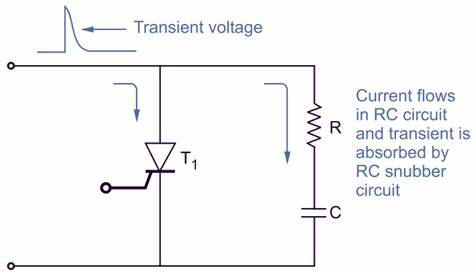
Figure 4. RC Snubber Circuit for Transient Voltage Suppression
Selection Criteria for Non-Polarized Capacitors
Choosing the right non-polarized capacitor is an important step in building a reliable electronic circuit. You need to consider several factors to make sure the capacitor works well and lasts a long time. The first step is to determine the correct capacitance value. This means figuring out how much electrical charge the capacitor needs to store for the circuit to function properly. If the capacitance value is too high or too low, the circuit may not work as expected. Selecting the right value ensures smooth operation and prevents unwanted changes in electrical signals. After deciding on the capacitance, the next step is to check the capacitor’s voltage rating. This rating tells how much voltage the capacitor can safely handle. It is always best to choose a capacitor with a voltage rating higher than the highest voltage in the circuit. If the voltage rating is too low, the capacitor may fail, which could damage the circuit.
Using a capacitor with a safe voltage margin helps protect the circuit from sudden voltage spikes and extends the life of the component. Another important factor to consider is how the capacitor responds to different frequencies. Different capacitors perform better at certain frequencies, depending on the material they are made of. For circuits that work at high frequencies, it is best to use capacitors with low resistance to prevent energy loss. Choosing the right type of capacitor for the frequency of the circuit helps maintain stable signals and improves efficiency. Environmental conditions also play a big role in capacitor selection. If a circuit will be used in extreme temperatures, humid environments, or places where it may experience vibrations, the capacitor must be able to withstand these conditions. Some capacitors are specially designed to handle heat, moisture, or physical stress without breaking down over time. Picking the right capacitor for the environment ensures long-term reliability and prevents failures caused by harsh conditions.
Finally, you must decide how to connect capacitors within the circuit. Capacitors can be connected in series or parallel, depending on the circuit’s needs. A series connection increases the voltage capacity but reduces the total capacitance, while a parallel connection increases capacitance while keeping the same voltage rating. Understanding these configurations helps adjust the circuit to meet specific performance requirements. By carefully considering these factors capacitance, voltage rating, frequency response, environmental conditions, and connection type, you can choose the best non-polarized capacitor for their design. Making the right choice ensures the capacitor works well, lasts longer, and helps keep the circuit running smoothly.
Differences Between Polarized and Non-Polarized Capacitors

Figure 5. Non-Polarized Capacitors vs. Polarized
Capacitors, whether polarized or non-polarized, serve a great role in electronic circuits by storing and discharging electrical energy as needed. While both types share this function, they are distinguished by various characteristics, including differences in dielectric materials, electrical properties, capacitance values, structural designs, operating conditions, and suitability for specific applications. These distinctions influence their effectiveness in different circuit designs and determine the optimal choice based on performance requirements.
Dielectric Variations
The dielectric material within a capacitor serves as an insulating barrier between the conductive plates, preventing direct current from passing while allowing the capacitor to store energy in an electric field. The type of dielectric used significantly affects the capacitor's overall performance, including its capacitance, voltage rating, and frequency response. Polarized capacitors, such as electrolytic capacitors, often utilize electrolytes as their dielectric medium. This unique dielectric choice enables them to achieve higher capacitance values compared to many non-polarized alternatives. The specific composition of the electrolyte, along with the manufacturing process, dictates the capacitor's final electrical characteristics, including its efficiency, stability, and voltage tolerance. On the other hand, non-polarized capacitors employ a broader range of dielectric materials, including ceramic, polyester, and metal oxide films. Each of these materials imparts different electrical properties, making non-polarized capacitors versatile across various applications. One of the defining factors determining whether a capacitor is polarized or non-polarized is the reversibility of dielectric polarization. If the dielectric allows bidirectional charge movement without degradation, the capacitor remains non-polarized, making it suitable for AC circuits.
Differences in Performance
The performance characteristics of capacitors vary based on their design, intended function, and electrical specifications. Their effectiveness in circuit applications depends on factors such as capacitance value, equivalent series resistance (ESR), leakage current, and frequency response. For example, in television power supplies, metal oxide film capacitors are known for their superior filtering performance. However, to achieve the required capacitance and voltage endurance, they often need to be relatively large in physical size, which can limit their practicality in space-constrained applications. In contrast, electrolytic capacitors, which are inherently polarized, offer a more compact solution for high-capacitance filtering applications, making them a preferred choice for power supply circuits. Typically, electrolytic capacitors with capacitance values exceeding 1 µF are employed for applications such as coupling, decoupling, and filtering within power supplies. Their high capacitance allows them to smooth voltage fluctuations effectively, ensuring stable circuit operation. Non-polarized capacitors, which generally have capacitance values below 1 µF, are more commonly used in circuits that require precise frequency selection, current-limiting functionality, or resonance tuning. However, larger non-polarized capacitors capable of handling high voltages are also available. These are often used in specialized applications such as reactive power compensation, motor phase shifting, and frequency transformation in electrical grids.

Figure 6. Differences in Performance
Variance in Capacitance
The capacitance value of a capacitor is directly influenced by the type of dielectric material used in its construction. Polarized capacitors are designed to provide high capacitance in a compact form factor. Their ability to store and release amounts of electrical energy makes them valuable in applications that demand steady voltage regulation, such as DC power supplies and audio signal circuits. Their function in filtering and stabilizing voltage ensures that electronic circuits operate consistently, reducing fluctuations and noise interference. While they generally exhibit lower capacitance compared to their polarized counterparts, non-polarized capacitors offer distinct advantages in specific circuit designs. Their bidirectional nature makes them highly versatile, particularly in AC circuits where polarity is not a concern. This flexibility allows them to be used in signal processing, frequency tuning, and impedance-matching applications, ensuring stable circuit operation across various frequencies.
Structural Disparities
The physical structure of capacitors varies depending on their type, intended use, and manufacturing design. Capacitors are available in multiple shapes and sizes, each tailored to specific application requirements. Electrolytic capacitors, which are predominantly polarized, are commonly manufactured in cylindrical shapes due to their internal construction. However, alternative structural designs, including rectangular, sheet, tubular, and distributed capacitor formats, exist for specialized electronic functions. Distributed capacitance, for example, is an inherent characteristic in many circuit layouts, especially in high-frequency and intermediate-frequency applications. This effect can either be advantageous or require compensation, depending on the design requirements of the circuit.
Considerations of Usage and Environment
Polarized Capacitors: Aluminum electrolytic capacitors, commonly used for large-capacitance applications, provide effective power filtering but exhibit performance limitations at high frequencies. Tantalum electrolytic capacitors, although more expensive, offer superior stability and efficiency in high-frequency applications, making them ideal for use in advanced electronic circuits requiring precise voltage regulation.
Non-Polarized Capacitors: Ceramic, monolithic, and polyethylene film capacitors are widely used due to their compact size, affordability, and suitability for high-frequency applications. While they generally offer lower capacitance values compared to electrolytic capacitors, their reliability and stability in AC circuits make them great in signal processing, timing circuits, and impedance-matching networks. Magnetically dielectric capacitors, which employ ceramic materials and silver electrodes, exhibit low energy leakage and high-frequency stability, making them well-suited for high-voltage and RF applications.
Capacitor performance is also influenced by the dielectric constant of the insulating material. High-permittivity materials such as ferroelectric ceramics and electrolytes enable capacitors to achieve high capacitance values within a small volume. However, they may also introduce higher energy losses, which can be a limiting factor in certain applications. In contrast, materials with lower permittivity, such as specific ceramic compositions, exhibit reduced energy losses, making them ideal for high-frequency applications where signal integrity is a primary concern.
Application Distinctions
Polarized Capacitors: These capacitors are good in DC applications where substantial capacitance is required for voltage stabilization, filtering, and energy storage. They are widely used in power supply circuits, audio amplification systems, and electronic voltage regulation circuits. Due to their polarized nature, they must be installed correctly to prevent damage or malfunction.
Non-Polarized Capacitors: These capacitors are commonly used in AC circuits for functions such as signal coupling, decoupling, and frequency tuning. Their ability to handle bidirectional current flow makes them ideal for applications in audio signal processing, AC power distribution, and lighting systems, where polarity is not a concern.
Comparative Advantages
Polarized Capacitors: The primary advantage of polarized capacitors lies in their ability to store a large amount of electrical energy within a compact design. This feature makes them important in circuits that require stable, regulated DC voltage, ensuring consistent power delivery in electronic devices.
Non-Polarized Capacitors: These capacitors provide greater design flexibility by allowing current to flow in both directions. Their adaptability makes them the preferred choice for AC signal processing, impedance matching, and applications where polarity considerations are unnecessary. Their reliability and stability across a wide range of frequencies further enhance their suitability for various electronic and power management applications.
Types of Non-Polarized Capacitors
We explore various types of non-polarized capacitors, highlighting their construction, advantages, and typical use cases.
Ceramic Capacitors
Ceramic capacitors are among the most widely used capacitors in modern electronics, primarily due to their compact size, affordability, and versatility across a broad range of applications. These capacitors utilize ceramic materials as the dielectric, which provides excellent electrical insulation and enables efficient charge storage. One of their advantages is their ability to function effectively in high-frequency circuits, making them a preferred choice for noise suppression, coupling, and decoupling applications in both AC and DC circuits. Ceramic capacitors are available in multiple variations, including Class 1 and Class 2 types, which differ in terms of stability, temperature coefficient, and performance reliability. Class 1 ceramic capacitors offer superior precision and minimal capacitance variation over temperature changes, whereas Class 2 variants provide higher capacitance values at a lower cost but with slightly reduced stability.

Figure 7. Ceramic Capacitors
These capacitors are commonly found in applications such as power supply filtering, electromagnetic interference (EMI) suppression, and signal processing in radio frequency (RF) circuits. Due to their non-polarized nature, ceramic capacitors can be used in circuits where polarity is not a concern, further enhancing their usability. Moreover, advancements in ceramic capacitor technology, such as multilayer ceramic capacitors (MLCCs), have enabled their integration into modern high-density circuit boards, particularly in telecommunications, automotive electronics, and devices like smartphones and laptops. Despite their many benefits, ceramic capacitors can exhibit a phenomenon known as microphonic effect, where mechanical vibrations induce electrical noise. Nonetheless, their reliability, affordability, and adaptability make them a core of contemporary electronic design.
Film Capacitors
Film capacitors, also known as plastic film capacitors, are a class of non-polarized capacitors that use a thin plastic film as the dielectric material. These capacitors are highly regarded for their stability, low equivalent series resistance (ESR), and excellent self-healing properties, which enhance their longevity and reliability in various electronic circuits. The dielectric material in film capacitors can be made from several types of plastics, including Polyethylene Terephthalate (PET), Polypropylene (PP), Polystyrene (PS), and Polycarbonate (PC). Each material offers distinct advantages: for example, polypropylene capacitors provide excellent high-frequency performance and low dissipation factors, making them ideal for applications requiring minimal energy loss, such as pulse circuits and audio systems.
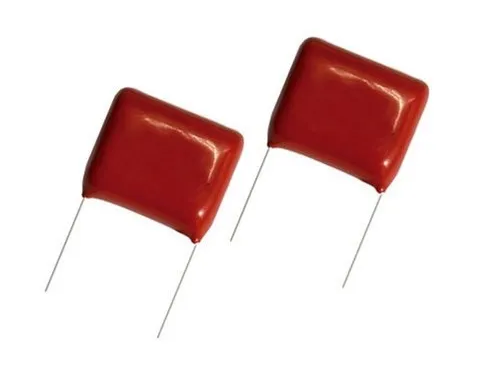
Figure 8. Film Capacitors
Due to their robust design and dependable performance, film capacitors are widely used in applications where long-term stability and low inductance. They are found in power electronics, motor run circuits, snubber circuits, and radio frequency (RF) filters. Unlike electrolytic capacitors, film capacitors do not suffer from drying out or electrolyte leakage, which extends their operational lifespan. They exhibit excellent insulation resistance, allowing them to function effectively in high-voltage applications. One notable drawback, however, is their relatively larger size compared to ceramic capacitors of similar capacitance values. Despite this, their superior electrical characteristics and durability make them an excellent choice for applications demanding precision and high reliability.
Mica Capacitors
Mica capacitors are specialized non-polarized capacitors that utilize mica as their dielectric material, prized for its exceptional electrical properties, including high precision, outstanding stability, and minimal energy loss. Mica is a naturally occurring mineral known for its insulation and resistance to moisture, which contributes to the long-term reliability of these capacitors. These capacitors exhibit very low dielectric absorption and a near-zero temperature coefficient, making them highly suitable for circuits that require exact capacitance values with minimal fluctuation over time or with changes in temperature.

Figure 9. Mica Capacitors
The primary applications of mica capacitors are found in high-frequency circuits, such as RF transmitters and receivers, oscillators, and amplifiers, where performance consistency is great. Due to their superior stability, they are also used in laboratory-grade measuring instruments and high-voltage applications, including radar systems and military-grade communication devices. One of the key reasons for their high reliability is that mica capacitors do not degrade over time as quickly as other types, making them an ideal choice for electronic components. However, these capacitors tend to be more expensive than ceramic or film capacitors due to the meticulous manufacturing process required to ensure precision and durability. Despite their higher cost, their unparalleled electrical performance makes them a preferred choice for applications where accuracy and stability are non-negotiable.
Glass Capacitors
Glass capacitors represent a niche category of non-polarized capacitors that employ glass as the dielectric material, offering superior performance in extreme environmental conditions. These capacitors are designed for high-reliability applications where stability over a wide temperature range and resistance to environmental factors such as humidity and radiation. The glass dielectric provides exceptionally high insulation resistance, which minimizes leakage current and ensures consistent performance even under rigorous operating conditions.
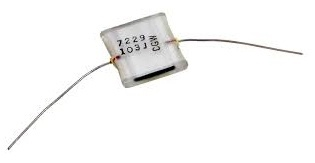
Figure 10. Glass Capacitor
Due to their robustness, glass capacitors are extensively used in aerospace, military, and industrial applications. They are often deployed in satellite systems, space exploration equipment, and high-energy physics experiments, where components must withstand severe temperature fluctuations and prolonged exposure to radiation. Glass capacitors exhibit low losses at high frequencies, making them suitable for RF and microwave applications. Despite their excellent performance characteristics, they are relatively expensive and bulkier compared to other capacitor types, limiting their use to specialized applications where their unique benefits outweigh the cost and size considerations. Nonetheless, their reliability and durability make them a crucial component in mission-critical electronic systems.
Teflon (PTFE) Capacitors
Teflon capacitors, also known as PTFE (Polytetrafluoroethylene) capacitors, are a specialized type of non-polarized capacitor known for their outstanding thermal stability, low dielectric losses, and high insulation resistance. PTFE, a highly durable and chemically inert polymer, serves as the dielectric material, giving these capacitors remarkable resistance to high temperatures, moisture, and chemical degradation. Due to their ability to operate reliably in extreme conditions, PTFE capacitors are frequently used in aerospace, medical, and industrial applications. They can function effectively across a broad temperature range, often exceeding 200°C, without changes in capacitance or electrical characteristics. Another advantage of Teflon capacitors is their exceptionally low dissipation factor, which makes them highly suitable for high-frequency applications such as RF circuits, microwave systems, and pulse circuits requiring minimal energy loss. Unlike some other capacitor types, PTFE capacitors do not degrade over time due to aging effects, ensuring long-term stability. However, these capacitors tend to be more expensive due to the complexity of manufacturing and the high cost of PTFE material. They are generally larger compared to ceramic or film capacitors with similar capacitance values. Despite these limitations, Teflon capacitors remain a preferred choice for applications demanding high precision, reliability, and resistance to harsh environmental conditions.

Figure 11. Teflon Capacitor
Silver Mica Capacitors
Silver mica capacitors are a refined version of traditional mica capacitors, incorporating thin sheets of natural mica coated with a layer of silver to enhance conductivity and precision. These capacitors are well known for their high accuracy, excellent frequency stability, and minimal energy loss, making them valuable in applications requiring precise capacitance values over extended periods. Due to their construction, silver mica capacitors exhibit low dielectric absorption and negligible temperature coefficients, ensuring their capacitance remains stable even in fluctuating thermal environments. The most common applications for silver mica capacitors include radio frequency (RF) circuits, oscillators, and precision filter networks, where even minor deviations in capacitance could impact circuit performance. They are also frequently used in vintage and high-end audio equipment, where their superior electrical properties help maintain sound fidelity. Compared to ceramic and film capacitors, silver mica capacitors offer much lower losses at high frequencies, making them great in RF and microwave applications. However, these advantages come at a cost, silver mica capacitors are relatively expensive due to the use of silver in their manufacturing process and the meticulous quality control required. They are available in smaller capacitance values, limiting their use in applications that require larger capacitance ranges. Despite these factors, their unmatched precision and reliability make them a valuable component in specialized electronic circuits.

Figure 12. Silver Mica Capacitor
Paper Capacitors
Paper capacitors, once a staple in electronic circuits, utilize paper impregnated with oil or wax as their dielectric material. Historically, these capacitors were widely used due to their relatively simple manufacturing process and ability to handle moderate voltage levels. However, with the advent of more advanced dielectric materials like plastic films, paper capacitors have largely been replaced in modern electronics. Despite this, they still find niche applications in vintage electronic equipment, power line filters, and restoration projects. One of the primary drawbacks of paper capacitors is their susceptibility to moisture absorption, which can lead to degradation in performance over time. To counteract this, early designs incorporated hermetic sealing to protect against environmental factors. Even so, paper capacitors tend to have higher leakage currents and are generally bulkier than their modern counterparts, making them less desirable for space-constrained applications. In some high-voltage circuits, older oil-filled paper capacitors were used for their ability to withstand voltage surges, but these have largely been replaced by polypropylene or polyester film capacitors that offer better reliability and performance. While paper capacitors may no longer be the first choice for contemporary electronic designs, they remain part of the history of capacitor technology and continue to be relevant in specialized restoration and repair applications.

Figure 13. Paper Capacitors
Operational Dynamics of Non-Polarized Capacitors
Non-polarized capacitors play a role in AC circuits by managing energy flow and stabilizing electrical signals. Their ability to function without a fixed polarity allows them to handle alternating current efficiently in applications where charge cycles repeatedly reverse direction. These capacitors undergo continuous charging and discharging in sync with the AC waveform, which enables them to regulate voltage levels, reduce fluctuations, and enhance overall circuit stability.
When a non-polarized capacitor is connected to an AC voltage source, it undergoes a repeating cycle of energy storage and release. As the alternating current rises toward its peak voltage, the capacitor accumulates electrical energy by building an electric field between its plates. The amount of energy stored depends on the capacitance of the component and the voltage applied. As the AC waveform shifts and begins moving in the opposite direction, the capacitor releases the stored energy back into the circuit. This discharge helps smooth voltage fluctuations, preventing sudden changes that could disrupt circuit operation. By consistently absorbing and releasing energy, the capacitor helps maintain a more stable voltage profile. This cycle is best for reducing voltage spikes and dips, ensuring that sensitive components receive a more consistent power supply. Without this stabilizing effect, circuits may experience erratic voltage changes, potentially leading to inefficient performance or damage to connected components.
Non-polarized capacitors contribute to circuit efficiency by improving signal clarity and minimizing unwanted electrical noise. In high-frequency circuits, they act as filters by diverting excess high-frequency signals away from components, reducing interference and preventing signal distortion. This function is valuable in audio processing and communication systems, where maintaining clean, undistorted signals. In systems that process signals across a broad range of frequencies, these capacitors help facilitate smoother transitions between states. For instance, in analog filters, they regulate signal frequencies to ensure accurate signal shaping and processing without introducing distortion. This makes them a great component in precision electronics, where signal integrity is a priority.
Non-polarized capacitors also play a role in protecting circuits from electrical disturbances. In power circuits, transient voltage spikes, caused by sudden changes in electrical load, can damage sensitive components. By absorbing and releasing energy as needed, these capacitors help suppress such transients, reducing the risk of voltage surges that could lead to circuit failures. Additionally, in environments with high electromagnetic interference (EMI), non-polarized capacitors act as a shield against unwanted noise. By filtering out EMI, they prevent disruptions that could affect the performance of nearby electronic devices. This protective capability ensures that electrical systems operate reliably even in conditions with electrical interference.
Integrating and Charging Non-Polarized Capacitors
Non-polarized capacitors are widely used in electronics because they do not have a fixed polarity. Unlike polarized capacitors, they can be connected in any orientation without the risk of incorrect placement. This feature makes them highly versatile, simplifying circuit design and reducing installation errors. This section covers the practical steps for integrating non-polarized capacitors into circuits, explains their charging behavior, and highlights their role in stabilizing electrical systems.
How Non-Polarized Capacitors Charge and Store Energy?
The charging process of a non-polarized capacitor is an electrical principle that determines how it interacts with voltage sources and other circuit components. When connected to a power source, the capacitor begins accumulating charge on its two conductive plates, which are separated by an insulating material known as the dielectric. As electrons move through the external circuit, they build up on one plate, creating a potential difference between the two sides of the capacitor. This process continues until the voltage across the capacitor matches the voltage of the power source, at which point no further charge movement occurs. Unlike batteries, which generate a continuous flow of current, capacitors only store energy temporarily, releasing it when the circuit conditions require. The amount of charge a capacitor can hold is determined by its capacitance, which is measured in farads (F), and follows the equation:

where 𝑉 represents the voltage across the capacitor, 𝑄 is the charge stored, and 𝐶 is the capacitance. A higher capacitance value means the capacitor can store more charge at the same voltage level. This relationship is good in designing circuits that require precise energy management, such as timing circuits, oscillators, and signal processing applications. Since non-polarized capacitors can operate in both AC and DC environments, they can be used in a wider range of scenarios compared to their polarized counterparts, which are typically limited to DC applications. Their ability to charge and discharge rapidly makes them effective in high-frequency circuits where fast energy transfer is needed.
Understanding how non-polarized capacitors store and release energy helps optimize circuit efficiency and ensure stable performance under varying electrical conditions. In AC circuits, capacitors continuously charge and discharge in response to the changing voltage direction, making them ideal for applications such as power factor correction and signal coupling. In DC circuits, they help filter unwanted noise by smoothing out voltage fluctuations, ensuring a more stable power supply to sensitive components. Because their behavior is predictable and well-documented, they provide a reliable means of controlling energy distribution within a circuit. By leveraging these properties, you can create more efficient, durable, and adaptable electronic systems suited for a wide range of applications.
Non-Polarized Capacitors in Circuit Stability
Beyond their basic function of storing and releasing electrical charge, non-polarized capacitors play a role in stabilizing electrical circuits. Many electronic systems experience fluctuations in voltage and current, which can disrupt the operation of sensitive components or introduce unwanted noise into signals. Non-polarized capacitors help mitigate these issues by acting as a temporary reservoir of energy, absorbing excess charge when voltage levels rise and supplying stored energy when voltage levels drop. This balancing effect helps smooth out variations in electrical supply, ensuring consistent circuit operation and reducing stress on other components. In applications where precise voltage regulation is needed, such as in audio equipment or communication systems, these capacitors are great for maintaining signal integrity and preventing distortion.
In AC circuits, non-polarized capacitors are commonly used for filtering and impedance matching. By selectively allowing certain frequencies to pass while blocking others, they help improve signal clarity and reduce unwanted interference. This makes them valuable in radio frequency (RF) circuits, audio processing devices, and power line conditioning systems. Their ability to handle rapid changes in current flow allows them to function effectively in transient suppression circuits, where they protect sensitive components from sudden voltage spikes. Without these capacitors, circuits would be more vulnerable to fluctuations that could degrade performance or cause premature component failure.
Their role in DC circuits is equally important, particularly in power supply designs where voltage stability is a priority. Non-polarized capacitors help smooth out ripple voltage from rectified AC signals, providing a more stable DC output for microcontrollers, sensors, and other low-power electronic components. This ensures that devices receive a clean and steady power source, reducing the risk of erratic behavior caused by fluctuating voltages. Their versatility and reliability make them a preferred choice working on a broad range of electronic applications. Whether used for filtering, decoupling, or energy storage, non-polarized capacitors contribute to the efficiency, durability, and overall performance of modern electronic circuits.
Advantages and Disadvantages of Non-Polarized Capacitors
Advantages
• Bidirectional Functionality: A major advantage of non-polarized capacitors is their ability to function regardless of the voltage polarity. Unlike polarized capacitors, which require correct orientation, non-polarized capacitors can handle alternating voltage without the risk of failure. This makes them important in AC circuits, where voltage direction changes constantly. Their bidirectional nature is useful in applications such as signal coupling, audio processing, and other circuits that rely on dynamic voltage variations.
• Superior High-Frequency Performance: Non-polarized capacitors excel in high-frequency applications due to their stable dielectric materials, such as ceramic or film. These materials minimize frequency-dependent losses, which can degrade performance in other capacitor types like electrolytics. As a result, non-polarized capacitors are widely used in radio frequency (RF) circuits, high-speed digital electronics, and systems requiring rapid signal transitions. Their ability to maintain performance across a broad frequency spectrum makes them a preferred choice for precision applications.
• Simplified Circuit Integration: Because non-polarized capacitors do not have polarity constraints, they simplify circuit design and assembly. You do not need to worry about installing them with the correct orientation, reducing the risk of assembly errors. This benefit not only improves reliability but also speeds up the manufacturing process. In contrast, using a polarized capacitor incorrectly can lead to circuit failure or even damage to other components.
• Enhanced Durability and Stability: These capacitors are more resistant to voltage reversals, a common issue in circuits with fluctuating or unpredictable power conditions. Their robust construction allows them to maintain long-term stability and reliability, even in demanding environments. Unlike electrolytic capacitors, which can degrade over time due to chemical reactions, non-polarized capacitors have longer operational lifespans.
Disadvantages
• Larger Physical Size: For a given capacitance value, non-polarized capacitors are often larger than their polarized counterparts. This is due to the construction techniques and materials required to achieve non-polarity. In compact electronic devices where space is limited, their larger footprint can be a drawback. You must carefully consider size constraints when choosing capacitors for space-sensitive applications.
• Higher Cost: Non-polarized capacitors, especially high-quality versions designed for specialized applications, tend to be more expensive than polarized capacitors. The additional cost is due to the complexity of their design and the materials needed to ensure stability at high frequencies. While they offer superior performance in many cases, their higher price can be a limiting factor in cost-sensitive projects.
• Lower Capacitance for a Given Size: Although advancements in materials and manufacturing have expanded the capacitance range of non-polarized capacitors, they generally provide lower capacitance than polarized capacitors of the same physical size. This can be a disadvantage in applications requiring high capacitance within a small footprint, such as power smoothing in low-frequency circuits. Designing for such applications you may need to use multiple capacitors or alternative solutions to compensate for this limitation.
• Sensitivity to Environmental Conditions: Certain types of non-polarized capacitors, such as film or mica capacitors, can be affected by environmental factors like temperature and humidity. These conditions can alter their capacitance values, dielectric strength, and overall performance. In circuits exposed to extreme temperatures or high humidity, you must take these variations into account to ensure consistent operation.
Applications of Non-Polarized Capacitors
Non-polarized capacitors are used in many industries due to their ability to handle bidirectional currents and high-frequency signals. Their versatility makes them an important component in modern electronic systems, where they contribute to stability, efficiency, and overall performance. Below, we explore their roles in various sectors, highlighting their impact on technology and reliability.
Telecommunications
In the telecommunications industry, non-polarized capacitors help process and clean up signals. They filter out unwanted noise and keep signals steady so that communication stays clear and reliable. This is important for devices like high-speed internet routers, network switches, and signal boosters, all of which rely on strong, stable connections. These capacitors are also used in wireless communication systems, such as mobile phone networks and satellites. They help manage high-frequency signals, ensuring that information is sent and received without interference. In satellite systems, for example, capacitors help maintain stable signal transmission over long distances. As communication technology advances with faster networks like 5G, these capacitors will continue for improving speed and signal quality.
Automotive Electronics
Modern cars depend on electronic systems for everything from engine performance to entertainment. Non-polarized capacitors help ensure these systems work smoothly, even in tough conditions. Inside the engine, capacitors help control fuel injection, ignition timing, and emissions by stabilizing voltage levels. In safety systems like electronic stability control, they help sensors and computers make quick adjustments to keep the car steady. They are also used in car entertainment systems, where they reduce electrical noise to improve sound and video quality. Because cars experience extreme temperatures, vibrations, and sudden voltage changes, capacitors must be durable and reliable. Their ability to work in different conditions without worrying about the direction of electrical flow makes them a perfect fit for complex vehicle electronics, including hybrid and electric cars.
Industrial Electronics
Factories and automated machines need a steady power supply to operate correctly. Non-polarized capacitors help regulate power, keeping voltage stable and filtering out sudden spikes that could damage sensitive equipment. Many industrial machines use high amounts of power, which can cause electrical noise and fluctuations. Capacitors help smooth out these changes, preventing malfunctions and ensuring that automation systems and robots function correctly. Without them, power inconsistencies could lead to machine failures, costly downtime, or even safety hazards. They help keep production running efficiently, reducing the need for frequent maintenance and repairs.
Consumer Electronics
Non-polarized capacitors are found in almost every electronic device used at home. They help power smartphones, tablets, home appliances, and entertainment systems by managing voltage levels and reducing interference. In battery-powered devices like smartphones and wireless headphones, capacitors extend battery life by improving energy efficiency. They also improve sound quality in speakers and headphones by filtering out background noise. Household appliances such as TVs, microwaves, and washing machines also rely on these capacitors to keep power levels steady. They prevent voltage changes from causing malfunctions, helping appliances last longer and work more efficiently. Their small size and ability to handle both AC and DC power make them perfect for use in compact and portable devices.
Medical Devices
Medical equipment must be extremely precise and reliable. Non-polarized capacitors are used in imaging machines, heart monitors, and even implanted devices like pacemakers. In MRI and CT scanners, capacitors help manage power distribution, ensuring clear and accurate images. In heart monitors, they filter electrical signals so that doctors get precise readings of a patient’s heartbeat. For implanted medical devices, capacitors must be highly dependable, as any failure could risk a patient’s health. Because medical devices operate in strict conditions and often require continuous power, the capacitors used in them must meet the highest quality and safety standards.
Energy Systems
Renewable energy sources like solar and wind power rely on stable electricity flow. Non-polarized capacitors help by smoothing out power fluctuations and ensuring that energy is delivered consistently. In solar energy systems, capacitors help convert power from solar panels into usable electricity by stabilizing voltage. In wind turbines, they help control power output as wind speeds change, preventing sudden surges or drops in energy supply. By improving power stability, capacitors make renewable energy systems more efficient and reliable, supporting the transition to cleaner energy sources.
Aerospace and Defense
Space and defense technologies require electronic components that can handle extreme conditions, such as high temperatures, strong vibrations, and radiation. Non-polarized capacitors are used in satellites, aircraft, and military equipment to ensure stable power supply and reliable signal transmission. In space, where electronic systems must function in zero gravity and harsh environments, capacitors help keep power levels steady. Military equipment, such as radar and missile guidance systems, also depends on capacitors to ensure accurate communication and quick responses under high-pressure conditions. Since failure is not an option in these fields, capacitors used in aerospace and defense must be extremely durable and long-lasting.
Conclusion
Looking at non-polarized capacitors shows how important they are in electronics. They work with both AC and DC currents and fit well in high-frequency environments. Their ability to connect in any direction makes circuits simpler and helps them last longer. They're found in everything from household gadgets to advanced aerospace technology. These capacitors help make sure that electronic devices run smoothly and last longer, proving they are excellent for modern technology.
About us
ALLELCO LIMITED
Read more
Quick inquiry
Please send an inquiry, we will respond immediately.
Frequently Asked Questions [FAQ]
1. How to tell if a capacitor is non-polarized?
To determine if a capacitor is non-polarized, you should look for specific features. Non-polarized capacitors do not have polarity markings such as plus (+) or minus (-) signs. They often come in round or oval shapes, in contrast to the cylindrical shape of many polarized capacitors. Common types of non-polarized capacitors include ceramic and film capacitors.
2. Can I replace a polarized capacitor with a non-polarized one?
When considering replacing a polarized capacitor with a non-polarized one, it's important to note that this is generally not advisable. Polarized capacitors, such as electrolytic capacitors, are designed for specific polarity applications and replacing them with non-polarized capacitors could lead to circuit malfunctions or damage.
3. Can non-polarized capacitors be used in AC circuits?
Non-polarized capacitors are well-suited for AC circuits because they can handle the reverse voltage characteristic of AC applications. These capacitors, including types like ceramic, film, and mica, are used in AC circuits for signal coupling, noise filtering, and timing applications due to their ability to withstand voltage fluctuations.
4. How to check non-polarity capacitor with multimeter?
To check a non-polarized capacitor with a multimeter, first ensure the capacitor is fully discharged to avoid any potential hazards. Then, set the multimeter to the capacitance measurement mode and connect the probes to the capacitor’s terminals. A proper functioning capacitor will display its capacitance value on the multimeter. If the device shows an out-of-range or zero reading, the capacitor might be defective.
5. What is the rating of a non- polarized capacitor?
The rating of a non-polarized capacitor includes its capacitance, measured in farads, and its voltage rating. Non-polarized capacitors have higher voltage ratings than polarized ones, with common values being 63V, 100V, 160V, 250V, 400V, 600V, and 1000V. These ratings make non-polarized capacitors suitable for various applications, especially in circuits that encounter higher voltage levels.
The Basics of Clamping Diodes and Their Circuit Configurations
on February 20th
Everything You Need to Know About AD8325ARU
on February 19th
Popular Posts
-

Complex Instruction Set Computers: How They Changed Computing?
on April 18th 147749
-

USB-C Pinout and Features
on April 18th 111901
-
Using Xilinx Unified Simulation Primitives: A Comprehensive Guide to FPGA Design and Simulation
on April 18th 111349
-

Power Supply Voltages in Electronics: Meaning of VCC, VDD, VEE, VSS, and GND
on April 18th 83714
-

RJ45 Connector Guide: Pinout, Wiring, Cable Types, and Uses
on January 1th 79502
-

The Ultimate Guide to Wire Color Codes in Modern Electrical Systems
The way our electrical systems use colors isn’t just for looks. Each wire color now indicates a specific function, making it easier to identify and handle electrical components correctly during ins...on January 1th 66867
-

Quality (Q) Factor: Equations and Applications
The quality factor, or 'Q', is important when checking how well inductors and resonators work in electronic systems that use radio frequencies (RF). 'Q' measures how well a circuit minimizes energy...on January 1th 63004
-
Purge Valve Guide: Function, Symptoms, Testing, and Replacement for Optimal Engine Performance
The purge valve is a key part of a car’s system that helps keep the air clean by managing fuel vapors before they can escape into the atmosphere. This not only helps the environment by reducing pol...on January 1th 62935
-

Achieving Peak Performance with the Maximum Power Transfer Theorem
The Maximum Power Transfer Theorem explains how energy from a source, such as a battery or generator, flows to a connected load. It shows the exact condition where the load receives the most power....on January 1th 54074
-

A23 Battery Specifications and Compatibility
The A23 battery is a small, cylinder-shaped battery with high voltage. Also called 23A, 23AE, or MN21, it runs at 12 volts and much higher than AA or AAA batteries. Its special design make...on January 1th 52087
HOT Part Number
-

XC3S50A-4VQG100C
AMD
IC FPGA 68 I/O 100VQFP
SI1102-A-GM
Silicon Labs
SENSOR OPT REFLECTIVE 50CM 8WDFN
TCN4-13+
Mini-Circuits
1:4 LTCC TRANSFORMER, 650 - 1250
VF30100S-E3/4W
Vishay General Semiconductor - Diodes Division
DIODE SCHOTTKY 100V 30A ITO220AB
GRM033R70J103KA01D
Murata Electronics
CAP CER 10000PF 6.3V X7R 0201
QMK212B7102MDHT
Taiyo Yuden
CAP CER 1000PF 250V X7R 0805
M82351G-12
MACOM Technology Solutions
ACCESS VOICE PROCESSOR
74LV132D,112
Nexperia USA Inc.
IC GATE NAND SCHMIT 4CH 2IN 14SO
AH1801-FJG-7
Diodes Incorporated
MAG SWITCH OMNIPOLAR DFN2020B-3
DG412DY-T1-E3
Vishay Siliconix
IC SWITCH SPST-NOX4 35OHM 16SOIC
PIC16F876A-I/SO
Microchip Technology
IC MCU 8BIT 14KB FLASH 28SOIC
LXA08FP600
Power Integrations
DIODE GP 600V 8A TO220 FULL PACK
FM25V20A-DG
Infineon Technologies
IC FRAM 2MBIT SPI 40MHZ 8DFN
CY7C1011CV33-10ZXC
Cypress Semiconductor Corp
IC SRAM 2MBIT PARALLEL 32TSOP II
04023C221KAT2A
KYOCERA AVX
CAP CER 220PF 25V X7R 0402
RO3101A
Murata Electronics
SAW RES 433.9200MHZ SMD
XRD9818ACGTR
MaxLinear, Inc.
IC AFE 3 CHAN 16BIT 28TSSOP
CL21F104ZBANNNC
Samsung Electro-Mechanics
CAP CER 0.1UF 50V Y5V 0805 -

BZT52-B16_R1_00001
Panjit International Inc.
SOD-123, ZENER
P0300ECL
Littelfuse Inc.
THYRISTOR 25V 400A TO226-2
TPS73615DBVTG4
Texas Instruments
IC REG LINEAR 1.5V 400MA SOT23-5
SN74AXC4T774BQBR
Texas Instruments
IC TRANSCEIVER HALF 4/4 16WQFN
170M5954
Eaton - Bussmann Electrical Division
FUSE SQUARE 350A 1KVAC RECT
CC0805KRX7R9BB682
YAGEO
CAP CER 6800PF 50V X7R 0805
SRP7028A-6R8M
Bourns Inc.
FIXED IND 6.8UH 4.5A 60 MOHM SMD
SMAJ150CA
Taiwan Semiconductor Corporation
TVS DIODE 150VWM 243VC DO214AC
PE-68675
Pulse Electronics
IC CHIP
MAX14890EATJ+
Analog Devices Inc./Maxim Integrated
IC RECEIVER 0/4 32TQFN
TFZGTR20B
Rohm Semiconductor
DIODE ZENER 20V 500MW TUMD2
1N5406-E3/73
Vishay General Semiconductor - Diodes Division
DIODE GEN PURP 600V 3A DO201AD
ME501610
Powerex Inc.
BRIDGE RECT 3P 1.6KV 100A MODULE
GRM1555C2A5R8DA01D
Murata Electronics
CAP CER 5.8PF 100V C0G/NP0 0402
MRF8S19140HSR3
NXP USA Inc.
FET RF 65V 1.96GHZ NI780HS
TN2130K1-G
Microchip Technology
MOSFET N-CH 300V 85MA TO236AB
ADL5519ACPZ-R7
Analog Devices Inc.
IC AMP LOG DETECT CTRLR 32LFCSP
SP3222ECT-L
MaxLinear, Inc.
IC TRANSCEIVER FULL 2/2 18SOIC -
502AT-2
Semitec USA Corp
NTC THERMISTORS 5KOHM 1%
NFM18CC101R1C3D
Murata Electronics
CAP FEEDTHRU 100PF 20% 16V 0603
PS2562L-1-F3-A
Renesas Electronics America Inc
OPTOISOLATOR 5KV DARL 4SMD
502494-0370
Affinity Medical Technologies - a Molex company
2.0 W/B SGL R/ARECASSY3CKTEMBSTP
C1206C223K5RACTU
KEMET
CAP CER 0.022UF 50V X7R 1206
NIS5102QP2HT1G
onsemi
IC HOT SWAP CTRLR GP 12PLLP
VI-J62-MY
Vicor Corporation
DC DC CONVERTER 15V 50W
ADR441ARMZ-REEL7
Analog Devices Inc.
IC VREF SERIES 0.12% 8MSOP
MIC5200-5.0BS
Microchip Technology
IC REG LINEAR 5V 100MA SOT223-3
TAS3251DKQR
Texas Instruments
IC AMP D MONO/STER 350W 56HSSOP
GRM1886T1H360JD01D
Murata Electronics
CAP CER 36PF 50V T2H 0603
TZM5249B-GS08
Vishay General Semiconductor - Diodes Division
DIODE ZENER 19V 500MW SOD80
LM2575-5.0YWM
Microchip Technology
IC REG BUCK 5V 1A 24SOIC
RT0402BRE075K6L
YAGEO
RES SMD 5.6K OHM 0.1% 1/16W 0402
C0603JB1A104M030BC
TDK Corporation
CAP CER 0.1UF 10V JB 0201
CSD17571Q2
Texas Instruments
MOSFET N-CH 30V 22A 6SON
P4SMA13CA
Bourns Inc.
TVS DIODE 11.1VWM 18.2VC DO214AC
AR0144ATSM20XUEA0-DPBR
onsemi
1MP 1/4 CIS SO