Piezoelectric Transducer: Working Principle, Construction, Types, Characteristics, and Applications
A piezoelectric transducer lets you convert mechanical force into an electrical signal, or electrical energy into mechanical movement. In this article, you will learn what a piezoelectric transducer is, how it is built, and how it works. You will also see its common types, key characteristics, and applications.Catalog
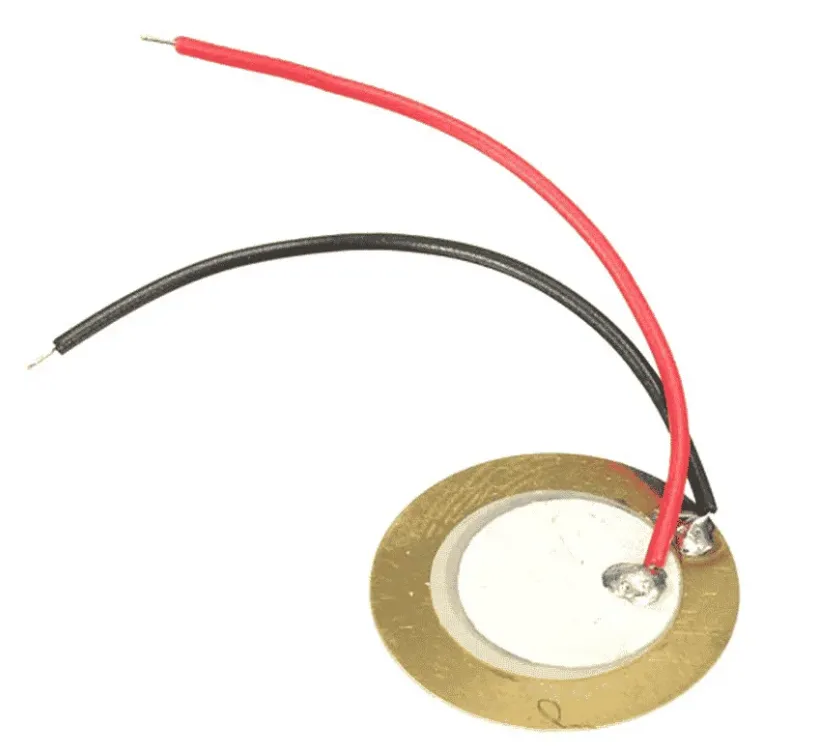
Figure 1. Piezoelectric Transducer (Piezo Disc Element)
What is a Piezoelectric Transducer?
A piezoelectric transducer is a device that converts mechanical force into electrical energy, or electrical energy into mechanical movement. It works using a special material that generates a small voltage when it is pressed, bent, or vibrated. Because of this property, it is commonly used to detect pressure, vibration, sound, or motion. The simple disc-type structure with connected leads, as commonly seen in practical setups, allows mechanical movement to be easily converted into an electrical signal for measurement or control applications.
Construction of a Piezoelectric Transducer
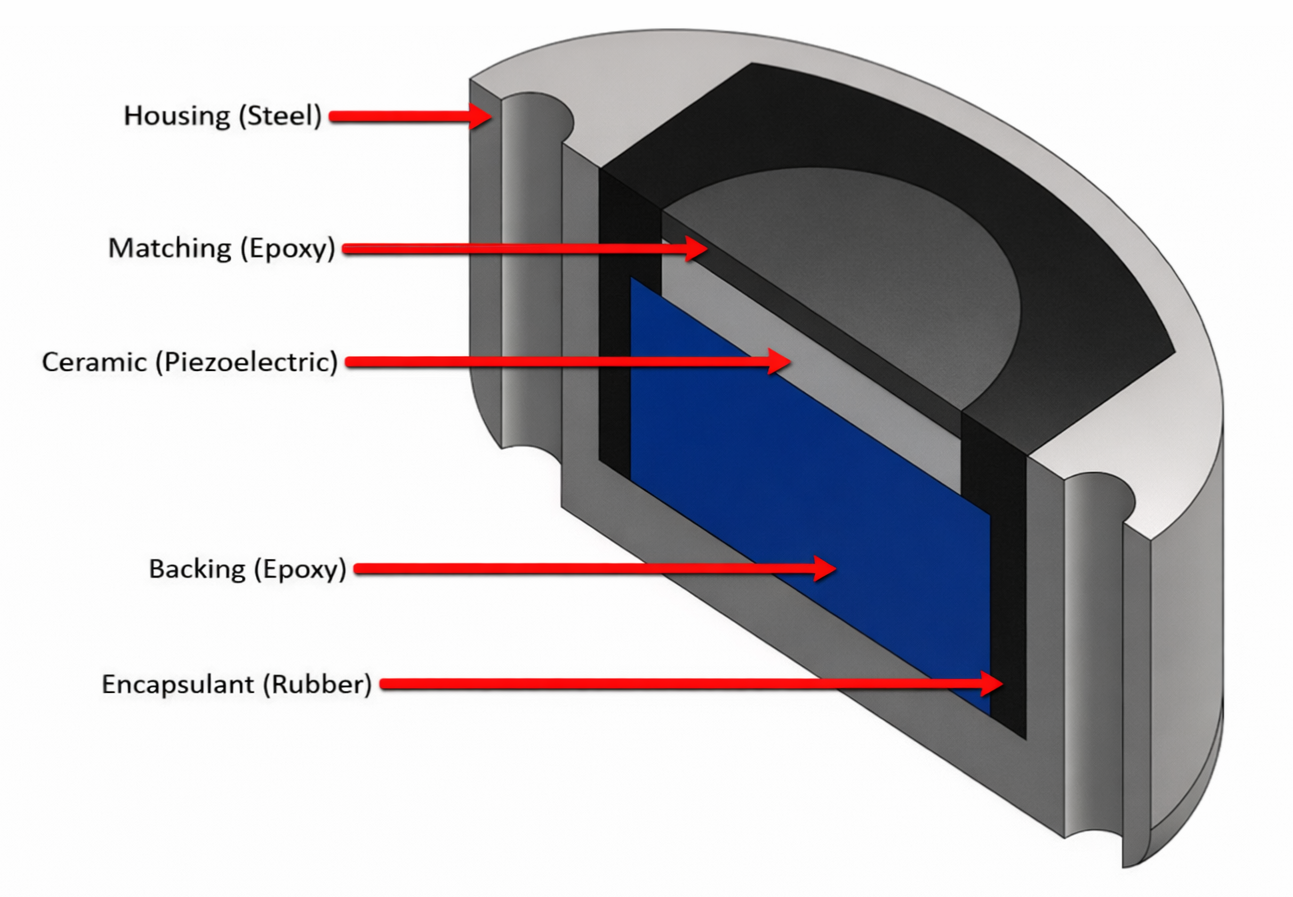
Figure 2. Construction of a Piezoelectric Transducer
• Housing (Steel)
Provides mechanical strength and protects the transducer from external damage.
• Matching Layer (Epoxy)
Helps transfer mechanical energy efficiently to the piezoelectric element and improves signal performance.
• Piezoelectric Ceramic
The active sensing element that generates an electrical voltage when pressure or vibration is applied.
• Backing Layer (Epoxy)
Absorbs unwanted vibrations and controls the response of the transducer.
• Encapsulant (Rubber)
Seals the structure and protects it from moisture, dust, and environmental effects.
Working Principle of Piezoelectric Transducer
The working principle of a piezoelectric transducer is based on the ability of certain materials to respond to mechanical stress and electrical energy. Inside the material, electric charges shift when force or voltage is applied. This behavior appears in two related forms, known as the direct piezoelectric effect and the inverse piezoelectric effect. Each effect explains how energy is converted from one form to another.
Direct Piezoelectric Effect
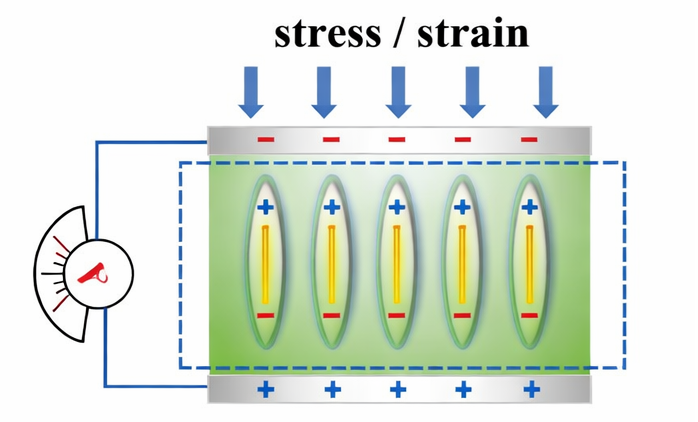
Figure 3. Direct Piezoelectric Effect
In the direct piezoelectric effect, mechanical stress or strain is applied to the piezoelectric material. As shown in the figure, pressing or loading the material causes the internal electric charges to shift from their normal positions. This charge separation creates positive and negative surfaces on opposite sides of the material. As a result, a small electrical voltage is generated across the electrodes. The output voltage increases as the applied force or vibration becomes stronger, allowing the transducer to sense pressure, force, or motion accurately.
Inverse Piezoelectric Effect
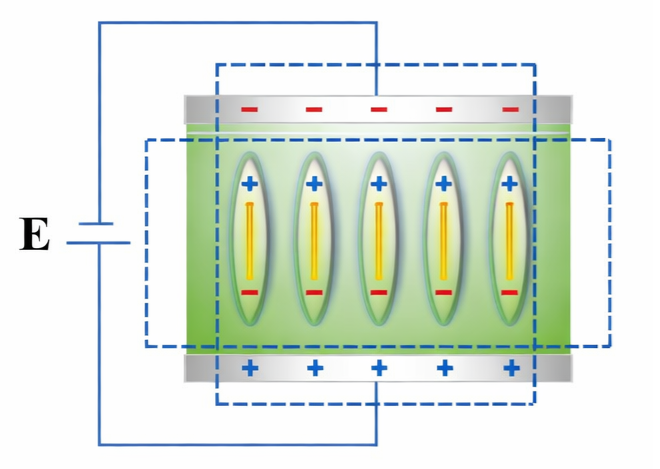
Figure 4. Inverse Piezoelectric Effect
In the inverse piezoelectric effect, the energy conversion happens in the opposite direction. An external electrical voltage is applied to the piezoelectric material. As illustrated in the figure, the applied electric field forces the internal charges to realign. This realignment causes the material to change shape slightly by expanding or contracting. The physical deformation produces mechanical movement or vibration, enabling the piezoelectric transducer to generate motion, sound, or ultrasonic waves.
Electrical Characteristics of Piezoelectric Transducers
|
Parameter |
Specification |
|
Output Signal Type |
AC voltage generated from mechanical
stress |
|
Electrical Output Mode |
Charge mode or voltage mode operation |
|
Output Voltage Range |
10 mV to 100 V peak depending on force
and size |
|
Charge Sensitivity |
1 pC per N to 1000 pC per N |
|
Voltage Sensitivity |
1 mV per N to 50 mV per N |
|
Source Capacitance |
100 pF to 50 nF |
|
Source Impedance |
Very high, typically above 1 megaohm |
|
Internal Resistance |
Greater than 10 gigaohms |
|
Frequency Response Range |
1 Hz to 10 MHz depending on design |
|
Resonant Frequency |
1 kHz to 5 MHz typical |
|
Anti Resonant Frequency |
Slightly higher than resonant
frequency |
|
Output Impedance at Resonance |
Low impedance at resonant point |
|
Output Impedance at Anti Resonance |
Very high impedance at anti resonant
point |
|
Static Measurement Capability |
Not suitable for true DC measurement |
|
Discharge Time Constant |
Milliseconds to seconds based on load
resistance |
|
Signal Polarity |
Depends on stress direction and
material orientation |
|
Dielectric Constant |
100 to 5000 depending on material |
|
Operating Voltage as Actuator |
10 V to 1000 V AC or DC |
|
Power Consumption |
Very low in sensor mode |
|
Noise Level |
Very low intrinsic electrical noise |
|
Cable Sensitivity |
High, affected by cable capacitance |
|
Required Signal Conditioning |
Charge amplifier or high impedance voltage
amplifier |
|
Temperature Stability |
Moderate, varies by piezo material |
|
Electrical Loss Factor |
Low at operating frequency |
|
Insulation Resistance |
Typically greater than 10 gigaohms |
|
Output Linearity |
High within rated mechanical limits |
Types of Piezoelectric Transducers
Piezoelectric transducers come in different types, each designed to sense or produce motion, pressure, sound, or vibration for specific measurement and control applications.
Piezoelectric Accelerometer Transducer
A piezoelectric accelerometer transducer is used to measure acceleration and vibration. It works by converting mechanical motion into an electrical signal when the sensor moves. Compared to pressure or force transducers, it is more sensitive to rapid changes and high-frequency vibrations. This makes it suitable for machine monitoring and vibration analysis. It is commonly used in industrial and structural health systems.
Piezoelectric Pressure Transducer
A piezoelectric pressure transducer measures dynamic pressure changes and converts them into an electrical output. It responds quickly to fast pressure variations, unlike static pressure sensors. Compared to force transducers, it is designed specifically for fluid and gas pressure measurement. It is often used in combustion engines and hydraulic systems. High frequency response is its main advantage.
Piezoelectric Force Transducer
A piezoelectric force transducer measures applied force or load through charge generation. When force is applied, the piezoelectric element produces an electrical signal proportional to the load. Compared to accelerometers, it focuses on direct force rather than motion. It performs well in dynamic force measurement. This type is widely used in testing and impact measurement.
Piezoelectric Ultrasonic Transducer
A piezoelectric ultrasonic transducer generates and detects ultrasonic waves. It converts electrical energy into high-frequency sound waves and receives reflected signals. Compared to microphones, it operates at much higher frequencies beyond human hearing. This allows accurate sensing, imaging, and distance measurement. It is commonly used in medical ultrasound and industrial inspection.
Piezoelectric Actuator Transducer
A piezoelectric actuator transducer converts electrical energy into precise mechanical movement. When voltage is applied, it expands or contracts to create motion. Unlike sensor-type transducers, it is mainly used for actuation rather than measurement. It provides very small but accurate displacement. This makes it ideal for precision positioning systems.
Piezoelectric Microphone Transducer
A piezoelectric microphone transducer converts sound vibrations into electrical signals. Sound waves cause the piezoelectric material to vibrate and generate voltage. Compared to ultrasonic transducers, it operates within the audible frequency range. It is simple in design and does not require external power for sensing. This type is commonly used in basic audio and acoustic detection systems.
Piezoelectric Ignition Transducer
A piezoelectric ignition transducer generates high voltage when mechanical force is applied. Pressing or striking the element produces a spark without external power. Compared to other piezoelectric transducers, it focuses on voltage generation rather than sensing. This makes it reliable for ignition purposes. It is widely used in gas lighters and ignition systems.
Applications of Piezoelectric Transducer
Piezoelectric transducers are widely used in modern technology because they can accurately convert mechanical energy into electrical signals for sensing, measurement, and control across many industries.
Medical Ultrasound Systems
Piezoelectric transducers are widely used in ultrasound machines. They generate high-frequency sound waves and receive the reflected signals to form images. This helps doctors see internal body structures safely. They are reliable and respond very quickly.
Vibration and Condition Monitoring
These transducers are used to detect vibration in machines and structures. Mechanical vibration is converted into an electrical signal for analysis. This helps identify faults early in motors, pumps, and engines. It improves safety and reduces maintenance cost.
Pressure Measurement Systems
Piezoelectric transducers measure rapidly changing pressure in gases and liquids. They work well where pressure changes occur at high speed. This makes them suitable for engines and hydraulic systems. They are not used for steady or static pressure.
Force and Impact Measurement
They are used to measure force, load, and impact. When force is applied, an electrical charge is produced. This allows accurate measurement of dynamic forces. They are common in testing and material analysis.
Sound and Acoustic Devices
Piezoelectric transducers are used in microphones, buzzers, and sound pickups. Sound vibrations cause the material to generate an electrical signal. They are simple in design and very durable. These devices are common in consumer electronics.
Ignition and Spark Generation
In ignition systems, piezoelectric transducers generate high voltage when pressed. This voltage creates a spark without needing external power. They are commonly used in gas lighters and stoves. The design is simple and highly reliable.
Advantages and Limitations of Piezoelectric Transducer
Advantages of Piezoelectric Transducer
• They are highly sensitive to small changes in force and vibration.
• They respond quickly to dynamic signals.
• They work over a wide frequency range.
• Their size is small and lightweight.
• They do not need external power in sensing mode.
• They are durable and reliable in harsh conditions.
Limitations of Piezoelectric Transducer
• They cannot measure static or steady forces.
• They require special signal conditioning circuits.
• Their output is affected by temperature changes.
• The output signal is usually very small.
• Some materials can crack under high stress.
Piezoelectric Transducer vs Other Transducers
|
Specification |
Piezoelectric Transducer |
Strain Gauge Transducer |
Capacitive Transducer |
Inductive Transducer |
Optical Transducer |
|
Measured Quantity |
Force, pressure, vibration |
Strain and force |
Displacement, pressure |
Position, displacement |
Light, position, speed |
|
Operating Principle |
Piezoelectric effect |
Resistance change |
Capacitance change |
Electromagnetic induction |
Light modulation |
|
Output Signal Type |
Voltage or charge |
Resistance change |
Capacitance change |
Voltage |
Voltage or current |
|
Static Measurement Capability |
Not suitable |
Suitable |
Suitable |
Suitable |
Suitable |
|
Dynamic Measurement Capability |
Excellent |
Good |
Moderate |
Good |
Excellent |
|
Typical Sensitivity |
High |
Medium |
Very high |
Medium |
Very high |
|
Frequency Range |
1 Hz to above 1 MHz |
Up to 10 kHz |
Up to 100 kHz |
Up to 50 kHz |
Above 1 MHz |
|
Response Time |
Very fast under 1 microsecond |
Slow to moderate |
Fast |
Moderate |
Extremely fast |
|
Output Impedance |
Very high above 1 Mohm |
Low around 120 to 350 ohms |
High |
Low |
Low |
|
Temperature Sensitivity |
Medium |
High |
Medium |
Low |
Low |
|
Signal Conditioning Needed |
Required |
Required |
Required |
Required |
Minimal |
|
Power Requirement |
No external power for sensing |
Requires excitation voltage |
Requires excitation voltage |
Requires excitation voltage |
Requires power source |
|
Size and Weight |
Very small and lightweight |
Small |
Small |
Medium |
Small |
|
Environmental Robustness |
High |
Moderate |
Moderate |
High |
Moderate |
|
Applications |
Vibration monitoring, ultrasound |
Load cells, weighing systems |
Position and level sensing |
Proximity and position sensing |
Encoders, fiber sensors |
Conclusion
Piezoelectric transducers operate through direct and inverse piezoelectric effects to sense or produce motion and electrical signals. They offer high sensitivity, fast response, and wide frequency operation for dynamic measurements such as vibration, pressure, force, and sound. Different types are used for sensing, actuation, and ignition purposes across many industries. However, they are not suitable for static measurements and require proper signal conditioning.
About us
ALLELCO LIMITED
Read more
Quick inquiry
Please send an inquiry, we will respond immediately.
Frequently Asked Questions [FAQ]
1. Can a piezoelectric transducer work underwater?
Yes, many piezoelectric transducers are designed for underwater use when properly sealed. They are commonly used in sonar, hydrophones, and underwater ultrasonic sensing.
2. Do piezoelectric transducers need calibration?
Yes, calibration is required for accurate measurements, especially in sensing applications. Calibration ensures the electrical output correctly corresponds to the applied force or vibration.
3. What materials are commonly used in piezoelectric transducers?
Most piezoelectric transducers use ceramic materials such as PZT (lead zirconate titanate). Some applications use quartz or polymer-based materials for specific performance needs.
4. Why do piezoelectric transducers require high-impedance circuits?
Piezoelectric transducers have very high internal impedance. High-impedance input circuits prevent signal loss and allow accurate voltage or charge measurement.
5. Can piezoelectric transducers be used with microcontrollers?
Yes, they can be interfaced with microcontrollers using proper signal conditioning circuits such as charge amplifiers or voltage amplifiers to ensure stable readings.
Earthing (Grounding) Transformer: Working Principle, Types, Applications, and Comparison
on December 22th
Squirrel Cage Induction Motor: Working Principle, Types, Advantages, and Applications
on December 19th
Popular Posts
-

Complex Instruction Set Computers: How They Changed Computing?
on April 18th 147768
-

USB-C Pinout and Features
on April 18th 111996
-
Using Xilinx Unified Simulation Primitives: A Comprehensive Guide to FPGA Design and Simulation
on April 18th 111351
-

Power Supply Voltages in Electronics: Meaning of VCC, VDD, VEE, VSS, and GND
on April 18th 83758
-

RJ45 Connector Guide: Pinout, Wiring, Cable Types, and Uses
on January 1th 79555
-

The Ultimate Guide to Wire Color Codes in Modern Electrical Systems
The way our electrical systems use colors isn’t just for looks. Each wire color now indicates a specific function, making it easier to identify and handle electrical components correctly during ins...on January 1th 66955
-
Purge Valve Guide: Function, Symptoms, Testing, and Replacement for Optimal Engine Performance
The purge valve is a key part of a car’s system that helps keep the air clean by managing fuel vapors before they can escape into the atmosphere. This not only helps the environment by reducing pol...on January 1th 63098
-

Quality (Q) Factor: Equations and Applications
The quality factor, or 'Q', is important when checking how well inductors and resonators work in electronic systems that use radio frequencies (RF). 'Q' measures how well a circuit minimizes energy...on January 1th 63029
-

Achieving Peak Performance with the Maximum Power Transfer Theorem
The Maximum Power Transfer Theorem explains how energy from a source, such as a battery or generator, flows to a connected load. It shows the exact condition where the load receives the most power....on January 1th 54095
-

A23 Battery Specifications and Compatibility
The A23 battery is a small, cylinder-shaped battery with high voltage. Also called 23A, 23AE, or MN21, it runs at 12 volts and much higher than AA or AAA batteries. Its special design make...on January 1th 52176
HOT Part Number
-
PCM1807PWR
Texas Instruments
IC ADC/AUDIO 24BIT 96K 14TSSOP
FDS6630A
onsemi
MOSFET N-CH 30V 6.5A 8SOIC
THCV214
THine Solutions, Inc.
IC DESERIALIZER LVDS 48TQFP
MBR1545CT
Vishay General Semiconductor - Diodes Division
DIODE ARRAY SCHOTTKY 45V TO220AB
SMA6J7.0A
Littelfuse Inc.
TVS DIODE 7VWM 12VC DO214AC TR
LD39100PU33R
STMicroelectronics
IC REG LINEAR 3.3V 1A 6DFN
KA5M0965QYDTU
onsemi
IC OFFLINE SW MULT TOP TO3P-5L
XC2S150-6PQ208C
AMD
IC FPGA 140 I/O 208QFP
1825WC562MAT1A
KYOCERA AVX
CAP CER 5600PF 2.5KV X7R 1825
MPC8572EVTAVNE
Freescale Semiconductor
POWERQUICC RISC MICROPROCESSOR
STF12NM60N
STMicroelectronics
MOSFET N-CH 600V 10A TO220FP
TLV2773IDGS
Texas Instruments
IC CMOS 2 CIRCUIT 10VSSOP
FDB3502
onsemi
MOSFET N-CH 75V 6A/14A TO263AB
FJY3004R
Fairchild Semiconductor
0.1A, 50V, NPN
MAX20078AUE+
Analog Devices Inc./Maxim Integrated
IC LED DRV CTRL PWM 10MA 16TSSOP
TPD6S300RUKR
Texas Instruments
SURGE SUPP 8VC 2-CIRCUIT 20WQFN
BAT54WS
SMC Diode Solutions
DIODE SCHOTTKY 30V 100MA SOD323
MCP6L02T-E/MS
Microchip Technology
IC OPAMP GP 2 CIRCUIT 8MSOP -

TK40A06N1,S4X
Toshiba Semiconductor and Storage
MOSFET N-CH 60V 40A TO220SIS
ADM6319C29ARJZ-RL7
Analog Devices Inc.
IC SUPERVISOR MANUAL RST SOT23-5
ADSP-2185NBSTZ-320
Analog Devices Inc.
IC DSP CONTROLLER 16BIT 100LQFP
EC4H07C-TL
onsemi
BIP NPN 30MA 4V FT=10G
JAN1N4549RB
Microchip Technology
ZENER DIODE
SA115C563JAR
AVX Corporation
CAP CER 0.056UF 50V X7R AXIAL
VE-251-EU
Vicor Corporation
DC DC CONVERTER 12V 200W
AONS66920
Alpha & Omega Semiconductor Inc.
MOSFET N-CH 100V 17.5A/48A 8DFN
CDCLVD1208RHDT
Texas Instruments
IC CLK BUFFER 2:8 800MHZ 28VQFN
AT49SV163DT-80CU
Microchip Technology
IC FLASH 16MBIT PARALLEL 48CBGA
XC9235D08CER-G
Torex Semiconductor Ltd
IC REG STEPDOWN DCDC 600MA SYNCH
S-24CS02AFJ-TB-G
ABLIC Inc.
IC EEPROM 2KBIT I2C 400KHZ 8SOP
SZMMSZ2V4T1G
onsemi
DIODE ZENER 2.4V 500MW SOD123
HTSW-104-08-L-S-RA
Samtec Inc.
CONN HEADER R/A 4POS 2.54MM
SIHG32N50D-GE3
Vishay Siliconix
MOSFET N-CH 500V 30A TO247AC
MC100LVEP16DR2
onsemi
IC RECEIVER/DRVR DIFF ECL 8-SOIC
C1608X5R1A105M080AC
TDK Corporation
CAP CER 1UF 10V X5R 0603
P6KE62C
Littelfuse Inc.
TVS DIODE 53VWM 89.25VC DO204AC -

BCM11125IFEBG
Broadcom Limited
MAP/AP-ONLY
STPS41L60CG-TR
STMicroelectronics
DIODE ARRAY SCHOTTKY 60V D2PAK
STW28N60DM2
STMicroelectronics
MOSFET N-CH 600V 21A TO247
G-MRCO-001
TE Connectivity Measurement Specialties
SENSOR MR ANALOG SOT223
LTC6102CMS8#PBF
Analog Devices Inc.
IC CURRENT SENSE 1 CIRCUIT 8MSOP
DF30FB-30DP-0.4V(81)
Hirose Electric Co Ltd
CONN HDR 30POS SMD GOLD
GRM0225C1C6R0BD05L
Murata Electronics
CAP CER 6PF 16V C0G/NP0 01005
AT91SAM7X128-AU
Microchip Technology
IC MCU 16/32B 128KB FLSH 100LQFP
GRM0337U1H110GD01D
Murata Electronics
CAP CER 11PF 50V U2J 0201
LT1638IMS8#PBF
Analog Devices Inc.
IC OPAMP GP 2 CIRCUIT 8MSOP
FEMTOSMDC010F-2
Littelfuse Inc.
PTC RESET FUSE 12V 100MA 0603
TMPM3HQFDFG
Toshiba Semiconductor and Storage
TXZ FAMILY MCU
AP2162AFGEG-7
Diodes Incorporated
IC PWR SWITCH P-CHAN 1:2 8UDFN
GRM1555C1H7R1CA01D
Murata Electronics
CAP CER 7.1PF 50V C0G/NP0 0402
MMSZ4695T1G
onsemi
DIODE ZENER 8.7V 500MW SOD123
HCPL2630SM
onsemi
OPTOISO 5KV 2CH OPEN COLL 8SMD
MC33201VDR2G
onsemi
IC OPAMP GP 1 CIRCUIT 8SOIC
4816P-T01-100LF
Bourns Inc.
RES ARRAY 8 RES 10 OHM 16SOIC