Purge Valve Guide: Function, Symptoms, Testing, and Replacement for Optimal Engine Performance
The purge valve is a key part of a car’s system that helps keep the air clean by managing fuel vapors before they can escape into the atmosphere. This not only helps the environment by reducing pollution but also makes the car run better and use fuel more efficiently. This article explains the details about purge valves, including how they work, their types, and how to check if they are working properly.Catalog

What is a Purge Valve?
A purge valve, also known as a canister purge valve, is an important part of a car’s evaporative emission control (EVAP) system. This system helps keep the air clean by stopping harmful fuel vapors from escaping into the environment. When gasoline sits in the fuel tank, it releases vapors, which can be bad for the air we breathe. Instead of letting these vapors escape, the EVAP system stores them in a charcoal canister. The purge valve is the part that controls when and how these vapors are sent from the canister back into the engine. Once inside the engine, these vapors are burned along with fuel, which helps reduce pollution and also improves fuel efficiency. This process makes sure that no fuel is wasted and that the car runs cleaner and more efficiently.
Most modern cars use an electric solenoid to control the purge valve. The engine control unit (ECU), which is like the car’s brain, decides when to open or close the valve based on different factors like engine speed and temperature. When the ECU sends a signal, the purge valve opens, allowing the trapped fuel vapors to move into the engine’s intake manifold, where they are burned during combustion. To ensure everything is working properly, the car has sensors that monitor this process. If the sensors detect a problem like the valve being stuck open or closed, the check engine light may turn on to warn the driver. If the purge valve isn’t working correctly, it can cause issues such as higher emissions, lower fuel efficiency, rough engine performance, or even difficulty starting the car. That’s why it’s important to fix a faulty purge valve as soon as possible to keep the vehicle running smoothly and in an environmentally friendly way.
Role in the EVAP System
The purge valve plays a role in the Evaporative Emission Control (EVAP) system, which is responsible for controlling fuel vapors inside a car. When gasoline sits in the fuel tank, it naturally produces vapors, and if these vapors were to escape into the air, they would contribute to pollution and harm the environment. To prevent this, the EVAP system traps the vapors in a special container called a charcoal canister. This canister holds the vapors until the engine is ready to use them. The purge valve is the part that decides when to release these vapors from the canister into the engine, where they are burned instead of being wasted. The car’s engine control unit (ECU), which is like the brain of the vehicle, watches over different conditions such as engine temperature, speed, and load. When the ECU decides it’s the right time, it sends a signal to the purge valve, telling it to open. This allows the trapped vapors to travel through hoses into the intake manifold, where they mix with air and fuel before being burned in the engine’s combustion process. This system is needed because it helps the car run more efficiently while also protecting the environment from harmful emissions.

Figure 2. PIC EVAP System Diagram
By controlling the release of fuel vapors, the purge valve helps in several ways. First, it improves fuel efficiency by making sure that no fuel is wasted, since even vapors are used as part of the combustion process. Second, it reduces pollution by keeping harmful gases from escaping into the atmosphere. Finally, it optimizes engine performance because the engine gets a steady and controlled amount of extra fuel vapors, rather than experiencing sudden bursts of unburned fuel. If the purge valve stops working correctly, it can lead to problems such as poor fuel economy, higher emissions, rough idling, or difficulty starting the engine. That’s why the purge valve is such an important part of the EVAP system, it helps cars run better while also keeping the air cleaner.
Components of a Purge Valve
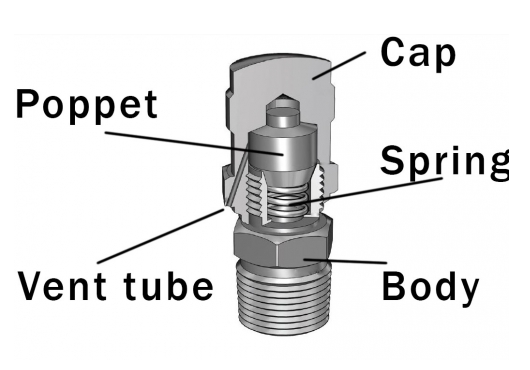
Figure 3. Components of a Purge Valve
To function effectively, a purge valve consists of several components, each playing a distinct role in its operation. Below is a detailed breakdown of these components and their functions:
• Valve Body: The valve body serves as the primary structural housing of the purge valve. It is constructed from durable materials such as high-grade plastic, aluminum, or stainless steel. These materials are chosen for their ability to withstand harsh environmental conditions, including exposure to fuel vapors, high temperatures, and mechanical stress. The valve body also houses other internal components, ensuring proper alignment and stability for seamless operation.
• Solenoid: The solenoid is an electromechanical component that governs the opening and closing of the valve. It consists of a coil of wire that generates a magnetic field when an electric current passes through it. This magnetic force activates the plunger, allowing the valve to open and close with precision. The solenoid is controlled by signals from the vehicle’s engine control unit (ECU), which determines the optimal timing for purging fuel vapors based on engine load, temperature, and other parameters.
• Plunger: The plunger is a movable metal or plastic rod located within the valve. It is directly influenced by the solenoid’s electromagnetic field. When the solenoid is activated, the plunger shifts position, causing the valve to open and allowing fuel vapors to flow. When the solenoid is deactivated, the plunger returns to its original position, sealing the valve shut. This movement must be precise to ensure accurate vapor flow regulation and prevent unintended leaks.
• Inlet and Outlet Ports: The inlet and outlet ports facilitate the controlled movement of vapors between the charcoal canister and the engine's intake manifold. The inlet port is connected to the charcoal canister, where fuel vapors are temporarily stored, while the outlet port directs these vapors into the engine for combustion. These ports are strategically designed to ensure smooth, unrestricted vapor flow while preventing obstructions that could hinder performance.
• Spring Mechanism: A spring mechanism is integrated within the valve to keep it securely closed when not in use. This prevents fuel vapors from escaping unintentionally when the purge function is not required. The spring is calibrated to provide the necessary resistance against the plunger’s movement, ensuring that the valve only opens under the correct conditions as dictated by the ECU.
• Diaphragm or Seal: The diaphragm or seal plays a role in maintaining the integrity of the valve system. This component ensures that vapors are released only when intended, preventing leaks that could lead to increased emissions or engine performance issues. The diaphragm or seal must be resistant to fuel vapors and temperature variations to ensure long-term reliability.
• Control Module (for Advanced Systems): In modern vehicles, some purge valves are equipped with a control module that works in tandem with the ECU. This module allows for more precise regulation of the purge valve's operation, adjusting its function based on engine conditions. By monitoring variables such as engine speed, temperature, and fuel pressure, the control module helps optimize fuel vapor recycling, improving both efficiency and emissions control.
• Filter: Some purge valves incorporate a filter to protect internal components from contaminants, such as dirt, dust, and fuel residue. A clean filter ensures that foreign particles do not interfere with the operation of the valve, prolonging its lifespan and maintaining consistent performance. Over time, this filter may require cleaning or replacement to prevent clogging and potential malfunctions.
Types of Purge Valves
Purge valves come in various types, each designed for specific applications and operational mechanisms. Their primary function remains the same but the way they achieve this varies based on their design and integration within a system. The classification of purge valves is based on their actuation method, control mechanism, and the type of system in which they are used. Understanding the differences between these types is required for selecting the most appropriate valve for a given application, whether it be in automotive, industrial, or pneumatic systems.
Below, we explore the major types of purge valves, highlighting their characteristics, functionalities, and areas of application.
Electromechanical Purge Valves

Figure 4. Electromechanical Purge Valves
These valves are designed for precise control and automation, ensuring that fuel vapor purge only occurs when needed. Their integration with the ECU allows them to adapt to conditions, optimizing performance while meeting stringent emissions regulations. Because they rely on electrical signals, they are less susceptible to mechanical wear and are typically more reliable than vacuum-operated counterparts. However, electromechanical purge valves can be sensitive to electrical failures, wiring issues, or solenoid malfunctions, necessitating periodic diagnostics and maintenance.
Manual Purge Valves
Manual purge valves differ from their electromechanical counterparts in that they require direct intervention to operate. Instead of responding to automated commands from an ECU or sensors, these valves must be manually opened or closed by turning a knob, lever, or other actuation mechanism. They are most commonly found in industrial settings, where controlled venting of gases, air, or other substances is required. For example, in pressurized systems or chemical processing plants, others may need to release excess gas buildup to maintain system stability and safety.

Figure 5. Manual Purge Valves
One of the primary advantages of manual purge valves is their simplicity and reliability. Since they do not rely on electronic components or complex sensors, they are less prone to failures that might occur due to electrical malfunctions or software glitches. However, because they require physical operation, they are not ideal for applications where automatic or remote-controlled operation is needed. Improper or delayed manual activation can lead to pressure imbalances, inefficiencies, or safety hazards, making operator training and vigilance required.
Automatic Purge Valves
Automatic purge valves are designed for self-regulated operation based on system conditions. These valves incorporate integrated sensors that continuously monitor parameters such as pressure, temperature, and gas concentration. When certain predefined conditions are met such as a buildup of excess pressure or temperature, the valve automatically activates, releasing vapors or gases as needed. These types of purge valves are widely used in industrial, automotive, and HVAC systems, where consistent monitoring and precise actuation are important for maintaining safety and efficiency.

Figure 6. Automatic Purge Valves
One of the benefits of automatic purge valves is their hands-free functionality, which reduces the need for manual intervention and ensures that systems remain balanced without constant supervision. They help prevent overpressurization, overheating, or gas accumulation, which could otherwise lead to equipment failure or hazardous conditions. However, because these valves depend on sensor accuracy and electronic control systems, any malfunction in the sensor array, wiring, or calibration could compromise their effectiveness, regular maintenance and system checks.
Solenoid Purge Valves
Solenoid purge valves are a specific type of electromechanical valve that utilize a solenoid coil to control the venting process. When an electrical current is passed through the coil, it creates a magnetic field, which activates a plunger or diaphragm, opening the valve to allow vapor flow. These valves are commonly used in modern vehicles' EVAP systems, as they provide high precision in controlling fuel vapor emissions. The ECU determines the ideal moment to activate the solenoid, ensuring that excess fuel vapors are burned efficiently rather than being released into the atmosphere.

Figure 7. Solenoid Purge Valves
Solenoid purge valves offer several advantages, including fast response times, precise control, and integration with electronic diagnostics. They can be monitored using OBD-II (On-Board Diagnostics) systems, making it easier to identify potential faults or inefficiencies. However, because they rely on electrical power, solenoid purge valves are susceptible to voltage fluctuations, wiring issues, and coil failures, which can lead to improper functioning or system errors.
Vacuum-Operated Purge Valves
Vacuum-operated purge valves are found in older vehicle models and operate based on the vacuum pressure generated by the engine’s intake manifold. Unlike solenoid-controlled purge valves, these rely purely on mechanical vacuum signals to open and close, meaning they do not require direct electrical activation. As the engine creates a vacuum during operation, this force pulls open the valve, allowing fuel vapors from the charcoal canister to enter the intake manifold. When the vacuum pressure decreases, the valve closes automatically.

Figure 8. Vacuum-Operated Purge Valves
While vacuum-operated purge valves are mechanically simple and reliable, they are less precise than their electromechanical counterparts. Their operation is directly dependent on engine vacuum conditions, which can vary based on altitude, load, and engine efficiency. As a result, these valves may not always provide optimal fuel vapor control, leading to potential inefficiencies in emissions management. Many modern vehicles have transitioned to solenoid-based systems due to their superior accuracy and adaptability.
Pressure-Relief Purge Valves
Pressure-relief purge valves are designed to automatically open when internal pressures exceed a set threshold. These valves serve a role in preventing overpressurization in systems such as fuel tanks, industrial gas lines, and hydraulic networks. When the internal pressure reaches a predefined limit, the valve activates, releasing excess gas or vapor to maintain a safe operating environment. Once the pressure returns to normal, the valve reseals to prevent further venting.

Figur 9. Pressure-Relief Purge Valves
These valves are important in high-pressure systems, ensuring that pressure spikes do not damage equipment, cause leaks, or create hazardous conditions. They are commonly used in fuel storage tanks, compressed gas systems, and industrial processing facilities. However, because they are pre-set to open at a specific pressure, improper calibration or wear over time can lead to either premature or delayed activation, potentially compromising system safety.
Pneumatic Purge Valves
Pneumatic purge valves are specialized valves used in pneumatic systems, where they help regulate air pressure and venting processes. These valves operate based on compressed air signals, allowing them to maintain the correct pressure levels within the system. They are commonly employed in air compressors, HVAC systems, and industrial automation equipment, where maintaining optimal air pressure is required for performance and safety.

Figure 10. Pneumatic Purge Valves
One of the advantages of pneumatic purge valves is their reliability in high-pressure environments. Because they do not rely on electrical control, they are ideal for hazardous environments where electrical components might pose a fire risk. However, they require proper maintenance and occasional recalibration to ensure they respond accurately to fluctuating pressure levels.
How a Purge Valve Works?
When a vehicle is not running, fuel vapors naturally accumulate in the charcoal canister, a component designed to capture and temporarily store these emissions. This process prevents harmful vapors from being released into the environment while the engine is inactive. The charcoal canister plays a role in the vehicle’s evaporative emission control system by ensuring that excess fuel vapors are contained rather than escaping into the atmosphere. However, storing these vapors is only a temporary solution, and they must eventually be reintroduced into the engine for proper combustion.

Figure 11. Diagram of the Canister Purge Valve and EVAP System
To regulate the release of these stored vapors, the engine control unit (ECU) monitors various conditions, such as engine temperature, load, and speed. Once the engine reaches specific predefined parameters, the ECU activates the purge valve, which opens to allow the trapped vapors to flow into the intake manifold. From there, the vapors mix with the air-fuel mixture and enter the combustion chamber, where they are burned alongside regular fuel. This process not only helps reduce harmful emissions but also ensures that no fuel is wasted, improving overall engine efficiency.
The purge valve remains open only as long as the engine conditions allow for optimal vapor transfer. If the engine parameters change such as during idling or heavy acceleration, the ECU will close the valve to maintain stable performance and prevent excessive fuel vapor introduction. This controlled operation of the purge valve is needed for reducing vehicle emissions while maintaining smooth engine functionality. By effectively managing when and how fuel vapors are reintegrated into the combustion process, the purge valve contributes to a cleaner, more efficient vehicle operation.
Symptoms of a Faulty Purge Valve
A faulty purge valve can lead to several noticeable issues that affect engine performance, fuel efficiency, and emissions. Recognizing these symptoms early can help prevent further complications and costly repairs. Below are some common indicators of a failing purge valve:
1. Check Engine Light Activation
One of the most common signs of a defective purge valve is the illumination of the check engine light on the dashboard. Modern vehicles are equipped with onboard diagnostics (OBD) systems that monitor engine performance and emissions-related components. If the purge valve is malfunctioning, the system will detect an irregularity and trigger the check engine light. A diagnostic scan may reveal error codes related to the evaporative emissions control system (EVAP), helping pinpoint the issue.
2. Difficulty Starting the Engine and Rough Idling
A purge valve that becomes stuck in the open position can cause an unintended vacuum leak, allowing excess air to enter the engine. This disruption in the air-fuel mixture may lead to rough idling, engine hesitation, or difficulty starting the vehicle. In severe cases, the engine may stall after ignition due to an improper balance of fuel and air.
3. Decreased Fuel Efficiency
A malfunctioning purge valve can negatively impact fuel combustion, leading to a noticeable decline in fuel economy. When the valve fails to regulate the proper recirculation of fuel vapors, excess fuel may be burned inefficiently or lost through the emissions system. You may find refueling more frequently than usual, which can be a strong indicator of an issue with the EVAP system.
4. Emissions Test Failures and Increased Pollution
Since the purge valve plays a role in controlling fuel vapor emissions, a faulty valve can lead to higher levels of unburned hydrocarbons being released into the atmosphere. This can cause a vehicle to fail emissions tests, making it non-compliant with environmental regulations. In some regions, a failed emissions test may prevent vehicle registration renewal until repairs are made.
A faulty purge valve can affect multiple aspects of vehicle performance, from engine operation to fuel efficiency and environmental compliance. If any of these symptoms appear, it is recommended to perform a diagnostic check or consult a professional mechanic to ensure timely repairs and prevent further damage to the vehicle’s emission control system.
How to Properly Test a Purge Valve?
To ensure the purge valve is functioning correctly, several diagnostic methods can be used. Below is a step-by-step guide to testing a purge valve effectively.
Visual Inspection for Physical Damage and Leaks
The first step in testing a purge valve is a simple but visual inspection. The purge valve is usually located near the engine or the charcoal canister, and it should be examined for any visible signs of wear or damage. Cracks in the valve body, broken connectors, or corroded terminals could indicate that the valve is compromised and may not function properly. If physical damage is found, replacing the valve may be necessary before conducting further testing.
In addition to physical damage, checking for leaks is important. Over time, the purge valve and its surrounding hoses can develop cracks or loose connections, leading to vacuum leaks. These leaks can disrupt the engine’s air-fuel mixture, resulting in rough idling or poor performance. A close examination of the hoses and fittings connected to the valve can help identify any signs of fuel vapor leakage or deterioration.
A preliminary assessment can also include listening for any unusual noises while the vehicle is running. If a purge valve is stuck open or malfunctioning, it may produce a hissing sound due to unintended air movement. While a visual inspection alone cannot confirm the valve’s functionality, it provides a good starting point for diagnosing potential problems before moving on to more precise testing methods.
Diagnosing Issues Using an OBD-II Scanner
A more precise method of testing a purge valve involves using an OBD-II (On-Board Diagnostics) scanner. Modern vehicles are equipped with a computer system that monitors the performance of various components, including the purge valve. When a purge valve fails or operates outside of its expected parameters, the vehicle’s engine control unit (ECU) stores diagnostic trouble codes (DTCs), which can be retrieved using an OBD-II scanner.
To perform this test, the scanner should be plugged into the vehicle’s OBD-II port, located beneath the dashboard. After running a system scan, any stored codes related to the evaporative emissions control (EVAP) system will be displayed. Common error codes associated with a faulty purge valve include P0443 (Evaporative Emission Control System Purge Control Valve Circuit Malfunction), P0441 (Incorrect Purge Flow), and P0455 (Evaporative Emissions System Leak Detected - Large Leak).
Once the relevant codes are retrieved, they can be cross-referenced with manufacturer guidelines or online resources to determine whether the purge valve is the likely culprit. However, an OBD-II scan alone does not confirm a purge valve failure, it only indicates potential issues within the emissions system. To verify the valve’s condition, additional hands-on tests should be performed.
Conducting a Bench Test for Solenoid Functionality
A purge valve functions using an electromagnetic solenoid, which opens and closes the valve when activated by the vehicle’s computer. To check whether this solenoid is operating correctly, a bench test can be conducted by applying direct voltage to the valve and listening for a response.
To perform this test, the purge valve should be removed from the vehicle and placed on a clean, stable surface. Using a 12-volt power source, such as a car battery or a power supply, connect the positive and negative terminals to the corresponding pins on the valve’s electrical connector. If the solenoid is functioning correctly, a distinct clicking sound should be heard, indicating that the valve is opening and closing as it should.
If no sound is heard when voltage is applied, the solenoid may be faulty and the purge valve may need to be replaced. However, if the valve does click but still exhibits symptoms of failure, further testing such as a vacuum test, should be performed to ensure that the valve is sealing properly.
Performing a Vacuum Test for Proper Sealing
Since the purge valve is responsible for controlling the flow of fuel vapors, it must form a proper seal when closed. A vacuum test is one of the most effective ways to determine whether the valve is sealing as it should or allowing unintended air passage.
To perform this test, a hand-operated vacuum pump should be connected to the purge valve’s inlet port. Once connected, the pump is used to create a vacuum, which should be maintained if the valve is functioning properly. If the vacuum holds steady, it means the valve is sealing correctly when closed. However, if the vacuum gradually decreases or disappears immediately, the valve is likely leaking, indicating a failure that requires replacement.
Another variation of this test involves applying power to the valve while using the vacuum pump. When voltage is applied, the valve should open, and the vacuum should be released. If the valve does not open or remains stuck, it confirms that the purge valve is defective and not operating as intended.
Checking Electrical Resistance with a Multimeter
A multimeter test is a final step in verifying whether the purge valve’s electrical components are within the expected range of operation. A malfunctioning purge valve can sometimes be traced to a broken or deteriorating internal coil, which can be detected by measuring electrical resistance.
To conduct this test, a digital multimeter should be set to the ohms (Ω) setting and connected to the purge valve’s electrical terminals. A properly functioning purge valve should have a resistance reading that falls within the manufacturer’s specified range, typically between 20 to 50 ohms (though this may vary based on vehicle make and model).
If the resistance reading is higher or lower than the recommended range, it indicates that the solenoid coil is damaged or burned out, meaning the valve is no longer functioning correctly. A reading of zero or infinite resistance suggests a complete failure of the solenoid circuit, confirming that the purge valve needs to be replaced.
Replacing a Canister Purge Valve
Replacing a faulty purge valve is a straightforward process that requires careful attention to safety and proper installation. Below is a detailed breakdown of the steps involved in replacing a canister purge valve.
Ensuring Safety by Disconnecting the Vehicle’s Battery
Before beginning the replacement process, it is require to prioritize safety by disconnecting the vehicle's battery. The canister purge valve is an electrically controlled component, and removing it while the vehicle is powered can pose risks such as short circuits or accidental activation of electrical components.
To disconnect the battery, start by locating it under the hood. Using a wrench or socket, loosen and remove the negative (-) terminal cable first. This prevents any unintentional electrical surges. Once the negative terminal is removed, repeat the process for the positive (+) terminal if necessary. Some vehicles may not require complete battery disconnection, but it is always a good precautionary measure to prevent potential damage to electronic systems.
In addition to preventing electrical hazards, disconnecting the battery can also help reset the vehicle’s onboard computer. Many modern vehicles store diagnostic trouble codes (DTCs) related to emissions system failures, and disconnecting the battery for a few minutes can sometimes clear these codes. However, after replacing the valve, a proper diagnostic scan should still be performed to ensure the issue has been fully resolved.
Locating the Canister Purge Valve in the Engine Bay
Once the vehicle's electrical system is safely disconnected, the next step is to locate the canister purge valve. The exact position of the valve can vary depending on the make and model of the vehicle, but it is generally found near the engine intake manifold or close to the charcoal canister in the EVAP system.
To locate the purge valve, refer to the vehicle’s service manual, which provides a diagram of the emissions system components. In most cases, the valve is a small, cylindrical or rectangular component with an electrical connector and one or more vacuum hoses attached. It is often mounted using brackets or bolts that secure it to the engine or nearby structures.
During this step, take a moment to inspect the surrounding components for any visible signs of damage, such as cracked hoses, corroded electrical connectors, or leaks. A faulty purge valve can sometimes affect nearby parts of the EVAP system, so identifying and addressing any additional issues can prevent future problems after replacement.
Disconnecting the Wiring Harness and Vacuum Lines
Before removing the purge valve, its electrical wiring harness and vacuum hoses must be carefully disconnected. The wiring harness provides power and control signals to the valve’s solenoid, allowing it to open and close at the appropriate times.
To disconnect the wiring harness, locate the connector clip and press the release tab while gently pulling the connector away from the valve. Some connectors may have locking mechanisms that require a small flathead screwdriver or a special tool to disengage. If the connector is difficult to remove, avoid pulling on the wires directly, as this could cause damage.
Next, remove the vacuum hoses connected to the purge valve. These hoses transport fuel vapors between the charcoal canister and the engine. Depending on the vehicle, the hoses may be secured with clamps, quick-connect fittings, or simple push-on connections. If clamps are present, use pliers or a screwdriver to loosen them before sliding the hoses off the valve. Be mindful of any fuel vapor or residual pressure that may be present in the lines, and consider wearing gloves to prevent skin contact with fuel residues.
Removing the Faulty Purge Valve from Its Mounting Bracket
With the wiring and vacuum connections removed, the next step is to detach the purge valve from its mounting location. The valve is secured with bolts or screws, which can be removed using a socket wrench or screwdriver.
Carefully unscrew the bolts while ensuring they are kept in a safe place for reinstallation. If the purge valve is mounted on a bracket, the entire bracket may need to be removed before the valve can be separated. Some vehicles use rubber grommets or clips to secure the valve, which may require gentle twisting or pulling to release it.
While removing the valve, check for signs of carbon buildup, clogging, or internal sticking, as these issues often indicate why the component failed. If the purge valve has a gasket or rubber seal, inspect it for wear or damage, as a deteriorated seal may need to be replaced to prevent air leaks in the EVAP system.
Installing the New Canister Purge Valve and Reconnecting Components
With the old purge valve removed, it is time to install the new replacement valve. Before installation, compare the new valve with the old one to ensure compatibility in terms of size, shape, and connection points. Some aftermarket parts may have slight variations, so verifying the match beforehand can prevent installation issues.
Begin by securing the new valve to its mounting bracket or position using the same bolts or fasteners removed earlier. Tighten them securely but avoid over-tightening, as excessive force could damage the mounting points or the valve itself. If the valve uses rubber grommets or clips, ensure they are properly seated to prevent movement during operation.
Next, reconnect the vacuum hoses and wiring harness. Push the hoses onto their respective fittings and secure them with clamps or connectors. Then, plug the wiring harness back into place, making sure the connector clicks into position. Double-check all connections to confirm that everything is properly secured before proceeding.
Clearing Diagnostic Error Codes and Testing Functionality
After installing the new purge valve, the final step is to reset any stored error codes in the vehicle’s computer and perform a functionality test. If the battery was disconnected earlier, some codes may have cleared automatically, but it is still recommended to use an OBD-II scanner to check for any lingering faults.
To clear error codes, connect the OBD-II scanner to the vehicle’s diagnostic port, usually located under the dashboard. Use the scanner’s menu options to erase stored trouble codes, specifically those related to the EVAP system (e.g., P0443, P0441, or P0455). Once cleared, start the engine and allow it to run for a few minutes to ensure there are no rough idling, hesitation, or warning lights.
For additional verification, take the vehicle for a short test drive while monitoring performance. The check engine light should remain off, and the engine should run smoothly without signs of vacuum leaks or fuel vapor issues. If problems persist, recheck all connections or consult a professional to confirm proper installation.
Cleaning a Purge Solenoid Valve
To maintain the purge solenoid valve in peak condition, regular cleaning is important. Over time, dirt, carbon deposits, and other contaminants can accumulate within the valve, leading to restricted airflow or even complete failure of the component. By cleaning the purge solenoid valve at appropriate intervals, you can ensure its efficiency, prolong its lifespan, and prevent engine performance issues. A well-maintained purge valve helps regulate fuel vapor flow correctly, preventing emission-related problems and improving overall engine functionality.
There are two main approaches to cleaning a purge solenoid valve: external cleaning and deep cleaning. By following proper cleaning procedures, you can avoid the cost of premature replacements and keep the valve functioning optimally. Neglecting maintenance can lead to poor engine performance, an illuminated check engine light, or increased emissions. Understanding how to properly clean the purge solenoid valve will help prevent these issues, ensuring that the vehicle operates smoothly and efficiently.
External Cleaning
The first step in maintaining a purge solenoid valve is to perform an external cleaning. This involves removing any dirt, dust, or grime that may have built up on the outer surface of the valve and its connecting tubes. Over time, exposure to engine heat and environmental factors can cause debris to accumulate, potentially leading to airflow restrictions. External cleaning is a preventive measure that helps maintain proper functionality and reduces the risk of more severe blockages.
To begin, choose an appropriate cleaning agent, such as a mass airflow sensor cleaner or an electronic parts cleaner, as these are designed to remove buildup without leaving harmful residues. Spray the cleaning solution onto a soft cloth or directly onto the valve's surface, then gently wipe away dirt and grime. Be cautious not to oversaturate any electrical connections, as excessive moisture can cause short circuits or damage the solenoid coil. If the valve tubes are visibly clogged, you may use a soft-bristle brush or compressed air to help loosen and remove debris.
Once the valve is cleaned externally, allow it to dry completely before reinstalling or testing it. Any residual moisture left on the valve could interfere with its operation or lead to corrosion over time. External cleaning should be performed regularly as part of routine maintenance, especially in vehicles frequently exposed to dust, dirt, or high humidity. By keeping the outer components clean, you help ensure that the valve functions efficiently and remains free from obstructions.
Deep Cleaning
When external cleaning is not enough to restore the purge solenoid valve’s functionality, a deep cleaning procedure is needed. This involves disassembling the valve to access internal components and remove any built-up carbon deposits or debris that may be affecting its performance. Over time, the solenoid inside the valve can become clogged with contaminants from fuel vapors, leading to restricted flow and improper operation. Deep cleaning helps restore the valve’s efficiency and ensures that it continues to function as intended.
To perform a deep cleaning, first, disconnect the valve from its electrical and vacuum connections. Carefully disassemble the unit according to the manufacturer's guidelines, paying close attention to the internal seals, diaphragm, and solenoid mechanism. Use an appropriate cleaning solution, such as throttle body or carburetor cleaner, to dissolve carbon deposits and remove any dirt from the internal components. A soft brush or cotton swab can be useful for scrubbing hard-to-reach areas without causing damage.
After cleaning all internal components thoroughly, allow them to dry completely before reassembling the valve. Ensure that all seals and gaskets are intact and properly positioned to prevent air leaks. Once the valve is fully reassembled, reinstall it in the vehicle and test its operation by running the engine and checking for any performance issues. A properly cleaned and maintained purge solenoid valve helps optimize fuel vapor management and contributes to a smoother-running engine.
Benefits of Purge Valves

Figure 12. Cross-Sectional Diagram of a Purge Valve with Components
Below are some of the primary advantages of implementing purge valves:
• Improved Efficiency: Purge valves optimize the utilization of fuel vapors by redirecting them back into the combustion process rather than allowing them to escape. This not only maximizes fuel efficiency but also enhances overall engine performance by ensuring a more complete combustion cycle. As a result, systems run smoother, consume less fuel, and produce more consistent power output.
• Enhanced Safety: By preventing excessive pressure buildup within a system, purge valves play a role in maintaining operational safety. Unregulated pressure increases the risk of component failure, leaks, or even hazardous explosions. With a properly functioning purge valve, pressure levels remain stable, reducing the likelihood of dangerous malfunctions and ensuring safe system operation.
• Environmental Protection: One of the most advantages of purge valves is their contribution to reducing harmful emissions. By controlling the release of fuel vapors, these valves prevent volatile organic compounds (VOCs) from escaping into the atmosphere. This not only helps businesses and manufacturers comply with environmental regulations but also contributes to reducing air pollution and minimizing the overall carbon footprint.
• Corrosion Prevention: Moisture accumulation within a system can lead to rust, corrosion, and premature wear of components. Purge valves help remove unwanted moisture and air, thereby protecting metal surfaces from oxidation and deterioration. This extends the life of the system and prevents costly damage caused by rust buildup.
• Reduced Maintenance Costs and Extended System Lifespan: By mitigating factors that contribute to wear and tear, purge valves reduce the frequency of maintenance and repair. Keeping a system free from excessive pressure, moisture, and unburned fuel vapors helps prevent component failures, lowering the need for expensive replacements and servicing. As a result, businesses and operators benefit from increased cost savings and improved system longevity.
Applications of Purge Valves
Purge valves play a role in various systems by ensuring proper pressure regulation, preventing contamination, and enhancing overall efficiency and safety. Their ability to control the release of unwanted gases, vapors, or moisture makes them important in numerous industries. Below are some of the applications of purge valves across different sectors:
Automotive EVAP Systems
In automotive evaporative emission control (EVAP) systems, purge valves are great for preventing the release of fuel vapors into the atmosphere. These vapors, if left uncontrolled, contribute to air pollution and environmental harm. The purge valve works by directing the collected fuel vapors from the charcoal canister back into the engine, where they are combusted rather than released into the environment. This not only ensures compliance with emissions regulations but also enhances the overall efficiency of the vehicle’s fuel system.
Purge valves help maintain proper engine performance by controlling the timing and amount of fuel vapor introduced into the combustion process. If the valve malfunctions, it can cause issues such as rough idling, poor acceleration, or increased fuel consumption. Modern vehicles use electronically controlled purge valves, which adjust the vapor purge cycle dynamically to optimize engine efficiency. This makes them a component in reducing emissions while maintaining engine reliability.
HVAC Systems
In heating, ventilation, and air conditioning (HVAC) systems, purge valves play a role in removing unwanted air and moisture. The presence of trapped air can lead to inefficient heat transfer, causing the system to work harder to maintain desired temperatures. Excess moisture, on the other hand, can cause corrosion, microbial growth, and damage to system components. By regularly expelling air and humidity, purge valves help maintain peak efficiency and prolong the lifespan of HVAC systems.
Moreover, in large-scale commercial or industrial HVAC setups, purge valves contribute to system safety by preventing pressure imbalances. Without proper pressure regulation, HVAC systems may experience fluctuations that reduce cooling or heating efficiency. In some cases, improper air removal can result in noisy operation or even damage to components like compressors and condensers. By incorporating purge valves, HVAC systems function smoothly, reducing maintenance needs and ensuring consistent climate control.
Industrial Gas Processing
Purge valves are need in industrial gas processing facilities, where they help regulate pressure and remove unwanted gas accumulations. In gas pipelines, fluctuations in pressure can lead to inefficiencies, equipment failure, or even hazardous leaks. By using purge valves to vent excess gas, these systems maintain stable operating conditions, ensuring safety and reliability. In industries dealing with volatile gases, purge valves act as a safeguard against dangerous pressure buildups.
Purge valves help improve the purity of gases used in industrial processes. Many gas systems require ultra-clean conditions to prevent contamination in applications such as chemical manufacturing and semiconductor production. By periodically flushing out unwanted residual gases, purge valves maintain the integrity of the system, ensuring consistent product quality and reducing operational risks. Their role in both safety and process efficiency makes them important in industrial gas applications.
Fuel Storage Tanks
Fuel storage tanks require precise pressure management to prevent damage caused by excessive pressure buildup or vacuum formation. During temperature fluctuations, fuel expansion and contraction can create pressure imbalances inside the tank. Purge valves help regulate these fluctuations by venting excess pressure or introducing air when necessary, reducing the risk of structural failure, leaks, or explosions. This is particularly great for large fuel storage facilities where even minor pressure inconsistencies can lead to serious safety concerns.
Beyond safety, purge valves also play a role in preserving fuel quality. When tanks are improperly vented, condensation can form, introducing moisture into the fuel supply. This moisture can lead to microbial growth, corrosion, and degradation of the stored fuel. By ensuring proper ventilation and pressure balance, purge valves help maintain fuel integrity, reducing maintenance costs and prolonging the lifespan of storage tanks and distribution systems.
Compressed Air Systems
In compressed air systems, purge valves are used to maintain proper pressure levels and remove accumulated moisture. Compressed air naturally contains water vapor, which condenses as the air cools within the system. If not removed, this moisture can lead to corrosion, ice formation in cold environments, and degradation of pneumatic tools. Purge valves are used in ensuring dry, clean air by systematically expelling unwanted moisture, protecting the efficiency and longevity of the system.
Purge valves contribute to energy efficiency by reducing unnecessary strain on the system. When moisture accumulates, it forces the compressor to work harder, increasing energy consumption and operational costs. By regularly purging excess air and moisture, these valves help optimize system performance, reduce wear on components, and ensure reliable operation of air-powered machinery. Their role in maintaining both efficiency and equipment health makes them good in various industrial and commercial settings.
Laboratory Equipment
In laboratory environments, purge valves are great for maintaining the accuracy and reliability of analytical instruments. Many precision devices, such as gas chromatographs and mass spectrometers, require ultra-clean conditions to function properly. Contaminants in the form of residual gases can interfere with measurements, leading to inaccurate results. Purge valves help eliminate these unwanted gases, ensuring a stable and controlled environment within the equipment.
Purge valves play a role in pressure regulation in laboratory instruments. Sensitive devices often operate under specific vacuum or pressure conditions, and any deviations can impact performance. By using purge valves to control internal pressure, laboratories can maintain the consistency and precision required for research and diagnostic applications. Their importance in ensuring high-quality data and instrument longevity makes them a component in scientific and medical settings.
Conclusion
We learned how important a purge valve is for a car’s performance and the environment. The purge valve helps cars use every bit of fuel and reduces harmful gases that could pollute the air. It's not just important for cars but also plays a big role in different industries and equipment, helping to control pressures and keep systems safe. Knowing about the different types of purge valves and how to maintain them shows us how technology and care for the environment come together. Keeping these valves in good shape helps make sure they work well and last a long time, which is good for both our cars and the environment.
About us
ALLELCO LIMITED
Read more
Quick inquiry
Please send an inquiry, we will respond immediately.
Frequently Asked Questions [FAQ]
1. What is the purpose of the purge valve?
The purge valve, part of a vehicle’s Evaporative Emission Control (EVAP) system, controls the release of fuel vapors from the charcoal canister to the engine for combustion. This process helps reduce harmful emissions and improves fuel efficiency.
2. What happens if the purge valve is closed?
If the purge valve is stuck closed, it prevents fuel vapors stored in the charcoal canister from being processed in the engine. This can lead to increased internal pressure in the fuel system, potentially causing issues like the fuel tank and system becoming pressurized or the activation of the check engine light due to vapor buildup.
3. What happens if you drive with a bad purge valve?
Driving with a faulty purge valve can lead to several problems such as poor engine performance, as the improper air-fuel mixture affects combustion. Increased emissions, because the fuel vapors are not being effectively used. Potential triggering of the check engine light. In some cases, it can cause fuel odors if vapors escape from the system.
4. How long is a purge valve good for?
A purge valve typically lasts for about 60,000 to 100,000 miles under normal vehicle operating conditions. However, its lifespan can vary based on factors like usage, environmental conditions, and fuel quality.
5. Does purge valve affect performance?
Yes, the purge valve can affect vehicle performance. A malfunctioning purge valve can disrupt the correct air-to-fuel ratio, leading to engine performance issues such as rough idling, difficulty starting, and inconsistent acceleration. In maintaining optimal vehicle performance and fuel efficiency, ensuring the purge valve is functioning correctly is needed.
How a Blower Motor Resistor Controls Your Car’s Airflow
on February 11th

AD5330BRU: Compact and Reliable Digital-to-Analog Converter
on February 10th
Popular Posts
-

Complex Instruction Set Computers: How They Changed Computing?
on April 18th 147749
-

USB-C Pinout and Features
on April 18th 111893
-
Using Xilinx Unified Simulation Primitives: A Comprehensive Guide to FPGA Design and Simulation
on April 18th 111349
-

Power Supply Voltages in Electronics: Meaning of VCC, VDD, VEE, VSS, and GND
on April 18th 83713
-

RJ45 Connector Guide: Pinout, Wiring, Cable Types, and Uses
on January 1th 79502
-

The Ultimate Guide to Wire Color Codes in Modern Electrical Systems
The way our electrical systems use colors isn’t just for looks. Each wire color now indicates a specific function, making it easier to identify and handle electrical components correctly during ins...on January 1th 66865
-

Quality (Q) Factor: Equations and Applications
The quality factor, or 'Q', is important when checking how well inductors and resonators work in electronic systems that use radio frequencies (RF). 'Q' measures how well a circuit minimizes energy...on January 1th 63001
-
Purge Valve Guide: Function, Symptoms, Testing, and Replacement for Optimal Engine Performance
The purge valve is a key part of a car’s system that helps keep the air clean by managing fuel vapors before they can escape into the atmosphere. This not only helps the environment by reducing pol...on January 1th 62926
-

Achieving Peak Performance with the Maximum Power Transfer Theorem
The Maximum Power Transfer Theorem explains how energy from a source, such as a battery or generator, flows to a connected load. It shows the exact condition where the load receives the most power....on January 1th 54071
-

A23 Battery Specifications and Compatibility
The A23 battery is a small, cylinder-shaped battery with high voltage. Also called 23A, 23AE, or MN21, it runs at 12 volts and much higher than AA or AAA batteries. Its special design make...on January 1th 52087
HOT Part Number
-
NCV7720DQAR2G
onsemi
IC MOTOR DRIVER 24SSOP
1N5227B
SMC Diode Solutions
DIODE ZENER 3.6V 500MW DO35
ADS7830IPWR
Texas Instruments
IC ADC 8BIT SAR 16TSSOP
NP60N06PDK-E1-AY
Renesas Electronics America Inc
MOSFET TRANSISTOR MORE 1 W
TL441CN
Texas Instruments
IC LOGARITHMIC 1 CIRCUIT 16DIP
2SAR514P5T100
Rohm Semiconductor
TRANS PNP 80V 0.7A MPT3
SMA6J18A-TR
STMicroelectronics
TVS DIODE 18VWM 33.2VC SMA
C8051F124
Silicon Labs
IC MCU 8BIT 128KB FLASH 100TQFP
2N5089
NTE Electronics, Inc
TRANS NPN 25V 0.05A TO92
18121C104JAT2A
KYOCERA AVX
CAP CER 0.1UF 100V X7R 1812
HCPL-7721-060E
Broadcom Limited
OPTOISO 3.75KV PUSH PULL 8DIP
NCT72CMTR2G
onsemi
SENSOR DIGITAL -40C-125C 8WDFN
AMK316AC7476MLHT
Taiyo Yuden
CAP CER 47UF 4V X7S 1206
AT17C65-10JC
Microchip Technology
IC SERIAL CONFIG PROM 64K 20PLCC
AD5248BRMZ100-RL7
Analog Devices Inc.
IC DGT POT 100KOHM 256TAP 10MSOP
PIC32MZ2048EFM100-E/GJX
Microchip Technology
IC MCU 32BIT 2MB FLASH 100TFBGA
12101K3R9CBTTR
KYOCERA AVX
CAP THIN FILM 3.9PF 100V 1210
GBPC5010W
GeneSiC Semiconductor
BRIDGE RECT 1P 1KV 50A GBPC-W -

UMK316F474ZF-T
Taiyo Yuden
CAP CER 0.47UF 50V Y5V 1206
CY25100SXC-064T
Infineon Technologies
IC CLOCK GENERATOR
9UMS9633BKLF
Renesas Electronics America Inc
IC MOBILE PC CLK EMEBED 48VFQFPN
AFT05MP075NR1
NXP USA Inc.
FET RF 2CH 40V 520MHZ TO270-4
LFE3-150EA-7FN672I
Lattice Semiconductor Corporation
IC FPGA 380 I/O 672FPBGA
VC060309A200RP
KYOCERA AVX
VARISTOR 12.7V 30A 0603
IRS44262STRPBF
Infineon Technologies
IC GATE DRVR LOW-SIDE 8SOIC
CY2544C016
Infineon Technologies
TSBU
MIC2551AYML
Micrel Inc.
USB TRANSCEIVER
DRV5021A3EDBZRQ1
Texas Instruments
MAGNETIC SWITCH UNIPOLAR SOT23-3
SY88343BLEY
Microchip Technology
IC LIMITING 1 CIRCUIT 10MSOP
AOT440
Alpha & Omega Semiconductor Inc.
MOSFET N-CH 40V 15.5A/105A TO220
VI-2W2-EW
Vicor Corporation
DC DC CONVERTER 15V 100W
MCP6292IDR
Texas Instruments
IC OPAMP GP 2 CIRCUIT 8SOIC
ATF750C-15JI
Microchip Technology
IC CPLD 10MC 15NS 28PLCC
640550-7
TE Connectivity AMP Connectors
CONN DUST COVER 7POS CLOSED
PM10CZF120
Powerex Inc.
MOD IPM 6PAC 1200V 10A
TLC277CP
Texas Instruments
IC CMOS 2 CIRCUIT 8DIP -

RT1206BRD071K2L
YAGEO
RES SMD 1.2K OHM 0.1% 1/4W 1206
SN74F163ANS
Texas Instruments
IC BINARY COUNTER 4-BIT 16SO
ATA664251-WGQW
Microchip Technology
IC MCU 8BIT 16KB FLASH 48QFN
AT28BV64-30JC
Microchip Technology
IC EEPROM 64KBIT PARALLEL 32PLCC
GBPC2508
Yangjie Technology
GBPC 800V 25.0A Diodes Bridge
MT47H128M16RT-25E IT:C
Micron Technology Inc.
IC DRAM 2GBIT PARALLEL 84FBGA
AD9644BCPZ-80
Analog Devices Inc.
IC ADC 14BIT PIPELINED 48LFCSP
MK21DX256VLK5
NXP USA Inc.
IC MCU 32BIT 256KB FLASH 80FQFP
FQPF3N90
Fairchild Semiconductor
MOSFET N-CH 900V 2.1A TO220F
74HC541D,653
NXP USA Inc.
IC BUFF/DVR TRI-ST 8BIT 20SOIC
MX25V8035ZNI-15G
Macronix
IC FLASH 8MBIT SPI 66MHZ 8WSON
P6SMB18CA
Taiwan Semiconductor Corporation
TVS DIODE 15.3VWM 25.5VC DO214AA
AUIPS7091S
Infineon Technologies
IC PWR SWITCH N-CHAN 1:1 D2PAK-5
RP122K331D-TR
Nisshinbo Micro Devices Inc.
IC REG LIN 3.3V 400MA DFN1010-4
GALI-51+
Mini-Circuits
IC AMP CELLULAR 0HZ-4GHZ SOT89
770901-1
TE Connectivity AMP Connectors
CONN PIN 22-26AWG TIN CRIMP
IPA60R800CEXKSA1
Infineon Technologies
MOSFET N-CH 600V 5.6A TO220-FP
P4SMA91A
Meritek
TVS DIODE 77.8VWM 125VC