
Solenoid Switches: Ultimate Guide to Types, Functions, Wiring, and Applications
Solenoid switches are key tools that use magnetism to control electricity. They have a coil, a moving part, and contact points that work together to turn electricity on or off quickly and reliably. From cars to machines and home devices, solenoid switches help manage electricity safely and effectively. This guide explores the detailed roles and different types of solenoid switches, showing why they are important in today’s technology.Catalog

What is a Solenoid Switch?
A solenoid switch is an important device that helps control the flow of electricity in a circuit using a magnetic force. It is commonly found in cars, machines, and electrical systems where turning power on and off needs to happen automatically. The switch works using electromagnetism, meaning that when electricity flows through a coil of wire, it creates a magnetic field. This magnetic force moves a small mechanical part inside the switch, which either connects or disconnects the electrical contacts. When the contacts are connected, electricity can flow, and when they are disconnected, the flow stops. The main parts of a solenoid switch include a coil, electrical contacts, and a small moving piece called an actuator. When power is supplied to the coil, the actuator moves, changing the state of the circuit. When the power is turned off, the actuator returns to its original position, bringing the circuit back to its previous state.
Solenoid switches are used in many different areas because they provide a quick and reliable way to control electricity. In cars, for example, they help start the engine by allowing power to flow to the starter motor. In factories and industrial machines, they help turn motors and other electrical devices on and off. These switches work very fast and can handle high levels of electricity without getting damaged easily. Many solenoid switches are designed to last a long time, even in tough conditions like extreme heat or cold. They are also found in home appliances, security systems, and large power systems used in buildings. Because they are so useful and dependable, solenoid switches play a key role in many modern electrical and mechanical systems.
Characteristics of a Solenoid Switch

Figure 2. Solenoid Switch
Solenoid switches are widely used in various electrical and mechanical systems due to their efficiency, durability, and reliability. These switches operate through electromagnetic actuation, allowing for precise and consistent performance in numerous applications, including automotive, industrial, and medical fields. Their design enables them to function with minimal wear and tear, making them a preferred choice for situations requiring frequent and rapid switching. Below are some key characteristics that make solenoid switches an important component in modern technology.
Fast Response
One of the most notable characteristics of a solenoid switch is its exceptionally fast response time. Unlike traditional mechanical switches that may take longer to activate due to moving parts and friction, solenoid switches operate within milliseconds, making them ideal for applications where rapid actuation is needed. This quick response is best in automated systems, emergency shut-off mechanisms, and high-speed manufacturing processes where even a slight delay can impact efficiency or safety. The electromechanical design of the solenoid switch allows it to generate a powerful and instantaneous movement as soon as an electrical current is applied, ensuring near-instantaneous switching without lag.
The speed of solenoid switches enhances precision in timing-sensitive applications, such as robotics, automotive systems, and industrial automation. In environments where timing accuracy is a priority, these switches help maintain seamless operations, reducing the risk of errors and inefficiencies. Their ability to provide almost instantaneous engagement and disengagement ensures that they can effectively support complex control systems requiring split-second decision-making. This rapid actuation, combined with their reliability, makes solenoid switches an invaluable component in numerous high-performance industries.
Long Operational Life
Solenoid switches are engineered for durability, making them a preferred choice for applications requiring frequent switching over an extended period. These switches are designed to handle millions of actuation cycles without wear and tear, greatly reducing the need for frequent replacements. Unlike conventional mechanical switches that may degrade quickly due to friction and mechanical stress, solenoid switches operate with minimal physical contact between moving parts, which contributes to their long lifespan. Their construction often includes high-quality materials such as corrosion-resistant metals and robust insulating components, ensuring they can withstand harsh environmental conditions while maintaining optimal performance.
Furthermore, the longevity of solenoid switches lowers maintenance costs, as fewer replacements and repairs are needed over time. Industries that rely on continuous and reliable operation, such as automotive manufacturing, aerospace, and heavy machinery, benefit from the extended service life of these switches. Their ability to function consistently for years without deterioration makes them a cost-effective solution for both high- and low-voltage applications. The extended operational life also enhances overall system reliability, reducing downtime and improving productivity in industrial and commercial settings.
High Reliability
Reliability is attribute of solenoid switches, making them a trusted component in applications where consistent performance is needed. These switches are designed to endure long-term use, even under high-stress conditions, without frequent failures. One of the reasons for their high reliability is their solid-state operation, which minimizes mechanical wear and reduces the likelihood of malfunctions. Unlike conventional relays or mechanical switches that may degrade over time due to repeated physical contact and friction, solenoid switches maintain their functionality with minimal deterioration. This makes them suitable for demanding environments, such as automotive ignition systems, industrial automation, and emergency power controls.
Solenoid switches can function effectively in extreme conditions, including high temperatures, moisture-prone environments, and heavy-vibration settings. Their ability to operate reliably under such circumstances makes them a preferred choice for military, aerospace, and marine applications, where failure is not an option. Many solenoid switches are also designed with fail-safe mechanisms, ensuring they revert to a safe state in the event of a power loss or system failure. This reliability helps prevent costly downtime, improves operational efficiency, and provides confidence that the switch will function as intended when needed most.
Compact and Portable
The compact size of solenoid switches makes them incredibly versatile, allowing for seamless integration into a wide range of applications where space is limited. Their small form factor enables easy installation in densely packed control panels, electronic circuits, and mobile systems, making them ideal for both stationary and portable devices. Unlike bulkier switching mechanisms, solenoid switches offer high performance without taking up excessive space, making them valuable in modern electronic and industrial designs that prioritize efficiency and miniaturization. Their lightweight construction also makes them suitable for battery-powered and handheld devices.
Beyond their space-saving advantages, the portability of solenoid switches enhances their usability across various industries, including automotive, medical equipment, and electronics. Their ability to function reliably in compact enclosures without compromising performance makes them a preferred choice for applications requiring mobility. Whether used in portable diagnostic devices, compact automation systems, or space-constrained control units, solenoid switches provide the necessary functionality without adding unnecessary bulk. This combination of compactness and efficiency ensures they remain an excellent component in advancing technology and innovation across multiple fields.
Location of a Solenoid Switch

Figure 3. Automatic Transmission System Diagram
The position of a solenoid switch varies based on its intended use, ensuring maximum efficiency and minimizing the need for excessive wiring.
Automotive Applications
Solenoid switches are very common in cars and other vehicles. They help different systems work properly by controlling electrical and mechanical movements. Their placement depends on what they are used for.
• Transmission System: In cars, solenoid switches are placed inside the transmission system to control hydraulic pressure. This helps the car change gears smoothly. Since the transmission system is complex, placing the solenoid inside the housing makes sure that gear shifts happen quickly and efficiently. This positioning also helps reduce wear and tear on the car’s transmission parts, making them last longer.
• Starter System: In the engine’s starting system, the solenoid switch is attached to the starter motor. This is because the solenoid’s job is to connect the battery to the starter motor when the driver turns the key or presses the start button. By being directly attached to the motor, the solenoid can quickly send power and make the engine start without delays. This placement ensures the car starts reliably every time.
• Fuel Injection System: In modern cars, solenoid switches are placed near the fuel injectors. Their job is to control how much fuel is sent into the engine at the right time. Since engines need different amounts of fuel depending on how fast the car is going or how much power is needed, solenoid switches must be positioned close to the fuel injectors for quick adjustments. This helps improve fuel efficiency, reduce pollution, and make the engine run smoothly.
Industrial and Electrical Applications
Solenoid switches are also important in industries, factories, and electrical systems. They help machines and other systems work properly by controlling the flow of liquids, gases, or mechanical movements.
• Valve Control Systems: In many industries, solenoid switches are placed near valves to control the flow of liquids or gases. For example, in water treatment plants, they help control the water supply. In oil refineries, they manage oil flow. Their placement near the valves helps them work quickly and accurately, preventing leaks or overflows.
• Automation Systems: In factories, solenoid switches are often placed near machines that need automatic control. For example, they help control robotic arms, conveyor belts, and other moving parts. By being placed close to these machines, solenoid switches can help them operate quickly and reduce the risk of errors or slowdowns in the production process.
• Household Appliances: Many home appliances, such as washing machines, dishwashers, and refrigerators, use solenoid switches. In washing machines, they control the water supply by opening and closing water valves. In dishwashers, they help release detergent at the right time. In refrigerators, solenoid switches help regulate the cooling system. Their placement inside these appliances ensures they work efficiently and save energy.
Electronic Devices
Solenoid switches are also used in many electronic devices. They help control small mechanical movements to make sure the device works properly.
• Printers: In printers, solenoid switches control the movement of the print head and the paper feed. They help ensure that the print head moves smoothly and that paper is fed into the printer at the right time. Placing the solenoid switch near these moving parts helps prevent paper jams and improves print quality.
• Automated Door Locks: Many modern door locks, such as those used in hotels, offices, and cars, use solenoid switches. These solenoids are placed inside the lock mechanism and help control locking and unlocking. When someone enters the correct code or uses a key card, the solenoid switch moves a small part inside the lock to open the door. Placing the solenoid inside the lock keeps it protected and ensures it works quickly and securely.
Functions of a Solenoid Switch
• Controls Electrical Flow: A solenoid switch regulates the passage of electricity between power sources and devices, ensuring efficient circuit activation and system protection. It operates using a magnetic force that adjusts internal contacts, either enabling or interrupting the flow of current. This controlled operation prevents electrical overloads and optimizes energy use, making solenoid switches important in various applications, from household circuits to industrial machinery.
• Protects Electrical Components: One of the primary functions of a solenoid switch is to safeguard electrical components from damage caused by excessive current flow. When an overload occurs, the switch quickly interrupts the circuit, preventing overheating and reducing the risk of fire. This rapid response enhances the reliability of electrical systems, ensuring that equipment remains functional and minimizing costly repairs or downtime.
• Emergency Power Cut-Off: Solenoid switches provide a quick and effective way to cut off power, preventing damage to equipment and reducing the risk of injury. This function is good in industrial facilities, healthcare settings, and power distribution systems, where immediate disconnection is necessary to handle emergencies. By allowing for rapid power shutdown, solenoid switches play a role in maintaining safety and preventing extensive damage.
• Automation and Machine Control: Solenoid switches are integral to modern automation, seamlessly working with sensors and controllers to regulate machine operations. They help synchronize processes in robotics, production lines, and smart infrastructure, ensuring smooth and efficient performance. By reducing the need for manual intervention, these switches enhance productivity and reliability in automated environments, making them need in industries that rely on precision and speed.
• Automotive Applications: In the automotive industry, solenoid switches are great for starting engines, as they engage the starter motor by connecting the battery to the ignition system. Beyond engine ignition, they also contribute to other vehicle functions, including transmission control, fuel injection, and auxiliary systems. Their ability to manage electrical flow ensures smooth and efficient vehicle operation, enhancing both performance and safety.
• Modern Features: Solenoid switches are equipped with advanced features that make them adaptable to various applications. They can be remotely controlled, allowing for safe operation in hazardous or hard-to-reach areas. Their high-speed response capability ensures rapid activation and deactivation, which is important in time-sensitive situations. Designed for durability, solenoid switches can withstand frequent use and harsh conditions, providing a long lifespan. They come in customizable designs, making them suitable for diverse industrial, automotive, and automation needs.
Types of Solenoid Switches
Solenoid switches come in various types, each designed for specific applications based on how they control the flow of fluids or gases. In this section, we will explore different types of solenoid switches.
Pilot-Operated Solenoid Valve
A pilot-operated solenoid valve is a type of solenoid switch that uses a small secondary valve, known as the pilot valve, to control the opening and closing of a larger main valve. This design allows the valve to handle higher pressures and larger flow rates with minimal electrical power. When the solenoid coil is energized, it activates the pilot valve, which then directs fluid or air to move the main valve. These valves are used in hydraulic and pneumatic systems such as in industrial machinery and automated manufacturing processes. Their ability to regulate pressure efficiently makes them a popular choice in applications where energy savings and reliability are important.

Figure 4. Pilot-Operated Solenoid Valve
One of the main advantages of pilot-operated solenoid valves is their ability to operate with lower power consumption while still controlling high-pressure systems. Because the pilot valve does most of the work, the solenoid coil itself does not need to generate a strong magnetic force, reducing energy use and heat buildup. However, these valves require a minimum pressure difference to function correctly, meaning they may not be suitable for systems with extremely low or fluctuating pressures. Despite this limitation, they are widely used in water treatment plants, irrigation systems, and industrial automation due to their efficiency, durability, and ability to handle large volumes of fluid with precision.
Two-Way Solenoid Valves
A two-way solenoid valve is a simple type of solenoid switch that controls the flow of liquid or gas using two ports: one for fluid to enter and another for it to exit. These valves can be either normally open (NO) or normally closed (NC), meaning they either allow fluid to flow freely when not powered or remain closed until activated. When electricity is supplied to the solenoid coil, it generates a magnetic field that moves a plunger or diaphragm inside the valve, opening or closing the passage. These valves are widely used in various industries, including water supply systems, medical devices, and fuel control in engines, where they regulate fluid flow with high accuracy.

Figure 5. Two-Way Solenoid Valves
One of the benefits of two-way solenoid valves is their versatility and reliability in controlling the movement of fluids and gases. Since they have only two states, open or closed, they are relatively simple to maintain and operate. They are often found in applications such as automatic irrigation systems, washing machines, and refrigeration units, where precise control of liquid or gas is required. However, selecting the right type of two-way solenoid valve depends on factors such as operating pressure, temperature, and the type of fluid being controlled. Their straightforward design, quick response time, and ability to function in various conditions make them a valuable component in many industrial and household systems.
AC Laminated Solenoid
An AC laminated solenoid is a type of solenoid switch specifically designed for alternating current (AC) applications. It features a laminated core made of thin metal sheets stacked together, which helps reduce electrical energy loss due to eddy currents. These solenoids are widely used in high-power applications, such as industrial machinery, electrical relays, and large-scale automation systems. When AC voltage is applied to the coil, the solenoid generates a strong magnetic field that moves a plunger or armature, enabling mechanical movement or activation of a switch. Because AC power fluctuates in cycles, laminated cores help maintain a steady operation by reducing heat buildup and energy waste.

Figure 6. AC Laminated Solenoid
One of the biggest advantages of AC laminated solenoids is their ability to handle high electrical loads while maintaining efficiency. Their design minimizes power loss, making them suitable for continuous or high-frequency operations. These solenoids are commonly found in applications such as vending machines, electromagnetic locks, and industrial conveyor systems. However, they can sometimes produce a humming noise due to the alternating current cycle, which may require additional dampening measures in sensitive environments. Despite this, their durability, efficiency, and ability to manage high currents make them a preferred choice for demanding electrical and mechanical applications.
Linear Solenoid
A linear solenoid is a type of electromagnetic switch that converts electrical energy into straight-line (linear) motion. It consists of a coil wound around a metal core and a movable plunger. When an electric current passes through the coil, it generates a magnetic field that pulls or pushes the plunger, creating movement. These solenoids are widely used in applications requiring precise and controlled motion, such as robotic arms, door locks, medical devices, and industrial automation systems. Their ability to produce direct mechanical motion makes them useful in many electromechanical systems.

Figure 7. Linear Solenoid
One of the benefits of linear solenoids is their ability to operate quickly and accurately with minimal mechanical components. They are often used in applications where space is limited, as they provide compact and efficient motion control. They can be designed for push or pull operations, depending on the direction in which the plunger moves when activated. However, they do have some limitations, such as limited force output compared to hydraulic or pneumatic actuators. Despite this, their reliability, ease of control, and quick response time make them a popular choice for applications requiring fast and precise movement.
Three-Way Solenoid Valve
A three-way solenoid valve is a specialized type of solenoid switch designed to control the flow of fluids or gases between three different ports. These valves can either mix two separate fluids into one outlet or divert a single fluid flow into two different paths. They are commonly used in HVAC (heating, ventilation, and air conditioning) systems, medical equipment, and industrial automation, where fluid flow needs to be directed or combined efficiently. When the solenoid is activated, an internal mechanism shifts to allow fluid to pass through specific pathways, providing flexibility in controlling liquid or gas distribution.

Figure 8. Three-Way Solenoid Valve
One of the major advantages of three-way solenoid valves is their ability to simplify complex fluid management systems. Instead of using multiple separate valves, a single three-way valve can perform the same function with greater efficiency and fewer components. These valves come in different configurations, including normally closed, normally open, and universal, which determine how the valve behaves when not energized. They are widely used in applications such as air compressors, fuel injection systems, and irrigation controls. Their ability to regulate multiple fluid pathways with precision makes them a valuable component in many industries.
Four-Way Solenoid Valve
A four-way solenoid valve is a more complex type of solenoid switch used primarily in pneumatic and hydraulic systems. It features four ports: two for fluid input and two for output. These valves are commonly used in applications that require the control of double-acting cylinders or bidirectional motors. When activated, the solenoid directs fluid or air to different pathways, allowing machines to move in forward and reverse motions. This makes them important in industries such as manufacturing, construction, and automation, where precise control of mechanical motion is required.

Figure 9. Four-Way Solenoid Valve
One of the biggest benefits of four-way solenoid valves is their ability to handle complex pressure and flow management tasks. They are often found in robotic systems, air brakes, and industrial presses, where smooth and controlled movement is needed. These valves can be configured as single solenoid (spring return) or double solenoid (latching) depending on the application. While they are highly efficient, they require careful installation and maintenance to prevent leaks or malfunctions. Their ability to control multi-directional flow makes great component in modern fluid control systems.
Direct-Acting Solenoid Valve
A direct-acting solenoid valve is a type of solenoid switch that operates independently of external pressure, meaning it directly controls fluid or gas flow without requiring a pressure differential. Unlike pilot-operated valves, these valves use the magnetic force from the solenoid coil to move a plunger, opening or closing the valve. This allows them to work in low-pressure or vacuum systems, making them suitable for medical devices, gas flow control, and small-scale fluid regulation. Because they respond quickly to electrical signals, they are ideal for applications where instant on/off control is required.

Figure 10. Direct-Acting Solenoid Valve
One of the advantages of direct-acting solenoid valves is their reliability in a wide range of operating conditions. Since they do not rely on external pressure, they can function even in zero-pressure systems, such as laboratory equipment and fuel delivery systems. However, because they rely solely on electromagnetic force, they may consume more power than pilot-operated valves, especially in high-flow applications. Despite this, their precision, responsiveness, and versatility use in industries requiring accurate fluid and gas control.
Types of Electromagnetic Solenoids
The various types of electromagnetic solenoids are designed to perform specialized functions based on their structure and operational principles. Some solenoids focus on direct mechanical actuation while others regulate the flow of fluids or gases. The following sections explore these solenoids in greater detail, outlining their principles, applications, and advantages.
Electromagnetic Solenoid
An electromagnetic solenoid is an electromechanical device that converts electrical energy into linear mechanical motion. It consists of a coil of wire wound around a metal core, which, when energized with an electric current, produces a magnetic field that moves a plunger or armature. This mechanism is widely used in various applications, including automated machinery, door locks, and industrial robotics, where precise motion control is required. The versatility of electromagnetic solenoids allows them to serve multiple functions, such as actuating mechanical linkages, engaging electromagnetic clutches and brakes, and even controlling fluid flow through solenoid valves. Their ability to provide quick response times and precise movements makes them invaluable in modern automation and electromechanical systems.

Figure 11. Electromagnetic Solenoid Actuator in a Control Valve System
Beyond basic actuation, electromagnetic solenoids play a role in electrical circuit control by serving as relays or switches. In power distribution and automotive systems, they enable the controlled engagement and disengagement of electrical circuits, preventing overload and ensuring safety. They also function in electronics, where they help automate various processes, from controlling printer mechanisms to activating fuel injectors in engines. Depending on the design and intended function, electromagnetic solenoids can be configured as push-type, pull-type, or rotary solenoids, each offering different mechanical advantages. Their efficiency, durability, and adaptability make them a key component in many modern technological systems, enhancing automation, efficiency, and reliability across numerous industries.
Electromagnetic Clutch Switch
An electromagnetic clutch switch is a specialized solenoid-based component that facilitates efficient power transmission by engaging or disengaging a clutch through electromagnetic force. When an electrical current is applied, the magnetic field generated attracts the clutch plate, allowing torque transfer between driving and driven components. This type of switch is useful in automotive applications, where it helps in seamless gear shifting by controlling the engagement of the clutch without requiring direct mechanical force. It is also commonly used in industrial conveyor systems, textile machinery, and agricultural equipment, ensuring precise control over motion and torque distribution. Compared to traditional mechanical clutches, electromagnetic clutch switches offer faster response times and smoother transitions, reducing mechanical wear and extending equipment lifespan.
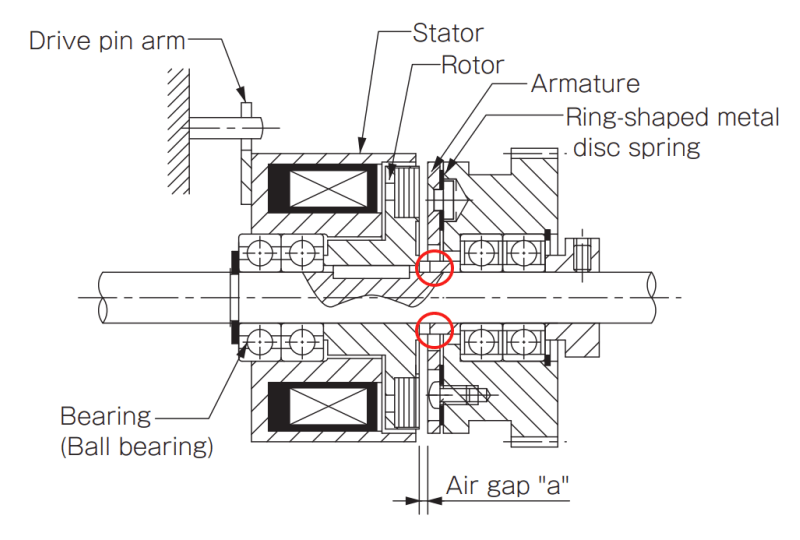
Figure 12. Cross-Sectional Diagram of an Electromagnetic Clutch Mechanism
In addition to enhancing machine efficiency, electromagnetic clutch switches contribute to energy conservation and improved operational safety. By engaging and disengaging power transmission instantaneously, these switches prevent unnecessary energy consumption in automated and high-speed machinery. In complex systems such as CNC machines and automated assembly lines, electromagnetic clutch switches work in coordination with sensors and controllers to optimize performance. Their ability to handle high-speed operations with minimal wear makes them ideal for applications requiring frequent clutch engagement and disengagement. Furthermore, their integration into modern smart control systems allows for remote and automated operation, enhancing both productivity and safety in industrial environments.
Electromagnetic Brake Switch
The electromagnetic brake switch is a component in motion control systems, providing efficient and precise braking through electromagnetic force. It operates by activating an electromagnet that generates a magnetic field, which attracts or repels a braking component, effectively stopping or slowing down a moving part. This type of braking system is widely used in elevators, cranes, and automated industrial machines for controlled stopping and holding power. Unlike traditional friction-based braking systems, electromagnetic brakes reduce wear and tear by eliminating direct mechanical contact, extending the lifespan of the braking components. Their ability to provide instant braking action without lag makes them ideal for applications safety and precision.
One of the advantages of an electromagnetic brake switch is its adaptability to different operational requirements. These switches can be designed for fail-safe applications, where the brake engages automatically in case of power failure, ensuring enhanced safety in systems like rail transport and robotic arms. Electromagnetic brakes can be integrated with electronic control systems, allowing for programmable stopping distances and variable braking forces based on time conditions. This makes them useful in automation and robotics, for precise motion control. Whether used in transportation, manufacturing, or heavy machinery, electromagnetic brake switches offer a reliable and efficient means of braking, reducing maintenance costs and improving system performance.
Solenoid Valve Switch
A solenoid valve switch is a specialized electromagnetic device that regulates fluid or gas flow in pipelines by using an electric current to control the movement of a valve mechanism. When energized, the solenoid coil generates a magnetic field that moves a plunger or diaphragm, either opening or closing the valve to allow or block the flow of fluid. These switches are widely used in industries such as water treatment, chemical processing, HVAC systems, and medical equipment, for precise control over liquid and gas flow. Unlike manual valves, solenoid valve switches operate rapidly and can be controlled remotely, enabling automation in applications such as irrigation systems, fire suppression systems, and fuel delivery systems.
One of the most advantages of solenoid valve switches is their ability to provide highly efficient and reliable fluid control with minimal mechanical wear. Since they function without direct mechanical movement apart from the plunger, they require less maintenance and offer longer operational life. Solenoid valves come in various types, including normally open, normally closed, and bistable configurations, allowing them to be customized for different applications. In medical devices, for example, solenoid valves regulate oxygen flow in ventilators, ensuring patient safety. Similarly, in automotive applications, they control fuel injection to optimize engine performance. Their fast response time, reliability, and integration with digital control systems make solenoid valve switches an important component in modern automated fluid control systems.
Ignition Switch
The ignition switch is a component in internal combustion engines, responsible for initiating the engine’s starting sequence by supplying electrical power to the ignition system. When the switch is turned, it activates the ignition coil, generating the high-voltage spark required to ignite the air-fuel mixture in the engine cylinders. This switch also controls power distribution to other vehicle components, such as the fuel pump, starter motor, and electronic control unit (ECU). In automotive applications, ignition switches are designed with multiple positions, including accessory mode, ignition-on, and start, allowing for controlled power distribution depending on the driver’s input. Their integration with security features such as key fobs, immobilizers, and push-button start systems further enhances vehicle safety and prevents unauthorized use.
Beyond automobiles, ignition switches are used in various engines, including motorcycles, boats, lawnmowers, and industrial generators. In modern vehicles, these switches have evolved into electronic ignition systems, which improve efficiency, reduce emissions, and enhance overall performance. Some advanced ignition switches incorporate RFID or biometric technology, ensuring only authorized users can start the engine. Additionally, ignition switches are designed to withstand harsh environmental conditions, including temperature fluctuations and vibrations, ensuring reliable operation over extended periods. As vehicles and machinery become more advanced, ignition switches continue to evolve, integrating with digital systems and smart technology to enhance both security and convenience.
Principle of Operation of a Solenoid Switch
A solenoid switch works using magnetism to control the flow of electricity in a circuit. When electricity flows through a coil of wire inside the switch, it creates a magnetic field. This magnetic field pulls a small metal piece, called a plunger, toward it. As the plunger moves, it pushes the switch contacts together, closing the circuit and allowing electricity to pass through. This process happens quickly and smoothly, making the solenoid switch a reliable way to turn electrical devices on and off. The strength of the magnetic field depends on the amount of electricity flowing through the coil, and the design of the switch ensures that it operates efficiently every time it is used.
When the power is turned off, the magnetic field disappears, and the plunger moves back to its original position. A small spring inside the solenoid switch helps push the plunger back, which also opens the electrical contacts and stops the flow of electricity. This simple movement allows the switch to quickly turn a circuit on and off without any manual effort. Since solenoid switches work so fast, they are commonly used in places where quick and repeated switching is needed, like in car engines, industrial machines, and electrical systems. The parts inside the solenoid switch are made to last a long time, even after thousands of uses, ensuring that the switch continues to work properly without wearing out too quickly.

Figure 13. Electrical Operation of a Starter Solenoid in an Automotive Starting System
The solenoid switch is an important part of many electrical systems because it allows a small electrical signal to control a much larger one. This makes it useful in machines and vehicles where a small switch needs to activate a powerful motor or other large electrical devices. The ability to switch circuits on and off quickly without sparks or physical wear makes solenoid switches safer and more efficient than traditional mechanical switches. Over time, improvements in solenoid switch design have made them more durable, quieter, and better at saving energy. Whether in a simple doorbell or a complex industrial machine, solenoid switches play a role in making electrical systems work smoothly and automatically.
How to Properly Wire a Solenoid Switch?
Before starting the wiring process, gather the materials to ensure a smooth and safe installation. You will need a solenoid switch, which is the component being wired into the system, and a power source, such as a battery or an appropriate electrical supply. A control switch or relay is required to activate the solenoid. Additionally, have wires and connectors for secure electrical connections, as well as wire strippers to remove insulation from the wires. To protect exposed connections and prevent short circuits, use electrical tape or heat shrink tubing. Finally, a multimeter is optional but highly recommended for checking voltage and continuity before finalizing the connections.
Step 1: Identify the Solenoid Terminals
Solenoid switches typically have multiple terminals, which may vary based on the type of solenoid. The common terminals include power input terminals (often labeled as B+ and Ground), which connect to the power source; a control terminal, which receives the activation signal from a switch or relay; and, in some applications, a load terminal, which sends power to the connected component (e.g., a starter motor). Always refer to the solenoid’s wiring diagram or user manual to confirm the terminal locations.
Step 2: Connect the Power Source
Attach the positive (+) power wire from the battery or power supply to the main power terminal on the solenoid. Then, connect the negative (-) power wire to the solenoid’s ground terminal or directly to the system’s chassis if applicable. Ensure that the power source matches the solenoid’s voltage requirements (e.g., 12V, 24V) to avoid damage.
Step 3: Wire the Control Signal
If using a simple manual switch, connect one end of the switch to the control terminal of the solenoid and the other end to the positive power supply. If using a relay, wire the control terminal of the solenoid to the relay output, and connect the relay’s input to the switch. For systems requiring an additional ground connection, attach a ground wire from the solenoid’s control circuit to the chassis or battery ground.
Step 4: Secure All Connections
Ensure that all wires are tightly connected using appropriate connectors such as crimp terminals, soldering, or screw terminals, depending on the solenoid design. Prevent loose connections, as they can lead to voltage drops and system failure.
Step 5: Test the Solenoid System
Reconnect the power source and activate the control switch. Listen for a clicking sound, which indicates that the solenoid is engaging. If the solenoid is connected to a motor or another component, verify that it operates correctly. If the solenoid does not activate as expected, use a multimeter to check voltage at different terminals.
Step 6: Insulate and Protect the Wires
Wrap electrical tape or use heat shrink tubing on exposed wires to prevent short circuits. Secure the wires away from moving parts or heat sources to avoid damage. For installations, use wire looms or conduits for added safety.
Advantages of Solenoid Switches
Solenoid switches are widely used in many industries because they offer fast operation, long-lasting performance, and the ability to withstand tough environmental conditions.
Fast Operation and Long Life
One of the main advantages of solenoid switches is their ability to turn on and off almost instantly. This quick response time is great in applications that require frequent switching, such as automotive ignition systems, industrial machines, and household appliances. Unlike traditional mechanical switches, which may wear out quickly due to repeated use, solenoid switches are designed to minimize friction and mechanical wear. This helps extend their lifespan, making them a more durable and cost-effective option for both commercial and residential applications. Because solenoid switches have fewer moving parts compared to conventional switches, they require less maintenance. This means you can rely on them for long-term use without worrying about frequent repairs or replacements. Their efficiency in energy consumption also makes them an attractive choice for applications where reducing power usage is a priority.
Durability in Harsh Conditions
Many solenoid switches are built to function reliably even in extreme environments. They often come with protective features such as dustproof and waterproof casings, allowing them to operate in outdoor settings, industrial workplaces, and areas with high levels of moisture or dirt. Some solenoid switches are also explosion-proof, meaning they can be safely used in hazardous locations, such as chemical plants, mining sites, and oil refineries, where the risk of explosions is high. Their ability to withstand vibrations, temperature fluctuations, and exposure to chemicals makes them suitable for heavy-duty machinery and outdoor electrical systems. This durability ensures that solenoid switches continue to perform effectively even in challenging conditions, reducing the risk of malfunctions and system failures.
Small and Lightweight Design
Another advantage of solenoid switches is their compact and lightweight design. Their small size allows them to be easily integrated into devices where space is limited, such as automotive electrical systems, portable equipment, and compact machinery. This feature is important in modern technology, where minimizing size and weight is a priority for improved efficiency and ease of use. Because solenoid switches are lightweight, they do not add unnecessary weight to the systems they are installed in. This is beneficial in applications like aviation, automotive design, and robotics, where reducing overall weight can improve performance and energy efficiency. Their simple design makes them easy to install, reducing the time and effort needed for setup and maintenance.
Limitations of Solenoid Switches
While solenoid switches offer many advantages, they also have certain limitations that must be considered when selecting them for specific applications. These limitations include issues related to heat buildup, limited mechanical capabilities, high power consumption, electromagnetic interference, and environmental sensitivity.
Heat Buildup
One of the main challenges with solenoid switches is that they generate heat when operated for long periods. Since solenoids rely on electric current to function, continuous activation can cause excessive heat buildup. This heat can reduce efficiency, potentially shortening the lifespan of the solenoid or affecting the performance of surrounding components. In applications where solenoids need to remain engaged for extended durations, additional cooling solutions such as heat sinks, ventilation systems, or intermittent duty cycles may be required to prevent overheating and maintain optimal performance.
Limited Force and Stroke
Solenoids are designed to produce mechanical motion, but their ability to generate force and movement is limited. The amount of force a solenoid can exert depends on its size, coil strength, and power supply, but even with these factors optimized, solenoids may not be suitable for applications that require high force output or extended movement (stroke length). This makes them less effective for tasks involving heavy loads, large mechanical displacements, or continuous pushing and pulling motions. In such cases, alternative actuators, such as hydraulic or pneumatic systems, may be more appropriate.
High Power Consumption
In applications where a solenoid switch needs to stay engaged for long periods, it requires a continuous power supply. This constant energy demand can lead to high power consumption, making solenoids less efficient in battery-powered or energy-sensitive systems. To mitigate this issue, you may use latching solenoids, which require power only during activation, or implement energy-saving techniques such as pulse-width modulation (PWM) to reduce power draw while maintaining functionality.
Electromagnetic Interference (EMI)
During operation, solenoids generate magnetic fields, which can interfere with nearby electronic devices and circuits. This electromagnetic interference (EMI) can cause malfunctions in sensitive equipment, particularly in environments with delicate sensors, communication systems, or precision electronics. To minimize these effects, solenoid switches should be properly positioned within a system, and shielding techniques such as metal enclosures or ferrite cores can be used to contain unwanted magnetic fields and reduce interference.
Environmental Sensitivity
Although many solenoid switches are built for durability, extreme environmental conditions can still impact their performance and longevity. Exposure to high humidity, dust, dirt, or extreme temperatures may cause corrosion, reduced efficiency, or mechanical failure over time. In industrial settings, outdoor applications, or harsh environments, protective enclosures, weatherproof coatings, or specially designed solenoids with enhanced resistance to moisture and contaminants may be necessary to ensure reliable operation.
Common Solenoid Switch Problems and Troubleshooting
Solenoid switches are important components in many electrical and mechanical systems, but like any other device, they can experience operational issues over time. Understanding these common problems and knowing how to troubleshoot them can help extend the lifespan of a solenoid switch and maintain the efficiency of the system in which it operates.
Common Issues
There are several common issues that solenoid switches may encounter, each with different causes and effects on performance. Recognizing these problems can help in diagnosing the root cause and finding the appropriate solution.
• Failure to Reset: A solenoid switch may fail to return to its original position after activation. This issue can be caused by coil burnout, where excessive electrical current damages the coil windings, preventing proper function. Another possible cause is welded contacts, which occur when the electrical contacts inside the solenoid fuse together due to excessive heat or prolonged usage. Mechanical obstructions, such as dirt or debris inside the switch, can also cause the solenoid to jam, preventing it from resetting.
• Weak Suction Force: When a solenoid switch does not pull in as strongly as it should, it may be due to worn-out electrical contacts, a damaged coil, or internal defects. Over time, electrical contacts can degrade due to repeated use, leading to poor conductivity and reduced efficiency. A damaged coil may result in insufficient electromagnetic force, preventing the solenoid from engaging properly. Internal components, such as springs or armatures, can wear out or become misaligned, further reducing the solenoid’s ability to function effectively.
• Delayed Gear Disengagement: In applications like automotive starter systems, a solenoid switch must disengage quickly after activation. If there is a delay in this process, it may be due to worn-out springs or prolonged use that has weakened internal components. Over time, the mechanical parts of the solenoid can lose their elasticity, leading to sluggish disengagement. This issue can cause additional strain on related components, leading to premature wear and potential system failures.
• Activation Issues: Sometimes, a solenoid switch may fail to activate altogether. This can happen due to electrical failures, such as disconnected or corroded wires, insufficient voltage supply, or faulty control circuits. Mechanical problems, such as stuck or misaligned internal components, can also prevent proper engagement. If a solenoid does not receive the correct electrical signal or cannot move freely, it will not function as intended, leading to performance issues in the overall system.
• Overheating and Noise: A solenoid switch that becomes excessively hot during operation may be experiencing incorrect voltage supply, internal resistance buildup, or mechanical friction. If a solenoid operates at a voltage higher than its rated capacity, it can overheat, potentially leading to coil burnout. Similarly, loose or worn-out components inside the solenoid can generate abnormal noise, such as buzzing or clicking sounds, indicating improper function. These issues can reduce the lifespan of the solenoid and may require immediate attention to prevent further damage.
• Fluid Leakage: In solenoid valves, which control the flow of fluids, leakage is a common problem that can be caused by internal wear, damaged seals, or contamination from dirt and debris. If the internal sealing components degrade over time, the valve may not close properly, leading to leaks. Contaminants such as dust or small particles can also interfere with the valve’s ability to form a tight seal, reducing efficiency and potentially causing damage to other connected components.
Troubleshooting and Solutions
Proper troubleshooting of solenoid switch issues involves a systematic approach to inspecting, testing, and repairing faulty components. Addressing these problems early can help prevent more extensive damage and ensure that the solenoid switch continues to function efficiently.
• Inspect and Test: The first step in troubleshooting a faulty solenoid switch is a thorough inspection of its electrical and mechanical components. Checking the wiring connections for loose, frayed, or corroded wires is need to ensure that the solenoid receives the correct voltage. A multimeter can be used to measure electrical resistance and confirm whether the solenoid coil is functioning properly. If there is an electrical failure, repairing or replacing damaged wires may resolve the issue.
• Contact Maintenance: Since electrical contacts inside a solenoid switch play a role in its operation, regular maintenance is important to prevent failure. If the contacts become dirty, corroded, or worn out, they can lead to weak performance or complete failure of the solenoid. Cleaning the contacts with an appropriate electrical contact cleaner can help restore proper conductivity. If the contacts are severely damaged or worn down, they may need to be replaced to ensure reliable operation.
• Component Replacement: In cases where a solenoid switch has suffered internal damage that cannot be repaired, replacing the faulty component may be the best solution. If the coil is burned out, the internal spring is broken, or the solenoid body is cracked, attempting to repair these parts may not be effective. Installing a new solenoid switch that matches the original specifications ensures that the system functions properly and avoids further complications. Regular preventive maintenance and timely replacements can help keep solenoid switches in optimal working condition for extended periods.
Applications of Solenoid Switches
Solenoid switches are important parts of many machines and electrical systems because they work quickly, last a long time, and can handle tough conditions. They use an electromagnetic coil to create a magnetic field that moves a small metal piece inside, which turns electrical circuits on or off. This ability makes them useful in many areas, such as industrial machines, home appliances, and cars. Solenoid switches help control electrical currents safely and efficiently, making them a key component in systems that need fast and reliable switching. They are designed to work with high power levels and last a long time, which is why they are used in modern technology that requires precise and dependable electrical control. As technology improves, solenoid switches continue to play a bigger role in advanced machines, making them even more useful in different industries.
Motor Control
Solenoid switches are very important in motor control because they help start, stop, and change the direction of motors in many machines, from factory equipment to household appliances and cars. They quickly connect and disconnect electrical circuits, allowing motors to run smoothly and efficiently. These switches are built to handle frequent switching for motors that often turn on and off. They also have protective features like dustproof and waterproof designs to prevent damage from dirt, moisture, and extreme temperatures. This protection helps extend the life of both the solenoid switch and the motor. By preventing electrical problems like overheating and short circuits, solenoid switches keep motor systems safe and running for a long time. This makes them use in industries where machines must work reliably without frequent maintenance.
Lighting Control
Solenoid switches play an important role in lighting systems by making it easy to turn lights on and off and adjust brightness levels. They are commonly used in homes, offices, and large buildings to improve energy efficiency and make lighting more convenient. When combined with smart technology, solenoid switches help automate lighting, allowing lights to turn on or off based on motion sensors, timers, or remote controls. This reduces energy waste and makes lighting systems more friendly. In places like offices and warehouses, solenoid switches help control large groups of lights, ensuring they only operate when needed. Since these switches are designed to last through many switching cycles, they require little maintenance and contribute to saving electricity in the long run. Their ability to manage lighting systems efficiently makes them a valuable tool for both homeowners and businesses looking for cost-effective and energy-saving solutions.
Air-Conditioning Control
Solenoid switches are also used in air conditioning (AC) systems to control when the unit turns on or off and to adjust temperature settings. They work together with thermostats and control systems to make sure the AC operates correctly, helping maintain a comfortable indoor temperature while saving energy. These switches allow AC units to respond quickly to changes, such as adjusting cooling levels based on room temperature. In large buildings, factories, and office spaces, solenoid switches help manage multiple AC units efficiently, ensuring the right amount of cooling is provided without wasting energy. They are also built to withstand harsh conditions, such as humidity and dust, which makes them reliable for long-term use. Because they can handle high electrical loads without breaking down easily, solenoid switches are a great choice for modern, energy-efficient cooling systems.
Conclusion
Solenoid switches are at the heart of many modern devices, offering powerful solutions to control electricity in a simple and effective way. Throughout this guide, we've seen how these switches are best in many areas, including controlling motors and managing air conditioning. They work fast, last long, and can handle tough environments. Although they have some drawbacks like getting too hot or using a lot of power, ongoing improvements continue to make them even more useful. Solenoid switches are important in making sure our machines and devices run smoothly and efficiently, making them a main part of today’s technology and industry.
About us
ALLELCO LIMITED
Read more
Quick inquiry
Please send an inquiry, we will respond immediately.
Frequently Asked Questions [FAQ]
1. What is the purpose of a solenoid switch?
A solenoid switch primarily functions as an electromagnetic device used to control large currents with small input currents. It converts electrical energy into mechanical action. This mechanical action usually involves moving a ferromagnetic plunger inside a coil, which either opens or closes a circuit. Commonly, solenoid switches are used in starter systems of automobiles to engage the starter motor.
2. Are solenoids AC or DC?
Solenoids can be designed for either alternating current (AC) or direct current (DC) power sources. The choice depends on the application. AC solenoids can handle slight changes in voltage better than DC solenoids, making them suitable for applications where power supply stability is an issue. DC solenoids offer quicker and more precise control, ideal for applications requiring fast response times.
3. How do you tell if a solenoid is good or bad?
Start by using a multimeter to check the resistance across the solenoid's coil terminals. Compare the measured resistance to the manufacturer's specified value. A resistance reading that is higher or lower than expected can signal a malfunctioning solenoid. Next, apply the correct voltage to the solenoid and watch the plunger's movement. If the plunger does not move or if you hear any unusual sounds during operation, this could indicate that the solenoid is faulty. Specifically for solenoids used in applications like starter motors, verify the continuity between the input and output terminals while the solenoid is engaged. A lack of continuity when the solenoid should be conducting is a clear sign of a defective solenoid.
4. What are the 3 main parts of a solenoid?
Coil: This is a wire wound around a metallic core that generates a magnetic field when an electric current flows through it.
Plunger or Armature: This is a movable ferromagnetic part located inside the coil. It is drawn into the coil when the coil is energized, resulting in mechanical motion.
Frame or Casing: This component encases the coil and plunger and serves as the conduit for the magnetic flux, ensuring the efficient operation of the solenoid.
5. Is a solenoid the same as a relay?
While both solenoids and relays are electromagnetic switches, they serve different purposes. A solenoid is used to convert electrical energy into mechanical movement, typically used to control something mechanically (like starting an engine). A relay, on the other hand, is used to open or close an electrical circuit using a small electrical signal to control a larger power circuit. Solenoids actuate mechanical operations, while relays control electrical power circuits without any direct mechanical action.
FW82801CA for Computers and Embedded Systems
on February 16th
MAX335CWG SPI-Compatible Analog Switch Explained
on February 14th
Popular Posts
-

Complex Instruction Set Computers: How They Changed Computing?
on June 11th 148369
-

USB-C Pinout and Features
on June 11th 131089
-
Using Xilinx Unified Simulation Primitives: A Comprehensive Guide to FPGA Design and Simulation
on June 11th 111849
-

Power Supply Voltages in Electronics: Meaning of VCC, VDD, VEE, VSS, and GND
on June 11th 94098
-

RJ45 Connector Guide: Pinout, Wiring, Cable Types, and Uses
on January 1th 93471
-

The Ultimate Guide to Wire Color Codes in Modern Electrical Systems
The way our electrical systems use colors isn’t just for looks. Each wire color now indicates a specific function, making it easier to identify and handle electrical components correctly during ins...on January 1th 76627
-

Quality (Q) Factor: Equations and Applications
The quality factor, or 'Q', is important when checking how well inductors and resonators work in electronic systems that use radio frequencies (RF). 'Q' measures how well a circuit minimizes energy...on January 1th 74625
-
Purge Valve Guide: Function, Symptoms, Testing, and Replacement for Optimal Engine Performance
The purge valve is a key part of a car’s system that helps keep the air clean by managing fuel vapors before they can escape into the atmosphere. This not only helps the environment by reducing pol...on January 1th 68562
-
Understanding Capacitors and Their Symbols in Circuit Diagrams
Capacitors are small parts used in almost all electronic devices. They store and release electrical energy and are found in things like power supplies, radios, and circuits that help reduce noise. ...on June 11th 58353
-

A23 Battery Specifications and Compatibility
The A23 battery is a small, cylinder-shaped battery with high voltage. Also called 23A, 23AE, or MN21, it runs at 12 volts and much higher than AA or AAA batteries. Its special design make...on January 1th 57907
HOT Part Number
-

MGA-634P8-TR1G
Broadcom Limited
IC AMP CDMA 1.5GHZ-2.3GHZ 8QFN
AD8276BRMZ-R7
Analog Devices Inc.
IC OPAMP DIFF 1 CIRCUIT 8MSOP
RK73H2BTTD4420F
KOA Speer Electronics, Inc.
RES 442 OHM 1% 1/4W 1206
12105G106ZAT2A
KYOCERA AVX
CAP CER 10UF 50V Y5V 1210
8SLVP1204ANLGI/W
Renesas Electronics America Inc
IC CLK BUFFER 2:4 2GHZ 16VFQFN
VI-J11-EX
Vicor Corporation
DC DC CONVERTER 12V 75W
MM74C04M
onsemi
IC INVERTER 6CH 1-INP 14SOIC
THVD1420DR
Texas Instruments
3.3-V TO 5-V RS-485 TRANSCEIVER
MPXY8600DK6T1
NXP USA Inc.
RF TX IC FSK 315/434MHZ 32QFN
LTC2402IMS#PBF
Analog Devices Inc.
IC ADC 24BIT SIGMA-DELTA 10MSOP
HCPL-314J-500E
Broadcom Limited
OPTOISO 5KV 2CH GATE DRIVER 16SO
MIC5504-3.3YM5-T5
Microchip Technology
IC REG LINEAR 3.3V 300MA SOT23-5
XC4013XL-2BG256C
AMD
IC FPGA 192 I/O 256BGA
71M6534H-IGT/F
Analog Devices Inc./Maxim Integrated
IC ENERY METER 3PH 256K 120-LQFP
IRFS52N15DTRLP
Infineon Technologies
MOSFET N-CH 150V 51A D2PAK
0805ZC104KAT9A
KYOCERA AVX
CAP CER 0.1UF 10V X7R 0805
SIS444DN-T1-GE3
Vishay Siliconix
MOSFET N-CH 30V 35A PPAK1212-8
87972DYI-147LFT
Renesas Electronics America Inc
IC CLOCK MULTIPLIER 52TQFP -

2N6351
Microchip Technology
TRANS NPN DARL 150V 5A TO33
LCMXO256C-4M100C
Lattice Semiconductor Corporation
IC FPGA 78 I/O 100CSBGA
301A10059X
Conec
CONN D-SUB PLUG 25POS SLDR CUP
IPA60R520CP
Infineon Technologies
N-CHANNEL POWER MOSFET
WM8510GEDS/RV
Cirrus Logic Inc.
IC CODEC MONO SPEAKER DVR 28SSOP
0805CS-240EJTS
Delta Electronics/Components
FIXED IND 24NH 500MA 220MOHM SMD
SML-D12V8WT86
Rohm Semiconductor
LED RED DIFFUSED 0603 SMD
MM3Z13VST1G
onsemi
DIODE ZENER 13V 300MW SOD323
FAN53600AUC33X
onsemi
IC REG BUCK 3.3V 600MA 6WLCSP
AD8602ARZ-REEL7
Analog Devices Inc.
IC CMOS 2 CIRCUIT 8SOIC
EP3C40F484C6N
Intel
IC FPGA 331 I/O 484FBGA
S-8352A33MC-K2ST2G
ABLIC Inc.
IC REG CTRLR BOOST SOT23-5
S30460
Microchip Technology
RECTIFIER
NB100LVEP56DTR2G
onsemi
IC DIFF DIG MULTPL 2X2:1 20TSSOP
SI9114ADY-T1-E3
Vishay Siliconix
IC REG CTRLR MULT TOP 14SOIC
SI4896DY-T1-E3
Vishay Siliconix
MOSFET N-CH 80V 6.7A 8SO
FOD250L
onsemi
OPTOISO 5KV TRANS W/BASE 8DIP
BD4836G-TR
Rohm Semiconductor
IC SUPERVISOR 1 CHANNEL 5SSOP -
KSZ8721BL
Microchip Technology
IC TRANSCEIVER FULL 1/1 48LQFP
RT9011-MSGJ6
Richtek USA Inc.
IC REG LINEAR 2.8V/3.3V TSOT23-6
SN65HVD485ED
Texas Instruments
IC TRANSCEIVER HALF 1/1 8SOIC
VI-2N4-CU
Vicor Corporation
DC DC CONVERTER 48V 200W
UC2844AD
Texas Instruments
IC CUR-MODE PWM CONT 14-SOIC
STM32F072C8T7
STMicroelectronics
IC MCU 32BIT 64KB FLASH 48LQFP
1206L035/16YR
Littelfuse Inc.
PTC RESET FUSE 16V 350MA 1206
AD8553ARMZ-REEL
Analog Devices Inc.
IC INST AMP 1 CIRCUIT 10MSOP
MSP430F5310IRGCR
Texas Instruments
IC MCU 16BIT 32KB FLASH 64VQFN
SMAJ12A-E3/5A
Vishay General Semiconductor - Diodes Division
TVS DIODE 12VWM 19.9VC DO214AC
MOC3032VM
Fairchild Semiconductor
TRIAC OUTPUT OPTOCOUPLER WITH ZE
MT47H64M16HR-187E:H
Micron Technology Inc.
IC DRAM 1GBIT PAR 84FBGA
CY22393FXIT
Infineon Technologies
IC CLOCK GENERATOR 16TSSOP
MBR2535CT
Vishay General Semiconductor - Diodes Division
DIODE ARRAY SCHOTTKY 35V TO220AB
06035A101JA12A
KYOCERA AVX
CAP CER 100PF 50V C0G/NP0 0603
LM431ACMX
onsemi
IC VREF SHUNT ADJ 2% 8SOIC
HMC175MS8TR
Analog Devices Inc.
IC DOUBLER PASSIVE FREQ 8MSOP
TL072CDG4
Texas Instruments
IC OPAMP JFET 2 CIRCUIT 8SOIC