TDA7266SA Dual Bridge Amplifier: Pin Configuration, Applications and Replacement
The TDA7266SA represents a great advancement in audio amplification technology, catering to a broad spectrum of consumer electronics. This article will delve into the architecture and diverse applications of the TDA7266SA, show its features such as a fixed gain of 26 dB, power adaptability from 3V to 18V, and integrated protective measures like standby, mute, short circuit, and thermal protections. By dissecting its pin configuration, comparing it with market alternatives, and exploring its specifications and practical usage, this detailed exploration aims to illuminate the capabilities of the TDA7266SA, making it an important component for enhancing audio performance in various electronic devices.Catalog
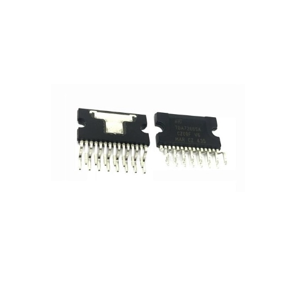
Overview of TDA7266SA
The TDA7266SA is a versatile Class AB dual-bridge audio power amplifier IC, employed in diverse technologies such as computer motherboards, LCDs, TVs, and portable wireless devices. Housed in a Clipwatt-15 package, it delivers a 26 dB gain through its dual channels, featuring standby, mute, short circuit, and thermal protections. It operates seamlessly within a voltage range of 3V to 18V. A closer look at the features reveals the TDA7266SA's standby and mute functions are beneficial for environments focused on power efficiency and noise management. The inclusion of short circuit and thermal protections speaks to its reliability, contributing to its longevity in devices where robustness is a priority.
Alternatives and Comparable Models
• TDA7294V
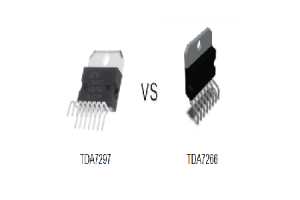
• TDA7297
TDA7266SA Symbol, Footprint and Pin Connection
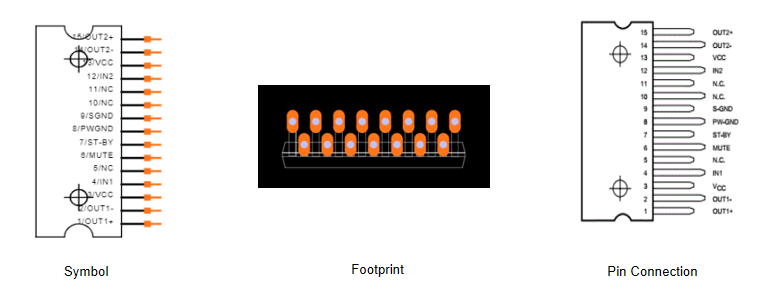
Pin 1: Positive Output (Left)
Delivers the enriched audio signal to the left channel, offering clarity and precision.
Pin 2: Negative Output (Left)
Works alongside Pin 1 to maintain a harmonious output for the left side, contributing to audio excellence.
Pin 3: Power Supply
Provides the voltage for the IC, maintaining steady performance and reliability.
Pin 4: Input (Right)
Tunes into the audio signal designated for the right channel's amplification. Strategically-applied shielding can diminish unwanted noise.
Pin 12: Input (Left)
Functions as the gateway for the left audio input, where precision in impedance matching enhances performance.
Pin 6: Mute
Temporarily halts audio output seamlessly, an advantage for transitions during connection modifications.
Pin 7: Standby
Conserves energy by keeping core circuits active, which proves valuable in devices operating on limited power sources.
Pin 8/9: Ground
Establishes a dependable path for current return, ensuring circuit stability. Advanced grounding methods can avert signal issues like distortion and hum.
Pin 13: Power Supply
Serves as an extra power input, highlighting the requirement for efficient power distribution to mitigate stress on the circuit.
Pin 14: Negative Output (Right)
Completes the output flow for the right channel, harmonizing with Pin 15 to achieve balanced audio production.
Pin 15: Positive Output (Right)
Outputs the refined audio signal, assuring seamless signal transmission to paired equipment.
Specifications of TDA7266SA Amplifier
|
Product
Attribute |
Attribute Value |
|
Manufacturer |
STMicroelectronics |
|
Package / Case |
Clipwatt-15 |
|
Packaging |
Tube |
|
Length |
19.85 mm |
|
Width |
3.2 mm |
|
Height |
11 mm |
|
Output Power |
7 W |
|
Output Current |
2 A |
|
Gain |
26 dB |
|
Class |
Class-AB |
|
Power Supply Rejection Ratio |
56 dB |
|
Supply Voltage |
3V ~ 18 V |
|
Power Dissipation |
20 W |
|
Operating Temperature |
0°C ~ 70 °C |
|
Mounting Style |
Through Hole |
|
Number of Channels |
2 Channel |
|
Product Type |
Audio Amplifiers |
Characteristics of TDA7266SA Amplifier
Gain and Voltage Adaptability
The TDA7266SA amplifier has a fixed gain of 26 dB, supporting a diverse voltage spectrum. This range accommodates varied applications, enhancing its adaptability in different contexts. In practical use, such a spectrum allows seamless integration into versatile system designs, providing consistent output across diverse environments.
Protective Features
Outfitted with extensive protective mechanisms, the TDA7266SA is shielded from potential electrical disruptions. These features guard against risks such as overvoltage and short circuits. By including these safeguards, you can count on the device for dependable operation and extended service life.
Efficiency in Mute and Standby Modes
Managing audio output is straightforward with the TDA7266SA's easily activated mute function via a control pin, avoiding unwanted noise. The standby mode is crafted to reduce power consumption, aligning with the principles of energy-efficient systems. This thoughtful design supports modern environmental goals and promotes sustainability.
Power Output Details
Under standard conditions of 12V with an 8Ω load, the TDA7266SA provides an output of 8.0W×2. At 11V with the same load, the output shifts to 7W×2, maintaining a THD of 10%. These specifications enable it to drive speakers with clarity, suitable for varied applications, and ensure reliable sound delivery.
Refining Gain Configuration of TDA7266SA
Gain is derived using the formula:

In this equation, (Rf) represents the feedback resistor and (Ri) signifies the input resistor. The interplay between(Rf) and (Ri) allows for the fine-tuning of gain levels, responding to diverse needs and desires. Choosing resistor values involves balancing various factors. Consider elements like resistor tolerance, temperature coefficients, and noise levels. This strategy supports reliability even as conditions fluctuate.
Modulating gain for different scenarios requires foresight. Potentiometers offer adjustable gain options, making them ideal for precise tweaks across varied situations. In the field, this provides a swift response during testing, boosting system adaptability and performance. Innovative methods, like digitally programmable gain amplifiers (DPGAs), facilitate dynamic gain changes. These systems enable immediate modifications via digital interfaces, effortlessly merging with contemporary technologies. Such progress signifies the shift towards more adaptable and intelligent design strategies.
Short Circuit Protection Strategies of TDA7266SA
In the TDA7266SA, sophisticated internal circuits actively guard against potential harm from short circuits. By constantly monitoring current and voltage surges, the system swiftly addresses anomalies. It emphasize the value of maintaining such vigilant oversight to avert circuit disruptions, the practical success of these built-in defenses.
Rapid Protective Responses
Upon detecting anomalies, the system may trigger immediate protective measures like shutting down or reducing power output. This thoughtful response strategy is good for preserving the integrity of both circuits and speakers. In practical settings, this mechanism has proven invaluable in preventing expensive repairs and minimizing downtime.
Function of Thermal Protection
Thermal protection addresses the challenges posed by excessive heat. By implementing this approach, the system secures operational consistency and prolonged service life. Evidence suggests that effective thermal management greatly enhances the durability and reliability of electronic components.
Diagnosing Root Issues
Following a fault, addressing the root causes is needed before restoring power. Thorough inspections help identify and rectify these problems, preventing future incidents and ensuring smooth operation. This practice is acknowledged as a standard approach in sustaining optimal electronic system performance.
TDA7266SA Applications
Audio in Televisions
The TDA7266SA contributes to the audio performance of contemporary televisions. It incorporates sophisticated amplification technology that enriches sound clarity and depth. User satisfaction during product evaluation often hinges on this audio precision.
Sound in LCD Displays
Capable of driving dual-channel audio, the TDA7266SA markedly improves sound in LCD displays. This feature becomes evident in settings where multiple channels are good for a full-bodied audio, consistently proving its worth in high-end display systems.
Sound Quality in Portable Devices
In wireless gadgets, the TDA7266SA functions in signal processing, subtly enhancing audio quality. This consistency across volume levels is frequently reflecting its value in maintaining a seamless audio.
Computer Motherboards
The TDA7266SA supports superior audio output on computer motherboards, ensuring clarity and minimal distortion. This advantage serves demand accurate sound reproduction, whether for gaming or any audio tasks.
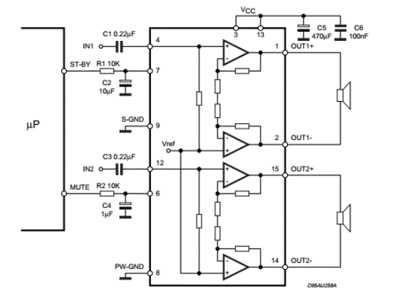
Tackling "Pop-Noise" with Microprocessors
To manage intrusive "Pop-Noise," careful control of standby and mute signals is needed. Employing a microprocessor to orchestrate the sequence and implement capacitance slow charging effectively reduces these noises. System design shows that timing delays are good in averting unwanted sounds, improving the overall acoustic.
TDA7266SA Usage Insights
Ground Resistance and Noise Prevention
Maintaining low ground resistance enhances audio clarity in TDA7266SA applications by minimizing interference and noise. Ground loops create unwanted hum, which affects sound fidelity. A star grounding configuration can address these issues, reducing potential differences between ground points.
Power Supply Stability
A stable power supply voltage between 3V and 18V supports optimal performance. Voltage inconsistencies may cause audio distortion or damage the amplifier. Using regulators or voltage stabilizers ensures steady voltage levels. Minor voltage fluctuations are often underestimated for their impact on performance.
Managing Mute Functions
Managing mute functions appropriately avoids abrupt signal interruptions that cause pops and clicks. Soft-start mechanisms enable smooth transitions without acoustic disturbances.
Impedance Matching
Proper input and output impedance matching optimizes signal transfer efficiency and fidelity. Mismatches lead to reflections and audio quality loss. Impedance bridging or matching transformers can be advantageous in complex setups. Grasping the subtle interactions of circuit components often results in enhanced sound performance.
Heat Dissipation
Heat dissipation is use for the TDA7266SA's longevity. Heatsinks or active cooling systems prevent overheating, a common failure cause. Effective thermal management extends component life, showcasing how design intricacies can impact durability.
Electrostatic Protection
Electrostatic discharge (ESD) protection enhances the amplifier's resilience against static damage. Protection diodes or ESD-safe materials safeguard sensitive components. This practice, beyond mere precaution, is integral to boosting the reliability and longevity of electronic systems.
Frequently Asked Questions [FAQ]
1. What is the TDA7266SA?
The TDA7266SA is a dual bridge amplifier, primarily used to enhance audio signals. It boosts audio output in various electronic devices, elevating sound clarity and intensity, reminiscent of enhancements sought in systems. Familiarity with its features allows custom applications, optimizing its use in specific contexts.
2. What type of amplification does the TDA7266SA provide?
This IC amplifies both phases of an audio signal, enhancing both positive and negative halves. It raises audio fidelity while reducing distortion. Balanced amplification is right achieving high-quality output, echoing the precision efforts in audio.
3. What is the operating temperature range of TDA7266SA?
The device operates efficiently between 0°C and 70°C. This range ensures consistent performance under varied conditions, reflecting strategies in thermal management that prioritize stable function across electronic devices.
4. How many channels does the TDA7266SA support?
The TDA7266SA supports two independent audio channels, enabling stereo sound. This setup provides an immersive through spatial separation, akin to soundstage techniques used in concert settings.
5. Is thermal protection included in the TDA7266SA?
The IC is equipped with thermal protection circuitry, preventing damage by restarting at safer temperatures. This reflects a broader design principle in technology, focusing on enhancing durability and longevity, much like risk management strategies preserving serious functions under stress.
About us
ALLELCO LIMITED
Read more
Quick inquiry
Please send an inquiry, we will respond immediately.
TDA7297 and TDA7266: A Detailed Comparison of Audio Amplifiers
on October 1th
TDA7560 AMPLIFIER Applications and Guidelines for Car Audio Systems
on September 30th
Popular Posts
-

Complex Instruction Set Computers: How They Changed Computing?
on April 18th 147749
-

USB-C Pinout and Features
on April 18th 111904
-
Using Xilinx Unified Simulation Primitives: A Comprehensive Guide to FPGA Design and Simulation
on April 18th 111349
-

Power Supply Voltages in Electronics: Meaning of VCC, VDD, VEE, VSS, and GND
on April 18th 83714
-

RJ45 Connector Guide: Pinout, Wiring, Cable Types, and Uses
on January 1th 79502
-

The Ultimate Guide to Wire Color Codes in Modern Electrical Systems
The way our electrical systems use colors isn’t just for looks. Each wire color now indicates a specific function, making it easier to identify and handle electrical components correctly during ins...on January 1th 66868
-

Quality (Q) Factor: Equations and Applications
The quality factor, or 'Q', is important when checking how well inductors and resonators work in electronic systems that use radio frequencies (RF). 'Q' measures how well a circuit minimizes energy...on January 1th 63004
-
Purge Valve Guide: Function, Symptoms, Testing, and Replacement for Optimal Engine Performance
The purge valve is a key part of a car’s system that helps keep the air clean by managing fuel vapors before they can escape into the atmosphere. This not only helps the environment by reducing pol...on January 1th 62938
-

Achieving Peak Performance with the Maximum Power Transfer Theorem
The Maximum Power Transfer Theorem explains how energy from a source, such as a battery or generator, flows to a connected load. It shows the exact condition where the load receives the most power....on January 1th 54076
-

A23 Battery Specifications and Compatibility
The A23 battery is a small, cylinder-shaped battery with high voltage. Also called 23A, 23AE, or MN21, it runs at 12 volts and much higher than AA or AAA batteries. Its special design make...on January 1th 52087
HOT Part Number
-

LTC4063EDD#TRPBF
Analog Devices Inc.
IC BATT CHG LI-ION 1CELL 10DFN
MIMX8MM1CVTKZAA
NXP USA Inc.
IC MPU I.MX 8M MINI SOLOLITE
APDS-9005-020
Broadcom Limited
SENSOR OPT 500NM AMB 6CHIPLED
06031A820KAT2A
KYOCERA AVX
CAP CER 82PF 100V C0G/NP0 0603
ICM-20602
TDK InvenSense
IMU ACCEL/GYRO/TEMP I2C/SPI LGA
170M4611
Eaton - Bussmann Electrical Division
FUSE SQUARE 350A 700VAC RECT
08053C105JAZ2A
KYOCERA AVX
CAP CER 1UF 25V X7R 0805
EP1C12F324C6N
Intel
IC FPGA 249 I/O 324FBGA
2SC4617T1G
onsemi
TRANS NPN 50V 0.1A SC75 SOT416
TL431AILPRAG
onsemi
IC VREF SHUNT ADJ 1% TO92-3
ADAU1787BCBZRL
Analog Devices Inc.
4 ADC, 2 DAC LOW POWER CODEC, AU
74VHC164MTCX
onsemi
IC SHIFT REGISTER 8BIT 14TSSOP
DAN222M3T5G
onsemi
DIODE ARRAY GP 80V 100MA SOT723
NR3015T470M
Taiyo Yuden
FIXED IND 47UH 300MA 1.608OHM SM
MM3Z18VC
onsemi
DIODE ZENER 18V 200MW SOD323F
1N4001W
Rectron USA
DIODE GEN 1A 50V SOD-123F
SMBJ90A
Taiwan Semiconductor Corporation
TVS DIODE 90VWM 146VC DO214AA
NTA1215MC
Murata Power Solutions Inc.
DC DC CONVERTER +/-15V 1W -
SDR1307-101KL
Bourns Inc.
FIXED IND 100UH 1.9A 180MOHM SMD
AOT5B65M1
Alpha & Omega Semiconductor Inc.
IGBT 650V 5A TO220
STP16CP596B1R
STMicroelectronics
IC LED DRIVER LINEAR 50MA 24DIP
AD7895ANZ-2
Analog Devices Inc.
IC ADC 12BIT SAR 8DIP
MURB1620CTT4G
onsemi
DIODE ARRAY GP 200V 8A D2PAK
STGIPS30C60T-H
STMicroelectronics
MOD IPM SLLIMM 30A 600V 25SDIP
IXDN604SIA
IXYS Integrated Circuits Division
IC GATE DRVR LOW-SIDE 8SOIC
CY7C63743-SC
Infineon Technologies
IC MCU 8K LS USB/PS-2 24-SOIC
U2745B-MFBG3
Microchip Technology
RF TX IC UHF 310-440MHZ 16LSSOP
DSPIC30F4013T-30I/PT
Microchip Technology
IC MCU 16BIT 48KB FLASH 44TQFP
ADF4106BRUZ-RL
Analog Devices Inc.
IC CLK/FREQ SYNTH 16TSSOP
EL8403IS
Elantec
IC OPAMP GP 4 CIRCUIT 14SOIC
8A35001B-001AJG
Renesas Electronics America Inc
NETWORK TIMING
GRM0337U1HR90BD01D
Murata Electronics
CAP CER 0.9PF 50V U2J 0201
LT1356CS#PBF
Analog Devices Inc.
IC VOLTAGE FEEDBACK 2 CIRC 16SO
AON7280
Alpha & Omega Semiconductor Inc.
MOSFET N-CH 80V 20A/50A 8DFN
IRLI540N
Infineon Technologies
MOSFET N-CH 100V 23A TO220AB FP
VI-J6Z-MZ
Vicor Corporation
VI-J6Z-MZ 300V 2V 5A -
LMH6722MA
Texas Instruments
IC AMP CURRENT FEEDBACK 14SOIC
HZM6.8Z4MWATL-E
Renesas Electronics America Inc
TVS DIODE 3.5VWM 3MPAK
LM4041DIM7-1.2
Texas Instruments
IC VREF SHUNT 1% SC70-5
RT6200GE
Richtek USA Inc.
IC REG BUCK ADJ 600MA SOT23-6
R5F21274SNFP#X6
Renesas Electronics America Inc
IC MCU 16BIT 16KB FLASH 32LQFP
1N5227B
onsemi
DIODE ZENER 3.6V 500MW DO35
12102C472JAT2A
KYOCERA AVX
CAP CER 4700PF 200V X7R 1210
PZTA64
Fairchild Semiconductor
SMALL SIGNAL BIPOLAR TRANSISTOR,
XC1765ELSO8C
AMD
IC PROM SER C-TEMP 3.3V 8-SOIC
XR88C92CJ-F
MaxLinear, Inc.
IC UART FIFO DUAL 44PLCC
RT24C2X202
Bourns, Inc.
TRIMMER 2K OHM 0.75W PC PIN SIDE
DLW31SN900SQ2L
Murata Electronics
CMC 370MA 2LN 90 OHM SMD
LMK432F476ZM-T
Taiyo Yuden
CAP CER 47UF 10V Y5V 1812
MOC207R1VM
onsemi
OPTOISO 2.5KV TRANS W/BASE 8SOIC
GRM0335C1E390JD01D
Murata Electronics
CAP CER 39PF 25V C0G/NP0 0201
SE10PG-M3/84A
Vishay General Semiconductor - Diodes Division
DIODE GEN PURP 400V 1A DO220AA
RABS15M REG
Taiwan Semiconductor Corporation
BRIDGE RECT 1P 1KV 1.5A ABS-L
PI74LPT16245AEX
Diodes Incorporated
IC TXRX NON-INVERT 3.6V 48TSSOP