
TDA8356: Specifications, Features, and Circuit Applications
The article provides a comprehensive overview of the TDA8356 integrated circuit, detailing its functionality, technical attributes, and applications in the field of television technology. It explains how the IC enhances field scanning outputs, contributes to energy efficiency, and supports advanced protective mechanisms to ensure device reliability. It also delves into the IC's specifications, equivalent models, and practical uses in various types of televisions, its adaptability and importance in the evolution of modern electronic devices.Catalog
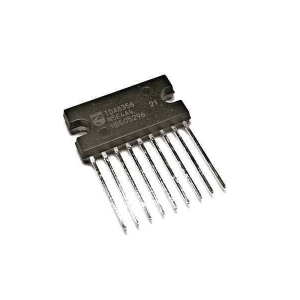
What is the TDA8356?
TDA8356 is a field scanning output IC developed by Philips, bridging past and present in television technology. It graces both domestic and imported large-screen TVs, embodying complex circuitry, including field scanning signal amplification and power amplification for field output signals. This IC also crafts field blanking signals and encompasses additional sophisticated functions. Its expansive frequency adaptability caters to an array of television models, insinuating subtle mastery in accommodating varied specifications.
The essence of TDA8356 lies in its robust drive prowess, ensuring reliability and energy-saving performance. It serves deflection yokes in TVs with frequencies from 50-120Hz and deflection angles of 90 or 110 degrees. This adaptability appeals to manufacturers seeking to fine-tune performance. Its design minimizes the necessity for extra components, providing a cost-effective and streamlined production process.
In high-efficiency Class G systems, like TCL's smart TVs, TDA8356 underlines energy-conscious design. This chip champions environmental sustainability while meeting the growing consumer appetite for eco-friendly gadgets. Incorporating a field return switch and a DC-coupled field output bridge circuit, it showcases advanced short-circuit protection, elevating its EMC immunity and fortifying its performance against electromagnetic disturbances.
Equivalent and Replacement Models
• TDA8351
• TDA8356H
TDA8356 Specifications
|
Product Attribute |
Attribute Value |
|
Manufacturer |
NXP |
|
Product Category |
Video ICs |
|
Type |
DC Coupled Vertical Deflection |
|
Minimum Operating Temperature |
-25 C |
|
Maximum Operating Temperature |
+75 C |
|
Mounting Style |
SMD/SMT |
|
Package / Case |
SOT-131 |
|
Brand |
NXP Semiconductors |
|
Length |
24 mm |
|
Product Type |
Video ICs |
Features of TDA8356
Vertical Flyback Switch and Zoom Functionality
The inclusion of a vertical flyback switch in the TDA8356 facilitates precise retrace timing, maximizing display efficiency. This contributes to reducing distortion during brisk screen movements, resulting in sharper and steadier images. Many find considerable value in this feature, particularly for improving image fidelity in rapidly changing displays. The zoom mode guard signal complements by maintaining aspect ratios seamlessly, preserving image balance without extra circuitry.
Protective Mechanisms
The TDA8356 features a durable protective mechanism against output pin short-circuits. This capability is instrumental in sustaining system reliability and durability in settings susceptible to electrical variation. By averting overcurrent damage, it promotes longer lifespan and minimizes maintenance efforts. Applications have shown greater stability with systems using the TDA8356, its practicality and resilience.
Elevated EMC Resistance
With its design centered on common mode inputs, the TDA8356 excels in blocking electromagnetic interference. This advantage is useful in reducing disturbances within compact electronic spaces. It meets stringent compliance demands, ensuring smooth integration into multiple platforms without sacrificing functionality. It adeptly resolves typical EMI challenges faced in competitive markets.
Streamlined Design and Implementation
The TDA8356's minimal need for external components fosters a simplified design, reducing complexity and potential points of failure. This straightforwardness speeds up manufacturing, cuts costs, and enhances production scalability. Many value the ease of implementation, as it aligns with current expectations for efficiency and cost-effectiveness.
Operating Characteristics of TDA8356
|
SYMBOL |
PARAMETER |
MIN. |
TYP. |
MAX. |
UNIT |
|
DC supply |
|||||
|
Vp |
supply voltage |
9 |
14.5 |
25 |
V |
|
Iq |
quiescent supply current |
– |
30 |
– |
mA |
|
Vertical circuit |
|||||
|
Io(pp) |
output current (peak-to-peak value) |
– |
– |
2 |
A |
|
Idiff(pp) |
differential input current (peak-to-peak value) |
– |
600 |
– |
μA |
|
Vdiff(pp) |
differential input voltage (peak-to-peak value) |
1.5 |
1.8 |
V |
|
|
Flyback switch |
|||||
|
IM |
peak output current |
– |
– |
±1 |
A |
|
VFB |
flyback supply voltage |
– |
– |
50 |
V |
|
Thermal data (in accordance with IEC 747-1) |
|||||
|
Tstg |
storage temperature |
-55 |
– |
+150 |
°C |
|
Tamb |
operating ambient temperature |
-25 |
– |
+75 |
°C |
|
Tvj |
virtual junction temperature |
– |
– |
150 |
°C |
Voltage and Current Dynamics
The TDA8356 functions within specific voltage and current intervals. These parameters are crafted to blend efficiency with a sense of precision and reliability. Grasping these aspects enhances the component's effectiveness in diverse applications, providing a delicate balance akin to mastering a complex musical piece.
Voltage Constraints
Voltage limitations emphasize the capacity for safe operation, defining the peaks and troughs of performance. Avoiding harmful voltage levels preserves device integrity and steadiness.
Current Parameters
Ensuring the current remains within tailored boundaries is akin to a careful dance, preventing overheating and potential mishaps. Field applications often employ current sensors or shunt resistors to oversee this aspect. Such vigilance not only shields but also prolongs the life of the device, embodying a thoughtful guardianship.
Thermal Considerations
Navigating within accepted electrical parameters also invokes thermal awareness. Solutions such as heat sinks or thermal pads are regularly embraced to dispel unwanted heat, orchestrating a harmony of form and function. The choice of these solutions draws from both design intuition and environmental understanding.
Reliability Aspects
Crafting dependable operation for the TDA8356 integrates electrical boundaries with application requirements. This synthesis during the design process not only nurtures reliability but also fine-tunes performance, reflecting a grasp of technical and practical methodologies, akin to an artisan perfecting their craft.
Application Circuit of TDA8356

In typical application circuits, a 33Ω resistor is strategically placed in series with the VFB input during 50-60V operations. This ensures stability and precision in high-voltage environments. The circuit utilizes the device's capability to accept opposing phase sawtooth signals at pins 1 and 2, for effective signal processing. The interplay of components here responds to needs of precision.
A parallel resistor, Rcon, is used to manage the current flowing through the deflection coil, for maintaining waveform integrity and minimizing distortion. Once amplified, the processed signals reach the deflection coil via pins 7 and 4. This setup generates pulse sawtooth and negative sawtooth waveforms, which are invaluable in applications, within display technologies. This careful regulation shows a pursuit of balance and clarity.
The resistor RM, in series with the deflection coil, enhances output linearity by feeding back voltage to pin 9. RM extends the dynamic range of the sawtooth waveform and ensures smoother transitions, contributing to high-quality signal reproduction. Adjusting the value of this resistor can profoundly impact circuit performance, resulting in more accurate and reliable outputs.
Pros and Cons
Benefits of Using the TDA8356
The TDA8356 delivers a range of appealing attributes. Its extensive frequency range allows it to adapt to a variety of electronic applications, fostering flexibility and adaptability. With a strong driving capacity, it handles demanding tasks efficiently, easing the pressure in high-performance environments. The device's stability contributes to dependable operation, for ensuring consistent results over extended periods. Furthermore, its low power usage caters to energy-conscious designs, resonating with the trend toward sustainable technology.
Challenges Associated with the TDA8356
Despite its strengths, the TDA8356 has some limitations. The single 9-pin package configuration poses challenges for interchangeability, potentially complicating upgrades or replacements where component flexibility is desired. This setup might also pose obstacles when integrating into modern systems that favor modular approaches. Moreover, its primary use in televisions under 20 inches limits its applications across varied electronic products, restricting its presence in larger or more versatile contexts. This specific focus can slow its uptake in fast-paced technological advancements where adaptability is valued.
Frequently Asked Questions [FAQ]
1. What is the equivalent of TDA8356?
The TDA8356 is closely matched by the NTE7131. Both components fulfill similar roles in electronics, facilitating replacement within circuit designs. It's advisable to delve into technical datasheets to verify compatibility, acknowledging potential subtle variances. In the process of selecting replacements, generally deliberate over aspects such as voltage, current ratings, and package type to ensure a seamless fit.
2. What type of circuit does the TDA8356 provide?
TDA8356 delivers a DC-driven vertical deflection output circuit, widely used in televisions and monitors. This circuit finely controls the vertical motion of the electron beam, for achieving a stable and vivid image. Such components are esteemed in industries for their steadfast performance and efficiency in upholding display quality. Achieving the desired performance entails extensive testing under diverse conditions, a practiced routine in electronic design and troubleshooting.
About us
ALLELCO LIMITED
Read more
Quick inquiry
Please send an inquiry, we will respond immediately.
L298 Motor Driver IC: Functions and Working Principles
on October 1th

MPS2222A Transistor: A Complete Overview
on October 1th
Popular Posts
-

Complex Instruction Set Computers: How They Changed Computing?
on June 14th 148402
-

USB-C Pinout and Features
on June 14th 131612
-
Using Xilinx Unified Simulation Primitives: A Comprehensive Guide to FPGA Design and Simulation
on June 14th 111884
-

Power Supply Voltages in Electronics: Meaning of VCC, VDD, VEE, VSS, and GND
on June 14th 94454
-

RJ45 Connector Guide: Pinout, Wiring, Cable Types, and Uses
on January 1th 93984
-

The Ultimate Guide to Wire Color Codes in Modern Electrical Systems
The way our electrical systems use colors isn’t just for looks. Each wire color now indicates a specific function, making it easier to identify and handle electrical components correctly during ins...on January 1th 76891
-

Quality (Q) Factor: Equations and Applications
The quality factor, or 'Q', is important when checking how well inductors and resonators work in electronic systems that use radio frequencies (RF). 'Q' measures how well a circuit minimizes energy...on January 1th 74842
-
Purge Valve Guide: Function, Symptoms, Testing, and Replacement for Optimal Engine Performance
The purge valve is a key part of a car’s system that helps keep the air clean by managing fuel vapors before they can escape into the atmosphere. This not only helps the environment by reducing pol...on January 1th 68783
-

Understanding Capacitors and Their Symbols in Circuit Diagrams
Capacitors are small parts used in almost all electronic devices. They store and release electrical energy and are found in things like power supplies, radios, and circuits that help reduce noise. ...on June 14th 58527
-

A23 Battery Specifications and Compatibility
The A23 battery is a small, cylinder-shaped battery with high voltage. Also called 23A, 23AE, or MN21, it runs at 12 volts and much higher than AA or AAA batteries. Its special design make...on January 1th 58132
HOT Part Number
-
ADAU1978WBCPZ
Analog Devices Inc.
IC ADC 24BIT 192K 40LFCSP-WQ
MIMX8MM1CVTKZAA
NXP USA Inc.
IC MPU I.MX 8M MINI SOLOLITE
REC10-2405S/H3/M
Recom Power
DC DC CONVERTER 5V 10W
SBR20100CTFP
Diodes Incorporated
DIODE ARRAY SBR 100V 10A ITO220
SN74LS640NSR
Texas Instruments
IC TRANSCEIVER INVERT 5.25V 20SO
PM8371-BI
PMC-Sierra
PM8371-BI
M2S025-FGG484
Microchip Technology
IC SOC CORTEX-M3 166MHZ 484FBGA
AT28C010-20TI
Microchip Technology
IC EEPROM 1MBIT PARALLEL 32TSOP
EP1C12F324C6N
Intel
IC FPGA 249 I/O 324FBGA
MC74VHCT373ADTRG
onsemi
IC LATCH TRANSP OCT 2ST 20-TSSOP
GBO25-12NO1
IXYS
BRIDGE RECT 1P 1.2KV 25A 4SIP
NCP302LSN20T1G
onsemi
IC SUPERVISOR 1 CHANNEL 5TSOP
SI3210-KT
Skyworks Solutions Inc.
IC TELECOM INTERFACE 38TSSOP
ADAU1787BCBZRL
Analog Devices Inc.
4 ADC, 2 DAC LOW POWER CODEC, AU
74VHC164MTCX
onsemi
IC SHIFT REGISTER 8BIT 14TSSOP
DAN222M3T5G
onsemi
DIODE ARRAY GP 80V 100MA SOT723
DG9451EN-T1-E4
Vishay Siliconix
IC MUX 8:1 105OHM 16MINIQFN
NPX-C01767
Amphenol NovaSensor
SENSOR PRES -

AOT5B65M1
Alpha & Omega Semiconductor Inc.
IGBT 650V 5A TO220
MPC508AU
Texas Instruments
IC MUX 8:1 1.5KOHM 16SOIC
TMS320DM355DZCE135
Texas Instruments
IC DGTL MEDIA SOC 337NFBGA
EFR32BG22C112F352GM32-CR
Silicon Labs
BLUE GECKO, QFN32, SECURE BOOT W
JMK105C6225MV-F
Taiyo Yuden
CAP CER 2.2UF 6.3V X6S 0402
MAX4481AXT+T
Analog Devices Inc./Maxim Integrated
IC OPAMP GP 1 CIRCUIT SC70-6
8A35001B-001AJG
Renesas Electronics America Inc
NETWORK TIMING
ACH3218-151-TD01
TDK Corporation
FILTER LC(T) SMD
VI-JND-IY
Vicor Corporation
DC DC CONVERTER 85V 50W
2204740-1
TE Connectivity AMP Connectors
CONN SPRING SLIDING BUS 2POS PCB
TAS5142DDVRG4
Texas Instruments
IC AMP CLSS D STER 100W 44HTSSOP
PC451J00000F
SHARP/Socle Technology
OPTOISOLATOR 3.75KV TRANS 4SMD
GRM1557U1H8R6DZ01D
Murata Electronics
CAP CER 8.6PF 50V U2J 0402
GRM2196P2A220JZ01D
Murata Electronics
CAP CER 22PF 100V P2H 0805
R5F51116ADFL#3A
Renesas Electronics America Inc
IC MCU 32BIT 256KB FLASH 48LFQFP
SN65LVDS050PWR
Texas Instruments
IC TRANSCEIVER FULL 2/2 16TSSOP
VI-J6Z-MZ
Vicor Corporation
VI-J6Z-MZ 300V 2V 5A
LM4041DIM7-1.2
Texas Instruments
IC VREF SHUNT 1% SC70-5 -
B32522N6684K289
EPCOS - TDK Electronics
CAP FILM 0.68UF 10% 450VDC RAD
CLA110MB1200NA
IXYS
MOD THYRISTOR DUAL 1200V SOT-227
RT6200GE
Richtek USA Inc.
IC REG BUCK ADJ 600MA SOT23-6
MAX17501GATB+T
Analog Devices Inc./Maxim Integrated
IC REG BUCK ADJ 500MA 10TDFN
PZTA64
Fairchild Semiconductor
SMALL SIGNAL BIPOLAR TRANSISTOR,
DRV5013ADEDBZRQ1
Texas Instruments
MAGNETIC SWITCH LATCH SOT23-3
HMC593LP3E
Analog Devices Inc.
IC AMP WIMAX 3.3GHZ-3.8GHZ 16QFN
74F02SCX
Fairchild Semiconductor
IC GATE NOR 4CH 2-INP 14SOIC
PE42423B-Z
pSemi
IC RF SWITCH SPDT 6GHZ 16QFN
LMK432F476ZM-T
Taiyo Yuden
CAP CER 47UF 10V Y5V 1812
MAX774ESA+
Analog Devices Inc./Maxim Integrated
IC REG CTRLR BUCK-BOOST 8SOIC
0805YD105MAT4A
KYOCERA AVX
CAP CER 1UF 16V X5R 0805
GRM155R71E103KA01J
Murata Electronics
CAP CER 10000PF 25V X7R 0402
MSP430FG4616IZQWR
Texas Instruments
IC MCU 16BIT 92KB FLASH 113BGA
RABS15M REG
Taiwan Semiconductor Corporation
BRIDGE RECT 1P 1KV 1.5A ABS-L
L6470H
STMicroelectronics
IC MTR DRV BIPLR 3.3/5V 28HTSSOP
UCC2973PW
Texas Instruments
IC CCFL CNTRL 160KHZ 8TSSOP
PI74LPT16245AEX
Diodes Incorporated
IC TXRX NON-INVERT 3.6V 48TSSOP