Temperature Switch Basics You Should Know
A temperature switch helps you control an electrical circuit by turning it on or off when a set temperature is reached. In this article, you will learn how a temperature switch works, its main parts, and the different types available. You will also understand its advantages, limitations, and common uses in various systems. In addition, you will see how to choose the right temperature switch for your needs.Catalog
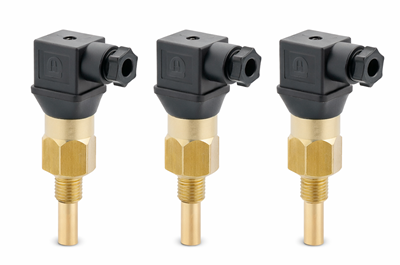
Figure 1. Industrial Temperature Switch
What is a Temperature Switch?
A temperature switch is a device that monitors temperature and automatically opens or closes an electrical circuit when a set limit is reached. It is widely used in electrical systems to control equipment or prevent overheating. Unlike sensors that only measure temperature, a temperature switch directly performs a switching action. This makes it useful for simple and reliable temperature-based control. It is commonly found in industrial machines, HVAC systems, and appliances.
The main role of a temperature switch is protection and automation. It helps stop equipment when temperatures become too high or too low. This reduces the risk of damage, failure, or safety hazards. It can also be used to start or stop devices like fans, heaters, or compressors. Because of its simple function, it is a key component in many control systems.
Working Principle of a Temperature Switch
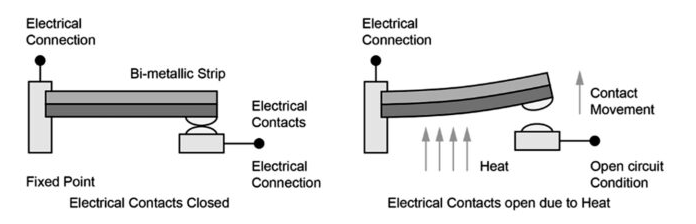
Figure 2. Temperature Switch Working Principle
A temperature switch works by sensing changes in temperature and converting them into a mechanical or electrical action. First, the sensing element detects a rise or drop in temperature from the surrounding environment. As the temperature approaches a preset value, the internal mechanism begins to respond to this change. Once the setpoint is reached, the device triggers a switching action that either opens or closes the electrical contacts. This action interrupts or allows the flow of current in the circuit. When the temperature returns to normal, the switch may reset automatically or remain in its new state depending on design. This simple process ensures reliable temperature control without the need for continuous monitoring.
Main Components of a Temperature Switch
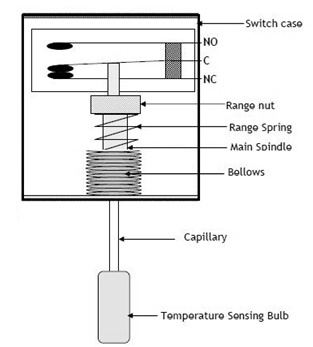
Figure 3. Capillary-Type Temperature Switch Components
• Temperature Sensing Bulb
The sensing bulb is the part that detects temperature from the environment. It is usually placed in direct contact with the medium being monitored. When temperature changes, the fluid inside the bulb expands or contracts.
• Capillary Tube
The capillary tube connects the sensing bulb to the internal mechanism. It carries the pressure changes caused by temperature variation. This allows remote sensing from a distance without placing the whole device in the hot area.
• Bellows
The bellows converts pressure changes into mechanical movement. As the internal fluid expands, the bellows expands as well. This movement is used to actuate the switching mechanism.
• Switch Contacts (NO/NC/C)
The contacts control the electrical circuit by opening or closing. Normally open (NO) and normally closed (NC) contacts define the circuit state. When triggered, the contacts change position to control current flow.
• Adjustment Screw / Range Nut
This component is used to set the desired temperature point. It adjusts the force needed to activate the switch. This allows to customize the switching temperature.
• Spring Mechanism
The spring provides resistance and helps return the system to its original position. It balances the movement of the bellows. This ensures stable and repeatable switching action.
Types of Temperature Switch
Temperature switches are mainly classified based on how they sense temperature and their internal construction.
Bimetallic Temperature Switches
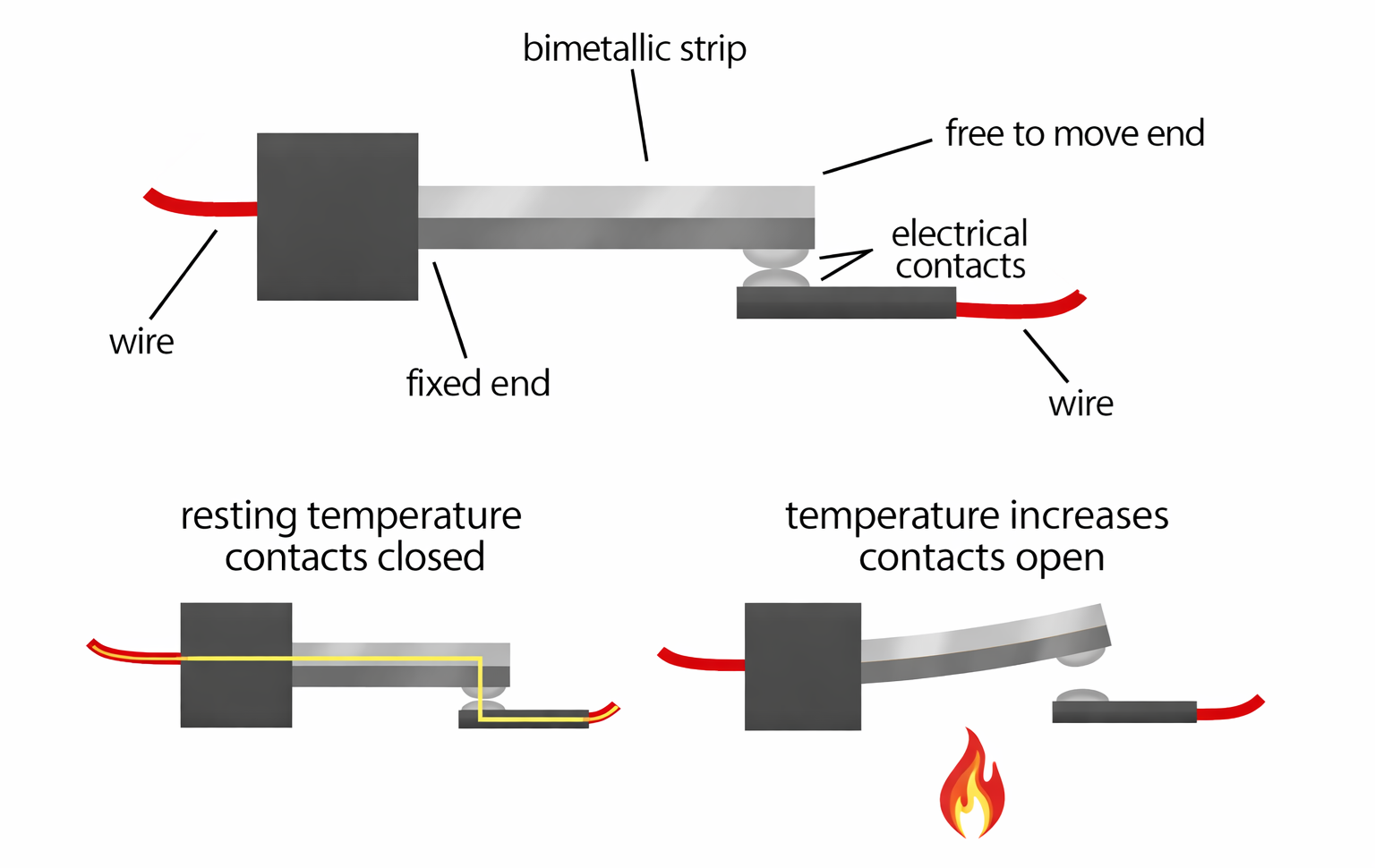
Figure 4. Bimetallic Temperature Switch
A bimetallic temperature switch uses a strip made of two different metals bonded together that react differently to heat. These metals expand at different rates when temperature changes. The strip is fixed at one end and free to move at the other end. This simple construction makes it compact and reliable for basic temperature control. It is commonly used in household appliances and low-cost protection systems.
As temperature increases, the strip bends due to uneven expansion of the metals. This bending movement pushes or pulls the electrical contacts. When the set temperature is reached, the contacts either open or close the circuit. As the temperature drops, the strip returns to its original shape and resets the switch. This type of temperature switch is known for its simplicity and durability.
Fluid Expansion Temperature Switches
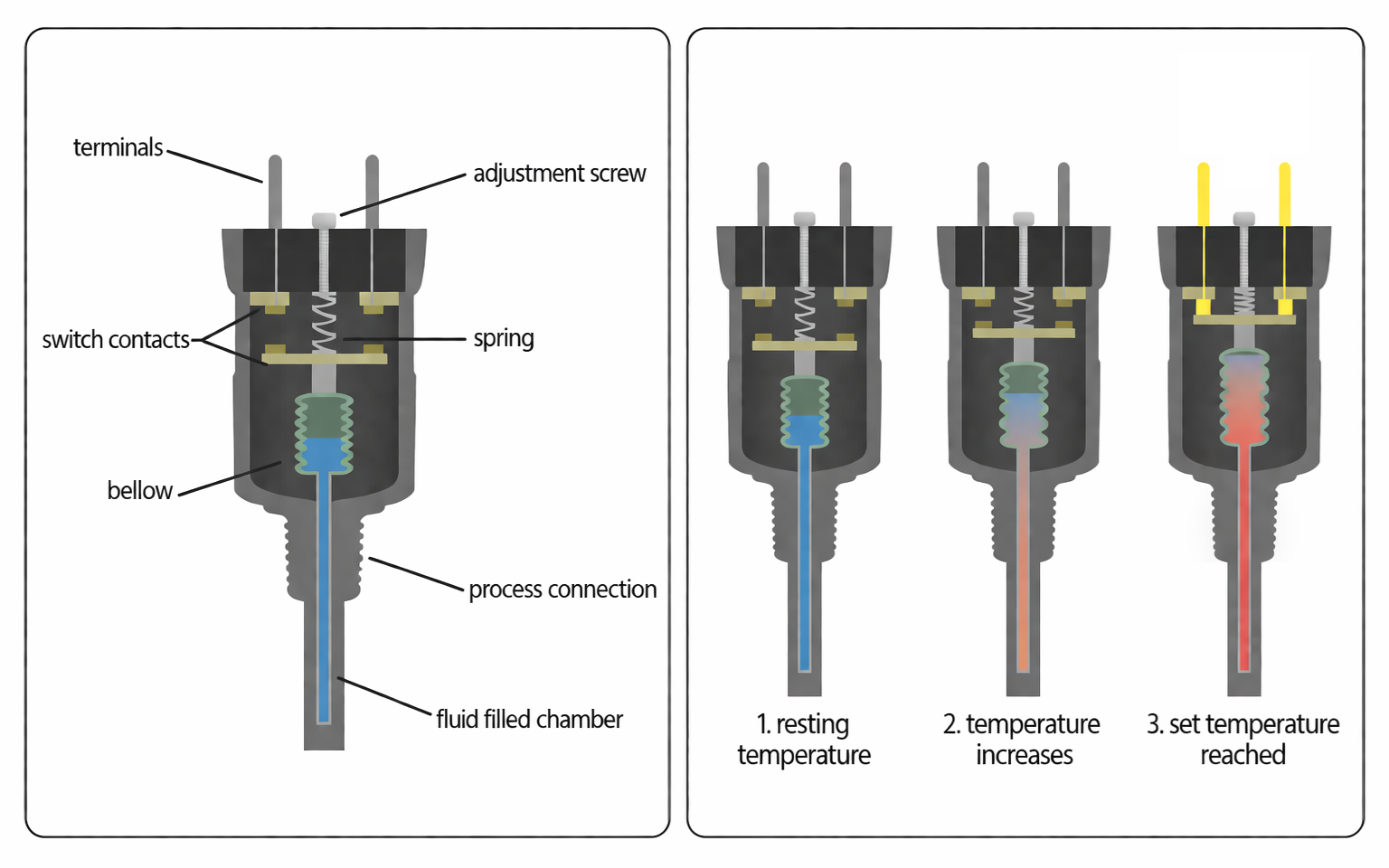
Figure 5. Fluid Expansion Temperature Switch
A fluid expansion temperature switch operates based on the expansion of liquid or gas inside a sealed system. It typically includes a sensing bulb, capillary tube, and a pressure-sensitive element. The fluid inside expands as temperature rises and creates pressure in the system. This design allows accurate sensing even in remote or harsh environments. It is widely used in industrial and HVAC applications.
When temperature increases, the expanding fluid generates pressure that moves a mechanical element. This movement is transferred to the switching contacts. Once the set temperature is reached, the contacts change state to control the circuit. As temperature decreases, the fluid contracts and the system returns to its original condition. This type offers higher accuracy and longer sensing distance compared to simple designs.
Electronic (Solid-State) Temperature Switches
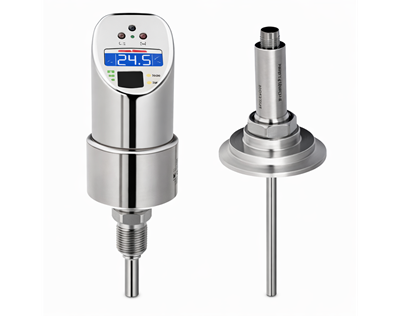
Figure 6. Electronic Temperature Switch
An electronic temperature switch uses sensors and electronic circuits to detect temperature changes. It typically uses components like thermistors or RTDs for precise measurement. The device includes a control circuit that compares the measured temperature with a preset value. This type offers higher accuracy and faster response than mechanical switches. It is commonly used in modern industrial systems.
When the sensed temperature reaches the setpoint, the electronic circuit sends a signal to trigger switching. This may activate a relay or a semiconductor output. The switching action is clean and consistent due to minimal mechanical movement. Many models include digital displays and adjustable settings for better control. This makes them suitable for applications requiring precise temperature monitoring.
Temperature Switch Specifications
|
Feature |
Temperature
Switch |
Thermostat |
Temperature
Sensor |
|
Function |
On/off switching
at preset limit |
Maintains target
temperature range |
Detects and
outputs temperature data |
|
Output Type |
Dry contact
(NO/NC), SPDT |
Relay output or
control signal (0–10V, PWM) |
Analog (mV, Ω)
or digital (I2C, 4–20mA) |
|
Accuracy |
±2°C to ±5°C |
±0.5°C to ±2°C |
±0.1°C to ±1°C |
|
Control
Capability |
Single threshold
action |
Closed-loop
regulation |
No control
(measurement only) |
|
Response Time |
1–10 seconds
(mechanical) |
5–30 seconds
(system dependent) |
<1 second
(electronic) |
|
Setpoint Range |
Fixed or
adjustable (e.g., 30°C–150°C) |
Adjustable
(e.g., 10°C–30°C room control) |
No setpoint |
|
Differential
(Hysteresis) |
2°C–20°C |
0.5°C–2°C |
Not applicable |
|
Power Handling |
Direct switching
up to 15A @ 250V AC |
Controls
external relay/load (≤10A typical) |
No power
switching |
|
Sensing Method |
Mechanical
(bimetal/fluid) or electronic |
Electronic or electromechanical |
Thermistor, RTD,
thermocouple |
|
Output State |
Binary (ON/OFF
only) |
Modulating or
staged control |
Continuous
signal |
|
Installation
Type |
Threaded,
immersion, surface |
Wall-mounted or
panel-mounted |
Probe, surface,
or embedded |
|
Operating
Voltage |
12V–240V AC/DC |
24V–240V AC/DC |
3.3V–24V DC |
|
Protection
Rating |
IP40–IP67 |
IP20–IP40
(typical indoor) |
IP20–IP68
(depends on probe) |
|
Typical Lifespan |
100k–500k cycles |
50k–200k cycles |
>1 million
readings |
|
Common Use |
Overheat
protection, cut-off control |
HVAC temperature
regulation |
Monitoring, data
logging, control systems |
Advantages and Disadvantages of Temperature Switch
Advantages of Temperature Switches
• Simple and reliable operation
• Direct switching without controller
• Low cost and easy installation
• Durable in harsh environments
• Minimal maintenance required
• Fast response in basic systems
Limitations of Temperature Switches
• Limited accuracy compared to sensors
• Fixed or limited adjustment range
• Mechanical wear in some types
• Not suitable for complex control
• Possible delay in response time
• Less precise than digital systems
Applications of Temperature Switch
Temperature switches are widely used in different industries for control and safety purposes.
1. HVAC Systems
Temperature switches are used in heating, ventilation, and air conditioning systems. They help control fans, compressors, and heaters based on temperature limits. This ensures stable indoor conditions and prevents overheating. They also improve energy efficiency by automating system operation.
2. Industrial Machinery Protection
In industrial equipment, temperature switches prevent overheating of motors and machines. They automatically shut down systems when temperature exceeds safe limits. This protects expensive equipment from damage. It also reduces downtime and maintenance costs.
3. Household Appliances
Temperature switches are used in devices like ovens, kettles, and irons. They regulate temperature to ensure safe operation. This prevents overheating and improves product lifespan. They are important for user safety in daily appliances.
4. Automotive Systems
Vehicles use temperature switches to monitor engine and coolant temperature. They activate cooling fans when needed. This helps maintain optimal engine performance. It also prevents engine overheating and failure.
5. Refrigeration Systems
Temperature switches control compressors and defrost cycles in refrigeration units. They maintain consistent cooling conditions. This is important for food storage and preservation. It also improves system efficiency.
6. Safety and Alarm Systems
Temperature switches are used in fire protection and alarm systems. They detect abnormal temperature rise and trigger alerts. This provides early warning in hazardous situations. It helps protect people and property.
Temperature Switch vs Thermostat vs Temperature Sensor
|
Feature |
Temperature
Switch |
Thermostat |
Temperature
Sensor |
|
Function |
On/off switching
at preset limit |
Maintains target
temperature range |
Detects and
outputs temperature data |
|
Output Type |
Dry contact
(NO/NC), SPDT |
Relay output or
control signal (0–10V, PWM) |
Analog (mV, Ω)
or digital (I2C, 4–20mA) |
|
Accuracy |
±2°C to ±5°C |
±0.5°C to ±2°C |
±0.1°C to ±1°C |
|
Control
Capability |
Single threshold
action |
Closed-loop
regulation |
No control
(measurement only) |
|
Response Time |
1–10 seconds
(mechanical) |
5–30 seconds
(system dependent) |
<1 second
(electronic) |
|
Setpoint Range |
Fixed or
adjustable (e.g., 30°C–150°C) |
Adjustable
(e.g., 10°C–30°C room control) |
No setpoint |
|
Differential
(Hysteresis) |
2°C–20°C |
0.5°C–2°C |
Not applicable |
|
Power Handling |
Direct switching
up to 15A @ 250V AC |
Controls
external relay/load (≤10A typical) |
No power
switching |
|
Sensing Method |
Mechanical
(bimetal/fluid) or electronic |
Electronic or electromechanical |
Thermistor, RTD,
thermocouple |
|
Output State |
Binary (ON/OFF
only) |
Modulating or
staged control |
Continuous
signal |
|
Installation
Type |
Threaded,
immersion, surface |
Wall-mounted or
panel-mounted |
Probe, surface,
or embedded |
|
Operating
Voltage |
12V–240V AC/DC |
24V–240V AC/DC |
3.3V–24V DC |
|
Protection
Rating |
IP40–IP67 |
IP20–IP40
(typical indoor) |
IP20–IP68
(depends on probe) |
|
Typical Lifespan |
100k–500k cycles |
50k–200k cycles |
>1 million
readings |
|
Common Use |
Overheat
protection, cut-off control |
HVAC temperature
regulation |
Monitoring, data
logging, control systems |
How to Choose the Right Temperature Switch?
Choosing the right temperature switch ensures reliable and efficient operation in your system.
1. Determine the Temperature Range
First, identify the minimum and maximum temperature your application requires. The switch must operate safely within this range. Choosing the correct range prevents damage and ensures accurate switching. Always consider possible temperature fluctuations. This helps avoid selecting an undersized device.
2. Select the Appropriate Type
Choose between bimetallic, fluid expansion, or electronic types. Each type suits different applications and accuracy needs. Mechanical types are simple, while electronic ones offer precision. Consider the environment and required performance level. This ensures the switch matches your system requirements.
3. Check Contact Rating
Ensure the switch can handle the electrical load of your system. The contact rating must match voltage and current requirements. Using a lower-rated switch can cause failure or damage. Always verify specifications before installation. This step is good for safety.
4. Consider Mounting and Installation
Check how the switch will be installed in your system. Options include threaded, surface-mounted, or panel-mounted designs. Proper mounting ensures accurate temperature sensing. It also improves reliability and lifespan. Choose a design that fits your setup.
5. Evaluate Environmental Conditions
Consider factors like humidity, dust, vibration, and exposure to chemicals. Choose a switch with the right protection rating (IP rating). Harsh environments require more durable materials. This prevents failure and ensures long-term performance. Always match the switch to the working conditions.
6. Look at Adjustability and Features
Decide if you need adjustable setpoints or fixed operation. Some applications require fine tuning, while others need simple control. Additional features like digital display or manual reset may be useful. These features improve usability and flexibility. Select based on your control needs.
Conclusion
Temperature switches provide a simple and reliable way to control and protect systems based on temperature changes. They operate by converting temperature variations into mechanical or electronic switching actions using components like sensing elements, contacts, and internal mechanisms. Different types, including bimetallic, fluid expansion, and electronic switches, offer varying levels of accuracy and performance for different applications. By understanding their features, applications, and selection criteria, you can ensure safe, efficient, and long-lasting temperature control in any system.
About us
ALLELCO LIMITED
Read more
Quick inquiry
Please send an inquiry, we will respond immediately.
Frequently Asked Questions [FAQ]
1. Can a temperature switch be used outdoors?
Yes, but you need a model with the proper IP rating and weather-resistant housing to handle moisture, dust, and temperature extremes.
2. How do you test if a temperature switch is working?
You can test it by applying heat and checking if the contacts open or close using a multimeter.
3. What causes a temperature switch to fail?
Common causes include mechanical wear, corrosion, electrical overload, or exposure to harsh environmental conditions.
4. What is hysteresis in a temperature switch?
Hysteresis is the difference between the switch-on and switch-off temperatures, preventing rapid cycling.
5. Do temperature switches consume power?
Mechanical switches consume almost no power, while electronic types use minimal power for sensing and control circuits.

What are Aluminum Polymer Capacitors and How They Work
on March 31th
Real Image vs. Virtual Image: What's the Difference?
on March 31th
Popular Posts
-

Complex Instruction Set Computers: How They Changed Computing?
on April 18th 147749
-

USB-C Pinout and Features
on April 18th 111904
-
Using Xilinx Unified Simulation Primitives: A Comprehensive Guide to FPGA Design and Simulation
on April 18th 111349
-

Power Supply Voltages in Electronics: Meaning of VCC, VDD, VEE, VSS, and GND
on April 18th 83714
-

RJ45 Connector Guide: Pinout, Wiring, Cable Types, and Uses
on January 1th 79502
-

The Ultimate Guide to Wire Color Codes in Modern Electrical Systems
The way our electrical systems use colors isn’t just for looks. Each wire color now indicates a specific function, making it easier to identify and handle electrical components correctly during ins...on January 1th 66868
-

Quality (Q) Factor: Equations and Applications
The quality factor, or 'Q', is important when checking how well inductors and resonators work in electronic systems that use radio frequencies (RF). 'Q' measures how well a circuit minimizes energy...on January 1th 63004
-
Purge Valve Guide: Function, Symptoms, Testing, and Replacement for Optimal Engine Performance
The purge valve is a key part of a car’s system that helps keep the air clean by managing fuel vapors before they can escape into the atmosphere. This not only helps the environment by reducing pol...on January 1th 62938
-

Achieving Peak Performance with the Maximum Power Transfer Theorem
The Maximum Power Transfer Theorem explains how energy from a source, such as a battery or generator, flows to a connected load. It shows the exact condition where the load receives the most power....on January 1th 54076
-

A23 Battery Specifications and Compatibility
The A23 battery is a small, cylinder-shaped battery with high voltage. Also called 23A, 23AE, or MN21, it runs at 12 volts and much higher than AA or AAA batteries. Its special design make...on January 1th 52087
HOT Part Number
-
LTC4063EDD#TRPBF
Analog Devices Inc.
IC BATT CHG LI-ION 1CELL 10DFN
MIMX8MM1CVTKZAA
NXP USA Inc.
IC MPU I.MX 8M MINI SOLOLITE
APDS-9005-020
Broadcom Limited
SENSOR OPT 500NM AMB 6CHIPLED
06031A820KAT2A
KYOCERA AVX
CAP CER 82PF 100V C0G/NP0 0603
ICM-20602
TDK InvenSense
IMU ACCEL/GYRO/TEMP I2C/SPI LGA
170M4611
Eaton - Bussmann Electrical Division
FUSE SQUARE 350A 700VAC RECT
08053C105JAZ2A
KYOCERA AVX
CAP CER 1UF 25V X7R 0805
EP1C12F324C6N
Intel
IC FPGA 249 I/O 324FBGA
2SC4617T1G
onsemi
TRANS NPN 50V 0.1A SC75 SOT416
TL431AILPRAG
onsemi
IC VREF SHUNT ADJ 1% TO92-3
ADAU1787BCBZRL
Analog Devices Inc.
4 ADC, 2 DAC LOW POWER CODEC, AU
74VHC164MTCX
onsemi
IC SHIFT REGISTER 8BIT 14TSSOP
DAN222M3T5G
onsemi
DIODE ARRAY GP 80V 100MA SOT723
NR3015T470M
Taiyo Yuden
FIXED IND 47UH 300MA 1.608OHM SM
MM3Z18VC
onsemi
DIODE ZENER 18V 200MW SOD323F
1N4001W
Rectron USA
DIODE GEN 1A 50V SOD-123F
SMBJ90A
Taiwan Semiconductor Corporation
TVS DIODE 90VWM 146VC DO214AA
NTA1215MC
Murata Power Solutions Inc.
DC DC CONVERTER +/-15V 1W -
SDR1307-101KL
Bourns Inc.
FIXED IND 100UH 1.9A 180MOHM SMD
AOT5B65M1
Alpha & Omega Semiconductor Inc.
IGBT 650V 5A TO220
STP16CP596B1R
STMicroelectronics
IC LED DRIVER LINEAR 50MA 24DIP
AD7895ANZ-2
Analog Devices Inc.
IC ADC 12BIT SAR 8DIP
MURB1620CTT4G
onsemi
DIODE ARRAY GP 200V 8A D2PAK
STGIPS30C60T-H
STMicroelectronics
MOD IPM SLLIMM 30A 600V 25SDIP
IXDN604SIA
IXYS Integrated Circuits Division
IC GATE DRVR LOW-SIDE 8SOIC
CY7C63743-SC
Infineon Technologies
IC MCU 8K LS USB/PS-2 24-SOIC
U2745B-MFBG3
Microchip Technology
RF TX IC UHF 310-440MHZ 16LSSOP
DSPIC30F4013T-30I/PT
Microchip Technology
IC MCU 16BIT 48KB FLASH 44TQFP
ADF4106BRUZ-RL
Analog Devices Inc.
IC CLK/FREQ SYNTH 16TSSOP
EL8403IS
Elantec
IC OPAMP GP 4 CIRCUIT 14SOIC
8A35001B-001AJG
Renesas Electronics America Inc
NETWORK TIMING
GRM0337U1HR90BD01D
Murata Electronics
CAP CER 0.9PF 50V U2J 0201
LT1356CS#PBF
Analog Devices Inc.
IC VOLTAGE FEEDBACK 2 CIRC 16SO
AON7280
Alpha & Omega Semiconductor Inc.
MOSFET N-CH 80V 20A/50A 8DFN
IRLI540N
Infineon Technologies
MOSFET N-CH 100V 23A TO220AB FP
VI-J6Z-MZ
Vicor Corporation
VI-J6Z-MZ 300V 2V 5A -
LMH6722MA
Texas Instruments
IC AMP CURRENT FEEDBACK 14SOIC
HZM6.8Z4MWATL-E
Renesas Electronics America Inc
TVS DIODE 3.5VWM 3MPAK
LM4041DIM7-1.2
Texas Instruments
IC VREF SHUNT 1% SC70-5
RT6200GE
Richtek USA Inc.
IC REG BUCK ADJ 600MA SOT23-6
R5F21274SNFP#X6
Renesas Electronics America Inc
IC MCU 16BIT 16KB FLASH 32LQFP
1N5227B
onsemi
DIODE ZENER 3.6V 500MW DO35
12102C472JAT2A
KYOCERA AVX
CAP CER 4700PF 200V X7R 1210
PZTA64
Fairchild Semiconductor
SMALL SIGNAL BIPOLAR TRANSISTOR,
XC1765ELSO8C
AMD
IC PROM SER C-TEMP 3.3V 8-SOIC
XR88C92CJ-F
MaxLinear, Inc.
IC UART FIFO DUAL 44PLCC
RT24C2X202
Bourns, Inc.
TRIMMER 2K OHM 0.75W PC PIN SIDE
DLW31SN900SQ2L
Murata Electronics
CMC 370MA 2LN 90 OHM SMD
LMK432F476ZM-T
Taiyo Yuden
CAP CER 47UF 10V Y5V 1812
MOC207R1VM
onsemi
OPTOISO 2.5KV TRANS W/BASE 8SOIC
GRM0335C1E390JD01D
Murata Electronics
CAP CER 39PF 25V C0G/NP0 0201
SE10PG-M3/84A
Vishay General Semiconductor - Diodes Division
DIODE GEN PURP 400V 1A DO220AA
RABS15M REG
Taiwan Semiconductor Corporation
BRIDGE RECT 1P 1KV 1.5A ABS-L
PI74LPT16245AEX
Diodes Incorporated
IC TXRX NON-INVERT 3.6V 48TSSOP