Understanding Embedded Systems: Definition, Characteristics, and Classification
This guide explains what embedded systems are and why they’re important. An embedded system is a small computer built into a bigger device to do one specific job. You’ll find them in things like microwaves, cars, fitness trackers, and factory machines. Unlike regular computers, they’re made to do just one or a few tasks really well, often in real time. This guide also compares embedded systems to general-purpose computers and shows the different types based on what they do and how powerful they are.Catalog
What Are Embedded Systems?
An embedded system is a specialized computer designed to carry out a specific function within a larger device or system. Unlike general-purpose computers, which can handle a wide range of tasks, embedded systems are focused on one or a few tightly defined operations. These systems are often required to meet strict timing demands and operate consistently under real-time conditions. The word "embedded" refers to how the computing system is physically and functionally integrated into the product it serves. This integration combines both software and hardware into a self-contained unit. Microcontrollers or microprocessors typically handle the software side, running code that controls behavior, while hardware components such as printed circuit boards (PCBs), sensors, and input/output interfaces allow the system to interact with its environment.
Embedded systems are everywhere in modern life, quietly powering many of the devices we use every day. In consumer electronics, they are found in smartphones, smartwatches, microwave ovens, and dishwashers, handling everything from user interfaces to internal control functions. In healthcare, embedded systems are built into medical devices like pacemakers and glucose monitors, where precise, dependable performance is critical. The automotive industry uses them for managing engines, controlling in-vehicle entertainment, and ensuring safety through features like anti-lock braking and airbag systems. In industrial settings, embedded systems are used to control and monitor machines on factory floors, helping maintain productivity and efficiency. What makes embedded systems so effective is the close coordination between the software and hardware. This tight integration allows each system to be fine-tuned for its exact role, resulting in fast, reliable performance with minimal waste of energy or processing power.
Characteristics of Embedded Systems
Targeted and Purpose-Driven Functionality
Embedded systems are engineered to perform well-defined roles. They’re not built for flexibility, but for precision. Take a digital thermostat, for example. Its job is to monitor and adjust temperature based on input from sensors and internal logic. It doesn’t need to browse the internet or run games, just perform its single task, and do it consistently. This focused design applies across a wide range of products. A basic appliance like a toaster needs simple timing and heat control. On the other hand, an automotive engine controller must coordinate multiple sensors and mechanical components in real time. Because each system is built with its specific job in mind, unnecessary features are left out. That keeps devices simpler, more affordable, and often more reliable.
Timing and Real-Time Responsiveness
In many embedded systems, when an action happens is just as important as what happens. These systems often operate under strict timing rules. If a task doesn’t finish on time, the entire system might malfunction or become unsafe. Real-time systems fall into two categories, the hard and soft real-time systems.
• Hard Real-Time Systems
In hard real-time systems, every operation must be completed within a strictly defined time frame, often measured in milliseconds or even microseconds. There is no flexibility. If the system responds too late, even by the smallest margin, the result can be catastrophic. These systems are used in safety-critical environments where failure is not an option. For example, in an automobile crash, airbag sensors must detect the impact and trigger deployment almost instantaneously. If the system lags, even briefly, the airbag may deploy too late to protect the passengers. Similarly, in a chemical processing plant, control systems must regulate temperature and pressure in real time. If a valve doesn’t open when needed, the result could be an explosion or toxic leak. To achieve this level of responsiveness, hard real-time systems are built with predictable, low-latency hardware and highly optimized software. The entire system is designed to guarantee that every task is executed within its deadline, without exception. This often involves dedicated processors, real-time operating systems (RTOS), and deterministic scheduling methods that ensure no task is delayed due to other operations in the system. Testing and validation for these systems are also rigorous.
• Soft Real-Time Systems
Soft real-time systems also rely on timely responses, but they allow for more flexibility. Occasional delays are acceptable, and while performance may degrade when deadlines are missed, the overall system remains functional. These systems are built to tolerate imperfections, as long as the delay does not break the user experience or cause a critical fault. Consider a video conferencing app. It aims to transmit audio and video in real time, but if a frame drops or the sound stutters briefly, the conversation continues. Likewise, in online gaming, a short lag might disrupt gameplay but won't crash the system. The system can catch up, recover, or apply smoothing algorithms to maintain an acceptable experience. These systems are still designed with responsiveness in mind, but the constraints are softer. They might use general-purpose operating systems with real-time extensions or rely on buffering and adaptive techniques to smooth over brief performance gaps. Because soft real-time systems often run on shared or multitasking platforms, you must strike a balance between responsiveness and resource usage. Efficient scheduling, resource allocation, and quality-of-service management are key to delivering good performance without over-engineering the system.
Cost Efficiency in Production and Operation
One of the main goals when designing embedded systems is to keep costs low not just for the final product, but throughout the entire process, from hardware choices to software development and long-term maintenance. Affordability is what makes it possible to use embedded systems in a wide range of products, from kitchen appliances to medical devices. Memory and storage are also kept to a minimum, focusing only on what’s needed. This smart use of resources helps reduce production costs while still delivering reliable performance. Because of this approach, manufacturers can produce embedded systems in large quantities without making products too expensive. That’s why even affordable gadgets like coffee machines, fitness bands, or kids' toys can offer advanced features. Behind the scenes, a compact, well-tuned embedded system is doing the work.
Balancing Processor Power and Memory Use
Selecting the appropriate processor and memory configuration is an important part of embedded system design. The choice largely depends on the complexity and performance requirements of the application. For basic functions such as turning on an LED, reading temperature from a sensor, or managing simple timing, a low-power microcontroller with limited RAM and minimal processing capability is usually sufficient. These chips are compact, affordable, and highly energy-efficient, making them ideal for small, battery-powered devices. However, more demanding applications like real-time video processing, GPS navigation with 3D mapping, or autonomous drone flight require more processing power and memory. These systems often rely on advanced CPUs or digital signal processors (DSPs), along with larger RAM and storage capacities. Striking the right balance ensures the system operates reliably and efficiently, without overengineering or exceeding the project’s technical or financial constraints.
Physical and Functional Design Constraints
Embedded systems often need to operate within strict physical and environmental limitations, and these constraints shape every aspect of their development. One of the most common challenges is size. Devices must often be compact enough to fit into limited spaces, such as inside a wristwatch, a smart sensor, or a vehicle dashboard. This requires thoughtful component selection and efficient layout design. Power consumption is another concern, especially for battery-powered or remotely deployed systems. In these cases, every component must be optimized to minimize energy use, extending battery life or reducing the need for frequent maintenance. Power-efficient design is key to ensuring long-term operation in the field.
Cost also plays a major role, extending beyond initial production to include maintenance, software updates, and the total cost of ownership over the system’s life. Despite all these constraints, embedded systems must still deliver reliable and consistent performance. Whether it's collecting data from a wearable health monitor or controlling the flight path of a drone, the system has to work accurately and without failure. Ultimately, every design choice must support the system’s ability to perform its assigned task within tight size, power, cost, and performance boundaries.
Embedded Systems vs. General-Purpose Systems
Purpose
General-Purpose Computers: These computers are built to handle many different tasks. They’re flexible and can run a wide range of software, from video editing and internet browsing to financial modeling and music streaming. The same computer can serve different users just by changing the software. Operating systems like Windows, macOS, or Linux help manage multiple programs at once, allowing users to switch tasks quickly. Think of general-purpose computers as digital Swiss army knives versatile, powerful, and useful in many situations.Embedded Systems: Embedded systems are designed to do one or a few specific tasks, and they’re built into larger machines. For example, a washing machine has a small computer that only controls washing functions like spinning and water levels. It doesn’t need to do anything else. These systems are usually programmed once and rarely updated. In cars, embedded systems control things like braking, airbags, and engine timing. They respond quickly and reliably because they’re built for a single job. They quietly keep everything running in the background.
Constraints
General-Purpose Computers: These systems aren’t built with many limits in mind. They usually sit in places with plenty of power, space, and cooling. That means they can use powerful parts like fast processors, lots of memory, and large storage drives, even if those parts use a lot of energy and get hot. They’re also easy to upgrade, you can add more memory, a better graphics card, or bigger storage if needed. This makes them flexible and customizable, but it also means they’re often bigger, more expensive, and less energy-efficient than devices built for a single job.Embedded Systems: Embedded systems have to work within strict limits. They’re small, use very little power (sometimes from a battery), and need to run reliably for long periods, often without anyone fixing or updating them. They might be used in harsh conditions like heat, vibration, or dust, such as in cars or outdoor machines. Since they’re often made in large numbers, they have to be cheap to produce but still reliable. They only include the parts and power needed for their specific job no extras. Once built, they usually run for years without changes.
Performance
General-Purpose Computers: These computers are built for speed and multitasking. They can run many programs at once like a video call, downloading files, playing music, and scanning for viruses, all without slowing down. They use powerful processors with multiple cores, lots of RAM, and fast storage to handle big jobs like gaming, 3D design, or software development. Their design focuses on quick responses and smooth performance. They balance hardware and software to manage tasks, shift resources, and recover from problems quickly, making them fast and reliable for many types of work.Embedded Systems: For embedded systems, performance isn’t about speed, it’s about doing a specific job reliably and on time. For example, a pacemaker’s computer doesn’t need to be fast, but it must send signals to the heart at exactly the right moment. Timing and precision matter more than power. Many embedded systems are real-time, meaning they must respond within strict time limits. They focus on doing a few tasks perfectly, not many tasks quickly. Their performance is judged by how dependable, energy-efficient, and heat-resistant they are, especially in tough environments.
User Interface
General-Purpose Computers: These computers are designed for people to interact with directly. They use things like keyboards, mice, touchscreens, and even voice or gesture controls. The interface is made to be flexible and easy to use, whether you're browsing the web, editing documents, playing games, or making videos. The software often looks nice, gives instant feedback, and can be customized. Everything is built around the user's needs, offering tools for all kinds of tasks.Embedded Systems: Most embedded systems don’t need much user interaction, some don’t have any at all. If they do have an interface, it’s usually simple and to the point. A microwave, for example, has a small screen and a few buttons. A fitness tracker might show your steps or heart rate, while more settings are handled through a phone app. Some systems use lights or sounds instead of screens. The goal is to give just enough control to use the device easily and safely, while keeping things simple and often hidden in the background.
Embedded System Types by Function and Performance
Real-Time Embedded Systems
Real-time embedded systems are specialized computing units designed to operate within strict timing constraints. These systems are embedded into larger devices and are programmed to respond to inputs or events within a guaranteed timeframe. Their primary goal is to ensure predictable and timely behavior, in scenarios where even slight delays can lead to serious consequences. These systems combine software and hardware components optimized for time-sensitive tasks. Real-time systems are engineered to prioritize deadlines, with specific mechanisms such as interrupt handling, deterministic scheduling, and minimal latency. Based on the criticality of meeting these deadlines, real-time systems are broadly classified into two categories: hard real-time systems and soft real-time systems.
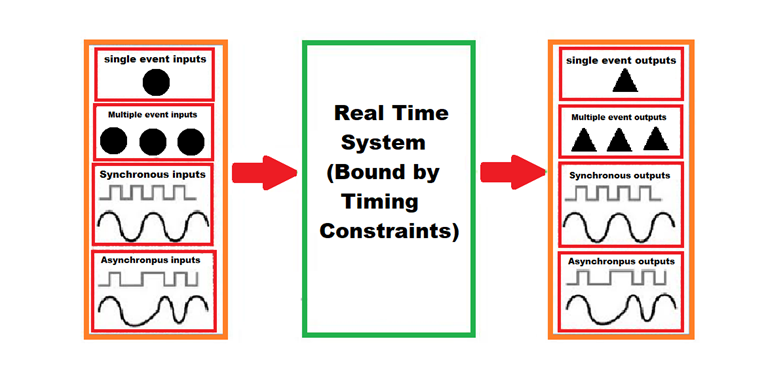
Figure 2. Real-Time Embedded Systems
Real-time embedded systems are used in a wide variety of industries and environments. For instance, in military systems, they enable rapid and precise reactions in defense operations, such as in missile tracking or battlefield communications. In medical monitoring devices, real-time systems are responsible for continuously tracking patient vitals and issuing alerts or interventions as needed. Similarly, in traffic control systems, they manage signal timings and monitor vehicle movements in real time to ensure smooth traffic flow and avoid collisions. Hard real-time systems are employed in contexts where missing a deadline could be catastrophic for example, in missile guidance systems, where even a millisecond delay can compromise mission success, or in defibrillators, where electrical shocks must be delivered at precisely the right moment to restore heart function. On the other hand, soft real-time systems allow for minor timing deviations, making them suitable for less critical scenarios such as video streaming, where small delays may cause buffering but not failure, or in microwave ovens, where a slight delay in cooking time is generally acceptable.
Stand-Alone Embedded Systems
Stand-alone embedded systems are self-contained computing devices designed to execute specific tasks independently, without requiring ongoing communication with a central host computer or network. Unlike embedded systems that operate as part of a larger system, stand-alone versions are built to function autonomously, managing their own inputs, processing, and outputs. They consist of a dedicated processor, memory, input/output interfaces, and application-specific software, all embedded within a compact form factor. Their design is often optimized for low power consumption, reliability, and efficient real-time performance. A key characteristic of stand-alone embedded systems is their ability to operate without external support after deployment. Once programmed and powered, they can carry out tasks repeatedly or in response to specific triggers, making them ideal for environments where network connectivity is limited or unnecessary. They are used in applications where reliability, autonomy, and compactness are priorities. This makes them valuable in scenarios that require consistent performance without manual oversight or external computing resources.
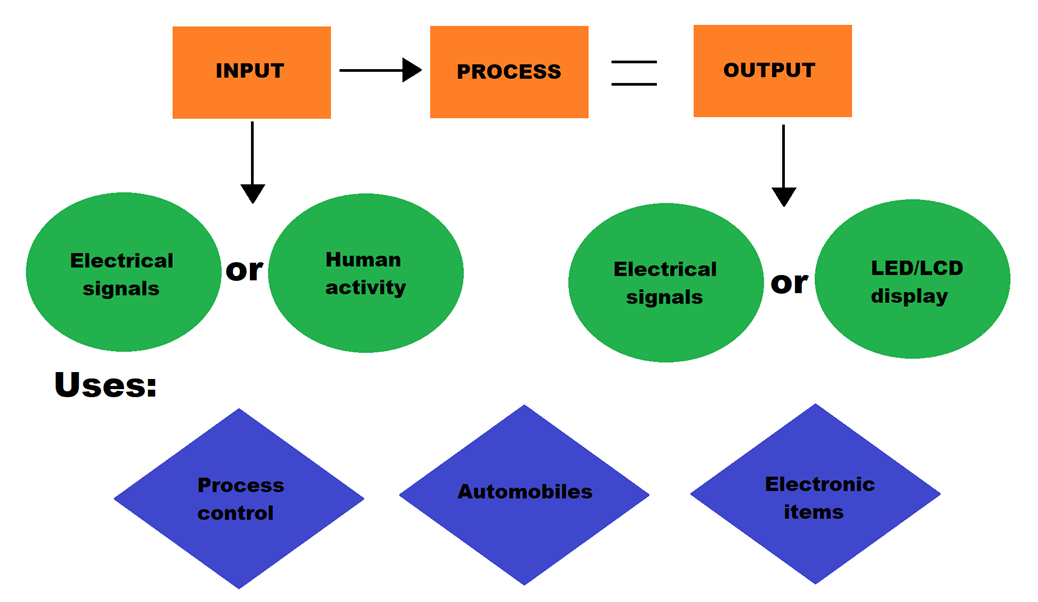
Figure 3. Stand-Alone Embedded Systems
Applications of stand-alone embedded systems are widespread across both consumer and industrial contexts. For instance, MP3 players are classic stand-alone devices that independently manage music playback. They integrate digital storage, decoding software, and audio hardware to play media files without needing a computer connection. Calculators, another well-known example, use embedded processors to perform arithmetic and advanced mathematical functions on demand in education, business, and engineering. Other common examples include microwave ovens and digital watches. A microwave oven’s embedded system handles input, timing, and power control to manage cooking functions without external assistance. Similarly, digital watches rely on precise internal oscillators and embedded software to keep time and provide features like alarms or timers, all within a fully self-sufficient unit. These examples shows how stand-alone embedded systems fulfill dedicated roles in everyday tools, seamlessly combining autonomy with efficiency.
Networked Embedded Systems
Networked embedded systems are specialized computing units interconnected through a variety of communication protocols, enabling them to share data and resources seamlessly across a network. These systems are designed to function over both wired and wireless configurations, depending on the specific needs and constraints of the application. A range of communication protocols supports this connectivity, including Local Area Networks (LAN), Wide Area Networks (WAN), Zigbee, Bluetooth, and the Controller Area Network (CAN) bus. Each of these protocols offers different advantages in terms of range, data rate, power consumption, and network topology, allowing for flexible and efficient system design.
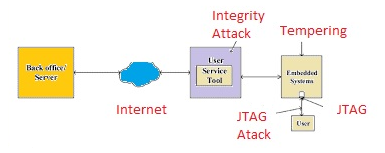
Figure 4. Networked Embedded Systems
The applications of networked embedded systems span multiple domains where data exchange and automation are needed. In the financial sector, for instance, they are embedded in Automated Teller Machines (ATMs), facilitating secure, transactions and remote maintenance. In energy infrastructure, smart grids leverage these systems to monitor and manage electricity distribution efficiently, responding dynamically to consumption patterns. Weather stations utilize networked embedded systems to collect, process, and transmit environmental data, supporting accurate forecasting and climate monitoring. In residential and commercial environments, home automation systems integrate such technology to enhance security, control lighting and temperature, and improve overall energy management. Through these diverse applications, networked embedded systems play a role in modern technology ecosystems, enabling intelligent, responsive, and connected environments.
Mobile Embedded Systems
Mobile embedded systems are distinguished by their compact size and portability, making them well-suited for integration into handheld or wearable devices. Designed to operate efficiently within the constraints of mobility, these systems are powered by batteries and incorporate energy-efficient hardware and software to extend battery life without compromising performance. Due to their physical and operational limitations, mobile embedded systems generally possess limited processing power and memory compared to their stationary counterparts. However, they are optimized to run specialized, lightweight software that ensures responsiveness and functionality while conserving resources.

Figure 5. Embedded Systems
These systems are found in a variety of electronics that prioritize convenience and mobility. Smartphones, for example, are sophisticated mobile embedded systems that offer a broad range of capabilities beyond voice communication, including internet browsing, photography, navigation, and app-based services. Fitness trackers are another example, utilizing embedded sensors and software to monitor health metrics such as heart rate, steps taken, and sleep quality, providing real-time insights into their physical activity. Similarly, portable gaming consoles rely on embedded systems to deliver immersive gaming experiences on the go, balancing performance with battery efficiency. Together, these examples highlight the versatility and growing importance of mobile embedded systems in enhancing modern lifestyles through portable, intelligent technology.
Embedded System Types by Microcontroller Performance
Small Scale Embedded Systems
Small scale embedded systems typically rely on 8-bit or 16-bit microcontrollers, such as the widely used 8051 series. These processors are selected for their simplicity, affordability, and low power requirements, making them well-suited for handling straightforward, predefined tasks. Due to their limited computational capabilities, these systems are ideal for applications where complex processing is unnecessary. Memory resources in small scale embedded systems are minimal, often just sufficient to store a compact program and handle small data sets. This limited memory capacity aligns with their simple functionality and reduces both cost and power consumption. As a result, these systems do not require extensive software support or large storage capacity. Power consumption is a key design consideration, as many small scale embedded systems are battery-operated. They are optimized for low energy usage to prolong battery life, which is important in portable or remote devices where frequent charging or maintenance is impractical. These systems are commonly found in devices such as electronic toys, digital thermometers, vending machines, and other appliances that perform specific, repetitive tasks. These applications require little to no user interaction and are expected to operate reliably over long periods with minimal intervention. Small scale embedded systems are entry-level solutions tailored for task-specific applications. Their defining characteristics include low cost, minimal complexity, and energy efficiency. While limited in capability compared to more advanced systems, they are highly effective and reliable within their intended scope of operation.
Medium Scale Embedded Systems
Medium scale embedded systems are powered by more capable processors, typically 16-bit to 32-bit microcontrollers or Digital Signal Processors (DSPs). These more advanced processors enable the system to handle larger volumes of data and perform computations at higher speeds than their small-scale counterparts. As a result, they are well-suited for applications that require greater processing power and efficiency. In terms of software, these systems often utilize higher-level programming languages such as C, C++, and occasionally Java. These languages support more complex and versatile software design, making it possible to implement sophisticated functionalities and user interfaces. The use of structured, object-oriented, or modular programming techniques also enhances maintainability and scalability in software development.
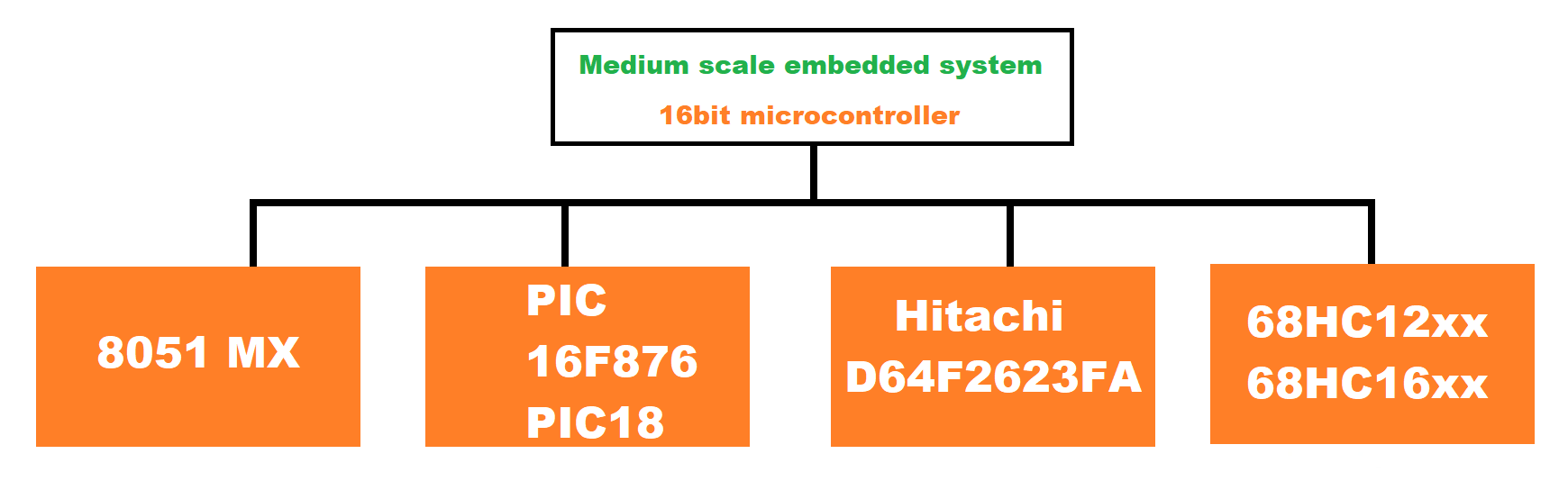
Figure 6. Example of Medium Scale Embedded Systems
Development tools for medium scale systems are more advanced and include Integrated Development Environments (IDEs), compilers, and debuggers. These tools enable more efficient and robust development workflows, offering features like code navigation, real-time error detection, and simulation for debugging and refining software in more intricate systems. The applications of medium scale embedded systems are widespread, particularly in devices that require a balance between performance and complexity. Common examples include Automated Teller Machines (ATMs), Global Positioning Systems (GPS), industrial control systems, and network routers. These devices demand more than simple control functions, relying on data processing, communication capabilities, and interaction. Medium scale embedded systems serve as a bridge between small, simple devices and large, complex embedded applications. They offer improved performance, moderate functional complexity, and enhanced software and connectivity support, making them ideal for a wide range of moderately demanding embedded solutions.
Sophisticated Embedded Systems
Sophisticated embedded systems represent the most advanced tier of embedded technology, utilizing high-performance 32-bit to 64-bit processors, often with multicore architectures. These powerful processors are designed to handle complex computations, data processing, and multitasking with high efficiency, enabling the systems to meet demanding performance requirements in different applications. To support such complexity, these systems often run on Real-Time Operating Systems (RTOS) or more comprehensive operating environments like embedded Linux. The choice of operating system depends on the specific application, especially when multitasking, real-time responsiveness, or advanced user interfaces are required. The presence of an operating system also facilitates easier development, scalability, and maintainability of sophisticated applications.

Figure 7. Example of Sophisticated Embedded Systems
The hardware architecture of sophisticated embedded systems is more complex than their small and medium-scale counterparts. These systems incorporate a wide range of interfaces for connectivity, including USB, Ethernet, and Wi-Fi, and often integrate multiple sensors and actuators. This hardware richness allows them to interact dynamically with their environment, collect and process vast amounts of data, and perform intricate control functions. Applications for these systems are found in high-stakes, mission-critical environments where reliability, precision, and speed are non-negotiable. Examples include satellites, avionics systems, advanced medical diagnostic equipment, and high-end industrial automation platforms. In these contexts, system failure can have severe consequences, making performance and dependability needed. Sophisticated embedded systems represent the pinnacle of embedded design. They are capable of executing highly complex and tasks, often under stringent regulatory and safety standards. These systems require robust software frameworks, advanced power management strategies, and attention to both hardware and software reliability, making them the most challenging yet powerful class of embedded systems.
Conclusion
Embedded systems are a big part of the devices we use every day, even if we don’t see them. They help things run smoothly, quickly, and reliably whether it’s a washing machine, a medical device, or a GPS. This guide showed how they work, what makes them different from normal computers, and the many forms they can take. No matter how simple or advanced, embedded systems are designed to do their job well with as little space, power, and cost as possible.
About us
ALLELCO LIMITED
Read more
Quick inquiry
Please send an inquiry, we will respond immediately.
Frequently Asked Questions [FAQ]
1. What are the three characteristics of embedded systems not found in general purpose systems?
An embedded system is designed to perform one dedicated function or a fixed set of related tasks. It often operates under real-time constraints, where timely responses are use for system performance. It usually runs with limited resources, including memory, processing power, and energy, unlike general-purpose systems which are built for flexibility and multitasking.
2. What are the classification of memory in embedded systems?
Memory in embedded systems is mainly classified into volatile and non-volatile memory. Volatile memory, such as RAM, is used for temporary data storage during program execution and loses its contents when power is off. Non-volatile memory, such as ROM and Flash, retains data even when the system is powered down and is used to store firmware or permanent code. Additionally, memory can also be grouped as program memory for code storage and data memory for storing variables and runtime data.
3. What are some of the key characteristics of an embedded OS?
An embedded operating system supports real-time processing, allowing it to respond to events within precise time limits. It has a small memory and storage footprint, making it suitable for systems with limited hardware resources. The OS is highly reliable and stable, often running continuously for long periods without failure. It supports device-level features and hardware-specific functions needed in embedded applications. It includes basic scheduling and task management features to control multiple processes efficiently within the system.
4. What are the programming languages classification of embedded systems?
Programming languages in embedded systems can be categorized into low-level and high-level languages. Low-level languages like Assembly provide direct hardware control but are difficult to maintain. C is a popular low-level language that offers both control and efficiency, making it widely used in embedded development. High-level languages like C++ allow for object-oriented design, especially in complex embedded applications. Languages like Python or Java are used in higher-level embedded platforms where performance demands are less critical. There are also domain-specific languages like VHDL or Verilog used in hardware-related embedded applications, especially in FPGA and ASIC designs.
5. What are the different types of ROM in embedded systems?
Mask ROM is programmed during manufacturing and cannot be changed afterward. PROM can be programmed once by the user but cannot be erased or reprogrammed. EPROM can be erased using ultraviolet light and reprogrammed, although the process is slow. EEPROM can be erased and rewritten electrically, even while the system is in use. Flash memory is a type of EEPROM that allows faster erasing and rewriting in blocks, making it the most commonly used ROM in modern embedded systems.
Learn How AD724JR Works in Your Projects
on March 31th
A Beginner's Guide to EPF10K30AQI240-3N
on March 28th
Popular Posts
-

Complex Instruction Set Computers: How They Changed Computing?
on April 18th 147749
-

USB-C Pinout and Features
on April 18th 111904
-
Using Xilinx Unified Simulation Primitives: A Comprehensive Guide to FPGA Design and Simulation
on April 18th 111349
-

Power Supply Voltages in Electronics: Meaning of VCC, VDD, VEE, VSS, and GND
on April 18th 83714
-

RJ45 Connector Guide: Pinout, Wiring, Cable Types, and Uses
on January 1th 79502
-

The Ultimate Guide to Wire Color Codes in Modern Electrical Systems
The way our electrical systems use colors isn’t just for looks. Each wire color now indicates a specific function, making it easier to identify and handle electrical components correctly during ins...on January 1th 66869
-

Quality (Q) Factor: Equations and Applications
The quality factor, or 'Q', is important when checking how well inductors and resonators work in electronic systems that use radio frequencies (RF). 'Q' measures how well a circuit minimizes energy...on January 1th 63004
-
Purge Valve Guide: Function, Symptoms, Testing, and Replacement for Optimal Engine Performance
The purge valve is a key part of a car’s system that helps keep the air clean by managing fuel vapors before they can escape into the atmosphere. This not only helps the environment by reducing pol...on January 1th 62944
-

Achieving Peak Performance with the Maximum Power Transfer Theorem
The Maximum Power Transfer Theorem explains how energy from a source, such as a battery or generator, flows to a connected load. It shows the exact condition where the load receives the most power....on January 1th 54076
-

A23 Battery Specifications and Compatibility
The A23 battery is a small, cylinder-shaped battery with high voltage. Also called 23A, 23AE, or MN21, it runs at 12 volts and much higher than AA or AAA batteries. Its special design make...on January 1th 52088
HOT Part Number
-

BD9B100MUV-E2
Rohm Semiconductor
IC REG BUCK ADJ 1A 16VQFN
UPD70F3539AF5A9-PN7-Q-A
Renesas Electronics America Inc
IC MICROCONTROLLER
18081A621JAT2A
KYOCERA AVX
CAP CER 620PF 100V NP0 1808
FDN340P
onsemi
MOSFET P-CH 20V 2A SUPERSOT3
70231-101
Amphenol ICC (FCI)
CONN RCPT BLADE PWR 8POS EDGE MT
MPSW42RLRAG
onsemi
TRANS NPN 300V 0.5A TO92
MC7824BT
onsemi
IC REG LINEAR 24V 1A TO220AB
AD8009ARZ-REEL
Analog Devices Inc.
IC OPAMP CFA 1 CIRCUIT 8SOIC
LT1815CS5#TRPBF
Analog Devices Inc.
IC OPAMP VFB 1 CIRCUIT TSOT23-5
DG411DYZ
Renesas Electronics America Inc
IC SWITCH SPST-NCX4 35OHM 16SOIC
VFT2060C-M3/4W
Vishay General Semiconductor - Diodes Division
DIODE SCHOTTKY 20A 60V ITO-220AB
TSX562AIYST
STMicroelectronics
IC CMOS 2 CIRCUIT 8MINISO
MR256D08BMA45
Everspin Technologies Inc.
IC RAM 256KBIT PARALLEL 48FBGA
VSC3312YYP-01
Microchip Technology
IC SWITCH 16X16 6.5GBPS 196FCBGA
XC68HC908GP20CFB
Motorola
TSG 8BIT20K FLASH
CSR8811A08-ICXR-R
Qualcomm
IC RF TXRX+MCU BLUETOOTH
MPSW05
onsemi
TRANS NPN 60V 0.5A TO92
1N4055R
Solid State Inc.
DIODE GEN PURP REV 900V 275A DO9 -

ASX342ATSC00XPED0-DP
onsemi
IMAGE SENSOR VGA 1/4 CIS SOC
0433.125NR
Littelfuse Inc.
FUSE BOARD MNT 125MA 125VAC/VDC
1SMA5941BT3G
onsemi
DIODE ZENER 47V 1.5W SMA
DCP010512BP-U/700
Texas Instruments
DC DC CONVERTER 12V 1W
1-1734344-1
TE Connectivity AMP Connectors
CONN D-SUB HD RCPT 15P R/A SLDR
KSD1621STF
onsemi
TRANS NPN 25V 2A SOT89-3
BQ24161RGET
Texas Instruments
IC BATT CHG LI-ION 1CELL 24VQFN
BTA26-600BW
STMicroelectronics
TRIAC ALTERNISTOR 600V 25A TOP3
NCP1239DD65R2G
onsemi
IC OFFLINE SWITCH FLYBACK 7SOIC
TMS320TCI6482BZTZA
Texas Instruments
TMS320 - DIGITAL SIGNAL PROCESSO
BQ20Z90DBTR-V150
Texas Instruments
IC GAS GAUGE LI-ION 30TSSOP
PCMB104T-1R0MT
Susumu
FIXED IND 1UH 18A 3.3 MOHM SMD
CY29942AXCT
Infineon Technologies
IC CLK BUFFER 1:18 200MHZ 32TQFP
CC0402KRX7R9BB561
YAGEO
CAP CER 560PF 50V X7R 0402
STPS20M60SG-TR
STMicroelectronics
DIODE SCHOTTKY 60V 20A D2PAK
AT25010N-10SC-2.7
Microchip Technology
IC EEPROM 1KBIT SPI 3MHZ 8SOIC
04023A1R0CAT4A
KYOCERA AVX
CAP CER 1PF 25V C0G/NP0 0402
ISL6327IRZ
Intersil
SWITCHING CONTROLLER, VOLTAGE-MO -

LQW18AN75NG0ZD
Murata Electronics
FIXED IND
DFA100BA160
SanRex Corporation
DIODE MODULE 1600V 100A
BAR46AFILM
STMicroelectronics
DIODE ARRAY SCHOTTKY 100V SOT23
MAX825SEUK
Analog Devices Inc./Maxim Integrated
IC SUPERVISOR MPU
MMST2222A-7-F
Diodes Incorporated
TRANS NPN 40V 0.6A SOT323
FODM8801AR2
onsemi
OPTOISO 3.75KV TRANS 4-MINI-FLAT
FJV1845FMTF
Fairchild Semiconductor
SMALL SIGNAL BIPOLAR TRANSISTOR,
EVK105RH5R1JW-F
Taiyo Yuden
CAP CER 5.1PF 16V R2H 0402
6651170-3
TE Connectivity AMP Connectors
CONN EDGE DUAL FMALE 4POS 0.508
KSZ8893FQLI-FX
Microchip Technology
IC SWITCH ETH 3PORT 128QFP
170M6340
Eaton - Bussmann Electrical Division
FUSE SQUARE 400A 1.3KVAC RECT
BCM20741A2KFB1G
Broadcom Limited
SINGLE-CHIP BLUETOOTH
MAX3443EASA+
Analog Devices Inc./Maxim Integrated
IC TRANSCEIVER HALF 1/1 8SOIC
GRM0335C1H9R3DA01D
Murata Electronics
CAP CER 9.3PF 50V C0G/NP0 0201
TNY175PN
Power Integrations
11.5 W (85-265 VAC) 15 W (230 VA
742700726
Würth Elektronik
FERRITE CORE 278 OHM SOLID 4MM
DM74S20N
onsemi
IC GATE NAND 2CH 4-INP 14DIP
P4SMA56CA-E3/61
Vishay General Semiconductor - Diodes Division
TVS DIODE 47.8VWM 77VC DO214AC