Understanding TIP120 Transistor
The TIP120 transistor is a powerful component widely used in electronics for switching and amplification tasks. This article will guide you through its features, uses, and how it works, while offering helpful details on how to use it in your own projects. Whether you’re controlling high-current devices or managing simple circuits, the TIP120 provides a reliable solution that can easily be integrated with microcontrollers like Arduino. Keep reading to explore everything you need to know about this versatile transistor, from its design to practical applications.Catalog
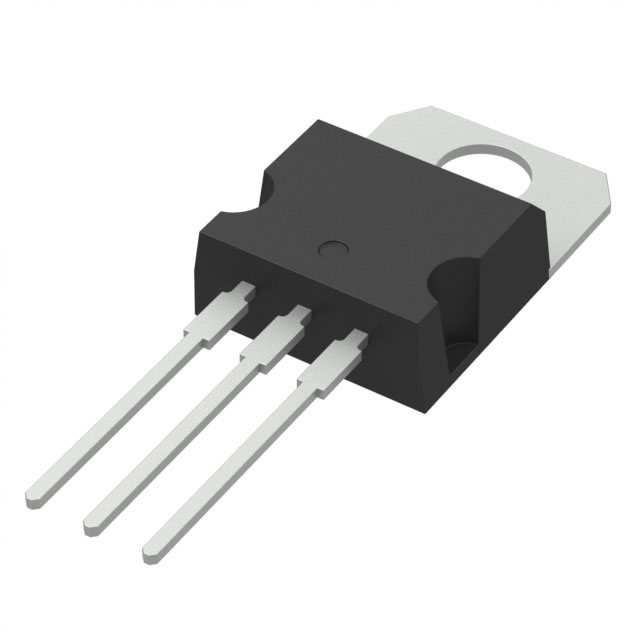
Introduction to the TIP120 Transistor
The TIP120 is an NPN transistor that includes a Darlington pair, giving it enhanced capabilities compared to a standard NPN transistor. With a high collector current rating of about 5A and a gain of approximately 1000, it is well-suited for handling larger loads. It can also withstand up to 60V across the collector-emitter, making it a good option for applications that require managing high voltages. If higher voltage handling is needed, other transistors in the same family could be explored as alternatives.

The internal layout of the TIP120 shows how the Darlington pair is formed, with two transistors working together. The emitter of the first transistor connects to the base of the second, and the collectors of both transistors are combined, resulting in increased current gain and better overall performance for controlling larger loads.
Pin Configuration of TIP120

CAD Models and Symbols for TIP120
TIP120 Symbol
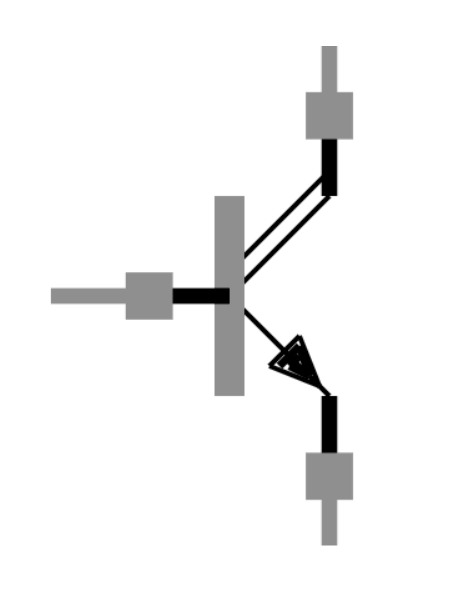
TIP120 Footprint

TIP120 3D Model

Applications of TIP120 Transistor
The TIP120 is a versatile choice for a variety of switching and amplification tasks. Whether you're driving high-power LEDs, controlling motors, or using it in relay circuits, this transistor can handle it. When it's used as a switch, it only needs a small base current (about 120mA) to control larger currents, up to 5A. This makes it ideal for applications where you need to manage high-power components but want to control them with lower-powered logic devices, like microcontrollers. The TIP120 is often found in circuits that demand strong amplification or need to manage higher currents reliably.
Ensuring Long-Term Use of TIP120 in Circuits
To make sure your TIP120 transistor works effectively for a long time, it's a good idea to stay within its limits. Keep the voltage below 60V and the current under 5A for safe operation. Proper pin configuration is essential, so always double-check before connecting it into a circuit. A heatsink is important, especially when dealing with higher loads, as it helps dissipate heat and prevents overheating. Using a resistor at the base will also ensure that the transistor functions efficiently. Keep it within recommended temperature ranges—between -65°C and +150°C—to avoid damaging the transistor.
Key Features of TIP120
NPN Darlington Transistor
The TIP120 is an NPN Darlington transistor, consisting of two transistors working together. This arrangement amplifies current, allowing it to manage larger loads effectively.
High DC Current Gain
With a typical current gain of 1000, the TIP120 is excellent for increasing small input currents to much larger output currents, making it suitable for applications that require amplification.
Continuous Collector Current
It can handle a continuous collector current of up to 5A, which means it can control higher power devices consistently without experiencing issues like overheating.
Collector-Emitter Voltage
The TIP120 can tolerate up to 60V between the collector and emitter, making it suitable for use in circuits that operate at higher voltage levels, offering flexibility in different designs.
Emitter-Base Voltage
With a low emitter-base voltage of 5V, it is easily controlled by lower-powered devices such as microcontrollers, which makes integration with logic circuits straightforward.
Base Current
The TIP120 requires a base current of around 120mA to fully turn on, making it efficient for switching applications where a small input can control a much larger output.
Peak Load Current
While the continuous current is 5A, the TIP120 can handle brief peaks of up to 8A, providing extra capacity for short-duration high current demands.
TO-220 Package
The TO-220 package is designed for components that need efficient heat dissipation. When used with a heatsink, this allows the TIP120 to operate under high-power conditions without overheating.
Common Uses of TIP120 Transistor
Switching High Current Loads
The TIP120 is commonly used to switch high current loads like motors or large arrays of LEDs. Its ability to handle up to 5A makes it a reliable component for managing these larger power devices.
Medium Power Switches
For applications needing medium power switches, the TIP120 is a good fit. It can handle moderate amounts of power, making it suitable for relays or other circuits requiring controlled switching.
High Amplification Circuits
Its high current gain makes the TIP120 a great choice for circuits that require significant amplification. It can take a small signal and boost it to a much larger output, ideal for audio or signal processing circuits.
Motor Speed Control
The TIP120 is frequently used in circuits designed to control motor speed by adjusting the current supplied to the motor, offering a way to fine-tune motor operation based on specific needs.
Inverter and Rectifier Circuits
In inverter and rectifier circuits, the TIP120 plays a role in switching between different voltage states, helping to manage the conversion of power between AC and DC formats.
Equivalent Components for TIP120
Equivalent components for the TIP120 include:
• TIP127 (PNP)
• 2N5306
• 2N6532
• 2SD1415
• 2SD2495
• BDT63
• BDW2
• KSB601
• KSD560
• MJF6388
Package Information for TIP120

Manufacturer Details for TIP120
The TIP120 is produced by On Semiconductor, a company focused on making energy-efficient products. They offer a range of solutions designed to reduce power consumption while maintaining high reliability. With a global presence, their manufacturing facilities, design centers, and sales offices are strategically located across key regions in North America, Europe, and Asia. Their goal is to offer products that help industries manage power more effectively, and the TIP120 is a part of their lineup aimed at simplifying power management in various applications.
Technical Specifications of TIP120
ON Semiconductor's TIP120 technical specifications, features, parameters, and related components with similar specifications.
| Type | Parameter |
| Mount | Through Hole |
| Mounting Type | Through Hole |
| Package / Case | TO-220-3 |
| Number of Pins | 3 |
| Supplier Device Package | TO-220-3 |
| Weight | 1.214g |
| Collector-Emitter Breakdown Voltage | 100V |
| Current - Collector (Ic) (Max) | 5A |
| Number of Elements | 1 |
| hFE Min | 1000 |
| Operating Temperature | 150°C TJ |
| Packaging | Bulk |
| Published | 2007 |
| Part Status | Obsolete |
| Moisture Sensitivity Level (MSL) | 1 (Unlimited) |
| Max Operating Temperature | 150°C |
| Min Operating Temperature | -65°C |
| Voltage - Rated DC | 60V |
| Max Power Dissipation | 65W |
| Current Rating | 5A |
| Base Part Number | TIP120 |
| Polarity | NPN |
| Element Configuration | Single |
| Power Dissipation | 65W |
| Power - Max | 2W |
| Transistor Type | NPN - Darlington |
| Collector Emitter Voltage (VCEO) | 60V |
| Max Collector Current | 200μA |
| DC Current Gain (hFE) (Min) @ Ic, Vce | 1000 @ 3A 3V |
| Current - Collector Cutoff (Max) | 500μA |
| Vce Saturation (Max) @ Ib, Ic | 4V @ 20mA, 5A |
| Voltage - Collector Emitter Breakdown (Max) | 60V |
| Max Breakdown Voltage | 60V |
| Collector Base Voltage (VCBO) | 60V |
| Emitter Base Voltage (VEBO) | 5V |
| Continuous Collector Current | 5A |
| Height | 9.2mm |
| Length | 9.9mm |
| Width | 4.5mm |
| REACH SVHC | No SVHC |
| Radiation Hardening | No |
| RoHS Status | RoHS Compliant |
| Lead Free | Lead Free |
Datasheet PDF
TIP120 Datasheet:
Frequently Asked Questions [FAQ]
1. Is the TIP120 an NPN or PNP transistor?
The TIP120 is an NPN Darlington Power Transistor. It can handle switching loads up to 60V, with a peak current of 8A and a continuous current of 5A.
2. How does the TIP120 transistor work?
The TIP120 contains a Darlington pair, where two transistors are connected. The first transistor amplifies the current, and the second one amplifies it even further. This setup provides a much higher current gain compared to using just a single transistor.
3. Can I use a BC547 instead of a TIP120?
While the BC547 is not an exact replacement for the TIP120, there are alternatives depending on your needs. The TIP122 is a good alternative for similar power levels. For lower power, you can use transistors like the 2N3904, BC547, BC538, 2N4401, or 2N2222A.
4. How do you use a TIP120 transistor with an Arduino?
The TIP120 is commonly used for switching high-current DC loads with an Arduino due to its availability and ease of use. The Arduino provides a small base current to the TIP120 to switch on a high-current load, such as a motor or lamp, connected to an external power supply. You’ll need to connect the transistor's base to one of the PWM pins on the Arduino, such as pin 3 on the Arduino UNO, but you can use other PWM pins based on your switching needs.
About us
ALLELCO LIMITED
Read more
Quick inquiry
Please send an inquiry, we will respond immediately.
Understanding AD9959 Features for Signal Processing
on October 24th
Everything You Need to Know About the 2N2219 Transistor
on October 24th
Popular Posts
-

Complex Instruction Set Computers: How They Changed Computing?
on April 18th 147749
-

USB-C Pinout and Features
on April 18th 111904
-
Using Xilinx Unified Simulation Primitives: A Comprehensive Guide to FPGA Design and Simulation
on April 18th 111349
-

Power Supply Voltages in Electronics: Meaning of VCC, VDD, VEE, VSS, and GND
on April 18th 83714
-

RJ45 Connector Guide: Pinout, Wiring, Cable Types, and Uses
on January 1th 79502
-

The Ultimate Guide to Wire Color Codes in Modern Electrical Systems
The way our electrical systems use colors isn’t just for looks. Each wire color now indicates a specific function, making it easier to identify and handle electrical components correctly during ins...on January 1th 66869
-

Quality (Q) Factor: Equations and Applications
The quality factor, or 'Q', is important when checking how well inductors and resonators work in electronic systems that use radio frequencies (RF). 'Q' measures how well a circuit minimizes energy...on January 1th 63004
-
Purge Valve Guide: Function, Symptoms, Testing, and Replacement for Optimal Engine Performance
The purge valve is a key part of a car’s system that helps keep the air clean by managing fuel vapors before they can escape into the atmosphere. This not only helps the environment by reducing pol...on January 1th 62943
-

Achieving Peak Performance with the Maximum Power Transfer Theorem
The Maximum Power Transfer Theorem explains how energy from a source, such as a battery or generator, flows to a connected load. It shows the exact condition where the load receives the most power....on January 1th 54076
-

A23 Battery Specifications and Compatibility
The A23 battery is a small, cylinder-shaped battery with high voltage. Also called 23A, 23AE, or MN21, it runs at 12 volts and much higher than AA or AAA batteries. Its special design make...on January 1th 52088
HOT Part Number
-

LTC4063EDD#TRPBF
Analog Devices Inc.
IC BATT CHG LI-ION 1CELL 10DFN
MIMX8MM1CVTKZAA
NXP USA Inc.
IC MPU I.MX 8M MINI SOLOLITE
APDS-9005-020
Broadcom Limited
SENSOR OPT 500NM AMB 6CHIPLED
06031A820KAT2A
KYOCERA AVX
CAP CER 82PF 100V C0G/NP0 0603
ICM-20602
TDK InvenSense
IMU ACCEL/GYRO/TEMP I2C/SPI LGA
170M4611
Eaton - Bussmann Electrical Division
FUSE SQUARE 350A 700VAC RECT
08053C105JAZ2A
KYOCERA AVX
CAP CER 1UF 25V X7R 0805
EP1C12F324C6N
Intel
IC FPGA 249 I/O 324FBGA
2SC4617T1G
onsemi
TRANS NPN 50V 0.1A SC75 SOT416
TL431AILPRAG
onsemi
IC VREF SHUNT ADJ 1% TO92-3
ADAU1787BCBZRL
Analog Devices Inc.
4 ADC, 2 DAC LOW POWER CODEC, AU
74VHC164MTCX
onsemi
IC SHIFT REGISTER 8BIT 14TSSOP
DAN222M3T5G
onsemi
DIODE ARRAY GP 80V 100MA SOT723
NR3015T470M
Taiyo Yuden
FIXED IND 47UH 300MA 1.608OHM SM
MM3Z18VC
onsemi
DIODE ZENER 18V 200MW SOD323F
1N4001W
Rectron USA
DIODE GEN 1A 50V SOD-123F
SMBJ90A
Taiwan Semiconductor Corporation
TVS DIODE 90VWM 146VC DO214AA
NTA1215MC
Murata Power Solutions Inc.
DC DC CONVERTER +/-15V 1W -
SDR1307-101KL
Bourns Inc.
FIXED IND 100UH 1.9A 180MOHM SMD
AOT5B65M1
Alpha & Omega Semiconductor Inc.
IGBT 650V 5A TO220
STP16CP596B1R
STMicroelectronics
IC LED DRIVER LINEAR 50MA 24DIP
AD7895ANZ-2
Analog Devices Inc.
IC ADC 12BIT SAR 8DIP
MURB1620CTT4G
onsemi
DIODE ARRAY GP 200V 8A D2PAK
STGIPS30C60T-H
STMicroelectronics
MOD IPM SLLIMM 30A 600V 25SDIP
IXDN604SIA
IXYS Integrated Circuits Division
IC GATE DRVR LOW-SIDE 8SOIC
CY7C63743-SC
Infineon Technologies
IC MCU 8K LS USB/PS-2 24-SOIC
U2745B-MFBG3
Microchip Technology
RF TX IC UHF 310-440MHZ 16LSSOP
DSPIC30F4013T-30I/PT
Microchip Technology
IC MCU 16BIT 48KB FLASH 44TQFP
ADF4106BRUZ-RL
Analog Devices Inc.
IC CLK/FREQ SYNTH 16TSSOP
EL8403IS
Elantec
IC OPAMP GP 4 CIRCUIT 14SOIC
8A35001B-001AJG
Renesas Electronics America Inc
NETWORK TIMING
GRM0337U1HR90BD01D
Murata Electronics
CAP CER 0.9PF 50V U2J 0201
LT1356CS#PBF
Analog Devices Inc.
IC VOLTAGE FEEDBACK 2 CIRC 16SO
AON7280
Alpha & Omega Semiconductor Inc.
MOSFET N-CH 80V 20A/50A 8DFN
IRLI540N
Infineon Technologies
MOSFET N-CH 100V 23A TO220AB FP
VI-J6Z-MZ
Vicor Corporation
VI-J6Z-MZ 300V 2V 5A -
LMH6722MA
Texas Instruments
IC AMP CURRENT FEEDBACK 14SOIC
HZM6.8Z4MWATL-E
Renesas Electronics America Inc
TVS DIODE 3.5VWM 3MPAK
LM4041DIM7-1.2
Texas Instruments
IC VREF SHUNT 1% SC70-5
RT6200GE
Richtek USA Inc.
IC REG BUCK ADJ 600MA SOT23-6
R5F21274SNFP#X6
Renesas Electronics America Inc
IC MCU 16BIT 16KB FLASH 32LQFP
1N5227B
onsemi
DIODE ZENER 3.6V 500MW DO35
12102C472JAT2A
KYOCERA AVX
CAP CER 4700PF 200V X7R 1210
PZTA64
Fairchild Semiconductor
SMALL SIGNAL BIPOLAR TRANSISTOR,
XC1765ELSO8C
AMD
IC PROM SER C-TEMP 3.3V 8-SOIC
XR88C92CJ-F
MaxLinear, Inc.
IC UART FIFO DUAL 44PLCC
RT24C2X202
Bourns, Inc.
TRIMMER 2K OHM 0.75W PC PIN SIDE
DLW31SN900SQ2L
Murata Electronics
CMC 370MA 2LN 90 OHM SMD
LMK432F476ZM-T
Taiyo Yuden
CAP CER 47UF 10V Y5V 1812
MOC207R1VM
onsemi
OPTOISO 2.5KV TRANS W/BASE 8SOIC
GRM0335C1E390JD01D
Murata Electronics
CAP CER 39PF 25V C0G/NP0 0201
SE10PG-M3/84A
Vishay General Semiconductor - Diodes Division
DIODE GEN PURP 400V 1A DO220AA
RABS15M REG
Taiwan Semiconductor Corporation
BRIDGE RECT 1P 1KV 1.5A ABS-L
PI74LPT16245AEX
Diodes Incorporated
IC TXRX NON-INVERT 3.6V 48TSSOP