What Is Photonics? A Complete Guide to Light-Based Technology
Photonics is all about using light to send, control, and detect information quickly and efficiently. In this article, you will learn what photonics is, the main components used in photonic systems, and how these systems work from start to finish. You will also explore different types of photonics technologies, such as fiber optics, integrated photonics, lasers, biophotonics, and quantum photonics. In addition, you will see where photonics is used and what makes it both powerful and challenging.Catalog
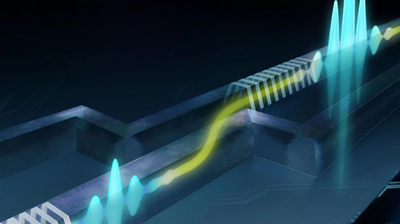
Figure 1. Photonic Waveguide Signal
What is Photonics?
Photonics is the science and technology of generating, controlling, and detecting light (photons). Photons are elementary particles that carry light energy and move at the speed of light, enabling fast and efficient information transfer. Unlike electrons, photons do not have mass or electric charge, which allows them to travel with minimal resistance. Photonics focuses on manipulating light for signal transmission, sensing, and energy applications. It plays a key role in modern technology by enabling high-speed communication and precise optical control. As digital systems demand faster performance, photonics continues to grow as an important field in advanced engineering and science.
Components in Photonics Systems
• Light Source (Laser/LED)
Light sources generate optical signals used in photonics systems. They convert electrical energy into light through processes like stimulated emission or electroluminescence. Lasers produce highly coherent and focused light, while LEDs emit broader and less directional light. These sources are good for initiating optical signals in communication and sensing systems.
• Optical Waveguides (Fibers/On-chip Guides)
Optical waveguides guide light from one point to another with minimal loss. They confine light within a structure using total internal reflection or refractive index contrast. Examples include optical fibers and integrated waveguides on chips. These components ensure efficient signal transmission over distances.
• Optical Modulators
Optical modulators control properties of light such as intensity, phase, or frequency. They encode information onto a light signal by modifying its characteristics. This is typically done using electrical signals to influence optical behavior. Modulators are used for transmitting data in optical communication systems.
• Photodetectors (Photodiodes)
Photodetectors convert incoming light into electrical signals. They operate based on the photoelectric effect, where photons generate charge carriers in a material. This allows optical signals to be interpreted by electronic systems. Photodiodes are widely used for signal reception and measurement.
• Optical Couplers and Splitters
Optical couplers divide or combine light signals within a system. They distribute optical power between multiple paths or merge signals into one. These components are important for routing and managing optical signals. They are commonly used in complex photonic networks.
• Optical Filters
Optical filters selectively allow certain wavelengths of light to pass while blocking others. They help refine and control signal quality in photonic systems. Filters are used to remove noise or separate channels in wavelength-based systems. This improves signal clarity and system performance.
How Photonics Works?
Photonics systems operate by generating light, guiding it through a controlled path, modifying its properties, and finally detecting it. The process begins with a light source that produces photons, which are then directed into a transmission medium such as a waveguide or optical fiber. As light travels, it maintains high speed and low energy loss compared to electrical signals. This makes photonics highly efficient for transferring information.
During transmission, the light signal can be modulated to carry data by altering its intensity, phase, or wavelength. The modified signal travels through the system until it reaches a detector. At the receiving end, the photodetector converts the optical signal back into an electrical form for processing. This complete flow, from generation to detection defines how photonics systems enable fast and reliable signal handling.
Types of Photonics Technologies
Fiber Optic Photonics
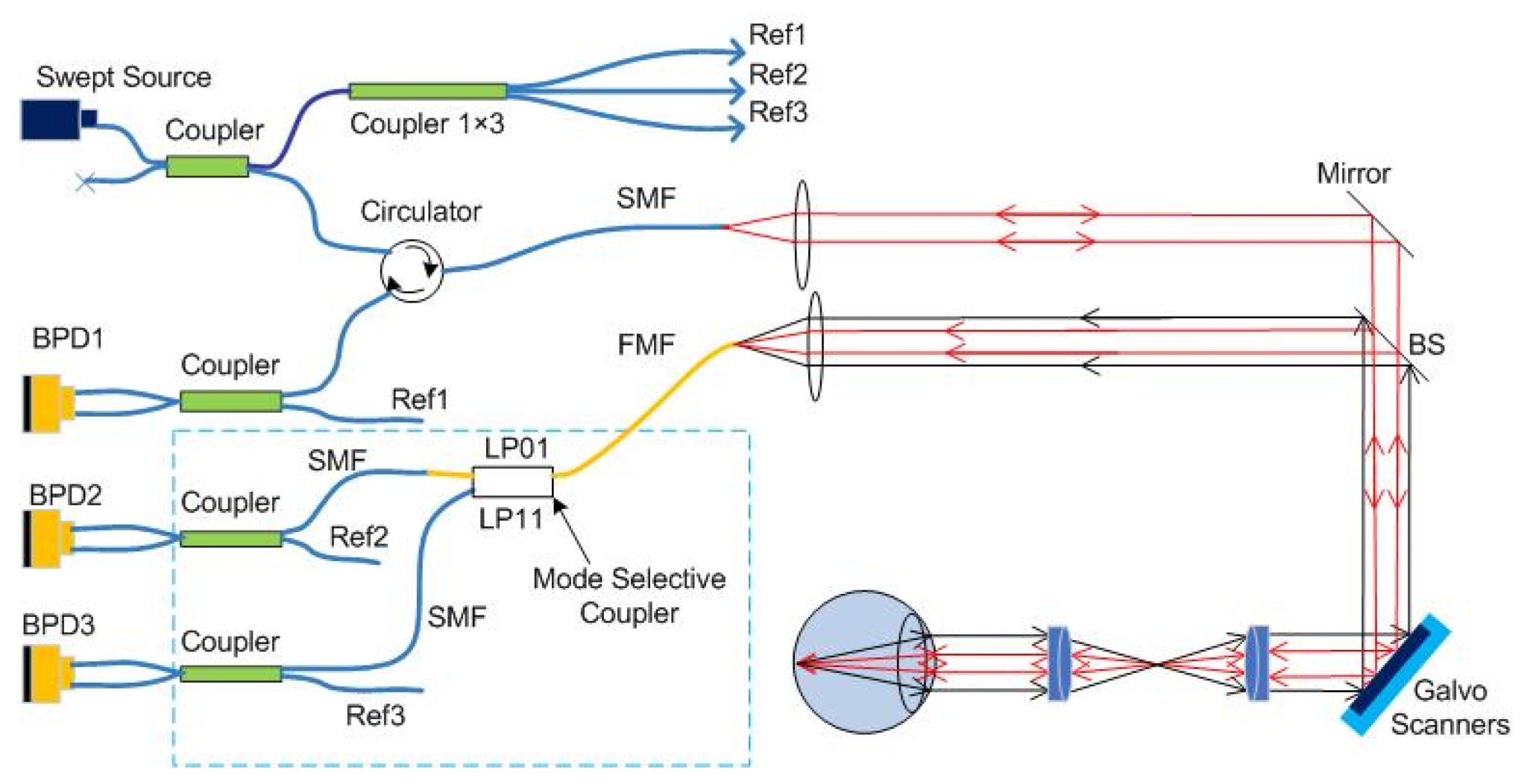
Figure 2. Fiber Optic Photonics System
Fiber optic photonics refers to systems that use optical fibers to transmit light signals over distances. These fibers are made of glass or plastic and guide light through total internal reflection within a core structure. The design allows light to travel with very low attenuation and minimal signal distortion. As illustrated in structured optical paths, signals can be split, combined, or redirected using components like couplers and circulators within fiber systems. Fiber optic photonics supports precise light routing through single-mode or multi-mode configurations. It also enables stable signal propagation even across long distances due to controlled refractive index differences. This type of photonics is great for efficient and reliable optical transmission systems.
Integrated Photonics (Photonic Integrated Circuits)
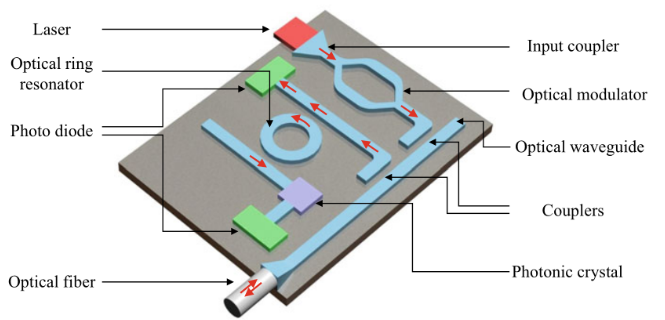
Figure 3. Photonic Integrated Circuit
Integrated photonics refers to the integration of multiple optical components onto a single compact chip. These components, such as waveguides, modulators, and detectors, are combined to perform complex optical functions within a small area. The chip-based structure allows precise control of light paths using miniaturized optical circuits. As seen in compact layouts, light can be routed through resonators, couplers, and waveguides within a single platform. This integration improves system stability and reduces physical size compared to discrete setups. It also enables scalable designs suitable for advanced optical processing. Integrated photonics plays a key role in modern miniaturized optical systems.
Laser Photonics
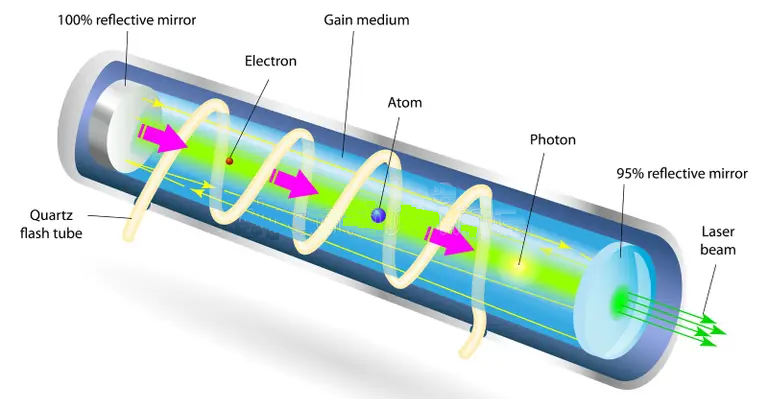
Figure 4. Laser Photonics System
Laser photonics focuses on systems that generate and control coherent light using laser sources. A laser produces light through stimulated emission within a gain medium enclosed by reflective mirrors. This structure amplifies photons and creates a highly directional and monochromatic beam. The resonant cavity ensures that light waves remain in phase, resulting in coherence. As visualized in structured laser setups, energy input excites atoms to release photons that reinforce each other. Laser photonics enables precise control over wavelength and beam quality. This type of photonics is important for applications requiring stable and high-intensity light sources.
Biophotonics
Biophotonics is the use of light-based technologies to study and analyze biological materials. It involves interactions between photons and living tissues, cells, or biomolecules. Light can be used to observe structural and functional characteristics without direct contact. Techniques in this field rely on optical properties such as absorption, scattering, and fluorescence. Biophotonics enables high-resolution imaging and non-invasive analysis. It supports detailed observation at microscopic and molecular levels. This field bridges photonics and life sciences for advanced biological investigation.
Quantum Photonics
Quantum photonics focuses on the behavior and control of individual photons at the quantum level. It studies how photons can be used as carriers of quantum information. Unlike classical light systems, it deals with properties such as superposition and entanglement in a simplified context. Photons are ideal for quantum systems because they interact weakly with the environment. This allows them to preserve quantum states over longer distances. Quantum photonics enables new approaches to secure communication and advanced computation. It represents a growing area of research in next-generation optical technologies.
Applications of Photonics
1. Telecommunications
Photonics enables high-speed data transmission using light signals. Optical communication systems rely on photonics to handle large bandwidth requirements. This allows faster internet and data exchange over long distances. It is important for modern global communication infrastructure.
2. Medical Imaging and Diagnostics
Photonics is used to capture detailed images of biological tissues. Optical techniques provide non-invasive and high-resolution analysis. This helps in early detection and accurate monitoring of conditions. It improves diagnostic accuracy and patient safety.
3. Manufacturing and Material Processing
Photonics supports precise cutting, shaping, and surface treatment processes. Light-based tools offer high accuracy and minimal material waste. These systems enable consistent and controlled production quality. They are widely used in advanced manufacturing environments.
4. Sensing and Measurement
Photonic sensors detect changes in light properties to measure physical conditions. These include temperature, pressure, and chemical composition. Optical sensing provides high sensitivity and fast response times. It is important for industrial monitoring and environmental analysis.
5. Data Centers and Computing
Photonics improves data transfer speeds within computing systems. Optical interconnects reduce latency and power consumption. This enhances overall system performance in high-demand environments. It supports the growth of large-scale data processing systems.
6. Defense and Security Systems
Photonics is used in systems requiring precise detection and monitoring. Optical technologies enable accurate distance measurement and tracking. These systems improve reliability in different environments. They are great for advanced security and surveillance solutions.
Advantages and Limitations of Photonics
Advantages of Photonics
• High-speed data transmission using light signals
• Low energy loss compared to electrical systems
• Immunity to electromagnetic interference
• High bandwidth capacity for large data transfer
• Precise signal control and accuracy
• Compact integration in modern optical devices
Limitations of Photonics
• Higher initial cost of optical components
• Complex alignment and system design
• Sensitivity to physical damage in some materials
• Limited efficiency in certain conversion processes
• Requires specialized manufacturing techniques
• Integration with electronic systems can be challenging
Photonics vs Electronics
|
Aspect |
Photonics |
Electronics |
|
Signal Carrier |
Photons (no
charge, no mass) |
Electrons
(charged particles) |
|
Propagation
Speed |
~3 × 10⁸ m/s (in
vacuum), ~2 × 10⁸ m/s (in fiber) |
~10⁵–10⁶ m/s
drift velocity in conductors |
|
Bandwidth
Capacity |
Up to >100
Tbps per fiber (WDM systems) |
Typically up to
10–100 Gbps per channel |
|
Frequency Range |
~10¹²–10¹⁵ Hz
(infrared to visible light) |
Up to ~10¹¹ Hz
(microwave range) |
|
Energy Loss
(Transmission) |
~0.2 dB/km
(optical fiber) |
Significant
resistive loss over distance |
|
Electromagnetic
Interference |
Fully immune to
EMI |
Affected by EMI
and crosstalk |
|
Heat Dissipation |
Very low during
transmission |
High due to
resistive heating (I²R losses) |
|
Transmission
Distance |
>100 km
without amplification (fiber) |
Typically <1–2
m for high-speed signals without repeaters |
|
Data Density |
Very high via
wavelength multiplexing (100+ channels) |
Limited by
conductor and frequency constraints |
|
Switching Speed |
Femtoseconds to
picoseconds (optical switching) |
Nanoseconds
(electronic switching) |
|
Power Efficiency
(Transmission) |
Lower power per
bit over long distances |
Higher power
consumption per bit |
|
Signal
Degradation |
Minimal over
long distances |
Significant
attenuation and noise buildup |
|
Integration
Density |
Moderate (still
developing PIC scaling) |
Extremely high
(billions of transistors per chip) |
|
Manufacturing
Maturity |
Emerging and
specialized processes |
Highly mature
CMOS fabrication |
|
Typical Use
Focus |
High-speed data
transfer, optical links |
Processing,
logic, and control systems |
Conclusion
Photonics enables high-speed, low-loss signal transmission by using light instead of electrical currents, making it important for modern communication and advanced technologies. Its systems rely on core components such as light sources, waveguides, modulators, and photodetectors working together to process optical signals efficiently. Various photonics technologies support applications in telecommunications, healthcare, manufacturing, sensing, and computing. Despite challenges like cost and complexity, its performance benefits and growing capabilities make photonics a key driver of future technological innovation.
About us
ALLELCO LIMITED
Read more
Quick inquiry
Please send an inquiry, we will respond immediately.
Frequently Asked Questions [FAQ]
1. Why is photonics faster than electronics?
Photonics uses light, which travels faster and experiences less resistance than electrons in wires. This allows higher data speeds and lower signal loss over long distances.
2. What materials are commonly used in photonics?
Common materials include silicon, glass, and III-V semiconductors like gallium arsenide. These materials are chosen for their ability to guide, generate, or detect light efficiently.
3. What is wavelength in photonics?
Wavelength refers to the distance between peaks of a light wave and determines its color and energy. It is important for controlling how light behaves in photonic systems.
4. How does photonics improve internet speed?
Photonics enables data transmission through optical fibers, which can carry more data at higher speeds than electrical cables. This results in faster and more reliable internet connections.
5. What is attenuation in photonics?
Attenuation is the gradual loss of signal strength as light travels through a medium. Minimizing attenuation is important for efficient long-distance communication.
What Is MEMS and Why It Matters in Modern Electronics
on April 5th
What Is a Flexible PCB (Flex PCB) and Why It Matters
on April 3th
Popular Posts
-

Complex Instruction Set Computers: How They Changed Computing?
on April 17th 147712
-

USB-C Pinout and Features
on April 17th 111712
-
Using Xilinx Unified Simulation Primitives: A Comprehensive Guide to FPGA Design and Simulation
on April 17th 111321
-

Power Supply Voltages in Electronics: Meaning of VCC, VDD, VEE, VSS, and GND
on April 17th 83604
-

RJ45 Connector Guide: Pinout, Wiring, Cable Types, and Uses
on January 1th 79254
-

The Ultimate Guide to Wire Color Codes in Modern Electrical Systems
The way our electrical systems use colors isn’t just for looks. Each wire color now indicates a specific function, making it easier to identify and handle electrical components correctly during ins...on January 1th 66771
-

Quality (Q) Factor: Equations and Applications
The quality factor, or 'Q', is important when checking how well inductors and resonators work in electronic systems that use radio frequencies (RF). 'Q' measures how well a circuit minimizes energy...on January 1th 62940
-
Purge Valve Guide: Function, Symptoms, Testing, and Replacement for Optimal Engine Performance
The purge valve is a key part of a car’s system that helps keep the air clean by managing fuel vapors before they can escape into the atmosphere. This not only helps the environment by reducing pol...on January 1th 62819
-

Achieving Peak Performance with the Maximum Power Transfer Theorem
The Maximum Power Transfer Theorem explains how energy from a source, such as a battery or generator, flows to a connected load. It shows the exact condition where the load receives the most power....on January 1th 54027
-

A23 Battery Specifications and Compatibility
The A23 battery is a small, cylinder-shaped battery with high voltage. Also called 23A, 23AE, or MN21, it runs at 12 volts and much higher than AA or AAA batteries. Its special design make...on January 1th 51976
HOT Part Number
-
AD9831AST
Analog Devices Inc.
IC DDS 10BIT 25MHZ CMOS 48-LQFP
C2012X5R0J225M085AA
TDK Corporation
CAP CER 2.2UF 6.3V X5R 0805
STP5NK80Z
STMicroelectronics
MOSFET N-CH 800V 4.3A TO220AB
MMZ09332BT1
NXP USA Inc.
IC RF AMP LTE 130MHZ-1GHZ 12QFN
CAT93C46RLI-G
Catalyst Semiconductor Inc.
IC EEPROM 1KBIT MICROWIRE 8DIP
ISL28130FHZ-T7
Renesas Electronics America Inc
IC OPAMP GP 1 CIRCUIT SOT23-5
EL3032
Everlight Electronics Co Ltd
OPTOISOLATOR 5KV TRIAC 6DIP
PTH05T210WAS
Texas Instruments
DC DC CONVERTER 0.7-3.6V
RS2A-13-F
Diodes Incorporated
DIODE GEN PURP 50V 1.5A SMB
GRM319R71H472KA01D
Murata Electronics
CAP CER 4700PF 50V X7R 1206
SN74F32N
Texas Instruments
IC GATE OR 4CH 2-INP 14DIP
GRM1555C1H9R7CZ01D
Murata Electronics
CAP CER 9.7PF 50V C0G/NP0 0402
04025A1R0CAT2A
KYOCERA AVX
CAP CER 1PF 50V C0G/NP0 0402
VND600SPTR-E
STMicroelectronics
IC PWR DRIVER N-CHAN 1:1 PWRSO10
CCM-2412DF
TDK-Lambda Americas Inc
DC DC CONVERTER +/-12V 3W
C3216X7R1C105K/0.85
TDK Corporation
CAP CER 1UF 16V X7R 1206
ISPPAC-CLK5320S-01TN64C
Lattice Semiconductor Corporation
IC CLOCK GENERATOR 64TQFP
AT24C16N-10SC
Microchip Technology
IC EEPROM 16KBIT I2C 8SOIC -

MPC565CZP40
NXP USA Inc.
IC MCU 32BIT 1MB FLASH 388PBGA
M24C08-WDW6TP
STMicroelectronics
IC EEPROM 8KBIT I2C 8TSSOP
SMCJ85A
Littelfuse Inc.
TVS DIODE 85VWM 137VC DO214AB
RN1971FE(TE85L,F)
Toshiba Semiconductor and Storage
TRANS 2NPN PREBIAS 0.1W ES6
ONET4201PARGTRG4
Texas Instruments
IC LIMITING 1 CIRCUIT 16VQFN
CM3312R111R-10
Laird-Signal Integrity Products
CMC 5A 2LN 110 OHM SMD
TL1431AIZ-AP
STMicroelectronics
IC VREF SHUNT ADJ 0.25% TO92-3
BD2248G-GTR
Rohm Semiconductor
IC PWR SWITCH N-CHAN 1:1 5SSOP
ADG604YRUZ
Analog Devices Inc.
IC SWITCH SP4TX1 115OHM 14TSSOP
LTC2246IUH#PBF
Analog Devices Inc.
IC ADC 14BIT PIPELINED 32QFN
PD3S120L-7
Diodes Incorporated
DIODE SCHOTTKY 20V 1A PWRDI323
TMDS171IRGZT
Texas Instruments
IC INTERFACE SPECIALIZED 48VQFN
C228B3
Solid State Inc.
ISOLATED 35 AMP SCR T0-48
FIAM2T23
Vicor Corporation
FIAM "T" 48 20A LP THRU
MCZ33993EWR2
NXP USA Inc.
IC INTERFACE SPECIALIZED 32SOIC
B0530WSQ-13-F
Diodes Incorporated
DIODE SCHOTTKY 30V 500MA SOD323
SPW35N60C3
Infineon Technologies
SPW35N60 - 600V COOLMOS N-CHANNE
MW7IC2220NBR1
Freescale Semiconductor
IC AMP CDMA 2.11-2.17GHZ TO272WB -
TMP303ADRLR
Texas Instruments
THERMOSTAT PROG ACT HI SOT563-6
ADL5544ARKZ-R7
Analog Devices Inc.
IC RF AMP GPS 30MHZ-6GHZ SOT89-3
DAC08EQ
Analog Devices Inc.
IC DAC 8BIT A-OUT 16CDIP
GAL16V8D-25LJI
Lattice Semiconductor Corporation
IC CPLD 8MC 25NS 20PLCC
LM3410YQMF
Texas Instruments
LED DRIVER, 5-SEGMENT, PDSO5
LM2575-12WU
Microchip Technology
IC REG BUCK 12V 1A TO263-5
EP20K60EQC208-3
Intel
IC FPGA 148 I/O 208QFP
UPSD3434EB40U6
STMicroelectronics
IC MCU 8BIT 288KB FLASH 80LQFP
C3225X7T2J104M160AE
TDK Corporation
CAP CER 0.1UF 630V X7T 1210
SI6463BDQ-T1-E3
Vishay Siliconix
MOSFET P-CH 20V 6.2A 8-TSSOP
ISL9538CHRTZ-T
Renesas Electronics America Inc
IC BATT CHG LI-ION 2-4CEL 32TQFN
MAX1875EEG+
Analog Devices Inc./Maxim Integrated
IC REG CTRLR BUCK 24QSOP
MMDTA06-7
Diodes Incorporated
TRANS 2NPN 80V 0.5A SOT26
VI-BW2-EV
Vicor Corporation
DC DC CONVERTER 15V 150W
CRCW251247R0FKEG
Vishay Dale
RES SMD 47 OHM 1% 1W 2512
1SMB5915B-13
Diodes Incorporated
DIODE ZENER 3.9V 550MW SMB
0402ZD223KAT2A
KYOCERA AVX
CAP CER 0.022UF 10V X5R 0402
IRFR4620PBF
International Rectifier
PFET, 24A I(D), 200V, 0.078OHM,