What Is a Fixed Resistor and How It Works in Circuits
You’ll notice fixed resistors everywhere once you start looking at electronic circuits. They quietly control how current and voltage behave so other parts can work safely and smoothly. In this guide, you’ll learn what a fixed resistor is, how it works, and why it’s used so often. You’ll also see the common types, symbols, and real circuit applications, along with simple tips for choosing the right one. By the end, you’ll have a clear picture of how fixed resistors fit into everyday electronics.Catalog
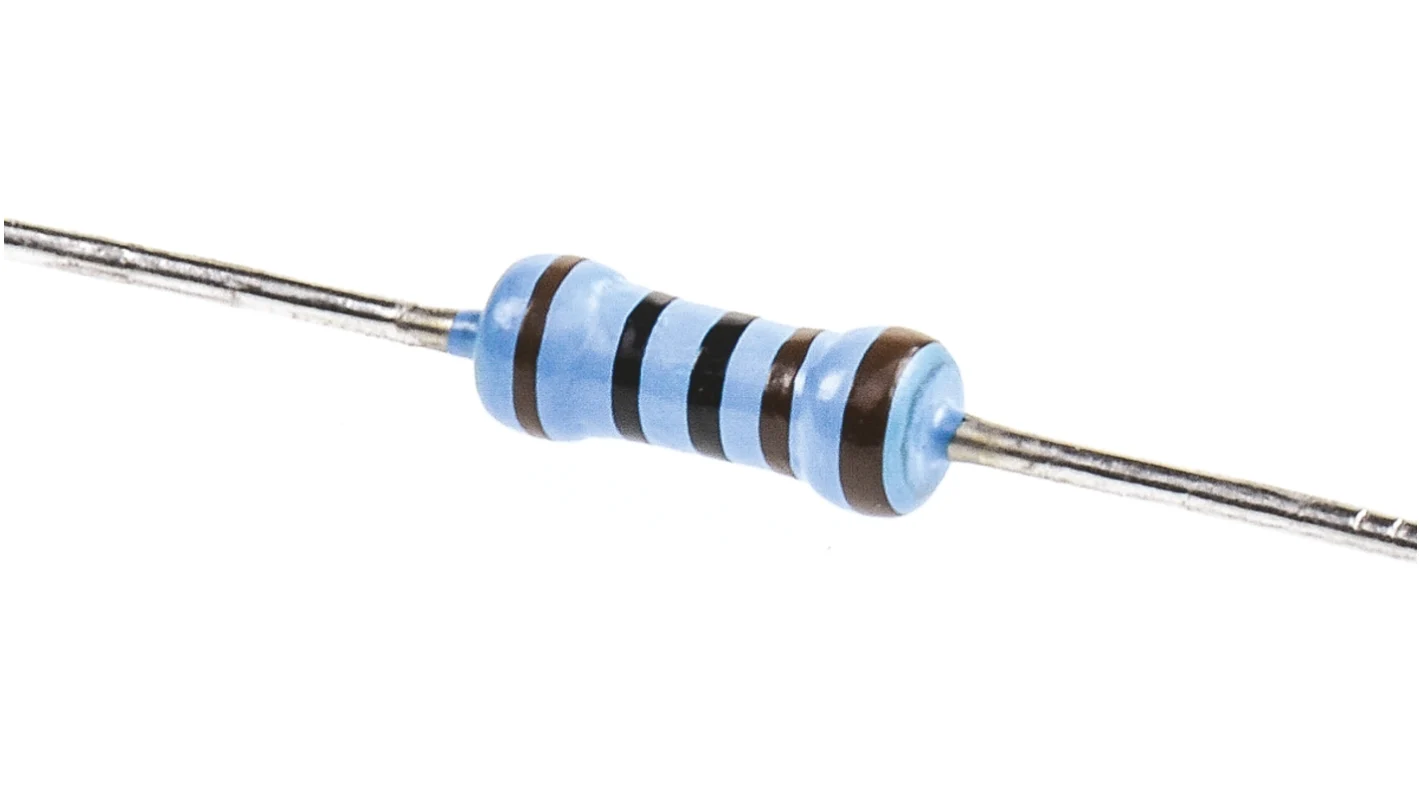
Figure 1. Fixed Resistor Component
What Is a Fixed Resistor
A fixed resistor is an electronic component that provides a constant, non-adjustable resistance value. Once manufactured, this resistance remains unchanged during normal operation and cannot be altered. The value, specified in ohms, is chosen to meet the electrical needs of a circuit.
What defines a fixed resistor is its stable and unchanging resistance, which allows it to perform a specific electrical role consistently over time. Because the resistance does not vary, the circuit’s behavior remains predictable and steady during operation.
Unlike adjustable resistors, a fixed resistor maintains the same resistance throughout its service life. This straightforward and dependable behavior makes fixed resistors a fundamental part of electronic circuits wherever a permanent resistance value is required.
How a Fixed Resistor Works
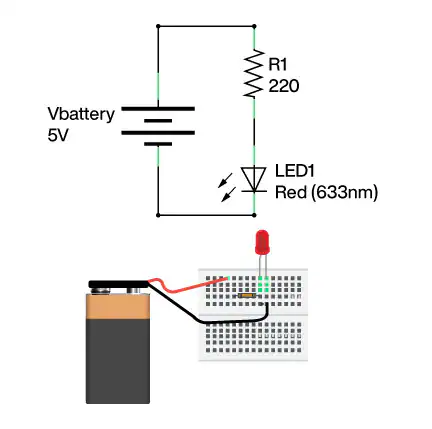
Figure 2. Fixed Resistor in a Simple Circuit
A fixed resistor works by opposing the flow of electric current in a circuit. When a voltage source, such as a battery, is connected, electric current naturally tries to flow through the circuit. The resistor slows this flow by providing resistance, which keeps the current at a safe and controlled level.
As current passes through the resistor, part of the electrical energy is used up inside the resistor, which results in a voltage drop across it. This means the voltage measured after the resistor is lower than the voltage before it. You can think of the resistor as creating an intentional reduction in voltage so that other components receive only what they can safely handle.
This behavior is especially important in simple circuits, such as those using LEDs. Without a resistor, too much current would flow, which could quickly damage the LED. By placing a fixed resistor in series, the current is limited, and the LED operates normally. In this way, the resistor controls both how much current flows and how voltage is shared within the circuit, ensuring stable and reliable operation.
Types of Fixed Resistors
Carbon Film Resistors
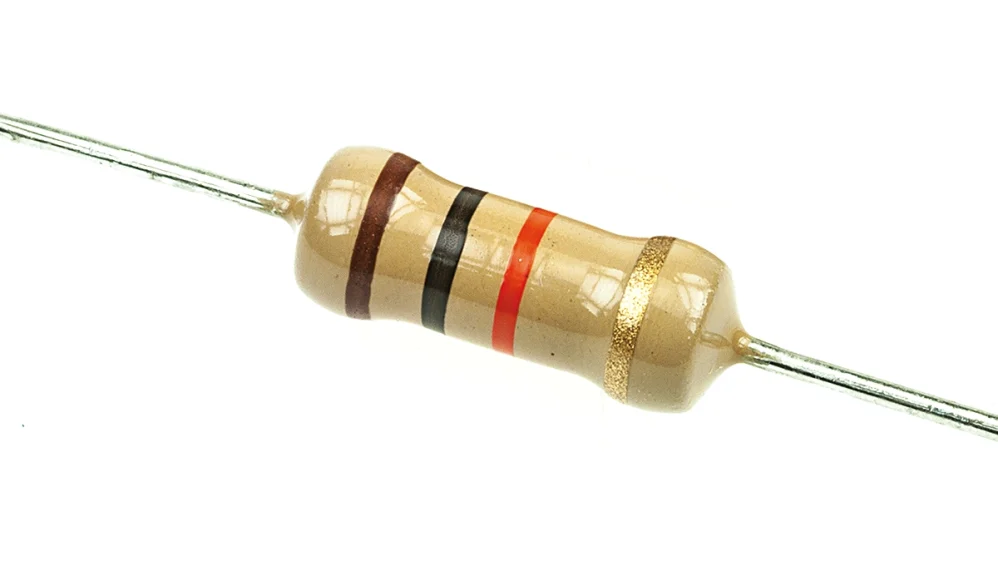
Figure 3. Carbon Film Resistor
Carbon film resistors are made by depositing a thin layer of carbon onto a ceramic base, with the resistance value set by trimming the carbon layer in a controlled pattern. This manufacturing process is simple and economical, which keeps production costs low.
In practical applications, carbon film resistors provide moderate accuracy and stability, making them suitable for general-purpose circuits. They are commonly used in basic electronic devices and learning projects where high precision is not required. Their affordability makes them a practical choice when cost is a primary concern.
Metal Film Resistors
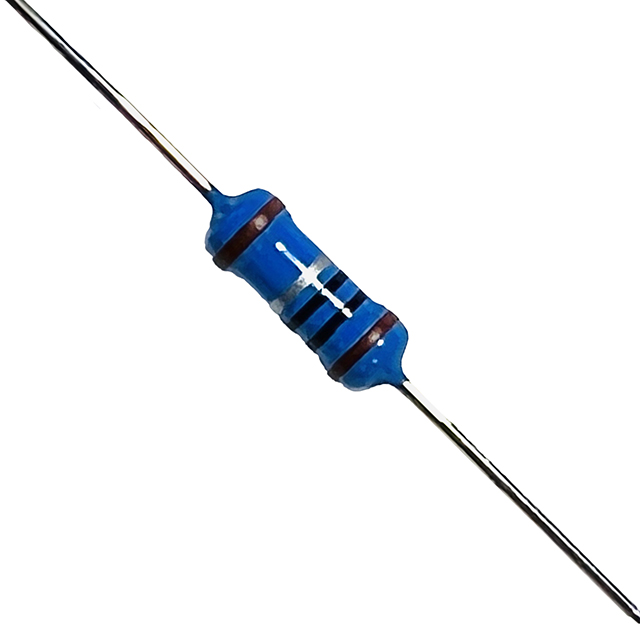
Figure 4. Metal Film Resistor
Metal film resistors use a thin metal layer applied to a ceramic core to form the resistive path. The resistance value is adjusted during manufacturing to achieve a precise and consistent result.
Compared to carbon film resistors, metal film resistors offer higher accuracy and better long-term stability. Their resistance changes less with temperature and aging, which makes them suitable for circuits that depend on consistent electrical behavior. These resistors are often used in measurement and signal-related applications where reliable performance is required.
Wirewound Resistors
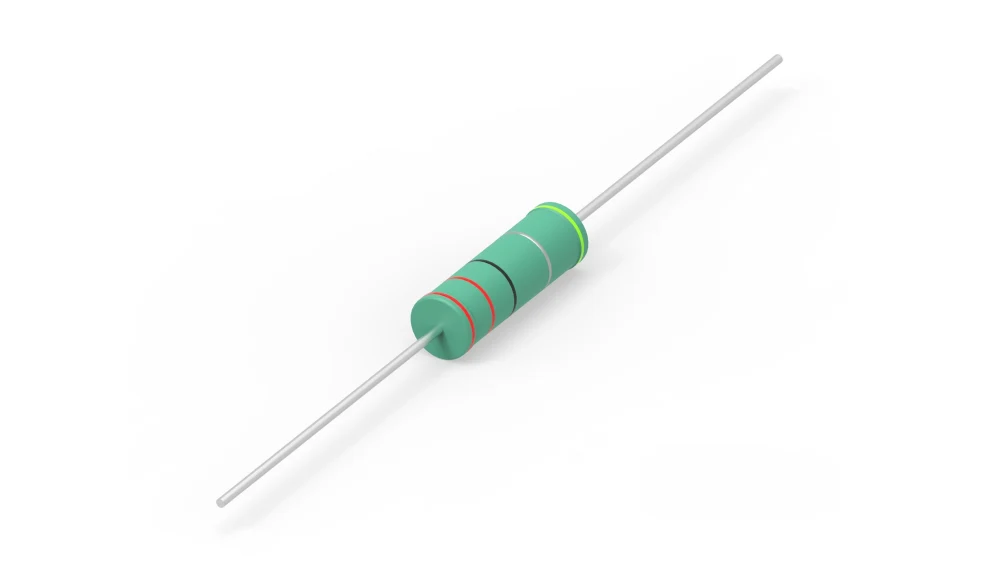
Figure 5. Wirewound Resistor
Wirewound resistors are constructed by winding metal wire around an insulated core, usually made of ceramic. The resistance value depends on the wire’s material, length, and thickness, which allows precise control during design.
This construction enables wirewound resistors to handle high power and current levels without damage. As a tradeoff, they are generally larger than film-based resistors and may not perform well in high-frequency circuits. They are typically used in power-related applications where durability and heat handling are more important than compact size.
Surface Mount Resistors
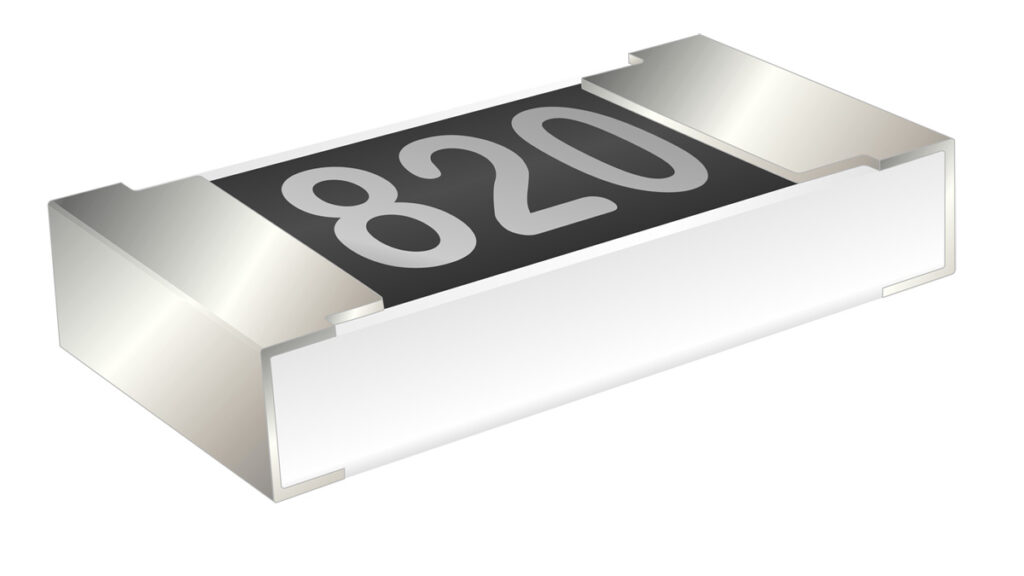
Figure 6. Surface Mount Resistor
Surface mount resistors are designed to be mounted directly onto the surface of a circuit board rather than using wire leads. They are manufactured using film-based techniques and are available in very small sizes.
Their compact form supports high-density circuit designs and efficient automated assembly, which makes them common in modern electronic products. Surface mount resistors are widely used in compact and portable devices, where space efficiency and large-scale manufacturing are key considerations.
Fixed Resistor Symbols
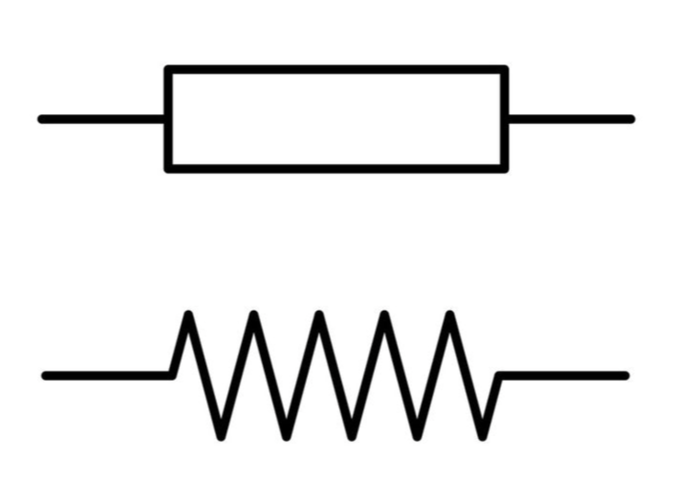
Figure 7. Fixed Resistor Schematic Symbols
In circuit diagrams, fixed resistors are represented using standard schematic symbols instead of drawings that show their physical appearance. These symbols provide a simple and consistent way to indicate where a resistor is placed and how it connects within a circuit.
Two symbol styles are widely recognized. The rectangular symbol follows the IEC standard and is commonly used in international and academic schematics, while the zigzag symbol follows the ANSI standard and is often seen in American and older circuit diagrams. Despite the difference in shape, both symbols refer to the same fixed resistor component.
Fixed Resistor Applications
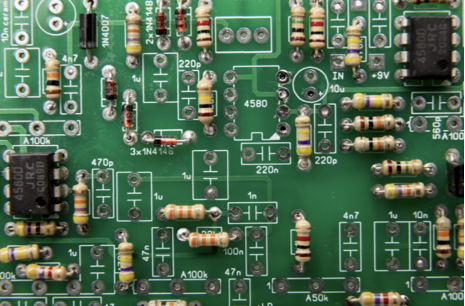
Figure 8. Fixed Resistors on a Circuit Board
Fixed resistors are used in electronic circuits to manage current flow and voltage levels, allowing components to operate within safe and intended limits. Their fixed resistance value enables consistent behavior across a wide range of circuit designs.
One common application is current limiting, where a fixed resistor restricts the amount of current flowing through a component. This is particularly important for parts that can be damaged by excess current, helping maintain stable and reliable operation.
Fixed resistors are also used in voltage division to reduce a higher voltage to a lower level needed by specific sections of a circuit. In signal paths, they assist with signal control by adjusting signal levels and maintaining balance. They also support circuit protection by reducing electrical stress caused by sudden changes in current, helping protect sensitive components during normal operation.
How to Choose a Fixed Resistor
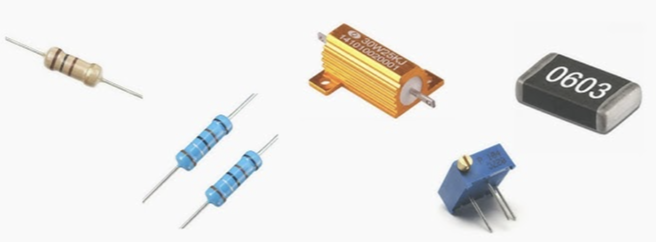
Figure 9. Common Fixed Resistor Types and Packages
Choosing a fixed resistor begins with selecting the resistance value, which determines how the resistor influences current or voltage within a circuit. This value should align with the circuit’s intended electrical behavior so the resistor performs its function as expected.
The power rating defines how much heat the resistor can safely dissipate during operation. Selecting a resistor with sufficient power handling helps prevent overheating and supports stable performance over time.
Tolerance describes how closely the actual resistance matches its stated value. Circuits that rely on consistent electrical behavior benefit from tighter tolerance, while less sensitive designs can operate with wider limits.
Application requirements also play a role in selection. Factors such as physical size, operating conditions, and circuit layout influence which resistor type is most suitable. Considering these aspects together helps ensure the fixed resistor fits the circuit and operates reliably.
Advantages and Limitations of Fixed Resistors
| Advantages | Limitations |
| Simple construction makes fixed resistors easy to manufacture and use in most circuits | The resistance value cannot be adjusted once the resistor is installed |
| Low production cost helps reduce the overall cost of electronic designs | Any change in required resistance means the component must be replaced |
| Provides stable and predictable resistance under normal operating conditions | Resistance value can shift when exposed to high temperatures |
| No moving parts, which improves long-term reliability and durability | Excess power dissipation can lead to overheating and failure |
| Available in a wide range of resistance values and power ratings | Limited tolerance options can restrict accuracy in sensitive circuits |
| Easy to integrate into both simple and complex circuit designs | Not suitable for applications that require fine tuning or calibration |
| Consistent performance over time when operated within ratings | Performance depends on material properties such as thermal stability |
| Offered in compact sizes for space-limited designs | Environmental factors like humidity can affect some resistor types |
| Well suited for automated assembly and mass production | Physical size may increase when higher power handling is required |
| Straightforward replacement during maintenance or repair | Incorrect selection can reduce circuit efficiency or lifespan |
Fixed Resistor vs Variable Resistor
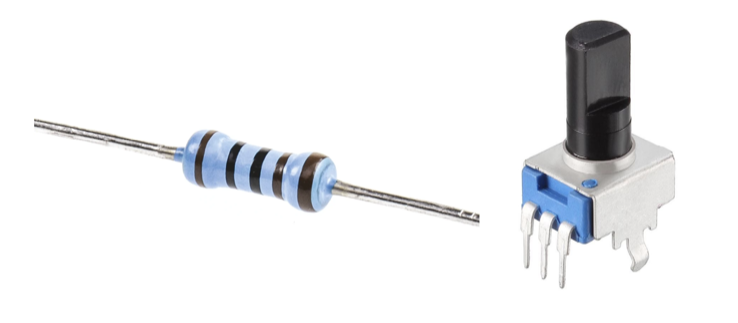
Figure 10. Fixed Resistor and Variable Resistor Comparison
Fixed resistors and variable resistors are selected based on whether a circuit requires a constant resistance value or adjustable control. A fixed resistor is used when the resistance is known in advance and does not need to change, which allows the circuit to operate with consistent and predictable behavior over time.
Variable resistors are chosen when adjustment is required during setup or use. They allow the resistance value to be changed to fine-tune circuit behavior or provide user control. In practice, fixed resistors suit designs intended for stable, long-term operation, while variable resistors are used where flexibility is necessary.
Conclusion
Fixed resistors are simple parts, but they play a big role in how electronic circuits behave. You’ve seen how they provide a steady resistance value that helps control current and manage voltage. Different types exist to handle different needs, from low-cost designs to high-power circuits. You also learned how symbols represent them in diagrams and where they are commonly used. By understanding how to choose the right fixed resistor, you can avoid common problems like overheating or unstable operation. With this knowledge, reading circuits and working with basic electronics becomes much easier and more confident.
About us
ALLELCO LIMITED
Read more
Quick inquiry
Please send an inquiry, we will respond immediately.
Frequently Asked Questions [FAQ]
1. What does a fixed resistor do in a circuit?
A fixed resistor limits current or reduces voltage so other components can operate safely and predictably.
2. Why can’t a fixed resistor be adjusted?
Its resistance value is set during manufacturing and remains the same throughout normal use.
3. Where are fixed resistors commonly used?
They are used in current limiting, voltage division, signal control, and basic circuit protection.
4. How do you choose the right fixed resistor?
You look at the resistance value, power rating, tolerance, and the conditions where it will operate.
5. What is the difference between fixed and variable resistors?
Fixed resistors have one constant value, while variable resistors allow the resistance to be adjusted during use.
Electronically Commutated Motor (ECM): Working, Types, and Applications
on January 22th
Crankshaft Position Sensor Guide for Car Owners
on January 22th
Popular Posts
-

Complex Instruction Set Computers: How They Changed Computing?
on April 18th 147749
-

USB-C Pinout and Features
on April 18th 111919
-
Using Xilinx Unified Simulation Primitives: A Comprehensive Guide to FPGA Design and Simulation
on April 18th 111349
-

Power Supply Voltages in Electronics: Meaning of VCC, VDD, VEE, VSS, and GND
on April 18th 83714
-

RJ45 Connector Guide: Pinout, Wiring, Cable Types, and Uses
on January 1th 79502
-

The Ultimate Guide to Wire Color Codes in Modern Electrical Systems
The way our electrical systems use colors isn’t just for looks. Each wire color now indicates a specific function, making it easier to identify and handle electrical components correctly during ins...on January 1th 66872
-

Quality (Q) Factor: Equations and Applications
The quality factor, or 'Q', is important when checking how well inductors and resonators work in electronic systems that use radio frequencies (RF). 'Q' measures how well a circuit minimizes energy...on January 1th 63005
-
Purge Valve Guide: Function, Symptoms, Testing, and Replacement for Optimal Engine Performance
The purge valve is a key part of a car’s system that helps keep the air clean by managing fuel vapors before they can escape into the atmosphere. This not only helps the environment by reducing pol...on January 1th 62951
-

Achieving Peak Performance with the Maximum Power Transfer Theorem
The Maximum Power Transfer Theorem explains how energy from a source, such as a battery or generator, flows to a connected load. It shows the exact condition where the load receives the most power....on January 1th 54077
-

A23 Battery Specifications and Compatibility
The A23 battery is a small, cylinder-shaped battery with high voltage. Also called 23A, 23AE, or MN21, it runs at 12 volts and much higher than AA or AAA batteries. Its special design make...on January 1th 52091
HOT Part Number
-

BD9B100MUV-E2
Rohm Semiconductor
IC REG BUCK ADJ 1A 16VQFN
UPD70F3539AF5A9-PN7-Q-A
Renesas Electronics America Inc
IC MICROCONTROLLER
18081A621JAT2A
KYOCERA AVX
CAP CER 620PF 100V NP0 1808
FDN340P
onsemi
MOSFET P-CH 20V 2A SUPERSOT3
70231-101
Amphenol ICC (FCI)
CONN RCPT BLADE PWR 8POS EDGE MT
MPSW42RLRAG
onsemi
TRANS NPN 300V 0.5A TO92
MC7824BT
onsemi
IC REG LINEAR 24V 1A TO220AB
AD8009ARZ-REEL
Analog Devices Inc.
IC OPAMP CFA 1 CIRCUIT 8SOIC
LT1815CS5#TRPBF
Analog Devices Inc.
IC OPAMP VFB 1 CIRCUIT TSOT23-5
DG411DYZ
Renesas Electronics America Inc
IC SWITCH SPST-NCX4 35OHM 16SOIC
VFT2060C-M3/4W
Vishay General Semiconductor - Diodes Division
DIODE SCHOTTKY 20A 60V ITO-220AB
TSX562AIYST
STMicroelectronics
IC CMOS 2 CIRCUIT 8MINISO
MR256D08BMA45
Everspin Technologies Inc.
IC RAM 256KBIT PARALLEL 48FBGA
VSC3312YYP-01
Microchip Technology
IC SWITCH 16X16 6.5GBPS 196FCBGA
XC68HC908GP20CFB
Motorola
TSG 8BIT20K FLASH
CSR8811A08-ICXR-R
Qualcomm
IC RF TXRX+MCU BLUETOOTH
MPSW05
onsemi
TRANS NPN 60V 0.5A TO92
1N4055R
Solid State Inc.
DIODE GEN PURP REV 900V 275A DO9 -

ASX342ATSC00XPED0-DP
onsemi
IMAGE SENSOR VGA 1/4 CIS SOC
0433.125NR
Littelfuse Inc.
FUSE BOARD MNT 125MA 125VAC/VDC
1SMA5941BT3G
onsemi
DIODE ZENER 47V 1.5W SMA
DCP010512BP-U/700
Texas Instruments
DC DC CONVERTER 12V 1W
1-1734344-1
TE Connectivity AMP Connectors
CONN D-SUB HD RCPT 15P R/A SLDR
KSD1621STF
onsemi
TRANS NPN 25V 2A SOT89-3
BQ24161RGET
Texas Instruments
IC BATT CHG LI-ION 1CELL 24VQFN
BTA26-600BW
STMicroelectronics
TRIAC ALTERNISTOR 600V 25A TOP3
NCP1239DD65R2G
onsemi
IC OFFLINE SWITCH FLYBACK 7SOIC
TMS320TCI6482BZTZA
Texas Instruments
TMS320 - DIGITAL SIGNAL PROCESSO
BQ20Z90DBTR-V150
Texas Instruments
IC GAS GAUGE LI-ION 30TSSOP
PCMB104T-1R0MT
Susumu
FIXED IND 1UH 18A 3.3 MOHM SMD
CY29942AXCT
Infineon Technologies
IC CLK BUFFER 1:18 200MHZ 32TQFP
CC0402KRX7R9BB561
YAGEO
CAP CER 560PF 50V X7R 0402
STPS20M60SG-TR
STMicroelectronics
DIODE SCHOTTKY 60V 20A D2PAK
AT25010N-10SC-2.7
Microchip Technology
IC EEPROM 1KBIT SPI 3MHZ 8SOIC
04023A1R0CAT4A
KYOCERA AVX
CAP CER 1PF 25V C0G/NP0 0402
ISL6327IRZ
Intersil
SWITCHING CONTROLLER, VOLTAGE-MO -

LQW18AN75NG0ZD
Murata Electronics
FIXED IND
DFA100BA160
SanRex Corporation
DIODE MODULE 1600V 100A
BAR46AFILM
STMicroelectronics
DIODE ARRAY SCHOTTKY 100V SOT23
MAX825SEUK
Analog Devices Inc./Maxim Integrated
IC SUPERVISOR MPU
MMST2222A-7-F
Diodes Incorporated
TRANS NPN 40V 0.6A SOT323
FODM8801AR2
onsemi
OPTOISO 3.75KV TRANS 4-MINI-FLAT
FJV1845FMTF
Fairchild Semiconductor
SMALL SIGNAL BIPOLAR TRANSISTOR,
EVK105RH5R1JW-F
Taiyo Yuden
CAP CER 5.1PF 16V R2H 0402
6651170-3
TE Connectivity AMP Connectors
CONN EDGE DUAL FMALE 4POS 0.508
KSZ8893FQLI-FX
Microchip Technology
IC SWITCH ETH 3PORT 128QFP
170M6340
Eaton - Bussmann Electrical Division
FUSE SQUARE 400A 1.3KVAC RECT
BCM20741A2KFB1G
Broadcom Limited
SINGLE-CHIP BLUETOOTH
MAX3443EASA+
Analog Devices Inc./Maxim Integrated
IC TRANSCEIVER HALF 1/1 8SOIC
GRM0335C1H9R3DA01D
Murata Electronics
CAP CER 9.3PF 50V C0G/NP0 0201
TNY175PN
Power Integrations
11.5 W (85-265 VAC) 15 W (230 VA
742700726
Würth Elektronik
FERRITE CORE 278 OHM SOLID 4MM
DM74S20N
onsemi
IC GATE NAND 2CH 4-INP 14DIP
P4SMA56CA-E3/61
Vishay General Semiconductor - Diodes Division
TVS DIODE 47.8VWM 77VC DO214AC