Electromotive Force (EMF): Definition, Formula, Types, and How It Works
In this article, you’ll learn what Electromotive Force (EMF) is and how it supplies energy that drives current through a circuit. You’ll see how EMF works inside sources like batteries, generators, and solar cells, and how internal resistance affects the voltage you get. You’ll also explore the different types of EMF and the formulas used to describe it. By the end, you’ll understand how EMF is measured and how it differs from potential difference.Catalog
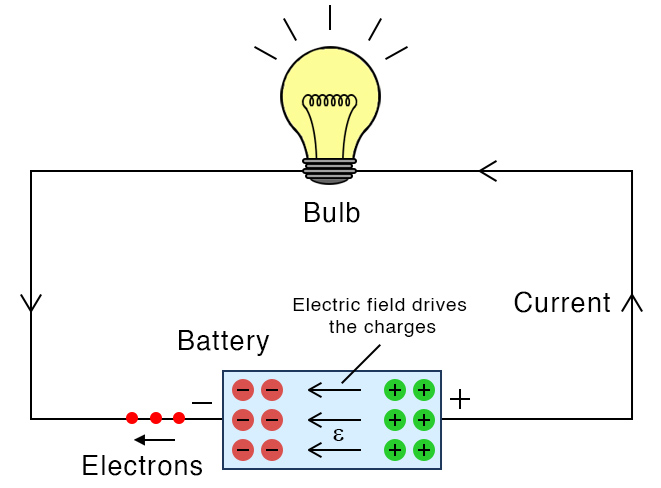
Figure 1. Electromotive Force (EMF) in a Circuit
What is Electromotive Force?
Electromotive Force (EMF) is the voltage generated by a source that drives electric current through a circuit. Despite its name, it is not an actual “force” but the energy supplied per unit charge by devices such as batteries, generators, solar cells, and other energy-conversion systems. EMF defines how much electrical energy a source is capable of supplying to a load. The figure above illustrates how electromotive force (EMF) drives charges inside the energy source and initiates current flow through the circuit.
How Electromotive Force Works?

Figure 2. EMF Working Principle
The figure above shows how electromotive force (EMF) creates and maintains a potential difference inside an energy source. EMF works by converting another form of energy into electrical energy, separating charges inside the source and setting up a voltage at its terminals.
In a battery, electrochemical reactions move charges, while in a generator, changing magnetic fields push charges through electromagnetic induction. In all cases, EMF does the work of driving charges against the internal electric field.
When the circuit is closed, this potential difference allows current to flow. When open, EMF is still present but cannot produce current. The diagram also shows the source’s internal resistance (r), which reduces terminal voltage when current flows.
Formula of Electromotive Force
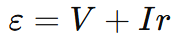
The standard equation for battery is:
or equivalently,
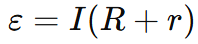
Where:
• ε = Electromotive Force
• V = Terminal voltage
• I = Current
• R = External/load resistance
• r = Internal resistance of the source
Both forms express the same relationship between EMF, terminal voltage, and internal resistance.
Types of Electromotive Force
Different technologies produce EMF through various mechanisms:
Chemical EMF
Chemical EMF is produced when electrochemical reactions inside batteries and cells separate charges, creating a potential difference. It is considered a type of EMF because the chemical energy is directly converted into electrical energy that drives current. Unlike electromagnetic or solar EMF, chemical EMF does not rely on motion or light, it depends solely on chemical processes.
Electromagnetic EMF
Electromagnetic EMF arises when a conductor experiences a changing magnetic field, which induces voltage according to Faraday’s law of induction. This type of EMF is generated in devices such as generators, alternators, and transformers. Compared to chemical EMF, it relies on mechanical motion or magnetic flux changes rather than chemical reactions.
Solar or Photovoltaic EMF
Solar or photovoltaic EMF is produced when photons from sunlight energize electrons in semiconductor materials, allowing them to move freely and create voltage. It qualifies as a type of EMF because light energy is converted directly into electrical energy. Unlike chemical or electromagnetic EMF, photovoltaic EMF requires no moving parts and depends entirely on light intensity.
Thermoelectric EMF
Thermoelectric EMF is generated when two junctions of different metals experience a temperature difference, causing charge carriers to migrate from hot to cold regions. This temperature-driven charge separation forms a measurable EMF, which is why thermocouples rely on this mechanism. Unlike solar or electromagnetic EMF, thermoelectric EMF depends purely on heat energy rather than light or magnetic fields.
Piezoelectric EMF
Piezoelectric EMF occurs when mechanical stress is applied to certain crystalline materials, forcing electric charges to shift within the structure. This stress-induced charge separation generates voltage, making it a distinct category of EMF based on mechanical energy conversion. Compared to chemical or thermoelectric EMF, piezoelectric EMF reacts almost instantly to pressure changes and requires no heat, light, or chemical reactions.
Measurement of Electromotive Force
Accurate EMF measurement is important in power system evaluation, battery diagnostics, and electrical testing.
Using a Voltmeter

Figure 3. EMF Measurement Using a Voltmeter
The figure above shows a simple open-circuit setup used to measure the EMF of a source. A voltmeter measures EMF by connecting across the open terminals of a source, allowing it to read the full voltage without current flow. It is considered a valid method because the high internal resistance of the voltmeter prevents loading, ensuring the internal resistance of the source does not affect the measurement. Compared to potentiometers or digital instruments, voltmeters are simpler and faster to use, but they offer less precision in sensitive applications.
Potentiometer Method

Figure 4. EMF Measurement Using a Potentiometer
The diagram above illustrates the null-balance setup used in potentiometric EMF measurement. A potentiometer measures EMF by comparing the unknown voltage to a standard reference using a null-balance technique, where no current is drawn from the source. This method is regarded as one of the most accurate ways to measure EMF because it completely eliminates loading errors. Unlike voltmeters or DMMs, potentiometers are slower and more complex to set up, but they provide superior accuracy for laboratory and calibration work.
Digital Instruments

Figure 5. EMF Measurement Using a DMM
The figure above shows how a digital multimeter reads the EMF directly across the source terminals. Digital multimeters (DMMs) measure EMF by sampling the voltage at the terminals of a source with the help of electronic circuits. They are widely used because they combine convenience, digital accuracy, and the ability to measure multiple electrical quantities. However, compared to potentiometers, DMMs may introduce small loading errors due to their finite input impedance, although they remain more practical and user-friendly than other methods.
Applications of Electromotive Force
EMF is important across a wide range of electrical and electronic systems, including:
• Powering loads with batteries, generators, and solar cells
• Running industrial machinery and electric motors
• Charging systems such as UPS units, vehicle batteries, and renewable energy storage
• Generating measurement signals in thermocouples, piezoelectric sensors, and other transducers
• Energy-harvesting systems for remote and portable devices
• Maintaining voltage levels across power distribution networks
Electromotive Force (EMF) vs Potential Difference (PD)
Below are the difference between emf and potential difference to help you see how each one behaves in a circuit.
|
Aspect |
Electromotive
Force (EMF) |
Potential
Difference (PD) |
|
Definition |
Energy
supplied per unit charge by a source |
Energy
used per unit charge between two points |
|
Location |
Occurs
inside the source |
Appears
across external components |
|
Circuit
Condition |
Measured
when circuit is open |
Measured
when current flows |
|
Cause |
Source
pushes charges |
Charges
lose energy while flowing |
|
Represents |
Total
energy provided |
Energy
consumed |
|
Symbol |
E
or ε |
V |
|
Value
Relation |
Always
≥ PD |
Always
≤ EMF when current flows |
|
Internal
Resistance Effect |
Unaffected
by load |
Reduces
when load/internal resistance consumes energy |
|
Source
Examples |
Batteries,
generators, solar cells |
Resistors,
motors, lamps |
|
Physical
Meaning |
Drives
current into the circuit |
Opposes
current through components |
|
Work
Done |
Work
done on charges |
Work
done by charges |
|
Unit |
Volt
(V) |
Volt
(V) |
|
Existence
in Open Circuit |
Exists
even when open |
Zero
when open (no current) |
|
Direction |
Negative
→ positive inside source |
Positive
→ negative in external circuit |
|
Source
Behavior |
Indicates
source strength |
Indicates
voltage drop across components |
Conclusion
Electromotive Force is important because it shows how electrical sources create and deliver energy to a circuit. Different forms of EMF come from chemical reactions, magnetic fields, light, heat, or mechanical pressure. EMF can be measured in several ways, each offering different levels of accuracy. Understanding EMF, its types, and how it compares with potential difference helps in working with electrical systems more effectively.
About us
ALLELCO LIMITED
Read more
Quick inquiry
Please send an inquiry, we will respond immediately.
Frequently Asked Questions [FAQ]
1. Can EMF values help me determine the health or condition of a battery?
Yes. A battery’s EMF can indicate its internal chemical condition and remaining capability. A significant drop in EMF (even with no load connected) suggests aging, sulfation, or internal damage.
2. How do I know if my digital multimeter is suitable for EMF measurements?
Check the input impedance and voltage accuracy rating. A good DMM should have at least 10 MΩ input impedance to minimize loading effects and should support millivolt and volt ranges for precise EMF readings.
3. Is EMF the same as the voltage rating printed on a battery?”
Not always. The printed voltage is the nominal rating, while the actual EMF can be slightly higher or lower depending on the battery’s chemistry, temperature, and age.
4. Can EMF help me size the right power source for my project or device?
Yes. Knowing the EMF helps you estimate how much usable voltage you’ll get under load. This allows you to choose a battery, generator, or solar module that can consistently supply the required operating voltage.
5. Why does EMF vary in different types of energy sources?
Different sources rely on different conversion processes chemical reactions, magnetic induction, light absorption, heat gradients, or mechanical pressure. Because each mechanism produces charge separation in a unique way, the resulting EMF also varies.
Structure and Application of M24C16-RMN6TP EEPROM Chip
on September 2th
How to Test a Transistor and a Diode with a Multimeter?
on September 2th
Popular Posts
-

Complex Instruction Set Computers: How They Changed Computing?
on April 18th 147751
-

USB-C Pinout and Features
on April 18th 111923
-
Using Xilinx Unified Simulation Primitives: A Comprehensive Guide to FPGA Design and Simulation
on April 18th 111349
-

Power Supply Voltages in Electronics: Meaning of VCC, VDD, VEE, VSS, and GND
on April 18th 83714
-

RJ45 Connector Guide: Pinout, Wiring, Cable Types, and Uses
on January 1th 79502
-

The Ultimate Guide to Wire Color Codes in Modern Electrical Systems
The way our electrical systems use colors isn’t just for looks. Each wire color now indicates a specific function, making it easier to identify and handle electrical components correctly during ins...on January 1th 66872
-

Quality (Q) Factor: Equations and Applications
The quality factor, or 'Q', is important when checking how well inductors and resonators work in electronic systems that use radio frequencies (RF). 'Q' measures how well a circuit minimizes energy...on January 1th 63005
-
Purge Valve Guide: Function, Symptoms, Testing, and Replacement for Optimal Engine Performance
The purge valve is a key part of a car’s system that helps keep the air clean by managing fuel vapors before they can escape into the atmosphere. This not only helps the environment by reducing pol...on January 1th 62955
-

Achieving Peak Performance with the Maximum Power Transfer Theorem
The Maximum Power Transfer Theorem explains how energy from a source, such as a battery or generator, flows to a connected load. It shows the exact condition where the load receives the most power....on January 1th 54078
-

A23 Battery Specifications and Compatibility
The A23 battery is a small, cylinder-shaped battery with high voltage. Also called 23A, 23AE, or MN21, it runs at 12 volts and much higher than AA or AAA batteries. Its special design make...on January 1th 52092
HOT Part Number
-

AP2553FDC-7
Diodes Incorporated
IC PWR SWITCH P-CHANNEL 1:1 6DFN
REG1117FA-5.0/500
Texas Instruments
IC REG LIN 5V 1A DDPAK/TO263-3
DSPIC33CH64MP508-I/PT
Microchip Technology
IC MCU 16BIT 88KB FLASH 80TQFP
NVTFS5826NLWFTWG
onsemi
MOSFET N-CH 60V 7.6A 8WDFN
CL03C180JA3ANNC
Samsung Electro-Mechanics
CAP CER 18PF 25V C0G/NP0 0201
C1608X8R1H103M080AE
TDK Corporation
CAP CER 10000PF 50V X8R 0603
LTC1682IMS8-5#PBF
Analog Devices Inc.
IC REG CHARGE PUMP 5V 50MA 8MSOP
PXAS30KBA
Rochester Electronics, LLC
IC MCU 16BIT ROMLESS 68PLCC
C3216Y5V1C106Z
TDK Corporation
CAP CER 10UF 16V Y5V 1206
ADA4610-1ARZ-R7
Analog Devices Inc.
IC OPAMP JFET 1 CIRCUIT 8SOIC
BYM11-200-E3/97
Vishay General Semiconductor - Diodes Division
DIODE GEN PURP 200V 1A DO213AB
GRM2167U1H560JZ01D
Murata Electronics
CAP CER 56PF 50V U2J 0805
TOP258GN-TL
Power Integrations
IC OFFLINE SWITCH FLYBACK 8SMD
STM8S207RBT3
STMicroelectronics
IC MCU 8BIT 128KB FLASH 64LQFP
XC6701B502MR-G
Torex Semiconductor Ltd
IC REG LINEAR 5V 150MA SOT25
08053G104ZAT2A
AVX Corporation
CAP CER 0.1UF 25V Y5V 0805
BZM55B13-TR
Vishay General Semiconductor - Diodes Division
DIODE ZENER 13V 500MW MICROMELF
MCH5809-TL-E
onsemi
NCH+SBD 2.5V DRIVE SERIES -

BZD17C3V6P-E3-08
Vishay General Semiconductor - Diodes Division
DIODE ZENER 3.6V 800MW DO219AB
DSRHD06-13
Diodes Incorporated
BRIDGE RECT 1P 600V 1A T-MINIDIP
BCX54-16E6327
Infineon Technologies
SMALL SIGNAL BIPOLAR TRANSISTOR
AD9961BCPZ
Analog Devices Inc.
IC BROADBAND FRONT-END 72LFCSP
AT80C51RD2-RLRUM
Microchip Technology
IC MCU 8BIT ROMLESS 44VQFP
PHK31NQ03LT,518
Nexperia USA Inc.
MOSFET N-CH 30V 30.4A 8SO
1469002-1
TE Connectivity AMP Connectors
CONN HDR HIGH SPEED 120POS PCB
S5JHE3_A/I
Vishay General Semiconductor - Diodes Division
DIODE GEN PURP 600V 5A DO214AB
SCAN90004TVS
Texas Instruments
IC REDRIVER LVDS 4CH 48TQFP
CD4025BCN
onsemi
IC GATE NOR 3CH 3-INP 14DIP
2225HC332KAT1A
KYOCERA AVX
CAP CER 3300PF 3KV X7R 2225
MN63Y1208-E1
Panasonic Electronic Components
IC RFID READR/TRAN 13.56MZ 16QFN
06035C112JAT2A
KYOCERA AVX
CAP CER 1100PF 50V X7R 0603
LFE3-95EA-8LFN672I
Lattice Semiconductor Corporation
IC FPGA 380 I/O 672FPBGA
XBS053V13R-G
Torex Semiconductor Ltd
DIODE SCHOTTKY 20V 500MA SOD323A
GRM0335C2A6R5CA01J
Murata Electronics
CAP CER 6.5PF 100V C0G/NP0 0201
STW36N55M5
STMicroelectronics
MOSFET N-CH 550V 33A TO247
C1608C0G2A090D080AA
TDK Corporation
CAP CER 9PF 100V C0G 0603 -
GRM1886P1H4R8CZ01D
Murata Electronics
CAP CER 4.8PF 50V P2H 0603
M29W128FL70N6E
Micron Technology Inc.
IC FLASH 128MBIT PARALLEL 56TSOP
70MT100KB
Vishay General Semiconductor - Diodes Division
BRIDGE RECT 3PHASE 1KV 70A MTK
ADXL344ACCZ-RL7
Analog Devices Inc.
ACCEL 2-16G I2C/SPI 16LGA
BZX84C39-HE3-08
Vishay General Semiconductor - Diodes Division
DIODE ZENER 39V 300MW SOT23-3
1735447-7
TE Connectivity AMP Connectors
CONN RCPT HSG 7POS 2.00MM
1808AA150JAT1A
KYOCERA AVX
CAP CER 15PF 1KV NP0 1808
Z84C4106PEC
Zilog
IC INTERFACE SPECIALIZED 40DIP
GRM1555C1H7R4WZ01D
Murata Electronics
CAP CER 7.4PF 50V C0G/NP0 0402
BDCN-20-13+
Mini-Circuits
RF DIR COUPLER 360MHZ-1GHZ 6SMD
MCC19-14IO1B
IXYS
MOD THYRISTOR DUAL 1400V TO240AA
OP467GPZ
Analog Devices Inc.
IC OPAMP GP 4 CIRCUIT 14DIP
LA4636-E
Sanyo
11 WATT 2-CHANNEL BTL AF POWER A
P6KE82A-T
Diodes Incorporated
TVS DIODE 70.1VWM 113VC DO15
NCV7608DWR2G
onsemi
IC HALF BRIDGE DRIVER 28SOIC
TLJA227M004R1100
KYOCERA AVX
CAP TANT 220UF 20% 4V 1206
TUSB2136PM
Texas Instruments
IC USB HUB I/O CONTROL 64-LQFP
HUFA75637P3
onsemi
MOSFET N-CH 100V 44A TO220-3