Microprocessor vs Integrated Circuit: Types, Functions, Applications, and Differences
This guide is all about microprocessors and integrated circuits (ICs). It explains what they are, how they work, and what they are used for. You’ll learn about the different types, how they are built, how they are used in devices like phones and computers, and how they can be replaced or upgraded. It also shows the good and bad sides of each and gives real examples to help you understand better.Catalog

Figure 1. Microprocessor vs Integrated Circuit
What is a Microprocessor?
A microprocessor is a small chip that works as the brain of a computer or digital device. It carries out instructions like doing math, comparing values, and controlling other parts of the system. Microprocessors are used in computers, phones, and many smart devices.
They handle many steps in order, reading instructions, processing data, and giving results. This lets them run programs, respond to input, and manage tasks quickly and efficiently.
While a microprocessor is a type of integrated circuit, it has a special job: handling many kinds of instructions to control an entire system.

Figure 2. Microprocessor
What is an Integrated Circuit?
An integrated circuit (IC) is a tiny chip that holds many electronic parts, such as transistors and resistors, all built onto one surface. These parts work together to do a specific task like storing data, boosting signals, or making decisions in a circuit.
ICs come in many types. Some are simple, like sound amplifiers. Others are complex, like the microprocessors inside computers.
Every microprocessor is an IC, but not every IC is a microprocessor. ICs can do many different jobs, while microprocessors are designed to run software and manage systems.
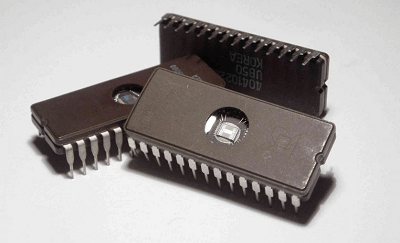
Figure 3. Integrated Circuit (IC)
Types of Microprocessors and Integrated Circuits
Types of Microprocessors
Microprocessors come in different forms depending on their purpose:
• General-Purpose Processor (GPP)
General-purpose processors (GPPs) run diverse tasks on desktops and laptops. They support multitasking and advanced computations using multiple cores and memory caches.
The diagram below shows how a General-Purpose Processor (GPP) is put together and how it works with other parts. At the center is the MIPS 4KEp core, which handles the main processing tasks. A small memory called cache helps speed things up by storing data that’s used often. A memory controller controls the flow of data between the processor and external memory.
External RAM is used as working memory, while flash memory stores permanent data like programs. These connect to the processor through a shared bus. The processor also has special connections like EJTAG for debugging and CardBus for connecting other devices. This setup lets the GPP handle many tasks and work with different types of memory and hardware.
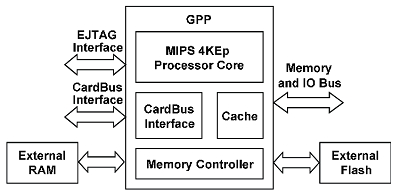
Figure 4. General-Purpose Processors (GPPs) Diagram
• Microcontroller (MCU)
Microcontrollers (MCUs) are used in embedded systems. These combine a processor with built-in memory and input/output interfaces, making them ideal for small, power-efficient devices.
The diagram below shows the basic structure of a microcontroller. In the center is the Microprocessor Unit (MPU), which runs the program and processes data. It connects directly to memory and to I/O ports that let it talk to things like sensors or displays.
Below the MPU are built-in tools that help it work better. These include timers, A/D converters (which turn analog signals into digital data), and communication ports like serial I/O. All of these are built onto a single chip, making microcontrollers small, efficient, and good for devices like appliances or smart gadgets.
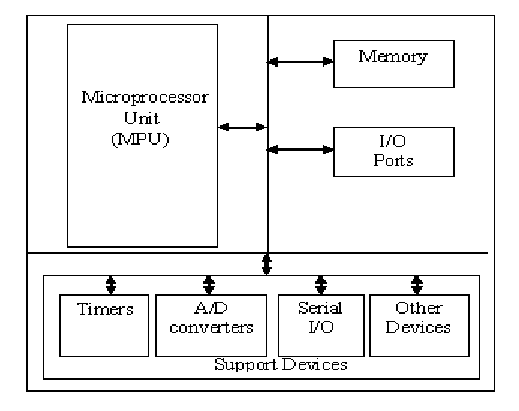
Figure 5. Microcontrollers (MCUs) Diagram
• Digital Signal Processor (DSP)
Digital Signal Processors (DSPs) are tuned for real-time operations like audio filtering, data compression, and signal modulation.
The diagram below shows how a Digital Signal Processor (DSP) works in a signal system. First, a device like a microphone turns sound into a weak analog signal. This signal is boosted and cleaned by filters before it’s converted into digital form using an ADC (Analog-to-Digital Converter).
The DSP processes the digital data, this can include filtering, enhancing, or compressing the signal. After that, a DAC (Digital-to-Analog Converter) turns the digital signal back into analog. It’s then cleaned and amplified before going to an output device like a speaker. This process allows the DSP to handle sound or signal data in time.
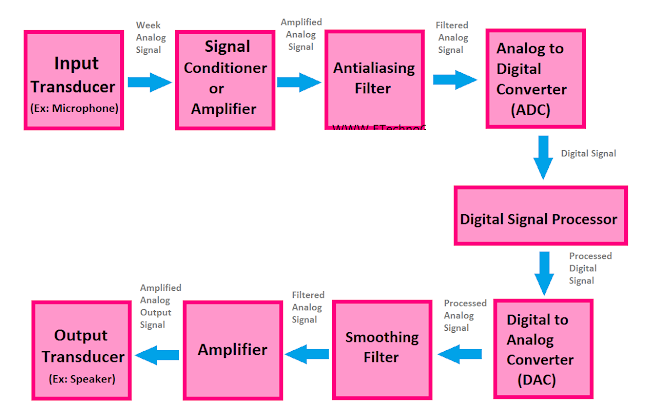
Figure 6. Digital Signal Processors (DSPs) Diagram
• System-on-Chip (SoC)
System-on-Chip (SoC) processors include not just a CPU but other modules like graphics engines or communication interfaces, all on one chip.
The diagram below shows how a System-on-Chip (SoC) combines many parts into one small chip. It includes a CPU, memory, logic circuits, and radio or analog parts to handle signals. It also has built-in connectors for antennas or sensors.
Some versions have MEMS sensors or actuators that let the chip sense things like movement or pressure and respond quickly. A test wrapper helps check if the chip works correctly. This compact design gives strong performance and is perfect for smartphones, wearables, and other modern electronic devices.
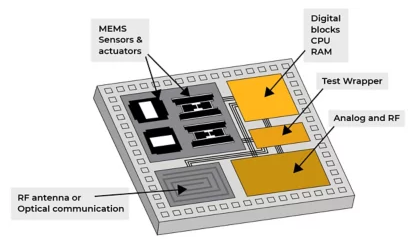
Figure 7. System-on-Chip (SoC) Processors Diagram
Types of Integrated Circuits
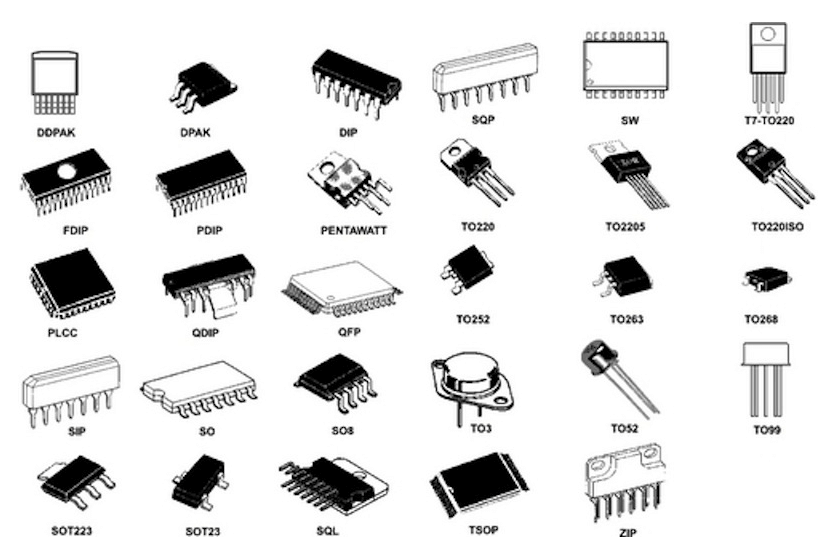
Figure 8. Types of Integrated Circuits
ICs are categorized based on how they handle signals:
• Analog ICs work with continuous signals and are found in amplifiers and power controllers.
• Digital ICs use binary logic and include components like logic gates and memory chips.
• Mixed-signal ICs blend both types, useful for applications like converting sensor data into digital signals.
• Power ICs manage voltage and current for stable power delivery.
• Application-Specific ICs (ASICs) are customized for particular uses like cryptocurrency mining or machine learning.
• Monolithic ICs house all components on one silicon die, while multichip modules contain several dies in one package.
Functional Roles of Microprocessors and Integrated Circuits
Microprocessor

Figure 9. Microprocessor System Architecture
A microprocessor is the main part of a digital system that carries out instructions and processes data. Inside, it has three main parts: the Arithmetic Logic Unit (ALU), the Control Unit, and a group of fast storage spaces called the Register Array.
1. The ALU performs basic math and logic operations.
2. The Control Unit tells the processor what to do and controls how data moves between parts.
3. The Register Array holds data and instructions temporarily so the processor can access them quickly.
The microprocessor connects to input devices, output devices, and memory:
• Input devices send raw data to the processor.
• Output devices show or use the results after processing.
• Memory stores both the program and the data. The processor fetches instructions and information from memory, processes it, and then stores the results back.
This process repeats in a cycle: fetch the instruction, decode it, and execute it. This cycle is how all microprocessors work.
Integrated Circuit (IC)
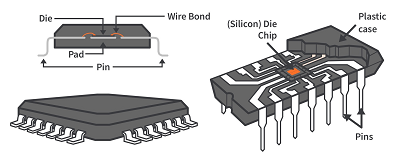
Figure 10. Integrated Circuit Internal Structure
An integrated circuit, or IC, is a small electronic device that performs one specific task. At its center is a silicon chip (die) that contains tiny circuits designed for functions like amplifying signals, generating timing, or doing simple logic.
Thin wires connect the silicon chip to metal contacts, which are linked to external pins. These pins stick out of a protective case and connect the IC to the rest of the system.
Each pin has a role: bringing in signals, sending signals out, or carrying power. The IC depends on both the quality of its internal design and the strength of these physical connections.
Once made, the IC performs its job reliably and doesn't need to be changed or reprogrammed. This makes it a stable and important part of many electronic devices.
Programmability of Microprocessors and Integrated Circuits
Microprocessors
Microprocessors are highly programmable. They don’t have a fixed job, they follow instructions from software that can be changed at any time. This means one microprocessor can control many different systems depending on what program it runs.
For example, the same chip can run a washing machine today and a web browser tomorrow. It write programs in high-level languages, convert them into machine code, and load them into the microprocessor. Once the program is loaded, the chip follows the instructions step by step.
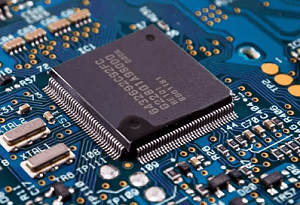
Figure 11. Electronic Circuit Board with Microprocessor
Because it’s controlled by software, a microprocessor’s behavior can be updated without touching the hardware. New features or improvements can be added through software updates. This also allows remote updates, devices can receive new programs over the internet without needing to be taken apart.
In systems where things often change like in robotics, factories, or aircraft, programmability is a big advantage. Microprocessors make it possible to fix bugs, improve performance, or change how the system works, even after it’s been built.
In short, microprocessors are powerful because they can be reprogrammed again and again, making them useful in many different situations.
Integrated Circuits (ICs)
Most ICs are not programmable. They are built to do one specific job, and that job is permanently built into the chip during manufacturing. For example, one IC may always regulate voltage, while another may always perform a simple logic function. These chips cannot be reprogrammed after they’re made.
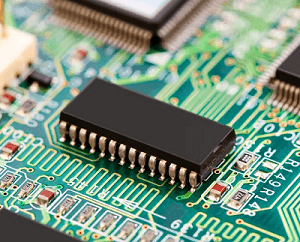
Figure 12. Integrated Circuit (IC) Soldered on PCB
However, there are exceptions. Some ICs, like FPGAs (Field-Programmable Gate Arrays) and CPLDs (Complex Programmable Logic Devices), can be reprogrammed after manufacturing. It write special code to set or change what these chips do. These programmable ICs are helpful for testing, product development, and systems that need flexibility but they are usually more expensive and use more power.
There are also microcontrollers, which combine fixed hardware with programmable memory. These can be updated with new software, offering some flexibility without being as complex as a full microprocessor. Still, most ICs remain fixed-function because they are simple, reliable, and low-cost ideal for tasks that don’t change.
Microprocessor and IC Replacement Options
|
Component
Type |
Original
Part |
Replacement
or Upgrade Option |
Application
Context |
Considerations |
|
Microprocessor
(PC CPU) |
Intel
Core i5-7400 (LGA1151) |
Intel
Core i7-7700 / i7-7700K |
Desktop
PC |
Must
match socket (LGA1151), update BIOS, stronger cooler may be needed |
|
Microprocessor
(Laptop) |
AMD
Ryzen 5 2500U (BGA) |
Not
typically replaceable – motherboard-specific |
Notebook/laptop |
Integrated
into motherboard (BGA); replacement requires full board swap |
|
Embedded
Microcontroller |
ATmega328P |
ATmega328PB
or STM32F030F4 |
Arduino
boards, hobby projects |
Flash
firmware; STM32 requires reworking code, power and pinout differences |
|
8-bit
Microprocessor |
Intel
8085 |
100%
compatible replacement –same 8085 chip |
Legacy
industrial systems |
Drop-in
replacement; verify clock and voltage |
|
Digital
Logic IC |
74LS00
(Quad NAND gate) |
74HC00
or 74HCT00 (faster CMOS equivalents) |
General
digital circuits |
Check
voltage compatibility (TTL vs CMOS), power supply limits |
|
Memory
IC (EEPROM) |
24C02 |
24C08,
24C16 (higher capacity with same protocol) |
I²C
EEPROM data storage |
Same
I²C protocol; firmware/software must support address extension |
|
Op-Amp
IC |
LM741 |
TL081
or OP07 |
Analog
signal processing |
Improved
input offset and bandwidth; verify power rails and compensation pin |
|
Power
Regulator IC |
7805
(5V linear regulator) |
LM2940
(low-dropout), or switching regulator module |
Power
supply circuits |
Better
efficiency with switch-mode; check heat dissipation and pinout |
|
Sensor
IC |
LM35
(temperature sensor) |
TMP36
or DS18B20 (digital) |
Temperature
sensing |
TMP36
is analog but more precise; DS18B20 requires digital interfacing |
|
Interface
IC |
MAX232 |
MAX3232
(3V compatible) |
RS-232
communication |
MAX3232
supports 3V logic; drop-in for MAX232 if running at lower voltages |
|
System
Controller IC |
ITE
IT8586E (EC/SIO in laptops) |
ITE
IT8587E (model variant, not direct swap) |
Embedded
Controller (EC) in laptops |
Firmware
must match exactly; usually needs reprogramming or OEM tool |
|
Programmable
Logic (PLD) |
GAL16V8 |
CPLD
(e.g., Xilinx XC9572XL) |
Digital
logic replacement |
Needs
HDL redesign and new toolchain; hardware adapter may be needed |
|
CPU
+ Motherboard Combo |
Intel
6th Gen (LGA1151, H110 chipset) |
Intel
10th Gen (LGA1200, B460 chipset) |
Full
desktop platform upgrade |
Requires
new motherboard, DDR4 memory, and new power connector setup |
Examples of Microprocessors and Integrated Circuits
Microprocessors and integrated circuits (ICs) are tiny electronic parts that help devices like computers, phones, and machines work. Here are some common examples and what they’re used for.
Popular Microprocessors
• Intel Core i7
This is a powerful chip found in many personal computers. It’s great for things like gaming, editing videos, and doing work that needs a fast computer.
• ARM Cortex-M (like STM32 chips)
These small microcontrollers are used in smart devices such as washing machines, fitness trackers, and even medical tools. They are popular because they don’t use much power and can do many different jobs.
• RISC-V Chips
RISC-V is a type of processor design that anyone can use and change. It’s open-source, which means it’s free to use, and can build their own custom versions. It’s used a lot in research and in new kinds of electronics.
• Old Chips: Zilog Z80 and Intel 8086
These older chips were used in early computers. Many still study them today to learn how computers used to work and how they were built.
Common Integrated Circuits (ICs)
• NE555 Timer
This small chip is used to keep time in a circuit. It can make lights blink or create sound beeps in simple projects. It’s very popular for learning and building small electronics.
• 7404 and 7400 Logic Chips
These chips are used in basic digital circuits. The 7404 is called an inverter, and the 7400 is a NAND gate. They help computers make decisions using logic (like yes/no or true/false). They are often used in schools to teach electronics.
• LM324 Op-Amp
This chip helps make weak signals stronger. It's used in things like sound systems and sensor circuits. It's cheap and works well in many types of projects.
• ATmega328P (used in Arduino boards)
This chip is like a tiny computer. It can read inputs (like from a button or sensor) and control outputs (like turning on lights or motors). It’s used in Arduino boards, which are great for learning and making your own gadgets.
Advantages and Disadvantages of Microprocessors
|
Aspect |
Advantages |
Disadvantages |
|
Speed and Performance |
High processing speed; executes millions to billions of
instructions per second |
Generates heat at high speeds; needs cooling solutions |
|
Size and Integration |
Small and lightweight due to integrated circuitry |
May require additional external components (RAM, I/O) |
|
Programmability |
Easily programmable for different tasks using software |
Software must be written, compiled, and debugged |
|
Versatility |
Can be used in various devices like PCs, smartphones, robots,
etc. |
Not optimal for simple control tasks; overkill for basic
applications |
|
Power Efficiency |
Modern processors offer good energy efficiency |
High-performance models may still consume power |
|
Cost |
Economical in mass production; reduces component count |
High initial design and development costs |
|
Reliability |
Solid-state components have long operational life |
Susceptible to electrical damage and thermal stress |
|
Functionality |
Can execute complex algorithms and multitask efficiently |
Cannot handle analog signals directly; needs ADCs |
|
Data Handling |
Supports complex data manipulation, multitasking, and arithmetic
operations |
Limited word/data size in lower-end models (e.g., 8-bit or
16-bit) |
|
Scalability |
Supports system upgrades (e.g., multicore, cache expansion) |
Older models become obsolete quickly; contributes to electronic
waste |
|
Security |
Can run secure systems with proper software |
Vulnerable to hacking, malware, and side-channel attacks without
safeguards |
Advantages and Disadvantages of Integrated Circuits
|
Aspect |
Advantages |
Disadvantages |
|
Size
and Weight |
Extremely
small and lightweight due to high component density |
Difficult
to handle without proper tools; fragile when exposed to physical stress |
|
Power
Consumption |
Consumes
very low power, ideal for battery-powered and portable devices |
Cannot
handle high power loads; not suitable for high-current applications |
|
Performance
and Speed |
High-speed
operation with minimal delay and fast switching capability |
Performance
is fixed; cannot be easily modified after manufacturing |
|
Cost
(Mass Production) |
Very
cost-effective for high-volume production due to batch fabrication |
Expensive
to design and manufacture in small quantities |
|
Reliability |
Fewer
solder joints and interconnections reduce the chance of mechanical or
electrical failure |
Sensitive
to static electricity (ESD) and temperature extremes |
|
Integration |
Can
integrate thousands to billions of transistors along with resistors and
capacitors |
Cannot
include large components like inductors or high-capacity capacitors |
|
Maintenance |
Simple
to replace as a whole unit, reducing repair complexity |
Cannot
be repaired at component level; entire chip must be replaced if faulty |
|
Voltage
Operation |
Suitable
for low-voltage operation, enhancing safety and efficiency |
Cannot
operate at high voltages due to insulation and material limitations |
|
Flexibility |
Used
across a wide range of digital, analog, and mixed-signal applications |
Fixed
configuration, functionality cannot be changed once manufactured |
|
Durability |
High
precision and repeatability in mass production ensures consistency |
Susceptible
to damage from moisture, static discharge, and overheating |
Applications of Microprocessors and Integrated Circuits
Microprocessors
1. Computers and Mobile Devices
In computers and mobile devices, microprocessors serve as the core engines that run operating systems and applications. They handle everything from basic input to complex multitasking, enabling to browse the internet, run software, stream videos, and use mobile apps. The speed and efficiency of a device largely depend on the power of its microprocessor.
2. Embedded Systems
Microprocessors are widely used in embedded systems specialized computing systems that perform dedicated functions within larger machines. In everyday appliances like vending machines, microwave ovens, and smart thermostats, microprocessors manage control logic and automate operations. Their role is to ensure precise and timely responses to inputs and environmental changes.
3. Industrial Equipment
In industrial settings, microprocessors are used for automation and control. They are embedded in programmable logic controllers (PLCs), robotic arms, and data loggers. These processors monitor and control production processes, handle data acquisition, and execute instructions that maintain safety, efficiency, and consistency on the factory floor.
4. Automotive Systems
Modern vehicles rely heavily on microprocessors to control various subsystems. From engine control units (ECUs) that manage fuel injection and emissions to advanced driver-assistance systems (ADAS) that support lane-keeping and collision avoidance, microprocessors are central to the performance and safety of automobiles. They also power infotainment systems, navigation tools, and climate control features.
5. Communication Devices
Communication infrastructure depends on microprocessors to manage data transmission and signal processing. Devices such as routers, modems, and mobile base stations use microprocessors to route information efficiently, maintain network stability, and support wireless and wired communication. These processors enable fast, secure, and reliable data exchange.
6. Medical Equipment
In the medical field, microprocessors power diagnostic tools, monitoring systems, and imaging equipment. Devices like ECG machines, blood pressure monitors, MRI scanners, and ultrasound devices rely on microprocessors to process data quickly and deliver accurate readings. Their integration improves both patient safety and the effectiveness of clinical treatments.
Integrated Circuits (ICs)
1. Digital ICs
Digital ICs operate using binary logic (0s and 1s) and are important to digital electronics. These include microcontrollers, memory chips (like RAM and ROM), and logic gates. Found in everything from smartphones and laptops to washing machines and calculators, digital ICs perform tasks such as data storage, signal processing, and control logic execution.
2. Analog ICs
Analog ICs handle continuous electrical signals and are used in applications where signal variation is important. They are used in audio amplification, sensor signal processing, and voltage regulation. For instance, analog ICs in a sound system adjust volume and tone, while in a temperature sensor, they convert environmental inputs into readable outputs.
3. Mixed-Signal ICs
Mixed-signal ICs combine analog and digital functions on a single chip, making them ideal for bridging the gap between physical inputs and digital systems. They are widely used in devices that require analog-to-digital or digital-to-analog conversion, such as smartphones, wireless communication modules, and touchscreen interfaces.
4. Power ICs
Power ICs are designed to manage the distribution and regulation of electrical energy within a system. They are used in smartphones, electric vehicles, battery chargers, and renewable energy systems to ensure efficient power conversion and battery management. By optimizing energy usage, power ICs improve the longevity and safety of electronic devices.
5. IoT-Specific ICs
Internet of Things (IoT) devices often use specialized ICs that integrate sensing, data processing, and wireless communication into a compact form. These all-in-one chips are found in smart home gadgets, wearable health monitors, agricultural sensors, and industrial automation systems. Their ability to operate on low power while delivering connectivity makes them important to the growth of the IoT ecosystem.
Conclusion
Microprocessors and ICs are small but powerful parts that make electronic devices work. Microprocessors can run many different tasks because they follow software instructions, which makes them useful in computers, machines, and smart devices. ICs are built to do one job really well, like amplifying sound or storing memory, and are found in all kinds of electronics. While microprocessors are flexible and can be reprogrammed, most ICs are fixed and simpler. Together, they help power everything from home gadgets to industrial machines, each playing an important role depending on what the device needs to do.
About us
ALLELCO LIMITED
Read more
Quick inquiry
Please send an inquiry, we will respond immediately.
Frequently Asked Questions [FAQ]
1. What’s the difference between a CPU and a microprocessor?
A CPU (Central Processing Unit) is the main part of a microprocessor that handles data processing. In most systems today, the terms are often used interchangeably, but technically, a CPU is a functional block within the broader microprocessor chip.
2. How do ICs differ from discrete components?
Integrated circuits combine many components like transistors and resistors on one chip, reducing size, cost, and power use. Discrete components are separate and take more space and assembly time.
3. Can microprocessors be used without an operating system?
Yes. Many microprocessors in embedded systems run without an OS, using bare-metal programming to perform specific tasks quickly with minimal resource use.
4. Are all integrated circuits digital?
No. Integrated circuits can be analog, digital, or mixed-signal. Analog ICs process continuous signals, while digital ICs handle binary logic. Some ICs combine both types.
5. How are SoCs different from regular microprocessors?
System-on-Chip (SoC) designs include a CPU plus other components like memory, GPU, and wireless modules all on one chip, making them compact and efficient for mobile and embedded use.
Quick Guide to Motor Driver Basics and Uses
on January 23th
Learn About Photoresistors
on July 9th
Popular Posts
-

Complex Instruction Set Computers: How They Changed Computing?
on April 18th 147749
-

USB-C Pinout and Features
on April 18th 111919
-
Using Xilinx Unified Simulation Primitives: A Comprehensive Guide to FPGA Design and Simulation
on April 18th 111349
-

Power Supply Voltages in Electronics: Meaning of VCC, VDD, VEE, VSS, and GND
on April 18th 83714
-

RJ45 Connector Guide: Pinout, Wiring, Cable Types, and Uses
on January 1th 79502
-

The Ultimate Guide to Wire Color Codes in Modern Electrical Systems
The way our electrical systems use colors isn’t just for looks. Each wire color now indicates a specific function, making it easier to identify and handle electrical components correctly during ins...on January 1th 66872
-

Quality (Q) Factor: Equations and Applications
The quality factor, or 'Q', is important when checking how well inductors and resonators work in electronic systems that use radio frequencies (RF). 'Q' measures how well a circuit minimizes energy...on January 1th 63005
-
Purge Valve Guide: Function, Symptoms, Testing, and Replacement for Optimal Engine Performance
The purge valve is a key part of a car’s system that helps keep the air clean by managing fuel vapors before they can escape into the atmosphere. This not only helps the environment by reducing pol...on January 1th 62951
-

Achieving Peak Performance with the Maximum Power Transfer Theorem
The Maximum Power Transfer Theorem explains how energy from a source, such as a battery or generator, flows to a connected load. It shows the exact condition where the load receives the most power....on January 1th 54077
-

A23 Battery Specifications and Compatibility
The A23 battery is a small, cylinder-shaped battery with high voltage. Also called 23A, 23AE, or MN21, it runs at 12 volts and much higher than AA or AAA batteries. Its special design make...on January 1th 52092
HOT Part Number
-

BD9B100MUV-E2
Rohm Semiconductor
IC REG BUCK ADJ 1A 16VQFN
UPD70F3539AF5A9-PN7-Q-A
Renesas Electronics America Inc
IC MICROCONTROLLER
18081A621JAT2A
KYOCERA AVX
CAP CER 620PF 100V NP0 1808
FDN340P
onsemi
MOSFET P-CH 20V 2A SUPERSOT3
70231-101
Amphenol ICC (FCI)
CONN RCPT BLADE PWR 8POS EDGE MT
MPSW42RLRAG
onsemi
TRANS NPN 300V 0.5A TO92
MC7824BT
onsemi
IC REG LINEAR 24V 1A TO220AB
AD8009ARZ-REEL
Analog Devices Inc.
IC OPAMP CFA 1 CIRCUIT 8SOIC
LT1815CS5#TRPBF
Analog Devices Inc.
IC OPAMP VFB 1 CIRCUIT TSOT23-5
DG411DYZ
Renesas Electronics America Inc
IC SWITCH SPST-NCX4 35OHM 16SOIC
VFT2060C-M3/4W
Vishay General Semiconductor - Diodes Division
DIODE SCHOTTKY 20A 60V ITO-220AB
TSX562AIYST
STMicroelectronics
IC CMOS 2 CIRCUIT 8MINISO
MR256D08BMA45
Everspin Technologies Inc.
IC RAM 256KBIT PARALLEL 48FBGA
VSC3312YYP-01
Microchip Technology
IC SWITCH 16X16 6.5GBPS 196FCBGA
XC68HC908GP20CFB
Motorola
TSG 8BIT20K FLASH
CSR8811A08-ICXR-R
Qualcomm
IC RF TXRX+MCU BLUETOOTH
MPSW05
onsemi
TRANS NPN 60V 0.5A TO92
1N4055R
Solid State Inc.
DIODE GEN PURP REV 900V 275A DO9 -

ASX342ATSC00XPED0-DP
onsemi
IMAGE SENSOR VGA 1/4 CIS SOC
0433.125NR
Littelfuse Inc.
FUSE BOARD MNT 125MA 125VAC/VDC
1SMA5941BT3G
onsemi
DIODE ZENER 47V 1.5W SMA
DCP010512BP-U/700
Texas Instruments
DC DC CONVERTER 12V 1W
1-1734344-1
TE Connectivity AMP Connectors
CONN D-SUB HD RCPT 15P R/A SLDR
KSD1621STF
onsemi
TRANS NPN 25V 2A SOT89-3
BQ24161RGET
Texas Instruments
IC BATT CHG LI-ION 1CELL 24VQFN
BTA26-600BW
STMicroelectronics
TRIAC ALTERNISTOR 600V 25A TOP3
NCP1239DD65R2G
onsemi
IC OFFLINE SWITCH FLYBACK 7SOIC
TMS320TCI6482BZTZA
Texas Instruments
TMS320 - DIGITAL SIGNAL PROCESSO
BQ20Z90DBTR-V150
Texas Instruments
IC GAS GAUGE LI-ION 30TSSOP
PCMB104T-1R0MT
Susumu
FIXED IND 1UH 18A 3.3 MOHM SMD
CY29942AXCT
Infineon Technologies
IC CLK BUFFER 1:18 200MHZ 32TQFP
CC0402KRX7R9BB561
YAGEO
CAP CER 560PF 50V X7R 0402
STPS20M60SG-TR
STMicroelectronics
DIODE SCHOTTKY 60V 20A D2PAK
AT25010N-10SC-2.7
Microchip Technology
IC EEPROM 1KBIT SPI 3MHZ 8SOIC
04023A1R0CAT4A
KYOCERA AVX
CAP CER 1PF 25V C0G/NP0 0402
ISL6327IRZ
Intersil
SWITCHING CONTROLLER, VOLTAGE-MO -

LQW18AN75NG0ZD
Murata Electronics
FIXED IND
DFA100BA160
SanRex Corporation
DIODE MODULE 1600V 100A
BAR46AFILM
STMicroelectronics
DIODE ARRAY SCHOTTKY 100V SOT23
MAX825SEUK
Analog Devices Inc./Maxim Integrated
IC SUPERVISOR MPU
MMST2222A-7-F
Diodes Incorporated
TRANS NPN 40V 0.6A SOT323
FODM8801AR2
onsemi
OPTOISO 3.75KV TRANS 4-MINI-FLAT
FJV1845FMTF
Fairchild Semiconductor
SMALL SIGNAL BIPOLAR TRANSISTOR,
EVK105RH5R1JW-F
Taiyo Yuden
CAP CER 5.1PF 16V R2H 0402
6651170-3
TE Connectivity AMP Connectors
CONN EDGE DUAL FMALE 4POS 0.508
KSZ8893FQLI-FX
Microchip Technology
IC SWITCH ETH 3PORT 128QFP
170M6340
Eaton - Bussmann Electrical Division
FUSE SQUARE 400A 1.3KVAC RECT
BCM20741A2KFB1G
Broadcom Limited
SINGLE-CHIP BLUETOOTH
MAX3443EASA+
Analog Devices Inc./Maxim Integrated
IC TRANSCEIVER HALF 1/1 8SOIC
GRM0335C1H9R3DA01D
Murata Electronics
CAP CER 9.3PF 50V C0G/NP0 0201
TNY175PN
Power Integrations
11.5 W (85-265 VAC) 15 W (230 VA
742700726
Würth Elektronik
FERRITE CORE 278 OHM SOLID 4MM
DM74S20N
onsemi
IC GATE NAND 2CH 4-INP 14DIP
P4SMA56CA-E3/61
Vishay General Semiconductor - Diodes Division
TVS DIODE 47.8VWM 77VC DO214AC