Simple Formula to Convert Celsius to Fahrenheit (Step-by-Step Guide)
You often see temperatures written in either Celsius (°C) or Fahrenheit (°F), depending on the country or system being used. To understand these readings correctly, you need to know how to convert Celsius to Fahrenheit. This article explains the conversion formula, shows step-by-step examples, and provides a quick reference chart. It also discusses common mistakes, the differences between the two scales, and where this conversion is used in everyday situations.Catalog
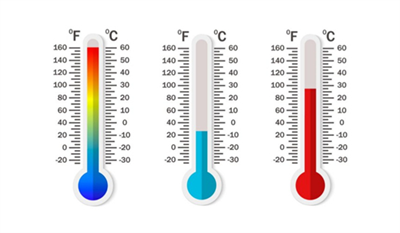
Figure 1. Celsius and Fahrenheit Scales
Understanding Celsius to Fahrenheit Conversion
Temperature is measured using different scales around the world, and two of the most widely used are Celsius (°C) and Fahrenheit (°F). Celsius to Fahrenheit conversion means changing a temperature value from the Celsius scale into its equivalent value in the Fahrenheit scale. This process allows to interpret temperature readings correctly when different measurement systems are used. Converting between these scales helps maintain consistency in scientific measurements, weather reports, and everyday temperature readings.
The Celsius scale is commonly used in most countries and is based on the freezing point of water at 0 °C and the boiling point at 100 °C. The Fahrenheit scale, used mainly in the United States and a few other regions, sets the freezing point of water at 32 °F and the boiling point at 212 °F. Because the interval size between these two scales is different, their numerical values for the same temperature are not the same. For this reason, temperature conversion becomes necessary when comparing data, reading international weather forecasts, or following instructions that use a different temperature unit.
Formula for Converting Celsius to Fahrenheit
To convert a temperature from Celsius (°C) to Fahrenheit (°F), a standard mathematical relationship between the two scales is used. The formula multiplies the Celsius temperature by a ratio and then adds a constant value to adjust the scale difference.
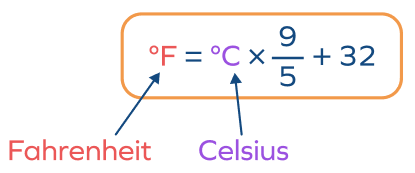
Figure 2. Celsius to Fahrenheit Conversion Formula
In this formula, the Celsius value (°C) is the temperature you want to convert. The fraction 9/5 represents the difference in interval size between the Celsius and Fahrenheit scales. After multiplying the Celsius value by this factor, 32 is added to align the result with the Fahrenheit scale’s starting reference point. This formula ensures that temperatures measured in Celsius can be accurately expressed in Fahrenheit.
Examples of Celsius to Fahrenheit Conversion
Now that you know the formula, you can apply it to convert a Celsius temperature into Fahrenheit. Let’s look at a simple example. If room temperature is 25 °C, what is it in °F?
Step 1: Identify the Celsius Value
First, identify the temperature given in the question. In this example, the temperature is 25 °C, which represents a typical room temperature. This value will be used as the input in the conversion formula. Before starting the calculation, make sure the unit is clearly written in Celsius so the correct formula can be applied.
Step 2: Write the Conversion Formula
Next, write the standard formula used for the conversion. The relationship between the two temperature scales is expressed by the formula below. Writing the formula first helps organize the calculation and prevents mistakes during substitution. This step ensures that you follow the correct process when converting the temperature.
Step 3: Substitute the Celsius Value
After writing the formula, replace the Celsius symbol in the equation with the given value. In this case, substitute 25 for the Celsius variable. Substituting the value correctly ensures the calculation will produce the right temperature in Fahrenheit.
Step 4: Perform the Multiplication
Next, multiply the Celsius value by 9/5. When you calculate 25 × 9/5, the result is 45. This step adjusts the temperature difference between the two scales because each Celsius degree corresponds to 9/5 of a Fahrenheit degree.
Step 5: Add 32 to the Result
Finally, add 32 to the value obtained from the multiplication step. This addition aligns the value with the reference point used in the Fahrenheit temperature scale.
Step 6: Write the Final Answer
After completing the calculation, write the answer with the correct unit. The converted temperature is 77 °F. This means that 25 °C is equal to 77 °F, which is a common room temperature in the Fahrenheit scale.
Celsius to Fahrenheit Conversion Chart
Here is a Celsius to Fahrenheit chart created using the conversion formula. This table provides quick reference values for commonly used temperatures.
|
Temperature in Celsius |
Temperature in Fahrenheit |
|
0°C (freezing point of water) |
32.0°F |
|
1°C |
33.8°F |
|
2°C |
35.6°F |
|
3°C |
37.4°F |
|
4°C |
39.2°F |
|
5°C |
41.0°F |
|
10°C |
50.0°F |
|
15°C |
59.0°F |
|
20°C |
68.0°F |
|
25°C |
77.0°F |
|
30°C |
86.0°F |
|
35°C |
95.0°F |
|
37°C (normal body temperature) |
98.6°F |
|
40°C |
104.0°F |
|
50°C |
122.0°F |
|
60°C |
140.0°F |
|
70°C |
158.0°F |
|
80°C |
176.0°F |
|
90°C |
194.0°F |
|
100°C (boiling point of water) |
212.0°F |
|
200°C |
392.0°F |
Common Mistakes in Celsius to Fahrenheit Conversion
When converting temperatures, small calculation errors can easily lead to incorrect results. Understanding these common mistakes can help you perform conversions more accurately.
Using the Wrong Formula
One common mistake is applying the Fahrenheit-to-Celsius formula instead of the Celsius-to-Fahrenheit formula. Because the formulas look similar, it is easy to confuse them. Using the wrong equation will produce completely incorrect results. Always check the direction of the conversion before starting the calculation.
Forgetting to Add 32
Another frequent error is forgetting to add 32 after multiplying by 9/5. This step is necessary because the Fahrenheit scale starts at a different reference point. If the addition step is skipped, the calculated value will be much lower than the correct Fahrenheit temperature.
Incorrect Fraction Calculation
Some people mistakenly multiply by 5/9 instead of 9/5. This happens when the ratio between the scales is reversed. Since the Celsius-to-Fahrenheit conversion requires multiplying by 9/5, using the wrong fraction changes the final result significantly.
Calculation Order Errors
Another mistake occurs when the steps are performed in the wrong order. The multiplication must happen before adding 32. If someone adds 32 to the Celsius value first and then multiplies, the final answer will be incorrect.
Rounding Too Early
Rounding numbers too early during the calculation can also create small inaccuracies. It is better to keep the exact value until the final step. Rounding only the final answer ensures better accuracy in temperature conversion.
Forgetting to Include Units
Sometimes people write the final number but forget to include the unit °F. Without the unit, the temperature value can be confusing. Always label the final answer clearly to indicate that the temperature is expressed in Fahrenheit.
Difference Between Celsius and Fahrenheit
|
Feature |
Celsius (°C) |
Fahrenheit (°F) |
|
Measurement System |
Metric system |
Imperial/US customary system |
|
Freezing Point of Water |
0 °C |
32 °F |
|
Boiling Point of Water |
100 °C |
212 °F |
|
Interval Between Freezing and Boiling |
100 degrees |
180 degrees |
|
Degree Size |
Larger temperature step |
Smaller temperature step |
|
Scientific Use |
Standard scientific scale |
Rarely used in science |
|
Global Usage |
Used worldwide |
Mainly used in the United States |
|
Weather Reporting |
Most countries |
United States weather reports |
|
Cooking Measurements |
Common internationally |
Used in US recipes |
|
Reference Points |
Based on water properties |
Historical calibration method |
|
Temperature Precision |
Broader increments |
Finer increments |
|
Thermometer Marking |
Widely used globally |
Region-specific |
|
Industrial Applications |
International standards |
Limited industrial use |
|
Typical Environment Range |
-30 °C to 50 °C weather range |
-22 °F to 122 °F weather range |
Applications of Celsius to Fahrenheit Conversion
Weather Forecast Interpretation
Weather reports in many countries use Celsius, while some regions commonly use Fahrenheit. Converting between the two scales helps understand temperature forecasts more easily. This is especially helpful when checking international weather updates or comparing climate conditions in different locations.
Cooking and Baking
Recipes from different countries often list oven temperatures using different measurement scales. One recipe may use Celsius, while another may use Fahrenheit. Converting the temperature ensures that food is cooked at the correct heat level. Accurate conversion helps maintain proper cooking results.
Scientific Research
Temperature measurements are often recorded using the Celsius scale in experiments and data reports. However, some of us may be more familiar with Fahrenheit. Converting the values helps present temperature data in a form that is easier for different audiences to understand. This improves clarity when sharing scientific information.
International Travel
When traveling to another country, temperature readings may be displayed in a different scale. Converting Celsius to Fahrenheit helps quickly understand how warm or cold the environment is. This makes it easier to prepare suitable clothing and plan outdoor activities. It also helps adjust to local weather conditions.
Engineering and Technical Work
Technical manuals, equipment specifications, and industrial standards sometimes present temperature values in a specific scale. In some cases, the values need to be converted to match another measurement system. Accurate conversion helps ensure proper equipment operation and reliable system performance. It also reduces the risk of temperature-related errors.
Education and Learning
Many science and mathematics lessons introduce both Celsius and Fahrenheit temperature scales. Learning how to convert between them helps students understand how different measurement systems relate to each other. Practicing temperature conversion also strengthens basic math skills. This concept is commonly taught in introductory science education.
Conclusion
Converting Celsius to Fahrenheit helps you understand temperature values used in different measurement systems. By using the correct formula and following the proper calculation steps, you can easily change Celsius values into Fahrenheit. Knowing common mistakes can help prevent errors during the conversion process. Understanding how the two scales differ and where they are used makes temperature readings easier to interpret in weather, cooking, science, travel, and technical work.
About us
ALLELCO LIMITED
Read more
Quick inquiry
Please send an inquiry, we will respond immediately.
Frequently Asked Questions [FAQ]
1. Why does the Celsius to Fahrenheit formula use 9/5?
The fraction 9/5 represents the difference in interval size between the Celsius and Fahrenheit scales. Between the freezing and boiling points of water, Celsius has 100 degrees, while Fahrenheit has 180 degrees. Since 180 ÷ 100 = 9/5, this ratio converts the degree spacing correctly.
2. At what temperature are Celsius and Fahrenheit the same?
Celsius and Fahrenheit have the same numerical value at −40 degrees. At this point, −40 °C equals −40 °F. This is the only temperature where both scales match exactly.
3. How do you convert Fahrenheit back to Celsius?
To convert Fahrenheit to Celsius, subtract 32 from the Fahrenheit value and multiply the result by 5/9. The formula is (°F − 32) × 5/9 = °C. This reverses the steps used in the Celsius-to-Fahrenheit conversion.
4. What temperature in Fahrenheit is considered room temperature?
Typical room temperature is about 20–25 °C, which equals 68–77 °F. This range is commonly used for indoor comfort, laboratories, and many technical specifications.
5. Is 0°C always equal to 32°F?
Yes, 0°C always equals 32°F because both values represent the freezing point of water at standard atmospheric pressure. This reference point is fixed in both temperature scales.
7-Segment Display: Pin Configuration, Types and Operating Principle
on June 30th
The Difference Between Analog and Digital Signals
on July 7th
Popular Posts
-

Complex Instruction Set Computers: How They Changed Computing?
on April 18th 147767
-

USB-C Pinout and Features
on April 18th 111996
-
Using Xilinx Unified Simulation Primitives: A Comprehensive Guide to FPGA Design and Simulation
on April 18th 111351
-

Power Supply Voltages in Electronics: Meaning of VCC, VDD, VEE, VSS, and GND
on April 18th 83758
-

RJ45 Connector Guide: Pinout, Wiring, Cable Types, and Uses
on January 1th 79555
-

The Ultimate Guide to Wire Color Codes in Modern Electrical Systems
The way our electrical systems use colors isn’t just for looks. Each wire color now indicates a specific function, making it easier to identify and handle electrical components correctly during ins...on January 1th 66955
-
Purge Valve Guide: Function, Symptoms, Testing, and Replacement for Optimal Engine Performance
The purge valve is a key part of a car’s system that helps keep the air clean by managing fuel vapors before they can escape into the atmosphere. This not only helps the environment by reducing pol...on January 1th 63098
-

Quality (Q) Factor: Equations and Applications
The quality factor, or 'Q', is important when checking how well inductors and resonators work in electronic systems that use radio frequencies (RF). 'Q' measures how well a circuit minimizes energy...on January 1th 63029
-

Achieving Peak Performance with the Maximum Power Transfer Theorem
The Maximum Power Transfer Theorem explains how energy from a source, such as a battery or generator, flows to a connected load. It shows the exact condition where the load receives the most power....on January 1th 54095
-

A23 Battery Specifications and Compatibility
The A23 battery is a small, cylinder-shaped battery with high voltage. Also called 23A, 23AE, or MN21, it runs at 12 volts and much higher than AA or AAA batteries. Its special design make...on January 1th 52176
HOT Part Number
-
MAX9001EUB+T
Analog Devices Inc./Maxim Integrated
IC AMP COMP REF 10UMAX
1N4742ATR
onsemi
DIODE ZENER 12V 1W DO41
8V49NS0412NLGI
Renesas Electronics America Inc
IC CLOCK GENERATOR 64VFQFPN
EP4S100G2F40I3N
Intel
IC FPGA 654 I/O 1517FBGA
WSL1206R0300FEB
Vishay Dale
RES 0.03 OHM 1% 1/4W 1206
PCM9210PTR
Texas Instruments
192KHZ DIX WITH ADC AND ROUTING
FDP3652
Fairchild Semiconductor
POWER FIELD-EFFECT TRANSISTOR, 9
FSL336LRLX
onsemi
IC OFFLINE SWITCH MULT TOP 7LSOP
BU12TD3WG-TR
Rohm Semiconductor
IC REG LINEAR 1.2V 200MA 5SSOP
VT1536MBFQX
Analog Devices Inc./Maxim Integrated
IC CHIP QFN SMD
LTC1647-3IGN#PBF
Analog Devices Inc.
IC HOT SWAP CTRLR GP 16SSOP
GRM1887U1H1R8CZ01D
Murata Electronics
CAP CER 1.8PF 50V U2J 0603
AP2280-2WG-7
Diodes Incorporated
IC PWR SWITCH P-CHAN 1:1 SOT25
PEX8606-BA50BIG
Broadcom Limited
PEX8606-BA50BI G
HSMS-281F-BLKG
Broadcom Limited
RF DIODE SCHOTTKY 20V SOT323
STPS20H100CT
STMicroelectronics
DIODE ARRAY SCHOTTKY 100V TO220
AAT4901IJS-1-T1
Skyworks Solutions Inc.
IC HALF BRIDGE DRIVER 700MA SC70
OPA140AID
Texas Instruments
IC OPAMP JFET 1 CIRCUIT 8SOIC -

2313225-1
TE Connectivity Aerospace, Defense and Marine
DAUGHTERCARD, HALF MODULE, ST ST
FDB3672-F085
Fairchild Semiconductor
MOSFET N-CH 100V 7.2A/44A TO263
CGA5L3X7S2A155M160AB
TDK Corporation
CAP CER 1.5UF 100V X7S 1206
SN74CBTLV3251PWR
Texas Instruments
IC MUX/DEMUX 1 X 8:1 16TSSOP
282105-1
TE Connectivity AMP Connectors
CONN RCPT HSG 3POS 6.00MM
SCTWA30N120
STMicroelectronics
IC POWER MOSFET 1200V HIP247
MC75451P
Motorola
PERIPHERAL DRIVER, 2 DRIVER
TC7660SEOA713
Microchip Technology
IC REG CHARG PUMP INV 20MA 8SOIC
06031A120GAT4A
KYOCERA AVX
CAP CER 12PF 100V C0G/NP0 0603
HEDL-5540#A12
Broadcom Limited
ROTARY ENCODER OPTICAL 500PPR
MC56F82743VFM
NXP USA Inc.
IC MCU 32BIT 64KB FLASH 32QFN
NR77CB0
Bourns Inc.
THERMOSTAT 77DEG C SPST-NC 2SMD
GCM0335C1E470JD03D
Murata Electronics
CAP CER 47PF 25V C0G/NP0 0201
T491B336K006ZT
KEMET
CAP TANT 33UF 6.3V 10% 1411
C0402C331K8RAC7867
KEMET
CAP CER 330PF 10V X7R 0402
ICM-20630
TDK InvenSense
IC MEMS ACCELEROMETER
GCM1885C2A6R8DZ13D
Murata Electronics
CAP CER 6.8PF 100V C0G/NP0 0603
LTC3829EUHF#PBF
Analog Devices Inc.
IC REG CTRLR BUCK 38QFN -
SMCJ60CA
Littelfuse Inc.
TVS DIODE 60VWM 96.8VC DO214AB
MUR1060F
Yangjie Technology
ITO-220AC 600V 10A Diodes Rect
MM908E624ACPEW
Freescale Semiconductor
MICROCONTROLLER, 8-BIT, HC08/S08
REG1117FA-2.5/500
Texas Instruments
IC REG LIN 2.5V 1A DDPAK/TO263-3
UMK212B7473MG-T
Taiyo Yuden
CAP CER 0.047UF 50V X7R 0805
IRLR7833TRPBF
Infineon Technologies
MOSFET N-CH 30V 140A DPAK
74LS373P-E
Renesas Electronics America Inc
IC LATCH FLIP FLOP REGISTER DIP
R3112N271C-TR-FE
Nisshinbo Micro Devices Inc.
IC SUPERVISOR 1 CHANNEL SOT23-5
ISL83386EIV
Intersil
IC TRANSCEIVER FULL 3/2 20TSSOP
S9S12HA48J0CLL
NXP USA Inc.
IC MCU 16BIT 48KB FLASH 100LQFP
LP3855EMPX-3.3
Texas Instruments
IC REG LINEAR 3.3V 1.5A SOT223-5
LQW18ASR18G00D
Murata Electronics
FIXED IND
VI-J21-MZ
Vicor Corporation
DC DC CONVERTER 12V 25W
CGA6L1X7S3A472M160AA
TDK Corporation
CAP CER 4700PF 1KV X7S 1210
170M3902
Eaton - Bussmann Electrical Division
FUSE SQUARE 125A 690VAC RECT
SA16A-E3/73
Vishay General Semiconductor - Diodes Division
TVS DIODE 16VWM 26VC DO204AC
MAX127AENG+
Analog Devices Inc./Maxim Integrated
IC DAS/ADC 12BIT 8K 24DIP
SMF14AT1G
onsemi
TVS DIODE 14VWM 23.2VC SOD123FL