Understanding CAD Systems: A Complete Guide
CAD technology has completely transformed how products are designed and created. It simplifies tasks, speeds up processes, and ensures accuracy, making it a go-to solution for creating innovative designs. This article explores CAD's features, advancements, and how it supports modern workflows.Catalog

Overview of CAD Technology
CAD technology has brought a remarkable shift to the way products are designed and developed. It has transformed traditional approaches, making them more efficient and streamlined. Today, CAD is used across various fields like engineering, manufacturing, and construction, creating far-reaching benefits for industries and society.
The continuous development of CAD has significantly boosted how quickly and effectively companies can design their products. It helps simplify complex tasks, reduce workload, and shorten the time required for design processes. This technology not only enhances efficiency but also ensures better design accuracy and consistency.
With its widespread application in sectors like aerospace, machinery, electronics, and construction, CAD has opened the door to new design methods such as collaborative and virtual design. These advancements align with the growing use of technologies like artificial intelligence, virtual reality, and multimedia. In the future, CAD is expected to become more integrated, smart, and connected, adapting to modern business needs and digital trends.
For businesses, embracing CAD means smoother operations and greater innovation. Its integration with e-commerce and advanced management systems enables seamless supply chain collaboration within and across enterprises. This paves the way for faster, smarter, and more agile design and production cycles, benefitting companies and customers alike.
Evolution of CAD Technology
CAD technology originated in the 1960s as a concept for interactive graphics, spearheaded by research at the Massachusetts Institute of Technology (MIT). Initially, high costs restricted its use to large corporations like General Motors and Boeing, which developed their own interactive drawing systems.
The 1970s saw a shift as computer prices fell, making CAD systems more accessible to industries. By the 1980s, personal computers revolutionized CAD adoption, spurring rapid development in software capabilities. Companies like Autodesk introduced accessible CAD systems, which gained popularity due to affordability and flexibility, allowing them to evolve quickly.
A notable early milestone was Ivan Sutherland's "Sketchpad," introduced in 1963. It marked a turning point by enabling designers to interact with computers graphically using a light pen. This innovation laid the foundation for modern graphical user interfaces.
Initially, CAD applications were limited to industries like automotive and aerospace. As computer hardware became cheaper and more powerful, CAD's capabilities expanded. It evolved from basic drawing tools into sophisticated systems for intelligent design, simulation, and analysis. The introduction of 3D modeling further transformed design processes by enabling highly detailed, realistic representations that captured complexities 2D drawings could not.
In China, CAD began as secondary development on foreign platforms. Over time, domestic developers adapted CAD to meet local needs, fostering innovation and making the technology more accessible to Chinese enterprises. By 2014, a collaborative domestic CAD alliance had strengthened these efforts, providing tailored solutions for diverse industries and driving further advancements in CAD technology.
Today, CAD continues to evolve alongside advancements in computing, enabling designers worldwide to work faster and more creatively, revolutionizing industries and shaping the future of design and engineering.
Certification Programs for CAD Professionals
National Computer-Aided Technology Certification Project
The National Computer-Aided Technology Certification (CAXC) project aims to prepare individuals for modern engineering roles by offering systematic training in CAD and related technologies. This initiative is designed for students, teachers, and professionals in various fields, such as engineering and manufacturing, who wish to enhance their technical skills.
The program focuses on teaching practical skills in areas like 2D and 3D CAD, computer-aided engineering (CAE), and computer-aided manufacturing (CAM). Participants gain an understanding of product data management and industrial design processes. By completing this certification, you can learn how to use the latest tools and techniques, making you better equipped for roles in industry and academia.
Addressing Industry Needs Through Certification
The certification program also responds to the growing need for skilled professionals in manufacturing, an area vital to a nation's growth. Many engineering graduates face challenges meeting employer expectations due to gaps in practical skills. This certification helps bridge that gap by combining theoretical knowledge with hands-on application.
Through the program, you can familiarize yourself with advanced industrial design technologies, significantly reducing the learning curve when transitioning to professional environments. It also incorporates feedback from industry experts to ensure the curriculum is aligned with real-world demands, helping participants develop skills that make them job-ready.
Components and Structure of CAD Systems
Interactive Computer System
CAD systems rely on interactive computer setups equipped with advanced graphics capabilities. These systems typically include essential components such as a computer host, display terminal, graphics tablet, plotter, scanner, printer, and a range of specialized software. These components work together to allow users to create, modify, and view designs interactively, making the design process more intuitive and efficient.
Engineering Workstations
Engineering workstations are powerful systems designed for individual users. These systems provide advanced features like three-dimensional graphics processing and are capable of handling large and complex design tasks. With high-resolution displays and compatibility with standard graphics software, these workstations are often used in environments where resource sharing over local area networks is required.
Personal Computer Systems
Personal computers (PCs) offer a more affordable and flexible option for CAD use. Over the years, PCs have evolved to include enhanced performance features like high-resolution graphics displays and specialized graphics cards. These advancements, combined with improvements in PC network technology, have made personal computers a popular choice for CAD applications, especially in small to medium-sized businesses.
Peripheral Equipment
Peripheral devices are essential for interacting with CAD systems. Input devices like keyboards, light pens, touch screens, and graphic tablets allow users to draw, design, and manipulate objects with precision. Output devices, such as printers and plotters, generate both digital and physical representations of designs. Advanced display systems, including raster scanning and directed beam displays, further enhance user interaction by offering detailed and vibrant graphical outputs.
Software Components
Software is the backbone of any CAD system. It includes graphic display software, CAD application programs, and data management tools. Interactive graphic display software enables tasks like editing, transformation, and visualization of designs, while CAD application software supports modeling and analysis for specific fields like architecture or electrical engineering. Data management software helps organize and retrieve large volumes of design information, ensuring smooth workflow management.
Auxiliary Models
Auxiliary models like 3D drawing software provide a realistic and detailed representation of designs. They are especially useful for capturing intricate features and ensuring accuracy. Many professional CAD systems support a variety of file formats like IGS and STEP, making it easier to share and integrate designs across platforms. Advanced systems like SolidWorks, CATIA, and Pro/E cater to specialized needs in industries such as aerospace and automotive.
Resource Libraries
Resource libraries are collections of standard parts and models that simplify the design process. They enable designers to quickly access predefined components, reducing time spent on repetitive tasks. These libraries, often hosted on online platforms, offer a wide range of elements for various industries, supporting better collaboration and efficiency in the design process.
Foundational CAD Technologies
Modern CAD systems offer advanced features that make designing intuitive, precise, and efficient. Interactive technology is a core aspect, allowing you to communicate directly with the computer system. This enables you to create, modify, and refine designs in real-time, with instant visual feedback on the screen. The ability to see immediate results makes the design process more fluid and adaptable, helping you maintain accuracy throughout your work.
Graphics transformation tools further enhance this experience by giving you full control over your designs. You can seamlessly switch between coordinate systems, adjust perspectives, and scale or rotate your models to view them from any angle. These tools are not only user-friendly but also ensure that complex tasks like perspective changes and matrix-based transformations are handled efficiently.
Automation within CAD systems takes productivity to the next level. It simplifies repetitive tasks, such as logic synthesis and layout design, while supporting advanced functions like system-level simulation and microprogramming. By integrating these capabilities, CAD software helps you focus more on the creative aspects of your projects, rather than manual technical work.
With these advanced features, CAD evolves beyond a design tool into a powerful platform that supports creativity and efficiency. The combination of interactivity, transformation tools, and automation equips you with everything you need to manage and optimize even the most complex projects.
Advanced Features and Technologies in CAD
Visual Drawing Capabilities
CAD software excels in visual drawing, making it easy for you to create and edit designs. The interface includes menus, toolbars, and dialog boxes that allow you to perform various operations, like key point editing, object snapping, and annotation. Features such as bird’s-eye view controls, text editing, and graphic previews make the process intuitive and efficient.
2D Drawing Tools
The 2D tools in CAD systems are versatile and user-friendly. You can create basic geometric shapes like lines, circles, ellipses, and polygons with precision. The software also provides helpful auxiliary tools, such as orthogonal mode for drawing straight lines and object snapping for pinpoint accuracy. These features make it easier to locate points, draw at specific angles, and create detailed designs.
Graphic Editing Functions
Editing tools in CAD systems give you complete control over your designs. You can move, copy, rotate, trim, stretch, or scale objects effortlessly. This flexibility ensures that you can adjust designs to meet specific requirements without starting from scratch.
Dimensioning and Text Features
Dimensioning tools let you add measurements to your drawings with ease, while customization options ensure that dimensions are clear and visually consistent. Text tools allow you to insert and format text anywhere in your designs, enabling detailed annotations and notes.
Layer Management
Layer management in CAD systems helps you organize your designs effectively. Each graphic object is assigned to a layer where attributes like color, line type, and line width can be defined. This makes complex designs easier to handle and modify.
3D Modeling and Rendering
The 3D capabilities of CAD systems enable you to create solid and surface models with great detail. You can visualize these models from different perspectives and make precise adjustments. Rendering tools enhance these models, giving them a realistic appearance that is perfect for presentations or simulations.
Data Sharing and Networking
CAD software supports data sharing through various formats, enabling you to collaborate with others. Network functionality allows you to publish and access resources, making teamwork more streamlined and efficient.
Transitioning from 2D to 3D
Tools like solprof, solview, and soldraw commands make it easy to create 3D views from 2D designs. These features let you visualize models in new ways, including creating multi-faceted or sectional views, helping you better understand complex structures.
Customization and Secondary Development
CAD systems allow you to customize menus and toolbars, making your workspace more efficient. You can also use embedded languages like Autolisp, Visual Lisp, or VBA for advanced customization and secondary development. This flexibility ensures the software can adapt to your specific needs.
User Interface
The CAD user interface is designed for interactivity and ease of use. With tools like drop-down menus, toolbars, and advanced interfaces, you can navigate the software intuitively. These features make it simple to execute commands, access tools, and interact with your designs.
Function Keys
• F1: Get help
• F2: Switch between drawing window and text window
• F3: Toggle automatic object capture
• F4: Digitizer control
• F5: Switch isometric planes
• F6: Toggle coordinate display on the status line
• F7: Grid display mode control
• F8: Orthogonal mode control
• F9: Grid snap mode control
• F10: Polar axis mode control
• F11: Object tracking control
Combination Function Keys
• Ctrl+B: Toggle grid capture mode (F9)
• Ctrl+P: Print
• Ctrl+C: Copy selected objects to clipboard
• Ctrl+F: Toggle automatic object capture (F3)
• Ctrl+G: Toggle grid display mode (F7)
• Ctrl+J: Repeat the last command
• Ctrl+K: Insert hyperlink
• Ctrl+N: Create a new graphic file
• Ctrl+M: Open the options dialog
• Ctrl+L: Activate orthogonal mode
• Ctrl+0: Full-screen display
Common Shortcut Keys
• A: Draw an arc
• AA: Measure area and perimeter
• AL: Align objects (requires blocks or combined objects)
• AR: Array objects
• AP: Load application
• ATE: Edit properties
• B: Create a block
• BR: Break a line or object at a point
• C: Draw a circle
• CO: Copy objects
• CLOSE: Close a file
• COL: Set color
• CHA: Rectangular chamfer
• CTRL+1: Open the feature panel
• CTRL+2: Open the image explorer
• CTRL+N: Create a new file
• CTRL+O: Open an existing file
• CTRL+0: Full-screen mode
• CTRL+P: Print
• CTRL+Y: Redo the last undone step
• CTRL+Z: Undo the last step
Dimensioning and Drawing Tools
• DLI: Add linear dimensions
• DAL: Add aligned dimensions
• DRA: Add radius dimensions
• DDI: Add diameter dimensions
• DAN: Add angular dimensions
• DCE: Add center marks
• DOR: Add coordinate dimensions
• DBA: Add baseline dimensions
• DCO: Add continued dimensions
Drawing and Editing Commands
• E: Erase objects
• EL: Draw an ellipse
• EX: Extend lines or objects
• EXT: Stretch faces or objects
• F: Draw an arc to connect lines
• G: Group objects
• H: Add a hatch pattern
• I: Insert a block
• L: Draw a straight line
• LA: Manage layers
• LT: Manage line types
• MA: Match object properties
• MI: Mirror objects
3D Modeling and Transformation
• 3DORBIT: Rotate 3D models interactively
• 3DPOLY: Draw a 3D polyline
• REV: Create a revolved surface
• LOFT: Generate a lofted surface
• SWEEP: Create a swept surface
Auxiliary Tools
• SO: Fill areas
• SPL: Draw spline curves
• T: Add multiline text
• U: Undo the last step
• UNI: Combine multiple objects into a single union
• XL: Create construction lines
• Z: Zoom into specific areas
Domestic Innovation Features
• New CAD tools offer advanced customization and features to suit specific industries.
• Functions like automatic layers, statistical summation, and enhanced collaboration tools improve productivity and accuracy.
About us
ALLELCO LIMITED
Read more
Quick inquiry
Please send an inquiry, we will respond immediately.
A Simple Guide to DMA Operations
on January 4th
The Role of Verilog HDL in Modern Digital Design
on January 4th
Popular Posts
-

Complex Instruction Set Computers: How They Changed Computing?
on April 18th 147749
-

USB-C Pinout and Features
on April 18th 111904
-
Using Xilinx Unified Simulation Primitives: A Comprehensive Guide to FPGA Design and Simulation
on April 18th 111349
-

Power Supply Voltages in Electronics: Meaning of VCC, VDD, VEE, VSS, and GND
on April 18th 83714
-

RJ45 Connector Guide: Pinout, Wiring, Cable Types, and Uses
on January 1th 79502
-

The Ultimate Guide to Wire Color Codes in Modern Electrical Systems
The way our electrical systems use colors isn’t just for looks. Each wire color now indicates a specific function, making it easier to identify and handle electrical components correctly during ins...on January 1th 66869
-

Quality (Q) Factor: Equations and Applications
The quality factor, or 'Q', is important when checking how well inductors and resonators work in electronic systems that use radio frequencies (RF). 'Q' measures how well a circuit minimizes energy...on January 1th 63004
-
Purge Valve Guide: Function, Symptoms, Testing, and Replacement for Optimal Engine Performance
The purge valve is a key part of a car’s system that helps keep the air clean by managing fuel vapors before they can escape into the atmosphere. This not only helps the environment by reducing pol...on January 1th 62943
-

Achieving Peak Performance with the Maximum Power Transfer Theorem
The Maximum Power Transfer Theorem explains how energy from a source, such as a battery or generator, flows to a connected load. It shows the exact condition where the load receives the most power....on January 1th 54076
-

A23 Battery Specifications and Compatibility
The A23 battery is a small, cylinder-shaped battery with high voltage. Also called 23A, 23AE, or MN21, it runs at 12 volts and much higher than AA or AAA batteries. Its special design make...on January 1th 52088
HOT Part Number
-

LTC4063EDD#TRPBF
Analog Devices Inc.
IC BATT CHG LI-ION 1CELL 10DFN
MIMX8MM1CVTKZAA
NXP USA Inc.
IC MPU I.MX 8M MINI SOLOLITE
APDS-9005-020
Broadcom Limited
SENSOR OPT 500NM AMB 6CHIPLED
06031A820KAT2A
KYOCERA AVX
CAP CER 82PF 100V C0G/NP0 0603
ICM-20602
TDK InvenSense
IMU ACCEL/GYRO/TEMP I2C/SPI LGA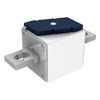
170M4611
Eaton - Bussmann Electrical Division
FUSE SQUARE 350A 700VAC RECT
08053C105JAZ2A
KYOCERA AVX
CAP CER 1UF 25V X7R 0805
EP1C12F324C6N
Intel
IC FPGA 249 I/O 324FBGA
2SC4617T1G
onsemi
TRANS NPN 50V 0.1A SC75 SOT416
TL431AILPRAG
onsemi
IC VREF SHUNT ADJ 1% TO92-3
ADAU1787BCBZRL
Analog Devices Inc.
4 ADC, 2 DAC LOW POWER CODEC, AU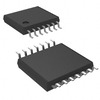
74VHC164MTCX
onsemi
IC SHIFT REGISTER 8BIT 14TSSOP
DAN222M3T5G
onsemi
DIODE ARRAY GP 80V 100MA SOT723
NR3015T470M
Taiyo Yuden
FIXED IND 47UH 300MA 1.608OHM SM
MM3Z18VC
onsemi
DIODE ZENER 18V 200MW SOD323F
1N4001W
Rectron USA
DIODE GEN 1A 50V SOD-123F
SMBJ90A
Taiwan Semiconductor Corporation
TVS DIODE 90VWM 146VC DO214AA
NTA1215MC
Murata Power Solutions Inc.
DC DC CONVERTER +/-15V 1W -
SDR1307-101KL
Bourns Inc.
FIXED IND 100UH 1.9A 180MOHM SMD
AOT5B65M1
Alpha & Omega Semiconductor Inc.
IGBT 650V 5A TO220
STP16CP596B1R
STMicroelectronics
IC LED DRIVER LINEAR 50MA 24DIP
AD7895ANZ-2
Analog Devices Inc.
IC ADC 12BIT SAR 8DIP
MURB1620CTT4G
onsemi
DIODE ARRAY GP 200V 8A D2PAK
STGIPS30C60T-H
STMicroelectronics
MOD IPM SLLIMM 30A 600V 25SDIP
IXDN604SIA
IXYS Integrated Circuits Division
IC GATE DRVR LOW-SIDE 8SOIC
CY7C63743-SC
Infineon Technologies
IC MCU 8K LS USB/PS-2 24-SOIC
U2745B-MFBG3
Microchip Technology
RF TX IC UHF 310-440MHZ 16LSSOP
DSPIC30F4013T-30I/PT
Microchip Technology
IC MCU 16BIT 48KB FLASH 44TQFP
ADF4106BRUZ-RL
Analog Devices Inc.
IC CLK/FREQ SYNTH 16TSSOP
EL8403IS
Elantec
IC OPAMP GP 4 CIRCUIT 14SOIC
8A35001B-001AJG
Renesas Electronics America Inc
NETWORK TIMING
GRM0337U1HR90BD01D
Murata Electronics
CAP CER 0.9PF 50V U2J 0201
LT1356CS#PBF
Analog Devices Inc.
IC VOLTAGE FEEDBACK 2 CIRC 16SO
AON7280
Alpha & Omega Semiconductor Inc.
MOSFET N-CH 80V 20A/50A 8DFN
IRLI540N
Infineon Technologies
MOSFET N-CH 100V 23A TO220AB FP
VI-J6Z-MZ
Vicor Corporation
VI-J6Z-MZ 300V 2V 5A -
LMH6722MA
Texas Instruments
IC AMP CURRENT FEEDBACK 14SOIC
HZM6.8Z4MWATL-E
Renesas Electronics America Inc
TVS DIODE 3.5VWM 3MPAK
LM4041DIM7-1.2
Texas Instruments
IC VREF SHUNT 1% SC70-5
RT6200GE
Richtek USA Inc.
IC REG BUCK ADJ 600MA SOT23-6
R5F21274SNFP#X6
Renesas Electronics America Inc
IC MCU 16BIT 16KB FLASH 32LQFP
1N5227B
onsemi
DIODE ZENER 3.6V 500MW DO35
12102C472JAT2A
KYOCERA AVX
CAP CER 4700PF 200V X7R 1210
PZTA64
Fairchild Semiconductor
SMALL SIGNAL BIPOLAR TRANSISTOR,
XC1765ELSO8C
AMD
IC PROM SER C-TEMP 3.3V 8-SOIC
XR88C92CJ-F
MaxLinear, Inc.
IC UART FIFO DUAL 44PLCC
RT24C2X202
Bourns, Inc.
TRIMMER 2K OHM 0.75W PC PIN SIDE
DLW31SN900SQ2L
Murata Electronics
CMC 370MA 2LN 90 OHM SMD
LMK432F476ZM-T
Taiyo Yuden
CAP CER 47UF 10V Y5V 1812
MOC207R1VM
onsemi
OPTOISO 2.5KV TRANS W/BASE 8SOIC
GRM0335C1E390JD01D
Murata Electronics
CAP CER 39PF 25V C0G/NP0 0201
SE10PG-M3/84A
Vishay General Semiconductor - Diodes Division
DIODE GEN PURP 400V 1A DO220AA
RABS15M REG
Taiwan Semiconductor Corporation
BRIDGE RECT 1P 1KV 1.5A ABS-L
PI74LPT16245AEX
Diodes Incorporated
IC TXRX NON-INVERT 3.6V 48TSSOP