Understanding Square Waveforms in Electronics
Square waveforms are a big part of how electronic devices work, especially in systems that deal with digital signals. These waveforms are simple in shape but very useful, switching between high and low levels in a clean, repeating pattern. You’ll find them in things like timers, clocks, sound generators, and control systems. In this article, you’ll learn what square, rectangular, and pulse waveforms are, how they look and sound, and how they’re used in real circuits. You’ll also see how square waves are built using sine waves, and how to generate them using different tools like timers, microcontrollers, and signal generators. Whether you're just curious or working on a project, this guide will help you understand square waveforms better. Let's get started.Catalog

Figure 1. Square Waveform Generator
What Are Square, Rectangular, and Pulse Waveforms?
Square, rectangular, and pulse waveforms are types of signals that switch between two levels — usually a high and a low voltage. These waveforms are used a lot in electronics, especially in digital circuits where signals are either on or off, like 1s and 0s in binary. A square waveform is one of the most common. It switches evenly between the high and low states, spending the same amount of time in each. This creates a pattern that looks like perfect squares when seen on a graph, which is why it’s called a square wave.
In an ideal world, the change between high and low in a square waveform would be instant — the signal would snap from one state to the other with no delay. But in real life, this shift takes a tiny amount of time. That’s why rise time (how quickly it goes up) and fall time (how quickly it drops) are often looked at closely when analyzing these waveforms.
Now, while the term "square wave" is sometimes used for any two-level waveform, there's a specific difference. If the waveform spends more time high than low — or the other way around — it’s called a rectangular waveform. It's still switching between two states, but the timing isn't equal. It might be high for a short time and low for a longer one, or vice versa.

Figure 2. Square Waveform
Then there’s the pulse waveform. Unlike square or rectangular waveforms, pulses don’t always repeat. They can happen once or occasionally, depending on the situation. A pulse might occur when a voltage hits a certain point or when some event triggers it. These pulses are often used to send data or control signals in circuits.
These waveforms might seem basic, but they play a big role in how electronic devices talk, process signals, and perform tasks behind the scenes.
What a Square Waveform Looks Like?
A square waveform is easy to recognize once you’ve seen it. It has a very simple and sharp shape — it jumps straight up to a high level, stays there for a moment, then drops straight down to a low level, and repeats this pattern over and over. On a graph or an oscilloscope screen, it looks like a row of connected squares or blocks, going up and down in a clean, regular rhythm.
What makes a square waveform truly “square” is that it spends an equal amount of time in the high state as it does in the low state. This balance is what gives it its name. If you were to look at it like a pattern of light switches, it would be like turning the light on for two seconds, off for two seconds, on for two seconds again, and so on. That equal timing is called a 1:1 mark-to-space ratio — meaning the “on” and “off” times match.
Although the term “square wave” gets used quite loosely, in technical terms, if the time spent in the high and low states is not the same, it’s no longer a true square waveform. That’s when it becomes a rectangular waveform instead. But both still share that same up-and-down, two-level style — the difference is just in how long each level lasts. This clean, switching pattern is what makes square waveforms so useful in digital electronics, because they clearly show a change from one state to another.
What a Square Waveform Sounds Like?
If you've ever heard a square waveform, you’ll notice it has a sharp, buzzy sound — much more intense than a smooth sine wave. That harshness comes from the shape of the wave itself. Because a square wave has quick, sudden jumps between high and low levels, the sound it produces is more cutting and less smooth to the ear.

Figure 3. Sound Representation of a Square Waveform
Square waves are full of what are called harmonics — these are extra frequencies layered on top of the main tone. That’s what gives square waves their rich, edgy character. In music or sound design, this makes them useful when you want a more attention-grabbing or unique tone. They're often used in synthesizers and electronic instruments for this reason. While a sine wave might sound soft and pure, a square wave comes through stronger and more aggressive, which can be great when you want a sound that stands out.
Important Things About Square Waveforms
Square waveforms are used a lot in electronics, especially in digital circuits. These are circuits where signals are either on or off. A square waveform fits perfectly because it switches clearly between two levels: high and low. This makes it easy for devices to read and respond to the signal.
In digital systems, the high level is usually called "1" and the low level is called "0". You may also hear them referred to as HIGH and LOW. These labels help show when the signal is active or inactive. Whether you're working with simple logic chips or advanced microcontrollers, square waveforms are often part of the process. They're used to control actions, send data, or keep time in many types of devices.
Since voltage levels can vary slightly, most systems define a range for what counts as HIGH or LOW. This allows devices to work properly even when the signal isn't exactly the same each time. There are a few key parts of a square waveform you should understand to use it properly.
Time Period
The time period tells you how long it takes for one full cycle of the waveform to happen. That includes going from low to high and back to low again. You can measure this from one rising edge to the next, or from one falling edge to the next. Even if the rise or fall isn't instant, the measurement tools always use the same trigger point, so the results stay accurate. Knowing the time period helps you understand how fast the waveform repeats.
Frequency
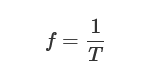
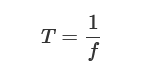
Frequency shows how many times the waveform repeats in one second. It’s measured in Hertz (Hz). If a waveform repeats once each second, it has a frequency of 1 Hz. If it repeats a thousand times in a second, that’s 1000 Hz or 1 kHz. You can easily switch between frequency and time period using this simple formula:
Frequency = 1 divided by Time Period
Time Period = 1 divided by Frequency
Amplitude
Amplitude is the voltage height of the waveform. It can be measured from the bottom (low) to the top (high). In analog systems, this might be listed as peak or peak-to-peak voltage. But in digital systems, what matters more is whether the signal is read as LOW or HIGH.
For example, in older TTL systems, LOW might mean a voltage between 0 and 0.4 volts. HIGH might be between 2 and 5 volts. Modern systems may use lower voltages, but the general idea stays the same. What matters is that the signal clearly fits into a LOW or HIGH range, so digital devices can tell what it means.
Once you get familiar with time, frequency, and amplitude, you’ll find it easier to work with square waveforms in real-world circuits. These simple waveforms can do a lot when used in the right way.
How Square Waveforms Rise and Fall?
Square waveforms are known for their sharp, clean transitions between high and low voltage levels. But in the real world, those edges aren’t truly instant. Every square waveform takes a small amount of time to move from low to high (called the rise time) and from high to low (called the fall time). These short transition periods may seem minor, but they can make a big difference in how well a circuit works, especially in digital electronics where timing matters.
The rise time is measured from the point where the signal reaches 10 percent of its final high value to the point where it reaches 90 percent. The fall time is measured in the same way, but from 90 percent down to 10 percent. These specific points help avoid any slight rounding or noise that might happen at the very start or end of a transition. In some cases, you might see measurements taken from 5 percent to 95 percent, but that’s less common.

Figure 4. Rise and Fall Time Points in a Square Waveform
These measurements are often given in nanoseconds, especially in fast digital systems. If the rise or fall time is too slow, it could cause problems, such as misread signals or timing issues in the circuit. That’s why you’ll often see rise and fall time values listed in the specifications of devices like signal generators or logic chips.
By knowing how fast a waveform rises or falls, you can better understand whether it will work smoothly in your project. It also helps when you're troubleshooting or trying to improve signal quality. Even though these changes happen very quickly, they’re an important part of how square waveforms behave in real circuits.
How Square Waveforms Are Made from Sine Waves?
At first glance, a square waveform looks very different from a smooth sine wave. One is sharp and blocky, the other soft and curving. But if you break a square waveform down using something called Fourier analysis, you’ll see that it’s actually made by adding together a series of sine waves. This may seem surprising, but it’s a fascinating way to understand how waveforms are built.
When a square waveform is analyzed, it turns out to be a mix of several sine waves that are all related to each other. These waves are called harmonics. The first one, known as the fundamental, sets the main frequency of the square wave. Then come the others: the third harmonic (which is three times the frequency of the fundamental), the fifth harmonic, the seventh, and so on. Each of these is an odd-numbered multiple of the fundamental frequency, and each one is a little weaker than the last.

Figure 5. Sine Wave Components That Form a Square Wave
So the more harmonics you add, the more the combined shape starts to look like a square wave. If you only had the fundamental sine wave, it would sound and look like a smooth wave. Add the third and fifth harmonics, and it starts to get squarer. Keep going, and the waveform becomes sharper and more defined.
Mathematically, a square wave can be expressed as the sum of its harmonic sine waves using the following equation:

This formula shows that a perfect square wave is made by adding only the odd-numbered harmonics of sine waves, with each harmonic having less strength than the one before it.

Figure 6. Frequency Spectrum of a Square Waveform
If you pass a square waveform through a low pass filter — which blocks out the higher harmonics — you’ll lose some of that sharp shape. The edges will become rounded, and the waveform won’t look or act like a true square anymore. That’s because those higher harmonics are what give a square wave its sharp edges and quick transitions.
In the spectrum diagram of a square wave, you’ll see strong signals at the odd-numbered harmonics — 3rd, 5th, 7th, and so on. These signals drop in strength as they go higher in frequency. You won’t see any even-numbered harmonics, because square waves don’t contain them. This pattern is part of what gives square waveforms their unique properties in both sound and electronic behavior.
Understanding that a square wave is built from sine waves helps explain why it behaves the way it does. Whether you’re working with sound, timing signals, or logic pulses, this hidden structure of harmonics plays a big part in how square waveforms function in real circuits.
Uses of Square Waveforms in Real Circuits
Square waveforms are used in many different types of electronic circuits, especially where timing and control are important. One of the most common uses is in clock signals. In digital electronics, every operation is often timed by a clock pulse — a repeating square waveform that tells the system when to move to the next step. Microcontrollers, processors, and other digital chips rely on this steady rhythm to function correctly.
You’ll also find square waves in pulse-width modulation (PWM), which is used to control devices like motors, LEDs, or even audio signals. By changing how long the signal stays high or low during each cycle, you can adjust things like brightness or speed without needing to change voltage. This is useful in things like fan controllers, dimmer circuits, and robotics.
Another common place square waves show up is in switching circuits. These are used to turn components on and off quickly, such as in power supplies, signal modulation systems, or digital logic gates. Since square waves change cleanly between high and low states, they’re perfect for handling these types of switching actions.
They’re also helpful in testing and debugging. If you're designing a circuit and want to check how it responds to signals, a square wave from a function generator is often the first thing you'll try. It helps reveal how the circuit handles fast transitions, which is especially important in high-speed or digital designs.
How to Generate Square Waveforms?
There are several easy and reliable ways to generate square waveforms, whether you’re working on a simple electronics project or building a more advanced system. One of the most common tools for this is the 555 timer IC. It’s a small, inexpensive chip that’s been used for decades in hobby and professional circuits alike. When set up in astable mode, the 555 timer creates a continuous square wave, and you can adjust the frequency and duty cycle by changing a few resistors and a capacitor.
Another popular method is using microcontrollers. These tiny programmable chips, like those in Arduino or other development boards, can generate square waves through their digital output pins. You can write a short piece of code that switches a pin on and off at regular intervals. Many microcontrollers also support PWM (pulse-width modulation), which lets you control the high and low time of each pulse — useful if you need a square wave that isn't perfectly balanced.
For more precise or flexible control, you might use a function generator or signal generator. These are tools that let you set the exact frequency, amplitude, and shape of the waveform, including square waves. They’re often used in labs or testing setups where accuracy and range matter more.
Square waveforms can also be created using oscillator circuits. These circuits are built using components like transistors, capacitors, or operational amplifiers. Depending on how they’re designed, they can produce square waves on their own or in combination with other waveform types.
In the digital world, you can even generate square waveforms using software. If you're working with audio, simulations, or digital signal processing, you can write code that creates square wave data and sends it to an output device. This is common in music synthesis or when testing software-based systems that need timing signals.
Conclusion
Square waveforms may look simple, but they play a big role in how electronic systems work. From timing and switching to sound and signal control, they’re used in many different ways. You’ve seen how they’re created, how they behave, and where they show up in real circuits. With this basic knowledge, you’ll find it easier to understand or use square waveforms in your own projects or learning.
About us
ALLELCO LIMITED
Read more
Quick inquiry
Please send an inquiry, we will respond immediately.
Frequently Asked Questions [FAQ]
1. What is the main use of a square waveform?
Square waveforms are mostly used for timing and switching in digital circuits. They help control when things turn on and off.
2. How is a square waveform different from a sine wave?
A square waveform has sharp, straight edges and switches quickly between high and low levels, while a sine wave is smooth and rounded.
3. Can I make a square waveform with a microcontroller?
Yes, you can easily create square waveforms using a microcontroller by turning a digital pin on and off in your code.
4. Why are square waveforms important in clocks and timers?
They give a steady on-off signal that helps devices keep track of time or steps in a process.
5. What does the frequency of a square wave mean?
Frequency tells you how many times the waveform repeats in one second. It’s measured in Hertz (Hz).

ADV7401KSTZ-140 Video Decoder Guide: Features, Applications, Specifications, and Datasheet
on April 3th
Understanding DIAC: Structure, Working, Applications, and Comparison with TRIACs and SCRs
on April 2th
Popular Posts
-

Complex Instruction Set Computers: How They Changed Computing?
on April 18th 147753
-

USB-C Pinout and Features
on April 18th 111925
-
Using Xilinx Unified Simulation Primitives: A Comprehensive Guide to FPGA Design and Simulation
on April 18th 111349
-

Power Supply Voltages in Electronics: Meaning of VCC, VDD, VEE, VSS, and GND
on April 18th 83714
-

RJ45 Connector Guide: Pinout, Wiring, Cable Types, and Uses
on January 1th 79502
-

The Ultimate Guide to Wire Color Codes in Modern Electrical Systems
The way our electrical systems use colors isn’t just for looks. Each wire color now indicates a specific function, making it easier to identify and handle electrical components correctly during ins...on January 1th 66872
-

Quality (Q) Factor: Equations and Applications
The quality factor, or 'Q', is important when checking how well inductors and resonators work in electronic systems that use radio frequencies (RF). 'Q' measures how well a circuit minimizes energy...on January 1th 63005
-
Purge Valve Guide: Function, Symptoms, Testing, and Replacement for Optimal Engine Performance
The purge valve is a key part of a car’s system that helps keep the air clean by managing fuel vapors before they can escape into the atmosphere. This not only helps the environment by reducing pol...on January 1th 62956
-

Achieving Peak Performance with the Maximum Power Transfer Theorem
The Maximum Power Transfer Theorem explains how energy from a source, such as a battery or generator, flows to a connected load. It shows the exact condition where the load receives the most power....on January 1th 54078
-

A23 Battery Specifications and Compatibility
The A23 battery is a small, cylinder-shaped battery with high voltage. Also called 23A, 23AE, or MN21, it runs at 12 volts and much higher than AA or AAA batteries. Its special design make...on January 1th 52092
HOT Part Number
-

RMPA0959
onsemi
IC RF AMP CELL 824-849MHZ 11LCC
RCLAMP0554S.TCT
Semtech Corporation
TVS DIODE 5VWM 15VC SOT23-6
CM453232-R47KL
Bourns Inc.
FIXED IND 470NH 545MA 320MOHM SM
744028002
Würth Elektronik
FIXED IND 2.2UH 1.3A 155MOHM SMD
MIC3809YMM
Microchip Technology
IC REG CTRLR MULT TOPOLOGY 8MSOP
AONS36302
Alpha & Omega Semiconductor Inc.
MOSFET N-CH 30V 146A 8DFN
SP3238EEA-L/TR
MaxLinear, Inc.
IC TRANSCEIVER FULL 5/3 28SSOP
BF5020WH6327
Infineon Technologies
N-CHANNEL POWER MOSFET
C1608X8R1H102M080AE
TDK Corporation
CAP CER 1000PF 50V X8R 0603
TPS71525QDCKRQ1
Texas Instruments
IC REG LINEAR 2.5V 50MA SC70-5
170M5444
Eaton - Bussmann Electrical Division
FUSE SQUARE 500A 1.3KVAC RECT
IHLP4040DZER220M1A
Vishay Dale
IHLP-4040DZ-1A 22 20% ER E3
C0603X181J1HACAUTO
KEMET
CAP CER 0603 180PF 100V ULTRA ST
PIC16F1575-E/JQ
Microchip Technology
IC MCU 8BIT 14KB FLASH 16UQFN
OPA4354AIPWR
Texas Instruments
IC CMOS 4 CIRCUIT 14TSSOP
P6SMB33A
Bourns Inc.
TVS DIODE 28.2VWM 45.7VC DO214AA
GCM1885C1H4R4CA16D
Murata Electronics
CAP CER 4.4PF 50V C0G/NP0 0603
R5F100LGAFB#10
Renesas Electronics America Inc
IC MCU 16BIT 128KB FLASH 64LFQFP -
TC621CCOA
Microchip Technology
THERMOSTAT PROG ACTIVE LOW 8SOIC
IRG4BC20UDPBF
International Rectifier
IGBT, 13A I(C), 600V V(BR)CES, N
MICROSMD175F-2
Littelfuse Inc.
PTC RESET FUSE 6V 1.75A 1210
AC0603KRX7R8BB222
YAGEO
CAP CER 2200PF 25V X7R 0603
1812AA150JAT1A\SB
KYOCERA AVX
CAP CER 15PF 1KV NP0 1812
SY10ELT22ZC
Microchip Technology
IC TRANSLTR UNIDIRECTIONAL 8SOIC
SCW03B-12
MEAN WELL USA Inc.
DC DC CONVERTER 12V 3W
A4840
Sensata-Crydom
SSR RELAY SPST-NO 40A 80-530V
TC4426AEOA
Microchip Technology
IC GATE DRVR LOW-SIDE 8SOIC
C1608NP01H470J080AA
TDK Corporation
CAP CER 47PF 50V NP0 0603
GRM1555C2A8R1DA01J
Murata Electronics
CAP CER 8.1PF 100V C0G/NP0 0402
INA330AIDGST
Texas Instruments
IC OPAMP GP 1 CIRCUIT 10VSSOP
12061C273KAT2A
KYOCERA AVX
CAP CER 0.027UF 100V X7R 1206
74LX1G70CTR
STMicroelectronics
IC BUF NON-INVERT 5.5V SOT323-5
CSNE151-204
Honeywell Sensing and Productivity Solutions
SENSOR CURRENT HALL 90A AC/DC
LF353DT
STMicroelectronics
IC OPAMP JFET 2 CIRCUIT 8SOIC
SMK316B7223KLHT
Taiyo Yuden
CAP CER 0.022UF 630V X7R 1206
R9G01612XX
Powerex Inc.
DIODE GP 1.6KV 1200A DO200AB -
FPF2300MPX
Fairchild Semiconductor
DUAL OUTPUT CURRENT LIMIT SWITCH
HZB6.8MWATL-E
Renesas Electronics America Inc
TVS DIODE 3.5VWM 3CMPAK
P0111MA 1AA3
STMicroelectronics
SCR 600V 800MA TO92-3
88E1545-A1-LKJ2C000
Marvell Semiconductor, Inc.
IC TXRX FULL/HALF 4/4 128LQFP
MAX809SN293D1T1G
onsemi
IC SUPERVISOR 1 CHANNEL SOT23-3
ICL3232IBZ-T
Renesas Electronics America Inc
IC TRANSCEIVER FULL 2/2 16SOIC
EP1K50FI484-2
Altera
LOADABLE PLD, 0.4NS PBGA484
FDMF6824C
onsemi
IC HALF BRIDGE DRIVER 50A 40PQFN
HVD144AKRF-E
Renesas Electronics America Inc
PLANAR PIN DIODE
MCD56-12IO1B
IXYS
MOD THYRISTOR/DIO 1200V TO-240AA
CD3275A0DRCR
Texas Instruments
PROTOTYPE
SN74ALS240ANSR
Texas Instruments
IC BUFFER INVERT 5.5V 20SO
9FG104EGLF
Renesas Electronics America Inc
IC FREQ TIMING GENERATOR 28TSSOP
MPC8548EVTAUJB
Freescale Semiconductor
MPU, 32-BIT, 1333MHZ, PBGA783
NCP1070STCT3G
onsemi
IC OFFLINE SWITCH FLYBACK SOT223
MIC4422YM
Microchip Technology
IC GATE DRVR LOW-SIDE 8SOIC
BU2510-E3/51
Vishay General Semiconductor - Diodes Division
BRIDGE RECT 1P 1KV 3.5A BU
GS8642Z36GB-167IV
GSI Technology Inc.
IC SRAM 72MBIT PARALLEL 119FPBGA