
What Are Infrared Sensors and How Do They Work
Infrared sensors help detect objects, measure temperature, and sense movement without touching anything. They work by picking up infrared radiation, which is a type of energy that all objects naturally give off. Some sensors actively send out infrared light and analyze reflections, while others simply detect heat from their surroundings. You can find them in everyday devices like remote controls, security alarms, and automatic doors. Because they don’t need visible light, they work well in both bright and dark conditions. Their ability to function without physical contact makes them useful for many applications, from home security to medical devices. This article will explain how infrared sensors work, their different types, and where they are commonly used.Catalog

Figure 1. Infrared Sensor
What Is an Infrared Sensor?
An infrared sensor, or IR sensor, is a type of electronic device that helps detect objects, measure temperature, or sense movement without making physical contact. It does this by working with infrared radiation, a form of energy that every object naturally emits. Some IR sensors actively send out infrared signals and then analyze the reflections to detect objects, while others passively absorb infrared radiation from their surroundings. Passive IR sensors do not emit any infrared waves; they only measure what is already present. This makes them useful for applications like motion detection, where they can sense the heat emitted by people or animals moving nearby.
Infrared radiation is invisible to the human eye, but an infrared sensor can pick it up. The way it works is simple: an IR LED (light-emitting diode) acts as a transmitter, sending out infrared light, while an IR photodiode serves as the receiver, detecting infrared waves of the same wavelength as those emitted by the LED. When infrared light hits the photodiode, the amount of light received causes changes in resistance and voltage output. The stronger the infrared signal, the more significant the change. This basic principle allows IR sensors to detect objects, measure distances, and even read temperature levels.
These sensors are widely used in different industries and everyday devices. You can find them in remote controls, security systems, automatic doors, and even in medical equipment like infrared thermometers. Since they rely on light rather than physical contact, they are especially useful in situations where touch-based sensing isn’t practical or possible. Their ability to function in both light and dark conditions makes them reliable for various applications. Whether you realize it or not, infrared sensors are all around you, playing a quiet but important role in modern technology.
How Infrared Sensors Work
Infrared sensors function similarly to object detection sensors, using light that the human eye cannot see. At their core, they rely on two main components: an IR LED, which emits infrared light, and an IR photodiode, which detects this light. When these two parts are used together, they create what is known as an optocoupler—a system where one component sends out a signal while the other picks it up. The behavior of this system is influenced by principles of physics, such as Planck's radiation law, Stefan-Boltzmann law, and Wien’s displacement law, which help explain how infrared energy interacts with different objects.
The IR LED works like a tiny flashlight, constantly emitting infrared radiation. Unlike the light from a regular LED, you won’t see it glowing because infrared light falls outside the visible spectrum. The IR photodiode, acting as the sensor, is designed to detect only infrared light of a specific wavelength—the same wavelength emitted by the IR LED. This ensures that the sensor responds accurately to the signals it is meant to detect while ignoring other types of light. There are different types of IR receivers, each with variations in voltage, wavelength sensitivity, and packaging, depending on the intended application.
For an infrared sensor to function effectively, the wavelength of the IR LED and the photodiode must be matched. When the IR LED sends out infrared rays, these rays either travel through open space or reflect off nearby objects. If an object is present, some of the infrared light bounces back toward the photodiode. The more light that is reflected and received, the stronger the signal detected by the sensor. Based on this information, the sensor changes its electrical resistance and voltage output, allowing it to determine the presence, distance, or movement of objects.
This principle is what allows infrared sensors to be so widely used. In simple terms, they "see" by sensing light that reflects back at them. This makes them useful for various applications, from detecting obstacles in robots and automatic doors to measuring temperature in thermal scanners. Because infrared sensors work without direct contact, they are reliable in environments where traditional sensors might struggle, such as low-light conditions or places where physical touch is impractical.
Types of Infrared Sensors
Infrared sensors come in two main types: active and passive. The difference between them lies in how they detect infrared radiation. Active IR sensors send out infrared light and analyze the reflection, while passive IR sensors only receive infrared radiation from objects around them. Both types have specific uses, depending on whether the goal is motion detection, temperature sensing, or object detection.
Active Infrared Sensors
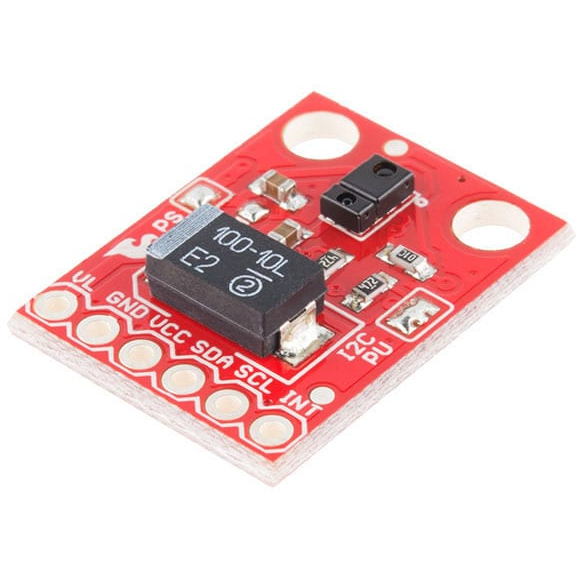
Figure 2. Active Infrared Sensors
Active infrared sensors have both a transmitter and a receiver. The transmitter, often an IR LED or laser diode, emits infrared light. When this light encounters an object, some of it reflects back to the receiver, which detects the returning signal and processes the information. These sensors rely on this reflection to determine the presence, distance, or movement of an object.
There are different kinds of active IR sensors. Some, like reflectance sensors, measure how much infrared light bounces back, making them useful in applications like obstacle detection in robots or line-following vehicles. Others, like break beam sensors, work by placing the transmitter and receiver in separate locations. When something passes between them and interrupts the infrared beam, the sensor detects the change. You might see this type of sensor in automatic doors or security systems that trigger an alarm when someone crosses an invisible barrier.
Because active IR sensors generate their own infrared light, they work reliably in both light and dark environments. However, they may struggle in conditions where too much infrared radiation is already present, such as outdoors in direct sunlight.
Passive Infrared Sensors
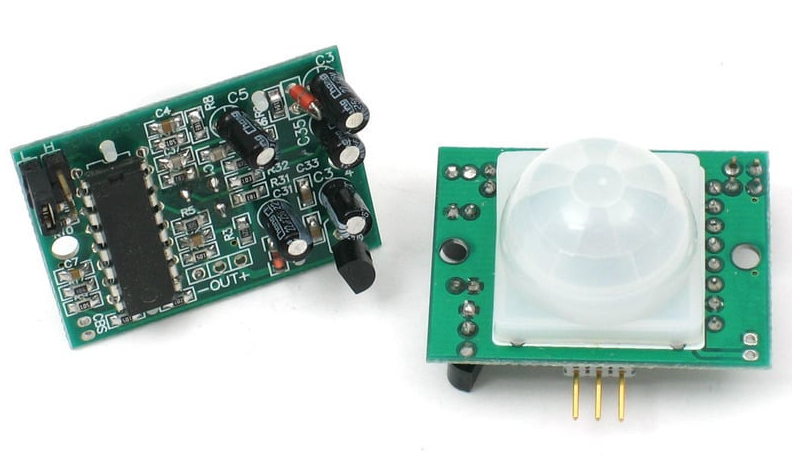
Figure 3. Passive Infrared Sensors
Unlike active sensors, passive infrared (PIR) sensors don’t send out infrared light. Instead, they only detect infrared radiation naturally emitted by objects, particularly warm ones like people, animals, or machines. Since all objects emit some level of infrared energy, passive IR sensors can pick up these signals and use them to detect motion or temperature changes.
PIR sensors are commonly found in motion detectors, such as those used in security alarms and automatic lighting systems. When a warm object, like a person, moves within the sensor’s range, the change in infrared energy is detected, and the system responds—turning on a light or sounding an alarm. Since they don’t rely on reflected infrared light, PIR sensors work well in dark environments and are not affected by lighting conditions.
Passive IR sensors are divided into two types:
• Thermal IR Sensors – These sensors detect infrared radiation regardless of its wavelength and use heat to generate a response. While they are highly reliable, they tend to have slower detection times because they must absorb enough energy before reacting.
• Quantum IR Sensors – These sensors respond to specific infrared wavelengths, allowing them to detect changes more quickly and with greater sensitivity. However, they often require cooling to maintain accuracy, especially in high-precision applications like thermal imaging and scientific instruments.
Both types of passive sensors are widely used in security systems, automatic doors, and temperature measurement tools. They are energy-efficient and require minimal maintenance since they don’t have to emit their own infrared light. However, because they rely on detecting heat changes, they might not work as well if the temperature difference between a moving object and its surroundings is small.
Infrared Sensor Circuit Diagram
An infrared sensor circuit is a simple yet widely used module in electronics, helping detect obstacles and measure distances. It works similarly to how human vision perceives objects but relies on infrared light instead of visible light. This type of circuit is commonly found in automation, robotics, and security systems. The main components of an infrared sensor circuit include:
• LM358 IC – An operational amplifier used for signal processing
• Two IR LED and photodiode pairs – The IR LEDs act as transmitters, while the photodiodes receive the reflected infrared signals
• Resistors (kilo-ohm range) – Control current flow through the circuit
• Variable resistors (potentiometers) – Adjust the circuit’s sensitivity
• Light Emitting Diode (LED) – Indicates when an object is detected

Figure 4. Infrared Sensor Circuit Diagram
In this circuit, the IR LED continuously emits infrared rays, which may be reflected back by an object and received by the photodiode. The photodiode's response varies depending on the intensity of the reflected infrared light. However, to make this signal useful, it needs to be processed, which is where a comparator circuit comes in.
An operational amplifier, such as the LM339 comparator IC, helps analyze the received signal. When no object is detected, the infrared light does not reflect back to the photodiode, and the voltage at the inverting input of the comparator is higher than at the non-inverting input. This keeps the output low, meaning the LED stays off.
When an object is present, the reflected infrared light is detected by the photodiode, causing a change in voltage at the comparator’s inputs. The comparator then switches its output to high, turning on the LED to indicate object detection.
Different resistors in the circuit play specific roles:
• R1 (100Ω) controls the current flowing through the IR LED
• R2 (10kΩ) manages the current in the photodiode
• R3 (330Ω) regulates the LED’s brightness
To fine-tune the circuit’s behavior, potentiometers (VR1 and VR2) allow you to adjust sensitivity and output levels. VR1 (10kΩ) controls how sensitive the sensor is to objects, while VR2 (5kΩ) helps set the output signal.
This type of circuit is commonly used in automation projects, such as automatic lighting, robotic obstacle detection, and security alarms. Since it relies on infrared light, it works well in both bright and dark conditions, making it a practical solution for many applications.
IR Sensor Circuit Using Transistors
This infrared sensor circuit is designed for obstacle detection and uses transistors instead of an operational amplifier. It consists of two types of transistors: an NPN transistor (BC547) and a PNP transistor (BC557). These transistors work together to detect infrared signals and trigger a response. Both transistors have the same pin configuration, making the circuit design straightforward.
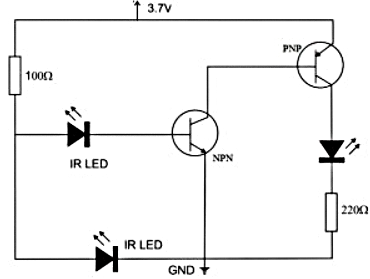
Figure 5. IR Sensor Circuit Using Transistors
In this setup, one infrared LED continuously emits infrared light, while the second IR LED acts as a detector. When an object comes close, the reflected infrared light activates the circuit. The circuit includes basic components such as:
• Two infrared LEDs – One always active, the other detecting reflected light
• BC547 NPN transistor – Controls current flow in response to the IR signal
• BC557 PNP transistor – Works with the NPN transistor to switch the LED on or off
• 100Ω and 200Ω resistors – Manage current through different parts of the circuit
• LED – Indicates when an object is detected
To build this circuit, follow these steps:
Arrange the Components Based on the Circuit Diagram
Before you start building the IR sensor circuit, gather all the necessary components and arrange them as shown in the circuit diagram. Having everything set up properly will make the assembly process smoother and help you avoid wiring mistakes. The main components you’ll be working with include two infrared LEDs, BC547 and BC557 transistors, resistors, and an indicator LED. Keeping the layout organized will ensure that all connections are made correctly.
Connect One IR LED to the Base Terminal of the BC547 NPN Transistor
Take the first infrared LED and connect its anode (positive leg) to the power source. Then, connect its cathode (negative leg) to the base terminal of the BC547 NPN transistor. This IR LED will act as a constant emitter, continuously sending out infrared light. It remains active at all times, providing the infrared signals that the sensor circuit will use for detection.
Attach the Second IR LED to the Same Base Terminal of the BC547
Now, connect the second infrared LED to the same base terminal of the BC547 NPN transistor. This IR LED serves as the detection component, meaning it reacts to infrared signals reflected from nearby objects. When an object enters the detection range, it reflects infrared light back to this LED, triggering a change in the circuit’s behavior.
Wire a 100Ω Resistor to the Remaining Pins of the IR LEDs
To control the current flow, connect a 100Ω resistor to the remaining pins of both IR LEDs. Resistors help prevent excessive current from damaging the LEDs, ensuring stable and efficient operation. Proper current regulation is necessary for the circuit to function correctly, as too much current could burn out the components.
Connect the Base Terminal of the PNP Transistor (BC557) to the Collector Terminal of the NPN Transistor (BC547)
Next, establish a connection between the base terminal of the BC557 PNP transistor and the collector terminal of the BC547 NPN transistor. This connection allows the circuit to switch states based on the presence or absence of reflected infrared light. When the NPN transistor is activated by infrared detection, it influences the PNP transistor, which in turn controls the output.
Wire the LED and a 220Ω Resistor as Shown in the Circuit Diagram
To indicate when an object is detected, connect an LED to the output section of the circuit. This LED will light up when the sensor detects infrared reflections from a nearby object. Since LEDs require current regulation, place a 220Ω resistor in series with the LED. This resistor prevents excessive current from flowing through the LED, ensuring it operates at the correct brightness without overheating.
Once All Connections Are Secure, Supply Power to Test the Circuit
After making all the necessary connections, double-check your wiring to ensure everything is correctly assembled. Once you’re confident that all components are properly connected, supply power to the circuit. When powered on, the circuit should detect objects based on infrared reflections. If an object moves within range, the second IR LED will sense the reflected light, activating the transistors and turning on the indicator LED.
When the IR detector receives reflected infrared light, it activates the transistors, allowing current to flow and turning on the LED. This setup is widely used in obstacle detection for robotics, automatic doors, and electronic automation systems. Since it uses transistors, the circuit is simple, reliable, and easy to build.
How the Circuit Works
When the infrared LED is active, it continuously emits infrared light. If there is an object nearby, some of this light bounces back toward the IR detector. The photodiode in the circuit picks up this reflected light, generating a small electrical current. This current acts as a signal that activates the connected NPN and PNP transistors, allowing more current to flow through the circuit.
As a result, the transistors switch on, completing the circuit and powering the output LED. When the LED lights up, it indicates that an object has been detected. The brightness and sensitivity of the circuit can be adjusted by fine-tuning the resistor values or repositioning the infrared LEDs.
This type of circuit is commonly used in automation projects, such as motion-activated lighting systems. For example, if installed in a hallway or near a staircase, the light can turn on automatically when someone walks by. It is also useful in security applications, triggering alarms or notifications when movement is detected within a specific range.
IR Burglar Alarm System
An IR burglar alarm system is a simple but effective way to detect movement at entry points like doors or windows. It works by using an invisible infrared beam, which acts as a security barrier. When someone crosses this beam, the circuit triggers a warning sound, alerting you to the presence of an intruder. Since infrared light is not visible to the human eye, the system remains discreet while continuously monitoring the area.

Figure 6. Burglar Alarm Circuit using IR Sensor
The circuit consists of several key components, including an NE555 timer IC, resistors (10kΩ and 560Ω), an IR photodiode (D1), an IR LED (D2), a 100nF capacitor (C1), a push switch (S1), a buzzer (B1), and a 6V DC power supply.
To set up the system, place the IR LED and the IR sensor opposite each other on either side of a doorway or entrance. In normal conditions, the IR beam is continuously detected by the photodiode, keeping the circuit in a low-output state.
When someone passes through the beam, the infrared light is interrupted, preventing the photodiode from receiving it. This causes the circuit to switch to an ON state, activating the buzzer. The alarm continues to sound until the circuit is manually reset by pressing a switch. To prevent an intruder from easily turning off the alarm, it’s best to place the reset switch in a hidden or remote location.
The buzzer in this setup provides an immediate audible alert when triggered, but it can be replaced with a louder siren or another type of notification device if needed. This simple IR burglar alarm is useful for home security, office protection, or even as a basic intrusion detection system in restricted areas.
Advantage and Disadvantage of IR Sensor
Infrared (IR) sensors have both advantages and limitations, making them suitable for some applications while less effective in others. They are widely used for motion detection, object sensing, and automation due to their ability to work in various lighting conditions and without physical contact. However, factors like limited range, environmental interference, and the need for a clear line of sight can impact their performance. The table below provides a clear comparison of the key advantages and disadvantages of IR sensors to help you understand their strengths and limitations.
| Advantage | Disadvantage |
| Low Power Consumption – Uses minimal power, making it ideal for battery-powered devices. | Requires a Clear Line of Sight – Objects blocking the infrared beam can prevent proper functioning. |
| Works in Both Light and Dark Conditions – Functions effectively regardless of lighting conditions. | Limited Detection Range – Typically works only within a few meters, making it unsuitable for long-distance detection. |
| No Physical Contact Needed – Detects objects and motion without direct contact, ensuring durability. | Affected by Environmental Conditions – Fog, dust, smoke, and heavy rain can interfere with accuracy. |
| Directional Sensing Prevents Data Leakage – Detects motion and objects only in a specific direction for precise readings. | Slower Data Transmission – Compared to RF or wired communication, IR sensors transmit data at a lower speed. |
| Resistant to Oxidation and Corrosion – Less exposure to wear and tear makes it durable for long-term use. | Not Ideal for Outdoor Applications – High infrared interference from sunlight can reduce effectiveness. |
| Strong Immunity to Electrical Noise – Performs well in high-electronic activity environments without interference. | Limited Material Detection – Some materials, like glass or certain plastics, may not reflect infrared light well, affecting detection accuracy. |
Common Uses of Infrared Sensors
Infrared sensors are widely used across various industries and everyday applications due to their ability to detect heat, movement, and objects without direct contact. They play a crucial role in motor synchronization by serving as speed sensors, ensuring precise control in industrial settings. Temperature sensors utilizing infrared technology help regulate processes in factories and other controlled environments. In automatic door systems, passive infrared (PIR) sensors detect movement to facilitate hands-free operation. Additionally, infrared sensors are used for distance measurement in various applications, including robotics and automation. Beyond these uses, they are also common in home automation, security systems, remote controls, and medical devices. Their ability to function in different lighting conditions while detecting heat makes them a highly adaptable technology for a wide range of applications such as:
Radiation Thermometers
Radiation thermometers use infrared sensors to measure temperature by detecting the heat emitted by an object. This non-contact method makes them ideal for both industrial and medical applications. One of their main advantages is the ability to measure temperature without direct contact, reducing the risk of contamination. They also have a fast response time, allowing them to detect temperature changes quickly, making them useful for real-time monitoring. Additionally, their simple operation requires minimal setup, making them easy to use in various environments.
Flame Monitors
Flame monitors use infrared sensors to detect and analyze the light emitted by flames, ensuring proper combustion in industrial burners, furnaces, and boilers. Since flames emit radiation across both ultraviolet (UV) and infrared (IR) wavelengths, these sensors play a crucial role in maintaining efficiency and safety. Commonly used flame detectors include Lead Sulfide (PbS) and Lead Selenide (PbSe) sensors, which are sensitive to different infrared wavelengths. Two-color detectors enhance accuracy by comparing signals at two wavelengths, while pyroelectric detectors respond to rapid changes in infrared radiation, making them effective for dynamic flame monitoring.
Moisture Analyzers
Moisture analyzers use infrared sensors to measure the moisture content in various materials by detecting how water molecules absorb specific infrared wavelengths, such as 1.1 µm, 1.4 µm, 1.9 µm, and 2.7 µm. This absorption pattern allows the analyzer to determine moisture levels accurately. Key components in moisture analyzer circuits include GaAs PIN photodiodes, which provide high-precision detection, and PbS photoconductive detectors, which help analyze infrared absorption in materials. These analyzers are widely used in industries like food processing, pharmaceuticals, and agriculture to maintain product quality and consistency.
Gas Analyzers
Infrared sensors play a crucial role in gas analyzers by detecting and measuring gas concentrations based on how gases absorb infrared light. Two primary methods are used for this purpose. The dispersive method splits emitted light into different wavelengths to analyze gas absorption patterns. In contrast, nondispersive infrared (NDIR) technology utilizes optical filters to block unwanted wavelengths, allowing precise detection of specific gases. NDIR sensors are widely used in applications such as carbonated beverage analysis, where they help maintain the proper CO₂ balance in drinks, and automobile exhaust gas monitoring, where they detect harmful emissions to enhance vehicle efficiency and safety.
IR Imaging Devices
Infrared imaging devices utilize IR waves to generate thermal images, making them essential in various fields. Thermal imaging cameras detect heat patterns and are widely used in security systems, medical diagnostics, and industrial inspections. Night vision equipment enhances visibility in low-light conditions by capturing infrared radiation. Materials such as water, rocks, soil, vegetation, human tissue, and even the atmosphere emit infrared radiation. IR cameras detect this emission and convert it into detailed thermal maps. To improve accuracy, these imaging sensors incorporate materials like Indium Antimonide (Sb) for high infrared sensitivity, Mercury-doped Germanium (Gd Hg) for enhanced detection accuracy, and Mercury-Cadmium-Telluride (Hg Cd Te) for use in advanced scientific and industrial infrared cameras. To prevent interference and ensure accurate measurements, these sensors are often cooled with liquid helium or liquid nitrogen, reducing the influence of the device's own infrared emissions.
Other Key Applications of IR Sensors
Infrared sensors are widely used in various scientific and industrial fields. Some of their key applications include:
• Meteorology – Helps monitor temperature changes in the atmosphere.
• Climatology – Used in climate research to track long-term heat patterns.
• Photobiomodulation – Supports medical treatments using infrared therapy.
• Water Analysis – Detects impurities and pollutants in water sources.
• Gas Detection – Monitors air quality and detects gas leaks.
• Anesthesiology Testing – Ensures proper gas mixtures in medical applications.
• Petroleum Exploration – Identifies underground oil and gas reserves.
• Railway Safety – Detects overheating components in train systems to prevent failures.
With their ability to detect heat, measure temperature, and analyze substances, IR sensors continue to be a key technology in automation, healthcare, environmental monitoring, and security applications.Conclusion
Infrared sensors are a powerful and reliable technology used for detecting motion, measuring temperature, and sensing objects without physical contact. They are widely used in security systems, automation, medical devices, and industrial applications. Whether in a simple remote control or an advanced thermal imaging system, IR sensors play an important role in everyday life. As technology continues to improve, these sensors will become even more efficient and useful in new and innovative ways.
About us
ALLELCO LIMITED
Read more
Quick inquiry
Please send an inquiry, we will respond immediately.
Frequently Asked Questions [FAQ]
1. How do infrared sensors work?
Infrared sensors detect infrared light, which is invisible to the human eye. Some sensors emit infrared light and measure how it reflects off objects, while others detect infrared radiation naturally emitted by warm objects like people or animals. When an object moves or its heat changes, the sensor detects it and sends a signal.
2. What are infrared sensors used for?
Infrared sensors are used in many applications, including motion detection, automatic doors, remote controls, temperature measurement, and security systems. They are also found in industrial machines, medical equipment, and night vision cameras.
3. Can infrared sensors work in the dark?
Yes, infrared sensors do not rely on visible light, so they work in both bright and dark conditions. This makes them useful for night vision cameras, motion-activated lights, and security alarms that need to function at all times.
4. Do infrared sensors detect all objects?
Infrared sensors are best at detecting objects that reflect infrared light or emit heat, such as people, animals, and warm surfaces. However, some materials, like glass and certain plastics, may not reflect infrared light well, which can affect detection.
5. How accurate are infrared sensors?
The accuracy of an infrared sensor depends on the type and quality of the sensor, as well as the environment it is used in. Many infrared sensors provide reliable detection and temperature measurements, especially when properly positioned and adjusted for sensitivity.
Understanding the ADM202JRN RS-232 Driver and Receiver
on March 5th
Plug Flow Reactor: Principles, Features, and Applications
on March 4th
Popular Posts
-

Complex Instruction Set Computers: How They Changed Computing?
on June 14th 148402
-

USB-C Pinout and Features
on June 14th 131612
-
Using Xilinx Unified Simulation Primitives: A Comprehensive Guide to FPGA Design and Simulation
on June 14th 111884
-

Power Supply Voltages in Electronics: Meaning of VCC, VDD, VEE, VSS, and GND
on June 14th 94454
-

RJ45 Connector Guide: Pinout, Wiring, Cable Types, and Uses
on January 1th 93984
-

The Ultimate Guide to Wire Color Codes in Modern Electrical Systems
The way our electrical systems use colors isn’t just for looks. Each wire color now indicates a specific function, making it easier to identify and handle electrical components correctly during ins...on January 1th 76891
-

Quality (Q) Factor: Equations and Applications
The quality factor, or 'Q', is important when checking how well inductors and resonators work in electronic systems that use radio frequencies (RF). 'Q' measures how well a circuit minimizes energy...on January 1th 74842
-
Purge Valve Guide: Function, Symptoms, Testing, and Replacement for Optimal Engine Performance
The purge valve is a key part of a car’s system that helps keep the air clean by managing fuel vapors before they can escape into the atmosphere. This not only helps the environment by reducing pol...on January 1th 68783
-
Understanding Capacitors and Their Symbols in Circuit Diagrams
Capacitors are small parts used in almost all electronic devices. They store and release electrical energy and are found in things like power supplies, radios, and circuits that help reduce noise. ...on June 14th 58527
-

A23 Battery Specifications and Compatibility
The A23 battery is a small, cylinder-shaped battery with high voltage. Also called 23A, 23AE, or MN21, it runs at 12 volts and much higher than AA or AAA batteries. Its special design make...on January 1th 58132
HOT Part Number
-
ADAU1978WBCPZ
Analog Devices Inc.
IC ADC 24BIT 192K 40LFCSP-WQ
MIMX8MM1CVTKZAA
NXP USA Inc.
IC MPU I.MX 8M MINI SOLOLITE
REC10-2405S/H3/M
Recom Power
DC DC CONVERTER 5V 10W
SBR20100CTFP
Diodes Incorporated
DIODE ARRAY SBR 100V 10A ITO220
SN74LS640NSR
Texas Instruments
IC TRANSCEIVER INVERT 5.25V 20SO
PM8371-BI
PMC-Sierra
PM8371-BI
M2S025-FGG484
Microchip Technology
IC SOC CORTEX-M3 166MHZ 484FBGA
AT28C010-20TI
Microchip Technology
IC EEPROM 1MBIT PARALLEL 32TSOP
EP1C12F324C6N
Intel
IC FPGA 249 I/O 324FBGA
MC74VHCT373ADTRG
onsemi
IC LATCH TRANSP OCT 2ST 20-TSSOP
GBO25-12NO1
IXYS
BRIDGE RECT 1P 1.2KV 25A 4SIP
NCP302LSN20T1G
onsemi
IC SUPERVISOR 1 CHANNEL 5TSOP
SI3210-KT
Skyworks Solutions Inc.
IC TELECOM INTERFACE 38TSSOP
ADAU1787BCBZRL
Analog Devices Inc.
4 ADC, 2 DAC LOW POWER CODEC, AU
74VHC164MTCX
onsemi
IC SHIFT REGISTER 8BIT 14TSSOP
DAN222M3T5G
onsemi
DIODE ARRAY GP 80V 100MA SOT723
DG9451EN-T1-E4
Vishay Siliconix
IC MUX 8:1 105OHM 16MINIQFN
NPX-C01767
Amphenol NovaSensor
SENSOR PRES -

AOT5B65M1
Alpha & Omega Semiconductor Inc.
IGBT 650V 5A TO220
MPC508AU
Texas Instruments
IC MUX 8:1 1.5KOHM 16SOIC
TMS320DM355DZCE135
Texas Instruments
IC DGTL MEDIA SOC 337NFBGA
EFR32BG22C112F352GM32-CR
Silicon Labs
BLUE GECKO, QFN32, SECURE BOOT W
JMK105C6225MV-F
Taiyo Yuden
CAP CER 2.2UF 6.3V X6S 0402
MAX4481AXT+T
Analog Devices Inc./Maxim Integrated
IC OPAMP GP 1 CIRCUIT SC70-6
8A35001B-001AJG
Renesas Electronics America Inc
NETWORK TIMING
ACH3218-151-TD01
TDK Corporation
FILTER LC(T) SMD
VI-JND-IY
Vicor Corporation
DC DC CONVERTER 85V 50W
2204740-1
TE Connectivity AMP Connectors
CONN SPRING SLIDING BUS 2POS PCB
TAS5142DDVRG4
Texas Instruments
IC AMP CLSS D STER 100W 44HTSSOP
PC451J00000F
SHARP/Socle Technology
OPTOISOLATOR 3.75KV TRANS 4SMD
GRM1557U1H8R6DZ01D
Murata Electronics
CAP CER 8.6PF 50V U2J 0402
GRM2196P2A220JZ01D
Murata Electronics
CAP CER 22PF 100V P2H 0805
R5F51116ADFL#3A
Renesas Electronics America Inc
IC MCU 32BIT 256KB FLASH 48LFQFP
SN65LVDS050PWR
Texas Instruments
IC TRANSCEIVER FULL 2/2 16TSSOP
VI-J6Z-MZ
Vicor Corporation
VI-J6Z-MZ 300V 2V 5A
LM4041DIM7-1.2
Texas Instruments
IC VREF SHUNT 1% SC70-5 -
B32522N6684K289
EPCOS - TDK Electronics
CAP FILM 0.68UF 10% 450VDC RAD
CLA110MB1200NA
IXYS
MOD THYRISTOR DUAL 1200V SOT-227
RT6200GE
Richtek USA Inc.
IC REG BUCK ADJ 600MA SOT23-6
MAX17501GATB+T
Analog Devices Inc./Maxim Integrated
IC REG BUCK ADJ 500MA 10TDFN
PZTA64
Fairchild Semiconductor
SMALL SIGNAL BIPOLAR TRANSISTOR,
DRV5013ADEDBZRQ1
Texas Instruments
MAGNETIC SWITCH LATCH SOT23-3
HMC593LP3E
Analog Devices Inc.
IC AMP WIMAX 3.3GHZ-3.8GHZ 16QFN
74F02SCX
Fairchild Semiconductor
IC GATE NOR 4CH 2-INP 14SOIC
PE42423B-Z
pSemi
IC RF SWITCH SPDT 6GHZ 16QFN
LMK432F476ZM-T
Taiyo Yuden
CAP CER 47UF 10V Y5V 1812
MAX774ESA+
Analog Devices Inc./Maxim Integrated
IC REG CTRLR BUCK-BOOST 8SOIC
0805YD105MAT4A
KYOCERA AVX
CAP CER 1UF 16V X5R 0805
GRM155R71E103KA01J
Murata Electronics
CAP CER 10000PF 25V X7R 0402
MSP430FG4616IZQWR
Texas Instruments
IC MCU 16BIT 92KB FLASH 113BGA
RABS15M REG
Taiwan Semiconductor Corporation
BRIDGE RECT 1P 1KV 1.5A ABS-L
L6470H
STMicroelectronics
IC MTR DRV BIPLR 3.3/5V 28HTSSOP
UCC2973PW
Texas Instruments
IC CCFL CNTRL 160KHZ 8TSSOP
PI74LPT16245AEX
Diodes Incorporated
IC TXRX NON-INVERT 3.6V 48TSSOP