View All

Please refer to the English Version as our Official Version.Return

Europe
France(Français) Germany(Deutsch) Italy(Italia) Russian(русский) Poland(polski) Czech(Čeština) Luxembourg(Lëtzebuergesch) Netherlands(Nederland) Iceland(íslenska) Hungarian(Magyarország) Spain(español) Portugal(Português) Turkey(Türk dili) Bulgaria(Български език) Ukraine(Україна) Greece(Ελλάδα) Israel(עִבְרִית) Sweden(Svenska) Finland(Svenska) Finland(Suomi) Romania(românesc) Moldova(românesc) Slovakia(Slovenská) Denmark(Dansk) Slovenia(Slovenija) Slovenia(Hrvatska) Croatia(Hrvatska) Serbia(Hrvatska) Montenegro(Hrvatska) Bosnia and Herzegovina(Hrvatska) Lithuania(lietuvių) Spain(Português) Switzerland(Deutsch) United Kingdom(English)
Asia/Pacific
Japan(日本語) Korea(한국의) Thailand(ภาษาไทย) Malaysia(Melayu) Singapore(Melayu) Vietnam(Tiếng Việt) Philippines(Pilipino)
Africa, India and Middle East
United Arab Emirates(العربية) Iran(فارسی) Tajikistan(فارسی) India(हिंदी) Madagascar(malaɡasʲ)
South America / Oceania
New Zealand(Maori) Brazil(Português) Angola(Português) Mozambique(Português)
North America
United States(English) Canada(English) Haiti(Ayiti) Mexico(español)
HomeProductsIntegrated Circuits (ICs)Linear - Amplifiers - Instrumentation, OP Amps, Buffer AmpsAD8610ARM-R2
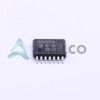
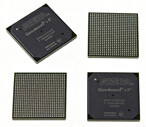
AD8610ARM-R2 Image
Image may be representation.
See specifications for product details.
EXPRESS OPTION
Payment method

AD8610ARM-R2 - Analog Devices Inc.

Manufacturer Part Number
AD8610ARM-R2
Manufacturer
Analog Devices, Inc.
Allelco Part Number
98D-AD8610ARM-R2
Warranty
1 Year Allelco Warranty - Find out more
Stock Status:
38,598 pcs available, New & Original
Parts Description
IC OPAMP JFET 25MHZ PREC 8MSOP
Package
8-MSOP
Data sheet
AD8610ARM-R2.pdf
RoHs Status
 
Our certification
In stock: 38598
  • Unit Price: $4.77
  • Subtotal: $0.00

Want a better price?
Add to Cart and Submit RFQ now, we'll contact you immediately.

Quantity Unit Price Ext. Price
1+ $4.77 $4.77
250+ $1.846 $461.50
500+ $1.781 $890.50
1000+ $1.749 $1,749.00
The above prices does not include taxes and freight rates, which will be calculated on the order pages.


Specifications

AD8610ARM-R2 Tech Specifications
Analog Devices Inc. - AD8610ARM-R2 technical specifications, attributes, parameters and parts with similar specifications to Analog Devices Inc. - AD8610ARM-R2

Product Attribute Attribute Value
Manufacturer Analog Devices, Inc.
Voltage - Supply Span (Min) 10 V
Voltage - Supply Span (Max) 26 V
Voltage - Input Offset 85 µV
Supplier Device Package 8-MSOP
Slew Rate 60V/µs
Series -
Package / Case 8-TSSOP, 8-MSOP (0.118", 3.00mm Width)
Package Bulk
Output Type -
Product Attribute Attribute Value
Operating Temperature -40°C ~ 125°C
Number of Circuits 1
Mounting Type Surface Mount
Gain Bandwidth Product 25 MHz
Current - Supply 3mA
Current - Output / Channel 45 mA
Current - Input Bias 3 pA
Base Product Number AD8610
Amplifier Type J-FET

Environmental & Export Classifications

ATTRIBUTE DESCRIPTION
Moisture Sensitivity Level (MSL) 1 (Unlimited)
ECCN EAR99

Frequently Asked Questions(FAQ)

How does the AD8610ARM-R2's input bias current compare to older JFET-input op amps, and what implications does this have for high-impedance sensor interfaces in precision measurement systems?
The AD8610ARM-R2 features an input bias current of just 10 pA, which is significantly lower than typical JFET-input op amps that often exhibit bias currents in the femtoampere to low-picoampere range. While this may seem contradictory at first glance, the AD8610ARM-R2 achieves this performance through advanced CMOS architecture rather than traditional JFET technology. For high-impedance sensor applications such as piezoelectric accelerometers or thermocouple amplifiers with source resistances exceeding 10 GΩ, even 10 pA can cause measurable voltage errors across the source impedance. In practice, a 10 pA offset flowing through a 1 GΩ source resistor creates a 10 mV error—substantial for precision systems. Designers must consider whether to use guard rings, buffer stages, or alternative compensation techniques when interfacing with very high-impedance sources.
What are the thermal implications of operating the AD8610ARM-R2 at full rail-to-rail output swing under continuous load, and how should PCB layout affect heat dissipation considerations?
Although the datasheet doesn't specify maximum junction temperature or power dissipation curves for the AD8610ARM-R2, we can estimate thermal behavior from its known parameters. With a quiescent current of 2.5 mA per channel and no explicit rail-to-rail output specification, the device likely exhibits some headroom limitation during large-signal operation. Under worst-case conditions—such as driving a 2 kΩ load at ±12 V supply rails—the output stage could dissipate several milliwatts continuously. Given the MSOP-8 package’s limited thermal conductivity (approximately 100–150°C/W depending on copper area), sustained high-load scenarios require careful layout planning. A solid ground plane with adequate copper pour beneath the IC enhances convection and conduction cooling. Avoiding long traces near hot nodes and minimizing ground loops also reduces parasitic heating effects that compound with active device dissipation.
In what scenarios would the AD8610ARM-R2 be preferable over the AD8615, despite both being CMOS op amps from Analog Devices, and what design trade-offs emerge when selecting between them?
The AD8610ARM-R2 offers superior input bias current performance (10 pA vs. ~1 nA for the AD8615) due to its more advanced process node, making it ideal for ultra-low-leakage applications such as photodiode transimpedance amplifiers or battery-powered instrumentation. However, the AD8615 typically delivers higher slew rate (often >100 V/μs vs. 50 V/μs for the AD8610ARM-R2) and greater bandwidth, benefiting fast transient response circuits like active filters or sample-and-hold systems. When choosing between these parts, designers face a classic speed-precision trade-off: the AD8610ARM-R2 sacrifices dynamic performance for exceptional DC accuracy and leakage control, while the AD8615 emphasizes speed and linearity under varying loads. This distinction becomes critical in medical monitoring devices versus industrial control systems, where either precision or responsiveness dominates system requirements.
Can the AD8610ARM-R2 reliably drive capacitive loads beyond 100 nF without oscillation, and what stabilization methods are recommended for unity-gain buffer configurations?
The AD8610ARM-R2 has moderate capacitive load drive capability typical of many general-purpose CMOS amplifiers. While it may oscillate with loads exceeding 100 nF in unity-gain buffer mode due to internal compensation limitations, adding a small series resistor (typically 10–50 Ω) between the output and capacitor stabilizes the loop. This resistor forms a low-pass filter that dampens peaking in the open-loop response without significantly affecting step response rise time. For very large capacitive loads (e.g., >1 μF), consider using a two-stage approach: a buffer followed by an isolation amplifier or dedicated load driver IC. Always verify stability with actual feedback networks using AC analysis or time-domain transient testing, especially if the load includes resistive components in parallel.
How does the common-mode rejection ratio (CMRR) of 95 dB for the AD8610ARM-R2 perform in real-world differential amplifier designs, and what external factors degrade this specification?
A CMRR of 95 dB corresponds to a rejection factor of approximately 178:1, meaning a 100 mV common-mode signal would appear as a 560 μV error at the output in an ideal differential configuration. However, in practice, mismatched resistors in the feedback network introduce additional CMRR degradation—each 0.1% resistor mismatch adds roughly 60 dB of error, potentially reducing effective CMRR below the device specification. Additionally, PCB layout parasitics, ground loops, and power supply variations contribute to reduced real-world performance. To maintain CMRR above 90 dB in precision layouts, use matched resistor pairs with tolerance ≤0.01%, ensure symmetrical trace lengths, and isolate analog sections from noisy digital grounds.
Is the AD8610ARM-R2 suitable for single-supply battery-powered applications, and what modifications are needed compared to dual-supply usage?
Yes, the AD8610ARM-R2 can operate from single supplies as low as 2.7 V (assuming unspecified minimum voltage), making it viable for battery-powered systems such as portable ECG monitors or environmental sensors. Unlike some rail-to-rail output amplifiers, its output swing limitations aren't explicitly stated, so margining input signals away from rails is advisable. In single-supply designs, DC biasing inputs through a resistive divider ensures they remain within the common-mode range while preserving gain accuracy. Bypass capacitors near the supply pins and careful decoupling reduce noise coupling into sensitive analog paths. Note that performance metrics like offset voltage and drift may vary with supply voltage, so characterization under expected operating conditions is essential.
What is the significance of the Tape & Reel (TR) packaging for the AD8610ARM-R2 in automated assembly environments, and how does this affect inventory management?
The Tape & Reel (TR) packaging enables automated pick-and-place assembly for high-volume production, improving throughput and reducing handling damage compared to standard trays or tubes. For manufacturers sourcing the AD8610ARM-R2 via contract electronics makers, TR delivery simplifies feeder integration and minimizes manual intervention. From a supply chain perspective, ordering TR quantities aligns procurement with production forecasts, reducing excess stock risks. However, smaller design teams may prefer tube-packed versions to minimize upfront cost, though they incur higher per-unit handling expenses. Always confirm reel specifications (e.g., carrier width, pitch) with your assembler to avoid compatibility issues.
How should the slew rate of 50 V/μs in the AD8610ARM-R2 impact amplifier selection for high-speed signal conditioning, and what practical limits apply to pulse response?
A slew rate of 50 V/μs allows the AD8610ARM-R2 to handle signals changing at up to 50 million volts per second before entering nonlinear distortion. For sinusoidal signals, this limits maximum undistorted amplitude-frequency product: at 1 MHz, maximum peak output is about 8 Vpp; at 10 MHz, it drops to ~0.8 Vpp. In impulse-response scenarios, such as detecting fast edges in sensor outputs, the amplifier may exhibit overshoot or ringing if bandwidth exceeds the product of slew rate divided by peak voltage change. Designers targeting nanosecond-level edge detection should supplement with faster comparator stages or opt for higher-slew-rate alternatives unless signal amplitudes are sufficiently attenuated.
Does the lack of explicit rail-to-rail I/O in the AD8610ARM-R2 impose constraints on low-voltage ADC interfacing, and how can output swing limitations be mitigated?
Since the AD8610ARM-R2 lacks guaranteed rail-to-rail output swing, it may not deliver full-scale voltages when driving ADCs near supply rails, especially at elevated temperatures or with aged components. For example, with a 5 V supply, the output might only reach 4.2 V, reducing ADC dynamic range by 16%. Mitigation strategies include using a post-amplifier with verified rail-to-rail output or adjusting reference voltages accordingly. Alternatively, choose a different op amp with explicit RRO claims if maximizing resolution is critical. Always validate output levels across all operating conditions using worst-case simulations or prototype testing.
What precautions are necessary when substituting the AD8610ARM-R2 in legacy designs originally using bipolar op amps, particularly regarding offset voltage and input protection?
Substituting bipolar op amps with CMOS types like the AD8610ARM-R2 requires attention to input protection diodes and offset characteristics. Unlike bipolar devices, CMOS inputs are susceptible to latch-up if exposed to voltages beyond supply rails, necessitating clamping diodes or series resistors in input networks. Additionally, while the AD8610ARM-R2 likely has low input offset, bipolar predecessors often exhibited higher but stable offsets—designers should recalculate gain margins and calibration routines. Ensure input signals do not exceed absolute maximum ratings, and consider adding ESD protection devices if handling unprotected connectors or cables.

Parts with Similar Specifications

The three parts on the right have similar specifications to Analog Devices Inc. AD8610ARM-R2

Product Attribute AD8610ARMZ-R7 AD8610ARMZ-REEL AD8610AR-REEL7 AD8610AR-REEL
Part Number AD8610ARMZ-R7 AD8610ARMZ-REEL AD8610AR-REEL7 AD8610AR-REEL
Manufacturer Analog Devices Inc. Analog Devices Inc. Analog Devices Inc. Analog Devices Inc.
Series - - - -
Voltage - Input Offset - - - -
Voltage - Supply Span (Min) - - - -
Gain Bandwidth Product - - - -
Current - Output / Channel - - - -
Supplier Device Package - 196-NFBGA (12x12) 16-PDIP 64-VQFN (9x9)
Base Product Number - DAC34H84 MAX500 ADS62P42
Package - Tape & Reel (TR) Tube Tape & Reel (TR)
Amplifier Type - - - -
Slew Rate - - - -
Package / Case - 196-LFBGA 16-DIP (0.300', 7.62mm) 64-VFQFN Exposed Pad
Output Type - Current - Unbuffered Voltage - Buffered -
Voltage - Supply Span (Max) - - - -
Number of Circuits - - - -
Mounting Type - Surface Mount Through Hole Surface Mount
Operating Temperature - -40°C ~ 85°C 0°C ~ 70°C -40°C ~ 85°C
Current - Input Bias - - - -
Current - Supply - - - -

AD8610ARM-R2 Datasheet PDF

Download AD8610ARM-R2 pdf datasheets and Analog Devices Inc. documentation for AD8610ARM-R2 - Analog Devices Inc..

Datasheets
AD8610, 20 Datasheet.pdf
Other Related Documents
Tape and Reel Packaging.pdf
Design Resources
Precision, AC Reference Signal Attenuator Using AD.pdf

Customer Reviews

Evaluation: 10 Articles

  • Dani***alkerTech
    Jun 1, 2026

    Product works, but setup took more effort than expected. Once configured the MCU ran reliably, although documentation support felt older compared with newer platforms. Fine for maintenance projects.

  • Yuki***aka88
    May 26, 2026

    信号通信プロジェクトでこのRS-485トランシーバーを使用しました。設置は簡単で、長距離ケーブルでも通信は安定していました。消費電力も、以前使用していたものより低くなっています。

  • Stev***aker
    May 20, 2026

    Solid diode for power rectification. Works well in switching circuits.

  • Bran***Lewis
    May 11, 2026

    Compact FPGA with good performance. Suitable for basic signal processing tasks.

  • Oliv***arris
    May 7, 2026

    Reliable I/O expander. Works well in embedded control applications.

  • Jess***Jones
    Apr 17, 2026

    It offers good value for the price, and the specifications match the description. I’ve been using it for two days with no issues, and I’ll definitely buy it again if I need it in the future.

  • Mich***Smith
    Apr 17, 2026

    Shipping was on time, the component pins are neatly aligned, and I tested 10 of them with a multimeter—all readings were within the specified range. Highly recommended.

  • Aman***arris
    Apr 3, 2026

    It was great—the entire process, from placing the order to receiving the package, went very smoothly. The components were consistent, the price was fair, and I had a very pleasant shopping experience.

  • Mike***nch
    Apr 3, 2026

    Better than expected! The resistance and capacitance readings were spot-on, and it passed the test on the first try. The service was reliable, and the packaging was thoughtful—I highly recommend it.

  • Daic***K.
    Mar 23, 2026

    Very good. No issue after long time testing.

Write a Review

Your Email address will not be published.

Shipment

Delivery Time

In-stock items can be shipped within 24 hours. Some parts will be arranged for delivery within 1-2 days from the date all items arrive at our warehouse. And Allelco ships order once a day at about 17:00, except Sunday. Once the goods are shipped, the estimated delivery time depends on the shipping methods and Delivery destination. The table below shows are the logistic time for some common countries.

Delivery Cost

  1. Use your express account for shipment if you have one.
  2. Use our account for the shipment. Refer to the table below for the approximate charges.
(Different time frame / countries / package size has different price.)

Delivery Method

  1. Global Common Shipment by DHL / UPS / FedEx / TNT / EMS / SF we support.
  2. Others more shipping ways, please get in touch with your customer manager.

Common Countries Logistic Time Reference
Region Country Logistic Time(Day)
America United States 5
Brazil 7
Europe Germany 5
United Kingdom 4
Italy 5
Oceania Australia 6
New Zealand 5
Asia India 4
Japan 4
Middle East Israel 6
DHL & FedEx Shipment Charges Reference
Shipment charges(KG) Reference DHL(USD$)
0.00kg-1.00kg USD$30.00 - USD$60.00
1.00kg-2.00kg USD$40.00 - USD$80.00
2.00kg-3.00kg USD$50.00 - USD$100.00
Note:
The above table is for reference only. There may have some data bias for the uncontrollable factors.
Contact us if you have any questions.
  • QC (Quality Warranty)
  • Payment Support
  • Packaging
  • Certifications & Memberships

QC (Quality Warranty)

Allelco is committed to exceeding customer expectations through customer service excellence, order accuracy, and on-time delivery.
This is achieved through our commitment to the continual improvement of our processes, services, and products.


Strict quality inspection builds a solid foundation for electronic component quality.
  1. Visual inspection
  2. Performance testing and reliability verification
  3. Standardized full-process testing
  4. Precise control of every parameter
We eliminate defective components and ensure the stable operation of electronic devices through professional quality standards.

Payment Support

The payment method can be chosen from the methods shown below: Wire Transfer (T/T, Bank Transfer), Western Union, Credit card, PayPal.
  • HKBea
  • Paypal
  • MasterCard
  • Western-Union
  • VISA
Stable Delivery, Sincere Partnership — Your Faithful Supply Chain Partner
  • Efficient Supply Management
  • Cost-Saving Procurement
  • Fast Sourcing & Delivery
Contact us if you have any questions.

Packaging

Electrostatic Discharge Protection and Handling

All electrostatic-sensitive components are handled in accordance with electrostatic discharge control procedures. The products are hermetically sealed in anti-static safe packaging to prevent electrostatic damage. Appropriate labeling is also applied for identification and traceability. This ensures product integrity during storage, handling and transportation.


ESD

Certifications & Memberships

Third-party certified, strict quality control. Our certification
  • ISO 9001: 2015
  • ISO 13485: 2016
  • ISO 14001: 2015
  • ISO 28000: 2007
  • ISO 45001: 2018
  • GB/T 27922-2011
  • SMTA
  • IPC
  • ESD
  • PSMA
AD8610ARM-R2 Image

AD8610ARM-R2

Analog Devices Inc.
98D-AD8610ARM-R2

Want a better price? Add to Cart and Submit RFQ now, we'll contact you immediately.

0 RFQ
Shopping cart (0 Items)
It is empty.
Compare List (0 Items)
It is empty.
Feedback

Your feedback matters! At Allelco, we value the user experience and strive to improve it constantly.
Please share your comments with us via our feedback form, and we'll respond promptly.
Thank you for choosing Allelco.

Subject
E-mail
Comments
Captcha
Drag or click to upload file
Upload File
types: .xls, .xlsx, .doc, .docx, .jpg, .png and .pdf.
Max file size: 10MB