View All

Please refer to the English Version as our Official Version.Return

Europe
France(Français) Germany(Deutsch) Italy(Italia) Russian(русский) Poland(polski) Czech(Čeština) Luxembourg(Lëtzebuergesch) Netherlands(Nederland) Iceland(íslenska) Hungarian(Magyarország) Spain(español) Portugal(Português) Turkey(Türk dili) Bulgaria(Български език) Ukraine(Україна) Greece(Ελλάδα) Israel(עִבְרִית) Sweden(Svenska) Finland(Svenska) Finland(Suomi) Romania(românesc) Moldova(românesc) Slovakia(Slovenská) Denmark(Dansk) Slovenia(Slovenija) Slovenia(Hrvatska) Croatia(Hrvatska) Serbia(Hrvatska) Montenegro(Hrvatska) Bosnia and Herzegovina(Hrvatska) Lithuania(lietuvių) Spain(Português) Switzerland(Deutsch) United Kingdom(English)
Asia/Pacific
Japan(日本語) Korea(한국의) Thailand(ภาษาไทย) Malaysia(Melayu) Singapore(Melayu) Vietnam(Tiếng Việt) Philippines(Pilipino)
Africa, India and Middle East
United Arab Emirates(العربية) Iran(فارسی) Tajikistan(فارسی) India(हिंदी) Madagascar(malaɡasʲ)
South America / Oceania
New Zealand(Maori) Brazil(Português) Angola(Português) Mozambique(Português)
North America
United States(English) Canada(English) Haiti(Ayiti) Mexico(español)
HomeProductsIntegrated Circuits (ICs)Interface - Drivers, Receivers, TransceiversLTC2875IDD#TRPBF
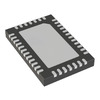
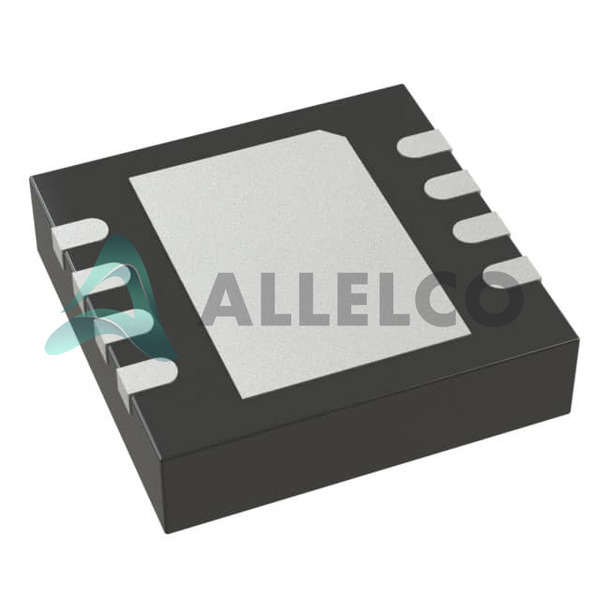
LTC2875IDD#TRPBF Image
Image may be representation.
See specifications for product details.
EXPRESS OPTION
Payment method

LTC2875IDD#TRPBF - Analog Devices Inc.

Manufacturer Part Number
LTC2875IDD#TRPBF
Manufacturer
Analog Devices, Inc.
Allelco Part Number
32D-LTC2875IDD#TRPBF
Warranty
1 Year Allelco Warranty - Find out more
Stock Status:
11,918 pcs available, New & Original
Parts Description
IC TRANSCEIVER 1/1 8DFN
Package
8-DFN (3x3)
Data sheet
LTC2875IDD#TRPB.pdf
RoHs Status
ROHS3 Compliant
Our certification
In stock: 11918
  • Unit Price: $4.079
  • Subtotal: $0.00

Want a better price?
Add to Cart and Submit RFQ now, we'll contact you immediately.

Quantity Unit Price Ext. Price
1+ $4.079 $4.08
10+ $3.578 $35.78
30+ $3.273 $98.19
100+ $3.017 $301.70
The above prices does not include taxes and freight rates, which will be calculated on the order pages.

Specifications

LTC2875IDD#TRPBF Tech Specifications
Analog Devices Inc. - LTC2875IDD#TRPBF technical specifications, attributes, parameters and parts with similar specifications to Analog Devices Inc. - LTC2875IDD#TRPBF

Product Attribute Attribute Value
Manufacturer Analog Devices, Inc.
Voltage - Supply 3V ~ 3.6V, 4.5V ~ 5.5V
Type Transceiver
Supplier Device Package 8-DFN (3x3)
Series -
Protocol CANbus
Package / Case 8-WFDFN Exposed Pad
Product Attribute Attribute Value
Package Tape & Reel (TR)
Operating Temperature -40°C ~ 85°C
Number of Drivers/Receivers 1/1
Mounting Type Surface Mount
Duplex -
Data Rate 4Mbps
Base Product Number LTC2875

Environmental & Export Classifications

ATTRIBUTE DESCRIPTION
RoHs Status ROHS3 Compliant
Moisture Sensitivity Level (MSL) 1 (Unlimited)
REACH Status REACH Unaffected
ECCN EAR99
HTSUS 8542.39.0001

Parts Introduction

LTC2875IDD#TRPBF Image
LTC2875IDD#TRPBF (1)

Manufacturer Part Number

LTC2875IDD#TRPBF

Manufacturer

Analog Devices

Introduction

The LTC2875 is a robust CANbus transceiver designed for high-speed automotive and industrial applications.

Product Features and Performance

High-Speed CAN Transceiver

Supports up to 4Mbps Data Rate

Fail-Safe Features against Bus Faults

Extended Common-Mode Range: -12V to 12V

Thermal Shutdown Protection

Power Up/Down Glitch-Free Operation

Low Current Shutdown Mode

HBM ESD Protection ±15kV on CAN Bus Pins

Product Advantages

High Noise Immunity

Thermal Protection Enhances Reliability

Wide Voltage Range to Accommodate Various Supply Levels

Suitable for 12V and 24V Systems

Key Technical Parameters

Protocol: CANbus

Number of Drivers/Receivers: 1/1

Voltage - Supply: 3V ~ 3.6V, 4.5V ~ 5.5V

Data Rate: up to 4Mbps

Operating Temperature Range: -40°C ~ 85°C

Quality and Safety Features

Protection Against -40V to 40V Overvoltage Faults

Short-Circuit and Overtemperature Protection

ISO 11898 Compliant

Compatibility

Pin Compatible with Standard CAN Transceivers

CAN 2.0 Part A and Part B Compatible

Application Areas

Automotive Networks

Industrial Automation Systems

Heavy Equipment

Networking and Data Communication

Product Lifecycle

Active Product Status

Not Nearing Discontinuation

Replacements or Upgrades Typically Not Required

Several Key Reasons to Choose This Product

Support for High-Speed Communication

Enhanced Safety with Built-in Protections

Reliable Performance in Extreme Conditions

Compatible Across a Broad Range of Applications

Low Power Shut Down Mode for Energy Savings

Designed for Rugged Environments with Wide Temperature Range and High Voltage Tolerance
Frequently Asked Questions(FAQ)

How does the LTC2875IDD#TRPBF support robust automotive communication in environments with high electromagnetic interference?
The LTC2875IDD#TRPBF is engineered for reliable CANbus signaling under challenging conditions, operating across a supply range of 4.5V to 5.5V and supporting data rates up to 4Mbps. Its differential signaling architecture and high common-mode noise immunity allow it to maintain signal integrity even when exposed to transient voltage spikes or conducted interference typical in automotive systems. The device’s compliance with automotive-grade robustness expectations makes it suitable for use in proximity to motors, ignition systems, or power electronics where EMI may otherwise disrupt communication.
What are the key differences between the LTC2875IDD#TRPBF and a standard 3.3V-only transceiver like the MCP2551 when interfacing with 5V microcontrollers?
While both devices enable CANbus communication, the LTC2875IDD#TRPBF supports dual supply ranges—3V to 3.6V and 4.5V to 5.5V—making it compatible with both low-voltage logic (e.g., 3.3V MCUs) and legacy 5V systems without requiring level-shifting circuitry. In contrast, the MCP2551 typically operates only at 5V and lacks native 3.3V compatibility, which can necessitate additional components or design constraints. This dual-range capability allows system architects to simplify board layout and reduce component count when integrating modern processors with traditional CAN interfaces.
Can the LTC2875IDD#TRPBF be used in battery-powered industrial sensor nodes that operate at 3.3V but still require full CANbus functionality?
Yes, the LTC2875IDD#TRPBF supports a supply voltage from 3V to 3.6V, making it ideal for 3.3V systems such as battery-powered sensor nodes or edge devices. At this lower rail, it maintains full transceiver performance, including 4Mbps data rates and robust error detection. However, designers should verify that the host microcontroller’s GPIO pins driving the TXD and RXD lines remain within the LTC2875’s input thresholds under worst-case temperature and voltage conditions (-40°C to 85°C). No external biasing is required due to its wide input hysteresis.
Why might someone choose the LTC2875IDD#TRPBF over a more compact SOIC package option despite space constraints?
Although SOIC variants offer smaller footprints in some designs, the LTC2875IDD#TRPBF uses an 8-DFN (3x3) package with an exposed thermal pad, which significantly improves heat dissipation during sustained high-speed transmission. For applications involving continuous 4Mbps traffic or prolonged operation near 5V supply rails, this thermal advantage reduces junction temperatures and enhances long-term reliability. The DFN’s reduced parasitic inductance also benefits signal integrity on high-speed CAN lines, especially in multi-node networks.
How does the LTC2875IDD#TRPBF handle fault conditions such as bus contention or shorted transceivers?
The LTC2875IDD#TRPBF includes integrated protection features such as hot-swap capability and reverse-battery tolerance on the VCC pin, which helps prevent damage during accidental misconnections. Additionally, its driver output stage is designed to withstand moderate overvoltage events without latch-up, allowing continued operation even if another node drives the bus into a dominant state unexpectedly. These behaviors align with ISO 11898-2 robustness requirements and reduce the risk of cascading failures in unprotected topologies.
Is there any limitation on how far the LTC2875IDD#TRPBF can reliably drive signals in a 4Mbps CAN network compared to lower baud rate implementations?
At 4Mbps, the maximum practical cable length is approximately 10 meters using twisted-pair cabling with proper termination. Beyond this distance, intersymbol interference and signal attenuation degrade eye diagrams below acceptable levels for CAN protocol timing margins. The LTC2875IDD#TRPBF meets the electrical characteristics specified for high-speed CAN (ISO 11898-2), but actual reach depends heavily on trace impedance matching, ground loops, and connector quality. Designers must follow layout best practices—such as keeping CANH/CANL traces close together and minimizing stubs—to preserve signal fidelity at this data rate.
Does the LTC2875IDD#TRPBF require external termination resistors, and how does this affect PCB area?
Yes, the LTC2875IDD#TRPBF itself does not include internal termination; therefore, 120Ω resistors must be placed at each end of the CAN bus segment to prevent reflections. These are typically added externally, usually as surface-mount components near the transceiver inputs. While this adds two small resistors per segment, it avoids loading the bus when disabled and ensures compliance with differential impedance targets. The footprint impact is minimal, often using 0402 or 0603 packages, but must be accounted for in high-density layouts.
How does the LTC2875IDD#TRPBF compare to other 5V-tolerant transceivers like the SN65HVD230 in terms of power consumption during idle periods?
Both the LTC2875IDD#TRPBF and SN65HVD230 operate at similar quiescent currents when powered, but the LTC2875IDD#TRPBF offers lower shutdown current in sleep modes (if enabled via control logic), which can be advantageous in battery-operated systems. However, the SN65HVD230 provides built-in sleep mode functionality without additional firmware coordination. The choice depends on whether system-level sleep control is managed by software (favoring LTC2875) or requires hardware-enforced low-power states (potentially favoring SN65HVD230).
What precautions should be taken when using the LTC2875IDD#TRPBF in a mixed-voltage environment where the MCU runs at 3.3V but the CAN bus operates at 5V?
Since the LTC2875IDD#TRPBF accepts logic inputs from 3V to 3.6V and drives outputs compatible with 5V CAN networks, direct connection between 3.3V MCU GPIOs and the transceiver’s TXD/RXD pins is acceptable without level shifting. However, ensure that the MCU’s output high voltage remains above the LTC2875’s VIH(min) threshold across all operating temperatures. Also, avoid floating inputs—pull unused pins low or configure them actively to prevent undefined states during power-up sequencing.
Can the LTC2875IDD#TRPBF be used in non-automotive applications such as building automation or test equipment?
Absolutely. Despite its suitability for automotive use, the LTC2875IDD#TRPBF functions effectively in industrial and commercial systems requiring high-speed CAN communication. Its wide operating temperature range (-40°C to 85°C), dual supply flexibility, and immunity to common-mode transients make it appropriate for factory floor sensors, HVAC controllers, or diagnostic tools where environmental stressors exceed consumer-grade expectations. As long as the application adheres to CAN protocol standards and physical layer requirements, the device performs reliably outside vehicular contexts.
How does the exposed pad on the LTC2875IDD#TRPBF improve thermal performance during continuous data transmission?
The exposed pad on the 8-DFN (3x3) package provides a direct path for heat transfer from the IC die to the PCB copper plane beneath it. During sustained 4Mbps operation, the driver and receiver circuits generate modest power dissipation—typically under 10mW—but repeated switching at high frequency can elevate junction temperature. Properly soldering the pad to a solid ground plane with multiple vias enhances heat sinking, lowering thermal resistance and improving reliability. Without this thermal interface, local hotspots could accelerate degradation over time.
Are there any known compatibility issues between the LTC2875IDD#TRPBF and certain microcontroller families during initialization sequences?
Generally, no inherent incompatibility exists, as the LTC2875IDD#TRPBF follows standard CMOS logic levels compatible with most MCUs. However, some microcontrollers exhibit weak pull-up or pull-down behaviors on UART pins during reset, which might cause unintended TXD transitions if not handled carefully. To avoid spurious wake-ups or bus errors, ensure that the MCU’s TXD line either defaults to tri-state or is actively driven low before enabling the transceiver. Refer to both the MCU and LTC2875IDD#TRPBF datasheets for startup timing alignment.
What role does the Moisture Sensitivity Level (MSL) rating play when manufacturing assemblies using the LTC2875IDD#TRPBF?
The LTC2875IDD#TRPBF has an MSL rating of 1, indicating it is moisture-insensitive and can be stored indefinitely without baking prior to reflow. This simplifies inventory management and reduces manufacturing overhead compared to higher-MSL components that require drying cycles. It also lowers the risk of popcorning during wave soldering or rework, enhancing yield in high-volume production environments.
How does the LTC2875IDD#TRPBF ensure compliance with EMC regulations when mounted on a standard FR4 PCB?
Compliance relies on a combination of internal design (differential signaling, controlled slew rates, and noise filtering) and external layout practices. To meet CISPR 25 or FCC Part 15 limits, keep CAN traces routed as tightly coupled pairs, avoid parallel routing with noisy signals, and use ferrite beads or common-mode chokes if necessary. The LTC2875IDD#TRPBF itself contributes through balanced output stages and limited dI/dt during transitions, reducing radiated emissions. Final certification depends on enclosure shielding, cable selection, and overall system grounding strategy.
Can the LTC2875IDD#TRPBF support multiple receivers (multi-drop) in a single network configuration?
Yes, the LTC2875IDD#TRPBF’s receiver accepts standard-compliant differential voltages and can coexist with other transceivers on the same bus. Each node, including those using the LTC2875IDD#TRPBF, draws minimal bias current from the bus, preserving voltage levels across many participants. However, network topology must adhere to CAN specification rules—no more than 30 nodes recommended at 4Mbps, and strict adherence to termination and cable quality to maintain signal integrity in multi-drop configurations.
What happens if the LTC2875IDD#TRPBF receives corrupted data due to noise, and how does this affect system recovery?
When noise corrupts incoming bits, the LTC2875IDD#TRPBF forwards the erroneous waveform to the microcontroller unchanged, as it acts only as a physical layer interface. Error detection occurs at the protocol level (e.g., CRC checks in CAN frames), so corrupted messages are discarded by the receiving node. The transceiver itself does not implement framing or arbitration logic—it merely translates electrical signals. Thus, system resilience depends on higher-layer protocols and software error handling rather than hardware correction by the LTC2875IDD#TRPBF.
How does the LTC2875IDD#TRPBF compare to isolated CAN transceivers in cost-sensitive applications without isolation requirements?
For non-isolated systems, the LTC2875IDD#TRPBF offers a significant cost advantage over galvanically isolated alternatives like the ISO1050 or ADM3053, which add several dollars per channel in BOM cost and increase PCB complexity. Isolation is unnecessary unless ground potential differences exceed ±250mV or surge immunity is critical. If the application operates within a single-ground reference domain, the LTC2875IDD#TRPBF provides sufficient robustness at a fraction of the price and footprint.
Should decoupling capacitors be placed close to the LTC2875IDD#TRPBF, and what values are typically used?
Yes, high-quality 100nF ceramic capacitors should be located within 5mm of the VCC and GND pins of the LTC2875IDD#TRPBF to suppress high-frequency noise and stabilize supply rails during fast transitions. A larger 1µF bulk capacitor may be added nearby for energy buffering in systems with intermittent load spikes. Avoid long traces or vias in the return path, as these introduce inductance that degrades effectiveness during rapid current demands from the transceiver’s drivers.

Parts with Similar Specifications

The three parts on the right have similar specifications to Analog Devices Inc. LTC2875IDD#TRPBF

Product Attribute LTC2875MPDD#TRPBF LTC2875HDD#TRPBF LTC2875IDD#PBF LTC2875IS8#TRPBF
Part Number LTC2875MPDD#TRPBF LTC2875HDD#TRPBF LTC2875IDD#PBF LTC2875IS8#TRPBF
Manufacturer Analog Devices Inc. Analog Devices Inc. Analog Devices Inc. Analog Devices Inc.
Supplier Device Package - 196-NFBGA (12x12) 16-PDIP 64-VQFN (9x9)
Mounting Type - Surface Mount Through Hole Surface Mount
Duplex - - - -
Operating Temperature - -40°C ~ 85°C 0°C ~ 70°C -40°C ~ 85°C
Data Rate - - - -
Voltage - Supply - - - -
Type - - - -
Package / Case - 196-LFBGA 16-DIP (0.300', 7.62mm) 64-VFQFN Exposed Pad
Number of Drivers/Receivers - - - -
Series - - - -
Package - Tape & Reel (TR) Tube Tape & Reel (TR)
Protocol - - - -
Base Product Number - DAC34H84 MAX500 ADS62P42

LTC2875IDD#TRPBF Datasheet PDF

Download LTC2875IDD#TRPBF pdf datasheets and Analog Devices Inc. documentation for LTC2875IDD#TRPBF - Analog Devices Inc..

Datasheets
Interface Selection Guide.pdf LTC2875 Datasheet.pdf
Environmental Information
Material Declaration LTC2875IDD#TRPBF.pdf
PCN Assembly/Origin
Mult Dev Wafer Site Chg 31/Jul/2020.pdf
Other Related Documents
Tape and Reel Packaging.pdf

Customer Reviews

Evaluation: 10 Articles

  • Dani***alkerTech
    Jun 1, 2026

    Product works, but setup took more effort than expected. Once configured the MCU ran reliably, although documentation support felt older compared with newer platforms. Fine for maintenance projects.

  • Yuki***aka88
    May 26, 2026

    信号通信プロジェクトでこのRS-485トランシーバーを使用しました。設置は簡単で、長距離ケーブルでも通信は安定していました。消費電力も、以前使用していたものより低くなっています。

  • Stev***aker
    May 20, 2026

    Solid diode for power rectification. Works well in switching circuits.

  • Bran***Lewis
    May 11, 2026

    Compact FPGA with good performance. Suitable for basic signal processing tasks.

  • Oliv***arris
    May 7, 2026

    Reliable I/O expander. Works well in embedded control applications.

  • Jess***Jones
    Apr 17, 2026

    It offers good value for the price, and the specifications match the description. I’ve been using it for two days with no issues, and I’ll definitely buy it again if I need it in the future.

  • Mich***Smith
    Apr 17, 2026

    Shipping was on time, the component pins are neatly aligned, and I tested 10 of them with a multimeter—all readings were within the specified range. Highly recommended.

  • Aman***arris
    Apr 3, 2026

    It was great—the entire process, from placing the order to receiving the package, went very smoothly. The components were consistent, the price was fair, and I had a very pleasant shopping experience.

  • Mike***nch
    Apr 3, 2026

    Better than expected! The resistance and capacitance readings were spot-on, and it passed the test on the first try. The service was reliable, and the packaging was thoughtful—I highly recommend it.

  • Daic***K.
    Mar 23, 2026

    Very good. No issue after long time testing.

Write a Review

Your Email address will not be published.

Shipment

Delivery Time

In-stock items can be shipped within 24 hours. Some parts will be arranged for delivery within 1-2 days from the date all items arrive at our warehouse. And Allelco ships order once a day at about 17:00, except Sunday. Once the goods are shipped, the estimated delivery time depends on the shipping methods and Delivery destination. The table below shows are the logistic time for some common countries.

Delivery Cost

  1. Use your express account for shipment if you have one.
  2. Use our account for the shipment. Refer to the table below for the approximate charges.
(Different time frame / countries / package size has different price.)

Delivery Method

  1. Global Common Shipment by DHL / UPS / FedEx / TNT / EMS / SF we support.
  2. Others more shipping ways, please get in touch with your customer manager.

Common Countries Logistic Time Reference
Region Country Logistic Time(Day)
America United States 5
Brazil 7
Europe Germany 5
United Kingdom 4
Italy 5
Oceania Australia 6
New Zealand 5
Asia India 4
Japan 4
Middle East Israel 6
DHL & FedEx Shipment Charges Reference
Shipment charges(KG) Reference DHL(USD$)
0.00kg-1.00kg USD$30.00 - USD$60.00
1.00kg-2.00kg USD$40.00 - USD$80.00
2.00kg-3.00kg USD$50.00 - USD$100.00
Note:
The above table is for reference only. There may have some data bias for the uncontrollable factors.
Contact us if you have any questions.
  • QC (Quality Warranty)
  • Payment Support
  • Packaging
  • Certifications & Memberships

QC (Quality Warranty)

Allelco is committed to exceeding customer expectations through customer service excellence, order accuracy, and on-time delivery.
This is achieved through our commitment to the continual improvement of our processes, services, and products.


Strict quality inspection builds a solid foundation for electronic component quality.
  1. Visual inspection
  2. Performance testing and reliability verification
  3. Standardized full-process testing
  4. Precise control of every parameter
We eliminate defective components and ensure the stable operation of electronic devices through professional quality standards.

Payment Support

The payment method can be chosen from the methods shown below: Wire Transfer (T/T, Bank Transfer), Western Union, Credit card, PayPal.
  • HKBea
  • Paypal
  • MasterCard
  • Western-Union
  • VISA
Stable Delivery, Sincere Partnership — Your Faithful Supply Chain Partner
  • Efficient Supply Management
  • Cost-Saving Procurement
  • Fast Sourcing & Delivery
Contact us if you have any questions.

Packaging

Electrostatic Discharge Protection and Handling

All electrostatic-sensitive components are handled in accordance with electrostatic discharge control procedures. The products are hermetically sealed in anti-static safe packaging to prevent electrostatic damage. Appropriate labeling is also applied for identification and traceability. This ensures product integrity during storage, handling and transportation.


ESD

Certifications & Memberships

Third-party certified, strict quality control. Our certification
  • ISO 9001: 2015
  • ISO 13485: 2016
  • ISO 14001: 2015
  • ISO 28000: 2007
  • ISO 45001: 2018
  • GB/T 27922-2011
  • SMTA
  • IPC
  • ESD
  • PSMA
LTC2875IDD#TRPBF Image

LTC2875IDD#TRPBF

Analog Devices Inc.
32D-LTC2875IDD#TRPBF

Want a better price? Add to Cart and Submit RFQ now, we'll contact you immediately.

0 RFQ
Shopping cart (0 Items)
It is empty.
Compare List (0 Items)
It is empty.
Feedback

Your feedback matters! At Allelco, we value the user experience and strive to improve it constantly.
Please share your comments with us via our feedback form, and we'll respond promptly.
Thank you for choosing Allelco.

Subject
E-mail
Comments
Captcha
Drag or click to upload file
Upload File
types: .xls, .xlsx, .doc, .docx, .jpg, .png and .pdf.
Max file size: 10MB