View All

Please refer to the English Version as our Official Version.Return

Europe
France(Français) Germany(Deutsch) Italy(Italia) Russian(русский) Poland(polski) Czech(Čeština) Luxembourg(Lëtzebuergesch) Netherlands(Nederland) Iceland(íslenska) Hungarian(Magyarország) Spain(español) Portugal(Português) Turkey(Türk dili) Bulgaria(Български език) Ukraine(Україна) Greece(Ελλάδα) Israel(עִבְרִית) Sweden(Svenska) Finland(Svenska) Finland(Suomi) Romania(românesc) Moldova(românesc) Slovakia(Slovenská) Denmark(Dansk) Slovenia(Slovenija) Slovenia(Hrvatska) Croatia(Hrvatska) Serbia(Hrvatska) Montenegro(Hrvatska) Bosnia and Herzegovina(Hrvatska) Lithuania(lietuvių) Spain(Português) Switzerland(Deutsch) United Kingdom(English)
Asia/Pacific
Japan(日本語) Korea(한국의) Thailand(ภาษาไทย) Malaysia(Melayu) Singapore(Melayu) Vietnam(Tiếng Việt) Philippines(Pilipino)
Africa, India and Middle East
United Arab Emirates(العربية) Iran(فارسی) Tajikistan(فارسی) India(हिंदी) Madagascar(malaɡasʲ)
South America / Oceania
New Zealand(Maori) Brazil(Português) Angola(Português) Mozambique(Português)
North America
United States(English) Canada(English) Haiti(Ayiti) Mexico(español)
HomeProductsIntegrated Circuits (ICs)PMIC - Power Supply Controllers, MonitorsLTC2923IDE#TRPBF
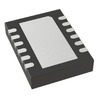
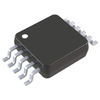
LTC2923IDE#TRPBF Image
Image may be representation.
See specifications for product details.
EXPRESS OPTION
Payment method

LTC2923IDE#TRPBF - Analog Devices Inc.

Manufacturer Part Number
LTC2923IDE#TRPBF
Manufacturer
Analog Devices, Inc.
Allelco Part Number
32D-LTC2923IDE#TRPBF
Warranty
1 Year Allelco Warranty - Find out more
Stock Status:
7,149 pcs available, New & Original
Parts Description
IC POWER SUPPLY CONTROLLER 12DFN
Package
12-DFN (4x3)
Data sheet
LTC2923IDE#TRPB.pdf
RoHs Status
ROHS3 Compliant
Our certification
In stock: 7149
  • Unit Price: $2.588
  • Subtotal: $0.00

Want a better price?
Add to Cart and Submit RFQ now, we'll contact you immediately.

Quantity Unit Price Ext. Price
1+ $2.588 $2.59
10+ $2.255 $22.55
30+ $2.058 $61.74
100+ $1.858 $185.80
500+ $1.766 $883.00
1000+ $1.724 $1,724.00
The above prices does not include taxes and freight rates, which will be calculated on the order pages.

Specifications

LTC2923IDE#TRPBF Tech Specifications
Analog Devices Inc. - LTC2923IDE#TRPBF technical specifications, attributes, parameters and parts with similar specifications to Analog Devices Inc. - LTC2923IDE#TRPBF

Product Attribute Attribute Value
Manufacturer Analog Devices, Inc.
Voltage - Supply 2.9V ~ 5.5V
Voltage - Input -
Supplier Device Package 12-DFN (4x3)
Series -
Package / Case 12-WFDFN Exposed Pad
Product Attribute Attribute Value
Package Tape & Reel (TR)
Operating Temperature -40°C ~ 85°C
Mounting Type Surface Mount
Base Product Number LTC2923
Applications Power Supply Controller, Sequencer

Environmental & Export Classifications

ATTRIBUTE DESCRIPTION
RoHs Status ROHS3 Compliant
Moisture Sensitivity Level (MSL) 1 (Unlimited)
REACH Status REACH Unaffected
ECCN EAR99
HTSUS 8542.39.0001

Parts Introduction

LTC2923IDE#TRPBF Image
LTC2923IDE#TRPBF (1)

Manufacturer Part Number

LTC2923IDE#TRPBF

Manufacturer

analog-devices

Introduction

The LTC2923IDE#TRPBF is a highly integrated power supply controller and sequencer that provides precise control and monitoring of multiple power rails. It features a programmable startup and shutdown sequencing, enabling efficient and reliable power-up and power-down of complex systems.

Product Features and Performance

Programmable start-up and shutdown sequencing for up to 8 power rails

Adjustable rise and fall times for each rail

Precise voltage monitoring with programmable undervoltage and overvoltage thresholds

Configurable fault handling and reporting

Integrated I2C interface for easy system integration

Low quiescent current of 35 μA

Product Advantages

Comprehensive power supply control and monitoring in a compact package

Flexible sequencing for complex systems

Reliable fault detection and handling

Simple I2C configuration and control

Key Reasons to Choose This Product

Optimized for power-critical applications

Streamlines power management for efficient system design

Reduces development time and complexity

Ensures reliable and safe power-up and power-down of sensitive electronics

Quality and Safety Features

Robust design for industrial and automotive environments

Integrated protection features against overcurrent, overvoltage, and overtemperature

Meets stringent safety and EMC requirements

Compatibility

The LTC2923IDE#TRPBF is compatible with a wide range of power supply topologies and can be used in various applications, including industrial equipment, medical devices, automotive electronics, and telecommunication systems.

Application Areas

Power supply control and sequencing

Voltage monitoring and fault detection

Power management for complex systems

Product Lifecycle

The LTC2923IDE#TRPBF is an active product. There are no immediate plans for discontinuation. Analog Devices may offer alternative or equivalent models in the future, but customers should contact our website's sales team for the latest product information and availability.
Frequently Asked Questions(FAQ)

What are the key design considerations when integrating the LTC2923IDE#TRPBF into a multi-rail power sequencing system, and how does its 2.9V to 5.5V supply voltage range influence system-level constraints?
The LTC2923IDE#TRPBF is a power supply controller designed for precise sequencing across multiple voltage rails, making it suitable for complex systems such as FPGAs, ASICs, or microprocessors where power-up and power-down sequences must adhere to strict timing specifications. Its operating supply range of 2.9V to 5.5V allows integration with both low-voltage digital logic (e.g., 3.3V or 5V I/O) and intermediate bus architectures, but designers must ensure that upstream regulators can maintain stable output within this window under load transients. Additionally, the device’s ability to monitor undervoltage conditions on individual rails enables fail-safe startup, which is critical in mission-critical applications. Careful attention must be paid to layout due to its small 12-DFN (4x3) package, where thermal vias and proper grounding are essential to meet performance requirements.
How does the LTC2923IDE#TRPBF compare to alternative sequencers like the LTC2924 or MAX6764 in terms of flexibility and precision for industrial control systems requiring ±5% rail tolerance?
While the LTC2923IDE#TRPBF provides fixed-threshold monitoring and sequencing based on internal reference voltages, the LTC2924 offers greater configurability through external resistors and supports more flexible threshold settings, potentially allowing tighter control over rail tolerances. In contrast, the MAX6764 is optimized for reset supervision rather than full sequencing, making it less suitable for multi-rail power-up orchestration. The LTC2923IDE#TRPBF strikes a balance between simplicity and functionality, delivering reliable sequencing without the need for additional components, which reduces BOM count and board space—key advantages in compact industrial designs. However, if ±5% precision requires analog feedback loops, a dedicated voltage supervisor IC might be more appropriate despite added complexity.
Can the LTC2923IDE#TRPBF be used in automotive-grade applications, and what modifications or certifications are necessary to meet AEC-Q100 requirements?
The LTC2923IDE#TRPBF is not inherently qualified to AEC-Q100 standards; it is specified for industrial temperature range (-40°C to +85°C), which may fall short of some automotive requirements that demand extended operation up to 125°C. For automotive use, designers should verify availability of an AEC-Q100 compliant version from Analog Devices or consider alternative parts explicitly rated for Grade 2 or higher. Even if the part operates within temperature limits, functional safety aspects such as fault logging, redundancy, and diagnostic features would need additional hardware support beyond the LTC2923IDE#TRPBF’s core sequencing function.
What impact does the Moisture Sensitivity Level (MSL) rating of 1 have on reflow soldering processes when using the LTC2923IDE#TRPBF in high-volume manufacturing?
With an MSL rating of 1, the LTC2923IDE#TRPBF is considered moisture-insensitive and can withstand unlimited exposure time at 30°C/60% RH before baking is required prior to reflow. This simplifies handling during assembly, especially in environments where humidity control isn’t strictly maintained, reducing production bottlenecks associated with drying ovens or scheduling delays. Manufacturers benefit from increased flexibility in just-in-time material delivery and inventory turnover, while also minimizing risk of popcorning defects during thermal cycling—critical for reliability in mass-produced consumer and industrial electronics.
How should the LTC2923IDE#TRPBF be interfaced with a microcontroller for dynamic sequencing control, and what limitations exist regarding real-time response?
The LTC2923IDE#TRPBF typically operates autonomously using internally generated timing signals derived from RC networks or external clock inputs, limiting direct software control unless augmented with additional logic. However, some variants allow status monitoring via open-drain outputs (e.g., PGOOD pins), enabling a microcontroller to verify completion of sequencing steps. True dynamic reconfiguration—such as changing sequence order or delay times—requires external circuitry or switching to a programmable sequencer like the LTC2925. Therefore, while the LTC2923IDE#TRPBF supports basic supervisory functions, real-time adaptability is constrained by its fixed-timing architecture, necessitating careful trade-offs between automation and responsiveness in adaptive power management strategies.
In what scenarios would replacing the LTC2923IDE#TRPBF with discrete components be preferable over using an integrated solution, despite potential increases in PCB area and component count?
Discrete implementations—using comparators, timers, and logic gates—may be justified when cost per unit must be minimized in high-volume applications where the LTC2923IDE#TRPBF’s price cannot be amortized across millions of units. Additionally, if unique sequencing profiles (e.g., staggered turn-on with non-linear delays) exceed the device’s predefined patterns, custom analog circuits offer superior tailoring. Similarly, in prototyping or low-run production, sourcing a single IC may introduce lead-time risks compared to readily available standard components. Nevertheless, integrated solutions like the LTC2923IDE#TRPBF reduce design effort, improve reliability through matched thresholds, and lower susceptibility to noise-induced false triggers, offering significant advantages in robustness and time-to-market.
How does the LTC2923IDE#TRPBF handle simultaneous power rail failures, and what protective mechanisms are built into its architecture?
The LTC2923IDE#TRPBF monitors each rail independently and asserts a fault signal (typically via a shared PGOOD pin) if any monitored voltage falls below its threshold during startup, shutdown, or runtime. Upon detecting such an event, it halts further sequencing and holds all outputs inactive until the fault condition clears and a manual reset occurs—either externally or via power cycle. This prevents cascading failures by ensuring no rail powers up prematurely or remains enabled during invalid states. However, the device does not actively regulate or clamp voltages; it only supervises, so protection against overcurrent or short-circuit conditions must be implemented separately using external fuses, current-limiting regulators, or FET switches.
What role does the exposed pad play in thermal performance of the LTC2923IDE#TRPBF, and how should it be handled during PCB layout to maximize heat dissipation?
The exposed pad on the 12-DFN (4x3) package serves both electrical ground connection and thermal conduction path, significantly lowering junction-to-board thermal resistance. To optimize heat dissipation, the pad must be connected to the primary ground plane and filled with multiple vias (at least six, preferably copper-plated) to transfer heat efficiently into inner layers or bottom-side heatsinking. Avoid floating the pad or connecting it only at one point, as this creates thermal bottlenecks. Proper implementation ensures stable operation under continuous load and enhances long-term reliability, particularly important in systems with tight temperature margins near the -40°C to +85°C specification limit.
Is the LTC2923IDE#TRPBF compatible with split-supply architectures, and how does its single 2.9V–5.5V input constrain mixed-signal design integration?
The LTC2923IDE#TRPBF accepts a single supply voltage ranging from 2.9V to 5.5V, which inherently limits its use in true split-supply systems where separate positive and negative rails are required. However, many modern mixed-signal designs use dual positive rails (e.g., 1.8V analog core and 3.3V digital I/O), and the LTC2923IDE#TRPBF can supervise both if powered from the higher rail. It cannot directly monitor negative voltages without external level-shifting circuitry. Thus, while not natively suited for bipolar supplies, it remains viable in most unipolar, multi-rail configurations common in embedded computing and communication infrastructure equipment.
How does the LTC2923IDE#TRPBF contribute to system-level EMC compliance, and what layout practices are recommended to minimize radiated emissions?
As a low-current control IC, the LTC2923IDE#TRPBF itself generates minimal electromagnetic interference, but its switching activity (e.g., driving enable lines) can couple noise onto sensitive nodes if routed improperly. To mitigate this, keep control traces short, avoid parallel routing with clock or data lines, and place bypass capacitors close to the VCC pin (typically 1µF ceramic). Grounding the exposed pad effectively shields internal circuitry and reduces loop areas, aiding emission control. Although the device doesn’t perform switching regulation, its clean digital outputs help maintain signal integrity, indirectly supporting EMC goals when combined with good PCB hygiene and adherence to EN 55032 or FCC Part 15 guidelines.
What are the implications of using the LTC2923IDE#TRPBF in battery-powered devices with limited energy budgets, and how does its quiescent current affect overall efficiency?
While the datasheet does not specify exact quiescent current for the LTC2923IDE#TRPBF, similar power sequencer ICs typically draw tens of microamps, which becomes significant in ultra-low-power modes. In battery-operated systems—such as IoT sensors or wearables—this leakage can accelerate discharge during standby. Designers should evaluate whether autonomous sequencing justifies the static power overhead or if simpler wake-up schemes using discrete components would conserve energy better. If the LTC2923IDE#TRPBF remains active continuously, consider duty-cycling its enable input or switching to a lower-power supervisor during sleep phases to extend operational lifetime.
How does the RoHS3 and REACH compliance status of the LTC2923IDE#TRPBF impact global regulatory submissions, and are there any hidden restrictions in specific regions?
The LTC2923IDE#TRPBF is fully compliant with RoHS3 directives, eliminating hazardous substances like lead, mercury, and cadmium above regulated thresholds, and is marked as REACH unaffected, meaning it contains no SVHCs (Substances of Very High Concern) exceeding 0.1% weight by mass. These statuses facilitate CE marking in Europe, FCC certification in the U.S., and import clearance in China under REACH-like regulations. No additional documentation or testing is typically required beyond standard compliance declarations, streamlining global market access. However, importers should still verify local interpretations, as some jurisdictions impose stricter disclosure rules even for compliant parts.
What alternatives exist if the LTI2923IDE#TRPBF’s fixed timing scheme cannot accommodate variable delays based on system state, and how do they compare in terms of development complexity?
Programmable sequencers like the LTC2925 or LTC2937 offer I²C or SPI interfaces allowing firmware to adjust timing parameters dynamically based on boot mode, temperature, or user configuration. Compared to the LTC2923IDE#TRPBF’s RC-based timing, these require microcontroller intervention and add communication overhead, increasing both software complexity and potential failure points. For applications where timing must adapt post-deployment (e.g., field updates), programmable options are superior. Conversely, in deterministic, repeatable environments (e.g., factory-configured industrial controllers), the LTC2923IDE#TRPBF’s simplicity reduces risk and accelerates validation, making it preferable despite lack of runtime flexibility.
How does the LTC2923IDE#TRPBF interact with digitally controlled DC-DC converters during brownout events, and what safeguards prevent unintended system resets?
During a brownout condition, the LTC2923IDE#TRPBF detects falling voltage on monitored rails and immediately disables downstream enable signals, preventing unstable operation. Simultaneously, it may assert a reset pulse to the microcontroller or FPGA, forcing a clean restart once voltages stabilize. This coordination avoids erratic behavior caused by partially powered logic. However, if the main supply drops too quickly, the LTC2923IDE#TRPBF’s response time (~microseconds) might lag behind converter instability, risking brief glitches. To mitigate, pair it with fast-acting supervisors or use converters with built-in brownout detection that trigger earlier than the sequencer’s threshold, creating overlapping protection layers.
What documentation resources accompany the LTC2923IDE#TRPBF, and how do application notes enhance practical implementation beyond the datasheet?
Analog Devices provides comprehensive resources including the LT Journal article series, AN135 (Power Sequencing Using the LTC2923), and schematic examples with bill-of-materials guidance. These documents illustrate real-world use cases—such as sequencing DDR memory rails or coordinating hot-swap controllers—and clarify nuances like capacitor selection for timing accuracy and PCB stackup recommendations. Unlike the datasheet’s parameter tables, application notes address layout pitfalls, EMI mitigation, and interaction with other PMICs, offering actionable insights that reduce debugging cycles and improve first-pass success rates in complex designs.
How does the LTC2923IDE#TRPBF support redundant power systems, and what modifications are needed to achieve failover functionality?
The LTC2923IDE#TRPBF can monitor multiple power sources by configuring different rails as primary and secondary inputs, using its undervoltage lockout (UVLO) thresholds to select the healthier source. By gating the enable line of the active regulator and inhibiting the other, it enables seamless transition during failure. However, achieving true redundant operation requires external OR-ing diodes or ideal diodes (controlled by additional comparators), since the sequencer alone cannot switch live loads. Integrating MOSFET-based ideal diode controllers with the LTC2923IDE#TRPBF’s status outputs allows sub-50mV dropout and automatic failover, critical for telecom or server applications where uptime is paramount.
What are the long-term reliability concerns associated with the LTC2923IDE#TRPBF in high-vibration environments, and how do packaging choices influence mechanical resilience?
The 12-DFN (4x3) package uses a molded epoxy resin over silicon die, which provides adequate shear strength for most commercial and industrial applications. However, in high-vibration settings—such as automotive or aerospace peripherals—the coefficient of thermal expansion mismatch between silicon and laminate substrate can induce stress cycles, potentially leading to wire bond fatigue or delamination over time. While Analog Devices tests for standard reliability metrics (HTOL, ESD), mechanical shock resistance isn’t always quantified. For enhanced durability, consider conformal coating or mounting on stiffeners, though these add cost and complexity. In practice, the LTC2923IDE#TRPBF performs reliably in vibration-prone environments when paired with robust PCB assembly practices.
How does the LTC2923IDE#TRPBF’s absence from Digi-Key’s “Program Verified” status affect procurement risk, and what verification steps should engineers take before design freeze?
The “Not Verified” designation indicates that Digi-Key has not independently tested sample parts against their quality standards, introducing potential uncertainty around counterfeit risk or batch inconsistencies. Before committing to production, engineers should request samples for functional validation, check Analog Devices’ factory test reports, and cross-reference with authorized distributors’ verified listings. Additionally, confirm that the exact model number (LTC2923IDE#TRPBF) appears on the manufacturer’s official website and that lead times align with project schedules. Though common among niche PMICs, this lack of third-party assurance warrants extra diligence to avoid late-stage qualification failures.

Parts with Similar Specifications

The three parts on the right have similar specifications to Analog Devices Inc. LTC2923IDE#TRPBF

Product Attribute LTC2923CDE#TRPBF LTC2923IDE#PBF LTC2923IMS#TRPBF LTC2923CMS#TRPBF
Part Number LTC2923CDE#TRPBF LTC2923IDE#PBF LTC2923IMS#TRPBF LTC2923CMS#TRPBF
Manufacturer Analog Devices Inc. Analog Devices Inc. Analog Devices Inc. Analog Devices Inc.
Voltage - Supply - - - -
Base Product Number - DAC34H84 MAX500 ADS62P42
Mounting Type - Surface Mount Through Hole Surface Mount
Voltage - Input - - - -
Applications - - - -
Package / Case - 196-LFBGA 16-DIP (0.300', 7.62mm) 64-VFQFN Exposed Pad
Supplier Device Package - 196-NFBGA (12x12) 16-PDIP 64-VQFN (9x9)
Package - Tape & Reel (TR) Tube Tape & Reel (TR)
Operating Temperature - -40°C ~ 85°C 0°C ~ 70°C -40°C ~ 85°C
Series - - - -

LTC2923IDE#TRPBF Datasheet PDF

Download LTC2923IDE#TRPBF pdf datasheets and Analog Devices Inc. documentation for LTC2923IDE#TRPBF - Analog Devices Inc..

Datasheets
Cylindrical Battery Holders.pdf
Environmental Information
Material Declaration LTC2923IDE#TRPBF.pdf
Other Related Documents
Tape and Reel Packaging.pdf

Customer Reviews

Evaluation: 10 Articles

  • Nath***rooks
    Jun 11, 2026

    Installed this power component in a converter board. Output remained stable under different load conditions and thermal performance was better than expected.

  • Dani***alkerTech
    Jun 1, 2026

    Product works, but setup took more effort than expected. Once configured the MCU ran reliably, although documentation support felt older compared with newer platforms. Fine for maintenance projects.

  • Yuki***aka88
    May 26, 2026

    信号通信プロジェクトでこのRS-485トランシーバーを使用しました。設置は簡単で、長距離ケーブルでも通信は安定していました。消費電力も、以前使用していたものより低くなっています。

  • Stev***aker
    May 20, 2026

    Solid diode for power rectification. Works well in switching circuits.

  • Bran***Lewis
    May 11, 2026

    Compact FPGA with good performance. Suitable for basic signal processing tasks.

  • Oliv***arris
    May 7, 2026

    Reliable I/O expander. Works well in embedded control applications.

  • Jess***Jones
    Apr 17, 2026

    It offers good value for the price, and the specifications match the description. I’ve been using it for two days with no issues, and I’ll definitely buy it again if I need it in the future.

  • Mich***Smith
    Apr 17, 2026

    Shipping was on time, the component pins are neatly aligned, and I tested 10 of them with a multimeter—all readings were within the specified range. Highly recommended.

  • Aman***arris
    Apr 3, 2026

    It was great—the entire process, from placing the order to receiving the package, went very smoothly. The components were consistent, the price was fair, and I had a very pleasant shopping experience.

  • Mike***nch
    Apr 3, 2026

    Better than expected! The resistance and capacitance readings were spot-on, and it passed the test on the first try. The service was reliable, and the packaging was thoughtful—I highly recommend it.

Write a Review

Your Email address will not be published.

Shipment

Delivery Time

In-stock items can be shipped within 24 hours. Some parts will be arranged for delivery within 1-2 days from the date all items arrive at our warehouse. And Allelco ships order once a day at about 17:00, except Sunday. Once the goods are shipped, the estimated delivery time depends on the shipping methods and Delivery destination. The table below shows are the logistic time for some common countries.

Delivery Cost

  1. Use your express account for shipment if you have one.
  2. Use our account for the shipment. Refer to the table below for the approximate charges.
(Different time frame / countries / package size has different price.)

Delivery Method

  1. Global Common Shipment by DHL / UPS / FedEx / TNT / EMS / SF we support.
  2. Others more shipping ways, please get in touch with your customer manager.

Common Countries Logistic Time Reference
Region Country Logistic Time(Day)
America United States 5
Brazil 7
Europe Germany 5
United Kingdom 4
Italy 5
Oceania Australia 6
New Zealand 5
Asia India 4
Japan 4
Middle East Israel 6
DHL & FedEx Shipment Charges Reference
Shipment charges(KG) Reference DHL(USD$)
0.00kg-1.00kg USD$30.00 - USD$60.00
1.00kg-2.00kg USD$40.00 - USD$80.00
2.00kg-3.00kg USD$50.00 - USD$100.00
Note:
The above table is for reference only. There may have some data bias for the uncontrollable factors.
Contact us if you have any questions.
  • QC (Quality Warranty)
  • Payment Support
  • Packaging
  • Certifications & Memberships

QC (Quality Warranty)

Allelco is committed to exceeding customer expectations through customer service excellence, order accuracy, and on-time delivery.
This is achieved through our commitment to the continual improvement of our processes, services, and products.


Strict quality inspection builds a solid foundation for electronic component quality.
  1. Visual inspection
  2. Performance testing and reliability verification
  3. Standardized full-process testing
  4. Precise control of every parameter
We eliminate defective components and ensure the stable operation of electronic devices through professional quality standards.

Payment Support

The payment method can be chosen from the methods shown below: Wire Transfer (T/T, Bank Transfer), Western Union, Credit card, PayPal.
  • HKBea
  • Paypal
  • MasterCard
  • Western-Union
  • VISA
Stable Delivery, Sincere Partnership — Your Faithful Supply Chain Partner
  • Efficient Supply Management
  • Cost-Saving Procurement
  • Fast Sourcing & Delivery
Contact us if you have any questions.

Packaging

Electrostatic Discharge Protection and Handling

All electrostatic-sensitive components are handled in accordance with electrostatic discharge control procedures. The products are hermetically sealed in anti-static safe packaging to prevent electrostatic damage. Appropriate labeling is also applied for identification and traceability. This ensures product integrity during storage, handling and transportation.


ESD

Certifications & Memberships

Third-party certified, strict quality control. Our certification
  • ISO 9001: 2015
  • ISO 13485: 2016
  • ISO 14001: 2015
  • ISO 28000: 2007
  • ISO 45001: 2018
  • GB/T 27922-2011
  • SMTA
  • IPC
  • ESD
  • PSMA
LTC2923IDE#TRPBF Image

LTC2923IDE#TRPBF

Analog Devices Inc.
32D-LTC2923IDE#TRPBF

Want a better price? Add to Cart and Submit RFQ now, we'll contact you immediately.

0 RFQ
Shopping cart (0 Items)
It is empty.
Compare List (0 Items)
It is empty.
Feedback

Your feedback matters! At Allelco, we value the user experience and strive to improve it constantly.
Please share your comments with us via our feedback form, and we'll respond promptly.
Thank you for choosing Allelco.

Subject
E-mail
Comments
Captcha
Drag or click to upload file
Upload File
types: .xls, .xlsx, .doc, .docx, .jpg, .png and .pdf.
Max file size: 10MB