View All

Please refer to the English Version as our Official Version.Return

Europe
France(Français) Germany(Deutsch) Italy(Italia) Russian(русский) Poland(polski) Czech(Čeština) Luxembourg(Lëtzebuergesch) Netherlands(Nederland) Iceland(íslenska) Hungarian(Magyarország) Spain(español) Portugal(Português) Turkey(Türk dili) Bulgaria(Български език) Ukraine(Україна) Greece(Ελλάδα) Israel(עִבְרִית) Sweden(Svenska) Finland(Svenska) Finland(Suomi) Romania(românesc) Moldova(românesc) Slovakia(Slovenská) Denmark(Dansk) Slovenia(Slovenija) Slovenia(Hrvatska) Croatia(Hrvatska) Serbia(Hrvatska) Montenegro(Hrvatska) Bosnia and Herzegovina(Hrvatska) Lithuania(lietuvių) Spain(Português) Switzerland(Deutsch) United Kingdom(English)
Asia/Pacific
Japan(日本語) Korea(한국의) Thailand(ภาษาไทย) Malaysia(Melayu) Singapore(Melayu) Vietnam(Tiếng Việt) Philippines(Pilipino)
Africa, India and Middle East
United Arab Emirates(العربية) Iran(فارسی) Tajikistan(فارسی) India(हिंदी) Madagascar(malaɡasʲ)
South America / Oceania
New Zealand(Maori) Brazil(Português) Angola(Português) Mozambique(Português)
North America
United States(English) Canada(English) Haiti(Ayiti) Mexico(español)
HomeProductsIntegrated Circuits (ICs)Specialized ICsAD9633BCPZ-125
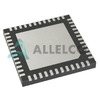
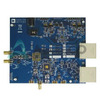
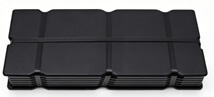
Image may be representation.
See specifications for product details.
EXPRESS OPTION
Payment method

AD9633BCPZ-125 - Analog Devices

Manufacturer Part Number
AD9633BCPZ-125
Manufacturer
Analog Devices, Inc.
Allelco Part Number
41D-AD9633BCPZ-125
Warranty
1 Year Allelco Warranty - Find out more
Stock Status:
15,500 pcs available, New & Original
Parts Description
LFCSP-48
Data sheet
-
Category
Integrated Circuits (ICs) > Specialized ICs
RoHs Status
Our certification
In stock: 15500

Required fields are indicated by an asterisk (*)
Please send RFQ, we will respond immediately.

Quantity

Specifications

AD9633BCPZ-125 Tech Specifications
Analog Devices - AD9633BCPZ-125 technical specifications, attributes, parameters and parts with similar specifications to Analog Devices - AD9633BCPZ-125

Product Attribute Attribute Value
Part Number AD9633BCPZ-125
Package LFCSP-48
Description LFCSP-48
Stock Condition Get 15500 pcs available quantity at Allelco
Payment PayPal / TT / Credit Card / Western Union
Allelco Certifications ESD / ISO 9001 / ISO 13485 / ISO 28000
Product Attribute Attribute Value
Manufacturer Analog Devices, Inc.
RoHs Status -
Warranty 100% Perfect Functions
Transport port Hong Kong
Shipping by DHL / FedEx / UPS / TNT / SF Express
RFQ Email info@allelco.com

Parts Introduction

Manufacturer Part Number

AD9633BCPZ-125

Manufacturer

analog-devices

Introduction

The AD9633 is a high-performance, low power, quad-channel, 12-bit, 125 MSPS analog-to-digital converter (ADC) with integrated sample-and-hold amplifiers. It features simultaneous sampling on all four channels, low power consumption, and a compact, low-profile package. The AD9633 is ideal for a wide range of applications including medical imaging, communications, and industrial instrumentation.

Product Features and Performance

12-bit resolution

125 MSPS sampling rate

4 differential analog inputs

Integrated sample-and-hold amplifiers

Simultaneous sampling on all 4 channels

Low power consumption

Compact 48-pin WFQFN package

Product Advantages

Excellent dynamic performance with low power

Simultaneous sampling of all 4 channels

Integrated sample-and-hold amplifiers

Wide operating temperature range of -40°C to 85°C

Key Reasons to Choose this Product

High-performance, cost-effective solution for multi-channel data acquisition

Compact package and low power consumption make it ideal for space-constrained applications

Robust design and wide operating temperature range ensure reliable operation in demanding environments

Proven performance and reliability from a trusted manufacturer, Analog Devices

Quality and Safety Features

Manufactured in ISO certified facilities

Rigorous testing and quality control processes

RoHS and REACH compliant

Compatibility

The AD9633 is compatible with a wide range of digital signal processors, microcontrollers, and other data acquisition systems.

Application Areas

Medical imaging equipment

Communications systems

Industrial instrumentation

Test and measurement equipment

Product Lifecycle

The AD9633 is an active product. There are no immediate plans for discontinuation. Alternative models with similar performance and features include the AD9634 and AD9637 series. If you have any questions or need assistance, please contact our sales team through our website.

Frequently Asked Questions(FAQ)

How does the AD9633BCPZ-125’s simultaneous sampling capability impact multi-channel signal acquisition in high-speed instrumentation applications?
The AD9633BCPZ-125 integrates four pipelined A/D converters with true simultaneous sampling, ensuring precise phase alignment across all four differential inputs. This eliminates timing skew that can occur in time-multiplexed architectures, which is critical when capturing transient or fast-moving signals on multiple channels. For instance, in radar or ultrasound imaging systems requiring correlated data from multiple sensors, this feature enables accurate spatial and temporal reconstruction without additional synchronization circuitry.
What are the implications of the AD9633BCPZ-125’s 1.7V to 1.9V analog and digital supply range for mixed-signal PCB layout and power integrity?
Operating at 1.8V (typical midpoint) reduces dynamic power compared to higher-voltage ADCs but demands strict decoupling and low-noise power delivery due to the limited headroom for signal swing and noise margins. The tightly coupled analog and digital supply rails mean that power supply rejection ratio (PSRR) becomes a key performance factor; any coupling of digital switching noise into the analog domain can degrade effective resolution. Designers should use separate LDOs or ultra-low-noise regulators for each domain with careful partitioning and guard rings to maintain performance.
In what scenarios would the external reference configuration be preferred over the internal reference for the AD9633BCPZ-125?
An external reference—such as a precision bandgap source—is advantageous when system-level accuracy, drift stability over temperature, or tighter long-term tolerance (<±10 ppm/°C) is required. For example, in industrial process monitoring where ADC gain errors directly translate to measurement inaccuracies, an external reference allows tighter control than the internal 1.25V bandgap, whose typical initial accuracy may exceed ±50 ppm. However, the internal reference simplifies design and reduces BOM count in space-constrained applications.
How does the LVDS serial interface of the AD9633BCPZ-125 affect FPGA integration complexity compared to parallel CMOS outputs?
While LVDS reduces pin count and simplifies routing over long traces, it introduces deserialization logic within the FPGA and requires precise clock recovery and deskew management. Compared to parallel CMOS interfaces, LVDS demands more sophisticated timing closure efforts in FPGA design due to bit-level skew accumulation across high-speed lanes. However, for the AD9633BCPZ-125’s 125 MSPS output rate, LVDS remains necessary to manage I/O bandwidth while maintaining signal integrity, especially given the 48-pin package constraints.
What trade-offs exist between using the AD9633BCPZ-125 in single-ended versus differential input configurations?
Differential inputs provide superior common-mode noise rejection and enable higher input signal amplitudes relative to ground, which helps maintain SNR even with noisy environments. However, they require balanced transformers or differential amplifiers, increasing component count and layout symmetry demands. Single-ended operation simplifies front-end design but limits CMRR and increases sensitivity to ground bounce. For the AD9633BCPZ-125, best performance comes from true differential signaling, so most high-fidelity designs will leverage its native differential inputs despite added complexity.
How does the 48-LFCSP (7x7) packaging influence thermal management and reliability during continuous operation at 125 MSPS?
The compact 48-lead LFCSP exposes the die pad for direct thermal connection to the PCB, enabling efficient heat dissipation. At sustained 125 MSPS throughput, the AD9633BCPZ-125 consumes approximately 120–150 mW depending on output load, generating measurable self-heating. Proper thermal vias under the exposed pad are essential to keep junction temperatures below 85°C, particularly in -40°C to +85°C industrial environments. Without adequate heatsinking, derating may be required to prevent parametric drift or accelerated aging.
Can the AD9633BCPZ-125 support interleaved multi-sampling modes across its four converters for extended channel counts?
No, the AD9633BCPZ-125 does not support interleaving. Each of its four A/D converters operates independently with simultaneous sampling. Attempting to emulate higher channel density via software or external multiplexing would sacrifice timing accuracy and defeat the purpose of the built-in simultaneity. For systems requiring >4 channels at 125 MSPS with tight phase matching, designers must either cascade multiple AD9633BCPZ-125 devices or select a dedicated multi-channel ADC architecture.
What considerations apply when cascading multiple AD9633BCPZ-125 devices to achieve higher aggregate sampling rates?
Cascading is only meaningful if the application requires multiple independent 125 MSPS streams rather than a single higher-rate stream. Since the AD9633BCPZ-125 lacks internal master/slave synchronization beyond simultaneous sampling, external clock distribution with minimal jitter (<100 fs RMS) and matched trace lengths is critical. Additionally, each device draws separate supplies and generates individual serial data, increasing FPGA input requirements. True pipeline stacking without architectural support offers no throughput benefit and adds latency mismatch risks.
How does the MSL 3 classification of the AD9633BCPZ-125 inform storage and handling protocols before reflow soldering?
MSL 3 indicates the part is sensitive to moisture absorption up to 168 hours at 85°C/60% RH before exposure to reflow conditions. After this window, popcorning during lead-free reflow can cause internal delamination or bond wire failure. Manufacturers typically bake devices exceeding 168 hours prior to assembly. For production planning, stock rotation and humidity-controlled storage are recommended to avoid hidden reliability risks associated with moisture ingress during high-temperature processing.
What role does the S/H-to-ADC ratio play in the AD9633BCPZ-125’s pipelined architecture, and how does the 1:1 ratio affect settling behavior?
The sample-and-hold (S/H) stage precedes the first pipeline stage in a pipelined ADC. A 1:1 S/H-to-ADC ratio means the hold aperture time equals the conversion cycle time, implying zero overhead between sampling and encoding. This tight coupling minimizes timing uncertainty and ensures full utilization of the 8 ns conversion period at 125 MSPS. Any delay or setup violation in the S/H front end directly translates to aperture jitter, limiting ENOB at high frequencies—particularly relevant for RF sampling above 10 MHz input.
Given its 12-bit resolution and 125 MSPS speed, what is the theoretical maximum input frequency that preserves full amplitude fidelity according to the Nyquist criterion for the AD9633BCPZ-125?
According to Nyquist, the maximum unambiguous frequency is half the sampling rate, yielding 62.5 MHz. However, practical reconstruction and anti-imaging filters are needed to suppress images beyond this point. For broadband RF applications, the usable bandwidth is often further reduced by the anti-aliasing filter roll-off and aperture jitter limitations. The AD9633BCPZ-125’s typical ENOB drops below 10 bits above ~40 MHz due to internal noise and jitter, so real-world usable bandwidth rarely exceeds 40 MHz despite the 62.5 MHz Nyquist limit.
How should termination and impedance matching be handled for the LVDS outputs of the AD9633BCPZ-125 when interfacing with FPGA transceivers?
LVDS uses differential signaling with nominal 100 Ω impedance. Termination resistors (typically 100 Ω across the pair) should be placed close to the FPGA receiver to minimize reflections. The AD9633BCPZ-125 drives LVDS-compliant levels (~350 mV diff), so proper receiver termination ensures eye diagram integrity. Avoid stubs or long unmatched traces, as they degrade rise/fall times and increase susceptibility to EMI. Use controlled-impedance routing (e.g., microstrip or stripline) on the PCB to maintain characteristic impedance within ±10% across all output lanes.
What design precautions are necessary to prevent digital feedback loops from degrading analog performance in systems using the AD9633BCPZ-125?
Digital outputs from the AD9633BCPZ-125 should be routed away from analog input traces, power planes, and reference lines. Clock signals driving other digital blocks must be isolated to avoid coupling into the 1.8V analog supply. Ground splits or star grounding topologies help isolate return currents. Ferrite beads or π-filter networks on digital supply lines can suppress conducted emissions. Failure to do so introduces spurious tones in the baseband spectrum, reducing SFDR and increasing harmonic distortion—especially problematic in communication receivers or sensor front ends.
How does the AD9633BCPZ-125 compare to alternative 12-bit, 125 MSPS ADCs like the AD9269 or LTC2208 in terms of power efficiency and interface flexibility?
The AD9633BCPZ-125 consumes more power (~150 mW) than ultra-low-power alternatives like the LTC2208 (80 mW) but trades power for integrated simultaneous sampling and lower interface count. Unlike the AD9269, which uses parallel CMOS, the AD9633BCPZ-125’s LVDS serial interface saves pins but adds FPGA deserialization overhead. Choice depends on system priorities: if four synchronized channels are needed, the AD9633BCPZ-125 avoids external muxing; otherwise, lower-power single-channel parts may offer better thermal budget and simpler FPGA integration.
What calibration techniques are typically employed to correct INL and DNL errors in the AD9633BCPZ-125, and when are they necessary?
Most applications rely on factory calibration, which corrects for fixed-pattern noise and improves monotonicity. Post-deployment correction using external lookup tables is rare due to memory overhead. However, if the system operates across extreme temperatures (-40°C to +85°C), periodic background calibration may be considered—though the AD9633BCPZ-125 lacks built-in self-calibration features. Instead, designers often use oversampling or averaging to mitigate residual INL effects, especially when measuring slowly varying DC signals where quantization noise dominates dynamic error metrics.
What impact does aperture jitter have on the dynamic performance of the AD9633BCPZ-125 at high input frequencies?
Aperture jitter causes timing uncertainty in the sample moment, leading to phase noise in sampled signals. For a 125 MSPS converter, even 1 ps RMS jitter degrades SINAD by ~0.5 dB near 60 MHz input. The AD9633BCPZ-125 specifies <0.7 ps RMS jitter, making it suitable up to ~40–50 MHz for full 12-bit accuracy. Beyond this, SNR drops nonlinearly, and SFDR suffers from spurs at multiples of the input tone. Careful clock source selection and low-jitter oscillators are therefore essential for RF-sampling applications.
How does RoHS3 compliance and REACH unaffected status influence global regulatory acceptance of the AD9633BCPZ-125 in medical and automotive systems?
RoHS3 compliance ensures adherence to EU directives banning hazardous substances like lead, cadmium, and mercury, facilitating market access across Europe, North America, and Asia. REACH unaffected status confirms no SVHC (Substance of Very High Concern) content above threshold limits, reducing documentation burden for OEMs in regulated sectors. These attributes support deployment in medical imaging and industrial automation where certification traceability is mandatory, without requiring additional substance testing or disclosure filings.

Customer Reviews

Evaluation: 10 Articles

  • Nath***rooks
    Jun 11, 2026

    Installed this power component in a converter board. Output remained stable under different load conditions and thermal performance was better than expected.

  • Dani***alkerTech
    Jun 1, 2026

    Product works, but setup took more effort than expected. Once configured the MCU ran reliably, although documentation support felt older compared with newer platforms. Fine for maintenance projects.

  • Yuki***aka88
    May 26, 2026

    信号通信プロジェクトでこのRS-485トランシーバーを使用しました。設置は簡単で、長距離ケーブルでも通信は安定していました。消費電力も、以前使用していたものより低くなっています。

  • Stev***aker
    May 20, 2026

    Solid diode for power rectification. Works well in switching circuits.

  • Bran***Lewis
    May 11, 2026

    Compact FPGA with good performance. Suitable for basic signal processing tasks.

  • Oliv***arris
    May 7, 2026

    Reliable I/O expander. Works well in embedded control applications.

  • Jess***Jones
    Apr 17, 2026

    It offers good value for the price, and the specifications match the description. I’ve been using it for two days with no issues, and I’ll definitely buy it again if I need it in the future.

  • Mich***Smith
    Apr 17, 2026

    Shipping was on time, the component pins are neatly aligned, and I tested 10 of them with a multimeter—all readings were within the specified range. Highly recommended.

  • Aman***arris
    Apr 3, 2026

    It was great—the entire process, from placing the order to receiving the package, went very smoothly. The components were consistent, the price was fair, and I had a very pleasant shopping experience.

  • Mike***nch
    Apr 3, 2026

    Better than expected! The resistance and capacitance readings were spot-on, and it passed the test on the first try. The service was reliable, and the packaging was thoughtful—I highly recommend it.

Write a Review

Your Email address will not be published.

Shipment

Delivery Time

In-stock items can be shipped within 24 hours. Some parts will be arranged for delivery within 1-2 days from the date all items arrive at our warehouse. And Allelco ships order once a day at about 17:00, except Sunday. Once the goods are shipped, the estimated delivery time depends on the shipping methods and Delivery destination. The table below shows are the logistic time for some common countries.

Delivery Cost

  1. Use your express account for shipment if you have one.
  2. Use our account for the shipment. Refer to the table below for the approximate charges.
(Different time frame / countries / package size has different price.)

Delivery Method

  1. Global Common Shipment by DHL / UPS / FedEx / TNT / EMS / SF we support.
  2. Others more shipping ways, please get in touch with your customer manager.

Common Countries Logistic Time Reference
Region Country Logistic Time(Day)
America United States 5
Brazil 7
Europe Germany 5
United Kingdom 4
Italy 5
Oceania Australia 6
New Zealand 5
Asia India 4
Japan 4
Middle East Israel 6
DHL & FedEx Shipment Charges Reference
Shipment charges(KG) Reference DHL(USD$)
0.00kg-1.00kg USD$30.00 - USD$60.00
1.00kg-2.00kg USD$40.00 - USD$80.00
2.00kg-3.00kg USD$50.00 - USD$100.00
Note:
The above table is for reference only. There may have some data bias for the uncontrollable factors.
Contact us if you have any questions.
  • QC (Quality Warranty)
  • Payment Support
  • Packaging
  • Certifications & Memberships

QC (Quality Warranty)

Allelco is committed to exceeding customer expectations through customer service excellence, order accuracy, and on-time delivery.
This is achieved through our commitment to the continual improvement of our processes, services, and products.


Strict quality inspection builds a solid foundation for electronic component quality.
  1. Visual inspection
  2. Performance testing and reliability verification
  3. Standardized full-process testing
  4. Precise control of every parameter
We eliminate defective components and ensure the stable operation of electronic devices through professional quality standards.

Payment Support

The payment method can be chosen from the methods shown below: Wire Transfer (T/T, Bank Transfer), Western Union, Credit card, PayPal.
  • HKBea
  • Paypal
  • MasterCard
  • Western-Union
  • VISA
Stable Delivery, Sincere Partnership — Your Faithful Supply Chain Partner
  • Efficient Supply Management
  • Cost-Saving Procurement
  • Fast Sourcing & Delivery
Contact us if you have any questions.

Packaging

Electrostatic Discharge Protection and Handling

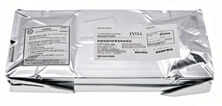
All electrostatic-sensitive components are handled in accordance with electrostatic discharge control procedures. The products are hermetically sealed in anti-static safe packaging to prevent electrostatic damage. Appropriate labeling is also applied for identification and traceability. This ensures product integrity during storage, handling and transportation.


ESD

Certifications & Memberships

Third-party certified, strict quality control. Our certification
  • ISO 9001: 2015
  • ISO 13485: 2016
  • ISO 14001: 2015
  • ISO 28000: 2007
  • ISO 45001: 2018
  • GB/T 27922-2011
  • SMTA
  • IPC
  • ESD
  • PSMA
Analog Devices

AD9633BCPZ-125

Analog Devices
41D-AD9633BCPZ-125

Want a better price? Add to Cart and Submit RFQ now, we'll contact you immediately.

0 RFQ
Shopping cart (0 Items)
It is empty.
Compare List (0 Items)
It is empty.
Feedback

Your feedback matters! At Allelco, we value the user experience and strive to improve it constantly.
Please share your comments with us via our feedback form, and we'll respond promptly.
Thank you for choosing Allelco.

Subject
E-mail
Comments
Captcha
Drag or click to upload file
Upload File
types: .xls, .xlsx, .doc, .docx, .jpg, .png and .pdf.
Max file size: 10MB