View All

Please refer to the English Version as our Official Version.Return

Europe
France(Français) Germany(Deutsch) Italy(Italia) Russian(русский) Poland(polski) Czech(Čeština) Luxembourg(Lëtzebuergesch) Netherlands(Nederland) Iceland(íslenska) Hungarian(Magyarország) Spain(español) Portugal(Português) Turkey(Türk dili) Bulgaria(Български език) Ukraine(Україна) Greece(Ελλάδα) Israel(עִבְרִית) Sweden(Svenska) Finland(Svenska) Finland(Suomi) Romania(românesc) Moldova(românesc) Slovakia(Slovenská) Denmark(Dansk) Slovenia(Slovenija) Slovenia(Hrvatska) Croatia(Hrvatska) Serbia(Hrvatska) Montenegro(Hrvatska) Bosnia and Herzegovina(Hrvatska) Lithuania(lietuvių) Spain(Português) Switzerland(Deutsch) United Kingdom(English)
Asia/Pacific
Japan(日本語) Korea(한국의) Thailand(ภาษาไทย) Malaysia(Melayu) Singapore(Melayu) Vietnam(Tiếng Việt) Philippines(Pilipino)
Africa, India and Middle East
United Arab Emirates(العربية) Iran(فارسی) Tajikistan(فارسی) India(हिंदी) Madagascar(malaɡasʲ)
South America / Oceania
New Zealand(Maori) Brazil(Português) Angola(Português) Mozambique(Português)
North America
United States(English) Canada(English) Haiti(Ayiti) Mexico(español)
HomeProductsIntegrated Circuits (ICs)Embedded - FPGAs (Field Programmable Gate Array)XC4005-5PQ160C
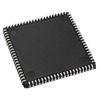
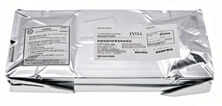
Image may be representation.
See specifications for product details.
EXPRESS OPTION
Payment method

XC4005-5PQ160C - AMD

Manufacturer Part Number
XC4005-5PQ160C
Manufacturer
AMD Xilinx
Allelco Part Number
32D-XC4005-5PQ160C
Warranty
1 Year Allelco Warranty - Find out more
Stock Status:
5,520 pcs available, New & Original
Parts Description
IC FPGA 112 I/O 160QFP
Package
160-PQFP (28x28)
Data sheet
XC4005-5PQ160C.pdf

Environmental Information

Xilinx REACH211 Cert.pdf
RoHs Status
 
Our certification
In stock: 5520

Required fields are indicated by an asterisk (*)
Please send RFQ, we will respond immediately.

Quantity

Specifications

XC4005-5PQ160C Tech Specifications
AMD - XC4005-5PQ160C technical specifications, attributes, parameters and parts with similar specifications to AMD - XC4005-5PQ160C

Product Attribute Attribute Value
Manufacturer AMD Xilinx
Voltage - Supply 4.75V ~ 5.25V
Total RAM Bits 6272
Supplier Device Package 160-PQFP (28x28)
Series XC4000
Package / Case 160-BQFP
Package Tray
Product Attribute Attribute Value
Operating Temperature 0°C ~ 85°C (TJ)
Number of Logic Elements/Cells 466
Number of LABs/CLBs 196
Number of I/O 112
Number of Gates 5000
Mounting Type Surface Mount
Base Product Number XC4005

Environmental & Export Classifications

ATTRIBUTE DESCRIPTION
RoHs Status RoHS non-compliant
Moisture Sensitivity Level (MSL) 3 (168 Hours)
REACH Status REACH Unaffected
ECCN EAR99
HTSUS 8542.39.0001

Parts Introduction

Manufacturer Part Number

XC4005-5PQ160C

Manufacturer

Xilinx

Introduction

Xilinx's XC4005-5PQ160C is part of the XC4000 series, a range of high-performance, field-programmable gate arrays (FPGAs).

Product Features and Performance

Embedded FPGA

High density with 196 logic blocks

466 logic elements/cells for adaptable logic functions

6272 total RAM bits for data storage

112 versatile I/O pins

5000 gate density for complex logic integration

Surface mount technology for PCB assembly

Product Advantages

Ideal for varied logic applications due to high I/O count

Adequate RAM for intermediate data handling

Flexible and adaptable design capabilities

Key Technical Parameters

196 LABs/CLBs

466 Logic Elements/Cells

6272 Total RAM Bits

112 Number of I/O

5000 Number of Gates

75V ~ 5.25V Supply Voltage

Operating Temperature 0°C ~ 85°C

Quality and Safety Features

Robust operating temperature range ensures reliable performance in diverse environments

Designed for surface mount technology ensuring a secure fit on PCBs

Compatibility

Compatible with standard 160-PQFP (28x28) footprints and equipment

Application Areas

Suitable for customized digital logic circuits

Ideal for prototyping and development of digital applications

Product Lifecycle

Obsolete status indicates that the product is no longer being manufactured

Customers may need to seek replacements or upgrades for newer designs

Several Key Reasons to Choose This Product

The XC4005-5PQ160C is part of the proven and reliable XC4000 series from Xilinx

High logic density and I/O count make it flexible for complex digital designs

Surface mount package is conducive to modern PCB design and manufacturing standards

A comprehensive range of operating temperatures for increased environmental adaptability

Legacy support for existing designs that require this specific FPGA model

Frequently Asked Questions(FAQ)

What are the key architectural differences between the XC4005-5PQ160C and other FPGA families when implementing high-speed digital signal processing pipelines?
The XC4005-5PQ160C utilizes a segmented architecture with 196 LABs containing configurable logic blocks and dedicated carry chains, which affects how DSP functions like multipliers and adders are routed. Compared to modern FPGA families with hardened DSP slices, this implementation requires more routing resources for similar arithmetic operations. For a typical 18-bit x 18-bit multiplier, the XC4005-5PQ160C would consume approximately 3-4 LABs versus 1 dedicated slice in newer architectures, increasing propagation delay by roughly 20-30 ns depending on placement.
How should thermal management be approached when deploying the XC4005-5PQ160C in industrial control systems operating at full utilization?
With a junction-to-ambient thermal resistance (θJA) of approximately 35°C/W for the 160-PQFP package, the XC4005-5PQ160C can dissipate about 1.4W continuously at 50°C ambient without exceeding 85°C junction temperature. At maximum clock speeds with all I/O active, power consumption may reach 2.5W, requiring heatsinking or airflow control. In sealed enclosures, thermal vias under the package and copper pours connected to internal ground planes help reduce hotspot temperatures by 10-15°C.
What considerations apply when selecting decoupling capacitors for the XC4005-5PQ160C power supply rails?
The XC4005-5PQ160C's 4.75V to 5.25V operating range requires careful transient response management due to its internal switching activity. For stable operation near the minimum voltage (4.75V), a combination of bulk capacitance (10µF tantalum or ceramic) and high-frequency bypassing (0.1µF X7R ceramics placed within 5mm of each VCCIO pin) is recommended. The total effective series inductance must be kept below 2nH to maintain impedance below 1Ω at 100MHz across all supply pins.
How does the XC4005-5PQ160C compare to contemporary CPLDs in terms of sequential logic capacity and timing predictability?
While the XC4005-5PQ160C offers significantly higher sequential logic capacity (466 logic elements vs typically <50 in mid-range CPLDs), its asynchronous behavior and variable routing delays make timing closure more challenging than with deterministic CPLD architectures. For state machines with fewer than 20 flip-flops, a CPLD might offer better worst-case timing margins—typically 10-15% faster—but cannot match the XC4005-5PQ160C's flexibility for complex control logic requiring hundreds of registers.
What impact does the XC4005-5PQ160C's limited number of I/O pins have on system design compared to modern FPGAs?
With only 112 user-accessible I/O pins, the XC4005-5PQ160C constrains interface options compared to larger FPGAs. For example, connecting four LVDS receivers would require 8 data lines plus clocks, leaving minimal pins for configuration or status signals. Designers must carefully plan pin assignments early, considering future expansion needs—perhaps allocating unused I/O for test points or firmware upgrades rather than fixed peripherals.
How should the XC4005-5PQ160C be handled during PCB assembly given its Moisture Sensitivity Level 3 classification?
As an MSL 3 device requiring protection from moisture absorption before reflow, the XC4005-5PQ160C must be stored in dry packaging until use. After opening, it remains usable for 168 hours if unexposed to ambient conditions; otherwise, baking at 125°C for 24 hours is required. During assembly, operators should monitor floor life closely, and the oven profile must include sufficient time above liquidus (typically >217°C for lead-free solder) to drive off absorbed moisture completely.
What are the implications of the XC4005-5PQ160C being RoHS non-compliant for commercial product development?
The RoHS non-compliance status of the XC4005-5PQ160C restricts its use in certain regions or applications requiring strict environmental compliance, such as medical devices sold in Europe or consumer electronics targeting global markets. Designers must either obtain alternative components that meet current regulations or work with suppliers to secure exemption documentation if legacy materials are unavoidable, though this approach carries supply chain risk.
How does the XC4005-5PQ160C's RAM block organization affect memory-intensive applications like FIFO buffers or lookup tables?
The XC4005-5PQ160C provides 6,272 bits of distributed RAM organized into 32-bit wide blocks across its LABs. A 1024x8 FIFO would consume 8 full RAM blocks plus additional logic for pointer arithmetic, reducing available resources for combinational logic by about 15%. Larger memories must be implemented using external SRAM or DRAM, introducing latency and complexity absent in devices with dedicated block RAM modules.
What clocking strategies are most effective for maximizing performance in designs utilizing the XC4005-5PQ160C?
Given the XC4005-5PQ160C’s reliance on internal clock distribution networks rather than global clock buffers, designers should minimize clock domain crossings and use regional clock resources where possible. Routing critical paths through fast interconnect channels reduces skew, and placing related logic clusters together improves timing closure. Maximum reliable operating frequency is typically 40-50 MHz for complex combinatorial logic; pipeline stages should be inserted every 20-30 logic levels to maintain stability.
How does the XC4005-5PQ160C compare to newer FPGA technologies in terms of power efficiency for battery-powered embedded applications?
The XC4005-5PQ160C consumes approximately 200mW per 1,000 usable gates at nominal voltage, resulting in total static power of around 1W even in standby mode—significantly higher than modern low-power FPGAs (<10mW). Its 5V core supply also prevents use in single-cell Li-ion powered systems without extensive regulation circuitry. For energy-sensitive applications, ASIC alternatives or newer FPGA families with dynamic power gating are far more suitable.
What configuration methods are supported for the XC4005-5PQ160C, and what are their security implications?
The XC4005-5PQ160C supports serial configuration via SPI-compatible interfaces, parallel PROM loading, or JTAG-based programming. However, it lacks built-in configuration memory protection mechanisms found in later devices, making bitstream tampering relatively easy if physical access is granted. Designers relying on intellectual property protection should implement external encryption or use devices with anti-fuse or flash-based configuration security features instead.
How do layout recommendations differ for the XC4005-5PQ160C compared to surface-mount ICs with similar pin counts?
Due to the 160-pin PQFP footprint (28x28mm), the XC4005-5PQ160C demands careful trace routing to avoid crosstalk and impedance mismatches on high-speed signals. Differential pairs should be length-matched within ±100 mils, and guard traces with stitching vias separate noisy digital lines from analog inputs. Ground planes must remain uninterrupted beneath the package to ensure proper thermal dissipation and electrical isolation, especially given its relatively large exposed pad area.
What are the limitations of the XC4005-5PQ160C when interfacing with modern DDR memory standards?
The XC4005-5PQ160C lacks dedicated DDR memory controllers and has limited I/O banks capable of supporting source-synchronous timing. Interfacing with DDR3 or higher would require external PHY chips and significant FPGA logic overhead to manage data alignment, which could consume up to 30% of available logic elements while still achieving suboptimal performance compared to integrated solutions in newer FPGAs.
How does the XC4005-5PQ160C handle signal integrity challenges when driving long PCB traces or connectors?
With standard I/O standards (LVTTL/LVCMOS) and moderate output slew rates, the XC4005-5PQ160C experiences increased reflection and ringing beyond 10cm trace lengths without termination. Series resistors (22–33Ω) close to the driver improve eye diagrams, and receiver-side termination may be needed for bidirectional lines. Eye masks should allow 70% unit interval for reliable sampling at 50MHz or lower data rates.
What are the risks associated with using obsolete semiconductor parts like the XC4005-5PQ160C in production environments?
Beyond RoHS compliance issues, the XC4005-5PQ160C represents legacy technology subject to discontinuation without advance notice. Supply chain disruptions, counterfeit risks, and lack of technical support increase project uncertainty. Designers should evaluate migration paths early, considering whether the benefits outweigh these operational liabilities—especially for products with multi-year lifecycles.
How does the XC4005-5PQ160C compare to equivalent gate-count ASICs in terms of NRE cost and time-to-market trade-offs?
Although the XC4005-5PQ160C offers reprogrammability and faster prototyping cycles, its per-unit cost at volume remains higher than custom ASICs for quantities exceeding 10,000 units. Non-recurring engineering costs for mask sets can reach $2M, but bring ASICs to production typically takes 12–18 months versus 3–6 months for FPGA-based prototypes using the XC4005-5PQ160C—a critical advantage for iterative development.
What precautions are necessary when simulating designs intended for the XC4005-5PQ160C before hardware deployment?
Because the XC4005-5PQ160C uses a proprietary architecture distinct from modern FPGAs, generic simulation models often fail to capture routing delays or resource conflicts accurately. Designers should use vendor-specific synthesis tools with accurate timing libraries and perform post-place-and-route simulations whenever possible. Additionally, verify that all constraints account for the device’s maximum fanout limits (~10–15 loads per signal) to prevent functional failures not seen in pre-layout simulations.
How should the XC4005-5PQ160C be tested in production to validate correct functionality and configuration?
Automated test equipment should validate basic I/O functionality using loopback patterns and check configuration register values against expected defaults. Boundary-scan (JTAG) tests cover interconnections between FPGA pins and external components, while internal self-test routines can detect stuck-at faults in programmable interconnects. However, due to the XC4005-5PQ160C’s limited diagnostic capabilities, comprehensive validation often requires custom test firmware running on auxiliary microcontrollers monitoring key signals.

Parts with Similar Specifications

The three parts on the right have similar specifications to AMD XC4005-5PQ160C

Product Attribute XC4005-5PQ160C XC4005-5PQ208C XC4005-5PC84C XC4005A-4PQ160C
Part Number XC4005-5PQ160C XC4005-5PQ208C XC4005-5PC84C XC4005A-4PQ160C
Manufacturer AMD AMD AMD AMD Xilinx
Package Tray Tray Tray -
Number of Gates 5000 5000 5000 -
Total RAM Bits 6272 6272 6272 -
Number of Logic Elements/Cells 466 466 466 -
Number of I/O 112 112 61 -
Voltage - Supply 4.75V ~ 5.25V 4.75V ~ 5.25V 4.75V ~ 5.25V -
Mounting Type Surface Mount Surface Mount Surface Mount -
Number of LABs/CLBs 196 196 196 -
Package / Case 160-BQFP 208-BFQFP 84-LCC (J-Lead) -
Base Product Number XC4005 XC4005 XC4005 -
Series XC4000 XC4000 XC4000 -
Supplier Device Package 160-PQFP (28x28) 208-PQFP (28x28) 84-PLCC (29.31x29.31) -
Operating Temperature 0°C ~ 85°C (TJ) 0°C ~ 85°C (TJ) 0°C ~ 85°C (TJ) -

XC4005-5PQ160C Datasheet PDF

Download XC4005-5PQ160C pdf datasheets and AMD documentation for XC4005-5PQ160C - AMD.

Datasheets
XC4000/A/H Families.pdf
Environmental Information
Xilinx REACH211 Cert.pdf

Customer Reviews

Evaluation: 10 Articles

  • Nath***rooks
    Jun 11, 2026

    Installed this power component in a converter board. Output remained stable under different load conditions and thermal performance was better than expected.

  • Dani***alkerTech
    Jun 1, 2026

    Product works, but setup took more effort than expected. Once configured the MCU ran reliably, although documentation support felt older compared with newer platforms. Fine for maintenance projects.

  • Yuki***aka88
    May 26, 2026

    信号通信プロジェクトでこのRS-485トランシーバーを使用しました。設置は簡単で、長距離ケーブルでも通信は安定していました。消費電力も、以前使用していたものより低くなっています。

  • Stev***aker
    May 20, 2026

    Solid diode for power rectification. Works well in switching circuits.

  • Bran***Lewis
    May 11, 2026

    Compact FPGA with good performance. Suitable for basic signal processing tasks.

  • Oliv***arris
    May 7, 2026

    Reliable I/O expander. Works well in embedded control applications.

  • Jess***Jones
    Apr 17, 2026

    It offers good value for the price, and the specifications match the description. I’ve been using it for two days with no issues, and I’ll definitely buy it again if I need it in the future.

  • Mich***Smith
    Apr 17, 2026

    Shipping was on time, the component pins are neatly aligned, and I tested 10 of them with a multimeter—all readings were within the specified range. Highly recommended.

  • Aman***arris
    Apr 3, 2026

    It was great—the entire process, from placing the order to receiving the package, went very smoothly. The components were consistent, the price was fair, and I had a very pleasant shopping experience.

  • Mike***nch
    Apr 3, 2026

    Better than expected! The resistance and capacitance readings were spot-on, and it passed the test on the first try. The service was reliable, and the packaging was thoughtful—I highly recommend it.

Write a Review

Your Email address will not be published.

Shipment

Delivery Time

In-stock items can be shipped within 24 hours. Some parts will be arranged for delivery within 1-2 days from the date all items arrive at our warehouse. And Allelco ships order once a day at about 17:00, except Sunday. Once the goods are shipped, the estimated delivery time depends on the shipping methods and Delivery destination. The table below shows are the logistic time for some common countries.

Delivery Cost

  1. Use your express account for shipment if you have one.
  2. Use our account for the shipment. Refer to the table below for the approximate charges.
(Different time frame / countries / package size has different price.)

Delivery Method

  1. Global Common Shipment by DHL / UPS / FedEx / TNT / EMS / SF we support.
  2. Others more shipping ways, please get in touch with your customer manager.

Common Countries Logistic Time Reference
Region Country Logistic Time(Day)
America United States 5
Brazil 7
Europe Germany 5
United Kingdom 4
Italy 5
Oceania Australia 6
New Zealand 5
Asia India 4
Japan 4
Middle East Israel 6
DHL & FedEx Shipment Charges Reference
Shipment charges(KG) Reference DHL(USD$)
0.00kg-1.00kg USD$30.00 - USD$60.00
1.00kg-2.00kg USD$40.00 - USD$80.00
2.00kg-3.00kg USD$50.00 - USD$100.00
Note:
The above table is for reference only. There may have some data bias for the uncontrollable factors.
Contact us if you have any questions.
  • QC (Quality Warranty)
  • Payment Support
  • Packaging
  • Certifications & Memberships

QC (Quality Warranty)

Allelco is committed to exceeding customer expectations through customer service excellence, order accuracy, and on-time delivery.
This is achieved through our commitment to the continual improvement of our processes, services, and products.


Strict quality inspection builds a solid foundation for electronic component quality.
  1. Visual inspection
  2. Performance testing and reliability verification
  3. Standardized full-process testing
  4. Precise control of every parameter
We eliminate defective components and ensure the stable operation of electronic devices through professional quality standards.

Payment Support

The payment method can be chosen from the methods shown below: Wire Transfer (T/T, Bank Transfer), Western Union, Credit card, PayPal.
  • HKBea
  • Paypal
  • MasterCard
  • Western-Union
  • VISA
Stable Delivery, Sincere Partnership — Your Faithful Supply Chain Partner
  • Efficient Supply Management
  • Cost-Saving Procurement
  • Fast Sourcing & Delivery
Contact us if you have any questions.

Packaging

Electrostatic Discharge Protection and Handling

All electrostatic-sensitive components are handled in accordance with electrostatic discharge control procedures. The products are hermetically sealed in anti-static safe packaging to prevent electrostatic damage. Appropriate labeling is also applied for identification and traceability. This ensures product integrity during storage, handling and transportation.


ESD

Certifications & Memberships

Third-party certified, strict quality control. Our certification
  • ISO 9001: 2015
  • ISO 13485: 2016
  • ISO 14001: 2015
  • ISO 28000: 2007
  • ISO 45001: 2018
  • GB/T 27922-2011
  • SMTA
  • IPC
  • ESD
  • PSMA
AMD

XC4005-5PQ160C

AMD
32D-XC4005-5PQ160C

Want a better price? Add to Cart and Submit RFQ now, we'll contact you immediately.

0 RFQ
Shopping cart (0 Items)
It is empty.
Compare List (0 Items)
It is empty.
Feedback

Your feedback matters! At Allelco, we value the user experience and strive to improve it constantly.
Please share your comments with us via our feedback form, and we'll respond promptly.
Thank you for choosing Allelco.

Subject
E-mail
Comments
Captcha
Drag or click to upload file
Upload File
types: .xls, .xlsx, .doc, .docx, .jpg, .png and .pdf.
Max file size: 10MB