View All

Please refer to the English Version as our Official Version.Return

Europe
France(Français) Germany(Deutsch) Italy(Italia) Russian(русский) Poland(polski) Czech(Čeština) Luxembourg(Lëtzebuergesch) Netherlands(Nederland) Iceland(íslenska) Hungarian(Magyarország) Spain(español) Portugal(Português) Turkey(Türk dili) Bulgaria(Български език) Ukraine(Україна) Greece(Ελλάδα) Israel(עִבְרִית) Sweden(Svenska) Finland(Svenska) Finland(Suomi) Romania(românesc) Moldova(românesc) Slovakia(Slovenská) Denmark(Dansk) Slovenia(Slovenija) Slovenia(Hrvatska) Croatia(Hrvatska) Serbia(Hrvatska) Montenegro(Hrvatska) Bosnia and Herzegovina(Hrvatska) Lithuania(lietuvių) Spain(Português) Switzerland(Deutsch) United Kingdom(English)
Asia/Pacific
Japan(日本語) Korea(한국의) Thailand(ภาษาไทย) Malaysia(Melayu) Singapore(Melayu) Vietnam(Tiếng Việt) Philippines(Pilipino)
Africa, India and Middle East
United Arab Emirates(العربية) Iran(فارسی) Tajikistan(فارسی) India(हिंदी) Madagascar(malaɡasʲ)
South America / Oceania
New Zealand(Maori) Brazil(Português) Angola(Português) Mozambique(Português)
North America
United States(English) Canada(English) Haiti(Ayiti) Mexico(español)
HomeProductsIntegrated Circuits (ICs)Embedded - FPGAs (Field Programmable Gate Array)XC6SLX16-2CSG225I
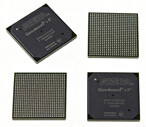
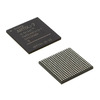
XC6SLX16-2CSG225I Image
Image may be representation.
See specifications for product details.
EXPRESS OPTION
Payment method

XC6SLX16-2CSG225I - AMD

Manufacturer Part Number
XC6SLX16-2CSG225I
Manufacturer
AMD Xilinx
Allelco Part Number
32D-XC6SLX16-2CSG225I
Warranty
1 Year Allelco Warranty - Find out more
Stock Status:
11,256 pcs available, New & Original
Parts Description
IC FPGA 160 I/O 225CSBGA
Package
225-CSPBGA (13x13)
Data sheet
XC6SLX16-2CSG22.pdf

Environmental Information

Xilinx REACH211 Cert.pdf
RoHs Status
ROHS3 Compliant
Our certification
In stock: 11256
  • Unit Price: $12.81
  • Subtotal: $0.00

Want a better price?
Add to Cart and Submit RFQ now, we'll contact you immediately.

Quantity Unit Price Ext. Price
1+ $12.81 $12.81
30+ $12.27 $368.10
The above prices does not include taxes and freight rates, which will be calculated on the order pages.

Specifications

XC6SLX16-2CSG225I Tech Specifications
AMD - XC6SLX16-2CSG225I technical specifications, attributes, parameters and parts with similar specifications to AMD - XC6SLX16-2CSG225I

Product Attribute Attribute Value
Manufacturer AMD Xilinx
Voltage - Supply 1.14V ~ 1.26V
Total RAM Bits 589824
Supplier Device Package 225-CSPBGA (13x13)
Series Spartan®-6 LX
Package / Case 225-LFBGA, CSPBGA
Package Tray
Product Attribute Attribute Value
Operating Temperature -40°C ~ 100°C (TJ)
Number of Logic Elements/Cells 14579
Number of LABs/CLBs 1139
Number of I/O 160
Mounting Type Surface Mount
Base Product Number XC6SLX16

Environmental & Export Classifications

ATTRIBUTE DESCRIPTION
RoHs Status ROHS3 Compliant
Moisture Sensitivity Level (MSL) 3 (168 Hours)
REACH Status REACH Unaffected
ECCN EAR99
HTSUS 8542.39.0001

Parts Introduction

XC6SLX16-2CSG225I Image
XC6SLX16-2CSG225I (1)

Manufacturer Part Number

XC6SLX16-2CSG225I

Manufacturer

Xilinx

Introduction

Spartan-6 LX family member FPGA for embedded applications

Product Features and Performance

1139 Logic Array Blocks / Configurable Logic Blocks

14579 Logic Elements / Cells

589824 Total RAM Bits

160 Input/Output pins

14V to 1.26V Supply Voltage range

Surface Mount technology

Operating temperature range from -40°C to 100°C

Product Advantages

High performance-to-cost ratio

Low power consumption

Offers increased system integration and flexibility

Key Technical Parameters

Supply Voltage: 1.14V ~ 1.26V

I/O Count: 160

RAM Bits: 589824

Temperature Range: -40°C ~ 100°C

Logic Cells: 14579

LABs/CLBs: 1139

Quality and Safety Features

Built to operate reliably in extreme temperature conditions

Compatibility

Compatible with a wide array of surface mount PCBs

Application Areas

Ideal for automotive, consumer electronics, aerospace, and industrial applications

Product Lifecycle

Active; Not near discontinuation with replacements and upgrades available

Several Key Reasons to Choose This Product

Robust performance in harsh environmental conditions

Low power design for energy-efficient applications

Xilinx's comprehensive development ecosystem

High-density I/O for complex designs

Versatile usage across multiple industries
Frequently Asked Questions(FAQ)

How does the XC6SLX16-2CSG225I compare to the XC6SLX9-2FTG256C in terms of logic capacity and I/O availability for a medium-complexity industrial control system?
The XC6SLX16-2CSG225I provides 14,579 logic elements and 160 I/Os, offering greater logic density than the XC6SLX9-2FTG256C, which contains only 8,736 logic elements and 144 I/Os. This makes the LX16 variant more suitable for applications requiring larger state machines or parallel data processing. However, the LX9 in a 256-pin TQFP package may be preferable when board space is constrained and lower resource utilization is acceptable. The choice depends on balancing pin count, footprint size, and actual gate utilization in the target design.
What are the implications of the XC6SLX16-2CSG225I’s supply voltage range (1.14V to 1.26V) when interfacing with legacy 3.3V digital peripherals such as GPIO expanders or UART transceivers?
The XC6SLX16-2CSG225I operates at 1.2V core logic levels, necessitating level-shifting circuitry when communicating with 3.3V devices. Direct connection can result in undefined logic states or damage due to overdrive stress on input protection diodes. Level translators like the TXB0108 or discrete MOSFET-based solutions are typically required. Designers must also consider propagation delay skew across voltage domains, which can affect timing closure in high-speed interfaces.
Can the XC6SLX16-2CSG225I reliably support real-time motor control using PWM generation and quadrature encoder decoding without external co-processors?
Yes, the XC6SLX16-2CSG225I has sufficient logic resources—14,579 logic elements and 589,824 RAM bits—to implement custom PWM generators with microsecond-level resolution and hardware-based QEI decoders. Its internal block RAM and DSP slices enable efficient implementation of PID loops and filtering algorithms. With careful placement and timing constraints, it can meet deterministic response requirements common in industrial motion control, though performance depends on clock domain management and interrupt latency handling.
Why might a designer choose the 225-CSPBGA package of the XC6SLX16-2CSG225I over a larger BGA variant despite its smaller footprint?
The 13x13 mm CSPBGA package reduces PCB layer count and routing complexity compared to larger BGAs, lowering manufacturing cost and improving signal integrity by minimizing stub lengths. It also enables compact form factors in embedded systems. However, reworkability suffers due to tight pitch, so high-volume production benefits more from this package than prototyping environments.
How does the operating temperature range (-40°C to +100°C) of the XC6SLX16-2CSG225I influence thermal design considerations in automotive edge computing applications?
While the junction temperature limit of 100°C is standard for commercial-grade FPGAs, automotive environments often expose components to transient spikes above ambient. The device must remain within thermal limits under worst-case airflow and load conditions. Thermal vias under the CSPBGA array and careful power budgeting are essential. Additionally, derating logic utilization helps maintain margin against self-heating during sustained operation.
Is it feasible to use the XC6SLX16-2CSG225I for cryptographic acceleration in secure boot implementations without violating export regulations?
The XC6SLX16-2CSG225I itself does not contain hardened security blocks like AES engines found in newer Artix or Kintex families, but it can implement software-based cryptographic algorithms using soft IP. Such designs fall under ECCN EAR99 when not paired with specific encryption features, making them generally unrestricted for most end markets—including consumer and industrial—provided no classified functionality is added.
What impact does the MSL 3 classification have on lead-free assembly processes involving the XC6SLX16-2CSG225I?
MSL 3 indicates the component must be used within 168 hours after opening the moisture barrier bag if not baked prior to reflow. In mass production, this drives strict inventory turnover policies or requires dry-pack storage with nitrogen flushing. Failure to comply risks popcorning during soldering, especially in lead-free profiles exceeding 245°C peak temperature.
How should designers evaluate whether the XC6SLX16-2CSG225I meets timing closure goals for a 200 MHz system clock in a high-speed ADC interface application?
Timing closure hinges on physical placement, I/O pad delays, and routing congestion. The XC6SLX16-2CSG225I’s 160 I/Os allow flexible bank partitioning, but achieving 200 MHz requires aggressive floorplanning, using dedicated clock resources, and possibly leveraging built-in SERDES-like capabilities via soft logic. Static timing analysis with real-world constraint files is mandatory; otherwise, margin erosion due to PVT variations could cause failure.
What trade-offs exist between using distributed RAM versus block RAM in the XC6SLX16-2CSG225I for implementing a FIFO buffer larger than 1 KB?
Distributed RAM uses flip-flops scattered across logic fabric, consuming logic cells instead of dedicated block memory. For a >1 KB FIFO, block RAM is preferred because it saves logic resources and supports wider widths efficiently. The XC6SLX16-2CSG225I contains approximately 360 Kb of block RAM (589,824 bits), enabling deeper or wider FIFOs without impacting CLB usage, thus preserving logic capacity for other functions.
How does the number of LABs (1,139) in the XC6SLX16-2CSG225I relate to synthesis efficiency when porting legacy VHDL code from older Xilinx architectures?
Spartan-6 LABs consist of 4 CLBs each, optimized for LUT-based logic rather than register-rich designs. Legacy code relying heavily on registers may synthesize inefficiently, increasing LAB consumption. Refactoring to minimize register duplication and leverage block RAM instead of distributed memory improves LAB utilization. Tools like Vivado or ISE will report utilization metrics that guide optimization efforts toward balanced logic and memory usage.
Can the XC6SLX16-2CSG225I directly drive LED arrays requiring constant-current sources without external drivers?
No. FPGA I/O pins are current-limited to protect the die—typically 12 mA per pin with absolute maximum ratings around 20–25 mA. Driving LEDs beyond this requires external constant-current circuits or transistors. For higher currents, the XC6SLX16-2CSG225I can generate PWM signals, but the actual current regulation must be handled externally to avoid damaging the IC.
What role does the RoHS3 compliance status play when sourcing multiple units of the XC6SLX16-2CSG225I for global deployment, particularly in EU markets?
RoHS3 compliance ensures the absence of restricted substances including Pb, Cd, Hg, Cr6+, PBB, and PBDE. This simplifies regulatory approval across Europe and avoids customs delays. Since the XC6SLX16-2CSG225I is fully compliant, procurement teams can source it without additional testing for halogen content or REACH SVHC declarations beyond standard documentation.
How should designers account for power consumption characteristics when selecting the XC6SLX16-2CSG225I for battery-powered IoT edge nodes?
Static power dominates in low-duty-cycle scenarios due to leakage current, which increases with temperature. The XC6SLX16-2CSG225I draws minimal quiescent current (<1 mA typical), but dynamic power scales with switching activity. Minimizing clock gating inefficiencies, using sleep modes, and reducing I/O toggling frequency are key strategies. Estimation tools like XPower Analyzer provide realistic figures based on toggle rates and resource usage.
What are the consequences of exceeding the recommended operating conditions for the XC6SLX16-2CSG225I’s supply voltage (1.14V to 1.26V) during in-system programming?
Operating outside the specified supply range risks latch-up, permanent oxide breakdown, or erratic configuration behavior. Programming via JTAG while power exceeds 1.26V may corrupt the bitstream or leave the FPGA in an unrecoverable state. Always ensure stable VCCO and VCCAUX voltages during programming cycles, as these rails also affect configuration integrity.
How does the absence of verified Digi-Electronics program status affect procurement risk assessment for the XC6SLX16-2CSG225I in safety-critical medical devices?
Unverified distributor programs introduce uncertainty about part authenticity or lifecycle status. For medical applications, traceability and conformance to ISO 13485 are essential. Relying solely on unverified channels increases risk of counterfeit components. Designers should prioritize authorized distributors or direct manufacturer channels to mitigate supply chain threats associated with the XC6SLX16-2CSG225I.
What design considerations apply when cascading multiple Spartan-6 LX FPGAs, such as the XC6SLX16-2CSG225I, using SelectMAP or other inter-device protocols?
Cascading introduces challenges in clock skew, signal attenuation, and configuration synchronization. The XC6SLX16-2CSG225I supports SelectMAP mode, but master-slave setups require careful attention to PROGRAM_B timing and DIN/DOUT alignment. Shared configuration buses demand pull-up resistors and buffering to prevent contention. Given limited I/O banks, routing congestion becomes a concern, often necessitating external configuration devices for multi-chip systems.
How does the XC6SLX16-2CSG225I compare to modern mid-range FPGAs like the Artix-7 XC7A35T-1CPG236C in terms of DSP slice efficiency for FIR filter implementation?
The XC6SLX16-2CSG225I lacks dedicated DSP48E slices, requiring soft logic for multiply-accumulate operations, which consumes more logic cells and reduces throughput compared to Artix-7 devices. While still capable, implementing wide-bandwidth FIR filters demands significantly more resources and careful pipelining. The Artix-7’s hard multipliers offer superior area-efficiency and clock speed, making it better suited for signal processing workloads.
What steps should be taken to validate functional correctness of user logic targeting the XC6SLXX16-2CSG225I before board bring-up, given its complex pinout and high pin count?
Comprehensive verification includes pre-synthesis HDL simulation, post-place-and-route timing simulation, and hardware-in-the-loop testing with known stimuli. Use ILA (Integrated Logic Analyzer) cores inserted during synthesis to monitor internal signals without external probes. Validate all 160 I/O assignments against the 225-CSPBGA layout, paying special attention to power-on reset sequences and bank voltage compatibility to avoid configuration errors.

Parts with Similar Specifications

The three parts on the right have similar specifications to AMD XC6SLX16-2CSG225I

Product Attribute XC6SLX16-2CSG324I XC6SLX16-2CS324I4204 XC6SLX16-2FTG256I XC6SLX16-2CSG324CES
Part Number XC6SLX16-2CSG324I XC6SLX16-2CS324I4204 XC6SLX16-2FTG256I XC6SLX16-2CSG324CES
Manufacturer AMD AMD AMD AMD
Series - - - -
Package - Tape & Reel (TR) Tube Tape & Reel (TR)
Supplier Device Package - 196-NFBGA (12x12) 16-PDIP 64-VQFN (9x9)
Total RAM Bits - - - -
Voltage - Supply - - - -
Operating Temperature - -40°C ~ 85°C 0°C ~ 70°C -40°C ~ 85°C
Number of LABs/CLBs - - - -
Mounting Type - Surface Mount Through Hole Surface Mount
Base Product Number - DAC34H84 MAX500 ADS62P42
Number of Logic Elements/Cells - - - -
Number of I/O - - - -
Package / Case - 196-LFBGA 16-DIP (0.300', 7.62mm) 64-VFQFN Exposed Pad

XC6SLX16-2CSG225I Datasheet PDF

Download XC6SLX16-2CSG225I pdf datasheets and AMD documentation for XC6SLX16-2CSG225I - AMD.

Environmental Information
Xilinx REACH211 Cert.pdf

Customer Reviews

Evaluation: 10 Articles

  • Nath***rooks
    Jun 11, 2026

    Installed this power component in a converter board. Output remained stable under different load conditions and thermal performance was better than expected.

  • Dani***alkerTech
    Jun 1, 2026

    Product works, but setup took more effort than expected. Once configured the MCU ran reliably, although documentation support felt older compared with newer platforms. Fine for maintenance projects.

  • Yuki***aka88
    May 26, 2026

    信号通信プロジェクトでこのRS-485トランシーバーを使用しました。設置は簡単で、長距離ケーブルでも通信は安定していました。消費電力も、以前使用していたものより低くなっています。

  • Stev***aker
    May 20, 2026

    Solid diode for power rectification. Works well in switching circuits.

  • Bran***Lewis
    May 11, 2026

    Compact FPGA with good performance. Suitable for basic signal processing tasks.

  • Oliv***arris
    May 7, 2026

    Reliable I/O expander. Works well in embedded control applications.

  • Jess***Jones
    Apr 17, 2026

    It offers good value for the price, and the specifications match the description. I’ve been using it for two days with no issues, and I’ll definitely buy it again if I need it in the future.

  • Mich***Smith
    Apr 17, 2026

    Shipping was on time, the component pins are neatly aligned, and I tested 10 of them with a multimeter—all readings were within the specified range. Highly recommended.

  • Aman***arris
    Apr 3, 2026

    It was great—the entire process, from placing the order to receiving the package, went very smoothly. The components were consistent, the price was fair, and I had a very pleasant shopping experience.

  • Mike***nch
    Apr 3, 2026

    Better than expected! The resistance and capacitance readings were spot-on, and it passed the test on the first try. The service was reliable, and the packaging was thoughtful—I highly recommend it.

Write a Review

Your Email address will not be published.

Shipment

Delivery Time

In-stock items can be shipped within 24 hours. Some parts will be arranged for delivery within 1-2 days from the date all items arrive at our warehouse. And Allelco ships order once a day at about 17:00, except Sunday. Once the goods are shipped, the estimated delivery time depends on the shipping methods and Delivery destination. The table below shows are the logistic time for some common countries.

Delivery Cost

  1. Use your express account for shipment if you have one.
  2. Use our account for the shipment. Refer to the table below for the approximate charges.
(Different time frame / countries / package size has different price.)

Delivery Method

  1. Global Common Shipment by DHL / UPS / FedEx / TNT / EMS / SF we support.
  2. Others more shipping ways, please get in touch with your customer manager.

Common Countries Logistic Time Reference
Region Country Logistic Time(Day)
America United States 5
Brazil 7
Europe Germany 5
United Kingdom 4
Italy 5
Oceania Australia 6
New Zealand 5
Asia India 4
Japan 4
Middle East Israel 6
DHL & FedEx Shipment Charges Reference
Shipment charges(KG) Reference DHL(USD$)
0.00kg-1.00kg USD$30.00 - USD$60.00
1.00kg-2.00kg USD$40.00 - USD$80.00
2.00kg-3.00kg USD$50.00 - USD$100.00
Note:
The above table is for reference only. There may have some data bias for the uncontrollable factors.
Contact us if you have any questions.
  • QC (Quality Warranty)
  • Payment Support
  • Packaging
  • Certifications & Memberships

QC (Quality Warranty)

Allelco is committed to exceeding customer expectations through customer service excellence, order accuracy, and on-time delivery.
This is achieved through our commitment to the continual improvement of our processes, services, and products.


Strict quality inspection builds a solid foundation for electronic component quality.
  1. Visual inspection
  2. Performance testing and reliability verification
  3. Standardized full-process testing
  4. Precise control of every parameter
We eliminate defective components and ensure the stable operation of electronic devices through professional quality standards.

Payment Support

The payment method can be chosen from the methods shown below: Wire Transfer (T/T, Bank Transfer), Western Union, Credit card, PayPal.
  • HKBea
  • Paypal
  • MasterCard
  • Western-Union
  • VISA
Stable Delivery, Sincere Partnership — Your Faithful Supply Chain Partner
  • Efficient Supply Management
  • Cost-Saving Procurement
  • Fast Sourcing & Delivery
Contact us if you have any questions.

Packaging

Electrostatic Discharge Protection and Handling

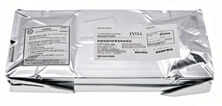
All electrostatic-sensitive components are handled in accordance with electrostatic discharge control procedures. The products are hermetically sealed in anti-static safe packaging to prevent electrostatic damage. Appropriate labeling is also applied for identification and traceability. This ensures product integrity during storage, handling and transportation.


ESD

Certifications & Memberships

Third-party certified, strict quality control. Our certification
  • ISO 9001: 2015
  • ISO 13485: 2016
  • ISO 14001: 2015
  • ISO 28000: 2007
  • ISO 45001: 2018
  • GB/T 27922-2011
  • SMTA
  • IPC
  • ESD
  • PSMA
XC6SLX16-2CSG225I Image

XC6SLX16-2CSG225I

AMD
32D-XC6SLX16-2CSG225I

Want a better price? Add to Cart and Submit RFQ now, we'll contact you immediately.

0 RFQ
Shopping cart (0 Items)
It is empty.
Compare List (0 Items)
It is empty.
Feedback

Your feedback matters! At Allelco, we value the user experience and strive to improve it constantly.
Please share your comments with us via our feedback form, and we'll respond promptly.
Thank you for choosing Allelco.

Subject
E-mail
Comments
Captcha
Drag or click to upload file
Upload File
types: .xls, .xlsx, .doc, .docx, .jpg, .png and .pdf.
Max file size: 10MB