View All

Please refer to the English Version as our Official Version.Return

Europe
France(Français) Germany(Deutsch) Italy(Italia) Russian(русский) Poland(polski) Czech(Čeština) Luxembourg(Lëtzebuergesch) Netherlands(Nederland) Iceland(íslenska) Hungarian(Magyarország) Spain(español) Portugal(Português) Turkey(Türk dili) Bulgaria(Български език) Ukraine(Україна) Greece(Ελλάδα) Israel(עִבְרִית) Sweden(Svenska) Finland(Svenska) Finland(Suomi) Romania(românesc) Moldova(românesc) Slovakia(Slovenská) Denmark(Dansk) Slovenia(Slovenija) Slovenia(Hrvatska) Croatia(Hrvatska) Serbia(Hrvatska) Montenegro(Hrvatska) Bosnia and Herzegovina(Hrvatska) Lithuania(lietuvių) Spain(Português) Switzerland(Deutsch) United Kingdom(English)
Asia/Pacific
Japan(日本語) Korea(한국의) Thailand(ภาษาไทย) Malaysia(Melayu) Singapore(Melayu) Vietnam(Tiếng Việt) Philippines(Pilipino)
Africa, India and Middle East
United Arab Emirates(العربية) Iran(فارسی) Tajikistan(فارسی) India(हिंदी) Madagascar(malaɡasʲ)
South America / Oceania
New Zealand(Maori) Brazil(Português) Angola(Português) Mozambique(Português)
North America
United States(English) Canada(English) Haiti(Ayiti) Mexico(español)
HomeProductsIntegrated Circuits (ICs)Specialized ICsXC2V250-4CSG144C
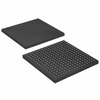
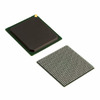
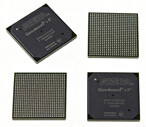
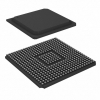
Image may be representation.
See specifications for product details.
EXPRESS OPTION
Payment method

XC2V250-4CSG144C - XILINX

Manufacturer Part Number
XC2V250-4CSG144C
Manufacturer
AMD Xilinx
Allelco Part Number
41D-XC2V250-4CSG144C
Warranty
1 Year Allelco Warranty - Find out more
Stock Status:
8,280 pcs available, New & Original
Parts Description
-
Data sheet
-
Category
Integrated Circuits (ICs) > Specialized ICs
RoHs Status
Our certification
In stock: 8280

Required fields are indicated by an asterisk (*)
Please send RFQ, we will respond immediately.

Quantity

Specifications

XC2V250-4CSG144C Tech Specifications
XILINX - XC2V250-4CSG144C technical specifications, attributes, parameters and parts with similar specifications to XILINX - XC2V250-4CSG144C

Product Attribute Attribute Value
Part Number XC2V250-4CSG144C
Package -
Description -
Stock Condition Get 8280 pcs available quantity at Allelco
Payment PayPal / TT / Credit Card / Western Union
Allelco Certifications ESD / ISO 9001 / ISO 13485 / ISO 28000
Product Attribute Attribute Value
Manufacturer AMD Xilinx
RoHs Status -
Warranty 100% Perfect Functions
Transport port Hong Kong
Shipping by DHL / FedEx / UPS / TNT / SF Express
RFQ Email info@allelco.com

Parts Introduction

Manufacturer Part Number

XC2V250-4CSG144C

Manufacturer

Xilinx

Introduction

The Xilinx XC2V250-4CSG144C is a high-performance, low-power FPGA (Field Programmable Gate Array) from the Virtex-II series. It offers a range of advanced features and capabilities suitable for a variety of embedded applications.

Product Features and Performance

384 Configurable Logic Blocks (CLBs)

442,368 total RAM bits

92 I/O pins

250,000 total gates

Operates on a voltage range of 1.425V to 1.575V

Supports a temperature range of 0°C to 85°C (Junction Temperature)

Available in a 144-pin TFBGA (Thin Fine-Pitch Ball Grid Array) or CSPBGA (Chip Scale Package Ball Grid Array) package

Product Advantages

High-density FPGA architecture for complex design implementation

Low-power operation for energy-efficient applications

Flexible I/O configuration for diverse interfacing requirements

Robust thermal and voltage specifications for reliable performance

Key Reasons to Choose This Product

Proven Virtex-II FPGA technology for reliable and high-performance solutions

Scalable design flexibility to accommodate changing application needs

Power-efficient design for extended battery life in portable devices

Comprehensive development tools and ecosystem support from Xilinx

Quality and Safety Features

Industrial-grade component quality and reliability

Compliance with relevant safety and environmental standards

Compatibility

Designed to be compatible with a wide range of embedded systems and application requirements

Application Areas

Suitable for a variety of embedded applications, including industrial automation, medical equipment, telecommunications, and consumer electronics.

Product Lifecycle

The Xilinx XC2V250-4CSG144C is an obsolete product, meaning it is no longer in active production. However, there may be equivalent or alternative models available from Xilinx that can provide similar functionality and performance. Customers are advised to contact our website's sales team for more information on available options and product lifecycle status.
Frequently Asked Questions(FAQ)

What are the key electrical and performance characteristics of the XC2V250-4CSG144C FPGA that impact power integrity and signal integrity in high-speed digital designs?
The XC2V2V250-4CSG144C operates at a core voltage of 1.425V to 1.575V, which is typical for advanced CMOS processes and influences both dynamic and static power consumption. With 92 I/O pins available, designers must consider termination schemes, ESD protection, and impedance matching when interfacing with external components such as DDR memory or high-speed serial transceivers. The device supports a maximum junction temperature of 85°C, requiring careful thermal management in compact systems. Given its moderate gate count (250,000) and embedded block RAM (442,368 bits), it balances logic density with power efficiency, making it suitable for mid-range applications where thermal envelope and supply stability are critical constraints.
How does the XC2V250-4CSG144C compare to other Virtex-II family members in terms of resource utilization and pin compatibility for system migration scenarios?
Compared to smaller variants like the XC2V6000, the XC2V250-4CSG144C offers significantly fewer logic cells (384 LABs vs. thousands) and less embedded RAM, making it ideal for simpler control-intensive tasks rather than data-path acceleration. In contrast to larger FPGAs in the same series, it maintains the same 144-pin CSPBGA package, enabling footprint reuse across product lines during design-in phases. This consistency simplifies PCB layout and allows reuse of reference designs, though routing congestion may increase if not carefully planned due to shared BGA pad assignments. Designers should verify pin-to-function mapping when migrating between sizes.
What considerations apply when implementing timing closure for the XC2V250-4CSG144C in synchronous designs with clock domains above 100 MHz?
The XC2V250-4CSG144C contains sufficient flip-flops and routing resources to support clocks exceeding 100 MHz, but achieving reliable timing closure requires disciplined use of dedicated global clock networks and regional clock buffers. With only 92 I/Os, high fan-out nets must be carefully managed to avoid skew-induced violations. Additionally, the limited number of LABs means dense logic blocks may require aggressive packing strategies, increasing interconnect delay. Using Xilinx’s ISE tools with proper timing constraints and post-implementation analysis is essential to meet setup and hold requirements under worst-case operating conditions.
Is the XC2V250-4CSG144C suitable for automotive or industrial applications requiring extended temperature ranges beyond its specified commercial grade range?
No, the XC2V250-4CSG144C is rated for industrial temperature operation from 0°C to 85°C (TJ), which aligns with standard commercial and industrial environments but falls short of AEC-Q100 Grade 2 (-40°C to +105°C) requirements. For automotive-grade reliability, alternative devices from AMD's newer families (e.g., Artix-7 or Kintex UltraScale+) with qualified process technologies would be necessary. While the part can function reliably in harsh ambient conditions up to 85°C, long-term drift and parametric shifts near this limit may affect functional safety compliance.
What trade-offs exist between using the XC2V250-4CSG144C versus discrete logic solutions when implementing state machines or protocol handlers?
Implementing complex state machines on the XC2V250-4CSG144C leverages programmable logic’s deterministic timing and reconfigurability, avoiding PCB area and power overhead associated with multiple ICs. However, each logic cell consumes static power even at idle, whereas discrete logic draws minimal quiescent current. For low-power embedded systems, this trade-off favors discrete implementations unless the XC2V250-4CSG144C provides additional features like embedded block RAM or DSP slices not present in older Virtex-II models. In most cases, the integration benefits outweigh modest power penalties for medium-complexity control logic.
How does the moisture sensitivity level (MSL 3) of the XC2V250-4CSG144C influence handling procedures during assembly and storage?
As an MSL 3 component requiring bake-out after 168 hours above floor life, improper handling of the XC2V250-4CSG144C during SMT assembly risks popcorning due to moisture absorption. Fabricators must follow JEDEC J-STD-033 guidelines, including baking prior to reflow if shelf life exceeds 168 hours. This necessitates controlled storage environments and tracking of lot codes. Neglecting these steps could compromise solder joint integrity and lead to field failures, especially in high-reliability applications where rework is difficult.
Can the XC2V250-4CSG144C interface directly with modern LVDS signaling standards without external drivers or level translators?
Yes, the XC2V250-4CSG144C includes selectable I/O standards supporting LVCMOS up to 3.3V and basic differential signaling via single-ended pairs, but true LVDS (Low-Voltage Differential Signaling) requires both differential input buffers and output drivers compliant with ANSI/TIA/EIA-644-A. While internal routing can carry differential pairs, full LVDS compliance depends on external termination resistors (typically 100Ω across the pair). Therefore, while capable of differential communication, designers should validate eye diagrams and jitter performance when driving LVDS-compliant receivers.
What impact does the base product number XC2V250 have on firmware portability and IP reuse across different packaging options?
The base product XC2V250 encompasses all variants of the XC2V250-4CSG144C, including different speed grades and package types (e.g., CSG144C vs. FBGA versions). Since the logic fabric remains identical, RTL code written for one variant typically synthesizes without modification. However, pin assignments differ between packages, so constraint files must be updated accordingly. This enables reuse of verified IP cores across form-factor optimizations while maintaining functional equivalence—critical for multi-platform product development where timing margins and thermal profiles vary by enclosure design.
When selecting between the XC2V250-4CSG144C and newer FPGA families, what factors justify choosing this older technology despite its age?
The XC2V250-4CSG144C may still be preferred in legacy systems requiring drop-in replacement or where ecosystem dependencies (e.g., proprietary IP, toolchains, or verification suites) are locked to the Virtex-II architecture. Its mature design flow and availability through long-term supply channels offer stability for production volumes below 10,000 units per year. Additionally, certain radiation-tolerant applications historically used earlier FPGA generations due to proven reliability in space-constrained missions, though modern alternatives now dominate such niches.
How should designers approach decoupling capacitor placement for the XC2V250-4CSG144C in a high-density BGA layout?
Due to its 144-LCSBGA (12x12 mm) package, decoupling capacitors must be placed within 1–2 mm of the power pins to minimize inductance and ensure stable voltage delivery. Multiple vias should connect ground planes directly beneath the package to reduce loop inductance. Target impedance calculations based on peak transient current draw (often 100–300 mA for active devices at 1.5V) dictate total capacitance needed—typically 10 µF bulk plus 0.1 µF ceramic per power rail. Failure to do so risks voltage droop during switching events, leading to timing failures or functional glitches.
What are the implications of the ECCN classification (3A001A7B) for international distribution and export control involving the XC2V250-4CSG144C?
Classified under ECCN 3A001A7B, the XC2V250-4CSG144C qualifies as a “high-performance” programmable logic device capable of supporting cryptographic or high-speed processing functions. Exporting this component outside designated regions may require US government licensing depending on end-use. End-users must certify non-military intent; otherwise, shipments could trigger ITAR restrictions. Distributors often restrict sales to pre-screened customers to comply with U.S. export regulations, particularly when downstream systems integrate encryption or radar processing capabilities.
How does the limited number of I/Os (92) on the XC2V250-4CSG144C constrain system architecture choices in embedded applications?
With only 92 general-purpose I/Os, designers face significant pin scarcity when connecting peripherals such as SPI, UART, I²C, parallel interfaces, or ADC/DAC converters simultaneously. This forces prioritization or multiplexing strategies, potentially introducing latency or reducing throughput. For example, sharing an SPI bus among multiple slaves requires careful arbitration logic implemented within the FPGA fabric. Alternatively, external microcontrollers may offload peripheral management, but this adds board complexity and cost. Resource planning early in the system definition phase is crucial to avoid last-minute redesigns driven by I/O bottlenecks.
What role does the 442,368-bit block RAM play in accelerating common FPGA-based algorithms on the XC2V250-4CSG144C?
The embedded block RAM in the XC2V250-4CSG144C enables fast data buffering, lookup tables (LUTs), FIFO structures, and small coefficient stores for FIR filters or FFT engines without consuming programmable logic resources. At 442 kbits, it supports moderate-sized caches or configuration memories for soft processors like MicroBlaze. Unlike distributed RAM built from LUTs, block RAM offers higher density and lower latency, improving energy efficiency for data-intensive operations. However, its fixed granularity limits flexibility compared to fully programmable memory architectures found in newer devices.
Are there any known limitations in using the XC2V250-4CSG144C for PCI Express or high-speed serial protocols?
No, the XC2V250-4CSG144C lacks native transceivers required for PCIe Gen1/Gen2 or GbE SERDES functionality. Attempting to implement these protocols purely with internal routing results in excessive jitter and unreliable link training due to lack of hardware-optimized serializer/deserializer circuits. While basic serial links over LVDS pairs are possible, they do not meet industry standard compliance requirements. Designers targeting such interfaces should instead select contemporary FPGAs with integrated transceivers to meet bandwidth and interoperability specifications.
What precautions should be taken when programming or reprogramming the XC2V250-4CSG144C in-system versus using external flash?
If relying on in-system programming (ISP) via JTAG or SelectMAP, ensure stable 1.5V supply during configuration to prevent partial writes or corruption of the bitstream. The XC2V250-4CSG144C supports both master and slave SPI modes for external flash boot-up, which enhances reliability by isolating configuration logic from runtime operations. Always verify checksums post-programming and consider redundant boot images stored in dual-flash configurations for mission-critical systems where firmware integrity cannot be compromised.

Customer Reviews

Evaluation: 10 Articles

  • Nath***rooks
    Jun 11, 2026

    Installed this power component in a converter board. Output remained stable under different load conditions and thermal performance was better than expected.

  • Dani***alkerTech
    Jun 1, 2026

    Product works, but setup took more effort than expected. Once configured the MCU ran reliably, although documentation support felt older compared with newer platforms. Fine for maintenance projects.

  • Yuki***aka88
    May 26, 2026

    信号通信プロジェクトでこのRS-485トランシーバーを使用しました。設置は簡単で、長距離ケーブルでも通信は安定していました。消費電力も、以前使用していたものより低くなっています。

  • Stev***aker
    May 20, 2026

    Solid diode for power rectification. Works well in switching circuits.

  • Bran***Lewis
    May 11, 2026

    Compact FPGA with good performance. Suitable for basic signal processing tasks.

  • Oliv***arris
    May 7, 2026

    Reliable I/O expander. Works well in embedded control applications.

  • Jess***Jones
    Apr 17, 2026

    It offers good value for the price, and the specifications match the description. I’ve been using it for two days with no issues, and I’ll definitely buy it again if I need it in the future.

  • Mich***Smith
    Apr 17, 2026

    Shipping was on time, the component pins are neatly aligned, and I tested 10 of them with a multimeter—all readings were within the specified range. Highly recommended.

  • Aman***arris
    Apr 3, 2026

    It was great—the entire process, from placing the order to receiving the package, went very smoothly. The components were consistent, the price was fair, and I had a very pleasant shopping experience.

  • Mike***nch
    Apr 3, 2026

    Better than expected! The resistance and capacitance readings were spot-on, and it passed the test on the first try. The service was reliable, and the packaging was thoughtful—I highly recommend it.

Write a Review

Your Email address will not be published.

Shipment

Delivery Time

In-stock items can be shipped within 24 hours. Some parts will be arranged for delivery within 1-2 days from the date all items arrive at our warehouse. And Allelco ships order once a day at about 17:00, except Sunday. Once the goods are shipped, the estimated delivery time depends on the shipping methods and Delivery destination. The table below shows are the logistic time for some common countries.

Delivery Cost

  1. Use your express account for shipment if you have one.
  2. Use our account for the shipment. Refer to the table below for the approximate charges.
(Different time frame / countries / package size has different price.)

Delivery Method

  1. Global Common Shipment by DHL / UPS / FedEx / TNT / EMS / SF we support.
  2. Others more shipping ways, please get in touch with your customer manager.

Common Countries Logistic Time Reference
Region Country Logistic Time(Day)
America United States 5
Brazil 7
Europe Germany 5
United Kingdom 4
Italy 5
Oceania Australia 6
New Zealand 5
Asia India 4
Japan 4
Middle East Israel 6
DHL & FedEx Shipment Charges Reference
Shipment charges(KG) Reference DHL(USD$)
0.00kg-1.00kg USD$30.00 - USD$60.00
1.00kg-2.00kg USD$40.00 - USD$80.00
2.00kg-3.00kg USD$50.00 - USD$100.00
Note:
The above table is for reference only. There may have some data bias for the uncontrollable factors.
Contact us if you have any questions.
  • QC (Quality Warranty)
  • Payment Support
  • Packaging
  • Certifications & Memberships

QC (Quality Warranty)

Allelco is committed to exceeding customer expectations through customer service excellence, order accuracy, and on-time delivery.
This is achieved through our commitment to the continual improvement of our processes, services, and products.


Strict quality inspection builds a solid foundation for electronic component quality.
  1. Visual inspection
  2. Performance testing and reliability verification
  3. Standardized full-process testing
  4. Precise control of every parameter
We eliminate defective components and ensure the stable operation of electronic devices through professional quality standards.

Payment Support

The payment method can be chosen from the methods shown below: Wire Transfer (T/T, Bank Transfer), Western Union, Credit card, PayPal.
  • HKBea
  • Paypal
  • MasterCard
  • Western-Union
  • VISA
Stable Delivery, Sincere Partnership — Your Faithful Supply Chain Partner
  • Efficient Supply Management
  • Cost-Saving Procurement
  • Fast Sourcing & Delivery
Contact us if you have any questions.

Packaging

Electrostatic Discharge Protection and Handling

All electrostatic-sensitive components are handled in accordance with electrostatic discharge control procedures. The products are hermetically sealed in anti-static safe packaging to prevent electrostatic damage. Appropriate labeling is also applied for identification and traceability. This ensures product integrity during storage, handling and transportation.


ESD

Certifications & Memberships

Third-party certified, strict quality control. Our certification
  • ISO 9001: 2015
  • ISO 13485: 2016
  • ISO 14001: 2015
  • ISO 28000: 2007
  • ISO 45001: 2018
  • GB/T 27922-2011
  • SMTA
  • IPC
  • ESD
  • PSMA
XILINX

XC2V250-4CSG144C

XILINX
41D-XC2V250-4CSG144C

Want a better price? Add to Cart and Submit RFQ now, we'll contact you immediately.

0 RFQ
Shopping cart (0 Items)
It is empty.
Compare List (0 Items)
It is empty.
Feedback

Your feedback matters! At Allelco, we value the user experience and strive to improve it constantly.
Please share your comments with us via our feedback form, and we'll respond promptly.
Thank you for choosing Allelco.

Subject
E-mail
Comments
Captcha
Drag or click to upload file
Upload File
types: .xls, .xlsx, .doc, .docx, .jpg, .png and .pdf.
Max file size: 10MB