View All

Please refer to the English Version as our Official Version.Return

Europe
France(Français) Germany(Deutsch) Italy(Italia) Russian(русский) Poland(polski) Czech(Čeština) Luxembourg(Lëtzebuergesch) Netherlands(Nederland) Iceland(íslenska) Hungarian(Magyarország) Spain(español) Portugal(Português) Turkey(Türk dili) Bulgaria(Български език) Ukraine(Україна) Greece(Ελλάδα) Israel(עִבְרִית) Sweden(Svenska) Finland(Svenska) Finland(Suomi) Romania(românesc) Moldova(românesc) Slovakia(Slovenská) Denmark(Dansk) Slovenia(Slovenija) Slovenia(Hrvatska) Croatia(Hrvatska) Serbia(Hrvatska) Montenegro(Hrvatska) Bosnia and Herzegovina(Hrvatska) Lithuania(lietuvių) Spain(Português) Switzerland(Deutsch) United Kingdom(English)
Asia/Pacific
Japan(日本語) Korea(한국의) Thailand(ภาษาไทย) Malaysia(Melayu) Singapore(Melayu) Vietnam(Tiếng Việt) Philippines(Pilipino)
Africa, India and Middle East
United Arab Emirates(العربية) Iran(فارسی) Tajikistan(فارسی) India(हिंदी) Madagascar(malaɡasʲ)
South America / Oceania
New Zealand(Maori) Brazil(Português) Angola(Português) Mozambique(Português)
North America
United States(English) Canada(English) Haiti(Ayiti) Mexico(español)
HomeProductsIntegrated Circuits (ICs)Specialized ICsATMEGA168P-20AUR
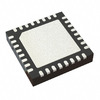
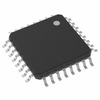
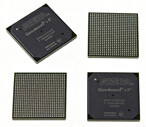
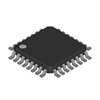
Image may be representation.
See specifications for product details.
EXPRESS OPTION
Payment method

ATMEGA168P-20AUR - Atmel

Manufacturer Part Number
ATMEGA168P-20AUR
Manufacturer
Atmel
Allelco Part Number
41D-ATMEGA168P-20AUR
Warranty
1 Year Allelco Warranty - Find out more
Stock Status:
7,630 pcs available, New & Original
Parts Description
-
Data sheet
-
Category
Integrated Circuits (ICs) > Specialized ICs
RoHs Status
Our certification
In stock: 7630

Required fields are indicated by an asterisk (*)
Please send RFQ, we will respond immediately.

Quantity

Specifications

ATMEGA168P-20AUR Tech Specifications
Atmel - ATMEGA168P-20AUR technical specifications, attributes, parameters and parts with similar specifications to Atmel - ATMEGA168P-20AUR

Product Attribute Attribute Value
Part Number ATMEGA168P-20AUR
Package -
Description -
Stock Condition Get 7630 pcs available quantity at Allelco
Payment PayPal / TT / Credit Card / Western Union
Allelco Certifications ESD / ISO 9001 / ISO 13485 / ISO 28000
Product Attribute Attribute Value
Manufacturer Atmel
RoHs Status -
Warranty 100% Perfect Functions
Transport port Hong Kong
Shipping by DHL / FedEx / UPS / TNT / SF Express
RFQ Email info@allelco.com

Parts Introduction

Manufacturer Part Number

ATMEGA168P-20AUR

Manufacturer

microchip-technology

Introduction

The ATMEGA168P-20AUR is a powerful yet cost-effective 8-bit AVR microcontroller with 16KB of flash memory, 1KB of SRAM, and 512 bytes of EEPROM. It features a wide range of peripherals, including ADC, PWM, UART, SPI, and I2C, making it suitable for a variety of embedded applications.

Product Features and Performance

8-bit AVR Microcontroller

20 MHz operating frequency

16KB Flash Program Memory

1KB SRAM

512 bytes EEPROM

8-channel 10-bit ADC

Two 8-bit and one 16-bit Timer/Counters

Six PWM Channels

Asynchronous UART

SPI and I2C Interfaces

Brown-out Detection

Power-on Reset

Watchdog Timer

Product Advantages

Highly flexible and configurable microcontroller

Extensive peripheral set for diverse applications

Low power consumption for energy-efficient designs

Wide operating voltage range (2.7V to 5.5V)

Extended temperature range (-40°C to +85°C)

Reliable and robust design

Key Reasons to Choose This Product

Powerful yet cost-effective 8-bit microcontroller

Extensive feature set for versatile applications

Proven reliability and performance of the AVR architecture

Ease of use and programming with the Atmel Studio development environment

Broad ecosystem of tools, libraries, and community support

Quality and Safety Features

Robust design with built-in protection mechanisms

Compliance with industry standards and safety regulations

Rigorous quality control and testing processes

Compatibility

The ATMEGA168P-20AUR is compatible with other AVR ATmega microcontrollers, allowing for easy migration and code reuse.

Application Areas

Industrial automation and control

Home appliances and smart home devices

Automotive electronics

Robotics and mechatronics

IoT and sensor-based applications

Medical devices and equipment

Product Lifecycle

The ATMEGA168P-20AUR is an active product, and there are several equivalent or alternative models available, such as the ATMEGA168PA-AU, ATMEGA328P-AU, and ATMEGA328PB-AU. If you require more information or assistance, please contact our sales team through our website.
Frequently Asked Questions(FAQ)

What are the key performance trade-offs when selecting the ATMEGA168P-20AUR for a battery-powered embedded system operating below 3V?
The ATMEGA168P-20AUR supports supply voltages down to 2.7V, making it suitable for low-power applications, but its maximum operating frequency of 20MHz is only guaranteed at full voltage (typically 5V). At lower voltages such as 3.3V or 2.7V, internal timing may degrade, requiring careful oscillator configuration and potential derating of clock speed. While this enables compatibility with 3.3V logic and extended battery life, designers must balance processing throughput against power efficiency—especially since dynamic power scales quadratically with voltage. Additionally, analog peripherals like the 10-bit ADC exhibit reduced effective resolution at lower Vcc due to reference voltage limitations.
How does the ATMEGA168P-20AUR compare to the ATMEGA328P in terms of memory architecture and peripheral integration for industrial sensor monitoring applications?
The ATMEGA168P-20AUR offers 16KB of flash and 1KB of SRAM, while the ATMEGA328P provides double that at 32KB flash and 2KB RAM, which can significantly impact firmware complexity handling. Both share similar core architecture and peripheral sets—including UART, SPI, I2C, and 8-channel ADC—but the larger memory footprint of the ATMEGA328P makes it more scalable for multi-sensor data logging or complex protocol stacks. However, the ATMEGA168P-20AUR’s smaller package (32-TQFP vs. DIP or SOIC variants) and lower pin count may reduce board real estate and BOM cost, offering a favorable trade-off where memory requirements do not exceed 16KB.
What considerations apply to thermal management and layout when integrating the ATMEGA168P-20AUR into compact consumer electronics?
Although the ATMEGA168P-20AUR generates minimal heat due to its CMOS design, operating near its 20MHz maximum frequency continuously under heavy computational load can increase junction temperature, especially in sealed enclosures. The 32-TQFP (7x7mm) package has limited exposed thermal pad options compared to larger QFN variants; thus, adequate PCB copper pour and via stitching around the device are recommended to dissipate heat efficiently. Designers should also avoid routing high-speed signals adjacent to analog inputs or the internal oscillator pins to prevent coupling noise, which indirectly affects thermal stability by increasing current draw from filtering circuits.
Can the ATMEGA168P-20AUR be used reliably in automotive environments despite not being AEC-Q100 certified?
The ATMEGA168P-20AUR is rated for -40°C to +85°C, which aligns with standard industrial temperature ranges but falls short of typical automotive-grade (-40°C to +125°C) requirements. While it may function in non-critical automotive subsystems such as infotainment accessories or body control modules with conservative thermal design, its lack of automotive qualification limits use in safety-relevant applications. Engineers should conduct accelerated life testing and validate long-term reliability under actual operating conditions if deploying in vehicles, and consider alternative parts with formal automotive certification for higher assurance needs.
What is the impact of using the internal RC oscillator versus an external crystal on system timing accuracy in the ATMEGA168P-20AUR?
The ATMEGA168P-20AUR includes a calibrated internal RC oscillator running at 1MHz with ±1% tolerance, which can be scaled up to 8MHz via PLL—but this introduces greater drift over temperature and aging compared to an external crystal. For precision timing applications such as UART baud rate generation or PWM synchronization, an external 16MHz crystal provides superior stability (±20ppm typical), ensuring consistent communication protocols and motor control performance. However, using the internal oscillator reduces component count and improves robustness in noisy environments, making it a viable compromise when absolute timing is less critical than system simplicity.
How should bootloader implementation affect flash programming strategy for the ATMEGA168P-20AUR in production programming workflows?
If a bootloader occupies part of the flash memory space on the ATMEGA168P-20AUR, engineers must reserve a dedicated region for application code and ensure proper vector table remapping during startup. This reduces available user program memory from the nominal 16KB and requires careful linker script configuration. Additionally, mass erase operations may be needed before reprogramming, depending on bootloader protection settings. Production lines should implement verification steps to confirm correct bootloader installation and avoid bricking devices due to corrupted firmware initialization sequences.
What are the implications of the ATMEGA168P-20AUR’s 23 I/O pins when designing a multi-device SPI network with daisy-chaining?
With 23 programmable I/O pins, the ATMEGA168P-20AUR can support multiple SPI slave devices, but each additional chip select line consumes valuable GPIO resources. In a daisy-chained topology, however, only two wires (SCK, MOSI) are shared, reducing pin usage per device, though latency increases with chain length. Careful assignment of CS pins is essential to avoid conflicts, and pull-up resistors on MISO lines should be avoided unless explicitly required by peripheral specifications. Given the limited I/O count, designers might need to multiplex certain functions or use shift registers for expanded output capability without adding microcontroller overhead.
Why might the ATMEGA168P-20AUR exhibit unexpected brown-out resets during voltage transients despite having built-in BOD circuitry?
The ATMEGA168P-20AUR features configurable brown-out detection (BOD) thresholds typically set around 2.7V, but aggressive voltage droop during power-up or load switching may briefly fall below threshold even if average supply remains stable. Transient spikes from inductive loads or poor decoupling can also trigger false resets. To mitigate this, designers should add bulk capacitance near the Vcc pin, minimize loop area in high-current paths, and possibly adjust BOD level through fuse bits—though doing so increases risk of undervoltage operation. Monitoring reset flags in software provides diagnostic insight into whether resets correlate with specific operational states.
How does EEPROM endurance compare between the ATMEGA168P-20AUR and other AVR microcontrollers in continuous logging scenarios?
The ATMEGA168P-20AUR’s 512-byte EEPROM has a rated endurance of approximately 100,000 write cycles per location, which is sufficient for most non-volatile data storage tasks such as configuration parameters or event counters. However, frequent writes (e.g., every few seconds) will deplete endurance within months under worst-case conditions. Unlike some newer MCUs with wear-leveling algorithms, this device lacks hardware-assisted wear distribution, so software must manage write frequency and distribute updates across multiple addresses manually. For long-duration logging, RAM buffering with periodic flash saves or external FRAM/EEPROM is preferable to preserve data integrity.
What precautions are necessary when interfacing the ATMEGA168P-20AUR’s analog inputs with high-impedance sensors like thermistors or photodiodes?
The ATMEGA168P-20AUR’s 10-bit ADC has an input impedance that varies with sampling rate, but high source impedance (>10kΩ) can cause charge injection errors and slow settling time, leading to inaccurate conversions. To address this, designers should buffer analog signals with op-amps or use lower-value series resistors combined with fast sampling modes. Additionally, guard rings on PCB traces and minimizing trace lengths help reduce leakage currents. Since the ADC reference voltage tracks Vcc within ~1%, any supply ripple directly impacts measurement accuracy, necessitating clean power delivery and optional external references for critical measurements.

Customer Reviews

Evaluation: 10 Articles

  • Dani***alkerTech
    Jun 1, 2026

    Product works, but setup took more effort than expected. Once configured the MCU ran reliably, although documentation support felt older compared with newer platforms. Fine for maintenance projects.

  • Yuki***aka88
    May 26, 2026

    信号通信プロジェクトでこのRS-485トランシーバーを使用しました。設置は簡単で、長距離ケーブルでも通信は安定していました。消費電力も、以前使用していたものより低くなっています。

  • Stev***aker
    May 20, 2026

    Solid diode for power rectification. Works well in switching circuits.

  • Bran***Lewis
    May 11, 2026

    Compact FPGA with good performance. Suitable for basic signal processing tasks.

  • Oliv***arris
    May 7, 2026

    Reliable I/O expander. Works well in embedded control applications.

  • Jess***Jones
    Apr 17, 2026

    It offers good value for the price, and the specifications match the description. I’ve been using it for two days with no issues, and I’ll definitely buy it again if I need it in the future.

  • Mich***Smith
    Apr 17, 2026

    Shipping was on time, the component pins are neatly aligned, and I tested 10 of them with a multimeter—all readings were within the specified range. Highly recommended.

  • Aman***arris
    Apr 3, 2026

    It was great—the entire process, from placing the order to receiving the package, went very smoothly. The components were consistent, the price was fair, and I had a very pleasant shopping experience.

  • Mike***nch
    Apr 3, 2026

    Better than expected! The resistance and capacitance readings were spot-on, and it passed the test on the first try. The service was reliable, and the packaging was thoughtful—I highly recommend it.

  • Daic***K.
    Mar 23, 2026

    Very good. No issue after long time testing.

Write a Review

Your Email address will not be published.

Shipment

Delivery Time

In-stock items can be shipped within 24 hours. Some parts will be arranged for delivery within 1-2 days from the date all items arrive at our warehouse. And Allelco ships order once a day at about 17:00, except Sunday. Once the goods are shipped, the estimated delivery time depends on the shipping methods and Delivery destination. The table below shows are the logistic time for some common countries.

Delivery Cost

  1. Use your express account for shipment if you have one.
  2. Use our account for the shipment. Refer to the table below for the approximate charges.
(Different time frame / countries / package size has different price.)

Delivery Method

  1. Global Common Shipment by DHL / UPS / FedEx / TNT / EMS / SF we support.
  2. Others more shipping ways, please get in touch with your customer manager.

Common Countries Logistic Time Reference
Region Country Logistic Time(Day)
America United States 5
Brazil 7
Europe Germany 5
United Kingdom 4
Italy 5
Oceania Australia 6
New Zealand 5
Asia India 4
Japan 4
Middle East Israel 6
DHL & FedEx Shipment Charges Reference
Shipment charges(KG) Reference DHL(USD$)
0.00kg-1.00kg USD$30.00 - USD$60.00
1.00kg-2.00kg USD$40.00 - USD$80.00
2.00kg-3.00kg USD$50.00 - USD$100.00
Note:
The above table is for reference only. There may have some data bias for the uncontrollable factors.
Contact us if you have any questions.
  • QC (Quality Warranty)
  • Payment Support
  • Packaging
  • Certifications & Memberships

QC (Quality Warranty)

Allelco is committed to exceeding customer expectations through customer service excellence, order accuracy, and on-time delivery.
This is achieved through our commitment to the continual improvement of our processes, services, and products.


Strict quality inspection builds a solid foundation for electronic component quality.
  1. Visual inspection
  2. Performance testing and reliability verification
  3. Standardized full-process testing
  4. Precise control of every parameter
We eliminate defective components and ensure the stable operation of electronic devices through professional quality standards.

Payment Support

The payment method can be chosen from the methods shown below: Wire Transfer (T/T, Bank Transfer), Western Union, Credit card, PayPal.
  • HKBea
  • Paypal
  • MasterCard
  • Western-Union
  • VISA
Stable Delivery, Sincere Partnership — Your Faithful Supply Chain Partner
  • Efficient Supply Management
  • Cost-Saving Procurement
  • Fast Sourcing & Delivery
Contact us if you have any questions.

Packaging

Electrostatic Discharge Protection and Handling

All electrostatic-sensitive components are handled in accordance with electrostatic discharge control procedures. The products are hermetically sealed in anti-static safe packaging to prevent electrostatic damage. Appropriate labeling is also applied for identification and traceability. This ensures product integrity during storage, handling and transportation.


ESD

Certifications & Memberships

Third-party certified, strict quality control. Our certification
  • ISO 9001: 2015
  • ISO 13485: 2016
  • ISO 14001: 2015
  • ISO 28000: 2007
  • ISO 45001: 2018
  • GB/T 27922-2011
  • SMTA
  • IPC
  • ESD
  • PSMA
Atmel

ATMEGA168P-20AUR

Atmel
41D-ATMEGA168P-20AUR

Want a better price? Add to Cart and Submit RFQ now, we'll contact you immediately.

0 RFQ
Shopping cart (0 Items)
It is empty.
Compare List (0 Items)
It is empty.
Feedback

Your feedback matters! At Allelco, we value the user experience and strive to improve it constantly.
Please share your comments with us via our feedback form, and we'll respond promptly.
Thank you for choosing Allelco.

Subject
E-mail
Comments
Captcha
Drag or click to upload file
Upload File
types: .xls, .xlsx, .doc, .docx, .jpg, .png and .pdf.
Max file size: 10MB