View All

Please refer to the English Version as our Official Version.Return

Europe
France(Français) Germany(Deutsch) Italy(Italia) Russian(русский) Poland(polski) Czech(Čeština) Luxembourg(Lëtzebuergesch) Netherlands(Nederland) Iceland(íslenska) Hungarian(Magyarország) Spain(español) Portugal(Português) Turkey(Türk dili) Bulgaria(Български език) Ukraine(Україна) Greece(Ελλάδα) Israel(עִבְרִית) Sweden(Svenska) Finland(Svenska) Finland(Suomi) Romania(românesc) Moldova(românesc) Slovakia(Slovenská) Denmark(Dansk) Slovenia(Slovenija) Slovenia(Hrvatska) Croatia(Hrvatska) Serbia(Hrvatska) Montenegro(Hrvatska) Bosnia and Herzegovina(Hrvatska) Lithuania(lietuvių) Spain(Português) Switzerland(Deutsch) United Kingdom(English)
Asia/Pacific
Japan(日本語) Korea(한국의) Thailand(ภาษาไทย) Malaysia(Melayu) Singapore(Melayu) Vietnam(Tiếng Việt) Philippines(Pilipino)
Africa, India and Middle East
United Arab Emirates(العربية) Iran(فارسی) Tajikistan(فارسی) India(हिंदी) Madagascar(malaɡasʲ)
South America / Oceania
New Zealand(Maori) Brazil(Português) Angola(Português) Mozambique(Português)
North America
United States(English) Canada(English) Haiti(Ayiti) Mexico(español)
HomeProductsIntegrated Circuits (ICs)Specialized ICsTT430N22KOF
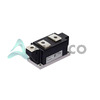
Image may be representation.
See specifications for product details.
EXPRESS OPTION
Payment method

TT430N22KOF - Cypress Semiconductor (Infineon Technologies)

Manufacturer Part Number
TT430N22KOF
Manufacturer
Infineon Technologies
Allelco Part Number
32D-TT430N22KOF
Warranty
1 Year Allelco Warranty - Find out more
Stock Status:
15,690 pcs available, New & Original
Parts Description
IGBT Module
Data sheet
-
Category
Integrated Circuits (ICs) > Specialized ICs
RoHs Status
Our certification
In stock: 15690
  • Unit Price: $218.671
  • Subtotal: $0.00

Want a better price?
Add to Cart and Submit RFQ now, we'll contact you immediately.

Quantity Unit Price Ext. Price
1+ $218.671 $218.67
200+ $205.376 $41,075.20
500+ $198.513 $99,256.50
1000+ $195.122 $195,122.00
The above prices does not include taxes and freight rates, which will be calculated on the order pages.


Specifications

TT430N22KOF Tech Specifications
Cypress Semiconductor (Infineon Technologies) - TT430N22KOF technical specifications, attributes, parameters and parts with similar specifications to Cypress Semiconductor (Infineon Technologies) - TT430N22KOF

Product Attribute Attribute Value
Part Number TT430N22KOF
Package -
Description IGBT Module
Stock Condition Get 15690 pcs available quantity at Allelco
Payment PayPal / TT / Credit Card / Western Union
Allelco Certifications ESD / ISO 9001 / ISO 13485 / ISO 28000
Product Attribute Attribute Value
Manufacturer Infineon Technologies
RoHs Status -
Warranty 100% Perfect Functions
Transport port Hong Kong
Shipping by DHL / FedEx / UPS / TNT / SF Express
RFQ Email info@allelco.com

Frequently Asked Questions(FAQ)

How does the holding current (Ih) of the TT430N22KOF compare to typical gate trigger requirements, and what implications does this have for low-power control circuits?
The TT430N22KOF specifies a holding current (Ih) of 300mA, which is significantly higher than its gate trigger current (Igt) of 250mA. This narrow margin between Ih and Igt indicates a relatively low latching threshold, meaning once triggered, the device will maintain conduction with only a small reduction in anode current. In low-power control applications, this characteristic allows for efficient turn-off using minimal current reduction but requires careful design to ensure the triggering circuit can reliably deliver the full 250mA without overshoot. The close proximity of these values suggests limited hysteresis in the switching behavior, which may necessitate snubber networks or precise timing control in high-speed switching scenarios.
What are the thermal implications of operating the TT430N22KOF at maximum rated conditions, and how should junction temperature be managed during continuous conduction?
With a peak off-state voltage (Vdrm) of 2.2kV and an on-state RMS current (It(RMS)) of 800A, the TT430N22KOF experiences substantial power dissipation under load. Although the datasheet does not specify thermal resistance directly, such high-voltage, high-current SCRs typically require robust heat sinking due to significant I²R losses during conduction. Operating near 800A RMS implies conduction angles approaching 180 degrees, resulting in high average power loss. Given the operating temperature range of -40°C to +125°C, designers must ensure adequate cooling to prevent thermal runaway, especially since SCRs lack active current regulation and rely on external circuitry for turn-off. Thermal derating curves from similar Infineon components suggest that maintaining junction temperatures below 100°C is advisable under continuous high-load operation.
Can the TT430N22KOF be used interchangeably with standard thyristors in medium-voltage DC motor drives, or are there critical limitations?
The TT430N22KOF is a 2-SCR module rated for 2.2kV and 800A RMS, making it suitable for medium-voltage DC applications such as motor drives. However, unlike discrete thyristor pairs configured for antiparallel or series connection, this integrated module ensures matched characteristics and optimized internal coupling, reducing imbalance risks. Standard thyristors would require individual selection, mounting, and thermal matching, increasing design complexity and failure risk. The TT430N22KOF’s compact packaging and bag-based delivery suggest it is intended for industrial-grade, high-reliability systems where integration outweighs cost savings from discrete solutions. Therefore, while technically feasible, substitution with discrete parts introduces reliability concerns unless carefully managed.
Why might a designer choose the TT430N22KOF over a lower-voltage SCR despite higher system voltage requirements, and what trade-offs are involved?
Selecting the TT430N22KOF over a lower-voltage alternative like 1.2kV or 1.6kV devices involves accepting increased conduction losses and cost for the benefit of simplified insulation and reduced series stringing. At 2.2kV, this SCR supports higher isolation levels, potentially eliminating the need for additional series-connected units in a 3kV system—reducing component count, improving balance, and lowering assembly complexity. However, higher blocking voltage increases off-state leakage and may reduce switching speed slightly. The 800A RMS rating also enables higher power throughput, justifying the choice in space- and reliability-constrained applications such as traction inverters or industrial rectifiers. The decision hinges on whether system-level simplification offsets the marginal efficiency penalty.
How does the gate trigger voltage (Vgt) of 2.2V influence driver circuit design when interfacing with microcontrollers or logic-level signals?
The TT430N22KOF requires a gate trigger voltage (Vgt) of 2.2V, which aligns with standard logic levels and simplifies interface with modern microcontrollers or gate drive ICs. Unlike older SCRs requiring several volts above anode potential, this voltage is easily generated using optocouplers or dedicated gate drivers capable of sourcing 250mA peak. However, the absolute requirement is not just reaching 2.2V, but delivering sufficient current (Igt = 250mA) to ensure reliable triggering across process variations and temperature extremes. Thus, the driver must provide both adequate voltage compliance and current capacity, often necessitating a low-impedance source even if the control signal is logic-compatible. This makes the TT430N22KOF more accessible for digital control architectures compared to high-threshold SCRs.
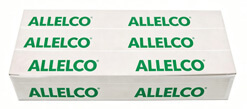
What precautions should be taken when storing or handling the TT430N22KOF before installation, given its bag-packed packaging and semiconductor nature?
The TT430N22KOF is supplied in anti-static bag packing, indicating sensitivity to electrostatic discharge (ESD). As with most power semiconductor modules, it should be stored in a controlled static-dissipative environment to prevent ESD-induced degradation. Humidity control is also important, as moisture ingress through packaging can lead to solder joint corrosion or popcorning during reflow or wave soldering. While this device is likely designed for manual or automated insertion rather than surface mount, handling should still avoid excessive mechanical stress. Proper ESD grounding during unpacking and assembly ensures long-term reliability, particularly in high-voltage applications where latent damage may manifest as premature failure under field conditions.
In a bridge configuration, how does the TT430N22KOF’s internal two-SCR structure affect commutation and snubber circuit requirements?
The TT430N22KOF contains two SCRs in a single package, typically arranged for bidirectional conduction in bridge topologies such as half-bridge or full-bridge converters. This integrated design ensures tight parameter matching, minimizing shoot-through risks and improving switching symmetry. However, during commutation—especially in inductive loads—the abrupt change in current induces voltage spikes that can exceed Vdrm if unmitigated. Therefore, RC snubbers are commonly placed across each SCR or the entire module to suppress dv/dt effects. The shared thermal mass also means heat spreading between SCRs improves thermal uniformity but reduces individual thermal cycling resilience. Designers must account for this interaction when sizing heatsinks and snubbers for optimal performance and longevity.
What role does the operating temperature range (-40°C to +125°C) play in selecting the TT430N22KOF for automotive or aerospace applications?
The wide operating temperature range of -40°C to +125°C makes the TT430N22KOF suitable for harsh environments including automotive powertrains and aerospace systems, where thermal extremes are common. At elevated temperatures, SCR characteristics such as holding current and gate sensitivity degrade; the specified upper limit ensures predictable performance up to 125°C junction temperature. Conversely, cold starts in automotive settings require stable triggering, and the lower bound guarantees functionality in sub-zero climates. However, achieving the full range depends on proper derating and thermal management. In aerospace, radiation hardness may be a separate concern not addressed by the commercial-grade part, so application-specific qualification is recommended beyond datasheet compliance.
How does the TT430N22KOF’s current capability (800A RMS) influence transformer and filter design in medium-voltage rectifier systems?
An RMS current rating of 800A implies the TT430N22KOF is intended for very high-power applications, such as medium-voltage rectifiers feeding industrial processes or traction systems. To support this current, the associated transformer must be rated for comparable RMS output, with appropriate core saturation margins and winding current density limits. Additionally, large inductive and capacitive filtering stages are typically required to smooth the pulsating DC output from the SCR bridge, increasing system size and cost. The high peak currents during commutation also demand fast-recovery diodes or freewheeling paths to protect the SCRs. Therefore, while the TT430N22KOF enables compact power conversion, the overall system design must scale proportionally in magnetic and filtering components to handle its current demands efficiently.
Are there any known reliability issues or failure modes associated with the TT430N22KOF in real-world implementations, based on engineering experience?
While specific failure reports for the TT430N22KOF are proprietary, typical SCR failure modes include latch-up during dv/dt transients, thermal runaway due to poor heatsinking, and gate oxide degradation from repeated high-current triggering. The high holding current (300mA) reduces the risk of unintended turn-on from noise, enhancing robustness. However, the absence of active turn-off control means reliance on load current interruption or forced commutation circuits, which must be fault-tolerant. In practice, improper snubber design or inadequate gate drive has led to premature failures in medium-voltage systems. Designers should implement redundancy, monitoring, and protection circuits to mitigate these risks, especially in safety-critical applications.
What distinguishes the TT430N22KOF from similar SCR modules in terms of integration and form factor for PCB layout considerations?
The TT430N22KOF integrates two SCRs into a single module, offering better thermal and electrical matching than discrete alternatives. Its bag-packed packaging suggests a modular design optimized for through-hole or press-fit mounting rather than surface mount, influencing PCB footprint and assembly method. The compact form factor reduces parasitic inductance in high-power loops, benefiting switching performance. However, routing power traces must accommodate large currents (up to 800A RMS), requiring thick copper layers and wide tracks. Layout symmetry is critical to balance current sharing in bridge configurations. Compared to larger modules or discrete stacks, the TT430N22KOF offers a middle ground between simplicity and performance, though it may not scale to multi-kilowatt systems without parallel operation.
How does the combination of 2.2kV blocking voltage and 800A conduction current impact insulation coordination and creepage distance in high-voltage enclosures?
With a peak off-state voltage (Vdrm) of 2.2kV, the TT430N22KOF requires strict insulation coordination to prevent arcing or partial discharge in enclosures. Standards such as IEC 60664 dictate minimum creepage and clearance distances based on pollution degree, material group, and working voltage. For 2.2kV, typical creepage distances exceed 15mm in polluted environments, influencing enclosure design and spacing between terminals. The high conduction current further complicates this, as busbars must carry 800A RMS without overheating, necessitating large conductors and thermal vias. Thus, the TT430N22KOF demands co-design of electrical insulation and thermal management, particularly in compact industrial drives where space constraints challenge compliance with high-voltage safety standards.
Can the TT430N22KOF be paralleled for higher current applications, and what challenges arise from current sharing?
Paralleling the TT430N22KOF modules can increase total current capacity, but mismatches in forward voltage drop, thermal coefficients, and switching timing lead to uneven current distribution. Without active balancing or current-sharing resistors, one device may carry disproportionate current, exceeding its thermal limits. The high Ih (300mA) helps stabilize conduction once on, but dynamic imbalances during turn-on or turn-off remain problematic. Inductance differences in interconnects exacerbate transient current skew. Therefore, paralleling should be approached cautiously, with simulation, empirical testing, and possibly gate synchronization. It is generally preferred to use a higher-current-rated module rather than relying solely on parallel operation for reliability and simplicity.
What is the significance of the “2 SCR” designation in the TT430N22KOF, and how does it affect circuit topology selection?
The “2 SCR” designation indicates the module contains two silicon-controlled rectifiers internally connected, typically for bidirectional or bridge configurations. This internal integration ensures matched switching characteristics and reduces external wiring complexity. In contrast to discrete SCR pairs requiring individual gate drives and heatsinking, the TT430N22KOF provides a pre-matched solution ideal for half-bridge or three-phase rectifier topologies. This reduces design time and improves system predictability. However, it also limits flexibility—users cannot reconfigure the internal connections. The module is optimized for applications where symmetry and reliability outweigh customization needs, such as industrial power supplies or motor drives.
How does the TT430N22KOF perform in high-frequency switching scenarios, and what are the limitations imposed by its SCR nature?
The TT430N22KOF is fundamentally a thyristor-based device, which inherently suffers from slow turn-off times compared to IGBTs or MOSFETs. This limits its suitability for high-frequency switching above a few hundred Hz, where turn-off losses become prohibitive. Instead, it is best suited for line-frequency or low-frequency applications such as rectifiers or phase-controlled AC regulators. High dv/dt during commutation can also trigger false turn-on, requiring careful snubber design. Therefore, while capable of handling high power at low frequency, the TT430N22KOF is not ideal for PWM or resonant converters demanding rapid switching, where semiconductor alternatives offer superior efficiency and control.
What documentation or application notes from Infineon support the use of the TT430N22KOF in medium-voltage power electronics?
Although specific application notes for the TT430N22KOF may not be publicly listed, Infineon typically provides detailed guidelines for high-voltage SCR modules, including gate drive recommendations, snubber design, thermal modeling, and layout best practices. These resources often accompany similar products such as the TAK series or industrial thyristor lines. Designers should consult Infineon’s technical literature portal for relevant ANs on medium-voltage rectification, commutation circuits, and protection techniques. Additionally, reference designs for traction inverters or HVDC links frequently incorporate SCR modules like the TT430N22KOF, offering practical insights into real-world implementation and validation.

Customer Reviews

Evaluation: 10 Articles

  • Nath***rooks
    Jun 11, 2026

    Installed this power component in a converter board. Output remained stable under different load conditions and thermal performance was better than expected.

  • Dani***alkerTech
    Jun 1, 2026

    Product works, but setup took more effort than expected. Once configured the MCU ran reliably, although documentation support felt older compared with newer platforms. Fine for maintenance projects.

  • Yuki***aka88
    May 26, 2026

    信号通信プロジェクトでこのRS-485トランシーバーを使用しました。設置は簡単で、長距離ケーブルでも通信は安定していました。消費電力も、以前使用していたものより低くなっています。

  • Stev***aker
    May 20, 2026

    Solid diode for power rectification. Works well in switching circuits.

  • Bran***Lewis
    May 11, 2026

    Compact FPGA with good performance. Suitable for basic signal processing tasks.

  • Oliv***arris
    May 7, 2026

    Reliable I/O expander. Works well in embedded control applications.

  • Jess***Jones
    Apr 17, 2026

    It offers good value for the price, and the specifications match the description. I’ve been using it for two days with no issues, and I’ll definitely buy it again if I need it in the future.

  • Mich***Smith
    Apr 17, 2026

    Shipping was on time, the component pins are neatly aligned, and I tested 10 of them with a multimeter—all readings were within the specified range. Highly recommended.

  • Aman***arris
    Apr 3, 2026

    It was great—the entire process, from placing the order to receiving the package, went very smoothly. The components were consistent, the price was fair, and I had a very pleasant shopping experience.

  • Mike***nch
    Apr 3, 2026

    Better than expected! The resistance and capacitance readings were spot-on, and it passed the test on the first try. The service was reliable, and the packaging was thoughtful—I highly recommend it.

Write a Review

Your Email address will not be published.

Shipment

Delivery Time

In-stock items can be shipped within 24 hours. Some parts will be arranged for delivery within 1-2 days from the date all items arrive at our warehouse. And Allelco ships order once a day at about 17:00, except Sunday. Once the goods are shipped, the estimated delivery time depends on the shipping methods and Delivery destination. The table below shows are the logistic time for some common countries.

Delivery Cost

  1. Use your express account for shipment if you have one.
  2. Use our account for the shipment. Refer to the table below for the approximate charges.
(Different time frame / countries / package size has different price.)

Delivery Method

  1. Global Common Shipment by DHL / UPS / FedEx / TNT / EMS / SF we support.
  2. Others more shipping ways, please get in touch with your customer manager.

Common Countries Logistic Time Reference
Region Country Logistic Time(Day)
America United States 5
Brazil 7
Europe Germany 5
United Kingdom 4
Italy 5
Oceania Australia 6
New Zealand 5
Asia India 4
Japan 4
Middle East Israel 6
DHL & FedEx Shipment Charges Reference
Shipment charges(KG) Reference DHL(USD$)
0.00kg-1.00kg USD$30.00 - USD$60.00
1.00kg-2.00kg USD$40.00 - USD$80.00
2.00kg-3.00kg USD$50.00 - USD$100.00
Note:
The above table is for reference only. There may have some data bias for the uncontrollable factors.
Contact us if you have any questions.
  • QC (Quality Warranty)
  • Payment Support
  • Packaging
  • Certifications & Memberships

QC (Quality Warranty)

Allelco is committed to exceeding customer expectations through customer service excellence, order accuracy, and on-time delivery.
This is achieved through our commitment to the continual improvement of our processes, services, and products.


Strict quality inspection builds a solid foundation for electronic component quality.
  1. Visual inspection
  2. Performance testing and reliability verification
  3. Standardized full-process testing
  4. Precise control of every parameter
We eliminate defective components and ensure the stable operation of electronic devices through professional quality standards.

Payment Support

The payment method can be chosen from the methods shown below: Wire Transfer (T/T, Bank Transfer), Western Union, Credit card, PayPal.
  • HKBea
  • Paypal
  • MasterCard
  • Western-Union
  • VISA
Stable Delivery, Sincere Partnership — Your Faithful Supply Chain Partner
  • Efficient Supply Management
  • Cost-Saving Procurement
  • Fast Sourcing & Delivery
Contact us if you have any questions.

Packaging

Electrostatic Discharge Protection and Handling

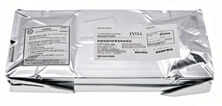
All electrostatic-sensitive components are handled in accordance with electrostatic discharge control procedures. The products are hermetically sealed in anti-static safe packaging to prevent electrostatic damage. Appropriate labeling is also applied for identification and traceability. This ensures product integrity during storage, handling and transportation.


ESD

Certifications & Memberships

Third-party certified, strict quality control. Our certification
  • ISO 9001: 2015
  • ISO 13485: 2016
  • ISO 14001: 2015
  • ISO 28000: 2007
  • ISO 45001: 2018
  • GB/T 27922-2011
  • SMTA
  • IPC
  • ESD
  • PSMA
Cypress Semiconductor (Infineon Technologies)

TT430N22KOF

Cypress Semiconductor (Infineon Technologies)
32D-TT430N22KOF

Want a better price? Add to Cart and Submit RFQ now, we'll contact you immediately.

0 RFQ
Shopping cart (0 Items)
It is empty.
Compare List (0 Items)
It is empty.
Feedback

Your feedback matters! At Allelco, we value the user experience and strive to improve it constantly.
Please share your comments with us via our feedback form, and we'll respond promptly.
Thank you for choosing Allelco.

Subject
E-mail
Comments
Captcha
Drag or click to upload file
Upload File
types: .xls, .xlsx, .doc, .docx, .jpg, .png and .pdf.
Max file size: 10MB