View All

Please refer to the English Version as our Official Version.Return

Europe
France(Français) Germany(Deutsch) Italy(Italia) Russian(русский) Poland(polski) Czech(Čeština) Luxembourg(Lëtzebuergesch) Netherlands(Nederland) Iceland(íslenska) Hungarian(Magyarország) Spain(español) Portugal(Português) Turkey(Türk dili) Bulgaria(Български език) Ukraine(Україна) Greece(Ελλάδα) Israel(עִבְרִית) Sweden(Svenska) Finland(Svenska) Finland(Suomi) Romania(românesc) Moldova(românesc) Slovakia(Slovenská) Denmark(Dansk) Slovenia(Slovenija) Slovenia(Hrvatska) Croatia(Hrvatska) Serbia(Hrvatska) Montenegro(Hrvatska) Bosnia and Herzegovina(Hrvatska) Lithuania(lietuvių) Spain(Português) Switzerland(Deutsch) United Kingdom(English)
Asia/Pacific
Japan(日本語) Korea(한국의) Thailand(ภาษาไทย) Malaysia(Melayu) Singapore(Melayu) Vietnam(Tiếng Việt) Philippines(Pilipino)
Africa, India and Middle East
United Arab Emirates(العربية) Iran(فارسی) Tajikistan(فارسی) India(हिंदी) Madagascar(malaɡasʲ)
South America / Oceania
New Zealand(Maori) Brazil(Português) Angola(Português) Mozambique(Português)
North America
United States(English) Canada(English) Haiti(Ayiti) Mexico(español)
HomeProductsIntegrated Circuits (ICs)Embedded - MicroprocessorsMCIMX6U5EVM10AD
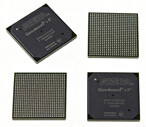
MCIMX6U5EVM10AD Image
Image may be representation.
See specifications for product details.
EXPRESS OPTION
Payment method

MCIMX6U5EVM10AD - NXP USA Inc.

Manufacturer Part Number
MCIMX6U5EVM10AD
Manufacturer
NXP Semiconductors
Allelco Part Number
32D-MCIMX6U5EVM10AD
Warranty
1 Year Allelco Warranty - Find out more
Stock Status:
7,720 pcs available, New & Original
Parts Description
I.MX 6DL ROM PERF ENHAN
Package
624-MAPBGA (21x21)
Data sheet
MCIMX6U5EVM10AD.pdf
RoHs Status
ROHS3 Compliant
Our certification
In stock: 7720
  • Unit Price: $20.23
  • Subtotal: $0.00

Want a better price?
Add to Cart and Submit RFQ now, we'll contact you immediately.

Quantity Unit Price Ext. Price
1+ $20.23 $20.23
30+ $19.32 $579.60
The above prices does not include taxes and freight rates, which will be calculated on the order pages.

Specifications

MCIMX6U5EVM10AD Tech Specifications
NXP USA Inc. - MCIMX6U5EVM10AD technical specifications, attributes, parameters and parts with similar specifications to NXP USA Inc. - MCIMX6U5EVM10AD

Product Attribute Attribute Value
Manufacturer NXP Semiconductors
Voltage - I/O 1.8V, 2.5V, 2.8V, 3.3V
USB USB 2.0 + PHY (4)
Supplier Device Package 624-MAPBGA (21x21)
Speed 1.0GHz
Series i.MX6DL
Security Features ARM TZ, Boot Security, Cryptography, RTIC, Secure Fusebox, Secure JTAG, Secure Memory, Secure RTC, Tamper Detection
SATA -
RAM Controllers LPDDR2, LVDDR3, DDR3
Package / Case 624-LFBGA
Package Tray
Product Attribute Attribute Value
Operating Temperature -20°C ~ 105°C (TJ)
Number of Cores/Bus Width 2 Core, 32-Bit
Mounting Type Surface Mount
Graphics Acceleration Yes
Ethernet 10/100/1000Mbps (1)
Display & Interface Controllers Keypad, LCD
Core Processor ARM® Cortex®-A9
Co-Processors/DSP Multimedia; NEON™ SIMD
Base Product Number MCIMX6
Additional Interfaces CAN, I²C, I²S, MMC/SD/SDIO, SAI, SPI, SSI, UART

Environmental & Export Classifications

ATTRIBUTE DESCRIPTION
RoHs Status ROHS3 Compliant
Moisture Sensitivity Level (MSL) 3 (168 Hours)
REACH Status REACH Unaffected
ECCN 5A992C
HTSUS 8542.31.0001

Parts Introduction

MCIMX6U5EVM10AD Image
MCIMX6U5EVM10AD (1)

Manufacturer Part Number

MCIMX6U5EVM10AD

Manufacturer

nxp-semiconductors

Introduction

The MCIMX6U5EVM10AD is a dual-core embedded microprocessor from NXP Semiconductors, built on the ARM® Cortex®-A9 architecture, operating at speeds up to 1.0GHz. Designed for a range of multimedia and interface applications.

Product Features and Performance

Dual-core ARM® Cortex®-A9 processor

Clock speed of 1.0GHz

Supports NEON™ SIMD for multimedia processing

Includes graphics acceleration

Features display & interface controllers for keypad and LCD

High-speed Ethernet (10/100/1000Mbps)

Integrated USB 2.0 with PHY (supports 4 USB interfaces)

Multiple RAM controllers supporting LPDDR2, LVDDR3, DDR3

Product Advantages

Enhanced multitasking with dual-core processing

High integration facilitates reduced system complexity

Optimal graphics and multimedia performance

Versatile connectivity options including advanced Ethernet and USB capabilities

Key Technical Parameters

Core: ARM® Cortex®-A9

Cores/Bus Width: 2 Core, 32-Bit

Speed: 1.0GHz

Graphics Acceleration: Yes

Ethernet: 10/100/1000Mbps

USB: USB 2.0 + PHY (4)

Voltage I/O: 1.8V, 2.5V, 2.8V, 3.3V

Operating Temperature: -20°C ~ 105°C (TJ)

Mounting Type: Surface Mount

Package / Case: 624-LFBGA

Quality and Safety Features

Operates within a wide temperature range from -20°C to 105°C ensuring reliability in varied environments

Rugged surface mount 624-LFBGA package for enhanced durability

Compatibility

Interfaces with CAN, I2C, I2S, MMC/SD/SDIO, SAI, SPI, SSI, UART supporting a broad spectrum of peripheral connections.

Application Areas

Multimedia Devices

Industrial Automation

Automotive Systems

High-performance Computing Platforms

Advanced user interfaces and displays

Product Lifecycle

Product Status: Active

No imminent discontinuation, ensuring long-term availability and support.

Several Key Reasons to Choose This Product

High processing power with dual-core ARM Cortex-A9 architecture

Seamless HD content handling with NEON™ SIMD extensions

Wide array of connectivity options cater to extensive industrial applications

Durable and reliable design suitable for rigorous environments

Long-term product availability with active status and no plans for discontinuation

Frequently Asked Questions(FAQ)

What are the key differences between the MCIMX6U5EVM10AD and similar i.MX6 processors when selecting a processor for industrial control systems requiring real-time multimedia processing?
The MCIMX6U5EVM10AD features dual ARM Cortex-A9 cores clocked at 1.0GHz with integrated NEON SIMD acceleration, which provides significant performance advantages over single-core variants in i.MX6 series for applications involving video decoding or sensor fusion. Unlike lower-end i.MX6ULL devices, this model includes full DDR3/LPDDR2 memory controller support and dedicated multimedia engines, enabling efficient handling of H.264 encoding/decoding at 1080p resolution without external co-processors. This makes it suitable for industrial HMIs or vision systems where both computational throughput and power efficiency matter.
How does the MCIMX6U5EVM10AD compare to newer NXP i.MX 8 series processors in terms of peripheral integration and thermal performance for embedded vision applications?
While the MCIMX6U5EVM10AD offers robust legacy interfaces like CAN, SSI, and MMC/SDIO, it lacks hardware security modules and modern display pipelines found in i.MX 8 series such as e.MMC boot support and HDMI 2.0. Its 1.0GHz operating frequency under full load typically results in junction temperatures exceeding 85°C in compact enclosures, whereas i.MX 8M Mini achieves comparable graphics performance at lower power. However, for designs already utilizing its 624-MAPBGA footprint and existing software stack, migration may not be cost-effective unless future-proofing is critical.
Can the MCIMX6U5EVM10AD reliably operate in automotive-grade temperature environments given its stated commercial range?
The MCIMX6U5EVM10AD is specified for -20°C to +105°C (TJ) operation, but this represents industrial grade rather than AEC-Q100 qualification. In practice, long-term reliability above 85°C requires careful PCB layout to manage thermal gradients across the 21x21 mm BGA package. For automotive applications demanding extended temperature cycling (-40°C to +125°C), additional derating of clock speeds or supplemental cooling may be necessary to ensure functional safety compliance.
What voltage considerations must be addressed when integrating the MCIMX6U5EVM10AD into a mixed-signal design with legacy 2.5V analog peripherals?
The MCIMX6U5EVM10AD supports multiple I/O voltage levels including 1.8V, 2.5V, 2.8V, and 3.3V, allowing direct interfacing with 2.5V sensors or ADCs. However, internal core logic operates at fixed 1.2V, necessitating careful power sequencing to avoid latch-up during startup. Voltage regulators supplying VDD_HIGH must maintain ±5% tolerance to meet setup/hold times for DDR3 initialization, especially at elevated ambient temperatures near 85°C.
Is the MCIMX6U5EVM10AD suitable for battery-powered edge devices requiring sustained multimedia throughput?
With typical active current consumption exceeding 1.5W at 1.0GHz, the MCIMX6U5EVM10AD consumes significantly more power than ultra-low-power alternatives like i.MX RT series. While dynamic voltage scaling can reduce average current to ~300mA during light loads, peak multimedia workloads will draw close to 1.2A from the core supply. For portable applications, external PMICs with fast transient response are essential to maintain stability during codec bursts while minimizing battery drain.
How does the MCIMX6U5EVM10AD’s memory subsystem impact system-level latency in real-time industrial automation tasks?
Supporting DDR3 up to 533MHz (DDR1066) enables burst transfer rates of ~8.5 GB/s, reducing memory-induced delays compared to LPDDR2-only implementations. However, lack of cache coherence between Cortex-A9 cores means shared data structures require explicit synchronization via spinlocks or mailbox mechanisms, adding microseconds of overhead per access. In time-critical loops handling motor control feedback, this can become non-negligible versus single-threaded architectures with deterministic execution timing.
What boot options are available for the MCIMX6U5EVM10AD, and what constraints apply when using SD card booting?
The MCIMX6U5EVM10AD supports booting from NOR flash, SD/MMC cards, or serial boot modes. When initiating from SD card, the ROM code expects a properly formatted MBR partition table with first sector containing correct CID/CSD registers. Due to limited SRAM size (~512 KB), initial SPL (Secondary Program Loader) must fit within these constraints—typically limiting kernel images to <1 MB if compressed. Failure to adhere to this can result in boot failure even with valid U-Boot binaries present on the card.
Are there known issues with the MCIMX6U5EVM10AD’s USB ports when driving multiple high-speed peripherals simultaneously?
Each of the four USB 2.0 OTG ports includes integrated PHYs capable of 480 Mbps operation, but shared bandwidth among endpoints can cause intermittent disconnects when all ports drive continuous streams (e.g., webcam + mass storage). Hardware limitations include only one ULPI interface to external transceivers, meaning internal PHY sharing introduces arbitration delays. Designers should allocate non-concurrent usage patterns or add hub controllers to isolate traffic domains.
What precautions are required when routing signals adjacent to the MCIMX6U5EVM10AD’s high-speed DDR3 traces?
DDR3 signal integrity demands tight impedance control (typically 40–50 Ω differential) and minimal length matching (<±50 ps skew) for address/command lines. Crosstalk from parallel GPIO or clock traces can corrupt initialization sequences, particularly at higher data rates (>400 MHz). Layer stacking should place ground planes directly beneath signal layers, and vias stitching must be dense around DRAM components to suppress cavity resonances that degrade eye diagrams during read/write operations.
How does the MCIMX6U5EVM10AD’s CAN interface perform in noisy factory environments with long cable runs?
The built-in CAN controllers support up to 1 Mbps baud rates but rely on external transceivers for galvanic isolation in harsh settings. Without proper termination (120 Ω at each end), reflections from stub lengths >10 cm can distort waveforms, triggering error frames. Adding TVS diodes rated for ISO 7637-2 pulses helps mitigate ESD risks, but signal rise times should remain >150 ns to prevent overshoot beyond transceiver thresholds during rapid state changes.
Can the MCIMX6U5EVM10AD run Linux distributions with GPU acceleration enabled?
Yes, the MCIMX6U5EVM10AD integrates Vivante GC1000+ GPU supporting OpenGL ES 2.0 and OpenVG 1.1, enabling accelerated 2D/3D rendering. However, driver maturity varies by distribution; Yocto-based builds often require custom kernel patches for full feature enablement. Frame buffer allocation must account for reserved memory regions (~128 MB minimum) mapped to GPU domain, impacting available RAM for application processes unless carefully partitioned during bootloader configuration.
What factors influence the choice between using the MCIMX6U5EVM10AD’s LCD controller versus HDMI output in embedded displays?
The MCIMX6U5EVM10AD’s LVDS and parallel RGB interfaces offer lower latency (<1 ms vs ~5 ms for HDMI due to TMDS encoding) ideal for resistive touch panels in kiosks. Conversely, HDMI supports higher resolutions (up to 1920x1080) and daisy-chaining via MST, beneficial for medical imaging or digital signage. Selection hinges on display panel availability, connector type, and whether EDID negotiation overhead justifies added complexity over direct pixel mapping.
Is there a maximum number of I2C slaves that can be connected to the MCIMX6U5EVM10AD without bus contention?
Up to 127 devices per bus address space theoretically, but practical limits arise from pull-up resistor values (typically 4.7 kΩ) and capacitance loading. Exceeding ~10 pF total trace+device capacitance forces slower slew rates (>1 µs rise time), risking missed ACKs during fast-mode transfers. Adding buffer chips (e.g., PCA9515) extends reach to 2 meters while maintaining 400 kHz operation, though adds component count and power budget.
How does the MCIMX6U5EVM10AD handle clock jitter in audio capture scenarios using its I2S interface?
The I2S subsystem derives clocks from either internal PLLs or external MCLK inputs, but internal generation exhibits ~200 ps RMS jitter at 48 kHz sample rate—sufficient for consumer audio but marginal for professional recording. External crystal oscillators (<50 ps jitter) paired with dedicated MCLK routing minimize artifacts. Word clock synchronization must align with LRCLK edges precisely, requiring FIFO buffering to absorb minor phase drift between source and SoC domains.
What are the implications of the MCIMX6U5EVM10AD’s Moisture Sensitivity Level 3 certification for production assembly?
As an MSL 3 part, the MCIMX6U5EVM10AD requires baking before reflow if stored beyond 168 hours above 30°C/60% RH. Failure to do so risks popcorning during soldering, potentially cracking the delicate 624-ball BGA joints. Assembly houses must track lot codes and humidity exposure logs; rework stations need nitrogen-assisted flux activation to ensure reliable wetting across all micro-balls without void formation.
Does the MCIMX6U5EVM10AD support secure boot mechanisms to protect firmware integrity?
Limited to RSA-2048 signature verification using keys burned into fuses during manufacturing, the MCIMX6U5EVM10AD implements basic secure boot but lacks runtime attestation or tamper detection. Keys cannot be updated post-deployment, making it vulnerable if compromised early in device lifecycle. For regulated industries (medical/avionics), additional hardware security modules (HSMs) external to the SoC are recommended to meet certification requirements beyond basic chain-of-trust validation.
How does the MCIMX6U5EVM10AD’s Ethernet MAC perform under heavy packet loads in network appliances?
Integrated 10/100/1000 Mbps Ethernet supports IEEE 802.3az energy-efficient Ethernet but shares PCIe-like internal buses with other peripherals, creating contention during bursty traffic. Without DMA scatter-gather support for jumbo frames, CPU utilization spikes to >70% during sustained 64-byte packet floods, starving background tasks. Offloading checksum computation to hardware or using external switch ASICs reduces host load and improves overall throughput predictability.
What design considerations apply when replacing the MCIMX6U5EVM10AD in legacy systems due to end-of-life status?
Although still available through distributors, the MCIMX6U5EVM10AD lacks long-term availability guarantees beyond 2025. Migration paths favor i.MX 6UL/ULL (lower power) or i.MX 8MM (higher performance), but require PCB redesign for different pinouts and package sizes. Software porting involves adapting device tree bindings and clock tree configurations, often necessitating vendor-specific SDK updates to maintain compatibility with existing Yocto layers or proprietary middleware stacks reliant on deprecated APIs.

Parts with Similar Specifications

The three parts on the right have similar specifications to NXP USA Inc. MCIMX6U5EVM10AD

Product Attribute MCIMX6U5DVM10AD MCIMX6U5EVM10AC MCIMX6U5EVM10AB MCIMX6U5EVM10ABR
Part Number MCIMX6U5DVM10AD MCIMX6U5EVM10AC MCIMX6U5EVM10AB MCIMX6U5EVM10ABR
Manufacturer NXP USA Inc. NXP USA Inc. NXP USA Inc. NXP USA Inc.
Package / Case - 196-LFBGA 16-DIP (0.300', 7.62mm) 64-VFQFN Exposed Pad
Mounting Type - Surface Mount Through Hole Surface Mount
Operating Temperature - -40°C ~ 85°C 0°C ~ 70°C -40°C ~ 85°C
Co-Processors/DSP - - - -
Ethernet - - - -
Display & Interface Controllers - - - -
Voltage - I/O - - - -
USB - - - -
Number of Cores/Bus Width - - - -
SATA - - - -
Security Features - - - -
Package - Tape & Reel (TR) Tube Tape & Reel (TR)
Supplier Device Package - 196-NFBGA (12x12) 16-PDIP 64-VQFN (9x9)
Speed - - - -
Additional Interfaces - - - -
Core Processor - - - -
RAM Controllers - - - -
Base Product Number - DAC34H84 MAX500 ADS62P42
Series - - - -
Graphics Acceleration - - - -

MCIMX6U5EVM10AD Datasheet PDF

Download MCIMX6U5EVM10AD pdf datasheets and NXP USA Inc. documentation for MCIMX6U5EVM10AD - NXP USA Inc..

Datasheets
i.MX 6Solo/6DualLite Appl.pdf
Environmental Information
NXP USA Inc REACH.pdf NXP USA Inc RoHS Cert.pdf

Customer Reviews

Evaluation: 10 Articles

  • Nath***rooks
    Jun 11, 2026

    Installed this power component in a converter board. Output remained stable under different load conditions and thermal performance was better than expected.

  • Dani***alkerTech
    Jun 1, 2026

    Product works, but setup took more effort than expected. Once configured the MCU ran reliably, although documentation support felt older compared with newer platforms. Fine for maintenance projects.

  • Yuki***aka88
    May 26, 2026

    信号通信プロジェクトでこのRS-485トランシーバーを使用しました。設置は簡単で、長距離ケーブルでも通信は安定していました。消費電力も、以前使用していたものより低くなっています。

  • Stev***aker
    May 20, 2026

    Solid diode for power rectification. Works well in switching circuits.

  • Bran***Lewis
    May 11, 2026

    Compact FPGA with good performance. Suitable for basic signal processing tasks.

  • Oliv***arris
    May 7, 2026

    Reliable I/O expander. Works well in embedded control applications.

  • Jess***Jones
    Apr 17, 2026

    It offers good value for the price, and the specifications match the description. I’ve been using it for two days with no issues, and I’ll definitely buy it again if I need it in the future.

  • Mich***Smith
    Apr 17, 2026

    Shipping was on time, the component pins are neatly aligned, and I tested 10 of them with a multimeter—all readings were within the specified range. Highly recommended.

  • Aman***arris
    Apr 3, 2026

    It was great—the entire process, from placing the order to receiving the package, went very smoothly. The components were consistent, the price was fair, and I had a very pleasant shopping experience.

  • Mike***nch
    Apr 3, 2026

    Better than expected! The resistance and capacitance readings were spot-on, and it passed the test on the first try. The service was reliable, and the packaging was thoughtful—I highly recommend it.

Write a Review

Your Email address will not be published.

Shipment

Delivery Time

In-stock items can be shipped within 24 hours. Some parts will be arranged for delivery within 1-2 days from the date all items arrive at our warehouse. And Allelco ships order once a day at about 17:00, except Sunday. Once the goods are shipped, the estimated delivery time depends on the shipping methods and Delivery destination. The table below shows are the logistic time for some common countries.

Delivery Cost

  1. Use your express account for shipment if you have one.
  2. Use our account for the shipment. Refer to the table below for the approximate charges.
(Different time frame / countries / package size has different price.)

Delivery Method

  1. Global Common Shipment by DHL / UPS / FedEx / TNT / EMS / SF we support.
  2. Others more shipping ways, please get in touch with your customer manager.

Common Countries Logistic Time Reference
Region Country Logistic Time(Day)
America United States 5
Brazil 7
Europe Germany 5
United Kingdom 4
Italy 5
Oceania Australia 6
New Zealand 5
Asia India 4
Japan 4
Middle East Israel 6
DHL & FedEx Shipment Charges Reference
Shipment charges(KG) Reference DHL(USD$)
0.00kg-1.00kg USD$30.00 - USD$60.00
1.00kg-2.00kg USD$40.00 - USD$80.00
2.00kg-3.00kg USD$50.00 - USD$100.00
Note:
The above table is for reference only. There may have some data bias for the uncontrollable factors.
Contact us if you have any questions.
  • QC (Quality Warranty)
  • Payment Support
  • Packaging
  • Certifications & Memberships

QC (Quality Warranty)

Allelco is committed to exceeding customer expectations through customer service excellence, order accuracy, and on-time delivery.
This is achieved through our commitment to the continual improvement of our processes, services, and products.


Strict quality inspection builds a solid foundation for electronic component quality.
  1. Visual inspection
  2. Performance testing and reliability verification
  3. Standardized full-process testing
  4. Precise control of every parameter
We eliminate defective components and ensure the stable operation of electronic devices through professional quality standards.

Payment Support

The payment method can be chosen from the methods shown below: Wire Transfer (T/T, Bank Transfer), Western Union, Credit card, PayPal.
  • HKBea
  • Paypal
  • MasterCard
  • Western-Union
  • VISA
Stable Delivery, Sincere Partnership — Your Faithful Supply Chain Partner
  • Efficient Supply Management
  • Cost-Saving Procurement
  • Fast Sourcing & Delivery
Contact us if you have any questions.

Packaging

Electrostatic Discharge Protection and Handling

All electrostatic-sensitive components are handled in accordance with electrostatic discharge control procedures. The products are hermetically sealed in anti-static safe packaging to prevent electrostatic damage. Appropriate labeling is also applied for identification and traceability. This ensures product integrity during storage, handling and transportation.


ESD

Certifications & Memberships

Third-party certified, strict quality control. Our certification
  • ISO 9001: 2015
  • ISO 13485: 2016
  • ISO 14001: 2015
  • ISO 28000: 2007
  • ISO 45001: 2018
  • GB/T 27922-2011
  • SMTA
  • IPC
  • ESD
  • PSMA
MCIMX6U5EVM10AD Image

MCIMX6U5EVM10AD

NXP USA Inc.
32D-MCIMX6U5EVM10AD

Want a better price? Add to Cart and Submit RFQ now, we'll contact you immediately.

0 RFQ
Shopping cart (0 Items)
It is empty.
Compare List (0 Items)
It is empty.
Feedback

Your feedback matters! At Allelco, we value the user experience and strive to improve it constantly.
Please share your comments with us via our feedback form, and we'll respond promptly.
Thank you for choosing Allelco.

Subject
E-mail
Comments
Captcha
Drag or click to upload file
Upload File
types: .xls, .xlsx, .doc, .docx, .jpg, .png and .pdf.
Max file size: 10MB