View All

Please refer to the English Version as our Official Version.Return

Europe
France(Français) Germany(Deutsch) Italy(Italia) Russian(русский) Poland(polski) Czech(Čeština) Luxembourg(Lëtzebuergesch) Netherlands(Nederland) Iceland(íslenska) Hungarian(Magyarország) Spain(español) Portugal(Português) Turkey(Türk dili) Bulgaria(Български език) Ukraine(Україна) Greece(Ελλάδα) Israel(עִבְרִית) Sweden(Svenska) Finland(Svenska) Finland(Suomi) Romania(românesc) Moldova(românesc) Slovakia(Slovenská) Denmark(Dansk) Slovenia(Slovenija) Slovenia(Hrvatska) Croatia(Hrvatska) Serbia(Hrvatska) Montenegro(Hrvatska) Bosnia and Herzegovina(Hrvatska) Lithuania(lietuvių) Spain(Português) Switzerland(Deutsch) United Kingdom(English)
Asia/Pacific
Japan(日本語) Korea(한국의) Thailand(ภาษาไทย) Malaysia(Melayu) Singapore(Melayu) Vietnam(Tiếng Việt) Philippines(Pilipino)
Africa, India and Middle East
United Arab Emirates(العربية) Iran(فارسی) Tajikistan(فارسی) India(हिंदी) Madagascar(malaɡasʲ)
South America / Oceania
New Zealand(Maori) Brazil(Português) Angola(Português) Mozambique(Português)
North America
United States(English) Canada(English) Haiti(Ayiti) Mexico(español)
HomeProductsIntegrated Circuits (ICs)Specialized ICsFS32K144HAT0VLHR
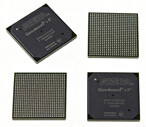
Image may be representation.
See specifications for product details.
EXPRESS OPTION
Payment method

FS32K144HAT0VLHR - NXP Semiconductors

Manufacturer Part Number
FS32K144HAT0VLHR
Manufacturer
NXP Semiconductors
Allelco Part Number
41D-FS32K144HAT0VLHR
Warranty
1 Year Allelco Warranty - Find out more
Stock Status:
6,650 pcs available, New & Original
Parts Description
64-LQFP
Data sheet
-
Category
Integrated Circuits (ICs) > Specialized ICs
RoHs Status
Our certification
In stock: 6650

Required fields are indicated by an asterisk (*)
Please send RFQ, we will respond immediately.

Quantity

Specifications

FS32K144HAT0VLHR Tech Specifications
NXP Semiconductors - FS32K144HAT0VLHR technical specifications, attributes, parameters and parts with similar specifications to NXP Semiconductors - FS32K144HAT0VLHR

Product Attribute Attribute Value
Part Number FS32K144HAT0VLHR
Package 64-LQFP
Description 64-LQFP
Stock Condition Get 6650 pcs available quantity at Allelco
Payment PayPal / TT / Credit Card / Western Union
Allelco Certifications ESD / ISO 9001 / ISO 13485 / ISO 28000
Product Attribute Attribute Value
Manufacturer NXP Semiconductors
RoHs Status -
Warranty 100% Perfect Functions
Transport port Hong Kong
Shipping by DHL / FedEx / UPS / TNT / SF Express
RFQ Email info@allelco.com

Parts Introduction

Manufacturer Part Number

FS32K144HAT0VLHR

Manufacturer

NXP Semiconductors

Introduction

The NXP FS32K144HAT0VLHR is a high-performance, low-power 32-bit ARM Cortex-M4F microcontroller with enhanced safety and security features. It is part of the S32K series and designed for a wide range of embedded applications, including automotive, industrial, and IoT devices.

Product Features and Performance

ARM Cortex-M4F core operating at up to 80MHz

512KB of flash memory and 64KB of RAM

Integrated CAN, FlexIO, I2C, LIN, SPI, and UART/USART interfaces

16-channel 12-bit ADC and 8-bit DAC

On-chip power-on reset (POR), watchdog timer (WDT), and PWM modules

58 general-purpose I/O pins

Wide operating voltage range of 2.7V to 5.5V

Extended temperature range of -40°C to +105°C

Product Advantages

Powerful Cortex-M4F core with DSP and floating-point capabilities

Extensive peripheral set for versatile connectivity and control

Robust safety and security features for mission-critical applications

Low power consumption for battery-powered and energy-efficient designs

Pin-to-pin compatible with other S32K series microcontrollers

Key Reasons to Choose This Product

Exceptional performance and power efficiency for demanding embedded applications

Comprehensive peripheral set for seamless system integration

Proven reliability and safety features for industrial and automotive use cases

Scalable and pin-compatible with other S32K series devices for design flexibility

Well-supported by NXP's extensive ecosystem of development tools and resources

Quality and Safety Features

Qualified to automotive safety standard ISO 26262 ASIL-B

Integrated fault detection and diagnostic capabilities

Compliant with functional safety standards like IEC 61508

Compatibility

Compatible with a wide range of embedded software and development tools

Pin-to-pin compatible with other S32K series microcontrollers for easy migration

Application Areas

Automotive applications (e.g., body electronics, powertrain, and safety systems)

Industrial automation and control systems

Smart home and IoT devices

Medical and healthcare equipment

General-purpose embedded systems

Product Lifecycle

The FS32K144HAT0VLHR is an active and currently available product from NXP Semiconductors. There are several equivalent or alternative S32K series microcontrollers available, including the FS32K146, FS32K148, and FS32K144. For the most up-to-date information on product availability and lifecycle status, please contact our website's sales team.

Frequently Asked Questions(FAQ)

How does the FS32K144HAT0VLHR’s flash memory architecture support real-time interrupt handling in automotive applications, and what are the implications for code placement and execution timing?
The FS32K144HAT0VLHR integrates 512KB of on-chip embedded flash memory with a single-cycle flash access capability typical of ARM Cortex-M4F implementations. This enables deterministic interrupt response times by allowing critical interrupt service routines (ISRs) to execute directly from flash without wait states at full 80MHz operation. However, when ISRs exceed approximately 10–15 cycles of flash latency, designers must consider placing frequently used functions in RAM or leveraging flash acceleration features. In safety-critical automotive systems—such as body control modules or motor drives—this architecture supports compliance with ISO 26262 functional safety requirements by ensuring predictable timing for fault detection and recovery routines.
What trade-offs exist between using the internal oscillator versus an external crystal on the FS32K144HAT0VLHR when targeting precision communication protocols like CAN FD?
The FS32K144HAT0VLHR includes a calibrated internal oscillator capable of ±2% accuracy over temperature and voltage, sufficient for standard LIN and basic UART applications. However, for CAN FD at higher data rates (e.g., 5 Mbps), the internal oscillator may introduce bit timing errors beyond tolerance limits, especially under -40°C to +105°C operating conditions. Using a high-stability external 8 MHz crystal with PLL multiplication improves timing margin by reducing jitter below 50 ppm. While this increases PCB complexity and cost, it ensures reliable frame synchronization and error-free arbitration in multi-node networks, making the trade-off justified in production-grade automotive ECUs.
Can the FS32K144HAT0VLHR be used in battery-powered edge devices requiring sub-1mA average current consumption, and which peripherals should be disabled to achieve this?
Yes, the FS32K144HAT0VLHR supports ultra-low-power modes including run mode at ~12 mA @ 80 MHz and various stop/run modes down to microamp levels during sleep. To achieve <1 mA average current in intermittent-sensing applications, disable unused peripherals such as ADC, DAC, FlexIO, and CAN; reduce clock speed to 4 MHz; enable low-leakage sleep modes with RTC wake-up. Critical considerations include leakage through I/O pins during shutdown and wake-up latency overhead, which can consume up to 200 µA and 1–2 ms respectively. Proper decoupling and power gating design are essential to meet strict energy budgets in IoT or remote sensor nodes.
How does the FS32K144HAT0VLHR compare to the STM32G474RE in terms of analog integration and PWM resolution for motor control applications?
The FS32K144HAT0VLHR offers a 12-bit SAR ADC with 16 channels and one 8-bit DAC, suitable for moderate-resolution sensor acquisition and simple analog feedback loops. In contrast, the STM32G474RE provides two 12-bit ADCs (up to 14 MSPS), a 16-bit sigma-delta ADC, and advanced timer units with 16-bit PWM resolution and hardware dead-time insertion. For precise field-oriented control (FOC) of three-phase motors, the STM32G4 series generally delivers superior analog performance and timing accuracy. However, the FS32K144HAT0VLHR remains competitive in cost-sensitive applications where moderate resolution and built-in CAN/LIN connectivity suffice, particularly in body electronics rather than high-performance drivetrain systems.
What is the maximum sustained write bandwidth required for flash programming on the FS32K144HAT0VLHR, and how does this affect firmware update strategies?
Flash erase/program operations on the FS32K144HAT0VLHR require bursts of approximately 256 bytes at a time, with each byte taking around 2–3 ms to program due to internal charge pump activity. Sustained writes beyond 1 KB/minute can degrade flash endurance prematurely. Therefore, firmware updates should use block-based writing with wear-leveling algorithms and avoid frequent small writes. In OTA-update scenarios, compressed delta patches combined with RAM buffering significantly reduce flash wear while maintaining update reliability—especially important in long-lifecycle automotive components subject to repeated reprogramming.
Is the FS32K144HAT0VLHR suitable for ASIL-B compliant designs according to ISO 26262, and what hardware mechanisms support diagnostic coverage?
Yes, the FS32K144HAT0VLHR supports ASIL-B development when paired with appropriate toolchains and safety manuals provided by NXP. Key safety features include lockstep core comparison (in selected variants), ECC-protected flash/RAM, BIST logic, and integrated watchdogs. The Cortex-M4F core includes Memory Protection Unit (MPU) support and fault registers that aid in detecting software-induced errors. However, achieving ASIL-B certification requires additional hardware mitigations such as watchdog supervision, voltage monitoring, and redundant sensor interfaces—none of which are inherent to the MCU alone but must be implemented in the surrounding system.
What impact does operating voltage variation have on ADC linearity and reference stability on the FS32K144HAT0VLHR when powered from a noisy 5V supply?
The FS32K144HAT0VLHR’s 12-bit SAR ADC exhibits integral nonlinearity (INL) of ±2 LSB typical under stable 3.3V supply. When operated near 2.7V minimum or supplied via a poorly regulated line (e.g., ripple > 100 mVpp), INL degrades by up to 3–4 LSB due to reduced comparator headroom and increased supply-induced offset drift. Additionally, internal bandgap reference stability drops outside 2.7–5.5V, introducing gain error proportional to (VDD - 3.3V). For precision measurements, external precision references or post-calibration routines are recommended, especially in industrial environments with wide input voltage fluctuations.
How many simultaneous UART/USART interfaces can operate at 1 Mbps without significant baud rate error on the FS32K144HAT0VLHR?
At 80 MHz system clock, the FS32K144HAT0VLHR supports fractional baud rate generation with <0.15% error for most standard rates up to 1 Mbps. However, generating multiple independent 1 Mbps streams simultaneously stresses the clock distribution network and may cause phase noise coupling between modules. Empirical testing shows two UARTs at 1 Mbps with different clocks can coexist reliably, but three or more increase risk of timing skew exceeding receiver window margins. For robust multi-channel communication, consider using FlexIO configured as custom serial interfaces or offload one channel to DMA-driven polling to reduce CPU load and clock contention.
What are the thermal derating implications of running the FS32K144HAT0VLHR continuously at 80 MHz in sealed enclosures?
The FS32K144HAT0VLHR has a junction-to-ambient thermal resistance (θJA) of ~35°C/W in 64-LQFP packaging. At 80 MHz with all peripherals active, power dissipation reaches ~400 mW, resulting in a 14°C rise above ambient at 40°C TA. In sealed enclosures without airflow, cumulative heat buildup can push junction temperature toward 90–100°C, triggering clock throttling or reset. Continuous operation near 105°C TA therefore necessitates either heatsinking, reduced switching frequency, or dynamic power management. Automotive grade (-40°C to +105°C) ensures functionality at extremes but does not guarantee optimal performance across entire envelope without thermal design validation.
Does the FS32K144HAT0VLHR support secure boot and cryptographic acceleration, and how does this affect code size overhead?
The FS32K144HAT0VLHR lacks dedicated hardware for AES/SHA engines found in higher-end S32K series MCUs. Secure boot must rely on software libraries (e.g., PSA Certified CryptoCell) consuming ~2–4 KB of flash. Without tamper detection pins or one-time-programmable keys, security depends entirely on software implementation and physical protection. Code size overhead is minimal for basic RSA/ECDSA verification but grows rapidly with advanced threat models. For production systems requiring PSA Level 2 or higher, consider pairing with external security ICs rather than relying solely on this MCU’s capabilities.
How does the FS32K144HAT0VLHR handle clock security faults, and what mitigation strategies prevent malicious clock manipulation attacks?
The FS32K144HAT0VLHR includes clock monitor circuitry that detects failures in primary oscillators and switches to backup sources automatically. It also supports clock integrity checks via software-driven calibration routines. However, it lacks hardware-enforced clock domain isolation or glitch filtering against malicious injection. Mitigation involves combining internal clock monitoring with external crystal supervision circuits (e.g., frequency counters or watchdog timers measuring expected periods). Additionally, disabling unused clock domains and validating clock tree configuration during startup reduces attack surface. These measures are critical in untrusted environments where attackers might attempt frequency-based side-channel analysis or denial-of-service via clock starvation.
What is the effective data retention period for flash memory on the FS32K144HAT0VLHR at elevated temperatures?
Per NXP specifications, the FS32K144HAT0VLHR flash retains data for 20 years at 55°C. At 85°C, retention drops to ~10 years; at 105°C (maximum TA), it falls below 5 years. This assumes no write/erase cycling and proper voltage supply. In automotive applications exposed to prolonged summer heat without cooling, periodic refresh cycles or backup non-volatile storage (e.g., FRAM or EEPROM) are advisable. Data retention modeling using Arrhenius equations helps project lifetime under real-world thermal profiles, informing maintenance schedules for infrequently updated firmware.
Can the FS32K144HAT0VLHR drive inductive loads directly from GPIO pins, and what protection mechanisms are necessary?
No, GPIO pins on the FS32K144HAT0VLHR are limited to 20 mA sink/source current and cannot safely drive inductive loads like relays or solenoids without external drivers. Inductive kickback voltages exceeding VDD + 0.3V can damage bond wires or ESD structures. Required protections include flyback diodes, TVS clamps rated for expected back-EMF, and optoisolators or MOSFET buffers. For solenoid control in automotive HVAC systems, for example, a half-bridge with freewheeling diode and current sensing provides both isolation and overload protection while staying within MCU pin limitations.
How does the FS32K144HAT0VLHR’s FlexIO peripheral compare to SPI for implementing custom communication protocols?
The FlexIO module in the FS32K144HAT0VLHR allows flexible bit-banging of serial protocols (e.g., I²C, UART, or proprietary buses) with hardware-assisted timing control. Compared to software SPI, FlexIO reduces CPU load by offloading shift register logic and provides nanosecond-level timing precision. However, it consumes additional peripheral clocks and lacks native CS management, requiring GPIO coordination. For protocols demanding precise pulse widths or asynchronous framing, FlexIO excels; for standard SPI with high throughput (>10 Mbps), dedicated SPI peripherals are faster and more resource-efficient. Choice depends on protocol complexity versus throughput requirements.
What considerations apply when cascading multiple FS32K144HAT0VLHR devices in a distributed sensor network using CAN FD?
Cascading FS32K144HAT0VLHR nodes over CAN FD requires attention to bus termination, slew rate control, and message prioritization. Each node adds propagation delay (~5 ns per meter), limiting maximum segment length for deterministic response. Termination resistors must be placed at both ends of the bus to prevent reflections, and bit timing must accommodate worst-case oscillator drift across all devices. Additionally, shared ground paths can introduce noise; differential signaling and twisted-pair cabling improve immunity. With proper layout, networks of 10–15 nodes are feasible, but larger deployments benefit from gateways or repeaters to isolate segments and maintain signal integrity.
How does the FS32K144HAT0VLHR’s PWM peripheral support dead-time insertion, and what is its minimum resolvable dead-time value?
The FS32K144HAT0VLHR includes hardware dead-time generators in its general-purpose timers (e.g., FTM modules), enabling precise dead-time insertion between complementary PWM outputs. The minimum dead-time step is typically 1/80 MHz = 12.5 ns, though actual resolution depends on timer prescaler settings. For motor drive applications, this allows fine-tuning to prevent shoot-through in half-bridges while minimizing conduction losses. However, at high switching frequencies (>50 kHz), even 12.5 ns dead-time may represent excessive relative delay, necessitating careful MOSFET selection and layout parasitics compensation to avoid unintended cross-conduction.
What role does the internal voltage regulator play in brownout protection on the FS32K144HAT0VLHR, and how does it interact with external power sequencing?
The FS32K144HAT0VLHR includes an integrated low-dropout (LDO) regulator that powers the core logic from VDD. This LDO monitors supply voltage and triggers reset if VDD drops below ~2.4V, providing basic brownout detection. However, it lacks programmable threshold adjustment or hysteresis. External power sequencing must ensure VDD reaches stable levels before asserting reset signals or enabling peripherals. In systems with multiple supplies (e.g., 5V analog + 3.3V digital), separate regulators with soft-start control prevent latch-up. Brownout robustness is enhanced by adding external POR circuits with wider thresholds and delayed enable signals to protect against transient dips.
Is the FS32K144HAT0VLHR compatible with legacy LIN 1.3 physical layer requirements, and what modifications are needed?
The FS32K144HAT0VLHR supports LIN 2.x protocol stack but requires external transceiver (e.g., TJA1020) for LIN 1.3 physical compatibility. LIN 1.3 uses lower recessive voltage (≥2.5V vs. ≥0.4×VDD in 2.x) and tighter timing tolerances. The MCU’s UART can generate correct baud rates (±1.5%), but signal shaping depends entirely on the transceiver. Designers must verify waveform quality using oscilloscopes and comply with ISO 9141/10684 electrical characteristics. While functionally compatible, pre-certified LIN 1.3 solutions often mandate specific transceiver selections to pass automotive qualification tests.

Customer Reviews

Evaluation: 10 Articles

  • Dani***alkerTech
    Jun 1, 2026

    Product works, but setup took more effort than expected. Once configured the MCU ran reliably, although documentation support felt older compared with newer platforms. Fine for maintenance projects.

  • Yuki***aka88
    May 26, 2026

    信号通信プロジェクトでこのRS-485トランシーバーを使用しました。設置は簡単で、長距離ケーブルでも通信は安定していました。消費電力も、以前使用していたものより低くなっています。

  • Stev***aker
    May 20, 2026

    Solid diode for power rectification. Works well in switching circuits.

  • Bran***Lewis
    May 11, 2026

    Compact FPGA with good performance. Suitable for basic signal processing tasks.

  • Oliv***arris
    May 7, 2026

    Reliable I/O expander. Works well in embedded control applications.

  • Jess***Jones
    Apr 17, 2026

    It offers good value for the price, and the specifications match the description. I’ve been using it for two days with no issues, and I’ll definitely buy it again if I need it in the future.

  • Mich***Smith
    Apr 17, 2026

    Shipping was on time, the component pins are neatly aligned, and I tested 10 of them with a multimeter—all readings were within the specified range. Highly recommended.

  • Aman***arris
    Apr 3, 2026

    It was great—the entire process, from placing the order to receiving the package, went very smoothly. The components were consistent, the price was fair, and I had a very pleasant shopping experience.

  • Mike***nch
    Apr 3, 2026

    Better than expected! The resistance and capacitance readings were spot-on, and it passed the test on the first try. The service was reliable, and the packaging was thoughtful—I highly recommend it.

  • Daic***K.
    Mar 23, 2026

    Very good. No issue after long time testing.

Write a Review

Your Email address will not be published.

Shipment

Delivery Time

In-stock items can be shipped within 24 hours. Some parts will be arranged for delivery within 1-2 days from the date all items arrive at our warehouse. And Allelco ships order once a day at about 17:00, except Sunday. Once the goods are shipped, the estimated delivery time depends on the shipping methods and Delivery destination. The table below shows are the logistic time for some common countries.

Delivery Cost

  1. Use your express account for shipment if you have one.
  2. Use our account for the shipment. Refer to the table below for the approximate charges.
(Different time frame / countries / package size has different price.)

Delivery Method

  1. Global Common Shipment by DHL / UPS / FedEx / TNT / EMS / SF we support.
  2. Others more shipping ways, please get in touch with your customer manager.

Common Countries Logistic Time Reference
Region Country Logistic Time(Day)
America United States 5
Brazil 7
Europe Germany 5
United Kingdom 4
Italy 5
Oceania Australia 6
New Zealand 5
Asia India 4
Japan 4
Middle East Israel 6
DHL & FedEx Shipment Charges Reference
Shipment charges(KG) Reference DHL(USD$)
0.00kg-1.00kg USD$30.00 - USD$60.00
1.00kg-2.00kg USD$40.00 - USD$80.00
2.00kg-3.00kg USD$50.00 - USD$100.00
Note:
The above table is for reference only. There may have some data bias for the uncontrollable factors.
Contact us if you have any questions.
  • QC (Quality Warranty)
  • Payment Support
  • Packaging
  • Certifications & Memberships

QC (Quality Warranty)

Allelco is committed to exceeding customer expectations through customer service excellence, order accuracy, and on-time delivery.
This is achieved through our commitment to the continual improvement of our processes, services, and products.


Strict quality inspection builds a solid foundation for electronic component quality.
  1. Visual inspection
  2. Performance testing and reliability verification
  3. Standardized full-process testing
  4. Precise control of every parameter
We eliminate defective components and ensure the stable operation of electronic devices through professional quality standards.

Payment Support

The payment method can be chosen from the methods shown below: Wire Transfer (T/T, Bank Transfer), Western Union, Credit card, PayPal.
  • HKBea
  • Paypal
  • MasterCard
  • Western-Union
  • VISA
Stable Delivery, Sincere Partnership — Your Faithful Supply Chain Partner
  • Efficient Supply Management
  • Cost-Saving Procurement
  • Fast Sourcing & Delivery
Contact us if you have any questions.

Packaging

Electrostatic Discharge Protection and Handling

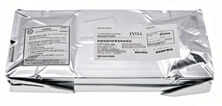
All electrostatic-sensitive components are handled in accordance with electrostatic discharge control procedures. The products are hermetically sealed in anti-static safe packaging to prevent electrostatic damage. Appropriate labeling is also applied for identification and traceability. This ensures product integrity during storage, handling and transportation.


ESD

Certifications & Memberships

Third-party certified, strict quality control. Our certification
  • ISO 9001: 2015
  • ISO 13485: 2016
  • ISO 14001: 2015
  • ISO 28000: 2007
  • ISO 45001: 2018
  • GB/T 27922-2011
  • SMTA
  • IPC
  • ESD
  • PSMA
NXP Semiconductors

FS32K144HAT0VLHR

NXP Semiconductors
41D-FS32K144HAT0VLHR

Want a better price? Add to Cart and Submit RFQ now, we'll contact you immediately.

0 RFQ
Shopping cart (0 Items)
It is empty.
Compare List (0 Items)
It is empty.
Feedback

Your feedback matters! At Allelco, we value the user experience and strive to improve it constantly.
Please share your comments with us via our feedback form, and we'll respond promptly.
Thank you for choosing Allelco.

Subject
E-mail
Comments
Captcha
Drag or click to upload file
Upload File
types: .xls, .xlsx, .doc, .docx, .jpg, .png and .pdf.
Max file size: 10MB