View All

Please refer to the English Version as our Official Version.Return

Europe
France(Français) Germany(Deutsch) Italy(Italia) Russian(русский) Poland(polski) Czech(Čeština) Luxembourg(Lëtzebuergesch) Netherlands(Nederland) Iceland(íslenska) Hungarian(Magyarország) Spain(español) Portugal(Português) Turkey(Türk dili) Bulgaria(Български език) Ukraine(Україна) Greece(Ελλάδα) Israel(עִבְרִית) Sweden(Svenska) Finland(Svenska) Finland(Suomi) Romania(românesc) Moldova(românesc) Slovakia(Slovenská) Denmark(Dansk) Slovenia(Slovenija) Slovenia(Hrvatska) Croatia(Hrvatska) Serbia(Hrvatska) Montenegro(Hrvatska) Bosnia and Herzegovina(Hrvatska) Lithuania(lietuvių) Spain(Português) Switzerland(Deutsch) United Kingdom(English)
Asia/Pacific
Japan(日本語) Korea(한국의) Thailand(ภาษาไทย) Malaysia(Melayu) Singapore(Melayu) Vietnam(Tiếng Việt) Philippines(Pilipino)
Africa, India and Middle East
United Arab Emirates(العربية) Iran(فارسی) Tajikistan(فارسی) India(हिंदी) Madagascar(malaɡasʲ)
South America / Oceania
New Zealand(Maori) Brazil(Português) Angola(Português) Mozambique(Português)
North America
United States(English) Canada(English) Haiti(Ayiti) Mexico(español)
HomeProductsIntegrated Circuits (ICs)Specialized ICsMCIMX537CVP8C2
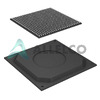
Image may be representation.
See specifications for product details.
EXPRESS OPTION
Payment method

MCIMX537CVP8C2 - NXP Semiconductors

Manufacturer Part Number
MCIMX537CVP8C2
Manufacturer
NXP Semiconductors
Allelco Part Number
41D-MCIMX537CVP8C2
Warranty
1 Year Allelco Warranty - Find out more
Stock Status:
11,950 pcs available, New & Original
Parts Description
-
Data sheet
-
Category
Integrated Circuits (ICs) > Specialized ICs
RoHs Status
Our certification
In stock: 11950

Required fields are indicated by an asterisk (*)
Please send RFQ, we will respond immediately.

Quantity

Specifications

MCIMX537CVP8C2 Tech Specifications
NXP Semiconductors - MCIMX537CVP8C2 technical specifications, attributes, parameters and parts with similar specifications to NXP Semiconductors - MCIMX537CVP8C2

Product Attribute Attribute Value
Part Number MCIMX537CVP8C2
Package -
Description -
Stock Condition Get 11950 pcs available quantity at Allelco
Payment PayPal / TT / Credit Card / Western Union
Allelco Certifications ESD / ISO 9001 / ISO 13485 / ISO 28000
Product Attribute Attribute Value
Manufacturer NXP Semiconductors
RoHs Status -
Warranty 100% Perfect Functions
Transport port Hong Kong
Shipping by DHL / FedEx / UPS / TNT / SF Express
RFQ Email info@allelco.com

Parts Introduction

Manufacturer Part Number

MCIMX537CVP8C2

Manufacturer

NXP Semiconductors

Introduction

The MCIMX537CVP8C2 is a high-performance, energy-efficient embedded microprocessor from NXP Semiconductors. It features the ARM® Cortex®-A8 core and is designed for a wide range of applications, including industrial, automotive, and consumer electronics.

Product Features and Performance

ARM® Cortex®-A8 core running at 800MHz

1 core, 32-bit bus width

Multimedia co-processors and NEON™ SIMD

Supports LPDDR2, DDR2, and DDR3 RAM controllers

Integrated graphics acceleration

Display and interface controllers for keypad, LCD, and LVDS

Ethernet, SATA, and multiple USB interfaces

Product Advantages

High-performance processing capabilities

Energy-efficient design

Flexible interfaces for a wide range of applications

Robust multimedia and graphics support

Key Reasons to Choose This Product

Powerful yet efficient ARM® Cortex®-A8 core

Comprehensive set of integrated peripherals and interfaces

Proven reliability and quality from NXP Semiconductors

Suitable for a variety of embedded applications

Quality and Safety Features

Operating temperature range of -40°C to 125°C (TJ)

Surface mount package for reliable operation

Rigorous quality and testing processes

Compatibility

Supports a wide range of memory and interface standards

Suitable for use in various embedded systems and applications

Application Areas

Industrial automation and control

Automotive infotainment and telematics

Consumer electronics and IoT devices

Medical and healthcare equipment

Product Lifecycle

The MCIMX537CVP8C2 is an active product in our website's sales team's portfolio. There are no direct equivalent or alternative models available at this time. If you require more information or need assistance, please contact our website's sales team.
Frequently Asked Questions(FAQ)

What are the key architectural advantages of the MCIMX537CVP8C2 compared to older-generation embedded processors when handling multimedia workloads?
The MCIMX537CVP8C2 integrates an ARM Cortex-A8 core clocked at 800MHz, which delivers significantly higher single-threaded performance than earlier ARM9 or ARM11 implementations. Its inclusion of NEON SIMD technology enables efficient parallel processing of audio, video, and image data—critical for real-time multimedia applications such as H.264 decoding or digital signage. This hardware acceleration reduces CPU load and supports higher frame rates in display-intensive tasks compared to processors without dedicated SIMD extensions.
How does the power and thermal behavior of the MCIMX537CVP8C2 influence system-level design decisions in industrial environments?
Operating across a junction temperature range of -40°C to 125°C allows robust deployment in harsh conditions, but the absence of dynamic voltage/frequency scaling means designers must account for steady-state power consumption when sizing cooling solutions. With multiple I/O voltage rails (1.3V, 1.8V, 2.775V, 3.3V), careful decoupling and power sequencing are essential to avoid signal integrity issues. In compact designs, heat dissipation through the 529-FBGA package may require thermal vias or external heatsinks, especially under sustained multimedia processing loads.
When selecting memory interfaces for the MCIMX537CVP8C2, what trade-offs exist between DDR2, DDR3, and LPDDR2 in terms of bandwidth, power, and board complexity?
DDR3 offers higher density and slightly better performance than DDR2 but consumes more power, making it less ideal for battery-powered systems. LPDDR2 is optimized for low power and is suitable for mobile or portable devices, though it typically runs at lower frequencies. DDR2 provides a balance but requires careful termination design. For most industrial applications using the MCIMX537CVP8C2, DDR3 with on-die ECC may be preferred if high reliability and capacity outweigh power constraints, while LPDDR2 becomes advantageous where thermal envelope or battery life is critical.
Can the MCIMX537CVP8C2 support dual-display configurations, and what interface limitations should engineers consider?
The MCIMX537CVP8C2 includes both LCD and LVDS controllers, enabling support for two independent displays—one via parallel RGB/TFT LCD and another via LVDS—provided the application software and framebuffer management accommodate dual output. However, shared memory bandwidth between graphics and other peripherals must be considered; simultaneous high-resolution rendering on both outputs may saturate the DDR memory bus unless optimized drivers or hardware overlays are used.
How does the SATA 1.5Gbps interface on the MCIMX537CVP8C2 affect storage subsystem design compared to USB-based mass storage?
SATA 1.5Gbps provides dedicated point-to-point connectivity to SSDs or HDDs with full DMA support and native command queuing, offering lower latency and higher throughput than USB 2.0’s 480Mbps theoretical maximum, which often sees practical limits near 35–40MB/s due to protocol overhead. While USB 2.0 ports on the MCIMX537CVP8C2 can handle removable media, SATA is preferable for internal storage requiring sustained transfer rates above 50MB/s, such as video recording or large database logging.
What considerations apply when routing signals from the MCIMX537CVP8C2’s high-speed interfaces like MMC/SD, SAI, or SPI in a multi-layer PCB?
High-speed interfaces such as SAI (for audio), MMC/SD (for flash storage), and SPI demand controlled impedance traces, proper length matching, and minimal crosstalk due to their tight timing margins. On the 529-ball FBGA package, these pins are tightly spaced, increasing routing difficulty. Engineers should allocate adjacent ground planes, use differential pairs where possible (e.g., LVDS), and follow NXP’s reference layout guidelines to maintain signal integrity and avoid EMI susceptibility, particularly given the device’s operation up to 800MHz.
Is the MCIMX537CVP8C2 suitable for automotive-grade applications requiring functional safety certifications?
No. Although the MCIMX537CVP8C2 operates over an extended temperature range (-40°C to 125°C) and is RoHS3 compliant, it is not qualified under AEC-Q100 standards nor does it include features required for ISO 26262 compliance such as lockstep cores or error-correcting code memory (ECC). For automotive infotainment or ADAS applications, alternative NXP i.MX 6/8 series parts designed for automotive grade would be more appropriate despite differing pinouts and packaging options.
How do the USB 2.0 OTG and standard host ports differ in implementation on the MCIMX537CVP8C2, and what host controller configuration is recommended?
One USB 2.0 port supports On-The-Go functionality, allowing the MCIMX537CVP8C2 to act as either a peripheral or host depending on firmware logic, while two additional USB 2.0 ports operate strictly as hosts. Implementing OTG requires negotiation via the ID pin and VBUS control circuitry, adding complexity compared to fixed-role hosts. Designers should ensure sufficient current delivery (>500mA per port) and include ESD protection diodes close to connectors, especially since internal PHYs are present on all three USB blocks, reducing external component count.
What role does the Multimedia co-processor play in offloading the MCIMX537CVP8C2’s main CPU during video encoding or decoding tasks?
The integrated multimedia engine accelerates common codecs like MPEG-4, H.264, and VC-1 by handling motion estimation, entropy coding, and color space conversion in dedicated hardware. This reduces CPU utilization from ~70% down to under 20% during HD video playback, freeing up resources for UI responsiveness or network services. However, codec-specific firmware libraries must be available in software stack; not all formats are supported equally well, so verification against target media profiles is necessary before integration.
In what scenarios might the absence of PCIe on the MCIMX537CVP8C2 limit system expansion compared to newer i.MX platforms?
Without PCIe support, expansion beyond built-in Ethernet, SATA, and USB is constrained primarily to GPIO-driven peripherals or slower serial buses. For applications requiring high-speed communication with GPUs, FPGAs, or NVMe drives, alternatives like i.MX 6/7/8 series with PCIe Gen2 are preferable. The MCIMX537CVP8C2 remains viable for edge nodes needing moderate I/O density without extreme bandwidth demands, such as industrial HMIs or gateways with local storage and wired connectivity.
How does the 529-FBGA (19x19) package impact PCB assembly yield and rework challenges during manufacturing?
The fine-pitch BGA package requires precise solder paste printing, accurate alignment, and reliable reflow profiling to avoid bridging or voids—common failure modes that reduce first-pass yield. Rework is extremely difficult due to small ball size and dense placement; most production environments opt for test fixtures or known good die probing instead. Designers should incorporate keep-out zones and fiducials to aid automated optical inspection (AOI) and ensure compliance with IPC Class 3 standards for mission-critical systems.
Can the MCIMX537CVP8C2 drive legacy serial devices such as RS-232 or CAN bus transceivers directly, or does it require level-shifting components?
The UART interfaces on the MCIMX537CVP8C2 are logic-level TTL-compatible (typically 3.3V), so interfacing with RS-232 (±12V) mandates external transceiver ICs like MAX232. Similarly, CAN transceivers require separate chips (e.g., TJA1050) because the SoC only provides CAN protocol logic, not differential signaling capability. Direct connection to 5V CMOS UARTs may risk damage unless voltage translation is implemented, underscoring the need for proper interface selection based on external device requirements.
What impact does the lack of integrated Wi-Fi or Bluetooth have on wireless connectivity strategies when using the MCIMX537CVP8C2?
Since the MCIMX537CVP8C2 lacks onboard RF subsystems, designers must add discrete modules via USB, SDIO, or UART interfaces. This increases bill-of-materials cost and board area but allows flexibility in choosing certified modules (e.g., Murata LBEE5KL1DX or u-blox NINA-B4) tailored to regional regulations and antenna design. It also introduces latency in firmware updates and potential driver compatibility issues across Linux distributions, though it avoids radio interference concerns inherent in tightly integrated RF SoCs.
How should boot sequence configuration be managed for the MCIMX537CVP8C2 to ensure reliable initialization?
Boot mode is selected via strapping pins during reset; common configurations include booting from NAND, NOR, or SD/MMC cards. Engineers must verify pull-up/pull-down resistor values per NXP documentation to avoid unintended modes, especially in noisy environments. Additionally, secondary program loader (SPL) support may be needed for complex flash layouts, and secure boot capabilities are absent, necessitating software-based integrity checks if tamper resistance is required.
What are the implications of the MCIMX537CVP8C2’s single-core architecture in multi-threaded or multi-tasking operating systems like Linux?
Running preemptive kernels such as Linux on a single Cortex-A8 core leads to scheduling contention under heavy concurrent loads—such as network packet processing while rendering graphics. Real-time performance suffers unless priorities are carefully assigned or RT patches are applied. For deterministic response, consider isolating critical tasks via cgroups or using Xenomai; alternatively, evaluate multicore i.MX platforms if future scalability is anticipated, though the MCIMX537CVP8C2 remains adequate for moderate workloads with efficient threading models.
Does the MCIMX537CVP8C2 support TrustZone security features, and how can sensitive data be protected in embedded deployments?
Yes, the MCIMX537CVP8C2 implements ARM TrustZone technology, partitioning the processor into secure and non-secure worlds to isolate cryptographic operations, key storage, or secure boot routines from untrusted applications. However, physical security measures such as tamper detection and secure element co-processors remain the designer’s responsibility. Software frameworks like OP-TEE can leverage TrustZone for confidential computing, but key provisioning and lifecycle management still depend on external hardware security modules if higher assurance levels are mandated.
How does the Moisture Sensitivity Level (MSL) rating of 3 for the MCIMX537CVP8C2 affect storage and handling procedures before assembly?
As an MSL 3 component, the MCIMX537CVP8C2 absorbs moisture slowly and must be stored in dry packaging (<10% RH) and consumed within 168 hours after opening. If exposed to ambient humidity during storage, it undergoes a baking step before reflow to prevent popcorning. Manufacturers should track bake cycles and use humidity indicator cards in shipping trays to comply with JEDEC J-STD-033, particularly important given the fine-pitch BGA’s sensitivity to moisture-induced delamination.
What long-term supply considerations should engineers evaluate when specifying the MCIMX537CVP8C2 for production beyond 5 years?
The MCIMX537CVP8C2 is part of NXP’s legacy portfolio and may face obsolescence risks. Engineers should assess NXP’s lifecycle status, availability forecasts, and migration paths to newer i.MX 6/8/RT families. Cross-referencing distributor inventories and considering alternate suppliers with similar form-factor replacements can mitigate disruption. Additionally, verifying EOL announcements and securing long-term allocations early helps avoid last-time-buy scenarios that could delay product launches or increase costs.

Customer Reviews

Evaluation: 10 Articles

  • Dani***alkerTech
    Jun 1, 2026

    Product works, but setup took more effort than expected. Once configured the MCU ran reliably, although documentation support felt older compared with newer platforms. Fine for maintenance projects.

  • Yuki***aka88
    May 26, 2026

    信号通信プロジェクトでこのRS-485トランシーバーを使用しました。設置は簡単で、長距離ケーブルでも通信は安定していました。消費電力も、以前使用していたものより低くなっています。

  • Stev***aker
    May 20, 2026

    Solid diode for power rectification. Works well in switching circuits.

  • Bran***Lewis
    May 11, 2026

    Compact FPGA with good performance. Suitable for basic signal processing tasks.

  • Oliv***arris
    May 7, 2026

    Reliable I/O expander. Works well in embedded control applications.

  • Jess***Jones
    Apr 17, 2026

    It offers good value for the price, and the specifications match the description. I’ve been using it for two days with no issues, and I’ll definitely buy it again if I need it in the future.

  • Mich***Smith
    Apr 17, 2026

    Shipping was on time, the component pins are neatly aligned, and I tested 10 of them with a multimeter—all readings were within the specified range. Highly recommended.

  • Aman***arris
    Apr 3, 2026

    It was great—the entire process, from placing the order to receiving the package, went very smoothly. The components were consistent, the price was fair, and I had a very pleasant shopping experience.

  • Mike***nch
    Apr 3, 2026

    Better than expected! The resistance and capacitance readings were spot-on, and it passed the test on the first try. The service was reliable, and the packaging was thoughtful—I highly recommend it.

  • Daic***K.
    Mar 23, 2026

    Very good. No issue after long time testing.

Write a Review

Your Email address will not be published.

Shipment

Delivery Time

In-stock items can be shipped within 24 hours. Some parts will be arranged for delivery within 1-2 days from the date all items arrive at our warehouse. And Allelco ships order once a day at about 17:00, except Sunday. Once the goods are shipped, the estimated delivery time depends on the shipping methods and Delivery destination. The table below shows are the logistic time for some common countries.

Delivery Cost

  1. Use your express account for shipment if you have one.
  2. Use our account for the shipment. Refer to the table below for the approximate charges.
(Different time frame / countries / package size has different price.)

Delivery Method

  1. Global Common Shipment by DHL / UPS / FedEx / TNT / EMS / SF we support.
  2. Others more shipping ways, please get in touch with your customer manager.

Common Countries Logistic Time Reference
Region Country Logistic Time(Day)
America United States 5
Brazil 7
Europe Germany 5
United Kingdom 4
Italy 5
Oceania Australia 6
New Zealand 5
Asia India 4
Japan 4
Middle East Israel 6
DHL & FedEx Shipment Charges Reference
Shipment charges(KG) Reference DHL(USD$)
0.00kg-1.00kg USD$30.00 - USD$60.00
1.00kg-2.00kg USD$40.00 - USD$80.00
2.00kg-3.00kg USD$50.00 - USD$100.00
Note:
The above table is for reference only. There may have some data bias for the uncontrollable factors.
Contact us if you have any questions.
  • QC (Quality Warranty)
  • Payment Support
  • Packaging
  • Certifications & Memberships

QC (Quality Warranty)

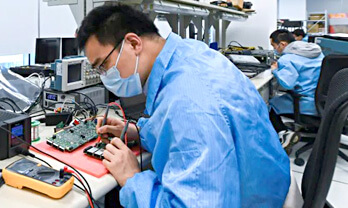
Allelco is committed to exceeding customer expectations through customer service excellence, order accuracy, and on-time delivery.
This is achieved through our commitment to the continual improvement of our processes, services, and products.


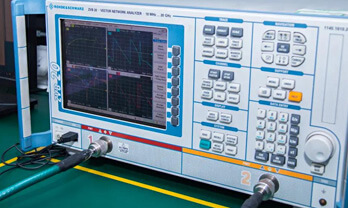
Strict quality inspection builds a solid foundation for electronic component quality.
  1. Visual inspection
  2. Performance testing and reliability verification
  3. Standardized full-process testing
  4. Precise control of every parameter
We eliminate defective components and ensure the stable operation of electronic devices through professional quality standards.

Payment Support

The payment method can be chosen from the methods shown below: Wire Transfer (T/T, Bank Transfer), Western Union, Credit card, PayPal.
  • HKBea
  • Paypal
  • MasterCard
  • Western-Union
  • VISA
Stable Delivery, Sincere Partnership — Your Faithful Supply Chain Partner
  • Efficient Supply Management
  • Cost-Saving Procurement
  • Fast Sourcing & Delivery
Contact us if you have any questions.

Packaging

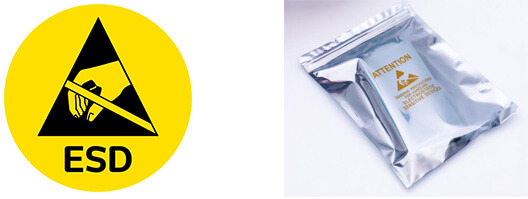
Electrostatic Discharge Protection and Handling

All electrostatic-sensitive components are handled in accordance with electrostatic discharge control procedures. The products are hermetically sealed in anti-static safe packaging to prevent electrostatic damage. Appropriate labeling is also applied for identification and traceability. This ensures product integrity during storage, handling and transportation.


ESD

Certifications & Memberships

Third-party certified, strict quality control. Our certification
  • ISO 9001: 2015
  • ISO 13485: 2016
  • ISO 14001: 2015
  • ISO 28000: 2007
  • ISO 45001: 2018
  • GB/T 27922-2011
  • SMTA
  • IPC
  • ESD
  • PSMA
NXP Semiconductors

MCIMX537CVP8C2

NXP Semiconductors
41D-MCIMX537CVP8C2

Want a better price? Add to Cart and Submit RFQ now, we'll contact you immediately.

0 RFQ
Shopping cart (0 Items)
It is empty.
Compare List (0 Items)
It is empty.
Feedback

Your feedback matters! At Allelco, we value the user experience and strive to improve it constantly.
Please share your comments with us via our feedback form, and we'll respond promptly.
Thank you for choosing Allelco.

Subject
E-mail
Comments
Captcha
Drag or click to upload file
Upload File
types: .xls, .xlsx, .doc, .docx, .jpg, .png and .pdf.
Max file size: 10MB