View All

Please refer to the English Version as our Official Version.Return

Europe
France(Français) Germany(Deutsch) Italy(Italia) Russian(русский) Poland(polski) Czech(Čeština) Luxembourg(Lëtzebuergesch) Netherlands(Nederland) Iceland(íslenska) Hungarian(Magyarország) Spain(español) Portugal(Português) Turkey(Türk dili) Bulgaria(Български език) Ukraine(Україна) Greece(Ελλάδα) Israel(עִבְרִית) Sweden(Svenska) Finland(Svenska) Finland(Suomi) Romania(românesc) Moldova(românesc) Slovakia(Slovenská) Denmark(Dansk) Slovenia(Slovenija) Slovenia(Hrvatska) Croatia(Hrvatska) Serbia(Hrvatska) Montenegro(Hrvatska) Bosnia and Herzegovina(Hrvatska) Lithuania(lietuvių) Spain(Português) Switzerland(Deutsch) United Kingdom(English)
Asia/Pacific
Japan(日本語) Korea(한국의) Thailand(ภาษาไทย) Malaysia(Melayu) Singapore(Melayu) Vietnam(Tiếng Việt) Philippines(Pilipino)
Africa, India and Middle East
United Arab Emirates(العربية) Iran(فارسی) Tajikistan(فارسی) India(हिंदी) Madagascar(malaɡasʲ)
South America / Oceania
New Zealand(Maori) Brazil(Português) Angola(Português) Mozambique(Português)
North America
United States(English) Canada(English) Haiti(Ayiti) Mexico(español)
HomeProductsIntegrated Circuits (ICs)Embedded - MicrocontrollersS9S12P128J0VFT
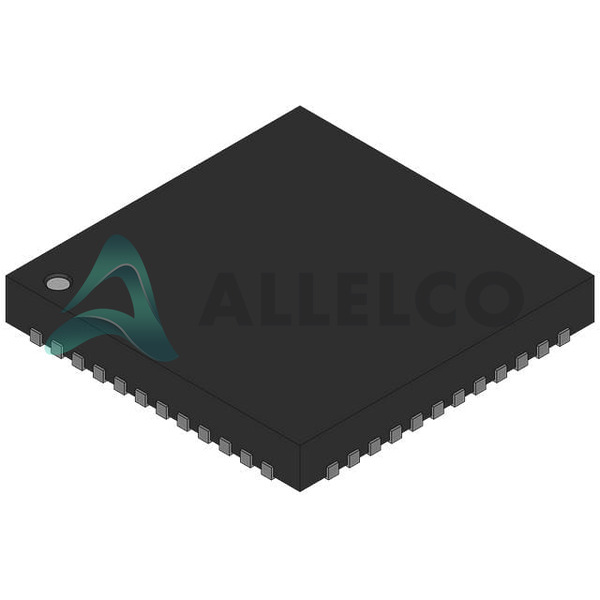
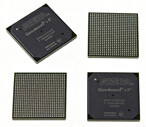
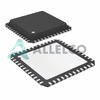
S9S12P128J0VFT Image
Image may be representation.
See specifications for product details.
EXPRESS OPTION
Payment method

S9S12P128J0VFT - Freescale Semiconductor

Manufacturer Part Number
S9S12P128J0VFT
Manufacturer
Freescale Semiconductor, Inc. (NXP Semiconductors)
Allelco Part Number
32D-S9S12P128J0VFT
Warranty
1 Year Allelco Warranty - Find out more
Stock Status:
14,980 pcs available, New & Original
Parts Description
IC MCU 16BIT 128KB FLASH 48QFN
Package
48-QFN-EP (7x7)
Data sheet
-
RoHs Status
 
Our certification
In stock: 14980

Required fields are indicated by an asterisk (*)
Please send RFQ, we will respond immediately.

Quantity

Specifications

S9S12P128J0VFT Tech Specifications
Freescale Semiconductor - S9S12P128J0VFT technical specifications, attributes, parameters and parts with similar specifications to Freescale Semiconductor - S9S12P128J0VFT

Product Attribute Attribute Value
Manufacturer Freescale Semiconductor, Inc. (NXP Semiconductors)
Voltage - Supply (Vcc/Vdd) 1.72V ~ 5.5V
Supplier Device Package 48-QFN-EP (7x7)
Speed 32MHz
Series HCS12
RAM Size 6K x 8
Program Memory Type FLASH
Program Memory Size 128KB (128K x 8)
Peripherals LVD, POR, PWM, WDT
Package / Case 48-TFQFN Exposed Pad
Package Bulk
Product Attribute Attribute Value
Oscillator Type Internal
Operating Temperature -40°C ~ 105°C (TA)
Number of I/O 34
Mounting Type Surface Mount
EEPROM Size 4K x 8
Data Converters A/D 10x12b
Core Size 16-Bit
Core Processor HCS12
Connectivity CANbus, SCI, SPI
Base Product Number S9S12

Environmental & Export Classifications

ATTRIBUTE DESCRIPTION
ECCN 3A991A2
HTSUS 8542.31.0001

Frequently Asked Questions(FAQ)

What are the key differences between the S9S12P128J0VFT and a typical 8-bit microcontroller when implementing motor control applications?
The S9S12P128J0VFT offers significant advantages over 8-bit MCUs in motor control due to its 16-bit HCS12 core, which provides higher computational precision for complex control algorithms. With 32MHz operating speed and 128KB flash memory, it can execute advanced field-oriented control or sensorless FOC routines that would be impractical on 8-bit devices. The integrated PWM modules with high-resolution timing and dedicated CANbus support further enhance real-time performance. Additionally, the 1.72V to 5.5V supply range enables flexible power architecture design compared to many 8-bit MCUs limited to 3.3V or 5V rails.
How does the S9S12P128J0VFT's voltage tolerance compare to other automotive-grade microcontrollers during transient load conditions?
The S9S12P128J0VFT supports a wide 1.72V to 5.5V supply range, providing greater flexibility than many automotive MCUs constrained to 5V operation. This wider tolerance allows better handling of voltage sags during cold cranking scenarios common in automotive environments. However, compared to some newer automotive devices rated up to 40V input protection, it lacks direct high-voltage rail capability without additional regulators. The internal voltage regulator and POR (Power-On Reset) circuitry help maintain stable operation within specified limits, though designers must still account for transients exceeding 5.5V at the package pins.
What considerations apply when selecting between the S9S12P128J0VFT and more modern ARM-based microcontrollers for legacy system upgrades?
Migrating from the S9S12P128J0VFT to an ARM-based solution may offer improved energy efficiency and peripheral integration, but requires re-evaluation of toolchain compatibility and software reuse. The S9S12 architecture uses a different instruction set and memory mapping, so existing C code may require significant modification. While ARM cores provide higher performance per MHz, the S9S12's mature ecosystem and proven reliability in industrial applications might justify continued use. Designers should assess whether the 32MHz HCS12 performance adequately meets current requirements before investing in full platform migration.
Can the S9S12P128J0VFT reliably operate in high-temperature environments such as under-hood automotive applications?
Yes, the S9S12P128J0VFT is specified for operation from -40°C to 105°C (TA), making it suitable for many under-hood applications. The HCS12 family has been widely used in automotive systems for decades, demonstrating robustness in harsh environments. However, achieving the upper temperature limit typically requires careful PCB layout, thermal management, and derating of electrical parameters. The internal oscillator maintains stability across this range, though external crystal implementations need appropriate compensation. Reliability testing should include accelerated life tests simulating actual service conditions beyond just junction temperature specifications.
What trade-offs exist between using the S9S12P128J0VFT versus discrete components for analog signal conditioning in precision measurement systems?
Integrating the S9S12P128J0VFT with its built-in 10x 12-bit ADC reduces component count and board space compared to discrete op-amps and ADCs, but limits maximum resolution to 12 bits rather than higher-performance external converters. The internal ADC has fixed reference voltages and sample rates, whereas discrete solutions allow customized front-end designs. For applications requiring >16-bit resolution or specialized sensor interfaces, external ADCs remain preferable despite increased BOM cost. The S9S12's DMA capabilities can efficiently handle ADC data transfer, reducing CPU overhead.
How does the S9S12P128J0VFT's memory architecture affect interrupt latency in safety-critical applications?
The S9S12P128J0VFT features a Harvard architecture with separate buses for program and data access, enabling single-cycle instruction execution and predictable interrupt response times. With 32MHz clocking, worst-case interrupt latency is approximately 125 nanoseconds plus context save time. The 6KB RAM provides sufficient workspace for interrupt service routines without bank switching delays. Compared to von Neumann architectures, this design minimizes contention and ensures deterministic behavior required in safety-critical systems. However, the 128KB flash size means larger code density than modern devices, potentially affecting cache performance if not managed properly.
What factors should influence the choice between QFN and alternative packages for the S9S12P128J0VFT in production designs?
The 48-QFN-EP (7x7) package offers excellent thermal and electrical performance due to the exposed pad, but presents challenges for automated assembly and repair. Board-level reliability depends on proper solder joint formation around all perimeter pads and the central thermal pad. Alternative packages like TQFP may simplify manufacturing but sacrifice pin density and thermal characteristics. For high-volume production, the QFN's smaller footprint reduces PCB area by approximately 40% compared to TQFP, lowering material costs. Designers must implement rigorous IPC-compliant land patterns and consider conformal coating requirements for moisture protection.
How does the S9S12P128J0VFT's watchdog timer implementation compare to software-based timeout monitoring in fault-tolerant systems?
The S9S12P128J0VFT includes a hardware watchdog timer (WDT) that operates independently of the main CPU, providing essential fail-safe functionality absent in pure software approaches. Unlike software watchdogs requiring periodic servicing, the hardware WDT resets the system if not refreshed within a programmed window, regardless of CPU state. This guarantees recovery from hangs or infinite loops. However, sophisticated systems often combine both approaches: software monitors application health while hardware WDT handles catastrophic failures. The S9S12's WDT can be configured for various timeout periods up to several seconds, depending on clock source selection.
What are the implications of the S9S12P128J0VFT's Moisture Sensitivity Level (MSL) rating of 3 for manufacturing and storage?
With an MSL rating of 3 (168 hours), the S9S12P128J0VFT must be stored in dry packaging and humidity-controlled conditions before reflow soldering. After opening the moisture barrier bag, components must be processed within 168 hours or baked to remove absorbed moisture to prevent popcorning during reflow. This aligns with standard IPC/JEDEC guidelines for lead-free assembly processes. Proper handling procedures include using desiccant bags, humidity indicator cards, and nitrogen-flush reflow ovens. Failure to adhere to these protocols risks latent defects manifesting after field deployment.
How does the S9S12P128J0VFT's CANbus peripheral support real-time communication in distributed control systems?
The S9S12P128J0VFT integrates a full CAN 2.0B controller supporting up to 1Mbps data rates, enabling robust communication in automotive and industrial networks. Its message buffering and acceptance filtering reduce CPU overhead compared to bit-banged implementations. The CAN peripheral works seamlessly with the 32MHz system clock, allowing precise timing for critical messages. However, achieving deterministic latency requires careful network topology design and priority arbitration management. Compared to newer CAN FD controllers, the standard CAN protocol on the S9S12 lacks higher-speed data phases and extended identifiers, limiting scalability in large networks.
What design considerations apply when interfacing sensors directly to the S9S12P128J0VFT's ADC inputs in battery-powered systems?
Direct sensor interfacing to the S9S12P128J0VFT's 12-bit ADC demands attention to reference voltage stability, input impedance matching, and noise immunity. The ADC requires external reference for optimal performance, typically derived from a stable bandgap source. Input signals must stay within 0–Vdd range, necessitating level-shifting circuits for negative or bipolar measurements. Anti-aliasing filters are essential when sampling above 8kHz to prevent spectral leakage. Power consumption considerations favor lower sampling rates; reducing ADC clock frequency decreases current draw significantly. The 10-channel multiplexer allows scanning multiple sensors sequentially while minimizing external components.
How does the S9S12P128J0VFT's low-voltage detection feature protect systems during brownout conditions?
The S9S12P128J0VFT incorporates Low-Voltage Detection (LVD) circuitry that monitors Vdd and can generate interrupts or reset the device when voltage drops below programmable thresholds typically around 2.7V to 3.0V. This prevents erratic operation during brownouts by ensuring clean shutdown before logic states become corrupted. Combined with the POR circuit, the LVD provides comprehensive power supervision across the entire 1.72V to 5.5V operating range. Designers can configure hysteresis levels to avoid chatter during brief voltage dips while maintaining system integrity during sustained undervoltage events.
What are the performance limitations of the S9S12P128J0VFT when executing floating-point intensive algorithms compared to modern DSPs?
The S9S12P128J0VFT lacks native floating-point hardware, requiring software emulation through libraries that consume significant CPU cycles. At 32MHz, executing double-precision operations may take hundreds of microseconds per calculation, making it unsuitable for real-time signal processing tasks handled efficiently by dedicated DSPs or ARM Cortex-M with FPU. While fixed-point arithmetic can approximate floating-point results with careful scaling, algorithm complexity increases substantially. For mathematical-heavy applications like FFTs or PID tuning with complex gain scheduling, external coprocessors or migration to higher-performance platforms becomes necessary.
How does the S9S12P128J0VFT's EEPROM endurance compare to flash memory usage patterns in write-intensive applications?
The S9S12P128J0VFT's 4K x 8 EEPROM block typically endures 100,000 write/erase cycles versus 10,000 cycles for the main flash memory. This makes EEPROM ideal for storing configuration parameters, calibration data, or non-volatile counters accessed frequently. Flash memory should be reserved for firmware updates or rarely modified constants. To extend EEPROM lifespan, implement wear-leveling algorithms distributing writes evenly across sectors. Avoid byte-level writes; instead, read-modify-write entire pages to minimize cycle consumption. For applications requiring >1 million write cycles, consider external FRAM or battery-backed SRAM alternatives.
What impact does the S9S12P128J0VFT's internal oscillator accuracy have on time-critical applications without external crystals?
The S9S12P128J0VFT's internal RC oscillator provides reasonable accuracy (±10%) over temperature and voltage variations, sufficient for many non-strictly-timed applications. However, in precision timing scenarios like UART baud rate generation or PWM resolution requirements, this variation causes unacceptable drift. External crystals offer ±20ppm stability, improving timing accuracy by two orders of magnitude. For RTC functions or synchronous communications, external oscillators are strongly recommended. If using the internal oscillator, calibrate against a known reference periodically and account for aging effects in long-duration deployments.
How should the S9S12P128J0VFT's SPI peripheral be configured for reliable communication with multiple slave devices in industrial environments?
Configuring the S9S12P128J0VFT's SPI for multi-slave systems requires careful consideration of chip select management, clock polarity/phase settings, and signal integrity. Use dedicated GPIO lines for individual SS signals rather than relying solely on hardware CS outputs. Implement open-drain or push-pull drivers capable of handling bus capacitance in long traces. Clock speeds should balance throughput against setup/hold margins; start conservatively and increase only after validation. Add series termination resistors near the master if reflections occur. The S9S12's SPI module supports full-duplex transfers and DMA, reducing CPU load during bulk data exchanges.
What precautions are necessary when bootloading firmware onto the S9S12P128J0VFT's flash memory via serial interfaces?
Bootloading the S9S12P128J0VFT requires understanding flash erase/write sequences and protection mechanisms. Flash memory must be erased sector-by-sector before rewriting, which consumes significant time for large images. Implement checksum verification post-transfer to detect corruption. Disable interrupts during erase/write operations to prevent partial updates. Ensure adequate power stability throughout the process—brownouts during flash programming cause irrecoverable damage. Consider using the on-chip ROM bootloader if available, or design a robust application-layer protocol with retry logic. Never attempt in-system programming without proper hardware interfaces (e.g., BDM port).
How does the S9S12P128J0VFT's package thermal resistance affect heat dissipation in densely populated PCBs?
The 48-QFN-EP (7x7) package has a thermal resistance junction-to-air (θJA) typically around 40°C/W without heatsinking. In dense assemblies, natural convection alone may insufficiently dissipate heat from high-current peripherals like PWM drivers or ADC reference circuits. Exceeding 105°C ambient temperatures forces aggressive derating of operating currents to maintain junction temperatures below 125°C. Adding copper pours connected to the exposed pad improves conduction to ground planes, reducing effective θJA by 30–50%. For continuous high-power operation, consider external thermal vias or localized heatsinks despite the compact form factor.

Parts with Similar Specifications

The three parts on the right have similar specifications to Freescale Semiconductor S9S12P128J0VFT

Product Attribute S9S12P128J0VFT S9S12P128J0VFTR S9S12P128J0MFT S9S12P128J0MFT
Part Number S9S12P128J0VFT S9S12P128J0VFTR S9S12P128J0MFT S9S12P128J0MFT
Manufacturer NXP USA Inc. NXP USA Inc. Freescale Semiconductor NXP USA Inc.
Package / Case - 196-LFBGA 16-DIP (0.300', 7.62mm) 64-VFQFN Exposed Pad
Number of I/O - - - -
Supplier Device Package - 196-NFBGA (12x12) 16-PDIP 64-VQFN (9x9)
Data Converters - - - -
Base Product Number - DAC34H84 MAX500 ADS62P42
Core Processor - - - -
Speed - - - -
Program Memory Size - - - -
Oscillator Type - - - -
Mounting Type - Surface Mount Through Hole Surface Mount
Core Size - - - -
Operating Temperature - -40°C ~ 85°C 0°C ~ 70°C -40°C ~ 85°C
Connectivity - - - -
RAM Size - - - -
EEPROM Size - - - -
Package - Tape & Reel (TR) Tube Tape & Reel (TR)
Peripherals - - - -
Voltage - Supply (Vcc/Vdd) - - - -
Program Memory Type - - - -
Series - - - -

Customer Reviews

Evaluation: 10 Articles

  • Nath***rooks
    Jun 11, 2026

    Installed this power component in a converter board. Output remained stable under different load conditions and thermal performance was better than expected.

  • Dani***alkerTech
    Jun 1, 2026

    Product works, but setup took more effort than expected. Once configured the MCU ran reliably, although documentation support felt older compared with newer platforms. Fine for maintenance projects.

  • Yuki***aka88
    May 26, 2026

    信号通信プロジェクトでこのRS-485トランシーバーを使用しました。設置は簡単で、長距離ケーブルでも通信は安定していました。消費電力も、以前使用していたものより低くなっています。

  • Stev***aker
    May 20, 2026

    Solid diode for power rectification. Works well in switching circuits.

  • Bran***Lewis
    May 11, 2026

    Compact FPGA with good performance. Suitable for basic signal processing tasks.

  • Oliv***arris
    May 7, 2026

    Reliable I/O expander. Works well in embedded control applications.

  • Jess***Jones
    Apr 17, 2026

    It offers good value for the price, and the specifications match the description. I’ve been using it for two days with no issues, and I’ll definitely buy it again if I need it in the future.

  • Mich***Smith
    Apr 17, 2026

    Shipping was on time, the component pins are neatly aligned, and I tested 10 of them with a multimeter—all readings were within the specified range. Highly recommended.

  • Aman***arris
    Apr 3, 2026

    It was great—the entire process, from placing the order to receiving the package, went very smoothly. The components were consistent, the price was fair, and I had a very pleasant shopping experience.

  • Mike***nch
    Apr 3, 2026

    Better than expected! The resistance and capacitance readings were spot-on, and it passed the test on the first try. The service was reliable, and the packaging was thoughtful—I highly recommend it.

Write a Review

Your Email address will not be published.

Shipment

Delivery Time

In-stock items can be shipped within 24 hours. Some parts will be arranged for delivery within 1-2 days from the date all items arrive at our warehouse. And Allelco ships order once a day at about 17:00, except Sunday. Once the goods are shipped, the estimated delivery time depends on the shipping methods and Delivery destination. The table below shows are the logistic time for some common countries.

Delivery Cost

  1. Use your express account for shipment if you have one.
  2. Use our account for the shipment. Refer to the table below for the approximate charges.
(Different time frame / countries / package size has different price.)

Delivery Method

  1. Global Common Shipment by DHL / UPS / FedEx / TNT / EMS / SF we support.
  2. Others more shipping ways, please get in touch with your customer manager.

Common Countries Logistic Time Reference
Region Country Logistic Time(Day)
America United States 5
Brazil 7
Europe Germany 5
United Kingdom 4
Italy 5
Oceania Australia 6
New Zealand 5
Asia India 4
Japan 4
Middle East Israel 6
DHL & FedEx Shipment Charges Reference
Shipment charges(KG) Reference DHL(USD$)
0.00kg-1.00kg USD$30.00 - USD$60.00
1.00kg-2.00kg USD$40.00 - USD$80.00
2.00kg-3.00kg USD$50.00 - USD$100.00
Note:
The above table is for reference only. There may have some data bias for the uncontrollable factors.
Contact us if you have any questions.
  • QC (Quality Warranty)
  • Payment Support
  • Packaging
  • Certifications & Memberships

QC (Quality Warranty)

Allelco is committed to exceeding customer expectations through customer service excellence, order accuracy, and on-time delivery.
This is achieved through our commitment to the continual improvement of our processes, services, and products.


Strict quality inspection builds a solid foundation for electronic component quality.
  1. Visual inspection
  2. Performance testing and reliability verification
  3. Standardized full-process testing
  4. Precise control of every parameter
We eliminate defective components and ensure the stable operation of electronic devices through professional quality standards.

Payment Support

The payment method can be chosen from the methods shown below: Wire Transfer (T/T, Bank Transfer), Western Union, Credit card, PayPal.
  • HKBea
  • Paypal
  • MasterCard
  • Western-Union
  • VISA
Stable Delivery, Sincere Partnership — Your Faithful Supply Chain Partner
  • Efficient Supply Management
  • Cost-Saving Procurement
  • Fast Sourcing & Delivery
Contact us if you have any questions.

Packaging

Electrostatic Discharge Protection and Handling

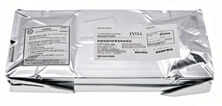
All electrostatic-sensitive components are handled in accordance with electrostatic discharge control procedures. The products are hermetically sealed in anti-static safe packaging to prevent electrostatic damage. Appropriate labeling is also applied for identification and traceability. This ensures product integrity during storage, handling and transportation.


ESD

Certifications & Memberships

Third-party certified, strict quality control. Our certification
  • ISO 9001: 2015
  • ISO 13485: 2016
  • ISO 14001: 2015
  • ISO 28000: 2007
  • ISO 45001: 2018
  • GB/T 27922-2011
  • SMTA
  • IPC
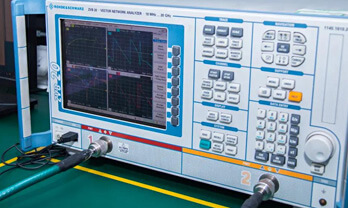
  • ESD
  • PSMA
S9S12P128J0VFT Image

S9S12P128J0VFT

Freescale Semiconductor
32D-S9S12P128J0VFT

Want a better price? Add to Cart and Submit RFQ now, we'll contact you immediately.

0 RFQ
Shopping cart (0 Items)
It is empty.
Compare List (0 Items)
It is empty.
Feedback

Your feedback matters! At Allelco, we value the user experience and strive to improve it constantly.
Please share your comments with us via our feedback form, and we'll respond promptly.
Thank you for choosing Allelco.

Subject
E-mail
Comments
Captcha
Drag or click to upload file
Upload File
types: .xls, .xlsx, .doc, .docx, .jpg, .png and .pdf.
Max file size: 10MB